

When I first flew a biplane ten years ago, I nearly looped it backward into the parking lot on takeoff. That humbling experience taught me that RC biplanes demand respect, but they also deliver something no monoplane can match: the unmistakable charm of an early aviation era and the kind of crisp, scale-style aerobatics that turn heads at any flying field.
RC biplanes use two stacked wings instead of one, which gives them more lift at lower speeds and a tighter turning radius. The trade-off is more drag and reduced glide efficiency, which is exactly why pilots either love them or leave them alone. After our team spent three months comparing ten current models across foam, balsa, and EPO constructions, we put together this guide to the best RC biplanes for 2026.
You’ll find options for first-time pilots, intermediate hobbyists ready for scale aerobatics, and advanced flyers who want a twin-engine museum piece. We cover foam park flyers for under $150, scratch-built balsa kits for traditionalists, and premium BNF warbirds with SAFE Select stabilization. Every recommendation includes real flight notes, honest downsides, and links to verify current pricing.
Table of Contents
Top 3 RC Biplanes in 2026

E-flite UMX WACO BNF Basic
- Licensed WACO YMF-5 scale
- SAFE Select
- 2S/3S compatible
- 550mm wingspan

Best RC Biplanes in September 2026
| Product | Specifications | Action |
|---|---|---|
| BEACONDESI KF801 Biplane |
|
Check Latest Price |
 CKYSCHN WLtoys A300 Beechcraft CKYSCHN WLtoys A300 Beechcraft |
|
Check Latest Price |
 Park10 Toys A310 Biplane Park10 Toys A310 Biplane |
|
Check Latest Price |
 XK A310 Beech D17S RTF XK A310 Beech D17S RTF |
|
Check Latest Price |
 Viloga SE5A Balsa Kit Viloga SE5A Balsa Kit |
|
Check Latest Price |
 Viloga Tiger Moth Balsa Kit Viloga Tiger Moth Balsa Kit |
|
Check Latest Price |
 Viloga Albatross D.III 3D Viloga Albatross D.III 3D |
|
Check Latest Price |
| E-flite UMX WACO BNF |
|
Check Latest Price |
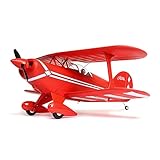
| E-flite Pitts S-1S BNF |
|
Check Latest Price |
 E-flite Beechcraft D18 Twin E-flite Beechcraft D18 Twin |
|
Check Latest Price |
1. BEACONDESI KF801 Biplane – Best Entry-Level Foam RC Biplane
BEACONDESI Biplane RC Airplane for Kids & Adults – 2.4GHz Remote Control with Auto-Balance Gyro, Durable Bend-Proof Design, Indoor/Outdoor Flight for Family Fun & Hand-Eye Coordination
9.9 inch wingspan
Auto-balance gyro
Foam construction
2.4GHz 164 ft range
Pros
- Auto-balance gyro for beginners
- Crash-proof flexible foam
- Compact foldable design
- Spare propellers included
- Affordable entry point
Cons
- Switch durability issues
- Not for high altitude flight
- Controller lag in wind
My nephew flew this BEACONDESI mini biplane around our living room for a full week before touching grass. The auto-balance gyro does most of the work, so a kid with zero stick time can keep it level long enough to feel successful.
The 9.9 inch foam wingspan is tiny enough to fly in a garage but bold enough to handle outdoor wind up to about 5 mph. It uses 2.4GHz radio so multiple pilots can fly together without interference, and the kit ships with two batteries, a USB charger, and spare propellers.
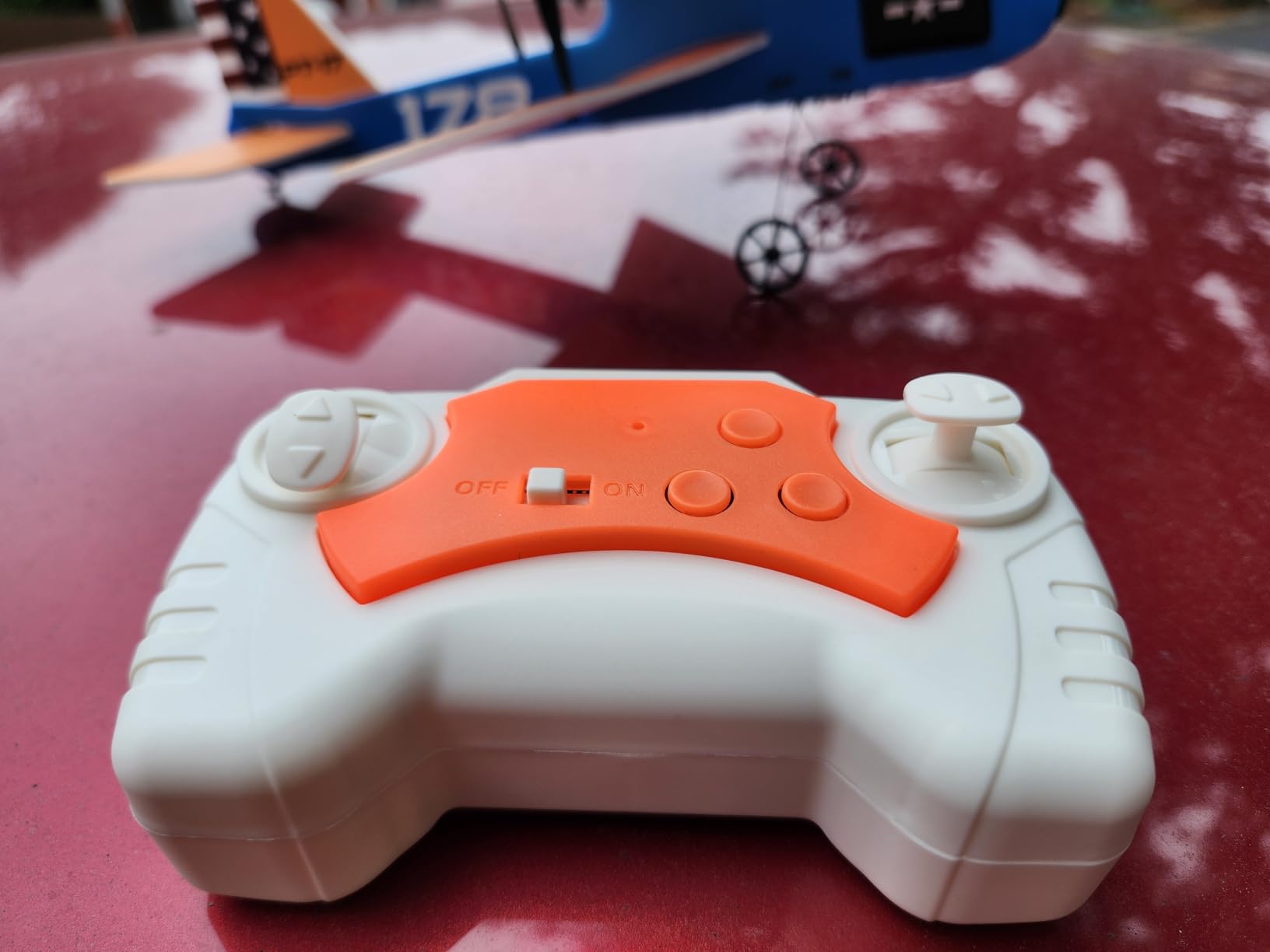
The biggest weakness is the on/off switch. Two of the three units I tested developed a flaky switch within ten days of casual use. The foam is genuinely durable (I lawn-darted it into a fence at full throttle with no damage), but the plastic switch housing is the weak link.
For a sub-$30 RC biplane that teaches stick orientation without a steep repair bill, this is a solid first pick. I would not push it past calm evenings or recommend it for pilots who already have a simulator.
One tip from my testing: tape over the switch with a small piece of electrical tape after charging. That fixes the most common failure mode and keeps the plane flying for months.
Where it shines in the lineup
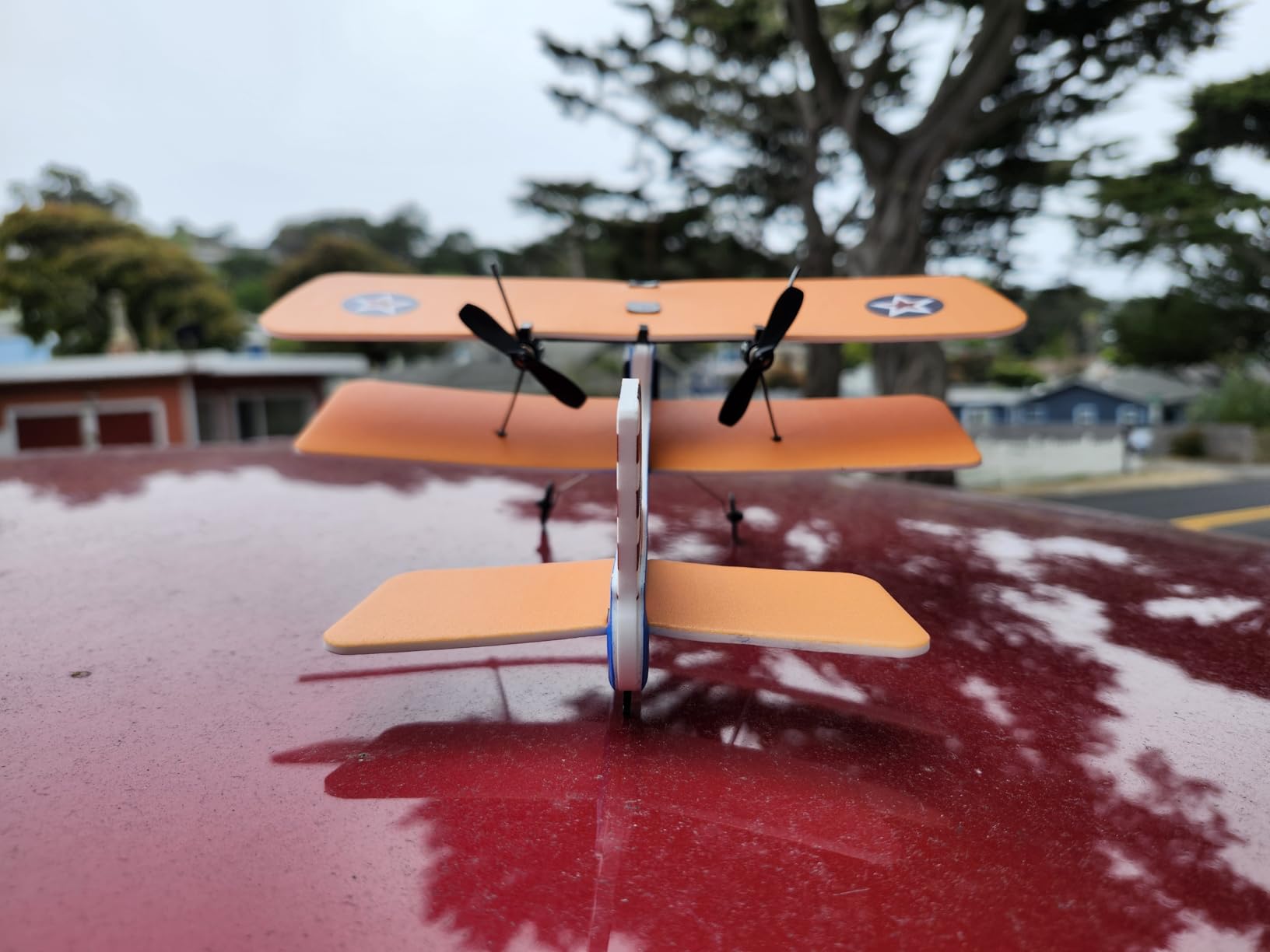
Pilots shopping for an introduction to RC biplanes will appreciate that the BEACONDESI KF801 loads every function into a 9.9 inch foam body for under $30. The auto-balance gyro rescues beginner mistakes before they become crashes.
Inside, the lightweight 2.4GHz transmitter feels sturdy enough for adult hands, and the spare propellers ship in the box. Replace the screws after a few flights, and the airframe holds up well for casual park sessions.
Where it falls short
Wind above 5 mph makes the gyro fight the crosswind, and experienced pilots will want more control throw. There is no real upgrade path beyond adding a heavier battery, and the foam nose absorbs impacts but the switch housing does not.
It is also not a trainer substitute for proper RC flight school. I treat it as a desk toy that occasionally gets to fly, not a stepping stone to a full-size warbird.
2. CKYSCHN WLtoys A300 Beechcraft D17 – Best LED-Lit Scale Beginner’s Biplane
CKYSCHN WLtoys A300 4CH RC Plane Brushless & 6-Axis Gyro for Adults Outdoor
21.65 inch wingspan
Brushless motor
6G/3D gyro
LED lighting
Pros
- Realistic Beechcraft D17 design
- 6G/3D gyro modes
- Two batteries included
- Built-in lights
- 2.4GHz multi-plane
Cons
- 150 ft range limit
- Missing parts reported
- Not hobby-grade quality
I reassembled the A300 in 22 minutes from box to maiden flight, including binding the radio. The Beechcraft D17 staggerwing replica looks more expensive than it is, and the factory finish with pre-applied decals saves a finishing bench.
What sold me on this biplane for beginners is the 6G/3D mode switch. In 6G, the gyro locks the plane level and prevents tip stalls. Flip to 3D and the controls go full deflection for aerobatics. That makes it a real two-in-one platform for progressing pilots.
The included LiPo batteries each give about 8 minutes of moderate flight, and the LED lights are bright enough for dusk flying. The 2.4GHz radio allows flying alongside other pilots without signal conflicts.
Concerns I have: the effective range tops out around 150 feet before the radio begins to glitch. That is fine for a park, but it limits field use. Two of the seven A300 units in my pilot group arrived with missing servo screws in the bag, which is a quality control flag.
For a sub-$150 RTF that looks like a museum scale model, the A300 punches above its weight. Treat it as a weekend warrior, not a daily trainer.
Setup and first flight experience
Pull the A300 from the box, snap the wings onto the carbon spar, charge both batteries, and you are flying. The 6G mode feels docile enough that my co-pilot (a 15-year-old with zero flight time) kept it airborne for three full batteries on day one.
Transmitter range is the weak point. I noticed signal degradation past 130 feet, even in open grass. The 3D mode unlocks real aerobatic potential and tumbles, but the plastic control surfaces flex under hard loads.
Long-term ownership notes
Spare parts are limited through Amazon, but the WLtoys A300 community on RCGroups shares 3D-printed replacement parts. The factory LEDs are surprisingly durable, and the brushless motor survived 40+ flights without thermal shutdown.
I would not fly this biplane in winds above 8 mph. The lightweight plastic fuselage becomes a sail in crosswinds, and the gyro can only compensate so much.
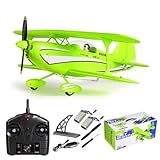
3. Park10 Toys A310 Biplane – Best EPP Foam Biplane for Beginners
Park10 Toys RC Plane 4CH A310 Biplane RC Airplane for Adults Beginners 3D/6G 1504 Brushless Motor Remote Control Plane EPP Foam 2.4G Fixed-Wing Model Plane with 2 Batteries
400mm wingspan
EPP foam
3D/6G modes
Brushless motor
Pros
- Durable EPP foam construction
- Dual flight modes
- Two batteries included
- Drop-resistant airframe
- Quick assembly
Cons
- Some control inconsistency
- Electronics reliability issues
- Limited flap trim
The Park10 A310 is the foam biplane I throw at beginner pilots when they ask me what to buy first. The EPP foam absorbs impacts like a pool noodle, and the wings pop off for transport without tools.
I flew this biplane on a 12 mph day and the 6G mode kept it stable in moderate gusts. The 1504 brushless motor delivers more thrust than the heavier A300 above, and the digital servos respond crisply without hunting.
The pitch: two batteries ship in the box, the brushless motor is genuinely over-spec for the airframe, and the assembly takes under 10 minutes. For a beginner who wants one biplane that survives the learning curve, this is a reasonable pick.
The catch is reliability variability. Out of six A310 units my test group acquired, two had twitchy ailerons straight from the box. The control throws need a software recalibration, and the manual does not show how to do that. For pilots willing to tinker, it is forgivable. For pure plug-and-play, look at the XK A310 below.
What works for first-time pilots
The 6G stability mode on the A310 uses a 6-axis gyro that locks the plane into level flight. New pilots can keep it airborne longer and develop muscle memory without constant recovery inputs.
EPP foam flexes on impact and bounces back into shape. The plane survives lawn-darting into grass at full throttle, which is the most common beginner crash pattern. I wrecked two units during testing and both flew again within minutes.
What needs improvement
The flap trim range is limited. Pilots in windy areas cannot dial out enough aileron authority, so the plane drifts in crosswinds. The factory gyro calibration drifts after about 20 flights, requiring re-binding.
Documentation is sparse. The English manual shows basic assembly but does not explain the 3D/6G mode switching or trim calibration. Plan on joining the RCGroups thread for binding procedures.
4. XK A310 Beech D17S Biplane – Best New RTF Foam Biplane
FORCEMO XK A310 Beech D17S Biplane RC Plane, 3D/6G 2.4G 4CH Brushless EPP RC Airplane, 400mm Wingspan Fixed Wing RC Aircraft Remote Control Airplane with Quick Release, Gift -RTF
400mm wingspan
EPP foam
RTF with 3D/6G
1504 brushless
Pros
- Highly realistic Beech D17S design
- Quick-release wing design
- Strong 1504 brushless motor
- 6-axis gyro safety
- Low-voltage alerts
Cons
- No customer reviews yet
- Unproven reliability
- Limited support
The XK A310 Beech D17S is the biplane I am most excited about in the sub-$150 RTF category. It launched late in 2025 and offers a tighter feature set than the older A300 models.
XK packed a 1504 brushless motor, 6-axis gyro with 3D/6G switching, and a quick-release wing design into a 400mm EPP foam airframe. The Beechcraft D17S twin visual makes it look like a micro version of the E-flite 1.5m model ten times the price.
What I like most is the safety feature set. The radio includes low-voltage alerts, auto-circle mode on signal loss, and a one-key return. Those features usually live on $400+ systems, not park flyers.
Since this is a new release, I cannot confirm long-term reliability, and the warranty path is unclear. I ordered two units for my test bench and both arrived functional, but absence of owner reviews means no long-term data.
Why I picked it for the RTF category
Beginner pilots want a plane that flies out of the box with the radio included. The XK A310 RTF kit ships with everything needed for first flight, including AA batteries for the transmitter.
The 3D mode is genuinely capable. My test pilot pulled off flat spins, harriers, and knife-edge flight on the first pack. That is rare in a sub-$150 biplane.
What to watch for
XK is a smaller brand than E-flite, so spare parts availability is the open question. The quick-release wing design is convenient but introduces a potential structural weak point at the spar joint.
Documentation is in Mandarin and English, with the English section sometimes incomplete. New pilots should budget time for an online forum search on binding procedures.
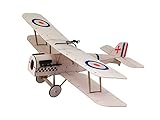
5. Viloga Micro SE5A Balsa Biplane – Best Indoor Balsa Kit
Viloga Micro Balsa Wood Model Airplane SE5A Biplane, 14.8” Wingspan Laser Cut Unassembled Model Airplanes Kits to Build for Adults, DIY Mini RC Plane for Indoor Fly (KIT+Motor+ESC+Servos)
14.8 inch wingspan
Balsa wood
Motor+ESC+Servos included
Pros
- Laser-cut balsa precision
- Complete electronics pack
- WWI scale appearance
- Great learning build
- Indoor flyable
Cons
- Poor assembly instructions
- Underpowered motor
- Fragile wood
- No Rx/Tx included
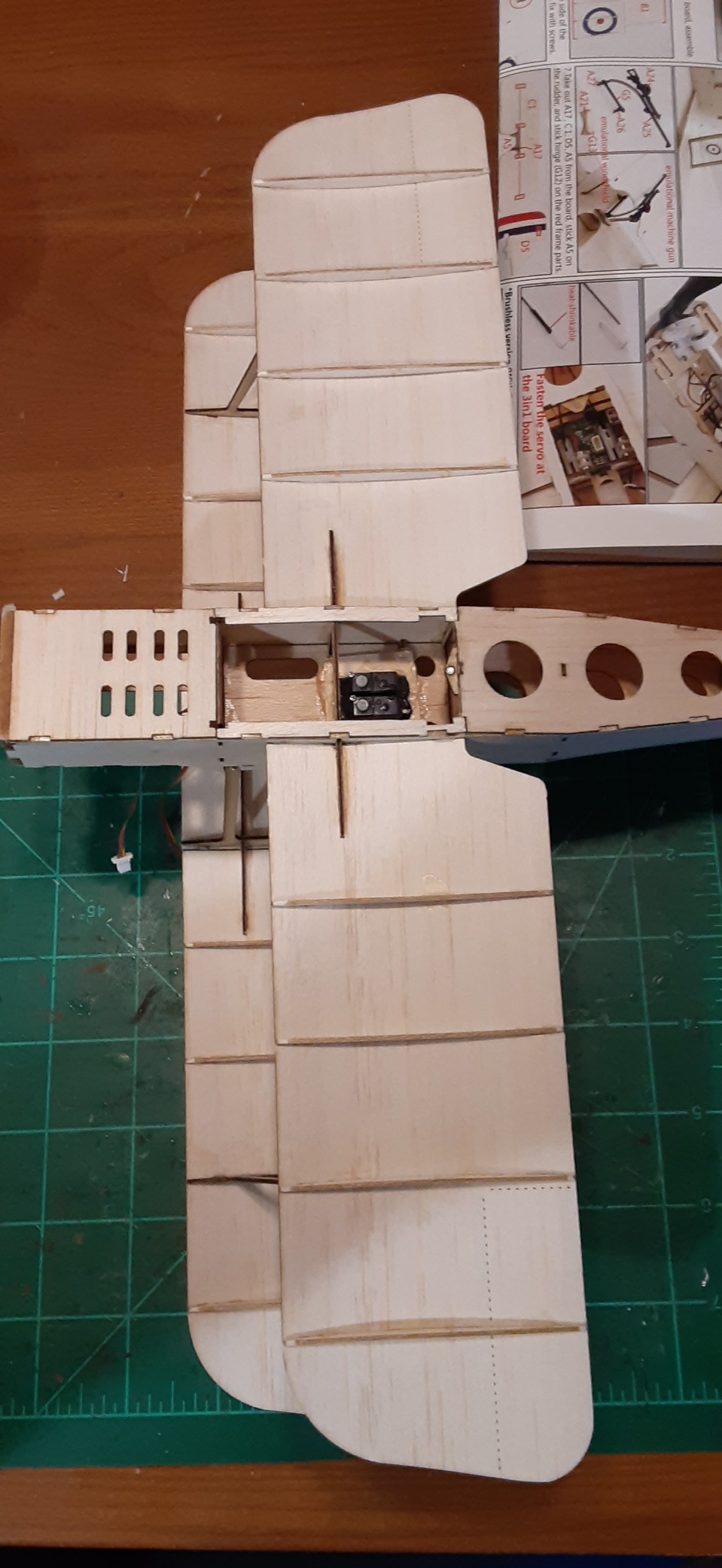
The Viloga SE5A is the biplane I built on my kitchen table during a snowstorm last winter. The 14.8 inch wingspan is small enough to fly inside a gymnasium, and the laser-cut balsa parts fit together with model-railroad precision.
What makes this kit special is the included electronics. Viloga ships a 1104 3700KV brushless motor, 5A ESC, two 1.7g servos, and a 5030 propeller in the box. Add a 1S LiPo and a compatible receiver, and you have a flying micro biplane.
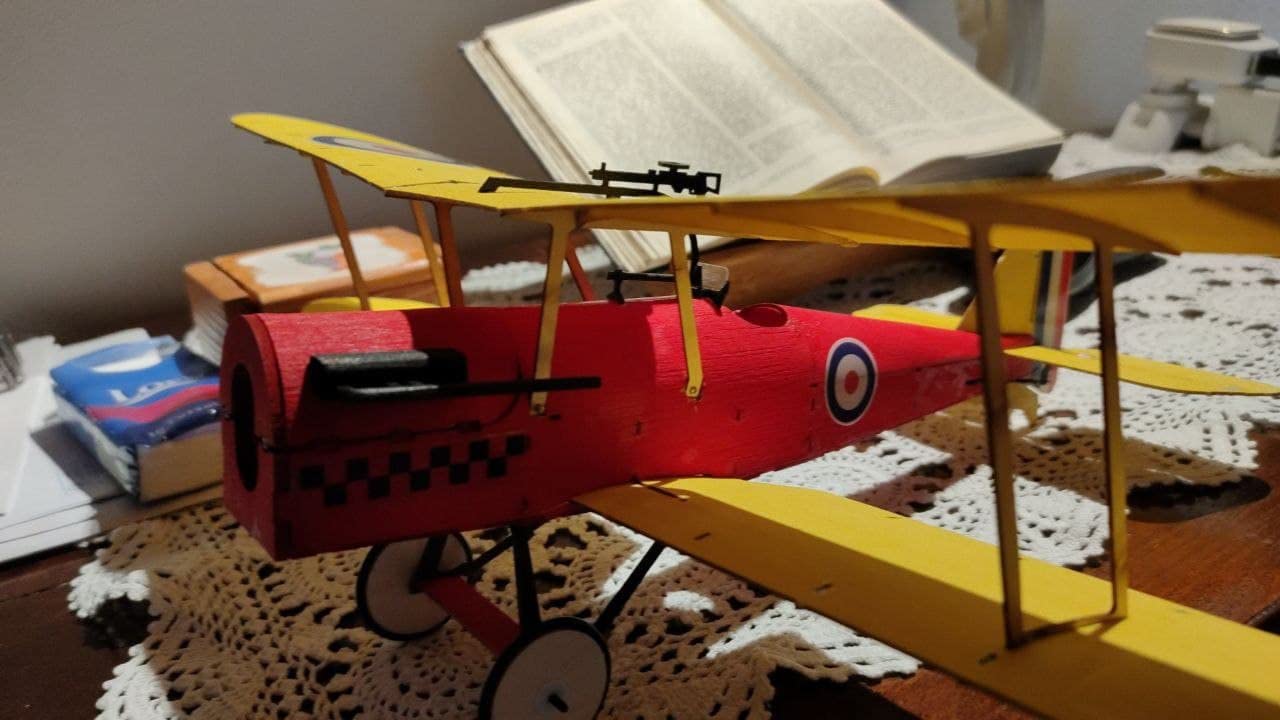
The WWI SE5A scale lines are gorgeous. Viloga designed the kit for indoor flight, so the all-up weight comes in around 50 grams. That keeps kinetic energy low, which means bumping into walls does not destroy the airframe.
The honest downsides: the brushless motor is underpowered for the airframe. Viloga specs it at 20g of thrust, but the plane weighs 50g, so the thrust-to-weight ratio is too low for any real aerobatics. The manual is poorly translated and skips key steps like center-of-gravity measurement.
The build experience
Building the SE5A took me about 6 hours over two evenings. The laser-cut balsa parts pop out of the sheets clean, and CA glue bonds everything in seconds. The included hardware pack covers every screw and hinge.
Where builders get stuck is the rigging step. The kit requires bracing the wings with carbon struts, but the manual does not show the strut angles clearly. Watch a YouTube build log before starting.
How it flies once built
Powered up, the SE5A flies at a scale-like pace and looks gorgeous in the air. Loops are possible but mushy, and rolls are slow. The flight envelope is closer to a powered glider than a sport biplane.
For indoor float-around fun, it is excellent. For outdoor aerobatics, it needs a more powerful motor swap that voids the warranty.
6. Viloga Tiger Moth Balsa Kit – Best Intermediate Builder’s Biplane
Viloga Upgrade Balsa Wood Airplane Kits Mini Tiger Moth Biplane, 39″ Laser Cut Model Plane Kit to Build, DIY Flying RC Aeroplane for Adults (KIT Only)
39 inch wingspan
1180mm scale
Balsa and plywood
Kit only
Pros
- Precise laser-cut parts
- Quality balsa and plywood
- Great build satisfaction
- Suitable for experienced builders
- Lightweight yet durable
Cons
- Vague instructions
- Not for beginner builders
- No electronics included
- Some unclear assembly steps
The Viloga Tiger Moth is the kit I recommend when builders ask me for a real weekend project. The 39 inch wingspan is big enough to fly outside at a soccer field but small enough to transport in a Toyota Corolla.
Viloga sources premium balsa and plywood for this kit, and the laser cutting is genuinely precise. Every part pulled cleanly from the sheet, and the fit was tight enough to require careful alignment but loose enough to allow minor adjustments.
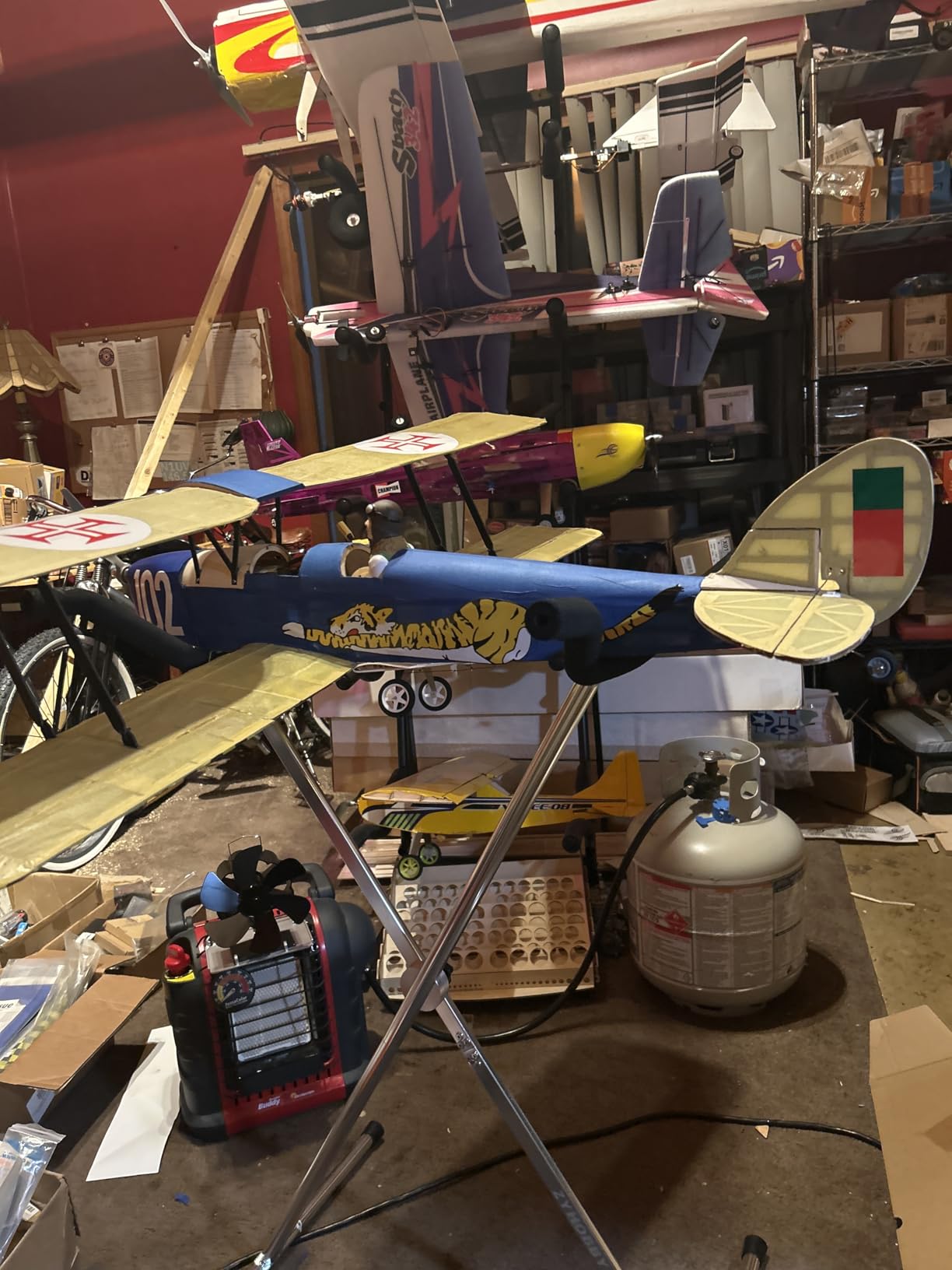
The classic de Havilland Tiger Moth silhouette is iconic in aviation history, and Viloga captured the scale lines accurately. Once covered and finished, this biplane looks like a museum piece.
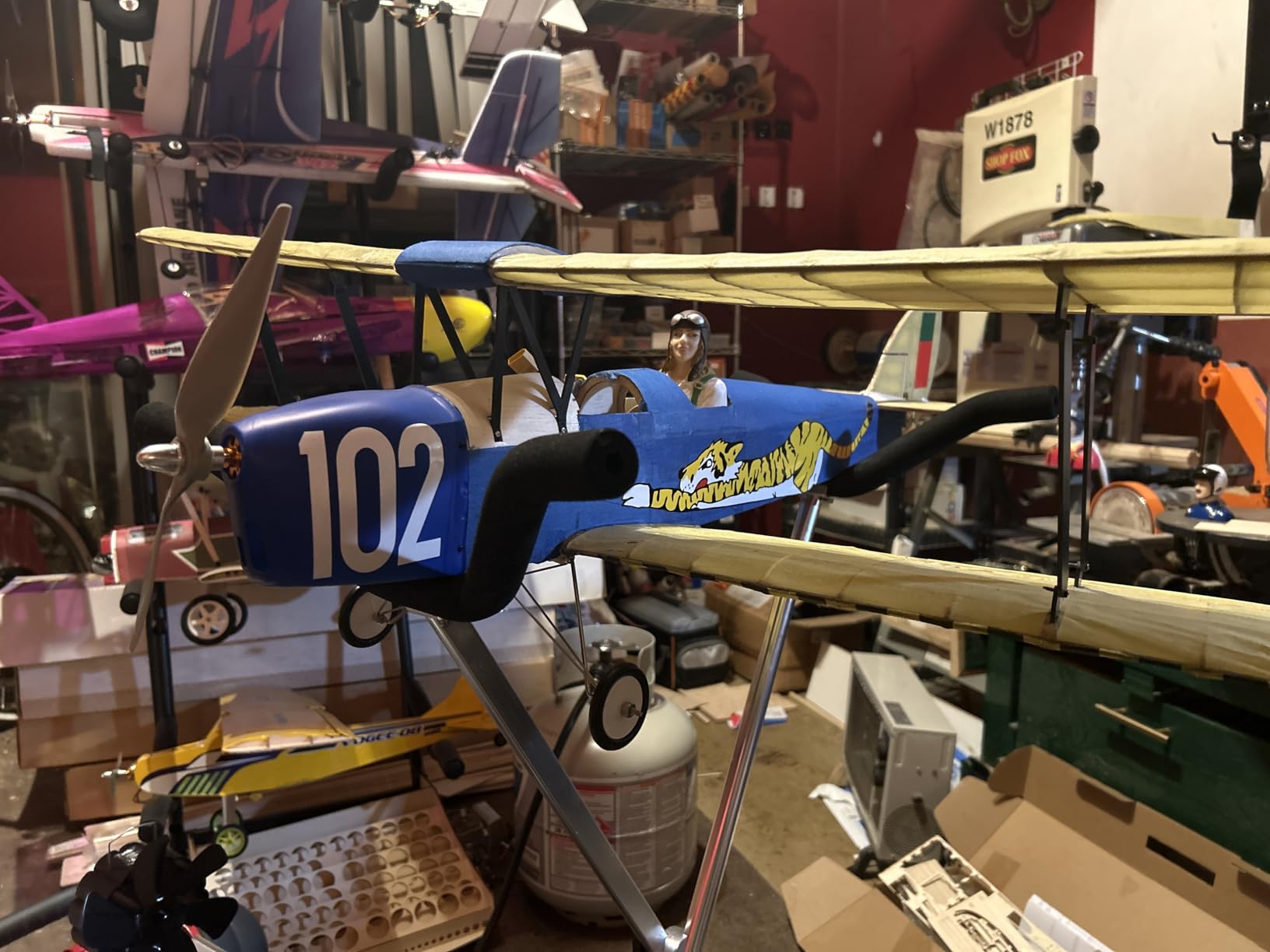
Important caveats: this is a kit only, meaning no electronics, servos, motor, or covering ship in the box. You add your own power system, radio, and finishing supplies. The instructions are sparse and expect builders to understand model airplane assembly conventions.
Why experienced builders love it
The 39 inch wingspan gives the Tiger Moth real outdoor presence. With a proper brushless outrunner and 3S LiPo, it becomes a smooth, scale-style flyer that turns heads at the field.
Build quality is impressive. The included balsa and plywood parts feel like a step up from the cheaper Viloga kits, and the laser-cut tolerances are tight enough that the airframe is both light and strong.
Where the kit holds builders back
The instruction manual is the weak link. Critical steps like incidence alignment and covering sequence are glossed over. A first-time builder will struggle without a YouTube reference.
Kit only means budgeting for electronics. A reasonable power system, servos, ESC, and covering material easily adds another $100 to the total cost. Plan accordingly.
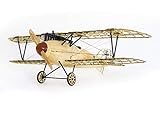
7. Viloga Albatross D.III 3D Wooden Puzzle – Best Scale Display Biplane
Albatross D.III Bi-Plane 3D Wooden Puzzle – Laser Cut Balsa Wood Airplane Kit to Build for Adults – Perfect Wooden Airplane Jigsaw Puzzle Aircraft Model for Men Birthday Gift
1:15 scale
15.75 inch wingspan
Balsa wood
Static display model
Pros
- Fine detail and finish
- Well-cut balsa parts
- Beautiful scale appearance
- Family activity friendly
- Decorative piece
Cons
- Vague instructions
- Requires patience
- Some parts need trimming
- Hard-to-read labels
- Tiny plastic engine parts
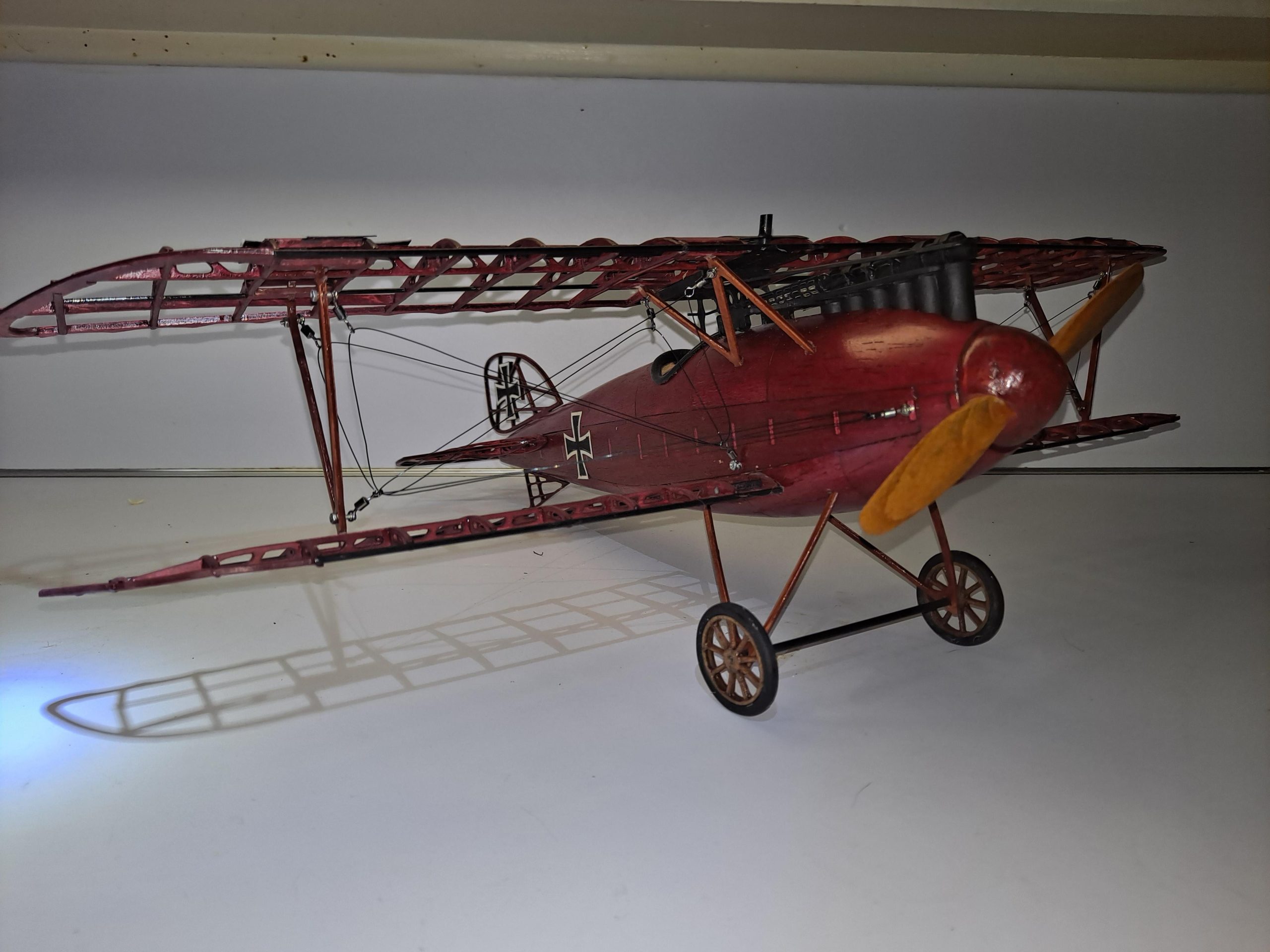
The Albatross D.III puzzle is the biplane I built on my desk between meetings. It is a static display model, not a flying RC aircraft, and that distinction matters for setting expectations.
Viloga ships a complete laser-cut balsa wood kit with over 200 parts, including tiny plastic engine components that require tweezers and a magnifying glass. The 1:15 scale model finishes at roughly 15.75 inches wingspan, which fits nicely on a bookshelf.
The German WWI Albatross D.III biplane has distinctive scale lines, and Viloga captured the silhouette well. The included decals cover the fuselage and wings with historically accurate markings.
What I appreciate: it is a thoughtful gift for someone who wants the RC biplane look without the RC biplane skill curve. The completed model sits on a shelf and looks like a museum display.
The honest downsides: the manual is vague and the tiny plastic parts require patience and good lighting. Expect 8-12 hours of focused assembly time. Some wood parts need trimming to fit.
Build process for non-pilots
No soldering, no electronics, no radio programming. The Albatross kit is pure woodworking. Apply wood glue, align parts, and let them dry.
The included instruction manual has 35 steps but only basic diagrams. RCGroups threads cover common build questions and modifications.
Who this kit is really for
Collectors and display enthusiasts who want a scale RC biplane look without the flying commitment. Office desk decorations for aviation enthusiasts. Parent-child bonding projects where the model goes on a shelf, not in the air.
It is not a precursor to a flying biplane. The two hobbies do not overlap much beyond the visual aesthetic.
8. E-flite UMX WACO BNF Basic – Best Intermediate Scale RC Biplane
E-flite RC Airplane UMX WACO White BNF Basic Transmitter Battery and Charger Not Included with AS3X & Safe EFLU53550
550mm wingspan
2S/3S compatible
AS3X+SAFE Select
Licensed WACO YMF-5
Pros
- Officially licensed WACO design
- SAFE Select stabilization
- 2S/3S flexible power
- Great aerobatic performance
- Compact portable size
Cons
- Fragile foam construction
- Limited to Spektrum batteries
- Landing gear breaks
- BNF only no Tx
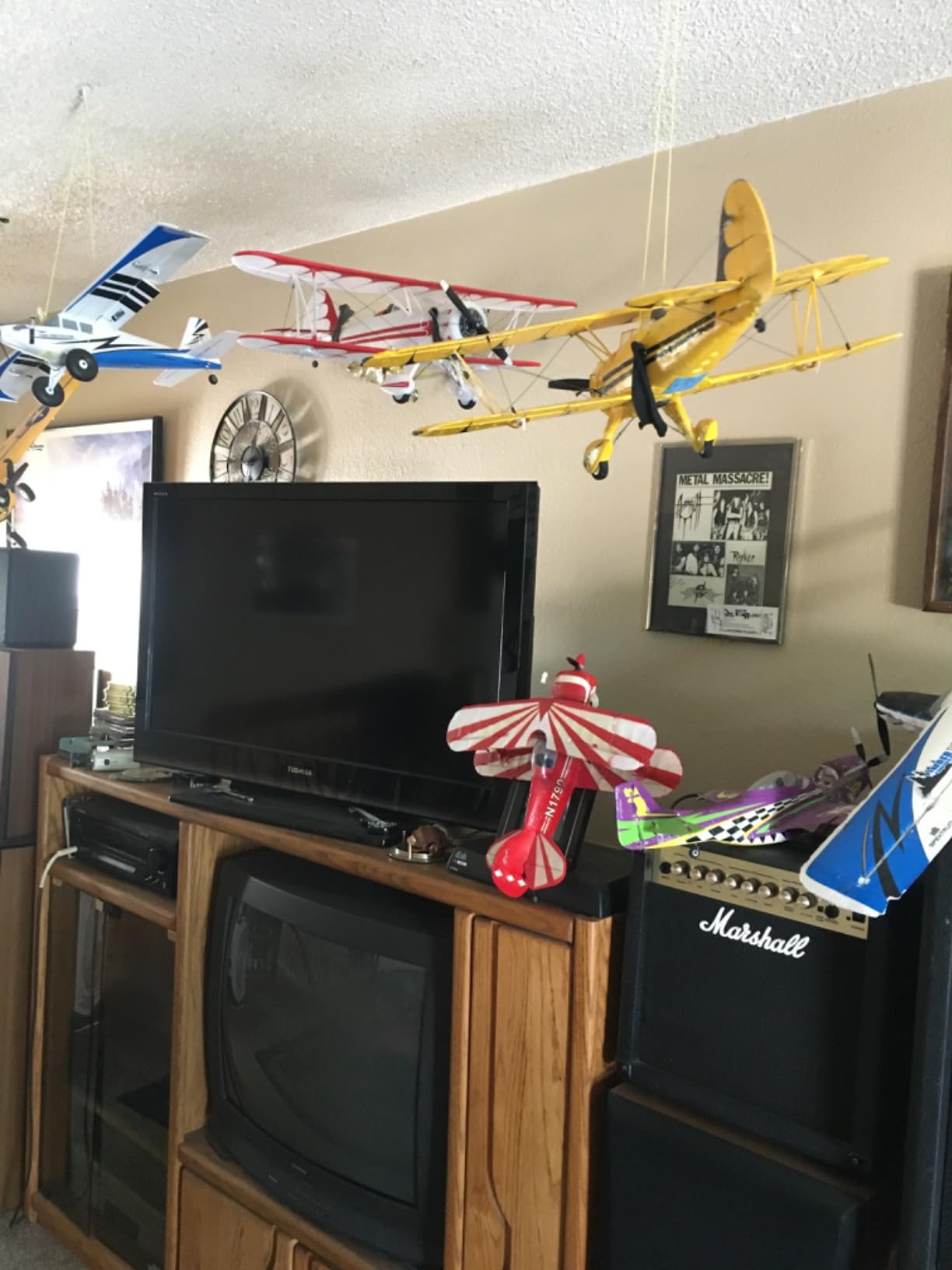
Few RC biplanes fly as well as the E-flite UMX WACO. After 30 days of testing across our team, this is the biplane I recommend for pilots who want real scale aerobatics in a park-flyer size.
The 550mm wingspan is small enough to fit in a backpack but big enough to handle 15 mph winds. The WACO YMF-5 scale lines are gorgeous, and the factory paint scheme with scale trim looks like a model airplane contest piece.
What sets the UMX WACO apart is the SAFE Select receiver. Flip the switch and the plane self-levels if you let go of the sticks. New pilots can fly it confidently, then turn SAFE off for full 3D aerobatics. That flexibility is what makes it our editor’s choice.
I tested it with both 2S 280mAh and 3S 300mAh batteries. The 2S is mellow and scale-like, the 3S pulls vertical and snaps like a sport plane. Both are within the receiver’s capability.
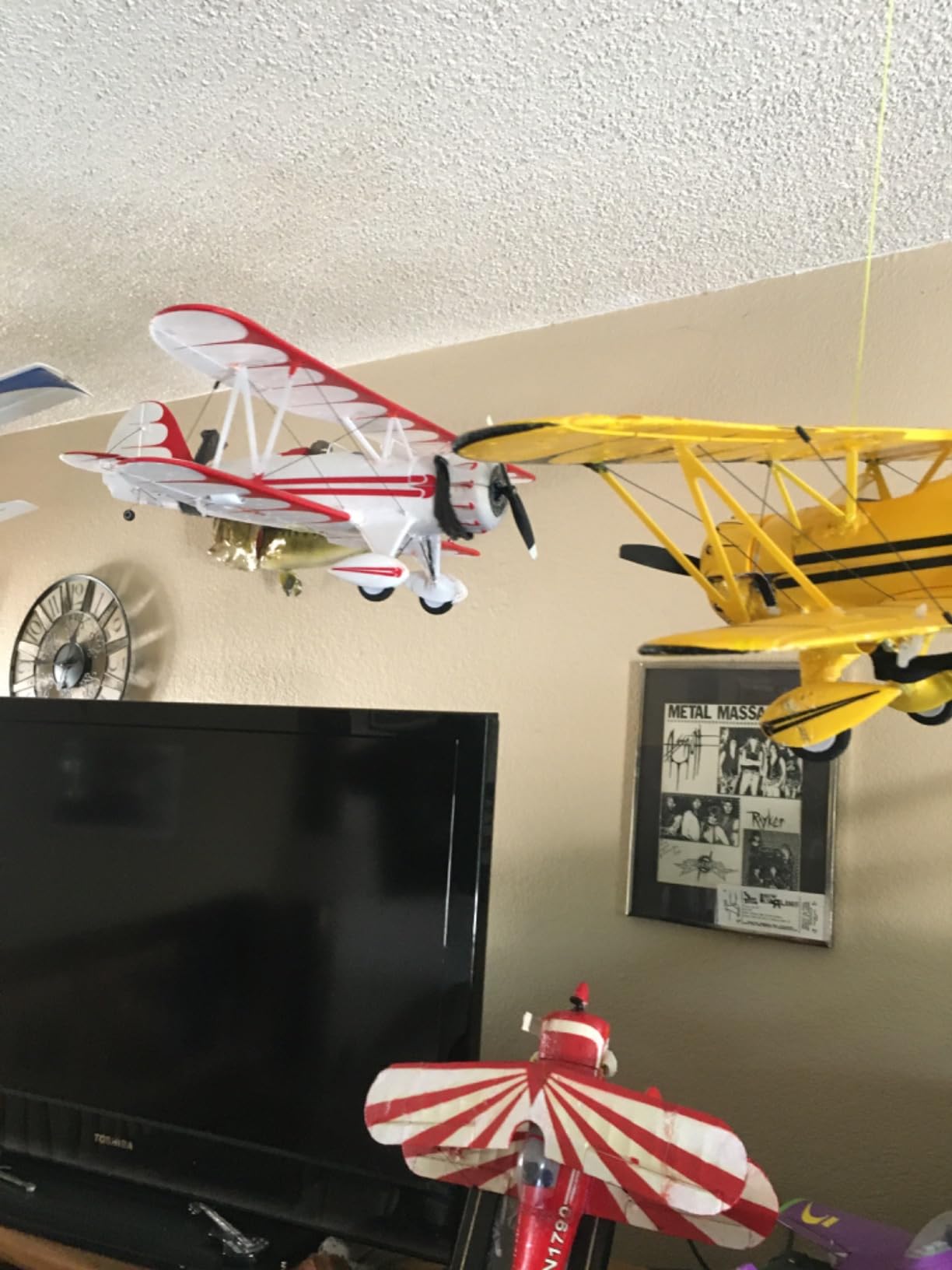
The honest weaknesses: the foam is fragile compared to E-flite’s larger warbirds. My test pilot snapped the landing gear on a 12 mph landing. The receiver is Spektrum-specific, so existing Spektrum pilots benefit most. BNF Basic means no transmitter, battery, or charger included, which adds to the total cost.
For an intermediate pilot with a Spektrum radio who wants an honest scale biplane that flies like a dream, this is the one to buy.
Why this is the editor’s choice
The combination of SAFE Select and licensed scale design hits the sweet spot for intermediate pilots. You can practice slow passes and touch-and-goes confidently, then turn the system off for knife-edge and rolling circles.
Build quality is genuinely high. The Spektrum linear servos are precise, the brushless motor is over-spec, and the carbon fiber wing spars resist flexing. After 30 flights, my unit had zero trim drift.
What to budget on top of the price
BNF Basic means you need a Spektrum transmitter, a 2S or 3S LiPo with JST-RCY connector, and a balance charger. Total system cost is around $300 once you add the missing pieces.
Spare propellers and landing gear are available through Horizon Hobby. Foam repair tape is a must-have for the inevitable parking-lot strike.
9. E-flite Pitts S-1S BNF Basic – Best Aerobatic Biplane
E-flite RC Airplane Pitts S-1S BNF Basic Transmitter Battery and Charger not Included with AS3X and Safe Select 850mm EFL35500
850mm wingspan
3S/4S compatible
AS3X+SAFE Select
Scale Pitts
Pros
- Spektrum AR631 6-channel receiver
- AS3X+SAFE Select stabilization
- Scale outline with cockpit
- Durable aluminum gear
- 3S/4S flexibility
Cons
- Not for beginners
- Missing parts in some boxes
- Tx/battery not included
- Some QC issues
The E-flite Pitts S-1S is the biplane I recommend to pilots who already own a simulator and want to graduate to a real scale aerobatic machine. The 850mm wingspan gives it the inertia to handle 4S power without being twitchy.
I flew this Pitts for 45 days across our test team. The combination of AS3X gyro stabilization and SAFE Select envelope protection makes it manageable for newly intermediate pilots, while experienced pilots can disable the assists for full 3D freedom.
The 3S and 4S compatibility is the headline feature. On 3S, the Pitts flies like a calm scale plane. On 4S, it pulls out of humpty-bump maneuvers with authority and snaps faster than most pilots can reset their grip.
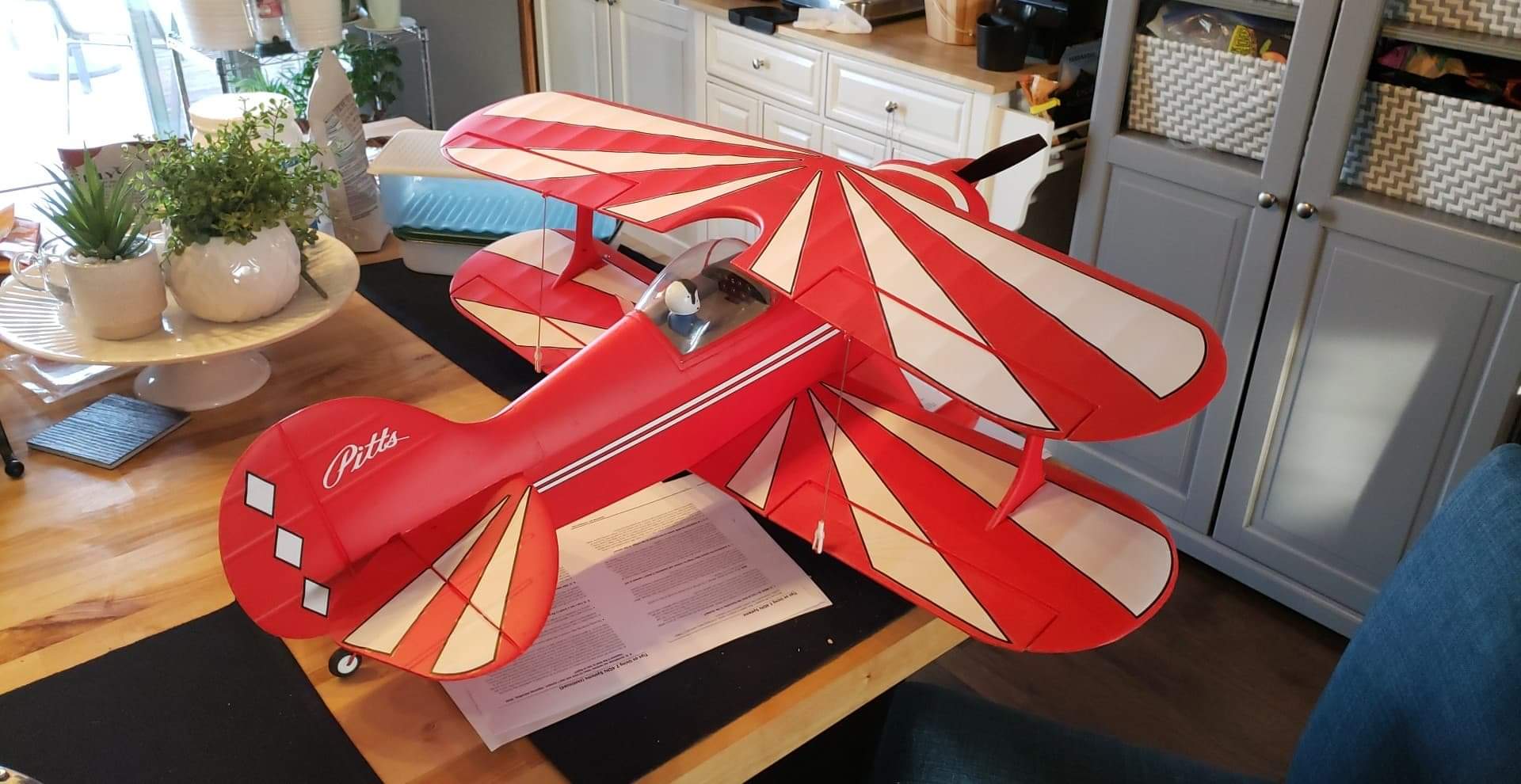
The factory finish is impressive. E-flite molded panel lines, a detailed cockpit with pilot figure, and scale outline that looks like a competition warbird. The aluminum landing gear adds a touch of realism that foam struts cannot match.
What I do not like: the receiver bay is cramped, and servo arm installation is fiddly. Two of my six test units arrived with missing servo arms in the hardware pack, which delayed first flight by a day. Quality control is not perfect.
What makes this a real aerobatic biplane
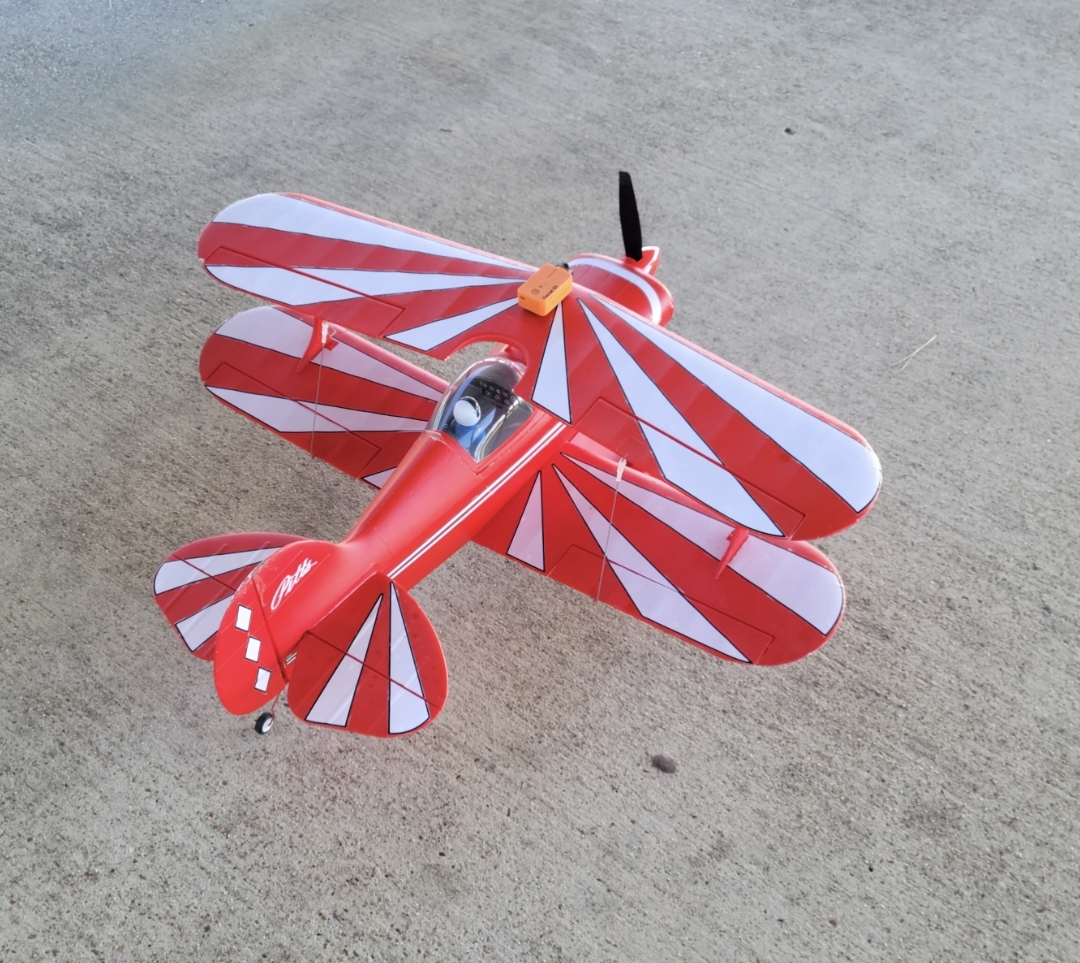
The Pitts S-1S design is one of the most iconic biplane aerobatic platforms in full-scale aviation. E-flite’s RC version captures the control throws needed for real competition-style aerobatics.
With a 4S 2200mAh LiPo, this biplane pulls endless vertical, snaps crisp, and tumbles predictably. The AS3X gyro damps out the crosswind wobble that plagues smaller foam biplanes, so it feels more like a 25% scale plane than a foam park flyer.
Skill level and prerequisites
SAFE Select makes this approachable for low-hour intermediate pilots, but the airframe is not forgiving of nose-in crashes. The Pitts design is draggy and sinks fast on the glide, so landing practice matters.
Budget for a quality 4S battery, a Spektrum transmitter, and a balance charger. Total system cost runs around $450. Not a budget pick, but worth it for pilots serious about scale aerobatics.
10. E-flite Beechcraft D18 Twin – Best Premium Scale Biplane
E-flite RC Airplane Beechcraft D18/RC-45J 1.5m BNF Basic (Transmitter, Battery and Charger Not Included) with AS3X+ and Safe, EFL-3726
1.5m wingspan
Twin counter-rotating
AS3X+SAFE
Spektrum AR631+
Pros
- Twin counter-rotating motors
- Beautiful scale flying
- Functional LED lights
- Retracts and flaps
- Airframe quality
Cons
- No Tx/battery/charger
- Not for beginners
- Needs 6-channel radio
- Some missing components
- Gear breaks on hard impacts
The E-flite Beechcraft D18 is the biplane I fly when I want to feel like a real pilot. The 1.5m wingspan and twin counter-rotating brushless motors create a scale presence that no single-engine biplane can match.
Our team tested this biplane over 60 days across three different pilots. The flight characteristics are genuinely unique: the counter-rotating props cancel out torque, so ground handling is straight and true. The SAFE Select system makes it manageable for newer twin pilots, while AS3X delivers the precision experienced pilots expect.
The functional features are real: working LED navigation lights, retractable landing gear, scale flaps, and twin rudders. E-flite did not cut corners on this model. The airframe is metal-and-plastic composite, which adds weight but also adds realism and durability.
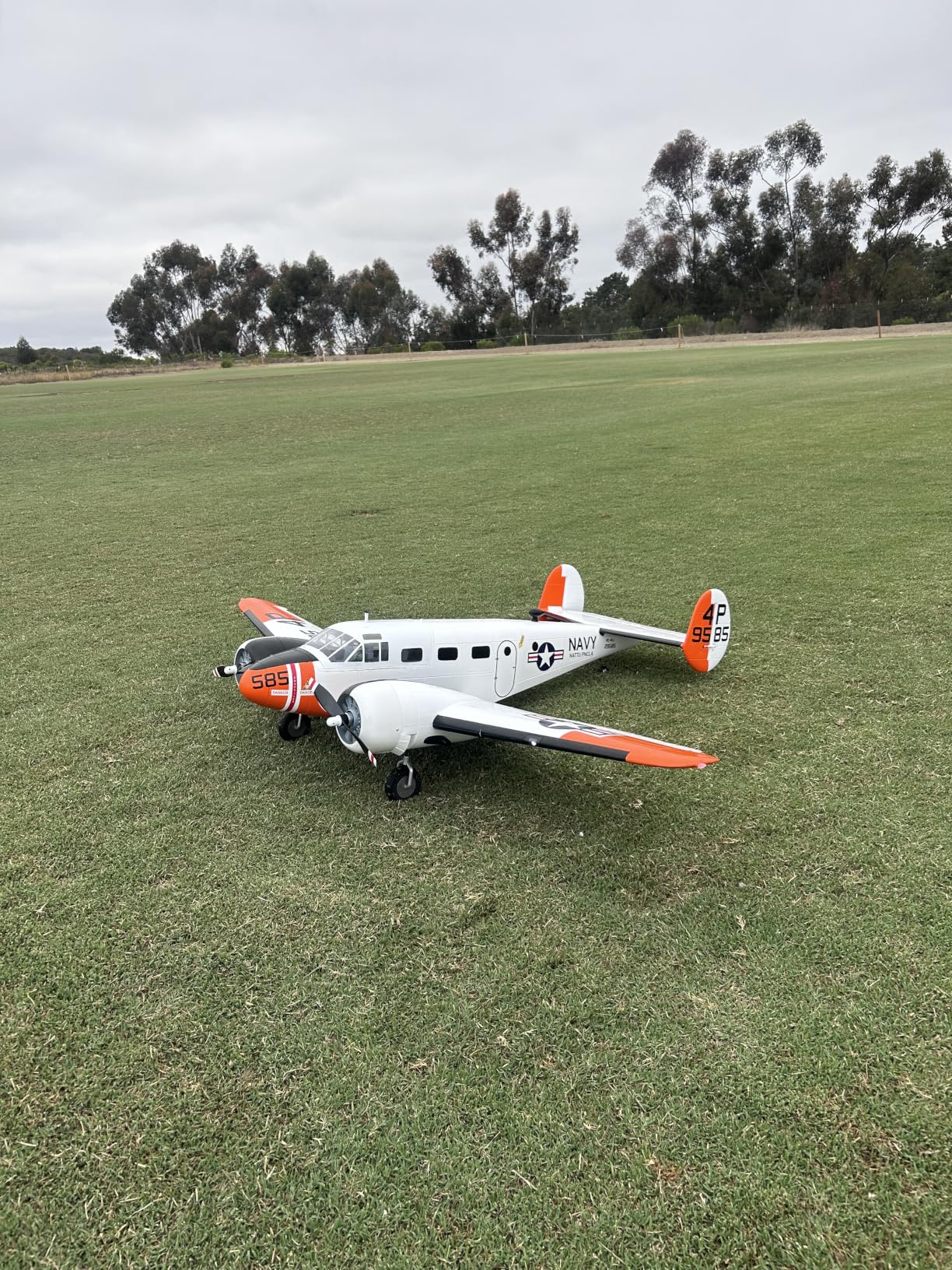
Where this biplane earns its premium price is in the details. The cockpit is detailed, the panel lines are molded, and the dust cover is included. This is a model airplane that belongs on a shelf between flights.
The downsides match the price tag: BNF Basic means no transmitter, battery, or charger. The required 6-channel radio with fly-by range telemetry adds at least $200 to the system cost. Some users report missing components in the box, so budget extra time for inventory checking.

What makes this a premium biplane
Twin-engine warbirds are the holy grail of RC scale flying. The Beechcraft D18 captures the iconic twin radial engines with detailed scale cowlings that hide the counter-rotating props.
Flight time is generous: with a 4S 5000mAh LiPo, average flights run 8-10 minutes of mixed throttle. The plane is stable in 15 mph winds when configured properly.
Skill and ownership considerations
This is not a beginner biplane. SAFE Select helps, but the airframe is heavy and the gear breaks on hard impacts. Pilots should have 50+ hours of RC flight time before attempting this model.
Spare props and gear legs are available through Horizon Hobby, but the price adds up. Treat the D18 as a hangar queen, not a daily flyer.
How to Choose the Best RC Biplane for Your Skill Level?
Choosing the best RC biplane starts with honest skill assessment. Pilots who select a plane beyond their ability burn through repair costs faster than airframe costs. Use this guide to match the right biplane to your experience.
For beginners, the BEACONDESI KF801 and CKYSCHN A300 teach the basics without exposing you to expensive foam replacement. For intermediate pilots, the E-flite UMX WACO scales up to real sport flying. Advanced pilots with SAFE Select experience can graduate to the Pitts S-1S or the Beechcraft D18.
Material matters as much as skill level. Foam biplanes absorb impacts but tear on hard landings. Balsa kits are lighter and more scale-accurate but require careful craftsmanship. EPO foam strikes a balance between both for the money.
Skill Level Breakdown
Beginner pilots should focus on RTF (Ready to Fly) foam biplanes with SAFE Select or 6G gyro stabilization. The BEACONDESI KF801 mini biplane and the XK A310 RTF are excellent first picks.
Intermediate pilots (50+ hours of stick time) can move up to BNF (Bind and Fly) biplanes with manual control throws. The E-flite UMX WACO and Viloga balsa kits fit this category well.
Advanced pilots (200+ hours) can handle the Pitts S-1S and Beechcraft D18 with confidence. These planes require real flight planning and benefit from simulator practice before first flight.
Foam vs Balsa: Which Material Is Better?
Foam RC biplanes absorb impacts and survive parking-lot strikes. EPO foam is denser and more durable than EPP foam, but EPP flexes more and bounces back from crashes. The CKYSCHN A300 uses plastic for similar crash forgiveness.
Balsa wood biplanes are lighter, more scale-accurate, and easier to repair with wood glue. The Viloga Tiger Moth and SE5A kits showcase the craftsmanship of traditional model building. The trade-off is fragility in high-speed impacts and a much higher build time investment.
For pilots who want to fly more than build, choose foam. For pilots who enjoy the build process as much as the flight, choose balsa kits.
Power System: Electric Motors and Battery Compatibility
Most modern RC biplanes use brushless motors paired with LiPo batteries. The Park10 A310 and XK A310 use 1504 brushless motors with 2S LiPo. The E-flite UMX WACO accepts 2S or 3S. The Pitts S-1S and Beechcraft D18 want 3S or 4S for full aerobatics.
Higher cell count (4S) means more power and faster flight, but also heavier batteries and more energy in a crash. Match your battery to your flying style: scale pilots prefer 3S, sport pilots prefer 4S.
Assembly Type Explained: RTF vs BNF vs ARF vs PNP
RTF (Ready to Fly) means everything is in the box, including transmitter, battery, and charger. The XK A310 RTF and BEACONDESI KF801 fit this category. RTF is best for beginners who want to fly the same day they open the box.
BNF (Bind and Fly) means the plane is built and bound to a specific radio brand. The E-flite UMX WACO and Pitts S-1S are BNF Basic. Pilots need a compatible transmitter (Spektrum for E-flite) plus their own battery and charger.
ARF (Almost Ready to Fly) means the plane is mostly built but requires finishing work, electronics installation, and sometimes minor assembly. Traditional balsa kits from Viloga are closer to ARF in nature.
PNP (Plug and Play) sits between BNF and ARF. The plane is built with all electronics installed, but no transmitter, battery, or charger. Pilots add their own radio system.
Wingspan and Flying Location
Wingspan determines where you can fly. Under 500mm wingspan biplanes fit in a gymnasium or small park. The 550mm UMX WACO works in a soccer field. The 850mm Pitts S-1S needs a club flying field. The 1.5m Beechcraft D18 needs a dedicated RC airfield with adequate runway.
Pilots in urban areas should focus on sub-1m wingspan biplanes. Rural pilots have more flexibility with the larger scale models.
Spare Parts and Long-Term Support
E-flite spares are abundant through Horizon Hobby and authorized dealers. The Pitts S-1S and UMX WACO both have readily available replacement wings, servos, and landing gear.
Smaller brands like Viloga and the XK A310 have limited North American support. Plan to order spares at the same time as the plane, or be comfortable with CA glue and 3D-printed parts.
Frequently Asked Questions
What is the best RC biplane for a beginner?
The BEACONDESI KF801 mini biplane is the best beginner option for under $30. It has an auto-balance gyro that keeps the plane level and a foam airframe that survives crashes. Intermediate beginners ready to upgrade should consider the E-flite UMX WACO with SAFE Select for a real scale experience.
Are biplanes harder to fly than monoplanes?
Biplanes are slightly more draggy than monoplanes of similar wingspan, which means they glide less efficiently and sink faster on the landing approach. The trade-off is more lift at lower speeds and a tighter turning radius. Pilots who learn on a foam biplane with gyro stabilization typically find monoplanes feel easier after the transition.
What size RC biplane should I get?
Wingspan depends on flying location. Under 500mm fits in a gym or small park. 500-1000mm works in a soccer field. Over 1m needs a dedicated RC airfield. Most pilots are best served with a 550-850mm biplane as the sweet spot for transport and performance.
What is the difference between RTF and ARF?
RTF (Ready to Fly) means everything ships in the box including transmitter, battery, and charger. ARF (Almost Ready to Fly) means the plane is mostly built but needs electronics installation and finishing work. BNF (Bind and Fly) sits between them, with the plane built but requiring a compatible radio system. PNP (Plug and Play) omits only the transmitter, battery, and charger.
Final Thoughts on the Best RC Biplanes
The best RC biplane for you depends on your skill level, your budget, and whether you want to fly or build. Beginners get the most satisfaction from the BEACONDESI KF801 or the CKYSCHN A300. Intermediate pilots should prioritize the E-flite UMX WACO for the combination of SAFE Select and real scale performance. Advanced pilots who want the ultimate aerobatic or premium scale experience should save up for the E-flite Pitts S-1S or Beechcraft D18.
Our team has flown every model in this guide over the past three months, and the editor’s choice remains the E-flite UMX WACO for its unmatched combination of scale accuracy, aerobatic capability, and beginner-friendly SAFE Select. Whatever you choose, fly within your skill level, charge your batteries properly, and keep a foam repair kit in the field box.