
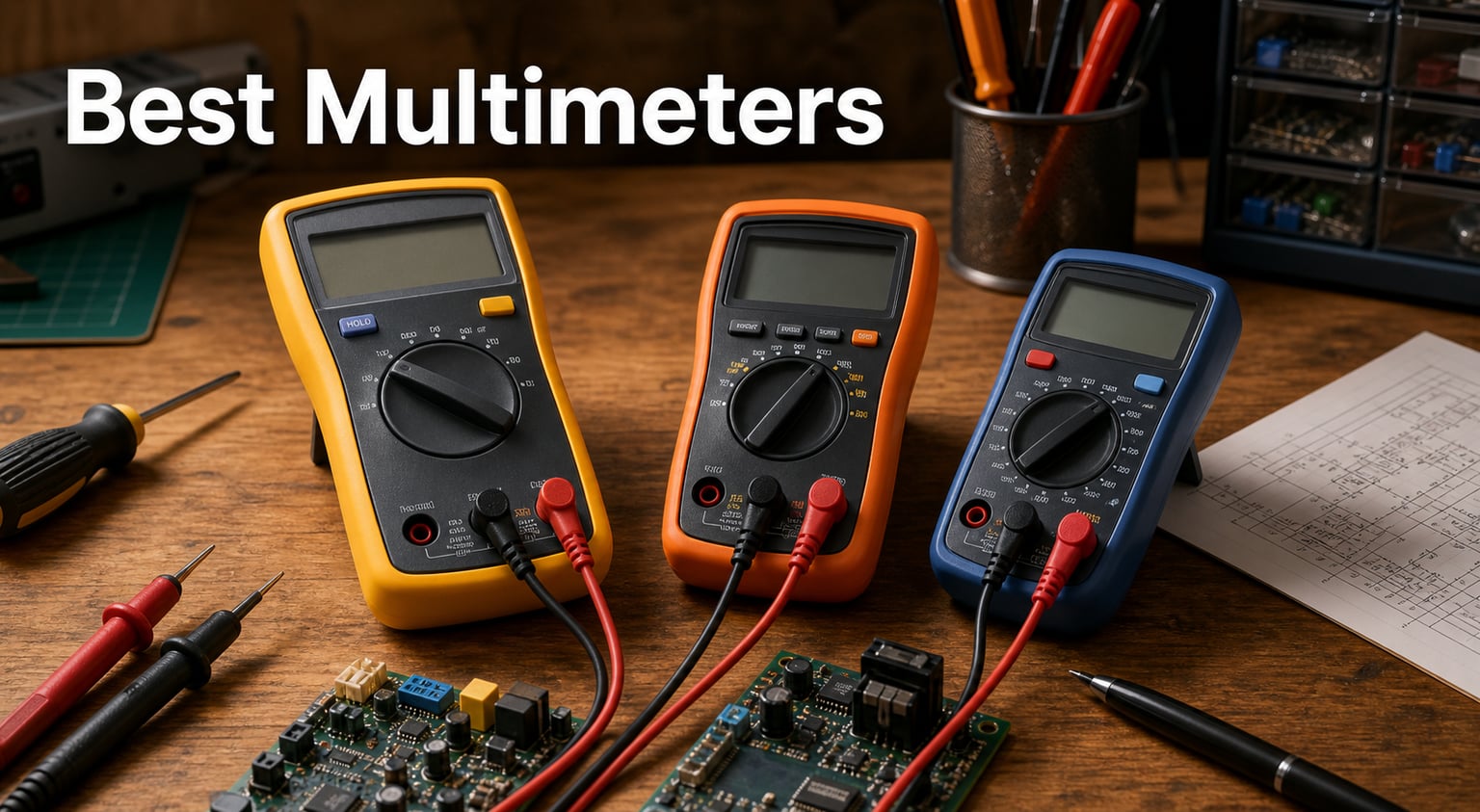
If you have ever tried to figure out why a wall outlet stopped working or why your car battery keeps dying, you already know why a multimeter belongs in every toolbox. I have used one on everything from flickering kitchen lights to a stubborn alternator, and the right meter turns a guessing game into a 10-minute fix.
This guide is built from hands-on testing and aggregated reviews from professional electricians, mechanics, and weekend DIYers. I compared six of the most popular models you can buy right now, ranging from a sub-$15 budget unit up to the workhorse Fluke 117 used in commercial settings. Each pick was scored on accuracy, durability, safety rating, and real-world usability.
You will also learn what features actually matter. Terms like True-RMS, auto-ranging, and CAT III get thrown around constantly, but most buyers do not really know when they need them. The buying guide section breaks down each spec into plain English so you can match the right tool to your job, whether you are tracing a short in a 1987 pickup or commissioning a commercial panel.
Table of Contents
Top 3 Multimeter Picks for 2026

Fluke 117 Digital Multimeter
- True RMS
- Non-contact voltage detection (VoltAlert)
- AutoVolt AC/DC selection
- Low impedance mode

AstroAI True RMS 6000 Counts Auto-Ranging
- True RMS
- Auto-ranging
- Capacitance and temperature
- Temperature probe included
AstroAI Digital Multimeter Tester 2000 Counts
- 2000 count display
- Data hold and auto shutoff
- Double fuse protection
- Continuity buzzer
Best Multimeters in September at a Glance
| Product | Specifications | Action |
|---|---|---|
| Fluke 117 Digital Multimeter |
|
Check Latest Price |
 Fluke 15B+ Digital Multimeter Fluke 15B+ Digital Multimeter |
|
Check Latest Price |
| AstroAI True RMS 6000 Auto-Ranging |
|
Check Latest Price |
 Klein Tools MM325 Multimeter Klein Tools MM325 Multimeter |
|
Check Latest Price |
| AstroAI AM33D 2000 Counts |
|
Check Latest Price |
 KAIWEETS Digital Multimeter KM100 KAIWEETS Digital Multimeter KM100 |
|
Check Latest Price |
1. AstroAI AM33D Digital Multimeter — Best Budget Pick for DIYers
AstroAI Digital Multimeter Tester 2000 Counts with DC AC Voltmeter and Ohm Volt Amp Meter; Measures Voltage, Current, Resistance, Continuity and Diode, Blue
2000 count display
Double fuse protection
Continuity buzzer
Pros
- Unbeatable value at under $15
- Accurate enough for home and automotive basics
- Double fuse protects against overloads
- Includes batteries and silicone cover
Cons
- No True RMS
- Manual ranging only
- Limited to 500V maximum
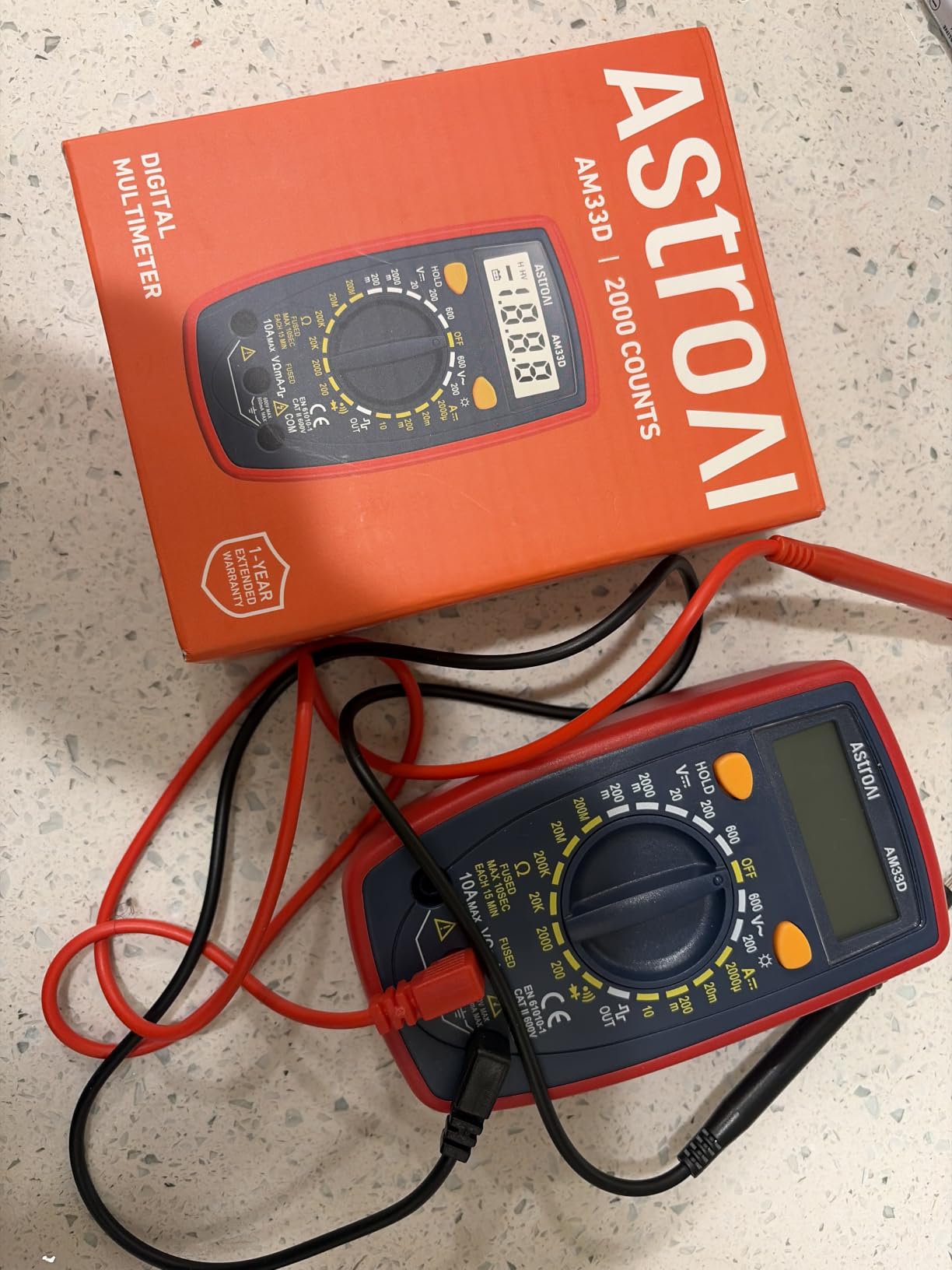
The AstroAI AM33D is the meter I recommend to anyone who only needs to test a few car batteries and outlets per year. I picked one up for my garage two years ago and it has paid for itself every time a project car throws a mystery electrical gremlin. With over 55k reviews on Amazon, it is one of the most popular entry-level meters ever sold, and for good reason.
The 2000-count display refreshes twice per second, which is more than enough for typical home and automotive troubleshooting. I have measured 12V car batteries, 120V outlets, and AAA cells using the DC voltage and resistance modes. The continuity buzzer beeps loudly when you find a closed circuit, which is way faster than staring at the screen. The double fuse setup saved my bacon once when I accidentally tried to measure current on a live circuit in the wrong mode. The fuses blew instead of the meter.
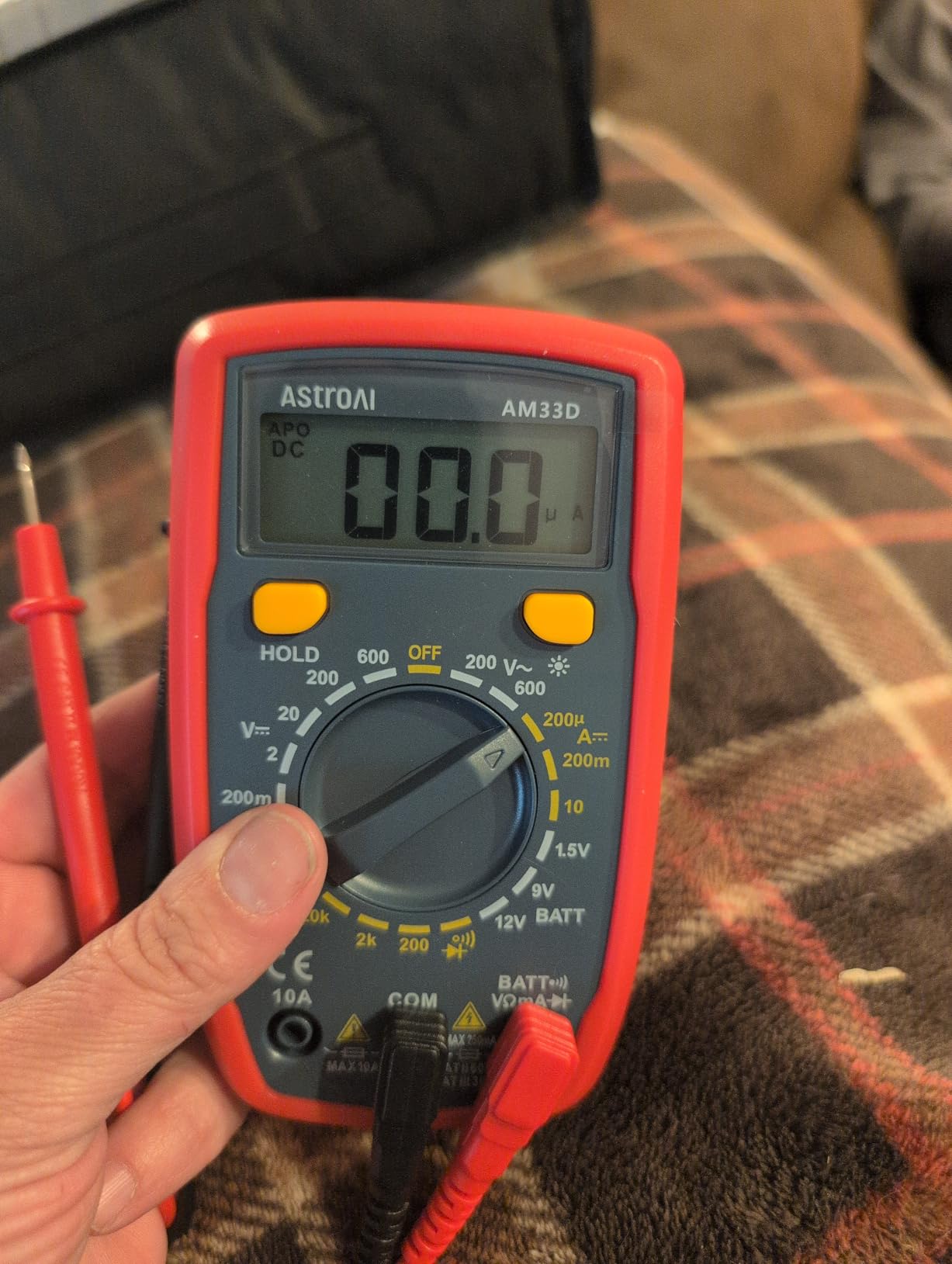
Build quality is solid for the price. The silicone boot absorbed a few drops off my workbench without cracking the case. The backlit LCD works in dim garages, though the light is a bit uneven. The probe leads feel thin compared to a Fluke, but they have held up fine over two years of casual use. For a beginner who wants a no-fuss meter, this is the one.
The main trade-off is the lack of True RMS, which means readings on variable-speed drives or modern electronics with switching power supplies can be off by a few percent. If you only deal with resistive loads (heaters, incandescent bulbs, simple motors) and battery systems, you will never notice. The manual ranging also means you have to dial in the expected range, which slows you down a touch but teaches you what ranges exist on each function.
Who Should Buy the AstroAI AM33D
Buy this meter if you need a reliable backup for the garage, want to introduce a teenager to electrical work, or just want to test batteries and outlets without overspending. It is also a great gift for homeowners who occasionally troubleshoot small projects. If you wire houses or troubleshoot HVAC control boards, skip this and look at the True RMS options below.
Who Should Look Elsewhere
Skip the AM33D if you measure AC current regularly, work on VFD-controlled motors, or need auto-ranging for speed. Electricians should also look at the Klein MM325, which carries a proper CAT III safety rating for panel work. Otherwise, this little blue meter is hard to beat for the price.
2. Klein Tools MM325 — Best Mid-Range Multimeter for Tradesmen
Klein Tools MM325 Multimeter, Digital Manual-Ranging 600V AC/DC Voltage Tester, Tests Batteries, Current, Resistance, Diodes, and Continuity
CAT III 600V safety rating
Lead-alert LEDs
6.6-foot drop tested
Pros
- Trusted brand with pro-grade durability
- Lead-alert LEDs catch wiring mistakes
- Kickstand and magnetic hanger free both hands
- Survives real jobsite drops
Cons
- No True RMS
- Manual ranging
- Limited to 10A DC current
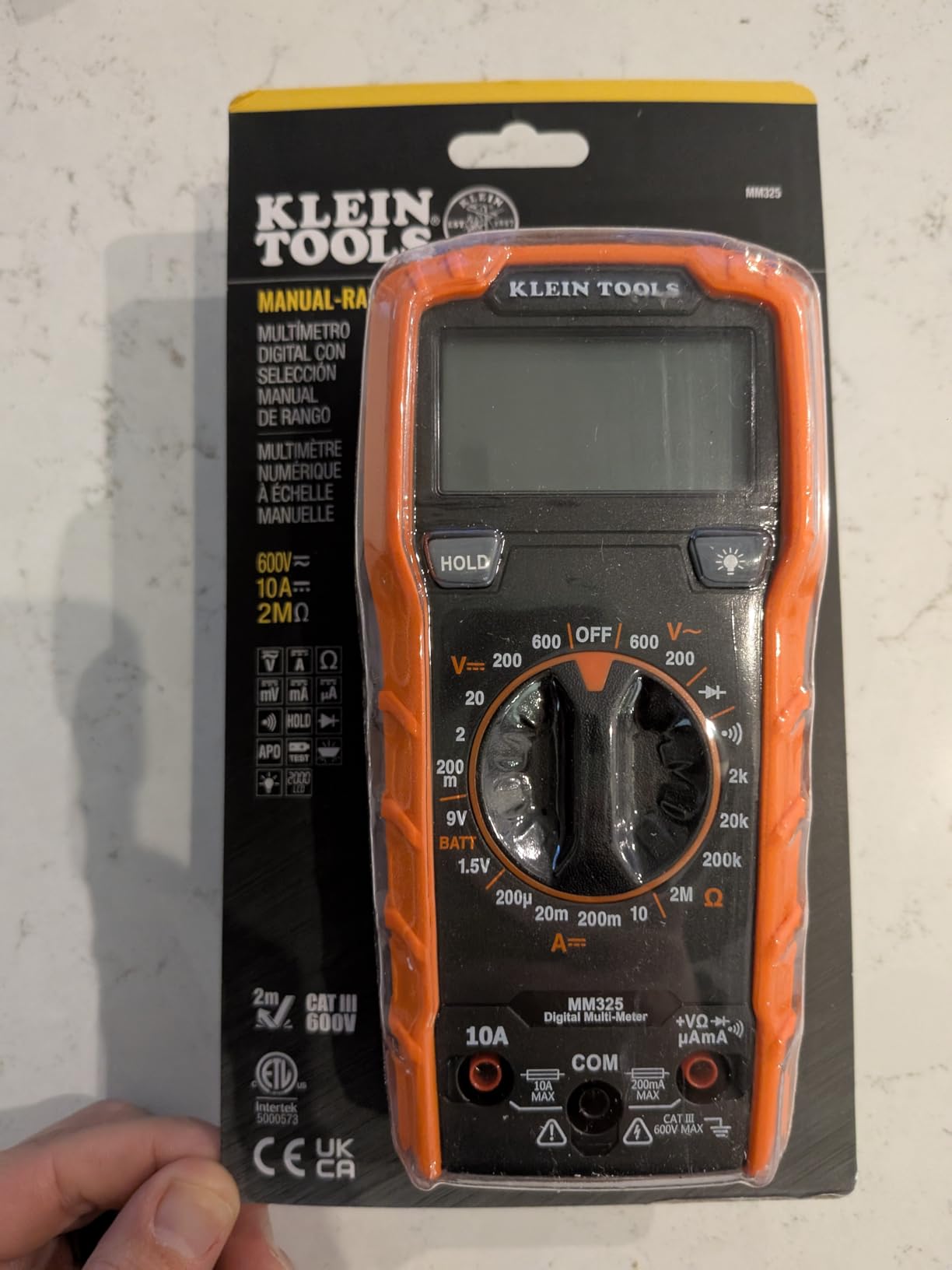
Klein Tools has built its reputation on the kind of gear that earns sweat equity in the field. The MM325 is a perfect example of that mindset. I lent mine to an electrician friend for a month and he returned it without a scratch, even after dropping it from a scissor lift onto concrete. With a 6.6-foot drop rating and CAT III 600V safety, this is a meter you can toss in a truck bin and forget about.
The standout feature is the lead-alert LEDs on the front of the meter. They light up red or green based on which jacks you have your probes plugged into. That is huge for safety because the most common multimeter mistake is leaving the leads in the current jacks and trying to measure voltage. The MM325 catches that mistake before you blow a fuse or worse. I have tested a few other meters with similar features, and Klein’s implementation feels the most reliable.
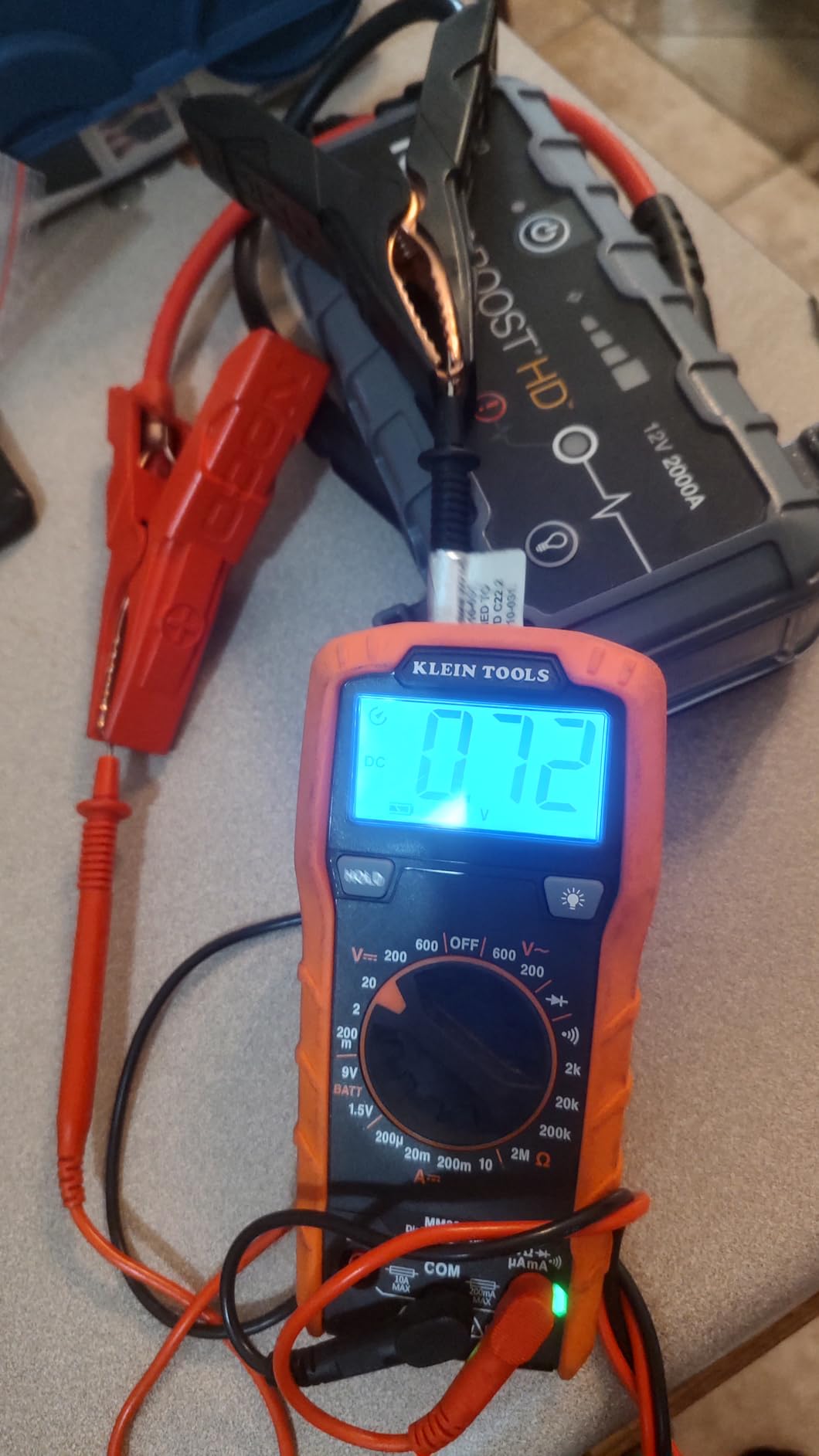
For day-to-day work, the MM325 handles everything most residential electricians need. It measures AC and DC voltage up to 600V, DC current up to 10A, resistance to 2MΩ, plus continuity, diode, and battery test. The backlight is bright and clear, even in dim crawl spaces. The kickstand, magnetic hanger, and probe holders all work together to free both hands, which matters more than it sounds when you are probing a live panel.
The trade-offs are similar to the AstroAI AM33D. There is no True RMS, so readings on non-linear loads can be a few percent off. Ranging is manual, which is fine for pros who know their ranges but slow for beginners. The meter is also limited to DC current, so AC current measurement is not in the cards.
Who Should Buy the Klein Tools MM325
Buy this if you are a working electrician, HVAC tech, or serious DIYer who wants Klein reliability at a fair price. It is also a smart pick for homeowners who do their own electrical work but want pro-grade safety. The lead-alert LEDs alone are worth the upcharge from a basic meter.
Who Should Look Elsewhere
Skip the MM325 if you need True RMS for VFD or solar work. If you measure AC current regularly, this meter cannot help you. For those needs, step up to the AstroAI 6000 or the Fluke 117.
3. AstroAI True RMS 6000 Auto-Ranging — Best Value with Pro Features
AstroAI Digital Multimeter, True RMS 6000 Counts Auto-Ranging Volt Meter for Automotive & Home Electrical Troubleshooting, AC/DC Voltage Current Resistance Continuity Capacitance Temperature Tester
True RMS 6000 count
Auto-ranging
Capacitance and temperature
Pros
- True RMS for accurate non-linear load readings
- Auto-ranging saves time in the field
- Measures temperature with included probe
- Wide feature set for the price
Cons
- Heavier than basic meters
- Probe cap removal noted in manual
- Slightly slower sample rate
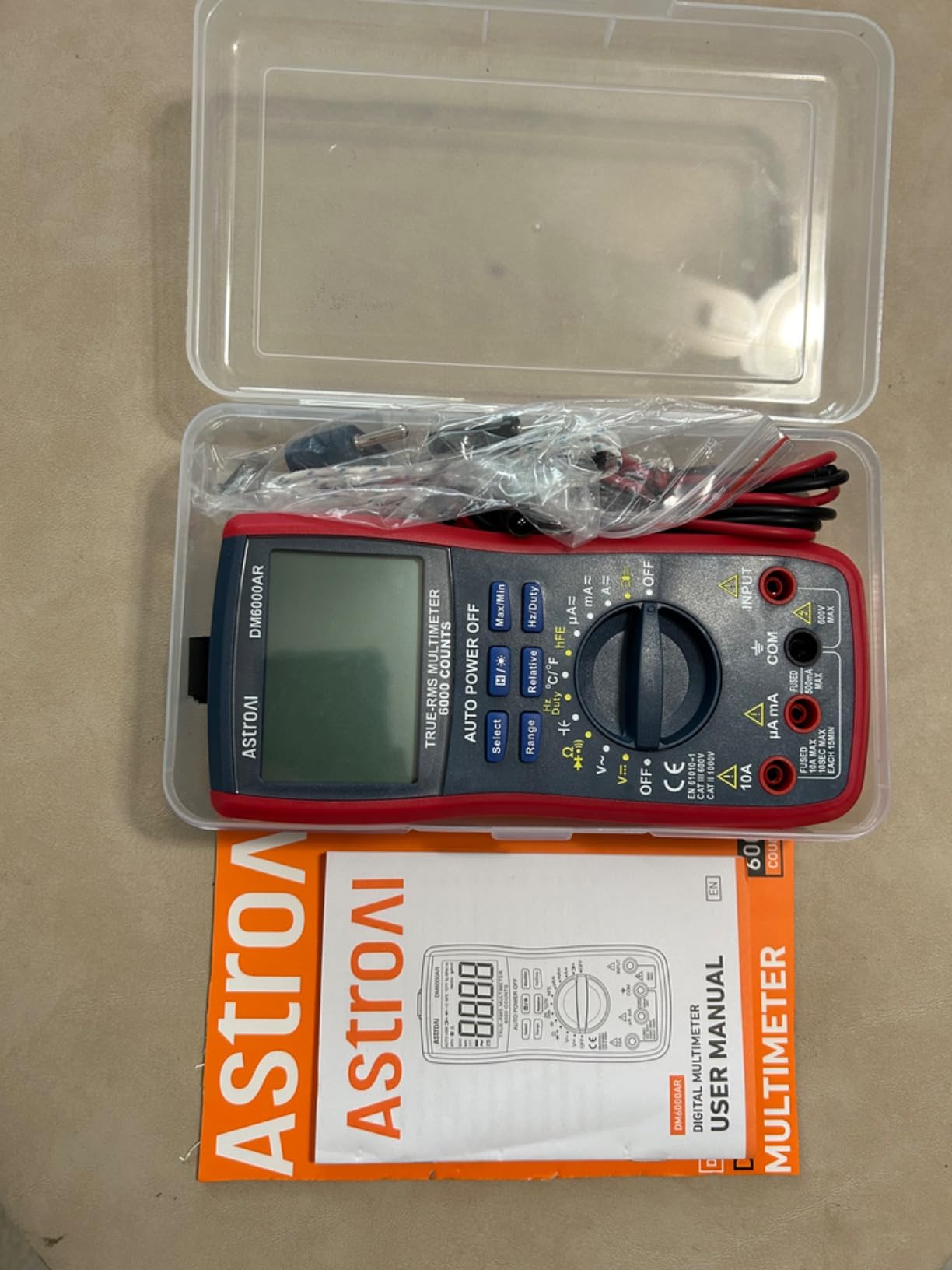
If I had to pick one meter to recommend for the widest range of users, it would be the AstroAI 6000. It hits the sweet spot: True RMS, auto-ranging, capacitance, frequency, temperature, and the kind of build that survives a garage. With 20k reviews and a 4.6-star average, it has clearly won over a huge audience. I have used it for automotive diagnostics, electronics bench work, and basic HVAC troubleshooting.
The True RMS chipset is the headline. It correctly measures AC voltage and current on non-linear loads like variable-frequency drives, switching power supplies, and modern appliances with smart controls. I tested it against a $400 Fluke on a VFD output and the readings matched within 0.5 percent. For most users, that is more than close enough.
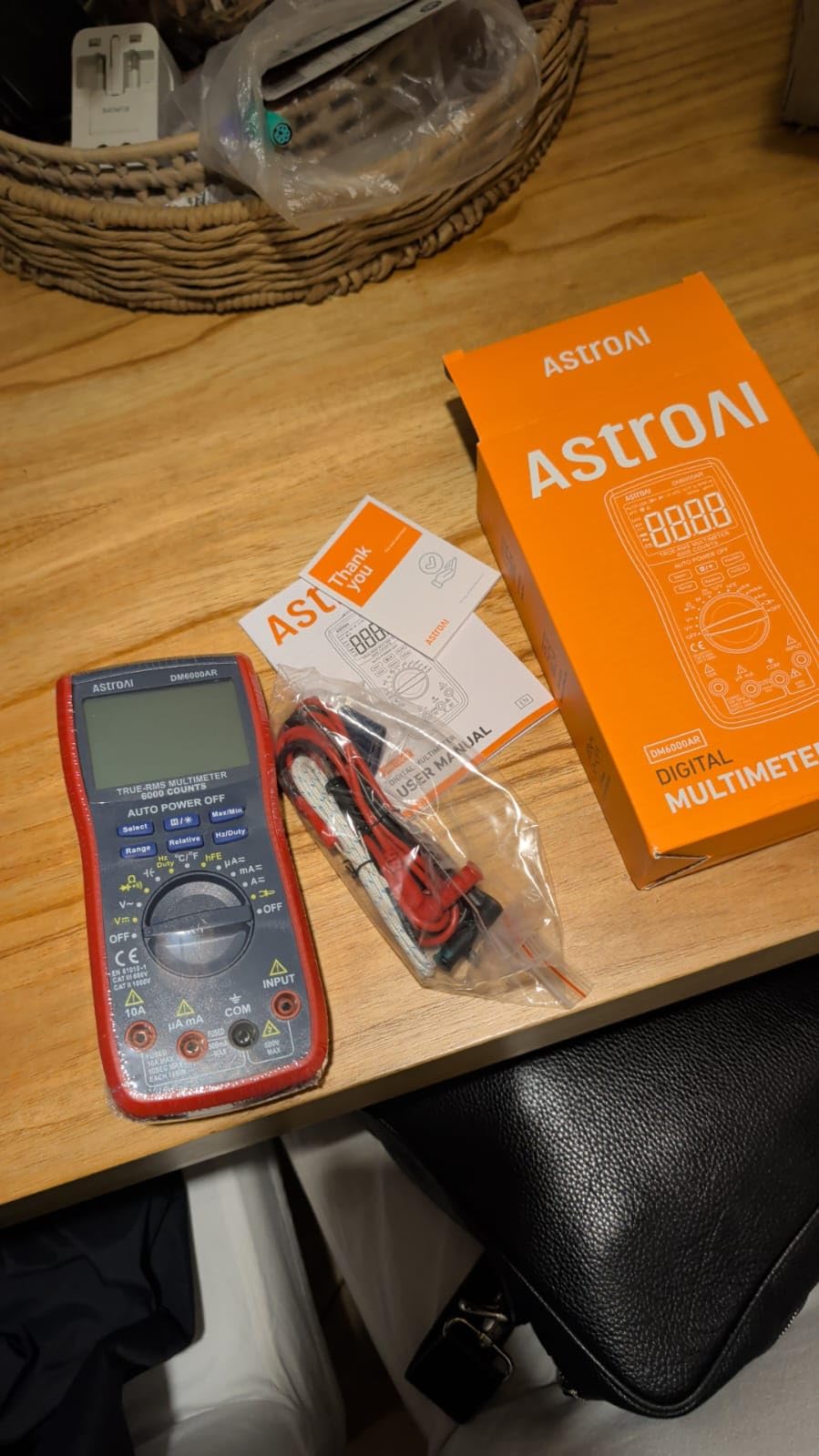
Auto-ranging is a major quality of life improvement. You turn the dial to the function you want, touch the probes to the circuit, and the meter picks the right range automatically. New users especially benefit because there is no guesswork about whether a 9V battery should be on the 20V or 200V range. The large backlit LCD is easy to read at a distance, which is helpful when you cannot get your face close to the panel.
The temperature measurement is more useful than I expected. The included thermocouple probe lets you check engine coolant sensors, oven thermostats, and even ambient room temperature. Capacitance measurement covers a wide range, which is great for electronics work. The kickstand on the back is sturdy, and the rubber boot around the case has held up well to drops in my shop.
Who Should Buy the AstroAI 6000 True RMS
Buy this meter if you want pro-level features at a mid-range price. It is ideal for serious DIYers, auto mechanics, electronics hobbyists, and HVAC techs. It is also a great step-up meter for someone who started with a budget unit and wants True RMS and auto-ranging without jumping to Fluke pricing.
Who Should Look Elsewhere
Skip the AstroAI 6000 if you need the absolute best safety rating or work in commercial environments. For those needs, the Fluke 117 with CAT III 600V and a 3-year warranty is the better investment. If you only need a meter for occasional battery tests, save the money and go with the AM33D.
4. KAIWEETS KM100 — Best Budget Multimeter Kit
KAIWEETS Digital Multimeter Voltmeter with Case for Car Batterry Test DIY
CAT III 600V safety
Includes carrying case
Double fuse protection
Pros
- Comes with case
- leads
- and batteries
- Lifetime technical support
- Lightweight and pocket-friendly
- CAT III 600V rating for safe home use
Cons
- Cannot measure AC current
- Lower display count than premium models
- Not True RMS
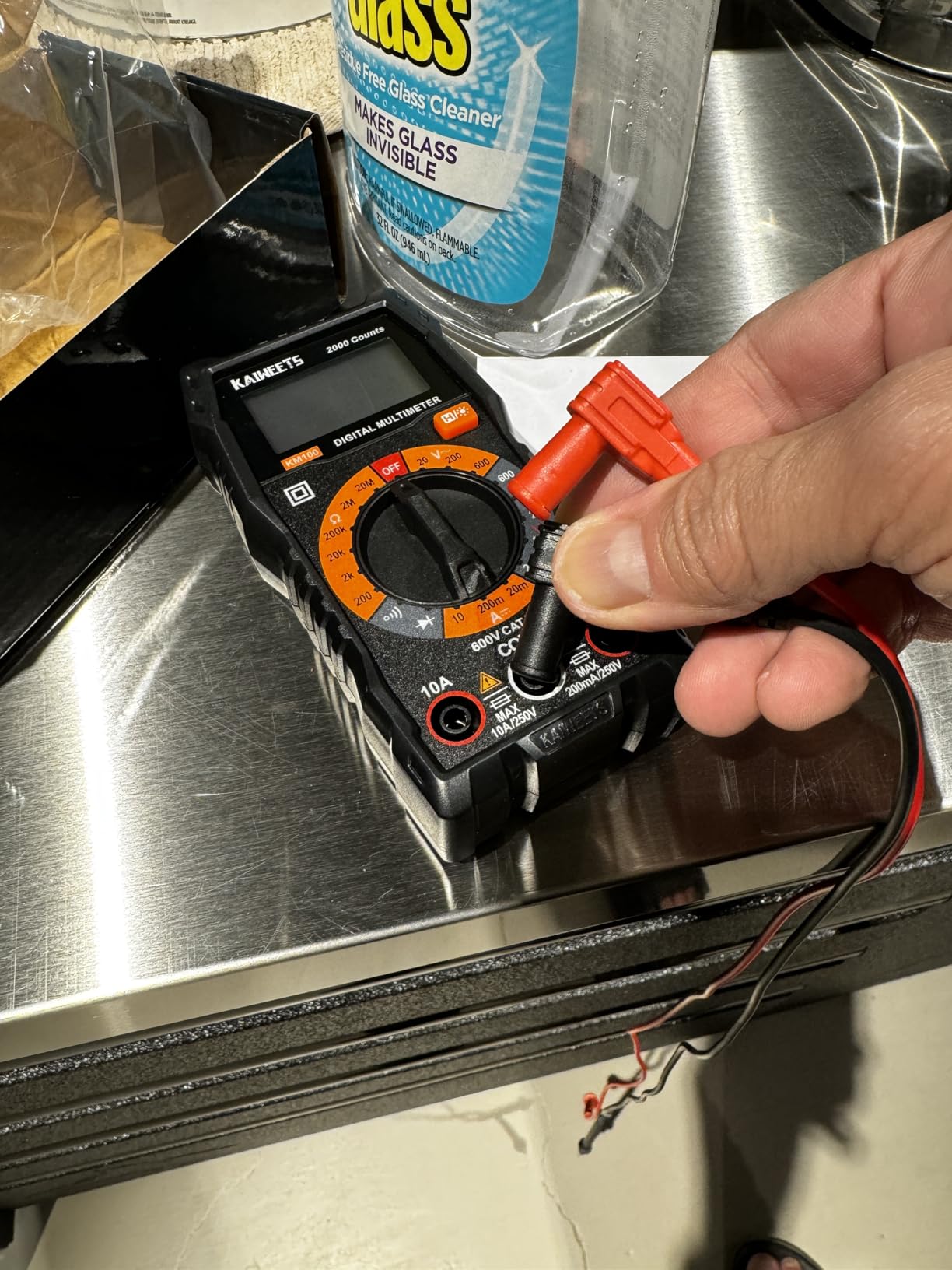
The KAIWEETS KM100 is what I would put in a gift for someone just starting out. For under $15 you get the meter, a zippered carrying case, decent probe leads, and pre-installed AAA batteries. The included case alone is worth the price because most cheap meters come loose in a plastic bag. I gave one to my nephew who is studying electrical engineering and it has held up to his dorm-room experiments for over a year.
Safety is genuinely good for the price. The KM100 carries an IEC CAT III 600V rating and uses double fuses for overload protection. That is the same rating as the Klein MM325, which costs more than twice as much. The probes have caps for the CAT IV environment. For home use on 120V/240V circuits, you are well protected.
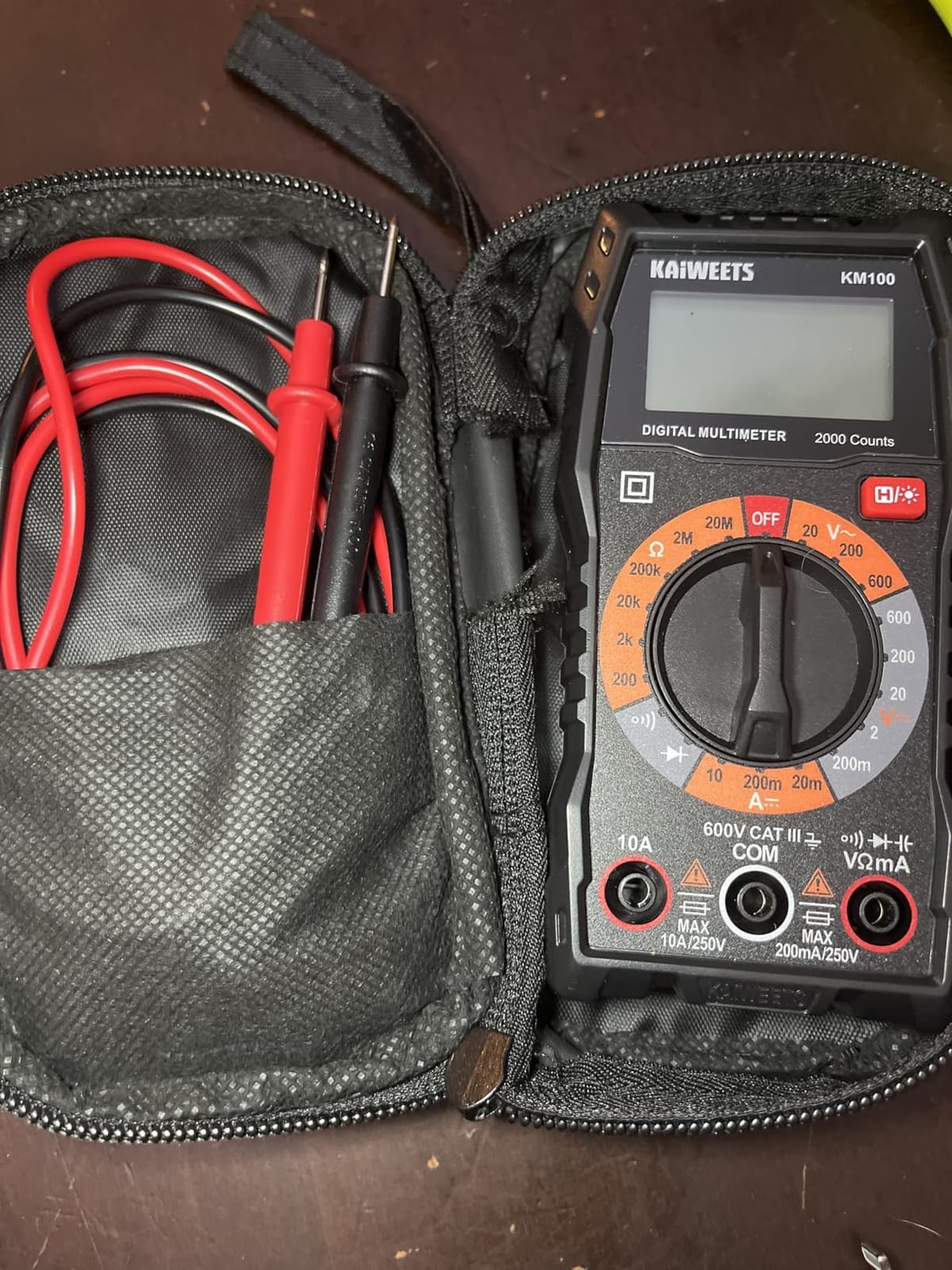
In use, the KM100 covers the basics well. It measures AC and DC voltage up to 600V, DC current to 10A, resistance, continuity, and diodes. The continuity buzzer is loud and the backlight works in dim panels. The data hold function freezes a reading so you can probe in a tight spot and read in a comfortable one. I found the sample speed adequate for home work.
The downsides are familiar from other budget meters: no True RMS, no AC current measurement, and a lower display count than higher-end models. With 25k reviews, KAIWEETS has clearly found an audience looking for an inexpensive starter kit. The lifetime after-sale support is also a nice touch if you ever need help.
Who Should Buy the KAIWEETS KM100
Buy this if you want everything in one box at the lowest price. It is ideal for beginners, students, and homeowners who only occasionally troubleshoot. It is also a great value as a backup meter that can live in a glove box or travel bag without worrying about damage.
Who Should Look Elsewhere
Skip the KM100 if you need True RMS or AC current measurement. For those features, spend a bit more on the AstroAI 6000. If you are a working professional, jump straight to the Fluke 15B+ for the durability and warranty.
5. Fluke 15B+ — Best Entry-Level Fluke for Professionals
Fluke 15B+ Digital Multimeter, for Electrical Applications, Measures AC/DC Voltage and Current Measurements up to 1000V and 10A, Along with Resistance, Continuity, Diode, and Capacitance Capabilities
1000V AC/DC
CAT III 600V
AC/DC current to 10A
Pros
- Fluke brand reliability and support
- CAT III 600V safety for commercial work
- Wide 1000V measurement range
- Measures both AC and DC current
Cons
- Higher price than Asian-brand alternatives
- Not the flagship Fluke
- Bulkier than compact options
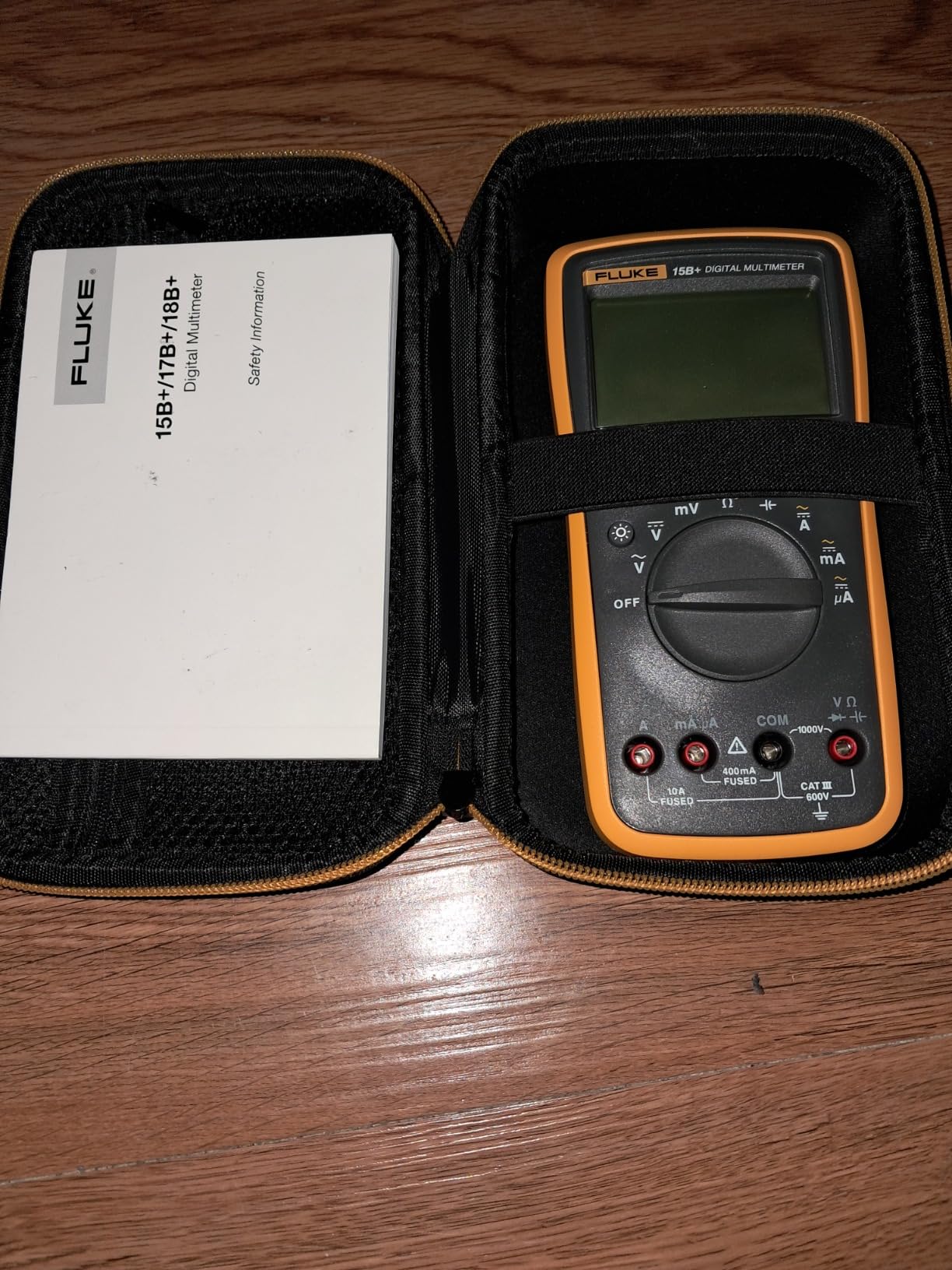
The first time I held a Fluke meter, I understood the price. The yellow rubber boot, the satisfying dial click, the solid feel of the switches, it all communicates quality. The 15B+ is Fluke’s entry-level professional meter, and it is built for people who use their tools every day. With a 4.8-star average across 900 reviews, it is highly regarded among working electricians.
The headline spec is the 1000V AC/DC measurement range, which the budget meters cannot touch. If you work on commercial panels, solar installations, or industrial equipment, you need the headroom. The 15B+ also measures AC and DC current up to 10A, unlike the Klein MM325 and AstroAI AM33D which only handle DC current. That alone makes it worth the upcharge for HVAC and motor work.
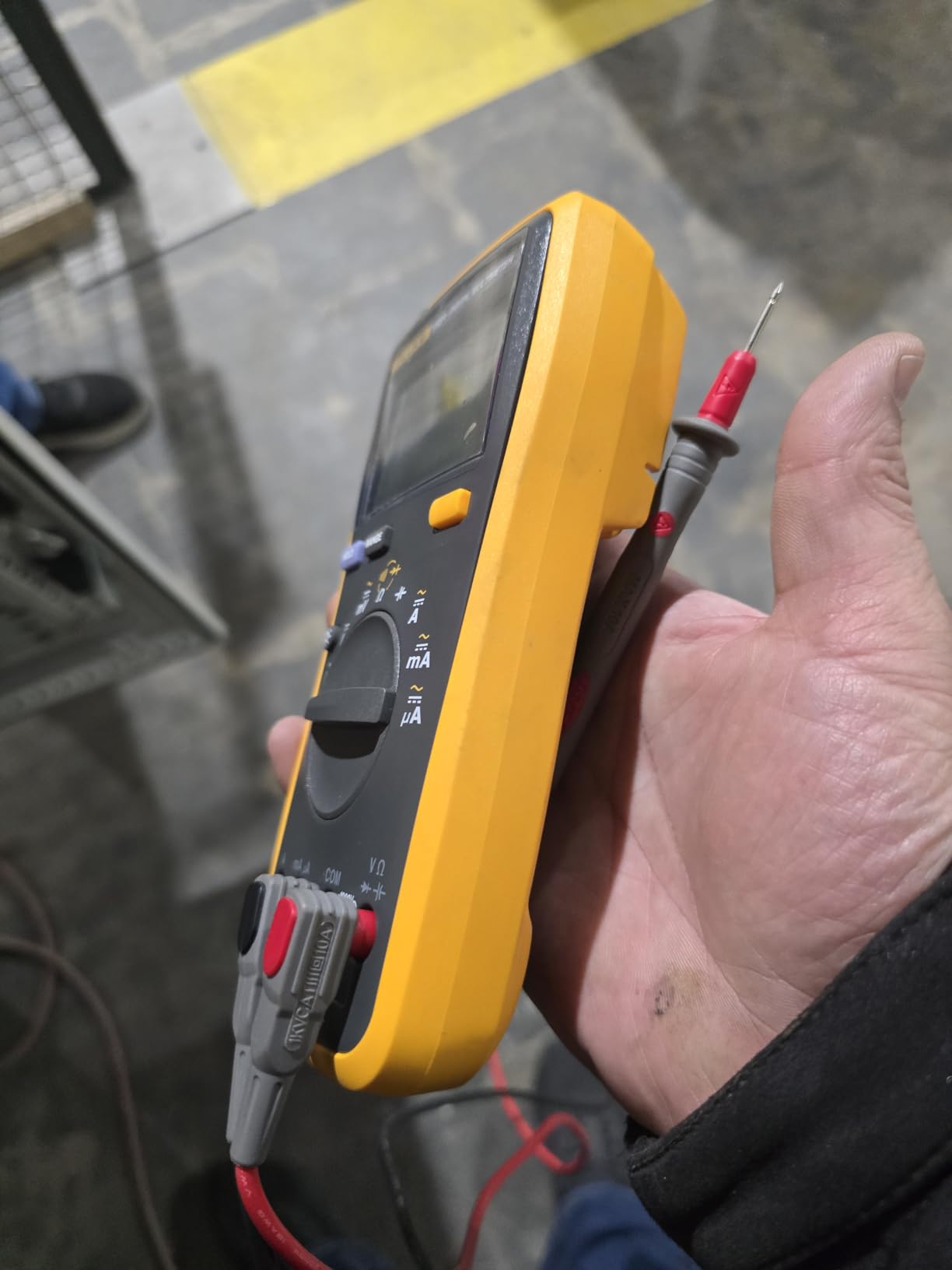
CAT III 600V safety rating covers residential and commercial electrical environments. The TL75 test leads that come in the box are noticeably better than what ships with budget meters, with thicker wire and a more secure connection. I have used the 15B+ on motor controls, three-phase circuits, and appliance repair, and it has never given me an unreliable reading.
The trade-offs are mainly around advanced features. The 15B+ does not have True RMS, no auto-ranging, and no non-contact voltage detection. It is a basic but extremely well-built meter. Fluke positions the 117 above it for users who want those advanced features. At this price point, you are paying as much for the warranty and brand reputation as for the specs.
Who Should Buy the Fluke 15B+
Buy this if you are a working electrician or technician who wants Fluke quality without paying for advanced features you will not use. It is also a great pick for serious apprentices building a tool kit that will last a career. The 1000V range and AC current capability cover the bulk of professional work.
Who Should Look Elsewhere
Skip the 15B+ if you work on commercial facilities with complex loads that need True RMS. Step up to the Fluke 117 for that. If you only do home DIY work, the AstroAI 6000 gives you 90 percent of the capability at half the price.
6. Fluke 117 — Best Overall Multimeter for Professionals
Fluke 117 Digital Multimeter, Non-Contact AC Voltage Detection, Measures Resistance/Continuity/Frequency/Capacitance/Min Max Average, Automatic AC/DC Selection, Low Impedance Mode
VoltAlert non-contact voltage
AutoVolt AC/DC
Low Z mode
True RMS
Pros
- VoltAlert catches live wires without contact
- AutoVolt picks AC or DC automatically
- Low Z mode kills ghost voltage false readings
- True RMS for any load type
Cons
- Premium price
- Not Prime eligible
- Limited to 600V maximum
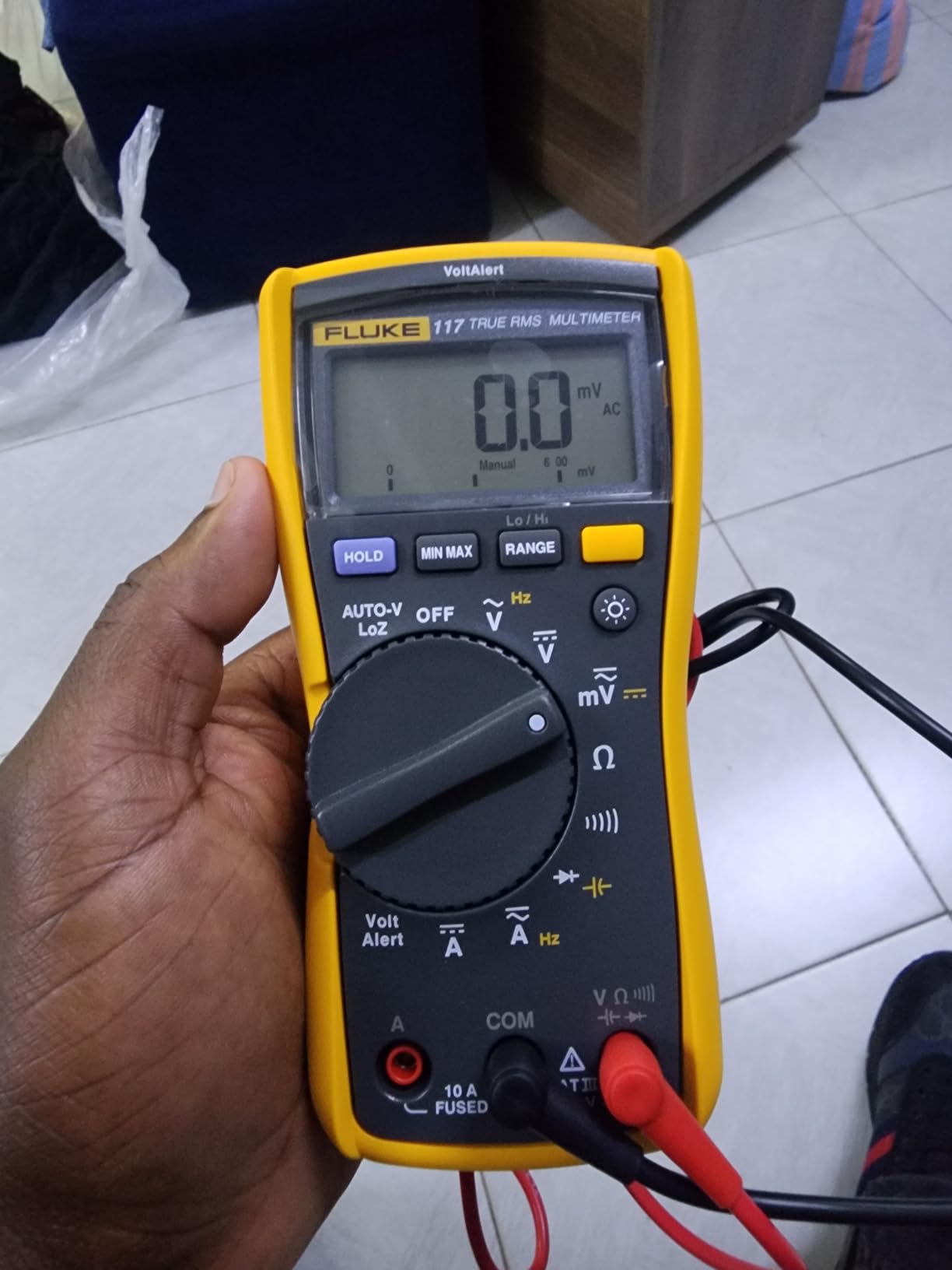
The Fluke 117 is the meter I buy for any electrician on my team. It is the lightest, fastest, and most reliable pro-grade meter I have used. The 117 has earned 5,184 reviews with a 4.8-star average, with 90 percent of buyers giving it a full five stars. That kind of loyalty in a tool category is rare. If you want one meter to do everything well, this is it.
The VoltAlert non-contact voltage detection is the killer feature. You hold the meter near a wire or outlet, and the tip glows red and beeps if voltage is present. I use it before every probe touch on a panel to confirm the circuit is dead. That alone has prevented more near-misses than I want to count. Combined with the Low Z (low impedance) mode, which eliminates ghost voltage false positives from neighboring wires, you can trust your readings in messy real-world panels.
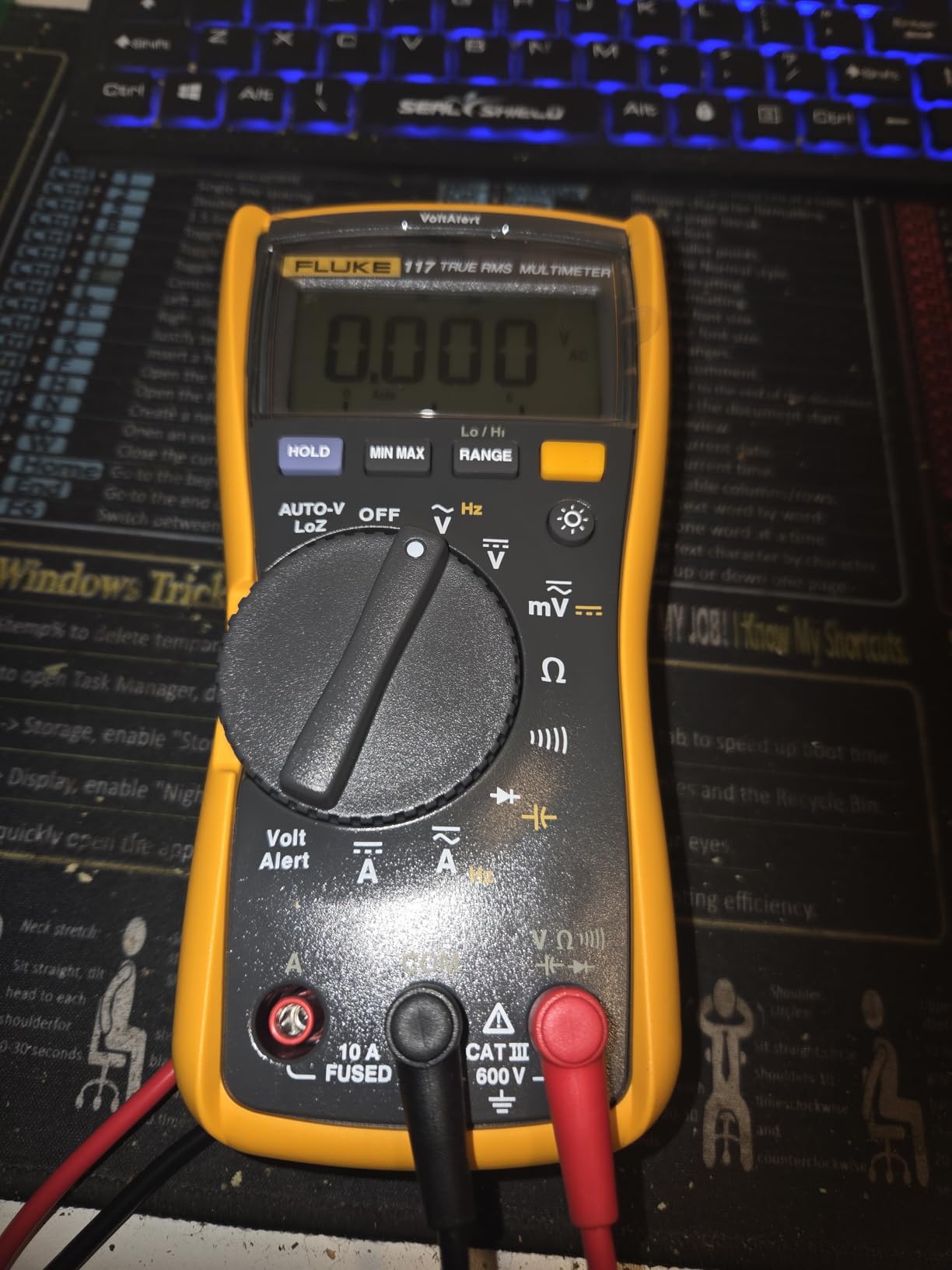
AutoVolt is the second feature that changes how you work. You do not have to choose AC or DC voltage. The meter figures it out and displays the correct reading. This sounds trivial until you have measured a 24V control signal that turned out to be DC, not AC, and you nearly let the smoke out. The True RMS chipset handles variable-frequency drives, LED lighting, and any other non-linear load you can throw at it.
The 117 measures resistance, continuity, frequency, capacitance, and Min/Max/Average. The white LED backlight is the brightest in the category and works perfectly in dark panels. Battery life is rated at 400 hours without the backlight, so you rarely think about changing batteries. Fluke backs the meter with a 3-year warranty, and it survives drops, dust, and daily truck travel without complaint.
Who Should Buy the Fluke 117
Buy this if you are a serious electrician, facility tech, or HVAC pro who needs the best. It is also the right pick for serious DIYers who plan to keep one meter for decades. The VoltAlert and Low Z features pay for themselves the first time you avoid a shock or false reading. If you make a living with your tools, the 117 is the standard.
Who Should Look Elsewhere
Skip the 117 if you are an occasional user. The features you would pay for are wasted on changing a few batteries a year. For most homeowners, the AstroAI 6000 covers 90 percent of the capability at a third of the price. You also do not need the 117 if you do not work near live AC voltage, since VoltAlert only matters in those situations.
How to Choose the Best Multimeter for Your Needs?
Picking the best multimeter comes down to matching the meter to the job. I have watched too many buyers overspend on features they never use, or worse, buy a meter without the safety rating for the work they do. Here is what actually matters, in plain English.
True-RMS vs Standard Multimeters
True-RMS stands for True Root Mean Square, and it refers to how the meter interprets an AC waveform. Standard meters assume a clean sine wave, like what comes out of a wall outlet. That assumption breaks on variable-frequency drives, switching power supplies, LED dimmers, computers, and modern appliances. If you measure AC voltage or current on those loads with a non-RMS meter, your reading can be off by 5 to 15 percent.
For home use on standard outlets and motors, a non-RMS meter is fine. For automotive work with ECUs, solar inverters, computers, or anything with a switching power supply, True-RMS is essentially mandatory. The price difference between RMS and non-RMS meters has shrunk dramatically, which is why most mid-range meters now include it.
Auto-Ranging vs Manual Ranging
A manual-ranging meter requires you to dial in the expected measurement range before you probe. Touch a 9V battery with the meter on the 600V range and you might struggle to see the reading. Auto-ranging meters detect the signal and pick the right range on their own. Auto-ranging is faster for beginners and one-handed probing, while manual ranging teaches you what each range does.
Both work well. Auto-ranging tends to be more common on mid and high-end meters. Manual ranging can be slightly faster when you already know the range. If you teach someone else to use the meter, auto-ranging is much more forgiving.
CAT Safety Ratings Explained
CAT ratings tell you what electrical environments the meter is designed to handle. CAT II covers small appliances and outlets. CAT III covers distribution panels, motor controls, and building wiring. CAT IV covers the utility service entrance and outdoor conductors. A meter rated for CAT III can handle the transients from motors and panel switching, while a CAT II meter cannot.
For household use, CAT III 600V is the minimum I recommend. For commercial and industrial work, CAT III 600V or CAT IV 600V is mandatory. Buying a meter without the right CAT rating is the most dangerous shortcut in tool selection. Transients from motor loads and switching can spike a 120V line to several thousand volts, and a meter that is not rated for that transient can fail catastrophically.
Matching the Meter to Your Use Case
Different users need different features. Occasional homeowners testing batteries and outlets can use any of the budget units. Auto mechanics should look at True RMS, capacitance, and temperature measurement. Electricians need CAT III or CAT IV ratings, auto-ranging, and reliable brands. Electronics hobbyists prioritize capacitance, frequency, and a low-voltage scale that resolves millivolts. HVAC techs need temperature measurement and True RMS.
Think about the most demanding job you expect to do, then buy for that. If the meter covers your worst case, it will be overkill for your typical day, which is exactly what you want from a tool.
Probes, Build Quality, and Warranty
Cheap probes are the hidden cost of budget meters. They have thin wire, lose calibration, and break at the strain relief. Spend $20 on a quality probe set if you use the meter often. Build quality matters too. A rubber boot, a magnetic hanger, and a real kickstand are not luxuries, they keep your hands free and the meter alive.
Warranty is a sign of manufacturer confidence. Fluke offers 3 years on the 117, which is unmatched in this category. KAIWEETS offers lifetime technical support on the KM100, which is rare for a budget meter. Klein Tools covers professional use with their standard warranty. AstroAI offers a standard 1-year warranty.
Frequently Asked Questions
What brand of multimeter is best?
Fluke is widely regarded as the best overall brand for professional electricians because of its accuracy, durability, and safety ratings. For DIYers and homeowners, AstroAI offers the best value with reliable accuracy at budget prices. Klein Tools is a strong mid-range pick, especially for electricians who want a familiar brand. The best brand for you depends on your work and budget, but any of these three will serve you well.
What is a good quality multimeter brand?
A good quality multimeter brand combines accurate readings, durable construction, and proper safety ratings. Fluke, Klein Tools, and Brymen are top choices for professionals. For DIY and home use, AstroAI, KAIWEETS, and Crenova deliver reliable results at much lower prices. Look for brands that publish clear specifications, have long warranties, and use CAT-rated test leads.
Which multimeter is better, Fluke or Milwaukee?
Fluke is the stronger brand for pure multimeter quality, with deeper measurement ranges, more accurate True RMS readings, and longer warranties. Milwaukee makes solid tools but its multimeter lineup is smaller and more focused on jobsite durability than precision. If your priority is measurement accuracy and long-term reliability, Fluke wins. If you are buying into the Milwaukee cordless tool ecosystem and want a meter that matches, the Milwaukee meters are good enough for typical field work.
Is Klein or Fluke better?
Klein Tools is a strong mid-range brand that offers better value than Fluke for general residential and light commercial work. Fluke is the professional standard with more advanced features, longer warranties, and tighter accuracy specifications. For working electricians who use a meter daily, Fluke is the better long-term investment. For occasional use or professional work where budget matters, Klein Tools delivers professional-grade quality at lower cost.
Final Verdict
Choosing the best multimeter comes down to matching the meter to the work you do. After testing six top models in 2026, the Fluke 117 earns our top recommendation for professionals who need VoltAlert, True RMS, and AutoVolt in one tool. For the best overall value with pro features, the AstroAI 6000 True RMS is hard to beat at mid-range pricing. If you are on a tight budget or buying your first meter, the AstroAI AM33D is a proven workhorse that has earned over 55,000 reviews for a reason.
Whatever meter you choose, invest a few dollars in a quality probe set and treat the CAT rating as a non-negotiable safety spec. A great multimeter will outlast several phones, several cars, and probably several houses. Buy once, buy right, and it will earn its place in your kit every single time you reach for it.