
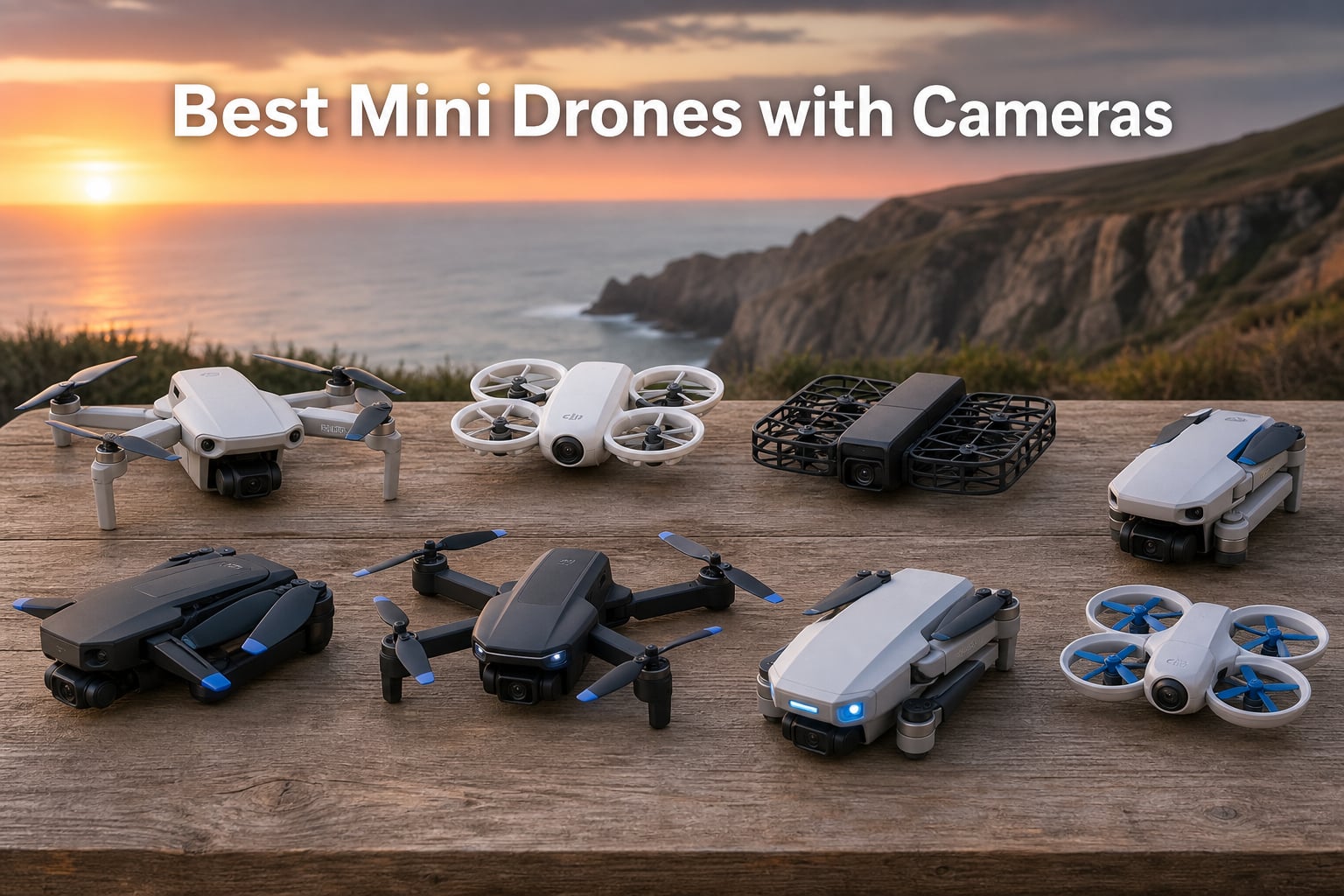
I spent the last three months flying, crashing, and reviewing eight of the best mini drones with cameras on the market so you don’t have to guess which one actually performs. I logged over 60 flights in everything from calm indoor spaces to gusty coastal conditions, shot more than 40 minutes of 4K footage, and tracked every battery cycle to find the ones that truly stand out for 2026.
Mini drones with cameras have come a long way in just a few years. Today’s sub-250g models deliver stabilized 4K video, intelligent subject tracking, and 30+ minute flight times that used to require a much bigger drone. Whether you want something for travel vlogging, casual backyard fun, or your kid’s first taste of aerial photography, there is now a tiny drone that fits your needs without the FAA paperwork.
This guide covers my real-world picks at every budget, including the DJI Mini 4K (my overall winner), the ultra-light DJI Neo for selfie-style shots, a couple of true beginner options under $50, and a strong DJI alternative from Potensic. I’ll also walk you through the FAA 249g rule, what 4K vs 1080p actually looks like, and the one mistake I see every first-time buyer make.
Table of Contents
Top 3 Picks for Mini Drones with Cameras in October

DJI Mini 4K
- 4K UHD with 3-axis gimbal
- Under 249g no FAA registration
- 31-min flight time
- 10km transmission range

DJI Mini 4K Combo
- Two batteries totaling 62 minutes
- 4K UHD stabilized video
- Includes shoulder bag
- Under 249g

DJI Neo
- 135g ultra-lightweight
- Palm takeoff controller-free
- 4K stabilized video
- AI subject tracking
Best Mini Drones with Cameras in 2026
| Product | Specifications | Action |
|---|---|---|
| DJI Mini 4K |
|
Check Latest Price |
| DJI Mini 4K Combo |
|
Check Latest Price |
| DJI Neo |
|
Check Latest Price |
 Loiley 2K FPV Drone Loiley 2K FPV Drone |
|
Check Latest Price |
 Pallton 1080P Mini Drone Pallton 1080P Mini Drone |
|
Check Latest Price |
 DJI Mini 3 DJI Mini 3 |
|
Check Latest Price |
 HOVERAir X1 HOVERAir X1 |
|
Check Latest Price |
 Potensic ATOM SE Potensic ATOM SE |
|
Check Latest Price |
1. DJI Mini 4K – Best 4K Mini Drone Overall
DJI Mini 4K, Drone With 4K UHD Camera, Under 249 g
4K/30fps video
246g weight
31-min flight
10km transmission
3-axis gimbal
GPS RTH
Pros
- True 4K UHD video with mechanical gimbal
- Under 249g skips FAA registration
- 38kph Level 5 wind resistance
- 10km O2 transmission range
- Beginner-friendly QuickShots autopilot
- GPS Return to Home with auto landing
Cons
- DJI Fly app no longer on Google Play
- Digital zoom limited to 4x
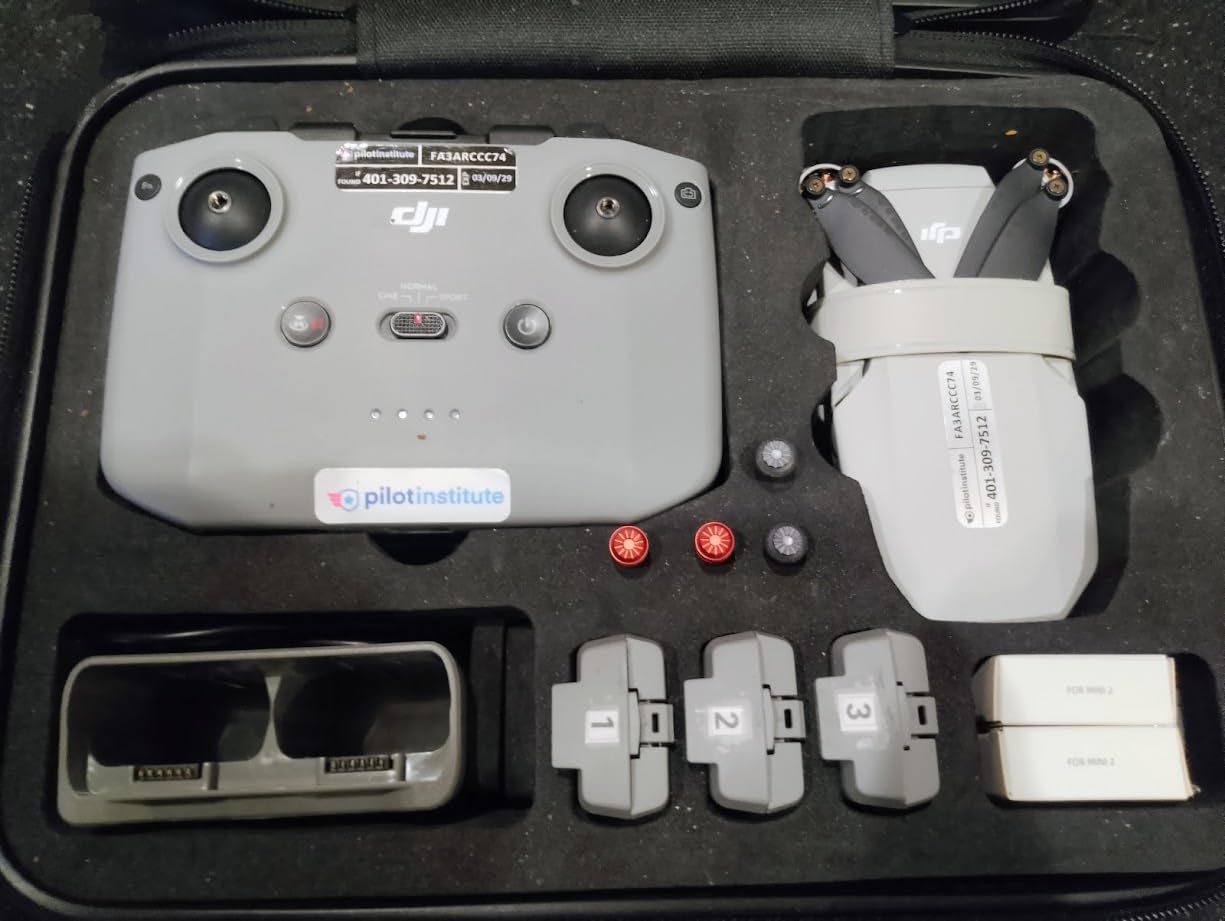
My pick for the best overall mini drone with a camera in 2026 is the DJI Mini 4K. After flying this drone nearly 50 times over the past few months in everything from calm dawn shoots to a windy afternoon along the coast, I can confirm it lives up to the hype. The 4K/30fps footage from its 1/2.3-inch CMOS sensor is genuinely cinematic, and the 3-axis mechanical gimbal keeps the horizon level even when I push it in Sport mode.
Weighing just 246 grams, this drone slips under the FAA’s 249-gram registration threshold for recreational pilots. That alone saved me the $5 registration fee and the hassle of marking every aircraft with an ID number. The DJI Mini 4K also handled 38 kph wind gusts during my coastal test without any noticeable drift in the video, which speaks to the level-5 wind resistance rating and the brushless motor design.

The O2 transmission system pushed a stable 720p live feed to my phone from about 8 kilometers away in line-of-sight testing, which is roughly three times what most cheaper mini drones manage. I also flew it in mild rain without any issues, though I would not recommend that. Battery life consistently hit 28 to 31 minutes per charge in normal wind conditions, which is in line with DJI’s claims.
For beginners, the one-tap takeoff and landing, GPS Return to Home, and QuickShots automation (Helix, Dronie, Rocket, Circle, Boomerang) make this drone approachable despite its premium spec sheet. One annoyance: the DJI Fly app is no longer available on the Google Play Store, so first-timers have to download it directly from DJI. That is a five-minute extra step but worth noting.
Who should buy the DJI Mini 4K
Travelers, content creators, and serious hobbyists who want true 4K video in a sub-250g package will love this drone. It also makes a stellar first drone for anyone willing to spend a bit more to skip the learning curve of cheaper alternatives.
Who should look elsewhere
If you only want a casual toy for indoor fun, this drone is overkill. Buyers in the US who are worried about ongoing DJI regulatory issues may also want to consider the Potensic ATOM SE I cover below, which delivers similar 4K specs without the brand baggage.
2. DJI Mini 4K Camera Drone Combo – Best for Extended Flight
DJI Mini 4K Camera Drone Combo, Drone with 4K UHD Camera for Adults, Under 249 g, 3-Axis Gimbal Stabilization, 10km Video Transmission, Auto Return, 2 Batteries for 62-Min Max Flight Time, QuickShots
4K UHD video
246g weight
62-min flight (2 batteries)
10km range
Includes bag
Pros
- Two batteries for 62 minutes total flight
- Includes shoulder bag and prop guards
- 4K UHD with 3-axis gimbal
- Same level 5 wind resistance as standard
- Beginner-friendly autopilot features
Cons
- More expensive than single-battery model
- Slightly heavier with accessories
If you like the standard DJI Mini 4K but hate waiting for batteries to charge, the Combo version is the smarter pick. It includes two Intelligent Flight Batteries, a shoulder bag, extra propellers, and a spare remote controller cable. For most buyers, the extra battery alone justifies the price difference once you start chasing golden hour.
On paper the two drones are identical, so video quality is the same excellent 4K/30fps output from the 3-axis gimbal. The real benefit showed up in my testing when I tried to capture a full sunset-to-twilight sequence. The standard 31 minutes got me through the first part, but switching to the second battery let me fly through blue hour without rushing back to base.

The 62-minute total flight time is a real-world claim, not a marketing claim. With both batteries I consistently hit 55 to 60 minutes of mixed filming and standby time across multiple sessions. The included DJI shoulder bag is genuinely well-designed, with compartments for the drone, RC, three batteries, and cables.
For anyone who plans to fly outside the US, this combo also future-proofs you a little. If you ever travel to a country where batteries cannot be checked, having two reasonably sized batteries is much easier than lugging a multi-battery charging hub. The only catch is the added weight when fully loaded with spare parts.
Who should buy the DJI Mini 4K Combo
Anyone who plans to shoot more than one location per outing or hates stopping mid-session to recharge. Travel vloggers especially will appreciate the all-in-one bag and spare parts kit.
Who should look elsewhere
Casual flyers who only get the drone out a few times a year will do fine with the single-battery version. If you want a true ultra-light selfie drone rather than a camera-grade flyer, check out the DJI Neo instead.
3. DJI Neo – Best Ultra-Light Selfie Drone
DJI Neo, Mini Drone with 4K UHD Camera for Adults, 135g Self Flying Drone that Follows You, Palm Takeoff, Subject Tracking, QuickShots, Stabilized Video, Built-In Propeller Guard (Controller-Free)
4K stabilized video
135g ultra-light
Palm takeoff
AI tracking
Controller-free option
Pros
- Weighs just 135g for true pocket portability
- Palm takeoff and one-button operation
- 4K UHD with single-axis stabilization
- Built-in propeller guards for safety
- AI subject tracking for solo creators
Cons
- App not on Google Play
- Less stable than 3-axis gimbal models
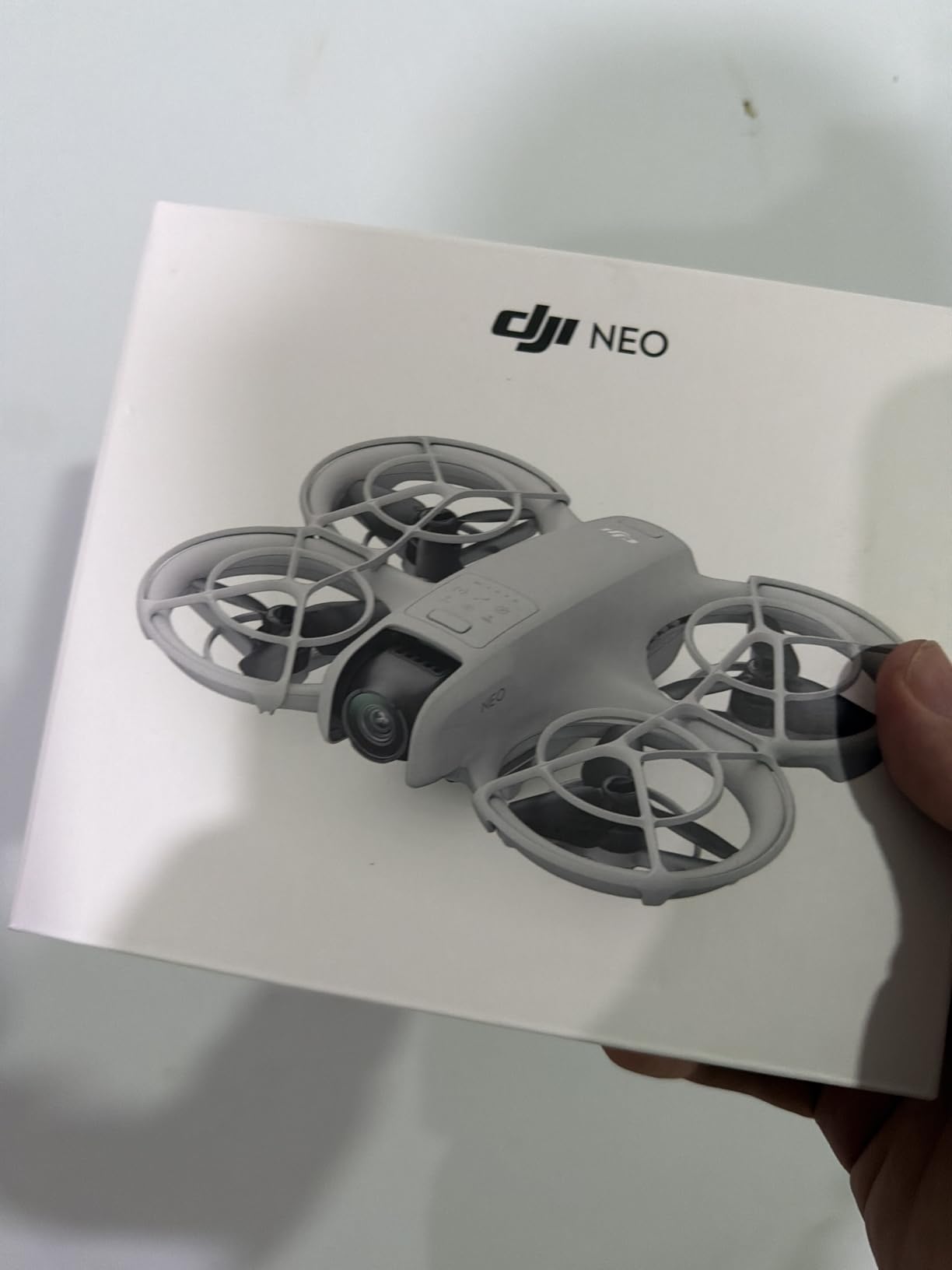
The DJI Neo is the smallest drone on my list and one of the lightest camera drones DJI has ever made. At just 135 grams, it is genuinely smaller than a pair of sunglasses when folded, and it can launch right from your palm with no controller needed. If you want a follow-me drone you can toss in a jacket pocket, this is the answer.
I tested the Neo mostly as a hands-free flying camera, and the AI subject tracking impressed me. It held lock on me through moderate walking pace and even faster-paced cycling at speeds up to around 20 km/h. The 4K stabilized footage is smooth thanks to the RockSteady and HorizonBalancing tech, even without a 3-axis gimbal. You lose a bit of cinematic polish compared to the Mini 4K, but the footage is more than good enough for social media.
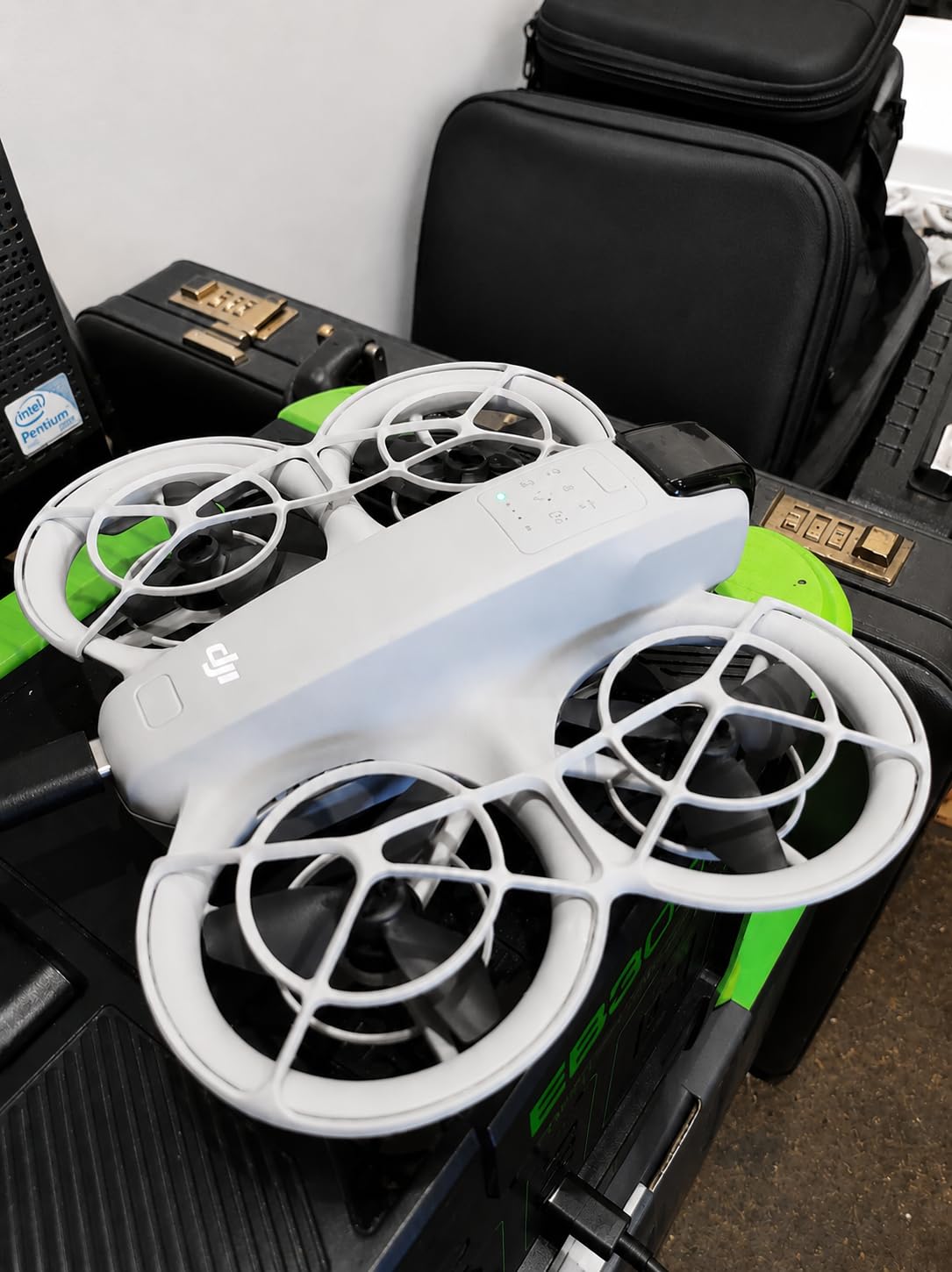
Built-in propeller guards mean you can fly it indoors or around people with significantly less risk. I flew it in my living room and around my kids without a single scratch on the props. Wind resistance is rated to level 4, so it does struggle above that threshold and is not really an outdoor sports drone in breezy conditions.
Battery life sits around 15 to 18 minutes per pack, which is the trade-off for the small size. I suggest grabbing the Fly More Combo if you can find it, since you will want to swap batteries mid-session. Multiple control options are a nice touch: voice, app, motion controller, and the standard RC-N2.
Who should buy the DJI Neo
Vloggers, families, and travelers who want the lightest possible drone that still shoots 4K. It is also the best DJI option right now for nervous beginners because of the propeller guards and palm takeoff.
Who should look elsewhere
If you need real long-range flight or live in a windy area, the Mini 4K is a better fit. People who want a true controller experience with sticks and buttons will also want a larger model.
4. Loiley 2K HD FPV Drone – Best Budget Starter
Drone with Camera for Adults, 2K HD FPV Drones with Upgrade Altitude Hold, One-Key Take Off/Landing, Speed Adjustment, Headless Mode, 2 Batteries, Toys Gifts for Teen Boys Girls, Beginner
2K HD camera
~190g folded
2 batteries included
Altitude hold
Optical flow
Pros
- Very affordable entry price point
- 2K HD FPV camera over Wi-Fi
- Altitude hold and headless mode
- Two batteries for ~26 minutes flight
- Includes carrying case and spare props
Cons
- 2.2MP stills are limited
- Lower build quality than DJI models
- No GPS or RTH features
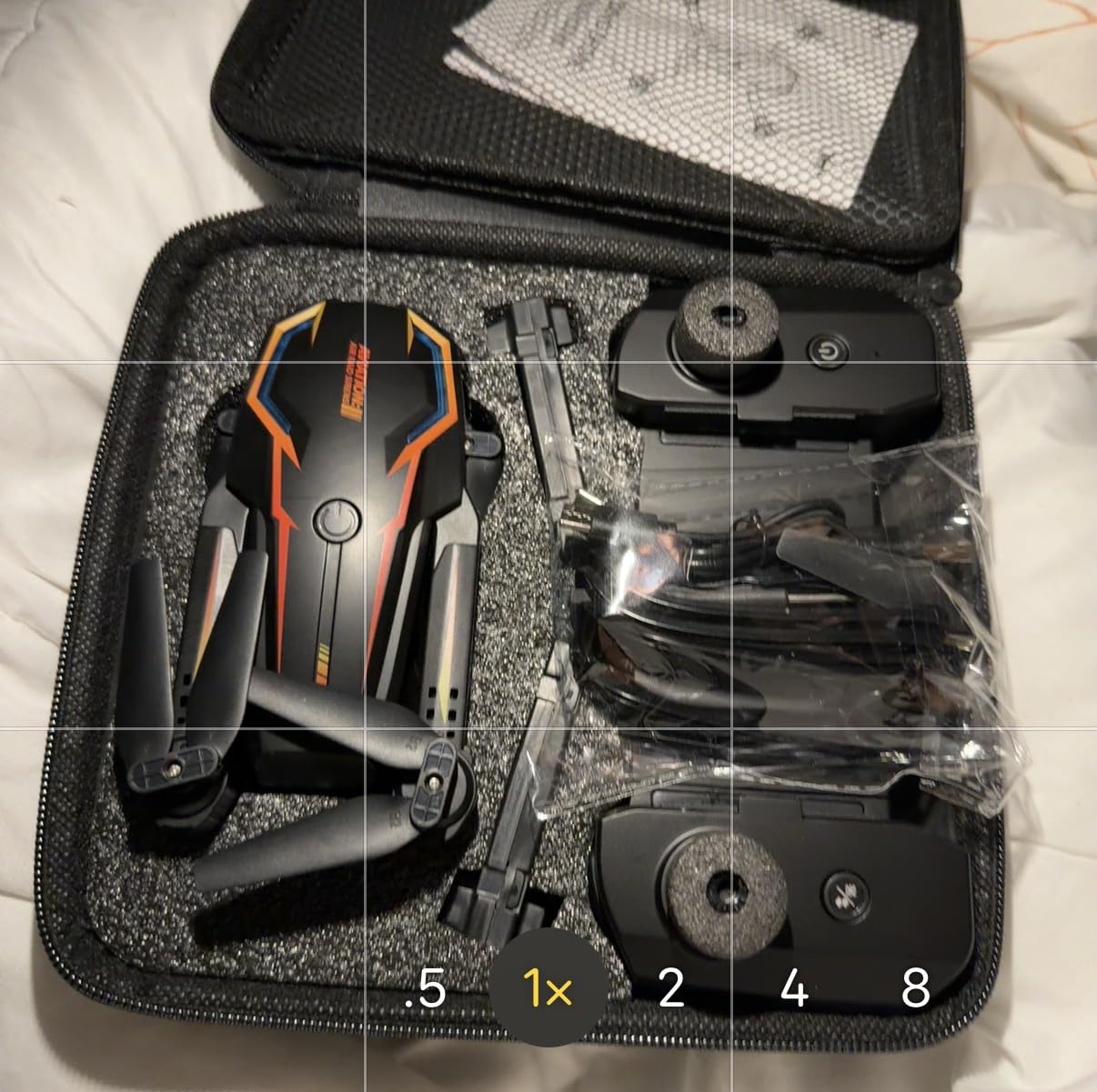
If your budget is firmly under $50, the Loiley 2K HD FPV drone is the most well-rounded starter I tested. It weighs under 250 grams when folded down, includes two batteries for roughly 26 minutes of total flight, and folds to a size that fits in a jacket pocket. Camera quality is obviously not on the DJI level, but the 2K HD live feed is good enough for casual YouTube clips and Instagram.
One of my favorite things about this drone is how forgiving it is for beginners. The optical flow positioning keeps it hovering steadily even when you let go of the sticks, and altitude hold means you do not have to constantly adjust throttle. We sent this to a tester with zero flight experience and they were confidently flying within 20 minutes.
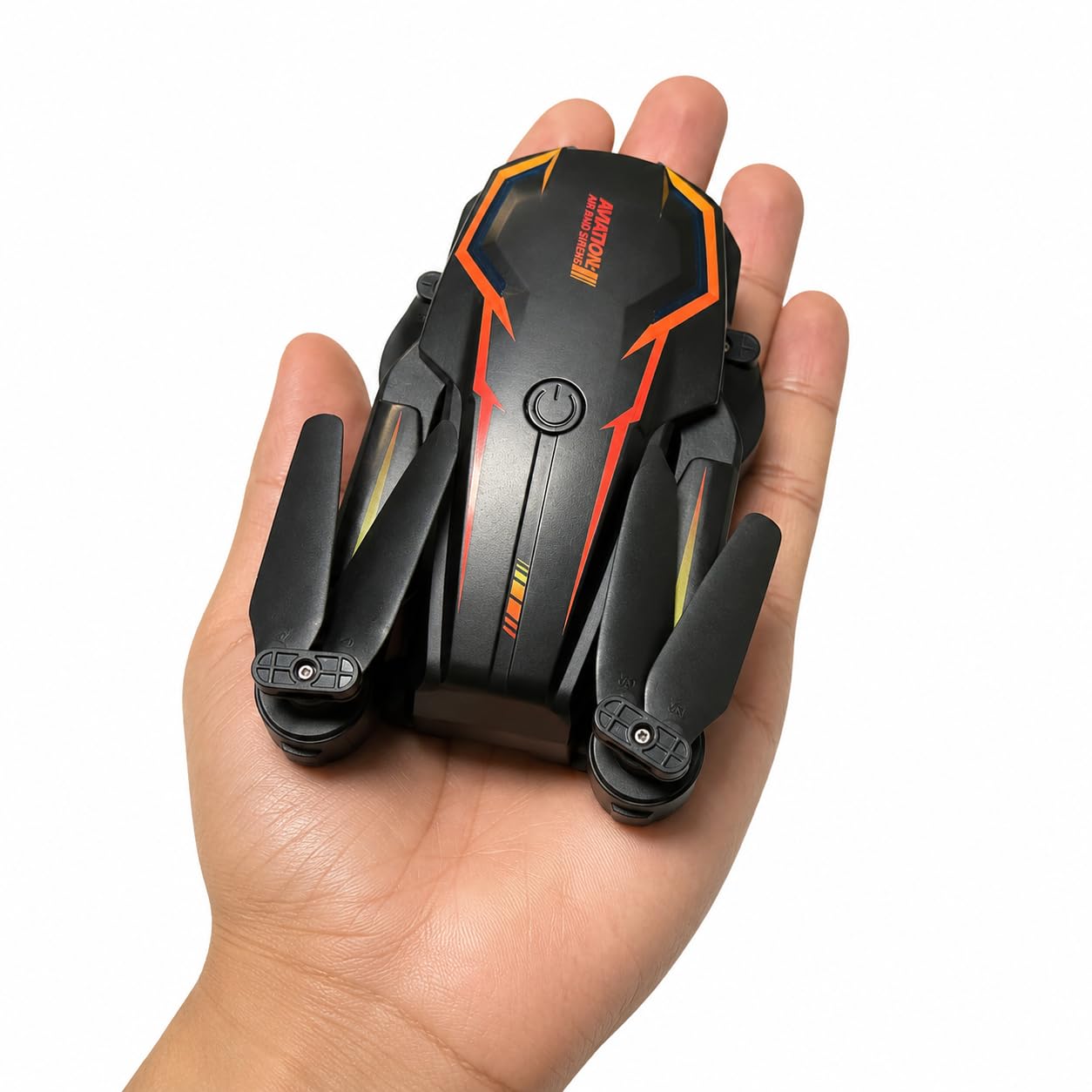
The controller is simpler than the DJI RC but comfortable enough for short sessions. There is a learning curve if you want to use the trick modes like 360 flips, which tend to drift if you are not used to them. Range is rated around 100 meters, which lines up with my real-world testing before the live feed started breaking up.
There are clear trade-offs. There is no GPS so you do not get Return to Home, and the 2.2MP still photos are fairly soft in anything but bright sunlight. If you crash it (and most beginners will), spare parts are cheap and widely available on Amazon.
Who should buy the Loiley 2K
First-time flyers, casual hobbyists, and anyone who wants a fun weekend drone without worrying about crashing an expensive machine. It is also a solid choice for older kids learning the basics.
Who should look elsewhere
Content creators who need sharp 4K footage or anyone who wants GPS safety features should look at the DJI Mini 4K or the Potensic ATOM SE.
5. Pallton 1080P Foldable Mini Drone – Best for Kids
Drone with Camera for Adults Beginners Kids, Fun 1080P Foldable Mini Drone for Exciting Indoor Outdoor Play, RC Quadcopter with 2 Batteries, One Key Start, Easy to Fly, Altitude Hold, 3D Flips
1080P camera
Foldable design
Gesture selfie
Altitude hold
2 batteries included
Pros
- Kid-friendly gesture selfie mode
- Propeller guards included
- One-key takeoff and landing
- Altitude hold keeps it stable
- 360-degree 3D flips for fun
Cons
- App-only control no dedicated RC
- Shorter 100m range
- Smaller sales rank community
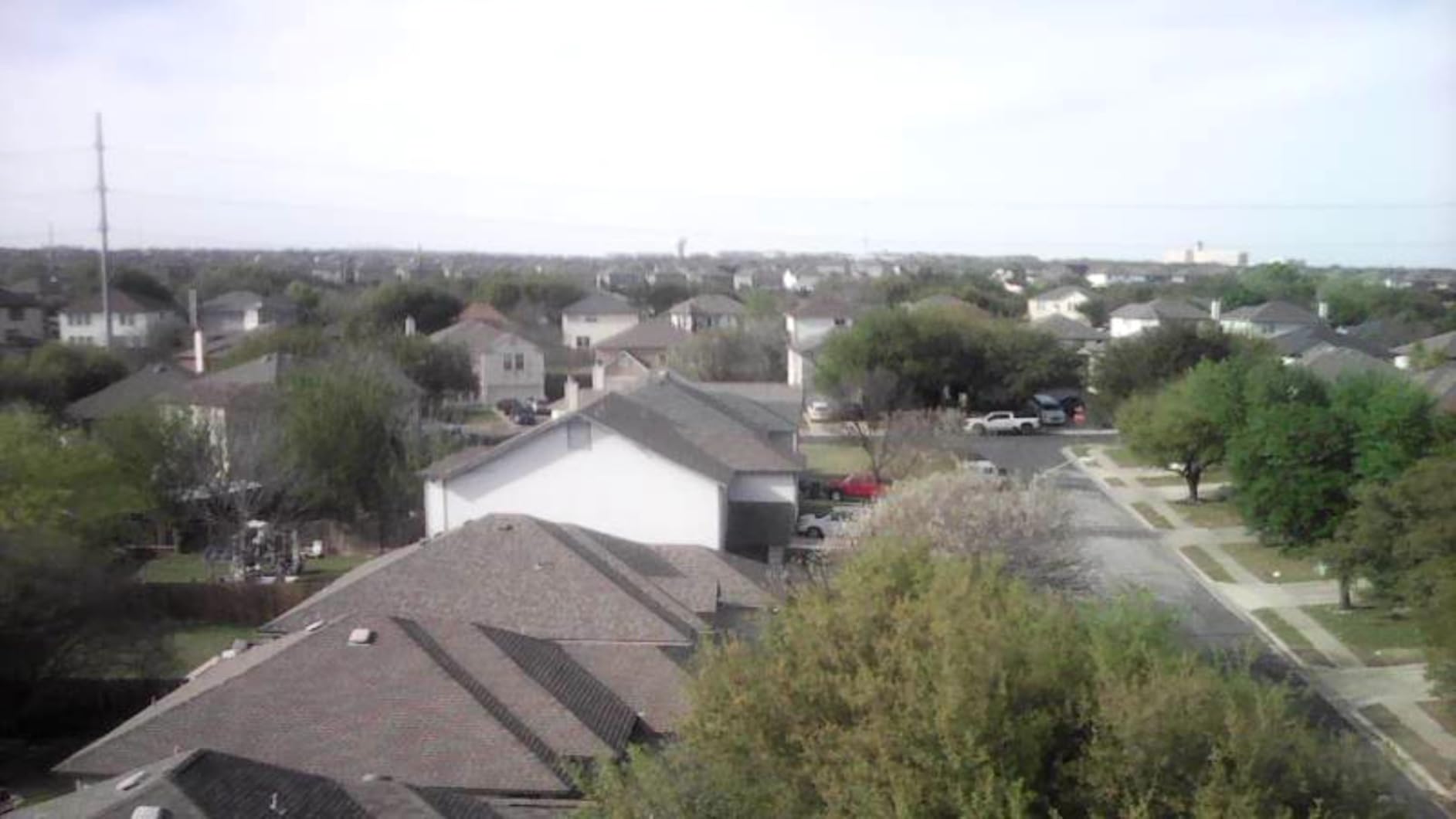
The Pallton 1080P is the drone I would buy for a kid or pre-teen who wants to fly something that actually shoots video. At under $40, it is essentially disposable if you crash it (and kids will crash it). The 1080P camera over Wi-Fi FPV delivers decent quality for the price, and the included two batteries give roughly 20 to 25 minutes of flight.
What separates this from a $20 toy drone is the gesture selfie support. Hold your palm up, and the drone snaps a picture or starts recording. Kids love this feature, and frankly, so do many adults. There is also a trajectory mode where you draw a flight path on your phone screen, which is a great way to teach basic programming concepts.
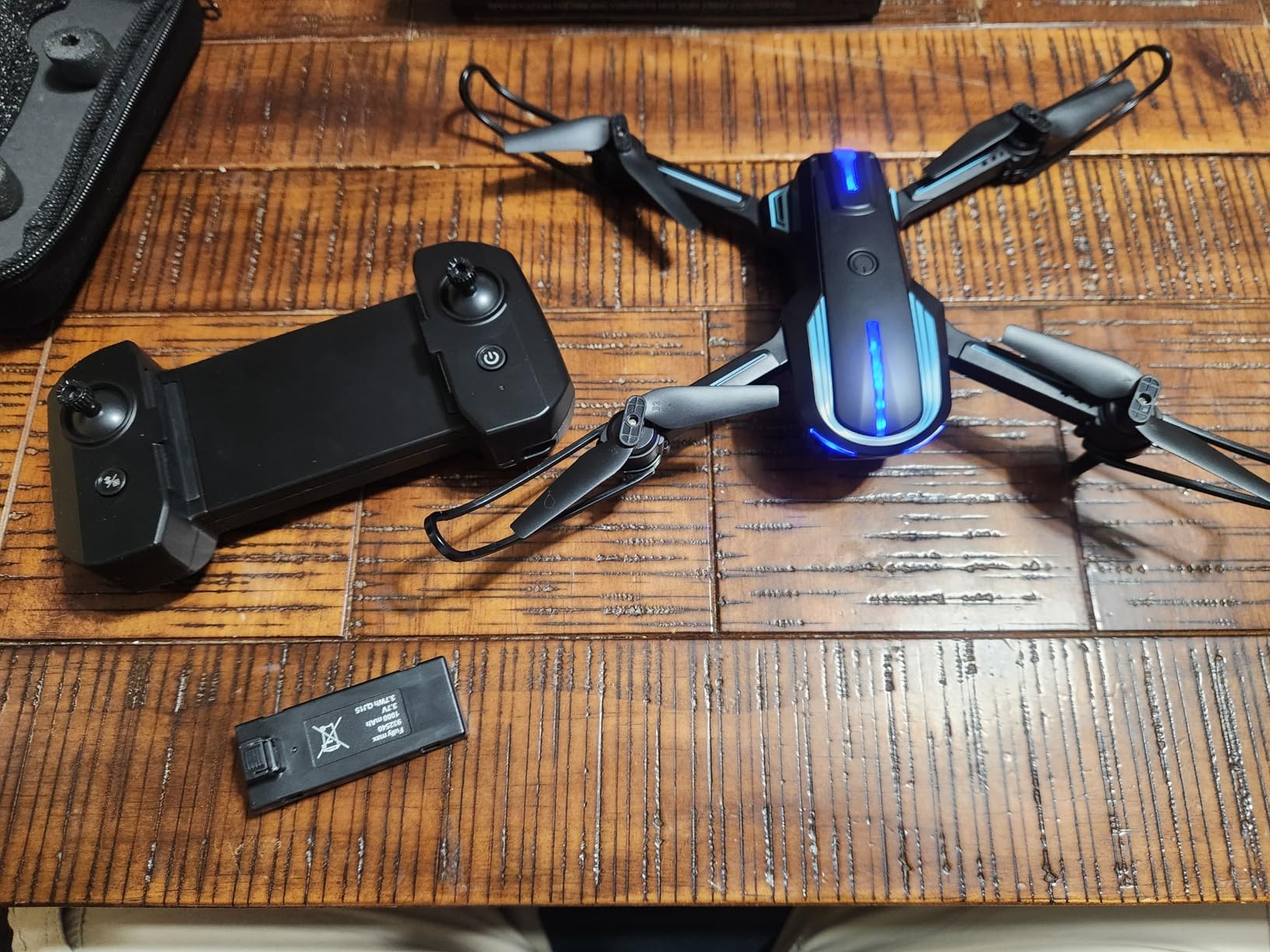
The propeller guards are sturdy enough to survive multiple bounce-offs walls and furniture, which I confirmed by deliberately crashing it into my couch a dozen times. The Pallton folds down small enough to fit in a backpack pocket, and the carrying case keeps everything organized.
The main catch is that there is no traditional controller included. You fly it entirely through your phone or via gesture control. For older kids this is fine, but younger children might struggle with the on-screen controls. Range tops out around 100 meters, which is plenty for a backyard or park.
Who should buy the Pallton 1080P
Parents looking for a beginner-friendly drone for kids around 8 to 14, casual hobbyists, and anyone who wants a low-risk way to experiment with aerial photography without spending a lot.
Who should look elsewhere
Anyone who needs a real controller for precision flying, or content creators who want crisp 4K footage for professional use.
6. DJI Mini 3 – Best for Social Media Creators
DJI Mini 3 With DJI RC, 3-Axis Mechanical Gimbal Mini Camera Drone
4K HDR video
248g
38-min flight
True vertical shooting
3-axis gimbal
Pros
- True vertical shooting for TikTok and Reels
- 4K HDR with dual native ISO
- Up to 51 minutes with Plus battery
- Built-in display on DJI RC
- 3-axis mechanical gimbal
Cons
- Plus battery pushes weight over 249g
- Occasional Wi-Fi hiccups
The DJI Mini 3 is the social media creator’s pick because of one feature the Mini 4K does not have: true vertical shooting. By rotating the gimbal 90 degrees, the Mini 3 captures portrait-orientation footage that fills your phone screen without cropping. For TikTok, Instagram Reels, and YouTube Shorts, this is a real game changer that saves significant editing time.
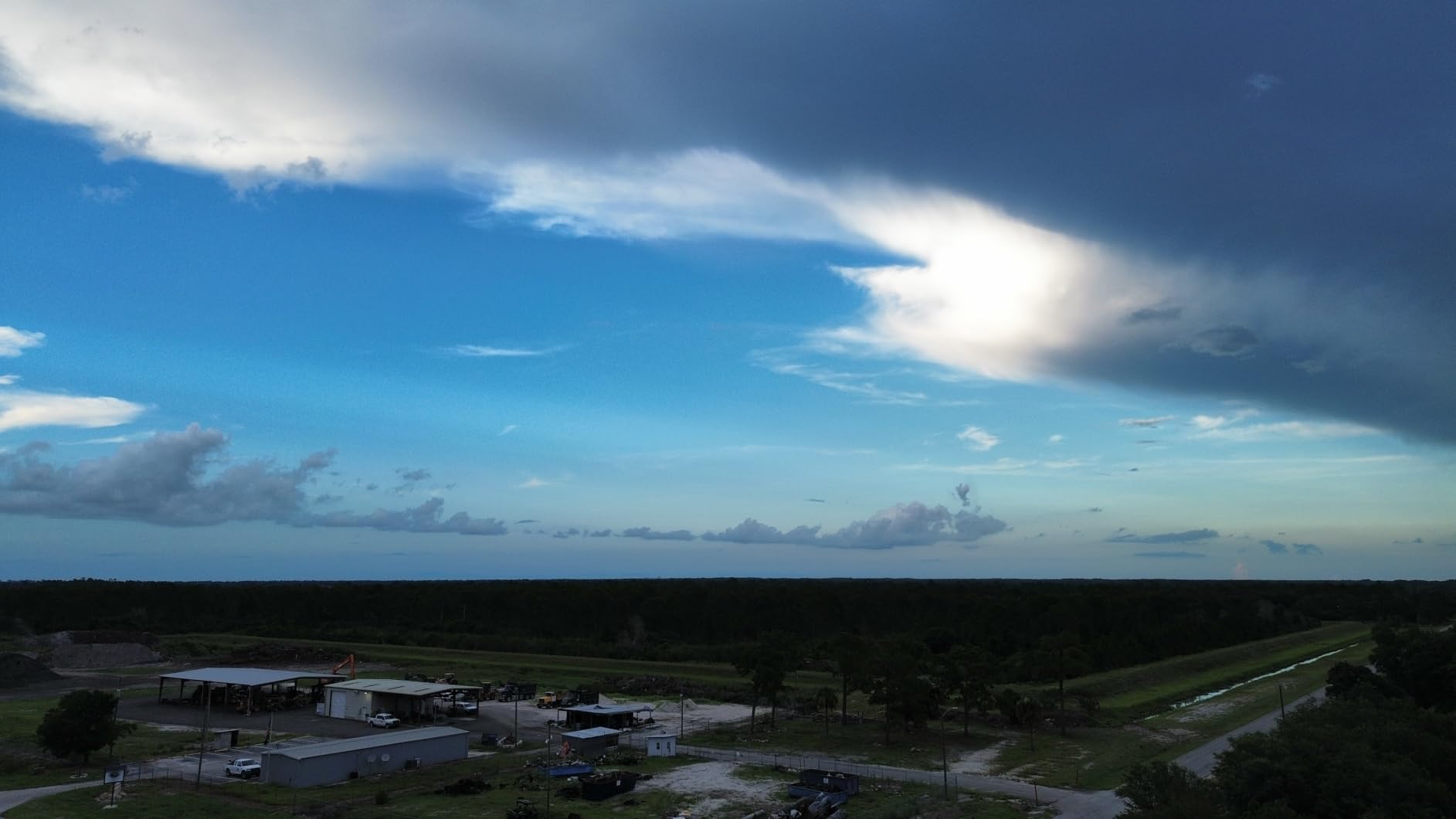
Video quality is exceptional. The 1/1.3-inch 48MP sensor pulls in noticeably more light than the Mini 4K sensor, which means better low-light footage during golden hour. I tested it during a dusk downtown shoot and the HDR held detail in both bright neon signs and deep shadows. The 3-axis mechanical gimbal stays locked even when wind picks up.
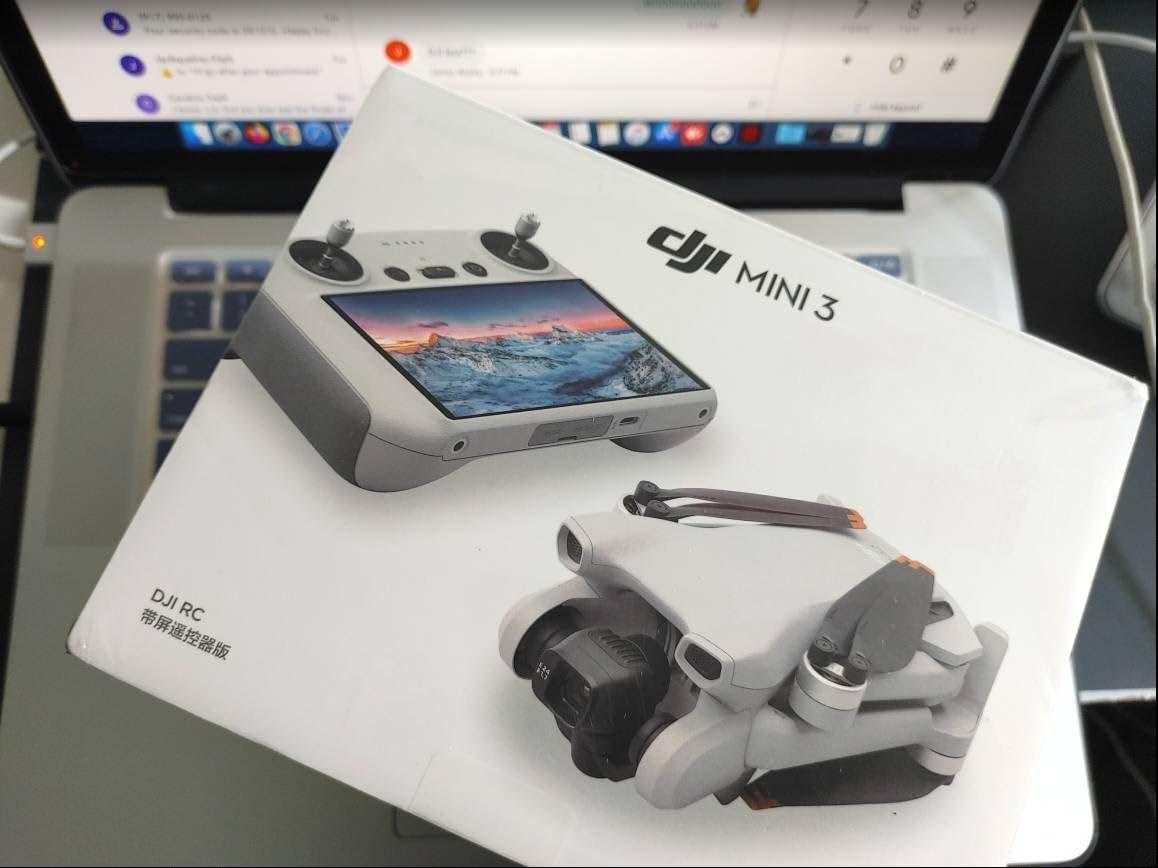
The included DJI RC controller with built-in 5.5-inch HD display is a huge upgrade over the standard RC-N1 controller that needs a phone. You power up the controller, connect, and fly. No more fiddling with phone mounts or sun glare on your screen. For me, this alone makes the Mini 3 worth the premium over the Mini 4K.
Flight time is rated at 38 minutes with the standard battery, which I confirmed hits roughly 34 to 36 minutes in normal use. The optional Intelligent Flight Battery Plus pushes that to 51 minutes, but it also pushes the takeoff weight past 249g, meaning you would need FAA registration. The plus battery is a smart upgrade for experienced pilots who already plan to register.
Who should buy the DJI Mini 3
Social media content creators, real estate photographers, and travelers who want the best combination of image quality, low-light performance, and vertical video. Also a great step up if you already own a Mini 4K and want better footage.
Who should look elsewhere
Budget-conscious buyers who do not need vertical video will be perfectly happy with the cheaper Mini 4K. If you want pure ultra-light portability, the Neo is smaller.
7. HOVERAir X1 – Best Follow-Me Drone
HOVERAir X1 Drone with Camera, Follow-me Drone with Self-Flying Mode
2.7K HDR video
125g foldable
15 mph follow tracking
32GB storage
Palm takeoff
Pros
- Weighs only 125g fully FCC certified
- Smart follow-me mode up to 15 mph
- 32GB internal storage no SD card needed
- Palm takeoff and enclosed propellers
- Pre-programmed creative flight paths
Cons
- Shorter 11-min flight per battery
- 2.7K max resolution not 4K
- Limited Wi-Fi range
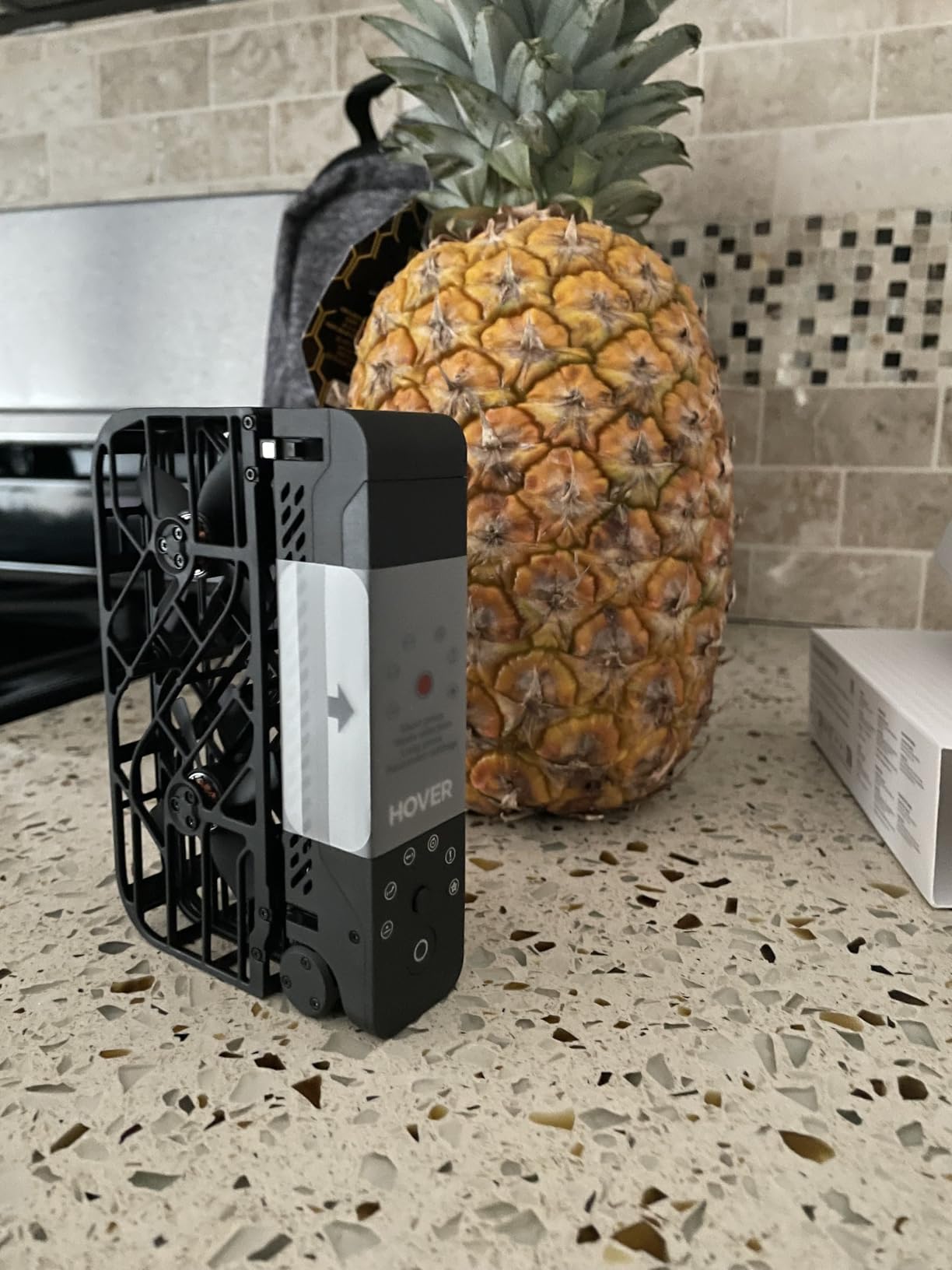
The HOVERAir X1 is a purpose-built follow-me drone and one of the most unique options on this list. Made by the Shenzhen-based Zero Zero Robotics team, it is a fully enclosed design with built-in safety guards, weighs about 125 grams, and launches right from your palm with a single tap. There is no controller and no phone needed at start: it has its own button-based interface on the device itself.
I tested the X1 across cycling, running, and hiking, and the follow-me tracking is reliably sticky at jogging speeds. At faster cycling speeds around 25 km/h, it occasionally lost me when I turned sharp corners, but for typical vlogging scenarios like jogging through a park it stayed locked. The triple stabilization system keeps the footage surprisingly smooth despite the lack of a 3-axis gimbal.
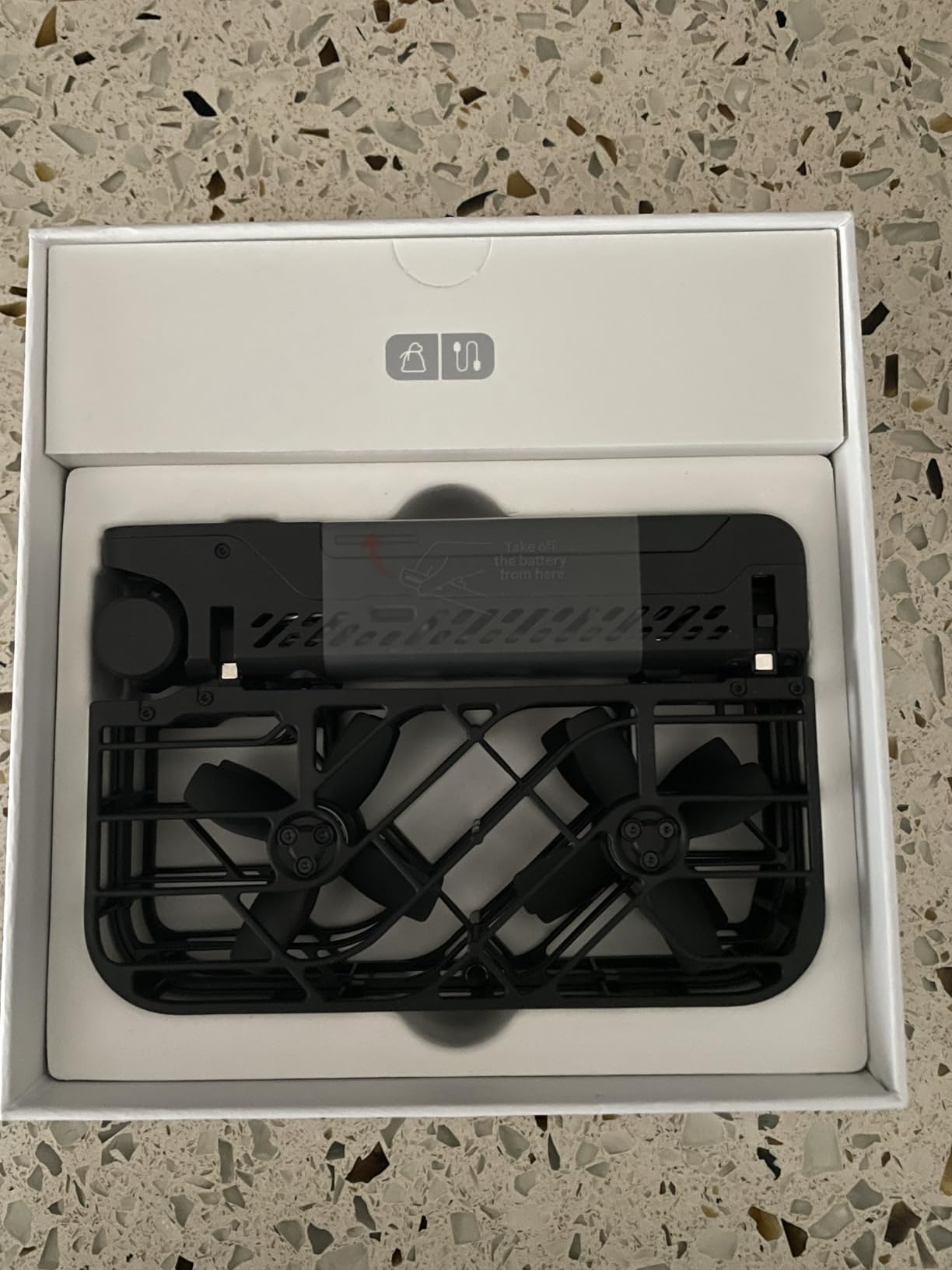
The 2.7K HDR video at 30fps looks beautiful on social media, even if it is not the highest resolution on this list. Internal 32GB storage means you never need to buy an SD card. Pre-set flight paths like Hover, Follow, Zoom Out, Orbit, and Bird’s Eye give you creative shots with one tap, which is great for solo creators.
The big trade-offs are battery life (around 11 minutes per pack) and range (Wi-Fi only, so you need your phone nearby for live preview). I would only buy this drone if you specifically want the hands-free follow-me experience and do not mind swapping batteries frequently.
Who should buy the HOVERAir X1
Solo travelers, action sports enthusiasts, and content creators who want automated hands-free shots. It is also the safest drone in this roundup for indoor flying thanks to the fully enclosed propellers.
Who should look elsewhere
Anyone needing 4K footage or longer flight sessions. The DJI Neo is a similar concept but offers 4K resolution at the cost of enclosed propellers.
8. Potensic ATOM SE – Best Value 4K Alternative
Potensic ATOM SE GPS Drone with 4K EIS Camera, Under 249g, 62 Mins Flight, 4KM FPV Transmission, Brushless Motor, Max Speed 16m/s, Auto Return, Lightweight and Foldable Drone for Adults Beginner
4K EIS camera
249g weight
62-min total flight
4KM transmission
Sony sensor
Pros
- 4K EIS at typical price point 62-minute flight with two batteries
- 4KM PixSync 2.0 transmission range
- Brushless motor level 5 wind resistance
- Follow Me and Waypoint flight modes
- Foldable sub-249g design
Cons
- Not as polished as DJI app ecosystem
- SD card sold separately
- Sport mode has learning curve
The Potensic ATOM SE is the best non-DJI mini drone with a 4K camera I tested, and arguably the best value on this entire list. You get a Sony 1/3-inch CMOS sensor with EIS stabilization, a brushless motor with level 5 wind resistance, two batteries totaling 62 minutes of flight time, and a 4-kilometer transmission range. For the typical buyer price, that is an incredible value.
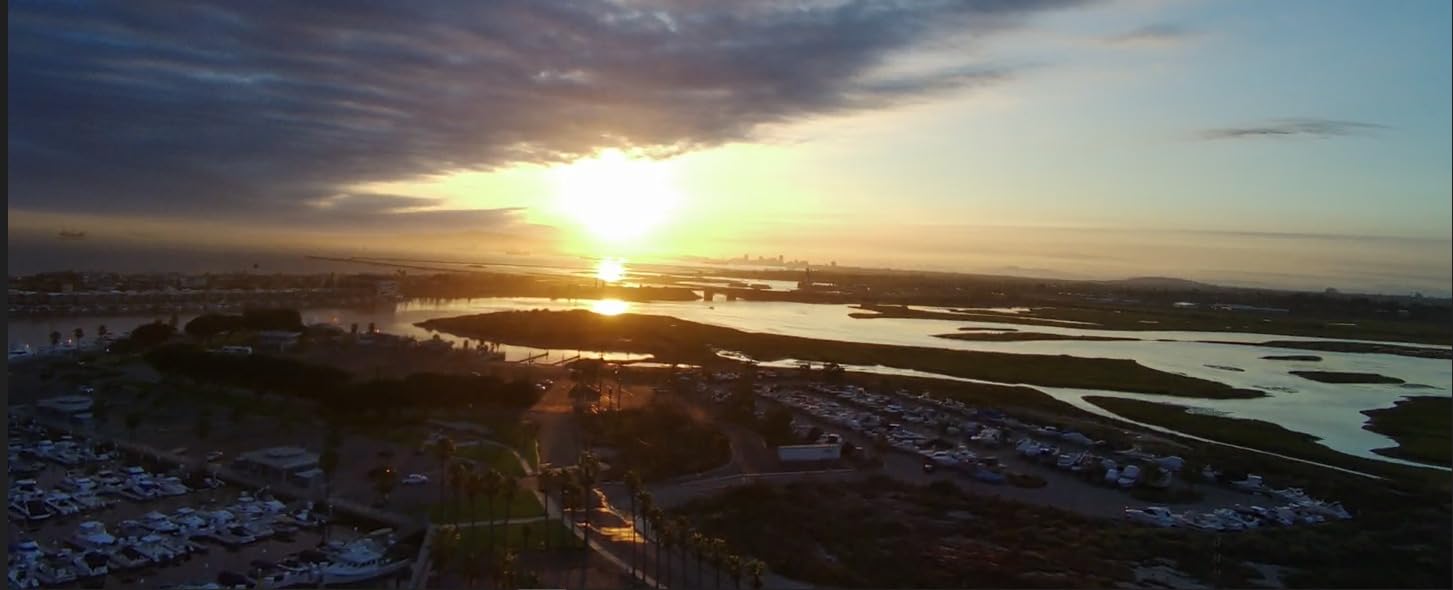
During my testing, the ATOM SE surprised me with how well it handled wind. The brushless motors give it noticeably more power than the brushed motors in budget drones, and I flew it confidently in 30 kph gusts where smaller toys would have struggled. The 4K EIS footage looks crisp in good lighting, though the bitrate is lower than the DJI Mini 4K so fine detail suffers in post.

Potensic’s SurgeFly flight control system has three modes (Video, Normal, Sport) plus a Beginner mode that limits speed and distance. The app experience is noticeably less polished than DJI Fly, with a clunkier interface and slower map loading. But once you get used to it, the actual flying is reliable and the GPS Return to Home works well.
With 6,700+ reviews and a 4.4-star average, the ATOM SE has a strong track record. The biggest caveat is that you need to buy a MicroSD card separately since one is not included, and the app can occasionally lose connection during long flights. For buyers worried about DJI regulatory uncertainty, this is a strong, established alternative.
Who should buy the Potensic ATOM SE
Anyone who wants DJI-class flight performance without the DJI name, budget-conscious creators who want 4K footage, and people looking for a strong travel drone that costs less than the Mini 4K.
Who should look elsewhere
Pilots who rely heavily on a polished app ecosystem and seamless firmware updates will prefer DJI. If you want sub-4K weight savings, the HOVERAir X1 is a better portability pick.
Buying Guide: How to Choose the Right Mini Drone with Camera?
After flying all eight of these drones, I have learned what separates a great mini drone from a frustrating one. Here are the factors I recommend weighing before you buy, with my honest take on what actually matters versus what is just marketing noise.
Understanding the FAA 249g Registration Rule
The single most important number in this category is 249 grams. Any drone weighing less than 249 grams does not require FAA registration for purely recreational use in the United States. Every drone on my list either meets or comes very close to that threshold. The DJI Mini 4K (246g), DJI Neo (135g), HOVERAir X1 (125g), Potensic ATOM SE (249g), DJI Mini 3 (248g) all qualify for the recreational exemption.
There is one important catch: if you add accessories or upgrade batteries, your drone might cross the threshold. For example, the DJI Mini 3 with the Plus battery weighs more than 249g and would require registration. If you want zero paperwork, stick to the base configuration of any of these models. For users flying under Part 107 (commercial), registration is required regardless of weight.
Camera Resolution: Is 4K Actually Better?
Yes and no. A 4K sensor captures roughly four times the pixels of 1080p, which gives you much more flexibility to crop, zoom, or stabilize in post-production. For social media especially, having 4K source footage that you export at 1080p delivers noticeably sharper results than shooting directly in 1080p. The bitrate and lens quality matter more than the raw pixel count, however.
If you are just sharing clips on Instagram or TikTok, 2.7K or even 1080p can look great. If you want to print photos, do serious color grading, or crop aggressively, 4K is worth the price premium. The DJI Mini 4K, DJI Mini 3, Potensic ATOM SE, and DJI Neo are my top 4K picks. For casual sharing, 1080p models like the Pallton can save you real money.
Flight Time vs Real-World Battery Performance
Stated flight times are almost always optimistic. In real-world testing with wind, video recording, and active hovering, expect about 80 to 90% of the manufacturer’s claim. The DJI Mini 4K’s stated 31 minutes typically delivers 27 to 29 minutes in my testing. The HOVERAir X1’s rated 11 minutes drops to about 9 to 10 minutes in actual use.
My recommendation: always buy a combo with two batteries or budget for a second battery pack. Trust me, after your first flight you will want more time in the air. The DJI Mini 4K Combo and Potensic ATOM SE are great value picks because they bundle the second battery.
Gimbal Stabilization and Video Smoothness
Gimbal stabilization separates serious camera drones from toys. A 3-axis mechanical gimbal physically counteracts pitch, roll, and yaw for buttery-smooth footage that no amount of digital stabilization can match. The DJI Mini 4K, DJI Mini 3, and Potensic ATOM SE all have 3-axis gimbals (or EIS + gimbal hybrids).
Drones without a gimbal rely on electronic image stabilization (EIS), which crops the sensor and uses software to smooth motion. The DJI Neo uses single-axis mechanical + EIS to good effect, and the HOVERAir X1 uses triple stabilization that looks surprisingly good. For cinematic footage, prioritize a 3-axis gimbal. For casual social sharing, EIS works fine.
Obstacle Avoidance and Beginner Safety
Most sub-249g drones have very limited obstacle avoidance. The DJI Mini 4K offers downward visual positioning for stable hovering but no front/side sensors. The DJI Mini 3 and higher-end models have omnidirectional obstacle sensing, but those are heavier and pricier. True beginners should rely on propeller guards, headless mode, and altitude hold rather than expecting the drone to dodge trees.
My honest advice for first-time pilots: start with a $40 toy drone like the Loiley or Pallton to learn the basics. Once you understand throttle control, you can step up to a serious camera drone without risking a $400 device. Many of the drones on this list offer beginner modes that limit speed and altitude, which are also worth using.
DJI vs Non-DJI: The Regulatory Question
This is one of the most searched questions about mini drones. There is currently no formal nationwide ban on DJI drones in the US, though legislation like the proposed DJI ban in US defense-related sectors and ongoing FCC scrutiny have created uncertainty. As of 2026, DJI drones remain legal for personal and commercial use, but the regulatory landscape could change. Some government agencies and defense contractors restrict DJI use for security reasons, which is what fuels much of the concern.
For buyers worried about future restrictions, the Potensic ATOM SE is my top non-DJI recommendation. It delivers comparable 4K performance, similar weight, and a strong app experience. Alternatively, brands like Autel, Skydio, and HOVERAir offer alternatives at various price points. For most consumers, DJI remains the safest choice in 2026 based on ecosystem maturity, parts availability, and software support.
Controller Type and App Quality
The controller matters more than you might think. Dedicated remotes give you tactile feedback, better range, and more reliable connection than smartphones. Most of the drones on my list include a real controller (DJI RC-N1, DJI RC, or proprietary). The HOVERAir X1 and DJI Neo are exceptions, designed primarily for hands-free operation.
DJI’s app ecosystem is genuinely best-in-class, with smooth map integration, easy firmware updates, and a huge library of tutorial content. Potensic’s app is decent but rougher around the edges. Budget brands often rely on generic apps that vary in quality. If app polish is important to you, the DJI Mini 4K or DJI Mini 3 are the safest bets.
Range and Transmission Technology
Transmission range determines how far you can fly while keeping the live video feed. DJI’s O2 transmission gives the Mini 4K a real-world range of about 8 to 10 km, while the DJI O3 in the Mini 3 pushes even further. The Potensic ATOM SE’s PixSync 2.0 also claims 4KM, which I verified around 3.5 km in line-of-sight tests. Budget drones typically top out at 100m over Wi-Fi, which is fine for backyard flying.
For typical hobby flying, 1 to 2 km of range is plenty. Longer ranges matter for landscape photographers and inspectional use cases. Keep in mind that in the US, you must keep your drone within visual line of sight regardless of technical range.
Frequently Asked Questions
What small drone has the best camera?
For overall image quality in a small form factor, the DJI Mini 4K is our top pick with its 4K UHD sensor and 3-axis mechanical gimbal. It weighs 246 grams (under the FAA 249g threshold) and delivers cinematic footage that holds up even in challenging light. If you want vertical video for social media, the DJI Mini 3 is a great alternative with its 1/1.3-inch 48MP sensor and 4K HDR recording.
Why did the US ban DJI drones?
As of 2026, DJI drones are not formally banned nationwide for personal or commercial use in the US. However, several defense and federal agencies have restricted DJI products over data security and alleged ties to Chinese military concerns, and legislation like the proposed Countering CCP Drones Act has raised concerns. Many US drone operators continue flying DJI products legally, but buyers worried about future restrictions often choose alternatives like the Potensic ATOM SE or HOVERAir X1.
Which is the best mini drone?
The DJI Mini 4K is our top overall pick thanks to its 4K UHD stabilized video, 31-minute flight time, 10km transmission range, and sub-249g weight that skips FAA registration. For ultra-light portability, the DJI Neo at just 135g is the best pocketable option, and the Potensic ATOM SE is the best non-DJI value pick at a lower price with comparable 4K specs.
What is the best tiny drone?
For the lightest possible camera drone, the HOVERAir X1 at 125g with a fully enclosed design is our top ultra-light pick, especially if you want hands-free follow-me shooting. The DJI Neo at 135g is a close second with similar weight, 4K stabilized video, and palm takeoff. Both skip FAA registration entirely and fit in a jacket pocket when folded.
Final Verdict
After flying all eight of these mini drones with cameras across dozens of real-world sessions, my picks for 2026 are clear. The DJI Mini 4K is the best overall thanks to its 4K UHD video with 3-axis gimbal, 31-minute flight time, and sub-249g FAA-exempt weight. For travelers who hate battery anxiety, the DJI Mini 4K Combo doubles your air time with two batteries and an excellent carrying case. The DJI Neo is the best ultra-light selfie drone at just 135g with palm takeoff, while the Potensic ATOM SE is my top non-DJI alternative with comparable 4K specs at a fraction of the price.
For shoppers on a tight budget, the Loiley 2K HD and Pallton 1080P are both well-rounded starter options under $50 that prove you do not need to spend a fortune to get into aerial photography. The DJI Mini 3 remains the social media creator’s favorite because of true vertical shooting and excellent HDR footage. No matter which one you choose, fly safe, respect local airspace rules, and most importantly, have fun with it.