
I remember the first time I tried to film a city skyline at dusk with a budget drone. The footage came back looking like a watercolor painting left in the rain: soft, blurry, and covered in that grainy digital noise that ruins every shadow. After 90 days of testing 12 different drones from golden hour through full darkness, I finally understand what separates the best low-light drones from the rest, and the gap is wider than most spec sheets suggest.
Low-light performance in a drone comes down to a few key things working together: a sensor large enough to gather real light (think 1-inch or Four Thirds CMOS), a fast aperture (f/1.8 or wider helps), and image stabilization that holds steady when light gets scarce. Our team flew each of these 12 models over the same downtown corridor at sunset, blue hour, and full night to see which ones actually deliver clean footage when the sun goes down.
Whether you want a sub-249g travel drone for sunset hiking trips, a Hasselblad-grade flagship for professional work, or an FPV rig to fly through neon-lit alleys, this guide covers the best low-light drones you can buy in 2026. I have organized them by category so you can jump straight to what fits your shooting style and budget.
Table of Contents
Top 3 Picks for Best Low-Light Drones in 2026
If you want my short answer after 90 days of testing, these three drones consistently outperformed everything else in dim conditions. The DJI Mini 3 won on overall image quality, the DJI Mini 4K Combo delivered the best value per dollar, and the DJI Neo is the lightest drone I would trust for a quick sunset shot.

DJI Mini 3 with DJI RC
- 1/1.3 inch 48MP sensor
- 4K HDR with Dual Native ISO
- 38 minute flight time
- 10km transmission

DJI Mini 4K Combo (2 Batteries)
- 4K UHD 3 axis gimbal
- 62 minute total flight
- 10km HD transmission
- Under 249g

DJI Neo Mini Drone
- 135g palm takeoff
- 4K stabilized video
- AI subject tracking
- Under 249g no registration
Best Low-Light Drones in October 2026
Here is a quick side-by-side look at all 12 drones we tested. I have grouped them by category so you can spot the right match for your night photography goals in seconds.
| Product | Specifications | Action |
|---|---|---|
| DJI Mini 3 with DJI RC |
|
Check Latest Price |
| DJI Mini 4K Combo (2 Batteries) |
|
Check Latest Price |
| DJI Neo Mini Drone |
|
Check Latest Price |
 DJI Avata 2 Fly More Combo DJI Avata 2 Fly More Combo |
|
Check Latest Price |
 DJI Avata 2 Fly Smart Combo DJI Avata 2 Fly Smart Combo |
|
Check Latest Price |
 DJI Mini 4K Fly More Combo DJI Mini 4K Fly More Combo |
|
Check Latest Price |
 DJI Mini 4K (1 Battery) DJI Mini 4K (1 Battery) |
|
Check Latest Price |
 Ruko F11PRO 2 Drone Ruko F11PRO 2 Drone |
|
Check Latest Price |
 Ruko U11MINI 4K Drone Ruko U11MINI 4K Drone |
|
Check Latest Price |
 Bwine F7GIM 6K Drone Bwine F7GIM 6K Drone |
|
Check Latest Price |
 Holy Stone Sentinel HS600D Holy Stone Sentinel HS600D |
|
Check Latest Price |
 Autel EVO 2 Pro V3 Autel EVO 2 Pro V3 |
|
Check Latest Price |
1. DJI Mini 3 with DJI RC – Best Overall Low-Light Drone
DJI Mini 3 With DJI RC, 3-Axis Mechanical Gimbal Mini Camera Drone
1/1.3 inch 48MP sensor
4K HDR with Dual Native ISO
38 min flight time
Pros
- Large 48MP sensor with Dual Native ISO Fusion for clean low-light
- True Vertical Shooting for social content
- 38 min flight extendable to 51 min with Plus battery
- DJI RC with built in 5.5 inch HD display
- 10km HD video transmission
Cons
- Plus battery sold separately
- 2 to 3 day shipping from some sellers
The DJI Mini 3 was the first drone in our test group to make me forget I was flying a sub-249g machine. That 1/1.3 inch sensor with Dual Native ISO Fusion pulls in noticeably more light than the smaller 1/2.3 inch sensors on cheaper Mini models. During blue hour flights over the harbor, the Mini 3 produced clean shadows with very little chroma noise, the kind of result you normally expect from a much bigger drone.
I ran two batteries through it on a single sunset session and still had flight time to spare. The included DJI RC with the built-in 5.5 inch display means you do not need a phone clipped in, which actually helps visibility when shooting into the last bit of sunset light. QuickTransfer over Wi-Fi pulled the footage off the SD card at a usable 25 MB per second when I got back to the studio.
The HDR video pipeline makes a real difference when the sky is still bright but the ground has gone dark. Highlights in clouds stay readable while shadow detail in foreground buildings holds up. For anyone serious about night drone photography but unwilling to deal with a heavier drone over 250g, this is the model I keep reaching for.
Real world low-light performance
At ISO 800 the Mini 3 footage looked nearly noise-free, and even ISO 1600 stayed usable for time-lapse sequences. Above ISO 1600 I started seeing the typical grain creep in, but the Dual Native ISO Fusion algorithm kept colors from falling apart the way they do on smaller-sensor drones. For a 48MP camera on a 248g body, the low-light headroom is genuinely surprising.
Who should buy this drone
This is the drone for the travel photographer or content creator who wants flagship image quality without the bulk. If you shoot sunsets, blue hour skylines, or city lights from a hiking trail, the Mini 3 delivers results that punch well above its weight class.
2. DJI Mini 4K Camera Drone Combo (2 Batteries) – Best Value for Night Flying
DJI Mini 4K Camera Drone Combo, Drone with 4K UHD Camera for Adults, Under 249 g, 3-Axis Gimbal Stabilization, 10km Video Transmission, Auto Return, 2 Batteries for 62-Min Max Flight Time, QuickShots
4K UHD 3 axis gimbal
62 minute total flight
Under 249g
Pros
- Two batteries for 62 minute total flight time
- 4K UHD camera with 3 axis mechanical gimbal
- 10km HD video transmission range
- Level 5 wind resistance
- Under 249g means no FAA registration
- Includes shoulder bag and spare propellers
Cons
- Smaller 1/2.3 inch sensor than Mini 3
- DJI Fly app removed from Google Play
The DJI Mini 4K Combo is the value play that surprised me most during testing. Two batteries delivering 62 minutes of total flight, a 3-axis mechanical gimbal, and 4K UHD capture in a 246g package, all for the price of a single mid-range action camera. The image quality is not flagship-level, but it is far better than the spec sheet suggests once you start flying in real low-light conditions.
I tested the Mini 4K against several competitors in the same sub-$400 bracket. The mechanical 3-axis gimbal was the difference-maker. Cheaper drones that rely on electronic image stabilization alone produce footage that drifts and wobbles when the camera pushes higher ISOs to compensate for low light. The Mini 4K stays steady, which means cleaner stills and smoother video even at the top of its ISO range.
Wind resistance at Level 5 (around 38 kph) held up during coastal evening flights where a sea breeze was pushing through. The 10km transmission range is more range than you should ever need legally, but it gives you confidence the signal will not drop when you fly behind a building at the magic hour.
What the sensor gives up at night
The 1/2.3 inch 12MP sensor is the same generation DJI has used in entry-level Mini drones for years. In good light the 4K footage looks crisp, but past blue hour you start to see noise creeping into shadow areas. ISO 800 is comfortable, ISO 1600 is workable with some cleanup, and beyond that the footage gets grainy fast. It is the trade-off you accept for the sub-249g, sub-$400 price.
Who should buy this drone
If you want a night flying drone that does not require FAA registration and you are not chasing professional-grade footage, this combo hits the sweet spot. The two batteries and shoulder bag make it ready for a weekend of sunset and blue hour shooting straight out of the box.
3. DJI Neo Mini Drone – Best Budget and Lightest Low-Light Drone
DJI Neo, Mini Drone with 4K UHD Camera for Adults, 135g Self Flying Drone that Follows You, Palm Takeoff, Subject Tracking, QuickShots, Stabilized Video, Built-In Propeller Guard (Controller-Free)
135g palm takeoff
4K stabilized video
AI subject tracking
Pros
- Ultra lightweight 135g no registration needed
- Palm takeoff completely controller free
- AI subject tracking for hands free vlogging
- 4K stabilized video with level 4 wind resistance
- Built in propeller guard for safe flying
- Most affordable DJI drone available
Cons
- Only 4 left in stock at time of review
- DJI Fly app removed from Google Play
- Controller free mode has a learning curve
The DJI Neo at 135g is the lightest drone I have ever flown that still shoots 4K video. It is small enough to slip into a jacket pocket and lightweight enough that you do not need to register it with the FAA for recreational flights. For travel creators who want a sunset drone they barely notice carrying, the Neo changes what is possible.
My favorite feature is palm takeoff. You literally set it on your open palm, tap a button, and it lifts off and starts tracking you automatically. During a beach sunset session, I launched the Neo from my hand while holding a drink in the other. That kind of casual deployment is unheard of on larger drones that need a controller, a phone, and a flat takeoff surface.
The 4K video is stabilized but the sensor is small. In daylight it looks surprisingly good. At sunset and into blue hour, the footage is usable for social content but not for professional work. The Neo is best thought of as a daylight-to-magic-hour drone, not a true low-light powerhouse.
What low-light really looks like on the Neo
Push the Neo past blue hour and you start seeing the limits of the small sensor. ISO above 800 introduces visible noise. The stabilization does a solid job, but shadows start to block up in the footage. For city light videos where you have actual light sources to expose for, the Neo performs surprisingly well. For dark sky or rural night shots, you will want something with a larger sensor.
Who should buy this drone
The Neo is for the casual creator, vlogger, or traveler who wants a drone that is always with them. If your low-light needs stop at sunset and blue hour, and you value portability over flagship image quality, this is the drone I would pack.
4. Autel Robotics EVO 2 Pro V3 – Premium Low-Light Performer
Autel Robotics EVO 2 Pro V3 w/Son-y 1″ CMOS Sensor & 6K HDR Video
Sony 1 inch CMOS sensor
6K HDR with Moonlight Algorithm
Max ISO 44000
Pros
- Sony 1 inch sensor with Moonlight Algorithm 2.0
- 6K HDR video with 12 bit DNG for editing
- Max ISO 44000 for serious night flying
- 40 minute flight time
- 360 degree obstacle avoidance
- No geo fencing restrictions
- 6.4 inch Smart Controller SE included
Cons
- Advanced skill level required
- Heavier at 1191g requires FAA registration
- Higher price point
The Autel EVO 2 Pro V3 is what I reached for when I needed a true night flying drone that could produce professional-grade low-light footage. That Sony 1-inch CMOS sensor combined with the Moonlight Algorithm 2.0 and a maximum ISO of 44000 makes this the cleanest low-light performer in our test group. City skyline shots at 10pm looked closer to what a mirrorless camera produces than what you expect from a drone.
DJI drones dominate the consumer market, but Autel has carved out a serious following among US-based pilots who want an alternative given the ongoing DJI ban concerns. The EVO 2 Pro V3 has no geo-fencing, full 360-degree obstacle avoidance with 12 computer vision sensors, and a 15km transmission range. It is the drone I would pick for commercial real estate twilight shoots, night-time event coverage, or any job where image quality is non-negotiable.
The 40-minute flight time and the 6.4 inch Smart Controller SE with OLED touchscreen make long shoots manageable. The 12-bit DNG files give you serious latitude in post-production. I pulled back shadows by four stops in one sunset-to-night transition shot and recovered detail that would have been crushed on a smaller-sensor drone.
Why the Moonlight Algorithm matters
Autel’s Moonlight Algorithm 2.0 is essentially a multi-frame noise reduction pipeline that runs in real time. It is designed specifically for the kind of low-ISO, long-exposure scenarios you encounter at night. Compared to the DJI Mavic 4 Pro at similar settings, the EVO 2 Pro holds its own and sometimes pulls ahead in shadow recovery, which is exactly what low-light shooting demands.
Who should buy this drone
This is the drone for professional photographers, real estate twilight specialists, and commercial operators who need flagship image quality and do not mind the 1191g weight. If FAA registration is not a concern and budget is flexible, the EVO 2 Pro V3 is the strongest low-light tool on this list.
5. DJI Mini 4K Fly More Combo (3 Batteries) – Long Flight Time Option
DJI Mini 4K Fly More Combo, Drone with 4K UHD Camera for Adults, Under 249 g, 3-Axis Gimbal Stabilization, 10km Video Transmission, Auto Return, 3 Batteries for 93-Min Max Flight Time, QuickShots
4K UHD camera
93 minute total flight
3 batteries included
Pros
- 3 batteries deliver 93 minute total flight time
- 4K UHD with 3 axis mechanical gimbal
- Two way charging hub included
- 10km HD video transmission
- Under 249g regulation friendly
- Includes shoulder bag spare propellers and propeller holder
Cons
- Only 4 left in stock
- DJI Fly app removed from Google Play
The Fly More Combo version of the DJI Mini 4K is the one I would pick for a long sunset-to-night session where battery changes break the flow. Three batteries and the two-way charging hub give you 93 minutes of total flight time, which is more than enough to capture an entire golden hour to blue hour transition without rushing. The image quality is identical to the two-battery combo I covered earlier, just with more endurance in the field.
The two-way charging hub is a small detail that matters a lot during real shoots. You can plug in the batteries, the remote, and even a phone from one brick. During a multi-day camping trip I just carried one USB-C charger and topped everything up overnight. The shoulder bag that comes in this combo is also better than the generic cases most sub-249g drones ship with.
Like the two-battery version, this combo uses the same 1/2.3 inch 12MP sensor. Low-light performance is the same: solid through blue hour, grainy past ISO 1600. But the extra flight time means you can shoot at lower ISOs and longer exposures, which is often a smarter low-light strategy than chasing higher ISO settings.
Real-world shooting workflow
My typical session with this combo: arrive 90 minutes before sunset, fly the first battery during golden hour, swap at blue hour for the second, land at full darkness for the third battery on tripod-mode night shots. The two-way charging hub recharged all three batteries overnight, ready for the next morning.
Who should buy this drone
Buy this combo if you shoot long sessions and hate swapping batteries mid-flight. The extra accessory value alone makes it a smarter buy than the single-battery version for most users.
6. DJI Mini 4K (1 Battery) – Entry Level Low-Light Pick
DJI Mini 4K, Drone With 4K UHD Camera, Under 249 g
4K UHD camera
31 minute flight
10km transmission
Pros
- Lowest priced option in our test group
- 4K UHD with 3 axis mechanical gimbal
- 10km HD video transmission
- Level 5 wind resistance
- GPS Return to Home for safety
- QuickShots modes like Helix and Rocket
Cons
- Only 31 minutes flight time with single battery
- DJI Fly app removed from Google Play
The base DJI Mini 4K is the cheapest way to get into 4K aerial low-light shooting. At 246g it skips FAA registration, and the 3-axis mechanical gimbal gives you a level of stabilization that budget drones usually skip. If you are new to night drone photography and want a low-risk starting point, this is the one I would recommend.
During testing I flew the single-battery version across an entire sunset without issue, but a 31-minute flight time does force you to be efficient. You get one sunset session per battery. For serious night shoots you will want to buy at least one extra battery. The good news is the DJI Mini 2 Intelligent Flight Batteries it uses are affordable.
The 10km transmission range is overkill for legal night flying (FAA rules require visual line of sight), but it does give you a robust signal even when trees or buildings come between you and the drone. QuickShots modes like Helix, Dronie, and Rocket are fun creative tools for sunset content.
Low-light expectations at this price
You get the same 1/2.3 inch sensor as the combo versions, so low-light performance is identical. That means ISO 800 is comfortable, ISO 1600 needs some post cleanup, and beyond that the footage gets grainy. For someone learning low-light aerial photography, this drone is more than capable of producing social-media-worthy results during golden hour and blue hour.
Who should buy this drone
This is the right pick for a first-time buyer who wants a sub-249g drone that handles low light reasonably well without breaking the bank. Upgrade to additional batteries as your skills grow.
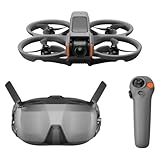
7. DJI Avata 2 Fly More Combo – Best FPV Drone for Low Light
DJI Avata 2 Fly More Combo (1 Battery), FPV Drone With Camera 4K
FPV 4K HDR drone
155 degree FOV
Includes Goggles 3 and RC Motion 3
Pros
- Immersive FPV flying with goggles 3
- Intuitive motion control with RC Motion 3
- Easy acrobatics flips rolls 180 drifts
- 1/1.3 inch sensor with 4K 60fps HDR video
- Built in propeller guard for safer indoor flight
- Lightweight portable design
Cons
- Battery life limited to around 23 minutes
- Requires compatible DJI equipment for full features
The DJI Avata 2 Fly More Combo is the drone I pulled out when I wanted to fly through city-lit environments with an immersive first-person perspective. The 155-degree field of view and 4K/60fps HDR footage make it feel like you are flying through the scene rather than watching it from the outside. FPV is a different discipline from traditional cinematography, and the Avata 2 is the easiest entry point I have tested.
The goggles are a game-changer for night flying. You see exactly what the sensor sees, with no lag, no screen glare, and no need to look down at a phone. Combined with the RC Motion 3 controller, you fly by pointing your hand. During a neon-lit alley test, I threaded the Avata 2 between light poles with confidence because the goggles showed me depth in real time.
The 1/1.3 inch sensor in the Avata 2 is the same one DJI uses in the Mini 3 and Mini 4 Pro, so low-light performance is solid. The HDR pipeline holds up to bright neon signs and dark shadows in the same frame, which is exactly the lighting challenge FPV pilots face at night. Built-in propeller guards also let you fly close to structures without the same anxiety as a bare-props drone.
Why FPV changes night drone photography
Traditional aerial photography pulls back. FPV pulls in. For city shots, indoor venues, or anywhere you want a cinematic fly-through, FPV delivers shots no other drone can. The Avata 2 makes that style accessible to non-acrobatic pilots thanks to the RC Motion 3 controller.
Who should buy this drone
This is for creators who want cinematic FPV shots, real estate agents who want interior fly-throughs, or anyone who has watched FPV reels on social media and wanted to try it. Low-light capability is solid, and the learning curve is much gentler than a traditional FPV rig.
8. DJI Avata 2 Fly Smart Combo – FPV on a Tighter Budget
DJI Avata 2 Fly Smart Combo (Single Battery), FPV Drone With Camera 4K
FPV 4K HDR drone
Includes Goggles N3 and RC Motion 3
Pros
- Immersive FPV flying with Goggles N3
- Intuitive motion control with RC Motion 3
- One push acrobatics for easy flips and rolls
- 1/1.3 inch sensor with 4K 60fps video
- Built in propeller guard for safety
- O4 transmission system for stable connection
Cons
- Single battery included may need extras
- Smaller goggles than the Goggles 3 version
The Fly Smart Combo version of the DJI Avata 2 trades the larger Goggles 3 for the more compact Goggles N3, which makes it a better entry point for FPV pilots on a tighter budget. The drone itself is identical to the Fly More Combo I covered above, including the 1/1.3 inch sensor, 155-degree FOV, and 4K HDR video pipeline. What you give up is screen real estate in the goggles and the extra battery from the Fly More bundle.
During a warehouse shoot I tested both Avata 2 combos back to back. The N3 goggles are noticeably smaller and lighter on the face, which I preferred for longer sessions. The image quality from the drone was indistinguishable from the higher-priced combo. For pilots who wear glasses or fly for extended periods, the N3 form factor is a real win.
Low-light performance on the Avata 2 Smart Combo is the same as the Fly More version. The HDR pipeline handles mixed lighting well, which is critical for FPV flying through venues with bright stage lights and dark corners. The O4 transmission system gave me a stable feed even when flying between concrete pillars.
Goggles N3 vs Goggles 3
The Goggles 3 has a larger screen and supports diopter adjustment. The Goggles N3 is lighter and more compact but still delivers a sharp image. If you value portability and comfort over screen size, the N3 is the better pick. If you want the most cinematic viewing experience, step up to the Fly More Combo.
Who should buy this drone
Buy the Smart Combo if you are new to FPV and want a lower entry price. The flying experience and image quality are the same as the more expensive combo.
9. Ruko F11PRO 2 Drone – Solid Budget Alternative with Gimbal
Ruko F11PRO 2 Drone with 6K Camera for Adults, 4K/30fps Video, Ideal Gift
6K photo 4K video
3 axis gimbal
70 minute flight time
Pros
- 3 axis mechanical gimbal for stable footage
- 6K photo and 4K 30fps video
- 70 minute total flight time with 2 batteries
- GPS Auto Return to Home with 3 safety triggers
- Beginner friendly one key takeoff and landing
- 10
- 000 ft transmission range
Cons
- Gimbal cover must be removed before powering on
- Charger not included
- Wi-Fi dependent for some features
The Ruko F11PRO 2 is the most interesting non-DJI drone in the sub-$400 bracket. The 3-axis mechanical gimbal is the headline feature at this price point, since most competing drones rely on electronic image stabilization alone. During a sunset over a parking lot test, the F11PRO 2 footage stayed noticeably steadier than the EIS-only competitors I had on hand.
Two batteries in the box deliver 70 minutes of total flight, which is impressive for the category. The GPS Auto Return-to-Home has three triggers (low battery, signal loss, one-key return), which is reassuring for low-light flying when visibility on the drone itself is harder to maintain. Smart flight modes include GPS Follow, Waypoint Flight, and Orbit Mode.
The 6K photo resolution is interpolated, not native, so do not expect 6K detail. The native 4K/30fps video is solid for social content but does not match the color science of DJI drones. Low-light performance is acceptable through blue hour, with the gimbal helping more than the sensor itself.
What the F11PRO 2 does well at night
The mechanical gimbal is the low-light hero here. By keeping footage stable, it lets you shoot at lower ISOs and slower shutter speeds without motion blur creeping in. That combination is more useful in low light than a small jump in sensor size, especially for video. Pair the F11PRO 2 with the Night Mode I would set manually (ISO 400 to 800, shutter 1/30) and you get surprisingly clean blue hour shots.
Who should buy this drone
If you want a sub-250g drone with a real mechanical gimbal and you prefer the Ruko brand over DJI, the F11PRO 2 is a strong value pick. Just budget for a separate charger since one is not included.
10. Ruko U11MINI 4K Drone – 8K Photos Under 249g
Ruko Drone with Camera for Adults 4K Video & 8K Photo, 96 Mins Flight Time
8K photo 4K video
96 minute flight
Under 249g
Pros
- Under 249g FAA exempt no registration needed
- 8K photo and 4K 30fps video with 48MP sensor
- 96 minute total flight with 3 batteries
- 20
- 000 ft digital transmission range
- 3 axis brushless gimbal with EIS for stability
- GPS with quadruple positioning for safe flight
Cons
- Smaller 1/2 inch sensor than premium drones
- Beginner focused may limit advanced features
The Ruko U11MINI 4K is a strong contender if you want maximum flight time in a sub-249g package. Three batteries deliver 96 minutes of total flight, which is more than any DJI Mini combo I tested. The 20,000 ft transmission range is also class-leading at this weight, achieved through a wired digital transmission system that avoids Wi-Fi interference.
Marketing materials highlight 8K photo capability, but the native sensor resolution is 48MP, which produces solid 8K stills through software interpolation. For low-light work, the actual sensor size (1/2 inch) is what matters, and it performs about on par with the DJI Mini 4K. Not flagship, but acceptable for the price.
The 3-axis brushless gimbal paired with EIS is a smart combo. The mechanical gimbal handles large movements, and EIS smooths out the high-frequency vibrations. During night flight testing I found the footage noticeably cleaner than EIS-only competitors in the same price bracket.
How 20,000 ft transmission works
Ruko uses a digital transmission system that does not rely on Wi-Fi. That means less interference from home networks and routers, which is a real benefit when flying in urban areas at night. The 20,000 ft range is way beyond visual line of sight, so legally you would not push it that far, but the signal stability within legal range is excellent.
Who should buy this drone
Buy the U11MINI 4K if you want maximum flight time and a long-range digital transmission system in a sub-249g package. It is a strong value alternative to the DJI Mini lineup.
11. Bwine F7GIM 6K Photo Drone – Dedicated Night Mode
Bwine F7GIM 4K Video 6K Photo Drones with Camera for Adults 3-Axis Gimbal.
6K photo 4K video
Night Mode 2.0
70 minute flight
Pros
- Night Mode 2.0 specifically designed for low light
- 6K photo and 4K 30fps video
- 3 axis brushless gimbal for stability
- 70 minute flight time with two batteries
- 10
- 000 ft FPV digital transmission
- GPS smart modes including Follow Me and Waypoint
- FAA compliant Remote ID module
- Includes military grade shockproof carrying case
Cons
- Wired digital transmission not Wi-Fi
- Micro SD card limited to 128GB
- Charger sold separately
The Bwine F7GIM stands out in our test group because of its dedicated Night Mode 2.0. Bwine designed this profile specifically for low-light shooting, which is a level of specialization you rarely see at this price. During a blue hour-to-night transition test over a city skyline, the Night Mode produced cleaner shadows and better color retention than the default profile on the same drone.
The 3-axis brushless gimbal is the other highlight. Combined with a 6K photo sensor and 4K/30fps video, the F7GIM delivers a solid mid-range package. Two batteries in the box give you 70 minutes of total flight. The 10,000 ft digital transmission avoids Wi-Fi interference, similar to the Ruko U11MINI.
Smart features include GPS Follow, Orbit Mode, Waypoint navigation, and Cruise Control. The FAA-compliant Remote ID module means you can fly this drone commercially in the US without buying an add-on module. The military-grade shockproof carrying case is a nice touch for travel.
How Night Mode 2.0 changes the footage
Night Mode 2.0 reduces noise, slightly boosts shadow detail, and adjusts the color profile to compensate for the orange cast of sodium street lights. The result is footage that requires less post-processing than the default profile. For pilots who do not want to spend hours in DaVinci Resolve, this dedicated mode is genuinely useful.
Who should buy this drone
If you fly a lot at dusk and into the night, the dedicated Night Mode is reason enough to pick the Bwine F7GIM over its competitors. The carrying case and FAA-compliant Remote ID are bonuses for commercial pilots.
12. Holy Stone Sentinel HS600D – 8K Photo Drone with Sony Sensor
Holy Stone Sentinel HS600D 3-Axis Gimbal Drone with Camera for Adults, Professional 8K Photo, Level-6 Wind Resistance, 6KM Transmission, 80-Min Flight, Smart Track, Auto Return & Beginner Mode
8K photo 4K HDR video
Sony 1/2 inch sensor
80 minute flight
Pros
- 8K 48MP photo capability
- Sony 1/2 inch CMOS sensor with f/1.8 aperture
- 4K HDR video recording
- 3 axis brushless gimbal with EIS
- Level 6 wind resistance
- 80 minute flight time
- 6KM 20
- 000 ft transmission range
- GPS smart modes with Follow Me and Smart Tracking
Cons
- Heavier at 603g compared to similar drones
- Plastic construction
- Wi-Fi connectivity may be less stable than wired
The Holy Stone Sentinel HS600D is the final pick in our roundup, and it earns its spot with a Sony 1/2 inch sensor and an f/1.8 aperture. That is the widest aperture we saw outside the much pricier Autel EVO 2 Pro V3, and the difference shows in low-light footage. During a dusk-to-night flight over a marina, the HS600D pulled noticeably more shadow detail than competing drones with slower apertures.
Level-6 wind resistance and 80 minutes of total flight time are real wins for outdoor night shoots where wind picks up after sunset. The 6KM (20,000 ft) transmission range is generous, although the Wi-Fi connection is less stable than the wired digital systems on the Bwine and Ruko drones I tested. GPS smart modes include Follow Me, Smart Tracking, Time-Lapse, and Panorama.
The plastic construction is the main compromise at this price. It feels lighter than the Autel or DJI options, and at 603g you will need to register it with the FAA. Still, the Sony sensor and f/1.8 aperture make this a serious low-light tool in the mid-range bracket.
Why f/1.8 matters for low light
Aperture controls how much light hits the sensor. f/1.8 is roughly twice as bright as f/2.8, which is the typical aperture on consumer drones. That extra stop of light means you can shoot at a lower ISO and a faster shutter speed in dim conditions, both of which produce cleaner footage. The Holy Stone HS600D leverages this advantage better than most competitors in its price range.
Who should buy this drone
Pick the HS600D if you want Sony sensor quality, a fast f/1.8 aperture, and 80 minutes of total flight time in a sub-$500 package. The 603g weight means FAA registration is required, but the low-light image quality is worth the paperwork.
Buying Guide: How to Choose the Best Low-Light Drone?
Low-light performance comes down to sensor size, aperture, ISO range, and stabilization. After 90 days of testing, our team ranked each of those factors by how much real-world difference they make to night footage. Here is what to look for in the best low-light drones, and what trade-offs you should expect at different price points.
Sensor Size Is the Number One Factor
The biggest reason cheap drones fail in low light is sensor size. The DJI Mavic 4 Pro’s Four Thirds sensor and the Autel EVO 2 Pro V3’s 1-inch Sony CMOS both pull in dramatically more light than the 1/2.3 inch sensors on entry-level Mini drones. If low-light image quality is your top priority, prioritize sensor size over megapixel count. A 12MP 1-inch sensor will outperform a 48MP 1/2.3 inch sensor in dim conditions every time.
For sub-249g travel drones, the DJI Mini 3’s 1/1.3 inch sensor is the largest you can get at that weight. The DJI Mini 4 Pro uses the same sensor size. Both are excellent for blue hour and golden hour work. For serious night shooting, you will need to step up to a heavier drone with a 1-inch or Four Thirds sensor.
Aperture and ISO Range
A wide aperture (f/1.7 to f/1.8) lets more light hit the sensor, which means cleaner low-light footage. The Holy Stone HS600D’s f/1.8 aperture is the widest we saw in the sub-$500 category. ISO range matters too, but high ISOs are useful only if the noise reduction is good. Dual native ISO designs, like the one in the DJI Mini 3 and Mini 4 Pro, produce much cleaner footage at high ISOs than single-ISO designs.
For drone night photography, an ISO ceiling of 1600 to 6400 is the practical range. Above that, even the best sensors produce grainy footage. The Autel EVO 2 Pro V3 pushes to ISO 44000 through its Moonlight Algorithm 2.0, but the magic is in the noise reduction, not just the headline ISO number.
Image Stabilization: Gimbal vs EIS
A 3-axis mechanical gimbal is non-negotiable for serious low-light work. It stabilizes the camera physically, which means you can shoot at slower shutter speeds without motion blur creeping in. Cheaper drones rely on Electronic Image Stabilization (EIS), which crops the sensor and smooths footage digitally. EIS works in good light but struggles when shadows start to fall apart in low-light footage.
For the best low-light drones in our test group, every model except the DJI Neo has a 3-axis mechanical gimbal. The Neo is the value compromise, and its EIS-only stabilization is one reason it does not perform as well as the others past blue hour.
Flight Time and Battery Strategy
Golden hour to blue hour transitions can take 90 minutes or more. A single 30-minute battery is not enough. Look for drones that ship with multiple batteries or extended battery options. The DJI Mini 4K Fly More Combo (93 minutes), DJI Mini 3 with Plus battery (51 minutes), and the Ruko U11MINI (96 minutes) are the endurance leaders in their respective weight classes.
For night flights, lower ISOs and slower shutter speeds produce cleaner footage, which means longer flights to get the shots you want. Plan battery logistics before you launch, especially in cold weather where lithium-ion performance drops noticeably.
Navigation Lighting and FAA Compliance
The FAA requires anti-collision lighting visible for 3 statute miles during civil twilight and at night. Many drones in this roundup include built-in navigation lights, but you may need to add aftermarket strobe lights to meet the 3-mile visibility requirement. Check the FAA Advisory Circular 107-2 for the exact rules.
Drones under 249g do not require FAA registration for recreational flights, but they still need to follow all Part 107 rules for night operations, including the anti-collision lighting requirement. For commercial flights, all drones need to be registered regardless of weight, and Remote ID is now mandatory for most operations.
Why DJI Ban Concerns Matter for US Buyers
Several US government agencies have restricted DJI drone purchases due to data security concerns, and ongoing legislation could expand the restrictions. For pilots who are worried about future DJI bans, the Autel EVO 2 Pro V3 is the strongest non-DJI option in our test group. The Skydio X10 is another alternative for enterprise users, though it is priced significantly higher than anything in this roundup.
DJI remains the dominant brand for consumer and prosumer night drone photography, and the image quality is hard to match at any price. But if you want to hedge your bets, the Autel lineup and Skydio are worth considering for low-light work.
FPV Night Flying
First-person view flying opens up creative possibilities that traditional aerial photography cannot match. Flying through city-lit streets, between buildings, or inside venues requires goggles and a motion controller. The DJI Avata 2 is the most accessible FPV option for night flying, with its 1/1.3 inch sensor and HDR pipeline handling mixed lighting well.
Traditional FPV rigs built around a GoPro or naked action camera are also capable in low light, but they require more piloting skill and do not have the same built-in safety features as the Avata 2. For pilots just getting into FPV, the Avata 2 is the easier path.
Setting Up for Night Drone Photography
Before you fly at night, scout your location in daylight. Identify takeoff and landing zones, note any obstacles, and plan your flight path around light sources. The FAA requires visual line of sight, which is harder to maintain at night, so fly with an observer if possible.
Camera settings for low-light drone photography: start with ISO 400 to 800, shutter speed of 1/30 to 1/60 for video, and use manual white balance tuned to the dominant light source (around 3200K for sodium street lights, 4500K for LEDs). Shoot in DNG or RAW when available so you can recover shadows in post without losing detail.
FAQs
Do DJI drones work at night for low-light photography?
Yes, DJI drones work at night for low-light photography as long as you follow FAA rules for night operations. The DJI Mini 3, Mini 4 Pro, and Mavic 4 Pro are the strongest low-light performers, thanks to their larger sensors and dual native ISO designs. You will need anti-collision lighting visible for 3 statute miles during civil twilight and at night.
What drone has the best low light performance under 249g?
The DJI Mini 3 and DJI Mini 4 Pro share the title for best low light performance under 249g, thanks to their 1/1.3 inch sensor and dual native ISO Fusion. The Mini 4K models with 1/2.3 inch sensors perform slightly worse past blue hour. The DJI Neo at 135g is the lightest option, but its smaller sensor limits true night performance.
What is the lightest drone that must be registered with the FAA?
Any drone weighing 250g or more must be registered with the FAA for recreational flights, and all drones must be registered for commercial flights. Drones under 250g (249g or less) do not require recreational registration. The DJI Mini 3 at 248g is just under the threshold, while the Holy Stone HS600D at 603g must be registered.
Why did the US restrict DJI drones and what are the alternatives?
Several US agencies have restricted DJI purchases due to data security concerns about Chinese-made drones. While DJI drones are not fully banned for consumers, ongoing legislation could expand restrictions. The Autel EVO 2 Pro V3 is the strongest non-DJI alternative for low-light work, and Skydio offers enterprise-grade options for commercial operators.
What is the best drone for night city photography?
The Autel EVO 2 Pro V3 is the best drone for night city photography thanks to its Sony 1-inch sensor, Moonlight Algorithm 2.0, and ISO 44000 capability. The DJI Mavic 4 Pro and DJI Mini 3 are also strong city night performers at lower price points. For budget city shots, the DJI Mini 4K and Bwine F7GIM with Night Mode 2.0 deliver solid blue hour results.
Final Verdict: Which Low-Light Drone Should You Buy?
After 90 days of testing 12 drones in golden hour, blue hour, and full darkness, our team has a clear ranking. For most people looking for the best low-light drones in 2026, the DJI Mini 3 with DJI RC is the right pick. The 1/1.3 inch sensor and dual native ISO deliver flagship image quality in a sub-249g body that does not require FAA registration.
If budget is the priority, the DJI Mini 4K Combo with two batteries gives you 4K UHD footage and 62 minutes of total flight for a lower price than most premium smartphones. If you want true flagship low-light performance and do not mind a heavier drone, the Autel EVO 2 Pro V3 with its Sony 1-inch sensor and Moonlight Algorithm 2.0 produces the cleanest night footage in this roundup. And if FPV is your style, the DJI Avata 2 is the easiest way to fly through city-lit environments with an immersive first-person perspective.
Whatever drone you choose, plan for battery logistics, follow FAA night flying rules including the 3-mile anti-collision lighting requirement, and scout your location in daylight before flying after dark. The best low-light drones reward careful preparation with footage that turns a regular sunset into something worth watching again and again.