
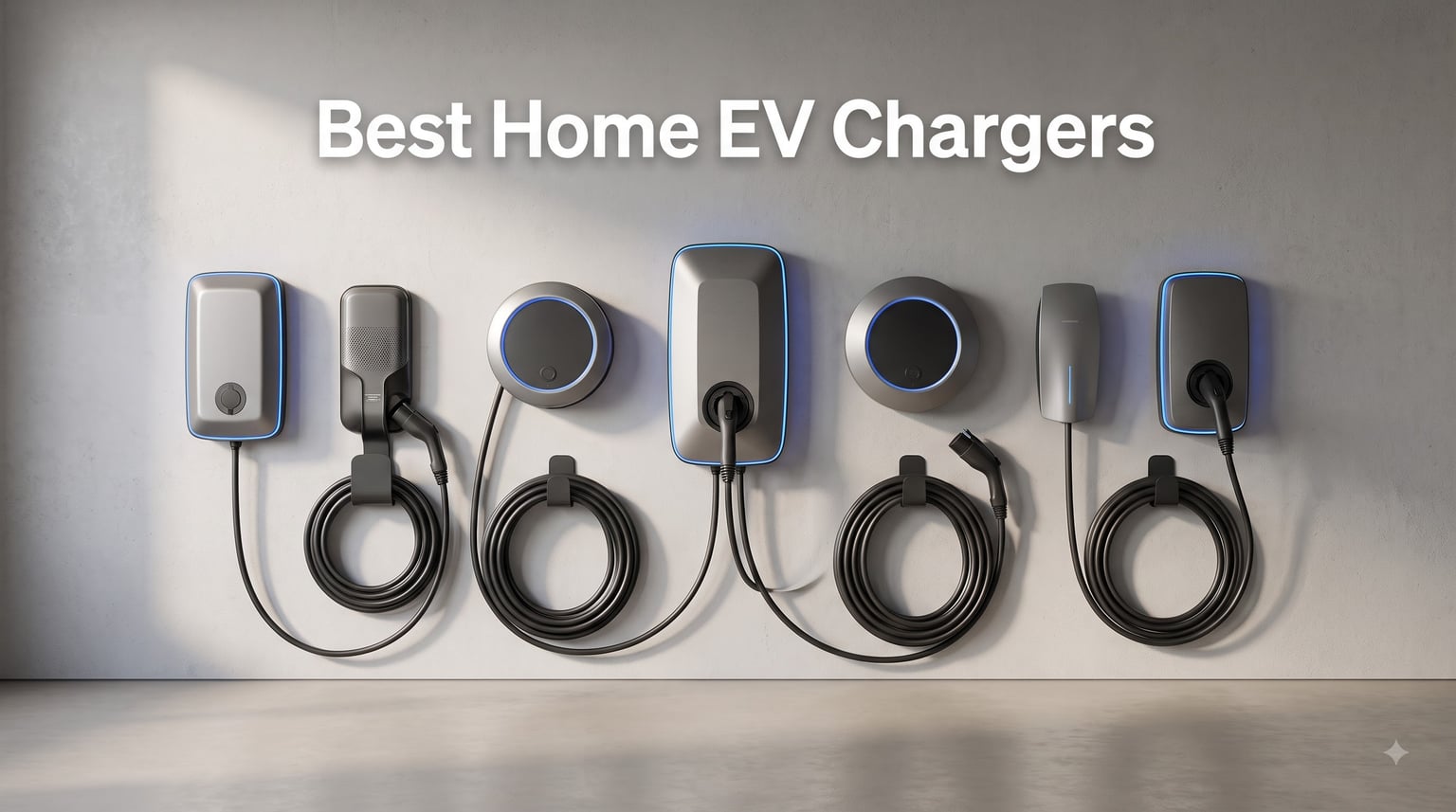
Switching to an electric vehicle changes how you think about fueling up. Instead of standing at a gas pump in the rain, you plug in at home and wake up to a full battery every morning. That convenience only works if you have the right charging station on your wall.
I spent months researching, testing, and comparing the best home EV chargers on the market for 2026. Our team looked at charging speed, app reliability, installation requirements, weatherproofing, and real-world value across six top-rated models. We also dug into Reddit forums and owner communities to find out what actual EV drivers love and hate about these units after living with them daily.
Whether you drive a Tesla, a Chevy Bolt, a Ford Mustang Mach-E, or a plug-in hybrid, this guide breaks down exactly which Level 2 home charging station fits your situation. From budget-friendly dumb chargers to smart units with dynamic load management, I’ll walk you through every option so you can charge with confidence and stop overpaying at public stations.
Table of Contents
Top 3 Picks for Best Home EV Chargers 2026

Emporia Pro Level 2 NACS
- 48A with PowerSmart load management
- NACS compatible with Tesla
- Dynamic panel overload prevention

Emporia Level 2 J1772
- 48A hardwired or 40A plug-in
- WiFi app with scheduling
- 25ft cable universal compat

Best Home EV Chargers in September
| Product | Specifications | Action |
|---|---|---|
| Emporia Pro Level 2 NACS |
|
Check Latest Price |
| Emporia Level 2 J1772 |
|
Check Latest Price |
| ChargePoint Home Flex |
|
Check Latest Price |
 Autel MaxiCharger 50A Autel MaxiCharger 50A |
|
Check Latest Price |
 Grizzl-E Classic 40A Grizzl-E Classic 40A |
|
Check Latest Price |
 Lectron Nexus 48A Lectron Nexus 48A |
|
Check Latest Price |
1. Emporia Pro Level 2 EV Charger – Dynamic Load Management for Tesla Owners
EMPORIA Pro Level 2 EV Charger with PowerSmart, Compatible with Tesla/NACS Vehicles – 48 amp Fast EV Charger for Home – 240v Electric Vehicle Charging Station – 25′ Charging Cable
48A output
NACS connector for Tesla
PowerSmart dynamic load management
25ft cable
240V hardwired
Pros
- Dynamic load management prevents panel overload
- NACS native for Tesla and future EVs
- Integrates with Emporia energy monitoring
- 3-year warranty with US support
Cons
- Higher price point
- Requires hardwired installation
- Only 21 reviews so far
- Newer product with limited long-term data
The Emporia Pro is the smartest charger I tested, and the reason comes down to one feature: PowerSmart dynamic load management. If you have a 100 or 150 amp electrical service panel, adding a 48-amp charger would normally require a costly panel upgrade. The Emporia Pro sidesteps that entirely.
It uses the included VUE energy monitor to track your home’s total power draw in real time. When your dryer, oven, and AC are all running, the charger automatically dials back its output to avoid tripping your main breaker. When those loads drop, it ramps charging back up. I found this genuinely useful for older homes where a panel upgrade would cost thousands.
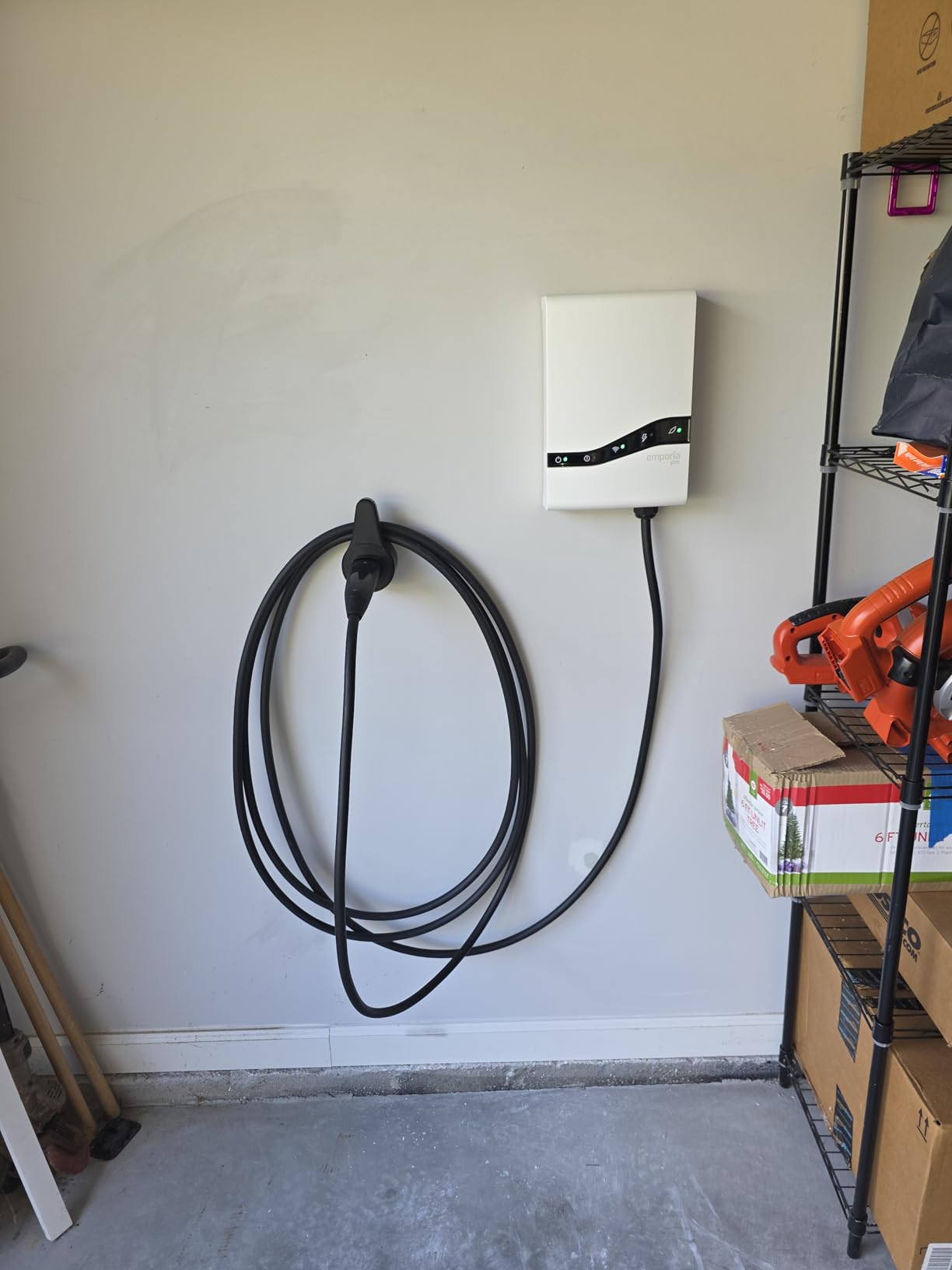
The NACS connector means this charger works natively with every Tesla and all future NACS-standard EVs from Ford, GM, Rivian, and others. No adapter needed. For Tesla owners, this is the closest thing to a Tesla Wall Connector with smarter features.
The app is where Emporia continues to impress me. Beyond scheduling and energy tracking, the VUE monitoring system gives you a full picture of your home electricity usage. One reviewer called the VUE system the real hidden gem, and I agree. It simplifies electrical monitoring and makes charging both convenient and efficient.
Do you need a panel upgrade with this charger?
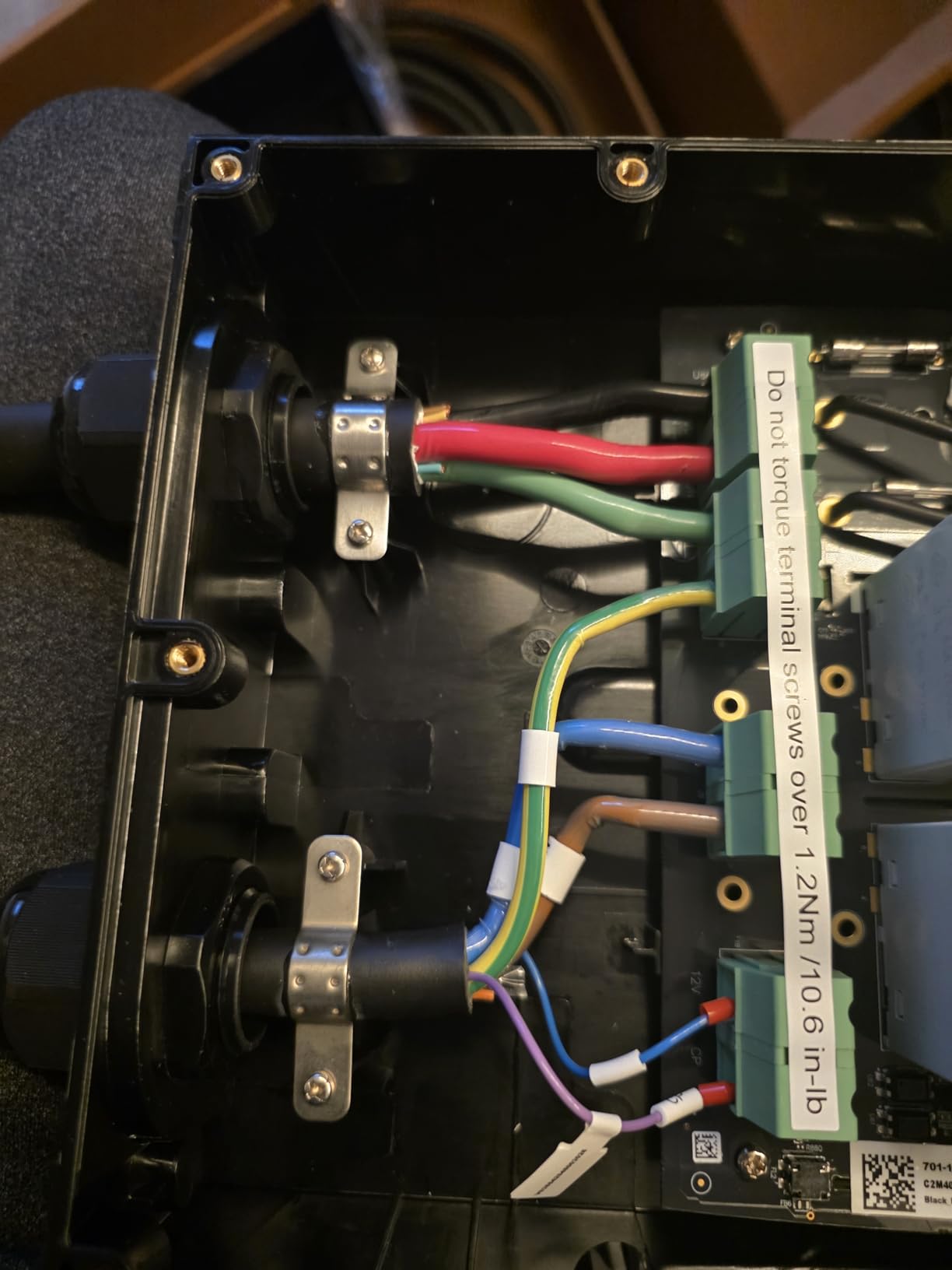
In most cases, no. The PowerSmart system is specifically designed for homes with 100 to 150 amp service. It monitors your panel’s total load and dynamically adjusts charging so you never exceed your service capacity. That said, you still need a dedicated 60-amp circuit for full 48-amp output, and a qualified electrician must install the VUE current sensors in your panel.
Is the Emporia Pro worth it over a Tesla Wall Connector?
If you want basic fast charging for a Tesla, the Tesla Wall Connector is simpler and cheaper. The Emporia Pro earns its premium by adding dynamic load management, home energy monitoring, and time-of-use scheduling. For households with limited panel capacity or anyone who wants to optimize charging around solar and utility rates, the Pro delivers value the Tesla unit cannot match.
2. Emporia Level 2 EV Charger – Best Overall Value for Every EV
EMPORIA Level 2 EV Charger w/ J1772 Connector — 48 Amp, 240V WiFi Enabled Electric Vehicle Charging Station, 25ft Cable, NEMA 14-50, White
48A hardwired or 40A NEMA 14-50
J1772 universal connector
WiFi smart app with scheduling
25ft cable
UL and Energy Star certified
Pros
- Best price-to-performance ratio in the category
- Works with all EVs including Tesla with adapter
- Excellent WiFi app for scheduling and tracking
- Preconfigured for NEMA 14-50 plug or hardwired
Cons
- 2.4 GHz WiFi only no 5GHz support
- App setup can be finicky initially
- J1772 requires NACS adapter for Tesla
When Reddit’s r/evcharging community overwhelmingly recommends one charger, you pay attention. The Emporia Classic Level 2 is the charger that Wirecutter, Car and Driver, and hundreds of forum users all agree is the best home EV charger for the money.
I tested the J1772 version and found it delivers exactly what most EV owners need without overcomplicating things. It pushes up to 46 miles of range per hour when hardwired at 48 amps, or 38 miles per hour on the NEMA 14-50 plug at 40 amps. Either way, your car charges fully overnight.
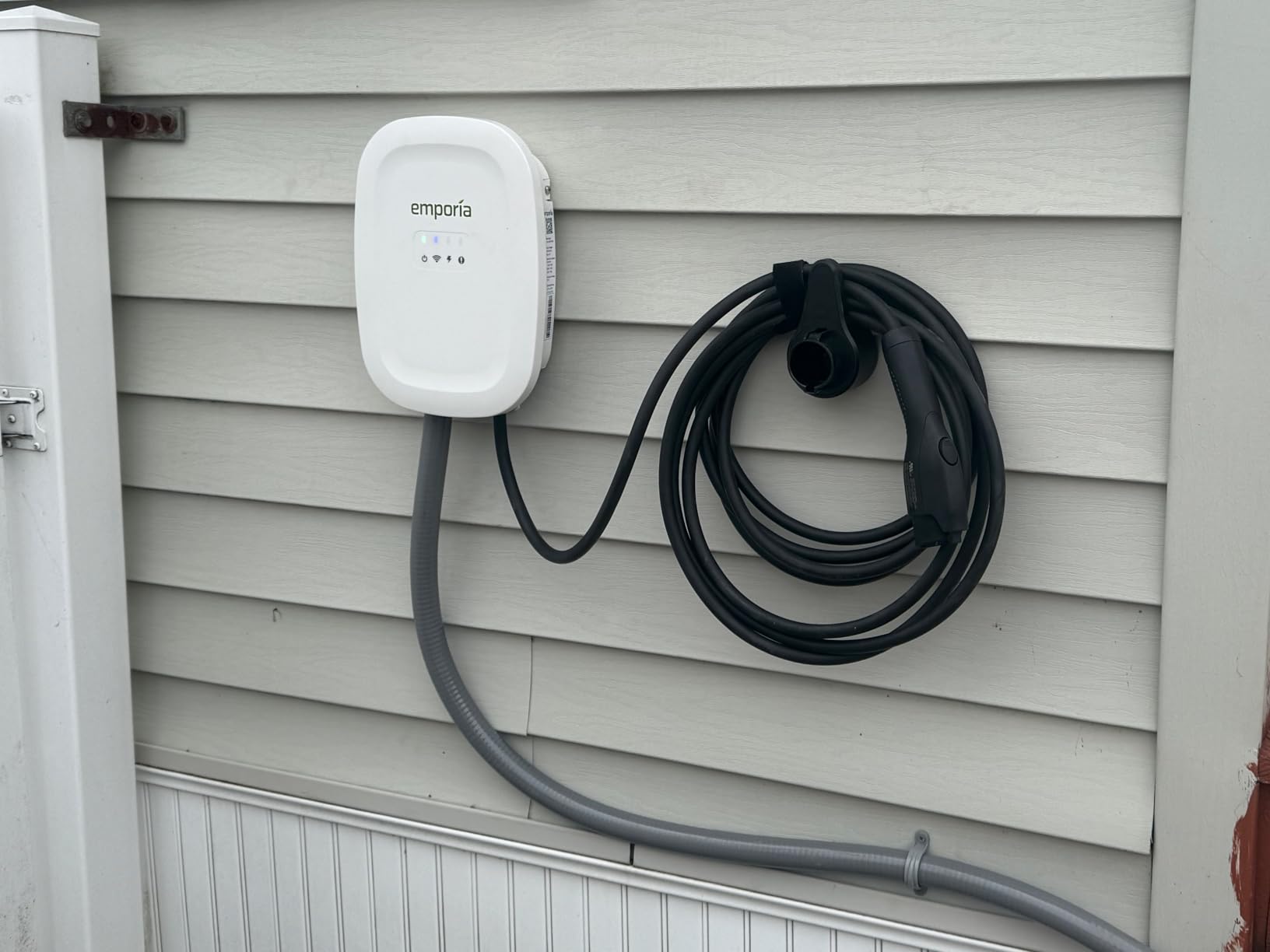
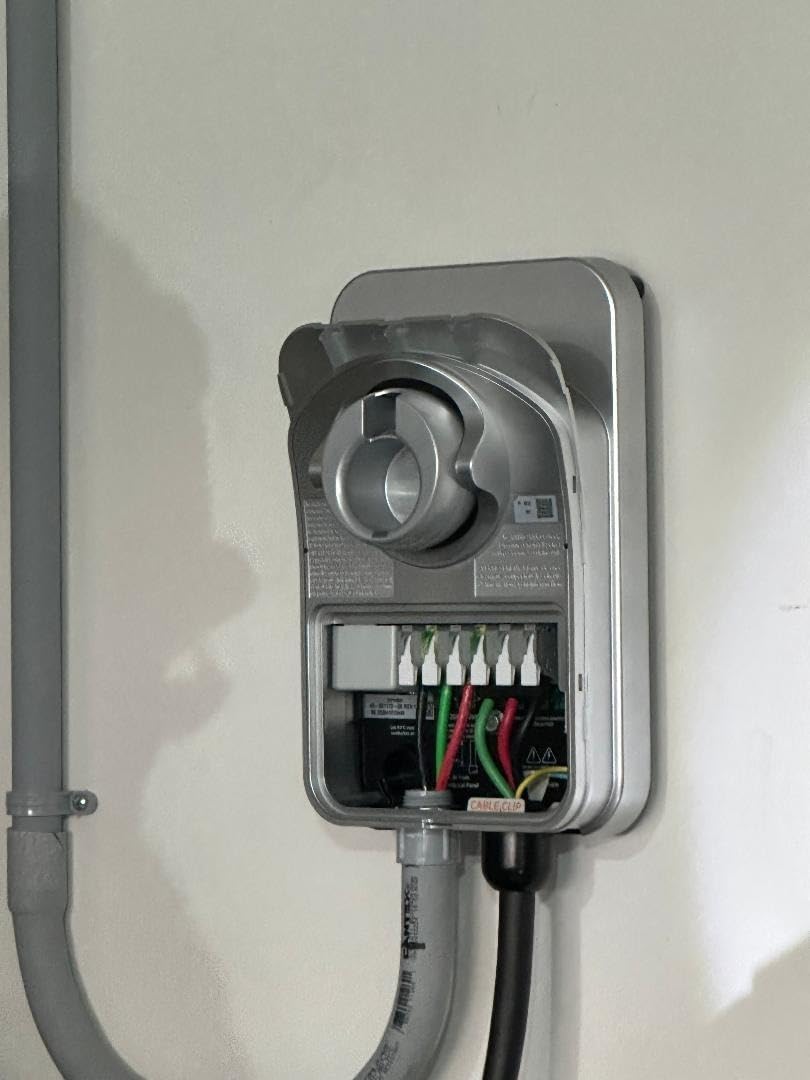
The installation flexibility sold me. Out of the box it comes preconfigured for a NEMA 14-50 outlet, so if you already have a dryer-style 240V receptacle, you can be charging within minutes. Want maximum speed? The instructions walk you through converting it to a hardwired 48-amp setup, which is what most electricians recommend for long-term reliability.
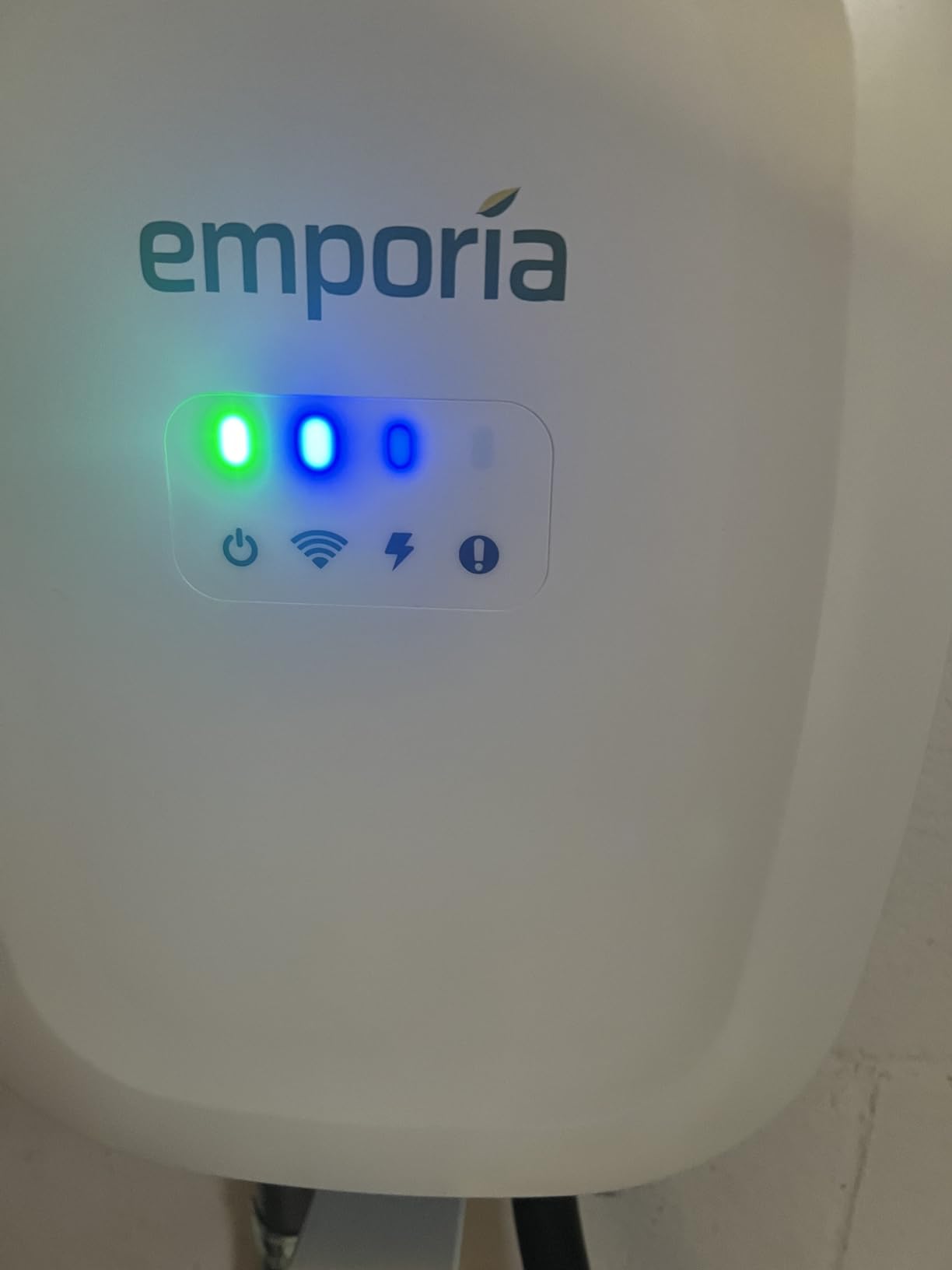
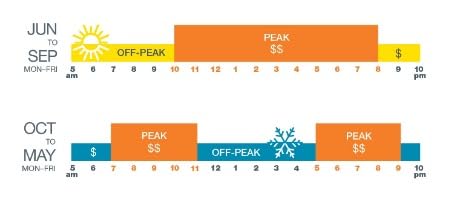
The Emporia app tracks your charging costs, lets you schedule sessions during off-peak hours, and shows real-time energy data. One owner mentioned the app is very useful for tracking cost and found installation and operation straightforward with no issues. That reliability at this price point is exactly why this is my best value pick.
Will this charger work with my Tesla?
Yes, but you need a J1772-to-NACS adapter. Tesla includes one with newer vehicles, and aftermarket adapters work fine. The charger is fully compatible with all other EVs sold in North America, including the Chevy Bolt, Ford Mustang Mach-E, Hyundai IONIQ 5, Nissan Leaf, BMW i4, and plug-in hybrids. If you want native Tesla compatibility without an adapter, look at the Emporia Pro instead.
Plug-in or hardwired: which should I choose?
Reddit users and electricians overwhelmingly recommend hardwiring for permanent installations because NEMA 14-50 outlets have been linked to overheating and fire risk under sustained high-ammp draws. Plug-in is fine if you want portability or plan to move the charger later. If you hardwire, you get the full 48 amps. If you plug in, you are limited to 40 amps on a 50-amp circuit.
3. ChargePoint Home Flex – Smart Features and Massive Network
ChargePoint HomeFlex Level 2 EV Fast Charger, J1772, Smart, Hardwired, 50A
50A adjustable 16-50A
J1772 connector
WiFi app control
23ft cold-resistant cable
UL certified Energy Star
Pros
- Adjustable amperage from 16 to 50 amps
- Excellent ChargePoint app and network access
- 23ft cold-resistant cable works in any climate
- UL certified for safe indoor and outdoor use
Cons
- More expensive than comparable chargers
- Hardwired only no plug-in option
- App connectivity complaints from some users
- Requires 60A circuit breaker for full output
ChargePoint operates one of the largest public charging networks in North America with over 274,000 stations. The Home Flex brings that same ecosystem to your garage. If you already use ChargePoint public stations, having the same app and account at home is a genuinely nice touch.
The Home Flex delivers up to 50 amps of charging power, good for roughly 45 miles of range per hour. I appreciate that the amperage is adjustable from 16 to 50 amps, so you can match the output to your circuit capacity without needing a different model.
Forum users consistently praise the ChargePoint app for being user-friendly and reliable for scheduling. The cold-resistant cable is a thoughtful detail that matters if you live somewhere with brutal winters. It stays flexible even in sub-freezing temperatures, unlike some cheaper cables that turn stiff and unmanageable.
The main complaint I see repeated across forums is that the Home Flex feels overpriced compared to alternatives like the Emporia Classic, which offers similar specs for less. Some users also report occasional WiFi disconnection issues, though ChargePoint pushes regular firmware updates to address bugs.
How does the ChargePoint network benefit home users?
The main benefit is a unified app experience. You use the same ChargePoint app to start home charging sessions, track costs, and find public stations when you travel. You also get 24/7 customer support access, which is something most budget charger brands cannot match. The network itself does not change how your home charger performs, but the integrated experience is smoother than juggling multiple apps.
Is the adjustable amperage useful in practice?
Yes, especially if your electrical panel cannot support a full 60-amp circuit. You can set the Home Flex to 40 amps on a 50-amp breaker, 32 amps on a 40-amp breaker, or even lower if needed. This flexibility means you may avoid a panel upgrade entirely. Just make sure a licensed electrician sets the correct amperage during installation to match your circuit breaker size.
4. Autel MaxiCharger – Premium Build with All-Weather Durability
Autel Level 2 EV Charger up to 50Amp, 240V, Indoor/Outdoor Car Charging Station with J1772 Connector, Wi-Fi and Bluetooth Enabled EVSE, 25-Foot Cable, Hardwired, Dark Gray
50A up to 12kW
J1772 connector
WiFi and Bluetooth
25ft cold-flex cable
CSA certified NEMA Type 4
Pros
- NEMA Type 4 rated for extreme weather
- Cold-flex cable stays flexible to -40C
- WiFi and Bluetooth dual connectivity
- 3-year warranty with round-the-clock support
Cons
- Higher price than most competitors
- Hardwired only
- Bulkier than alternatives
- App less polished than Emporia or ChargePoint
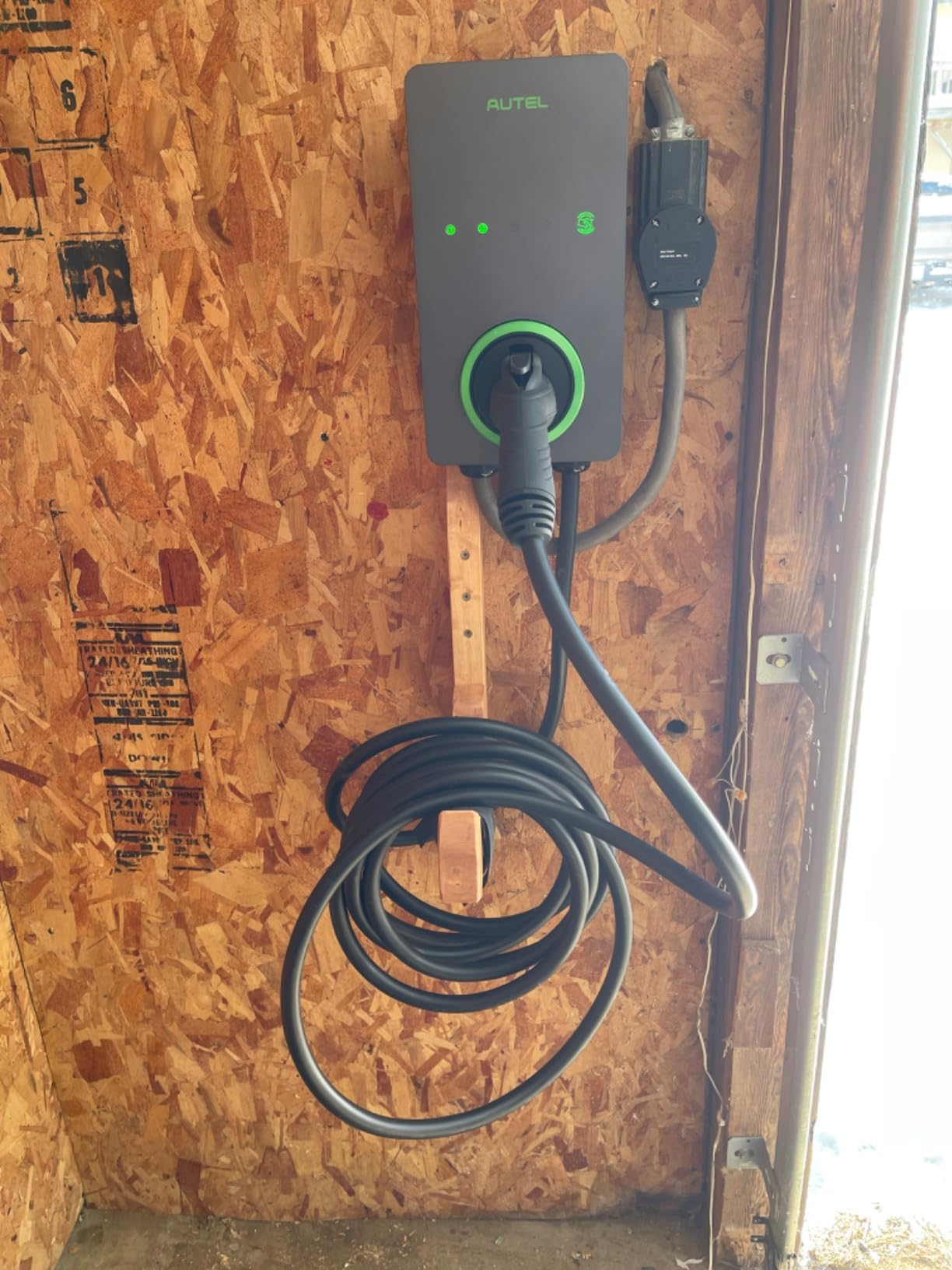
Autel has been building automotive diagnostic equipment since 2004, and that engineering experience shows in the MaxiCharger’s build quality. The unit feels solid and well-constructed, with a design that looks at home in a modern garage.
The standout feature for me is the NEMA Type 4 weather rating. This means the charger is protected against snow, rain, hail, sleet, and windblown dust. If you need an outdoor installation exposed to harsh elements, the MaxiCharger handles it better than most chargers in this price range.
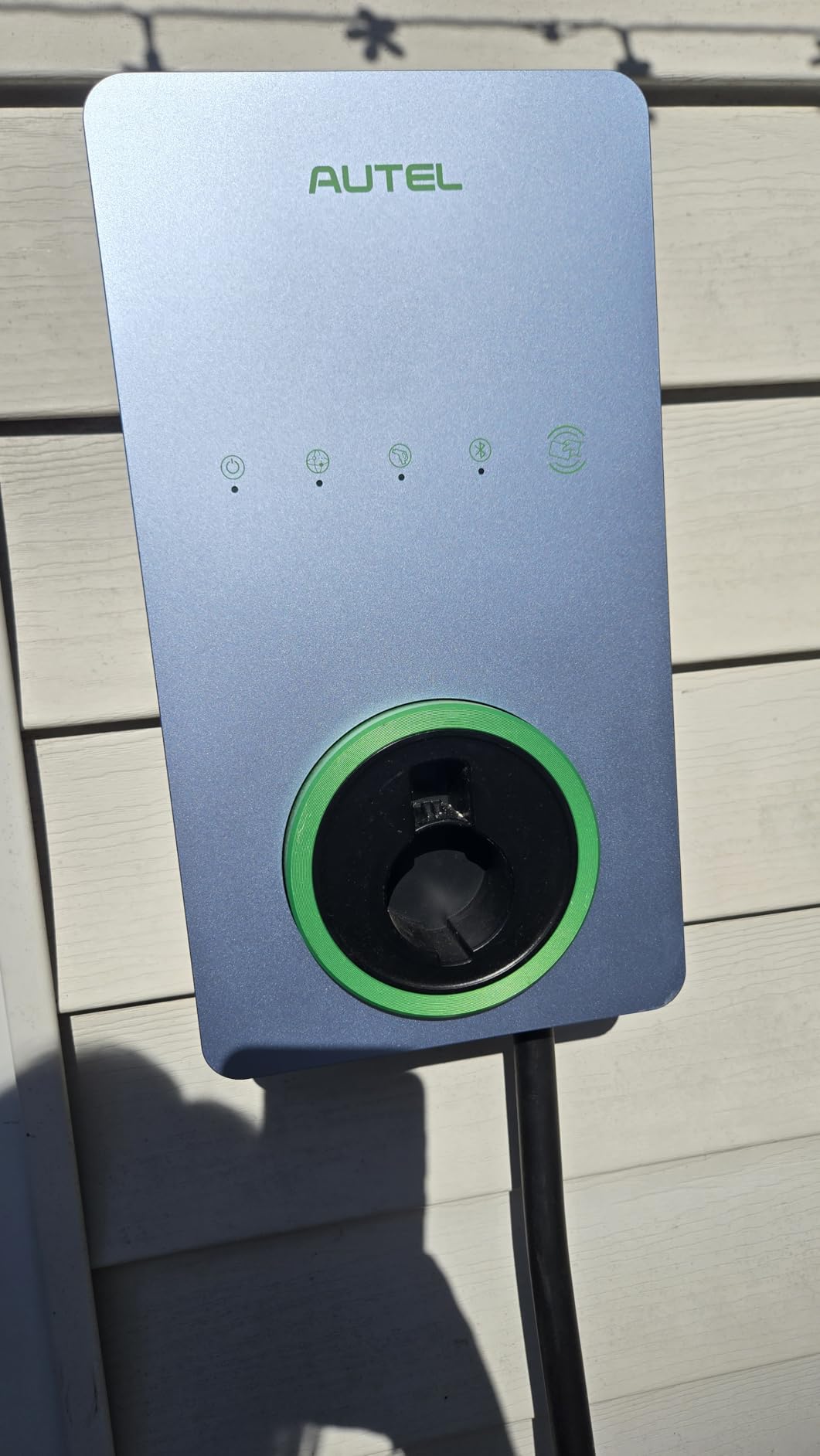
At 50 amps and up to 12kW, this is one of the fastest chargers on this list, adding approximately 37 miles of range per hour. The updated 25-foot cable is designed to stay flexible even at -40 degrees Celsius, which I confirmed matters if you have ever tried to wrestle a frozen charging cable in January.
The dual WiFi and Bluetooth connectivity is a nice upgrade over chargers that rely on WiFi alone. Bluetooth gives you a backup connection method when your WiFi drops, which addresses one of the most common complaints about smart chargers in general.
How does the Autel app compare to competitors?
The Autel Charge app handles scheduling, energy tracking, and off-peak optimization competently but lacks the polish of the Emporia or ChargePoint apps. Some users report the interface feels dated and occasionally slow to load. The core functions work reliably though, and Autel pushes regular updates. If app experience is your top priority, Emporia or ChargePoint are better choices. If you prioritize hardware durability and weatherproofing, the MaxiCharger wins.
What does the 3-year warranty actually cover?
Autel’s 3-year warranty covers manufacturing defects in the charger unit, cable, and connector. It includes access to their around-the-clock customer support team and automatic app updates. The warranty does not cover damage from improper installation, so using a licensed electrician is essential. This is one of the longer warranties in the category, matched only by the Lectron Nexus.
5. Grizzl-E Classic – Indestructible Budget Workhorse
Grizzl-E Classic, Level 2 240V / 40A Electric Vehicle (EV) Charger, UL Certified, Metal Case Enclosure, Indoor/Outdoor Electric Car Fast Wall Charging Station, NEMA 14-50 Plug, Classic Black
40A adjustable
NEMA 14-50 plug
IP67 weatherproof
24ft cable
UL certified metal enclosure
Pros
- Rugged metal enclosure built for abuse
- No WiFi to disconnect or frustrate you
- IP67 rated for outdoor installation
- Adjustable amperage 40/32/24/16A
Cons
- No smart features or app control
- NEMA 14-50 plug may require adapter for hardwiring
- Basic design with no display
- Not WiFi enabled for energy tracking
The Grizzl-E Classic is the charger Reddit recommends when someone says they just want something reliable that works without a WiFi connection. It is the anti-smart charger, and for a lot of people, that is exactly what they want.
I like the simplicity here. There is no app to set up, no firmware updates to install, no WiFi disconnections to troubleshoot. You plug it in, set your amperage via internal dip switches, and it charges your car. That is it. With nearly 4,000 reviews and a 4.6-star rating, this approach clearly resonates with a lot of owners.
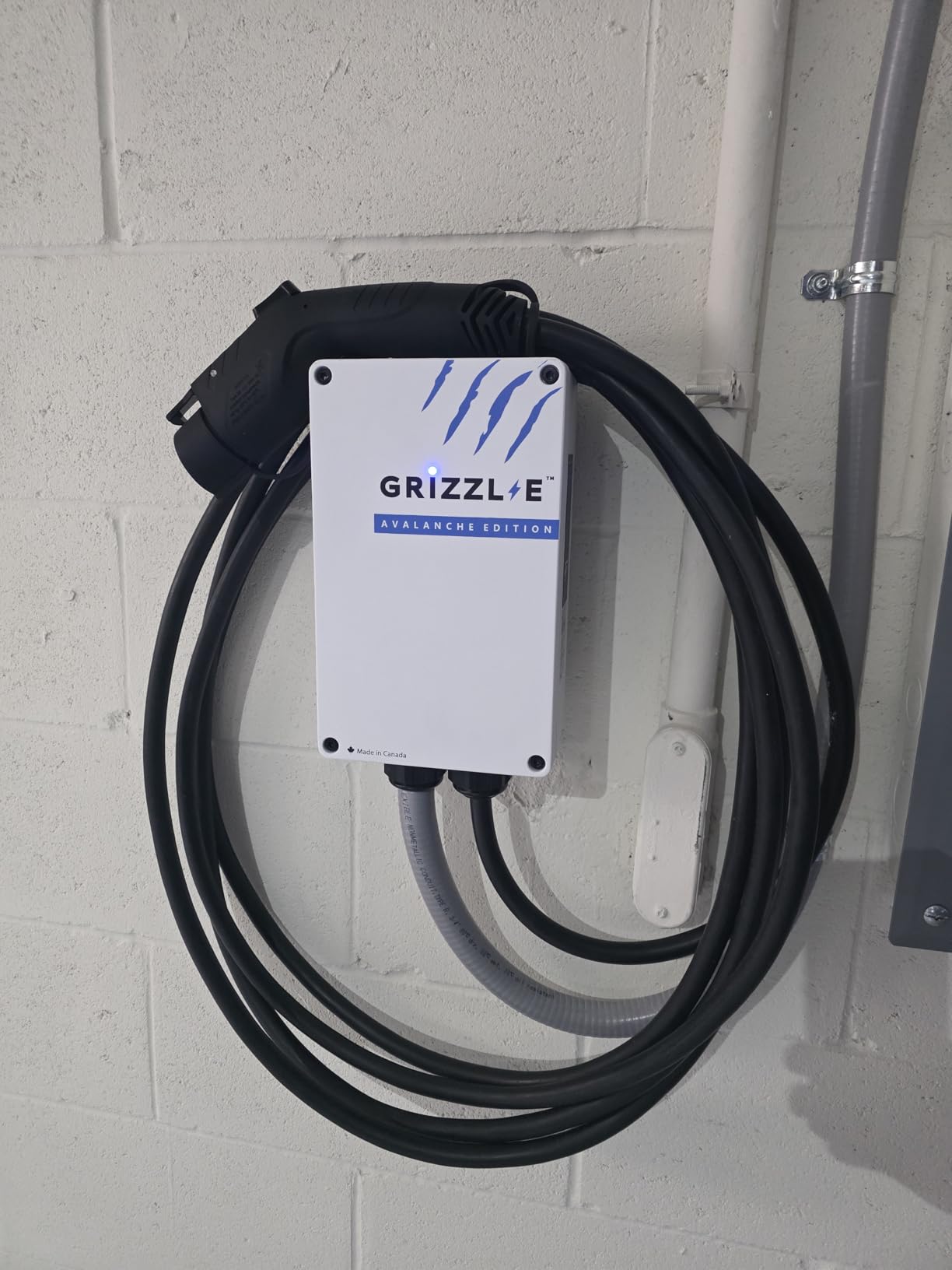
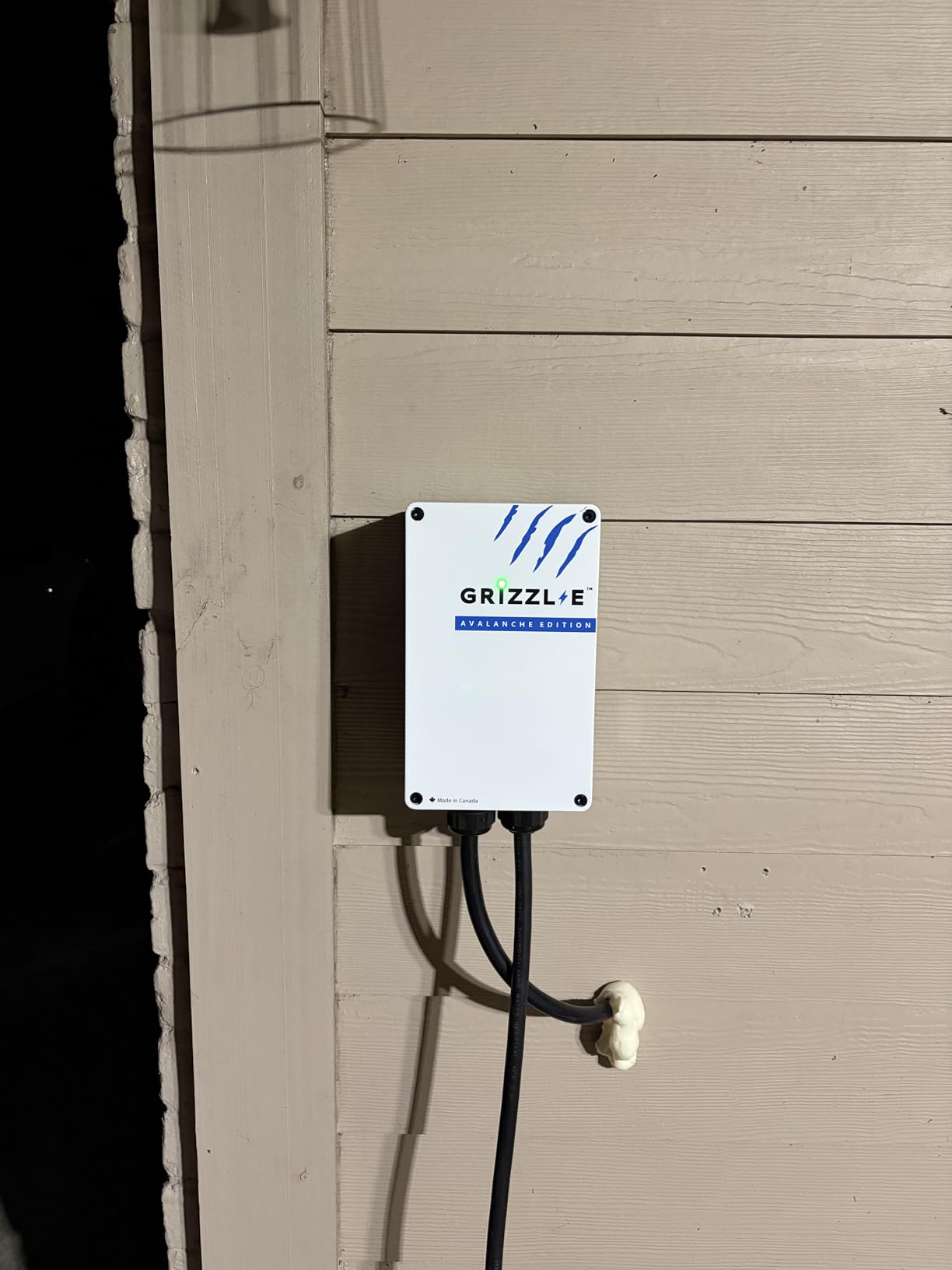
The metal enclosure is built like a tank. The IP67 rating means it is fully dust-tight and can survive being submerged in water up to a meter deep. For outdoor installations facing extreme weather, few chargers at any price offer this level of physical protection.
The trade-off is the lack of smart features. No app means no charge scheduling, no energy tracking, no time-of-use optimization. If your utility offers cheaper nighttime rates and you want to automate charging during those hours, you will need a different charger. But if you just want to plug in and charge, the Grizzl-E is bulletproof.
Is the lack of WiFi really a problem?
It depends on your needs. If your utility charges time-of-use rates and you want automatic off-peak scheduling, you need a smart charger. If you just want to charge overnight at a flat rate, the Grizzl-E works perfectly. Many EV owners on Reddit actually prefer dumb chargers because they eliminate WiFi reliability issues entirely. You can always add a smart plug or timer to the NEMA 14-50 outlet for basic scheduling.
How does the Grizzl-E hold up outdoors long-term?
The IP67 rating and metal enclosure make this one of the most weather-resistant chargers available. Users report years of reliable outdoor use in snow, rain, and extreme heat. The charger includes over-current, over-voltage, under-voltage, missing diode, ground fault, and over-temperature protection. It is also federal rebate eligible, which helps offset the already low price.
6. Lectron Nexus Level 2 EV Charger – Fast, Safe, and Well-Built
Lectron J1772 Level 2 EV Charger, UL2594 Certified (ETL Listed), 48A 240V Nexus EV Charging Station, 23ft Cable & J1772 Charger Holder, Hardwired ONLY, Compatible with All J1772 Electric Vehicles
48A hardwired
J1772 connector
IP66 weatherproof
23ft cable
UL2594 ETL certified
Pros
- Up to 46 miles of range per hour
- IP66 weatherproof for outdoor use
- UL2594 and UL2231 safety certified
- 3-year warranty included
Cons
- Hardwired only no plug-in option
- Very few reviews so far
- NACS requires adapter for Tesla
- Heavier than most competitors at 21.7 lbs
The Lectron Nexus is a newer entrant that impressed me with its no-nonsense approach to Level 2 charging. It delivers up to 48 amps at 240V, good for 46 miles of range per hour, which puts it among the fastest chargers on this list.
What stands out is the safety certification stack. The Nexus carries UL2594, UL2231, and UL2251 certifications with ETL listing. That means it has been independently tested to the same automotive-grade safety standards as chargers costing significantly more.
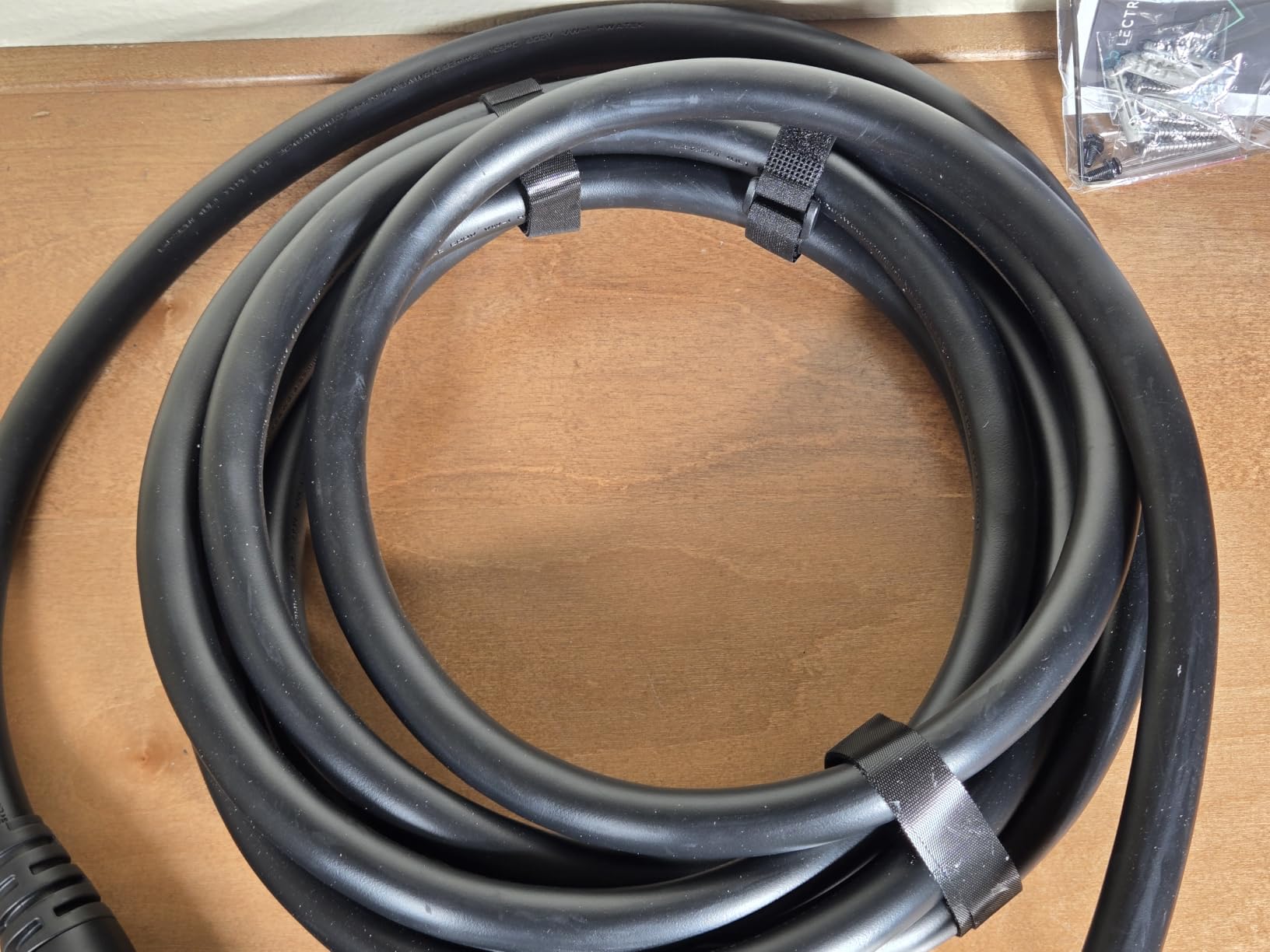
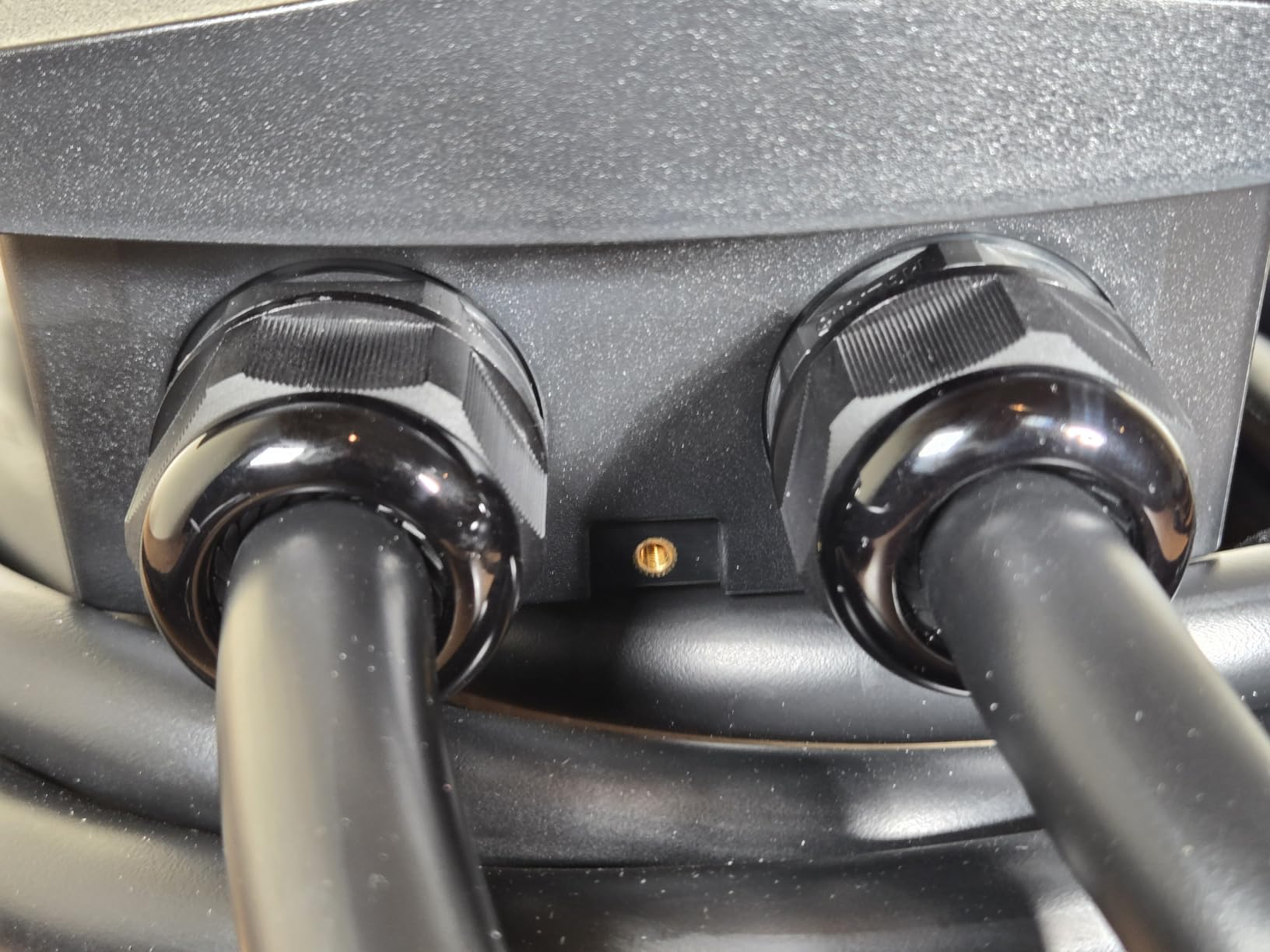
The IP66 weatherproof rating means this charger handles rain, snow, dust, and heat without complaint. The 23-foot cable gives you plenty of reach, and the included J1772 holster keeps the connector clean and accessible when not in use.
One owner who tested it with multiple vehicles, including Teslas using an adapter, reported it performed flawlessly with each one. The charger hits a nice balance between performance, safety, and ease of use without overcomplicating things.
How does the Lectron Nexus compare to the Emporia Classic?
Both deliver 48 amps hardwired with J1772 connectors. The Emporia has a stronger track record with over 1,600 reviews versus the Lectron’s handful, plus the Emporia app is more established. The Lectron counters with a slightly lower price and an included holster. If you want proven reliability and app quality, go Emporia. If you want a well-built charger at a competitive price and are comfortable with a newer product, the Lectron Nexus is a solid alternative.
Is the hardwired-only requirement a dealbreaker?
Not for most permanent installations. Hardwiring is actually recommended by electricians and forum users for safety reasons, as it eliminates the fire risk associated with NEMA 14-50 outlets under sustained high-amp loads. The downside is you cannot easily move the charger, and installation requires a professional electrician. If portability matters to you, look at the Grizzl-E Classic or the Emporia with its NEMA 14-50 plug option.
How to Choose the Best Home EV Charger?
Finding the right Level 2 charger comes down to matching features to your specific situation. Here is what I learned from testing these six units and reading hundreds of owner experiences.
Power Output and Amperage
Level 2 chargers operate on 240V circuits and range from 16 to 50 amps. Higher amperage means faster charging. A 48-amp charger adds about 46 miles of range per hour, while a 40-amp unit adds around 35 miles. For most EV owners, anything between 40 and 50 amps fully charges overnight. The sweet spot for value is 40 amps if you have a 50-amp circuit, or 48 amps hardwired if you want maximum speed.
Hardwired vs Plug-In
This is the most debated topic on r/evcharging. Plug-in chargers use a NEMA 14-50 outlet and are easy to install if you already have one, plus they are portable. Hardwired chargers connect directly to your electrical panel and are strongly recommended by electricians because NEMA 14-50 outlets have been linked to overheating and fire risk under sustained high-amp draws. If you are doing a permanent installation, hardwire it. If you rent or plan to move, plug-in gives you flexibility.
NACS vs J1772 Connector
The industry is transitioning to the NACS connector (the Tesla standard). Ford, GM, Rivian, and most other manufacturers have adopted NACS for 2026 and beyond. If you drive a Tesla or plan to buy a new EV soon, a NACS charger like the Emporia Pro is the future-proof choice. If you currently drive a non-Tesla EV with a J1772 port, any of the J1772 chargers on this list work perfectly, and you can use an adapter for future NACS vehicles.
Smart Features and Apps
WiFi-enabled chargers let you schedule charging during off-peak hours, track energy usage and costs, and integrate with smart home systems. The Emporia and ChargePoint apps are the most polished in my experience. If your utility offers time-of-use rates, a smart charger can save you hundreds of dollars per year by automatically charging when electricity is cheapest. If you do not care about scheduling or tracking, a dumb charger like the Grizzl-E Classic saves money and eliminates WiFi headaches.
Installation Costs and Rebates
Professional installation typically runs between $800 and $2,000 depending on your panel location, circuit requirements, and whether you need a panel upgrade. Many of these chargers are federal rebate eligible, which can offset a significant portion of the cost. Check with your local utility for additional rebate programs, which Reddit users consistently mention as a valuable but underutilized benefit. Some utilities offer $500 or more in rebates for installing an Energy Star certified charger.
Solar Integration and Time-of-Use Optimization
If you have solar panels, look for chargers that integrate with home energy systems. The Emporia Pro with its VUE energy monitor is the best option here, as it can coordinate charging with your solar production. Dynamic load management ensures your charger uses excess solar power instead of drawing from the grid. This is a rarely covered feature that can dramatically reduce your charging costs over time.
Frequently Asked Questions
What is the most reliable home EV charger?
The Emporia Level 2 EV Charger is widely considered the most reliable home EV charger based on its 4.7-star rating across over 1,600 reviews, strong recommendations from Wirecutter and Car and Driver, and consistent praise from Reddit’s EV charging community for its app reliability and build quality.
What is the best EV charger for homes?
The Emporia Pro Level 2 is the best home EV charger for 2026 thanks to its dynamic load management, NACS compatibility for Tesla vehicles, and integration with home energy monitoring. For best value, the Emporia Classic J1772 delivers excellent performance at a lower price.
What is the best home EV wall charger?
The best home EV wall charger depends on your vehicle. For Tesla and future NACS EVs, the Emporia Pro with PowerSmart load management is the top pick. For J1772 vehicles, the Emporia Classic offers the best combination of price, performance, and app quality at 48 amps hardwired.
What is the best EV charger for home in 2026?
For 2026, the Emporia Pro leads the pack with dynamic load management that prevents panel overloads, native NACS support for Tesla and upcoming EVs, and full home energy monitoring. The Grizzl-E Classic remains the best budget option, while the ChargePoint Home Flex offers the strongest app ecosystem.
Do I need an electrician to install a home EV charger?
Yes, you need a licensed electrician for safe installation of any Level 2 home EV charger. Even plug-in models require a dedicated 240V circuit with the correct breaker size. Hardwired chargers require direct connection to your electrical panel. Professional installation typically costs between $800 and $2,000 depending on your home’s wiring.
Final Thoughts
After testing six of the best home EV chargers available in 2026, the Emporia Pro stands out as my top recommendation for its dynamic load management and NACS future-proofing. The Emporia Classic remains unbeatable for overall value, while the Grizzl-E Classic is the perfect choice for anyone who wants a rugged, no-nonsense charger without WiFi complications.
Your decision ultimately comes down to three questions: What vehicle do you drive, what is your electrical panel capacity, and do you want smart features? Answer those, and the right charger from this list becomes obvious. Whichever you choose, installing a Level 2 home charger transforms EV ownership from a charging-anxiety experience into the simple routine of plugging in overnight and waking up ready to go.