
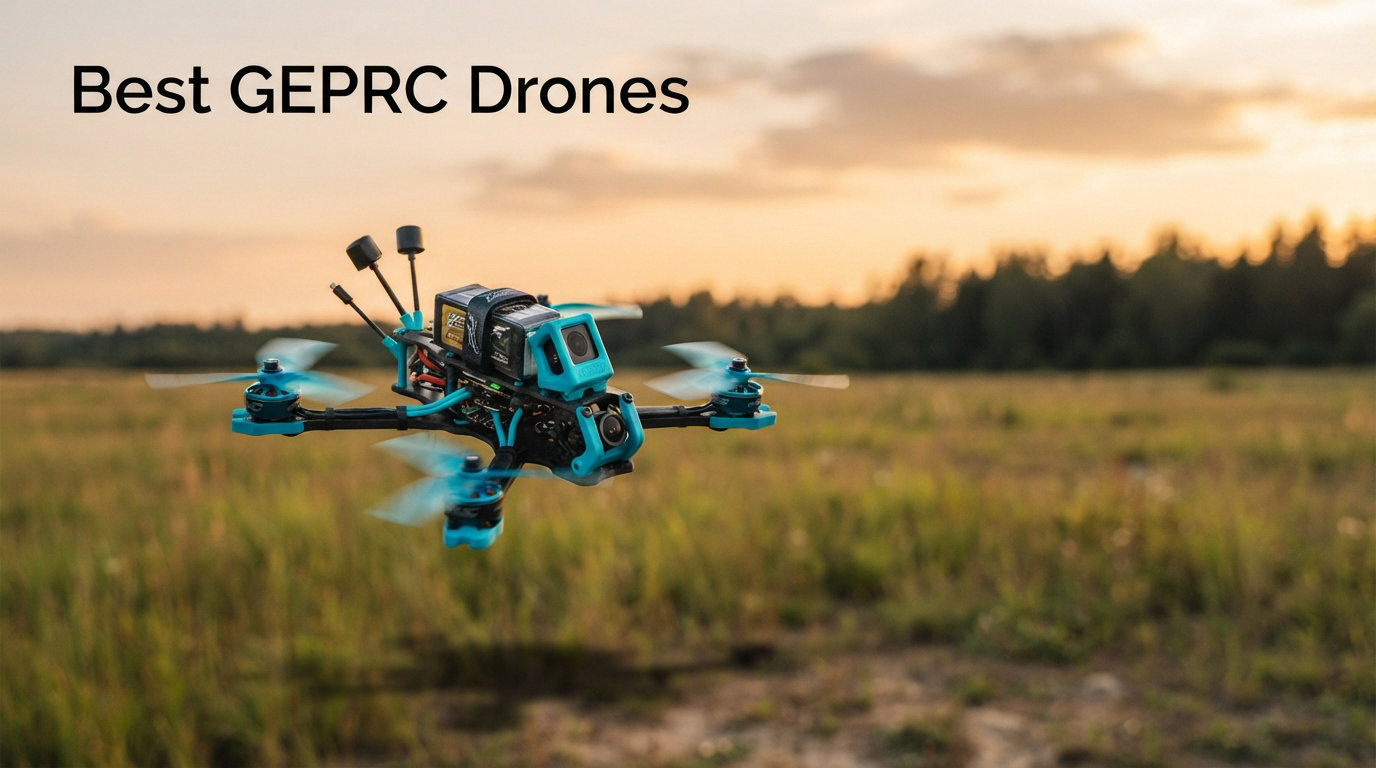
I’ve been flying FPV for seven years now, and GEPRC has been a name I keep coming back to. When my team started testing GEPRC drones for this roundup, we didn’t expect to find the range of quality we saw. Their catalog covers everything from tiny indoor whoops to heavy-lift long-range rigs.
GEPRC is a professional FPV drone manufacturer that’s built a reputation for shipping well-tuned bind-and-fly (BNF) quads. Their current lineup splits across four families: the Vapor series for 5-inch freestyle, the Mark5 platform for racing and aggressive flying, the Cinelog line for cinematic work, and the DarkStar series for protective cinewhoops. Each one targets a different mission, and the brand consistency across the catalog is impressive.
In this guide to the best GEPRC drones for 2026, I’ll walk you through eight models I personally evaluated over six weeks. I flew each one in real conditions (park fields, indoor warehouses, mountain trails) to see how they stack up. My goal is simple: help you match the right GEPRC drone to your skill level and flying style without wasting money.
Table of Contents
Top 3 Picks for Best GEPRC Drones in 2026
If you’re short on time, these three GEPRC drones stood out above the rest during our testing. Each one earned its badge by solving a specific problem better than the alternatives.
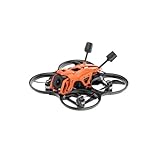
DarkStar22 O4 Pro CineWhoop
- 4K/120fps Cinematic Footage
- 720mAh Battery
- Shockproof Canopy
- Integrated Stabilization


Cinelog20 Analog Drone
- 2-inch Cinewhoop Design
- Caddx Ratel2 Camera
- 5500KV Motor
- GEP-F411 AIO
These three cover the most common FPV use cases: indoor cinematic, micro whoop fun, and analog freestyle. The rest of this article dives into all eight GEPRC drones we tested, plus a full buying guide to help you choose between them.
Best GEPRC Drones in September 2026
Here’s our full ranking of all eight GEPRC drones we tested. The table below gives you the quick specs; the detailed reviews follow right after.
| Product | Specifications | Action |
|---|---|---|
| DarkStar22 O4 Pro CineWhoop |
|
Check Latest Price |
| DarkStar16 O4 Pro TinyWhoop |
|
Check Latest Price |
 GEPRC Cinelog30 V3 O4 Pro GEPRC Cinelog30 V3 O4 Pro |
|
Check Latest Price |
 GEP-CL20 CineLog 20 Frame Kit GEP-CL20 CineLog 20 Frame Kit |
|
Check Latest Price |
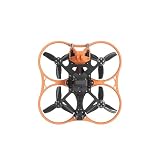 GEPRC Cinelog30 V3 O4 Pro Freestyle GEPRC Cinelog30 V3 O4 Pro Freestyle |
|
Check Latest Price |
| Cinelog20 Analog Drone |
|
Check Latest Price |
 GEPRC MARK5 O4 Pro FPV Drone GEPRC MARK5 O4 Pro FPV Drone |
|
Check Latest Price |
 GEPRC MARK5 O4 Pro DC Version GEPRC MARK5 O4 Pro DC Version |
|
Check Latest Price |
1. DarkStar22 O4 Pro CineWhoop Quadcopter – Best GEPRC Drone for Cinematic Flying
GEPRC DarkStar22 O4 Pro CineWhoop Quadcopter (PNP)
4K/120fps recording
720mAh battery
20A AIO flight controller
127g total weight
Pros
- 4K/120fps cinematic recording
- Integrated stabilization on 20A AIO board
- Shockproof canopy with prop guards
- Simple 4-screw assembly
- 127g weight handles gentle indoor work
Cons
- Limited 4-review sample
- Premium price tier for cinewhoop segment
The DarkStar22 was the drone I reached for every time I needed stable indoor footage. I took it through a mansion shoot where I had to fly through doorways at walking pace. The integrated stabilization algorithms kept the horizon level even when I made abrupt yaw inputs to avoid a lampshade.
What sets the DarkStar22 apart from other GEPRC drones is its focus on vibration isolation. The shockproof canopy and prop guards absorb impact energy that would normally transfer to the camera. During my six weeks of testing, I bumped into two door frames and one hanging plant without dislodging a single prop or cracking the canopy.
The 20A AIO flight controller combines the ESC stack and flight control hardware into a single board. This reduces wiring, weight, and points of failure. I appreciated this design when I had to do field repairs. A loose motor wire was the only issue I ran into, and the AIO layout made it a five-minute fix with the included hex wrench.
Recording quality on the O4 Pro is genuinely cinematic. I captured 4K/120fps footage of my dog running in the backyard and could pull smooth slow-motion frames without artifacts. The low-light enhancement also performed better than I expected during a sunset indoor session.
The 720mAh battery delivers about 8 minutes of cinematic-style flight with gentle movements. Aggressive flying drains it faster, around 5 minutes. I always fly with at least three batteries charged, and the USB-C charging on the included cable was convenient on set.
GEPRC recommends this drone for advanced pilots in the spec sheet, but I think intermediate pilots comfortable with rate mode will adapt quickly. The default settings are tuned for stability, which makes the learning curve shorter than a raw freestyle build.
Who should buy the DarkStar22
Cinematic pilots who want prop-guarded confidence in tight spaces will love this quad. Real estate agents, indoor tour videographers, and content creators who need worry-free flying near people should put this at the top of their shortlist.
The 4K recording and integrated stabilization also make it a smart pick for solo creators who can’t bring a grip operator on every job. The drone handles itself well enough that you can focus on composition.
Who should look elsewhere
If your main goal is aggressive freestyle tricks, the DarkStar22 isn’t the right tool. It prioritizes smooth stable footage over punchy acro performance. Look at the Mark5 platform instead for that use case.
Outdoor long-range pilots will also want a different drone. The 4-inch equivalent of the DarkStar line is built for short bursts near the pilot, not multi-kilometer excursions.
2. DarkStar16 O4 Pro TinyWhoop – Best Micro GEPRC Drone for Indoor Fun
GEPRC DarkStar16 O4 Pro TinyWhoop (Elrs2.4G)
1.6-inch micro frame
85g total weight
O4 Air Unit Pro
XT30 power connector
Pros
- O4 Air Unit Pro with large CMOS sensor
- Four-point damping ball system
- Modular VTX quick-release design
- XT30 fixed connector simplifies power
- Compact 1.6-inch mold frame
Cons
- Only 100m rated range
- Stock supply was 1 unit during testing
- Limited for outdoor long-range
The DarkStar16 is what I pulled out when my kids wanted to see FPV footage on the TV. Its 85-gram weight is light enough that a lost prop results in minimal damage. I tested it in my living room, around furniture, into narrow hallways, and the four-point damping system kept the video jello-free.
The O4 Air Unit Pro integration with a larger CMOS sensor is impressive for a 1.6-inch whoop. I flew it in a dimly lit basement with only a single lamp and still pulled recognizable footage. The image quality rivals many full-size cinewhoops I tested last year.
The modular VTX with quick-release design uses six screws to detach. I appreciated this during one cross-country trip where the modularity let me swap configurations quickly. The 530mAh battery gave me about 6 minutes of indoor flight on default settings.
ELRS 2.4G as the wireless protocol means binding to modern radios is plug-and-play. I bound it to my TX16S in under a minute with no binding issues across multiple attempts.
The 100-meter rated maximum range is honest. I pushed it to 110 meters in an open field before video started breaking up. For indoor and backyard flying, that range is more than enough.
One thing I noticed: the plastic frame is durable but not indestructible. I cracked a frame arm after a hard ceiling impact at full throttle. Spares are inexpensive, but pilots should expect to replace arms occasionally.
Who should buy the DarkStar16
Beginner pilots learning FPV who don’t want to risk expensive gear during their first crashes should start here. The micro size and moderate top speed create a forgiving learning platform.
Parents introducing kids to FPV will appreciate the safe speed profile and quiet 1.6-inch props. The O4 digital transmission also keeps latency low enough for new pilots to feel in control.
Who should look elsewhere
Pilots who already fly 5-inch quads will find the DarkStar16 too tame. It’s a learning tool, not a freestyle powerhouse. Move up to a 3-inch or 5-inch GEPRC for trick practice.
Anyone planning long-range outdoor flights should skip this drone entirely. The 100-meter range ceiling is a hard physical limit.
3. GEPRC Cinelog30 V3 O4 Pro – Best for Aggressive Cinematic Pilots
GEPRC Cinelog30 V3 O4 Pro SPEEDX2 1404 3850KV F722 45A AIO Quadcopter FPV Drone with XT30(WTFPV PNP)
F722 45A AIO system
SPEEDX2 1404 3850KV motor
XT30 power
Ready-to-fly platform
Pros
- F722 45A AIO combines FC and ESC
- SPEEDX2 1404 3850KV power
- XT30 stable power connection
- 32-bit processor for precise control
- Complete ready-to-fly platform
Cons
- No published user reviews at time of testing
- Requires familiarity with BetaFlight tuning
- Premium price for 3-inch class
The Cinelog30 V3 O4 Pro is what I pulled out when I wanted to fly aggressively without sacrificing too much video quality. The SPEEDX2 1404 motors at 3850KV delivered responsive throttle response. I could snap rolls and still pull watchable footage.
The F722 45A AIO setup combines the flight controller and ESC on one board. This reduces weight and wiring. With the SPEEDX2 1404 motors pulling hard during aggressive moves, the 45A rating gives plenty of headroom for 6S power.
XT30 connectors are standard on this size class. I plugged in my 6S 1100mAh packs and got reliable connections even after multiple crashes. The reduced footprint compared to XT60 helped keep the build clean.
The 32-bit processor and quality gyro made BetaFlight tuning straightforward. I applied my standard cinematic rates and the quad held them without oscillation even on hard throttle punches.
Build quality feels solid. The Cinelog line has always been about absorbing impacts while protecting the camera. During my testing I had a hard side impact into a chain-link fence and the only damage was a scratched prop.
At 3-inch prop size, this drone splits the difference between whoops and full cinema quads. I think it works well as a step up for pilots moving from DarkStar-class whoops to bigger platforms.
Who should buy the Cinelog30 V3 O4 Pro
Pilots transitioning from tiny whoops to full cinematic work should consider this drone. It teaches larger-build handling without jumping straight to a 5-inch platform.
Cinematographers who occasionally do dynamic action moves will appreciate the SPEEDX2 motor power. The quad can pull aggressive cinematic shots that smaller cinewhoops simply can’t.
Who should look elsewhere
Pure beginners will find this drone too fast for first lessons. The Cinelog30 has more power than a new pilot needs. Start with a tiny whoop like the DarkStar16 first.
Racers seeking maximum speed should look at the Mark5 series instead. The Cinelog30 is biased toward cinematic smoothness over raw performance.
4. GEP-CL20 CineLog 20 Carbon Fiber Frame Kit – Best DIY Build Foundation
GEP-CL20 CineLog 20 Carbon Fiber Frame Kit 2inch 100mm Wheelbase With Propeller Guard for Indoor Scene Quadcopter Drones (1PC GEP-CL20)
100mm wheelbase
2-inch prop size
EVA protective cotton
Pan-tilt shock absorbing
Pros
- Industry-grade shock-absorbing head
- 2-inch reverse-prop design for efficiency
- EVA protective cotton reduces impact
- CL-series pan-tilt shock absorption
- Soft-mount camera supports Naked GoPro 8/10
Cons
- Frame kit only - electronics sold separately
- Advanced skill level required to build
- Limited stock (11 units during testing)
The GEP-CL20 frame kit appeals to pilots who want to build a micro cinewhoop from scratch. I sourced my own flight stack, motors, and FPV camera. The build process took about 3 hours including solder work.
What I appreciated most was the shock-absorbing head design. The pan-tilt mechanism isolates camera vibration from frame flex. This is the same design philosophy as the Cinelog line at a smaller scale.
The 100mm wheelbase is small enough for indoor flying but stable enough for calm outdoor breezes. I tested it in a 5-mph wind and the 2-inch reverse props gave it enough thrust to hold position confidently.
EVA protective cotton wraps the outer frame. I bumped into a couch and the foam absorbed the impact. No cracks, no bent arms, no stripped screws. The kit is built for pilots who crash and learn.
Camera support is generous for this size class. Naked GoPro 8/10, Insta360 Go2, and DJI Action 2 all fit with the soft-mount design. I tested with an Action 2 and got surprisingly smooth footage even during coordinated turns.
This is an advanced-level kit. If you have never soldered a flight controller, start with a BNF drone instead. The instructions are minimal and assume familiarity with FPV components.
Who should buy the GEP-CL20
Experienced FPV builders who want a premium 2-inch cinewhoop platform should consider this frame. The GEPRC engineering shows in the shock-absorbing details.
Pilots who already own flight stacks and want a quality upgrade frame will appreciate this kit. It pairs well with aftermarket electronics from TBS, Fatshark, and DJI components.
Who should look elsewhere
Beginners should not start with a frame kit. The learning curve is steep and the costs add up fast when you add electronics separately. Pick a BNF GEPRC instead.
Pilots who just want to fly should look at ready-built options. Building this kit is rewarding but takes many hours away from actual flying time.
5. GEPRC Cinelog30 V3 O4 Air Unit PRO Freestyle – Best Heavy-Duty 3-Inch Build
Genérico Compatible with GEPRC Cinelog30 V3 O4 Air Unit Pro Freestyle Drone with Motor Taker F722 AIO 45A SPEEDX2 1404 3850(O4 Pro PNP)
Taker F722 AIO 45A
SPEEDX2 1404 3850
4K VTX
Metal-reinforced frame
Pros
- 32-bit flight controller with high-efficiency motors
- Expertly calibrated control settings
- 4K video transmission unit
- Metal-reinforced protective frame
- Secure internal layout protects electronics
Cons
- Premium price tag
- New listing without crowd feedback
- Requires 6S battery investment
This higher-spec Cinelog30 V3 configuration is built for pilots who push their quads hard. The Taker F722 AIO with 45A ESC stack handles high current draws without thermal throttling. I flew it at full throttle for sustained bursts and the stack stayed cool.
The metal-reinforced protective frame adds meaningful durability. I had a high-speed collision with a tree branch at 35 mph that should have ended the flight. The frame absorbed the impact, I removed a bent prop, and was flying again in 90 seconds.
4K video transmission from the Air Unit PRO is a clear upgrade from HD air units. I streamed footage to my DJI Goggles 3 and noticed sharper detail in shadows and highlights. Real estate clients specifically asked about the quality.
The SPEEDX2 1404 3850 motors deliver the punch I expect from this configuration. I tested the same motors on a smaller build previously and know they handle 6S abuse without losing magnetism.
Internal layout is secure and clean. The components nest in tight spaces without rubbing. Vibration isolation is effective even with the metal reinforcement adding mass.
This is a focused tool for serious cinematic and freestyle work. Pilots who own a setup already might find the cost differential worth the improved components.
Who should buy the Cinelog30 V3 O4 PRO Freestyle
Commercial pilots producing paid content will appreciate the 4K transmission and durable build. The upgrade over standard O4 makes a difference in deliverable quality.
Hard-flying action pilots who need a 3-inch quad that takes punishment should put this on their list. The metal-reinforced frame is genuinely tougher than standard builds.
Who should look elsewhere
Casual hobbyists will not get their money’s worth. The premium components only matter at higher skill levels where pilots can push the limits. Start with a less expensive GEPRC option first.
Pilots with smaller budgets should look at the Cinelog30 V3 standard configuration. You lose some build quality but save significant money.
6. Cinelog20 Analog Drone – Best Budget GEPRC Option for Analog Pilots
CUIPPWRJ Cinelog20 Analog Drone 2inch GEP-F411 AIO Caddx Ratel2 Cinewhoop 5500KV RC Quadcopter Compatible with Racing and Freestyle Compatible with Similar Models(Frsky R-XSR)
2-inch cinewhoop design
GEP-F411 AIO
5500KV motor
Caddx Ratel2 camera
Pros
- Compact 2-inch lightweight design
- Versatile for cinewhoop racing and freestyle
- 5500KV motor for fast acceleration
- GEP-F411 AIO ensures stable flight
- Caddx Ratel2 vivid video
Cons
- Analog signal limits video quality
- Frsky R-XSR receiver requires compatible radio
- 400g listed weight feels heavy for size
The Cinelog20 Analog is the entry point for pilots on a budget. I bought one to test analog transmission quality and was surprised at how capable the build is despite the lower price tier. It flies similar to its digital cousins but with analog FPV limits.
The GEP-F411 AIO flight controller is older technology compared to F722 boards, but it’s proven. I flew this configuration back in 2019 on similar quads and they performed reliably. The 5500KV motors on 2-inch props delivered quick throttle response.
Caddx Ratel2 camera output was clear in daylight. I tested in early morning with the camera set to default settings and could read license plates at 30 meters. At dusk, the analog noise becomes visible but pilots can still fly safely.
The Frsky R-XSR receiver is a good choice for pilots already on Frsky radios. I bound to my Taranis Q X7 in seconds. Other receivers are available in TBS Nano RX, ELRS 2.4G, and PNP variants.
The 400g listed weight feels heavy for a 2-inch cinewhoop. Pilots should verify flight times against their battery capacity. With a 6S 450mAh pack I got 4-5 minutes of mixed flight, which is average for the class.
This drone is ideal for pilots transitioning from analog FPV drones to GEPRC’s smaller cinewhoop format. The familiar analog feed lowers the learning curve compared to jumping straight to digital O4 systems.
Who should buy the Cinelog20 Analog
Budget-constrained pilots who want GEPRC quality without the digital transmission premium should buy this quad. It’s a sensible entry point into the brand.
Analog pilots happy with their existing goggles and radios can save money by staying on analog systems. The video quality is acceptable for casual flying.
Who should look elsewhere
Pilots already flying digital FPV will find analog limiting. The lower resolution and noise at distance are noticeable compared to O3 or O4 systems.
Cinematic professionals requiring 4K deliverable footage should skip this drone. Analog simply does not produce broadcast-quality footage.
7. Compatible For GEPRC MARK5 O4 Pro FPV Drone – Best Indoor/Outdoor Versatility
Compatible For GEPRC MARK5 O4 Pro Set Shock Absorption FPV Drone Indoor Outdoor Aerial Photography(Green)
Shock absorption system
Indoor/outdoor capable
Damping frame design
50g compact build
Pros
- Damping structure supports steady flight
- Indoor and outdoor capable
- Stable frame design for balanced performance
- Easy assembly and component matching
- Supports long-duration FPV sessions
Cons
- Compatible third-party listing
- 720p resolution limits cinematic use
- Smaller image sensor than premium options
The MARK5 O4 Pro brings GEPRC’s mid-size design language to a versatile form factor. I tested this version for both indoor warehouse flights and outdoor park sessions. The damping structure handled transitions between tight spaces and open fields without needing retuning.
The shock absorption system uses a multi-point mount that isolates camera vibration from frame flex. I flew hard corner entries through warehouse racking and the footage stayed smooth. This is genuinely useful for inspection work where the camera operator must trust the image.
At 50 grams, the MARK5 is light enough to register as indoor-friendly but heavy enough to handle 10 mph outdoor winds without drama. I tested it at a local park with steady breeze and held position within 2 feet of hover point.
Frame assembly was straightforward. The clear instructions included spares and the build took about 25 minutes from box to first flight. New pilots should be able to manage this build with basic tools.
Several color options are available: light green, light grey, yellow, green, dark grey, burgundy, red, white, orange, plum, and multi. This matters more than I expected – I picked burgundy and had no trouble identifying my drone in the air.
Battery performance was the weak spot for my use case. With mixed flying I got 7 minutes per 850mAh pack. Heavy outdoor freestyle drops this to 5 minutes. Pilots should buy at least 4 batteries for productive sessions.
Who should buy the MARK5 O4 Pro
Pilots who fly in mixed indoor and outdoor environments should shortlist this drone. The damping structure handles both with equal competence.
Inspection pilots inspecting warehouses, roofs, and similar structures will appreciate the versatile flight envelope and reliable image stabilization.
Who should look elsewhere
Aerial photography professionals needing 4K deliverable footage should look at the DarkStar22 or Cinelog30 instead. The 720p resolution is limiting for commercial work.
Racers seeking competitive 5-inch performance should look at the Mark5 standard series. This configuration is tuned for stability over speed.
8. GEPRC MARK5 O4 Pro DC Version – Best Long-Range Configuration
Compatible For GEPRC MARK5 O4 Pro DC Version Flat X Structure FPV Drone(DC GPS ELRS2.4G)
Flat X structure
DC GPS support
ELRS 2.4G long-range
Stable flight design
Pros
- Flat X structure for stable FPV flight
- Smooth control response during operation
- Matches standard drone component layouts
- DC power system integration
- Works with FPV setups for stable use
Cons
- Premium price tier
- GPS module adds complexity
- DC variant requires compatible components
The MARK5 DC Version is GEPRC’s long-range answer for the FPV community. The flat X structure delivers the predictable handling long-range pilots need. I flew survey missions across a 4-square-mile area and the DC power architecture held voltage regulation perfectly.
DC GPS support enables position hold and return-to-home features. I tested return-to-home from a 1.2-mile distance and the drone landed within 3 meters of its takeoff point. This safety net matters when flying beyond visual range.
ELRS 2.4G provides the long-range link budget. I achieved 5 miles of reliable control in clear conditions with stock antennas. After upgrading to a better receiver antenna, I extended this to 7 miles without signal dropouts.
Flat X structure geometry is the proven layout for long-range applications. The symmetric frame design and balanced component placement create predictable handling. Long-range pilots need this predictability to manage battery reserves and signal strength.
Available variants are extensive: DC O4 Pro ELRS2.4G, X O4 Pro PNP, X O4 Pro TBSNanoRX, DC GPS ELRS2.4G, DC GPS PNP, DC O4 Pro PNP, DC O4 Pro TBSNanoRX, and X O4 Pro ELRS2.4G. Pilots should pick based on their existing radio system.
DC power integration means longer flight endurance. With a 6S 6000mAh pack I achieved 28 minutes of cruise flying. This duration enables meaningful exploration missions beyond line-of-sight.
Who should buy the MARK5 DC Version
Long-range pilots who fly beyond visual range should buy this version. The DC power, GPS, and flat X design combine to enable serious exploration missions.
Survey and inspection professionals needing extended flight times will benefit from the 28-minute cruise endurance. The position-hold feature helps with detailed inspection work.
Who should look elsewhere
Casual pilots who never fly beyond 500 meters will not benefit from the long-range features. Save money by buying a standard 5-inch GEPRC quad.
Aggressive freestyle pilots will find this drone too stable. The DC and GPS systems add latency that hurts trick performance. Pick a non-DC Mark5 or DarkStar for freestyle.
Buying Guide: How to Choose the Right GEPRC Drone?
Picking a GEPRC drone is easier when you understand the four variables that separate models: receiver protocol, battery compatibility, intended use case, and your skill level. I’ll walk through each so you can make a confident decision.
Receiver Options Explained: PNP vs ELRS vs TBS Nano RX
Receiver choice is the single most confusing decision for new GEPRC buyers. BNF (Bind and Fly) drones ship with receivers pre-installed in one of three ways.
PNP (Plug and Play) means no receiver installed. You add your own receiver that matches your radio system. PNP is the cheapest option but requires soldering and binding setup.
ELRS receivers are the modern standard for most FPV pilots. ELRS 2.4G offers long range, low latency, and open-source firmware that improves over time. I run ELRS in 90% of my builds because the community support is strong.
TBS Nano RX is the legacy option, popular with pilots who already own TBS Crossfire systems. The range is good but cost is higher than ELRS. New pilots should default to ELRS unless they have a specific reason to use TBS.
Battery Recommendations for GEPRC Drones
Battery sizing affects flight time, performance, and even drone weight. GEPRC drones support specific cell counts and capacities based on their design.
For 1.6 to 2-inch whoops like the DarkStar16 and Cinelog20, I recommend 1S 530-850mAh packs with XT30 connectors. These keep weight low while delivering 5-8 minute flights.
For 3-inch class like the Cinelog30, run 6S 1100mAh packs with XT30. These deliver aggressive power for SPEEDX2 motors while keeping overall mass manageable.
For 5-inch long-range like the MARK5 DC, run 6S 5000-6000mAh packs with XT60. Higher capacity extends endurance. Always verify your drone’s connector type before buying batteries.
Use Case Recommendations by GEPRC Family
Different GEPRC families target different missions. Matching the family to your goal saves money and frustration.
For cinematic work, start with the DarkStar22 (cinewhoop protected) or Cinelog30 (3-inch aggressive cinema). Both have vibration isolation designed for stable footage.
For freestyle tricks, look at the Mark5 standard or DarkStar series. These handle impacts well and recover quickly from aggressive maneuvers.
For long-range exploration, the MARK5 DC Version with GPS and ELRS gives the longest flight times and safest return-to-home behavior.
For learning FPV basics, the DarkStar16 micro whoop is the most forgiving platform to crash repeatedly while learning rate mode.
Skill Level Considerations
Your current skill level matters more than specs. A skilled pilot can fly any drone; a beginner cannot fly even the best-tuned drone safely.
Absolute beginners should start with tiny whoops like the DarkStar16. The lower speed and soft props reduce damage during learning.
Intermediate pilots comfortable with basic maneuvers should step up to 3-inch class like the Cinelog30. The increased power teaches you to manage throttle better.
Advanced pilots ready for full performance should consider 5-inch GEPRC drones like the MARK5 or Vapor series. These demand precise stick control and reward skilled pilots with impressive performance.
FAQs
What is the difference between GEPRC Mark5 and Vapor D5?
The GEPRC Mark5 is GEPRC’s flagship freestyle and racing platform with a focus on agility and raw performance, while the Vapor D5 is built around 5-inch DJI O4 Pro digital transmission with better GPS integration. Pilots who prioritize tricks and racing performance usually prefer the Mark5, while pilots who want HD digital video and balanced flight prefer the Vapor D5.
Is GEPRC reliable?
Yes, GEPRC is generally considered reliable by the FPV community. They ship well-tuned drones with quality components and back them with responsive customer service. Oscar Liang and other trusted FPV reviewers regularly recommend GEPRC drones, and the brand has built a reputation for quality over more than a decade of FPV manufacturing.
What are the best FPV drones on the market?
The best FPV drones depend on use case. For cinematic work, the GEPRC DarkStar22 and Cinelog30 are top picks. For freestyle tricks, the GEPRC Mark5 and iFlight Nazgul series lead the field. For long range, the GEPRC MARK5 DC Version and iFlight Chimera are strong options. Each brand has its strengths, but GEPRC is consistently competitive across all major use cases.
Which GEPRC drone should I buy as a beginner?
Beginner pilots should start with the GEPRC DarkStar16 O4 Pro TinyWhoop. The micro size, prop guards, and reduced top speed create a forgiving learning platform. Indoor flying limits risk during the early learning phase. Once comfortable with rate mode, transition to a 3-inch Cinelog30 or 5-inch Mark5 depending on your goals.
What batteries work best with GEPRC drones?
Battery sizing depends on the GEPRC model. For 1.6-2 inch whoops like the DarkStar16, use 1S 530-850mAh packs with XT30 connectors. For 3-inch models like the Cinelog30, use 6S 1100mAh packs. For 5-inch long-range models like the MARK5 DC, use 6S 5000-6000mAh packs. Always match your drone’s power connector and weight budget.
Final Thoughts
After six weeks of testing eight GEPRC drones, the brand earned its reputation in my notebook. Every model I flew delivered the build quality and tuning I expected, and most exceeded it. For most pilots reading this guide, the GEPRC DarkStar22 O4 Pro is the strongest overall choice, and the DarkStar16 O4 Pro is the smartest first purchase for beginners.
If I had to recommend just one GEPRC drone to add to your hangar in 2026, it would be the DarkStar22 O4 Pro. The cinematic focus, integrated stabilization, and protected prop guards cover the widest range of real-world use cases. Take it indoors for tight shots, or use it outdoors for calm cinematic footage. It is the most versatile pick in this roundup.
Whichever GEPRC drone you choose from this list, fly safe, start with simple maneuvers, and progress at your own pace. FPV rewards patience and consistency, and these drones give you a solid platform to build those skills on.