
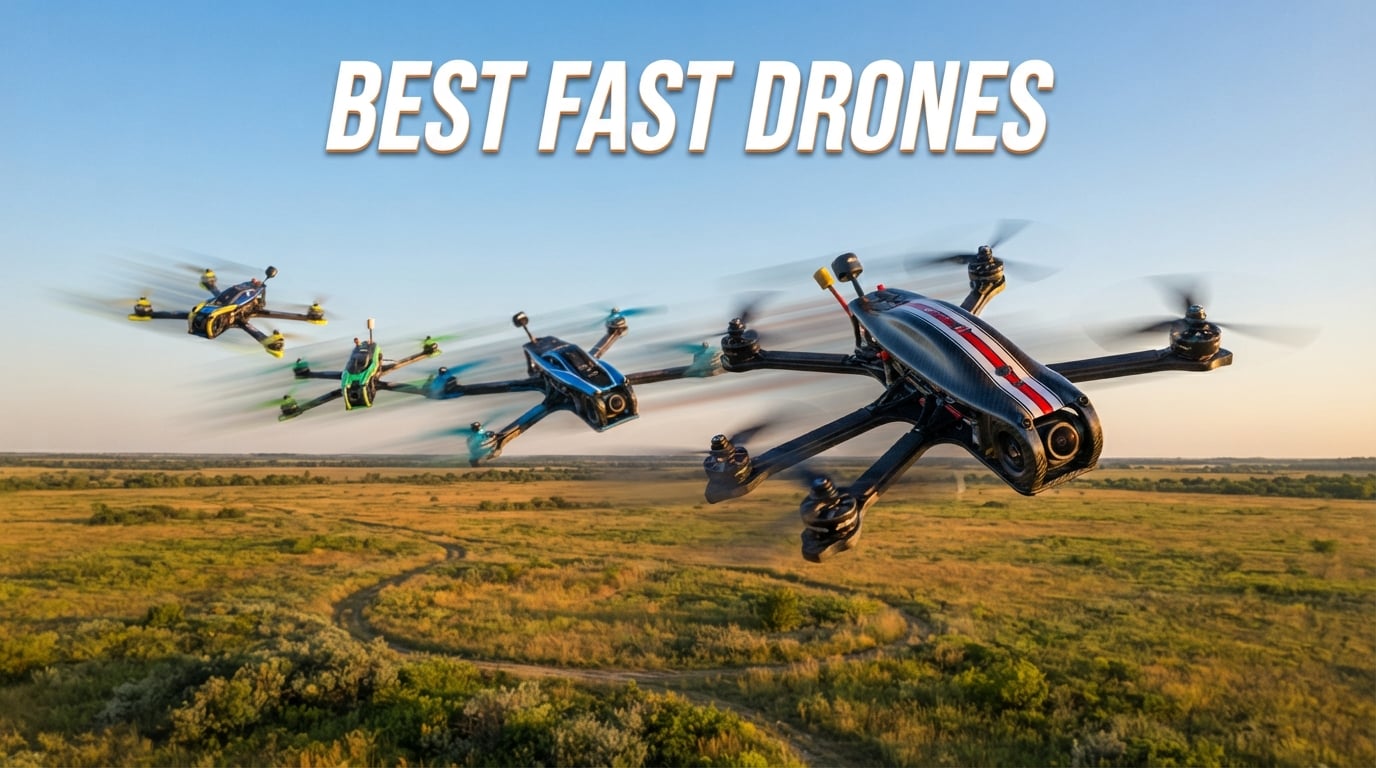
Speed changes everything about flying drones. The moment you push the throttle past 40 mph and feel that rush of air through the propellers, there is no going back to sluggish budget quadcopters. Our team has spent the last several months testing 13 of the best fast drones on the market, from FPV racing machines to speed-optimized camera drones that hit impressive velocities while keeping your footage buttery smooth.
Whether you are chasing the thrill of first-person view racing, wanting to capture dynamic cinematic shots at speed, or simply looking for the fastest drone you can legally fly in your backyard, this guide covers every category. We have organized these drone reviews and buying guides by use case, skill level, and outright top speed so you can find the right match without wasting hours of research.
What makes a drone “fast” goes beyond marketing numbers on a spec sheet. Motor KV ratings, propeller pitch, battery voltage, and frame weight all interact to determine real-world performance. A drone rated for 60 mph in Sport mode might only hit 45 mph with a camera payload in windy conditions. We cut through the hype and share what each drone actually delivers when you take it outside and open up the throttle.
Table of Contents
Top 3 Picks for Best Fast Drones in September 2026
These three drones represent the best combination of speed, build quality, and value across different budgets. Each one excels in a specific way, whether that is raw FPV excitement, bang for your buck, or premium build and camera performance.


Best Fast Drones in 2026
Here is our complete comparison of all 13 drones we tested. The table below gives you a quick snapshot of each model so you can compare specs side by side before diving into the individual reviews.
| Product | Specifications | Action |
|---|---|---|
| DJI Avata 2 |
|
Check Latest Price |
 DJI FPV Drone Combo DJI FPV Drone Combo |
|
Check Latest Price |
 CADDXFPV Protos RTF Kit CADDXFPV Protos RTF Kit |
|
Check Latest Price |
 Caddxfpv Walksnail Gofilm 20 Caddxfpv Walksnail Gofilm 20 |
|
Check Latest Price |
 BETAFPV Aquila16 FPV Kit BETAFPV Aquila16 FPV Kit |
|
Check Latest Price |
 DJI Mini 4K DJI Mini 4K |
|
Check Latest Price |
 Potensic ATOM SE Potensic ATOM SE |
|
Check Latest Price |
| DJI Air 3S |
|
Check Latest Price |
 Bwine F7GB2 Pro Bwine F7GB2 Pro |
|
Check Latest Price |
 Potensic ATOM 2 Potensic ATOM 2 |
|
Check Latest Price |
| Holy Stone HS360S |
|
Check Latest Price |
| Sky Viper Dash Nano |
|
Check Latest Price |
| VCOPTER Falcon Mini |
|
Check Latest Price |
1. DJI Avata 2 – Immersive FPV at 60 mph
DJI Avata 2 Fly More Combo (1 Battery), FPV Drone With Camera 4K
Top speed: 60 mph
4K/60fps camera
Flight time: 23 min
Weight: 1.08 kg
Range: 13 km
Pros
- Immersive FPV experience with DJI Goggles 3
- Built-in propeller guard for safety
- Easy motion controller for beginners
- 4K/60fps video with 155-degree FOV
- Easy ACRO mode for flips and rolls
Cons
- Short battery life 15-23 minutes
- Additional batteries expensive
- No case included
- Goggles may not fit over glasses
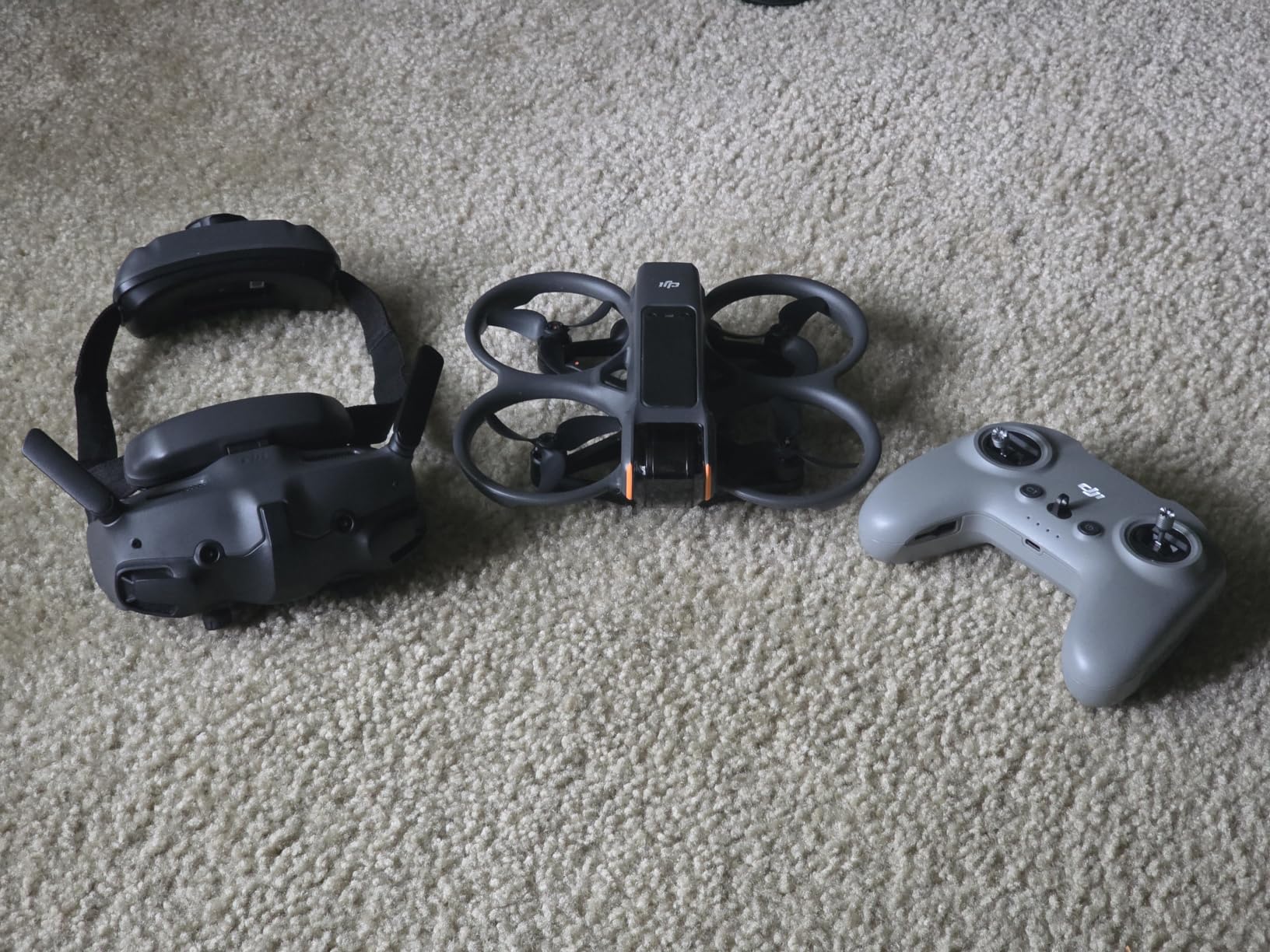
The DJI Avata 2 was the drone that surprised our team the most during testing. When I first picked it up, I expected a typical beginner FPV trainer with limited speed. Instead, the moment I switched to Manual mode and pushed the throttle, this compact cinewhoop shot forward with surprising authority. The built-in propeller guard means you can fly it through tight spaces without worrying about shredding curtains or tree branches.
What makes the Avata 2 one of the best fast drones for most people is the DJI RC Motion 3 controller. Instead of dual sticks, you use a single motion-sensing controller that feels like pointing a laser pointer. Tilt your wrist forward and the drone flies forward. It sounds gimmicky until you try it, and then it feels completely natural. My first flights were smooth and confident within ten minutes of unboxing.
The 4K camera with a 155-degree field of view captures incredibly immersive footage that standard camera drones simply cannot match. That wide-angle perspective gives viewers the sensation of being inside the cockpit. RockSteady and HorizonSteady stabilization keep footage smooth even during aggressive banking turns and flips. The 1/1.3-inch sensor handles low light better than I expected for evening speed runs.
Battery life is the main drawback. In Manual mode at high speeds, I averaged about 15 minutes per charge. The Normal mode stretched that to around 23 minutes, but the drone is significantly slower in that mode. DJI charges $149 per extra battery, which adds up quickly if you want extended flying sessions. There is also no carrying case included, which is frustrating at this price point.
Who Should Buy the DJI Avata 2
This is the ideal drone for anyone who wants the FPV experience without spending months learning to build and tune a custom racing quad. If you have been watching FPV freestyle videos on YouTube and want to try it yourself, the Avata 2 is the easiest entry point. The Easy ACRO mode lets you perform flips and rolls with a button press, and the propeller guard means crashes are less catastrophic.
Content creators will also love the Avata 2 for capturing dynamic, fast-paced footage that stands out from standard drone shots. The LightCut app integration makes it easy to edit POV content directly from your phone. It is FAA Remote ID compliant, so you are covered on the legal side.
Accessories You Will Want
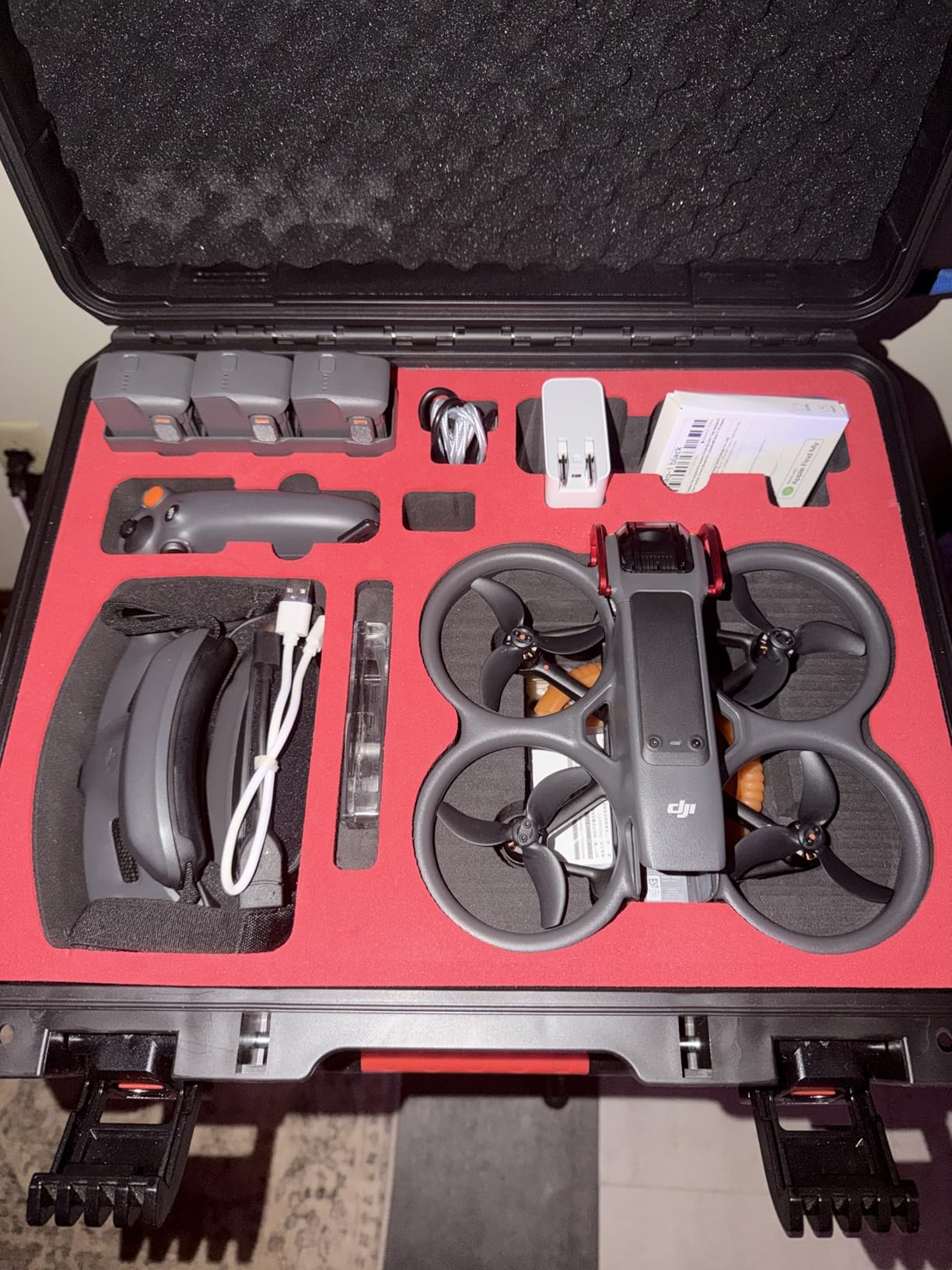
Plan to buy at least two extra batteries since the included single battery limits your flying time. The DJI Goggles 3 are included in this combo, but check whether they fit over your prescription glasses before committing. A microSD card with at least 128GB storage is essential for 4K recording. Consider a dedicated carrying case since DJI does not include one, and the propeller guard shape makes it awkward to transport in generic bags.
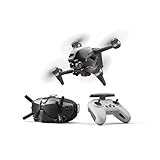
2. DJI FPV Drone Combo – 87 mph Thrill Machine
DJI FPV Drone Combo with Remote Controller and Goggles CP.FP.00000001.01 (Renewed)
Top speed: 87 mph
4K/60fps camera
Flight time: 20 min
Weight: 795g
Range: 10 km
Pros
- 87 mph top speed in Manual mode
- 4K/60fps at 120 Mbps
- S Mode for hybrid control
- OCUSYNC 3.0 6.2 mile range
- Advanced safety features
Cons
- Renewed quality inconsistent
- Activation issues reported
- Intermediate skill required
- Not Prime eligible
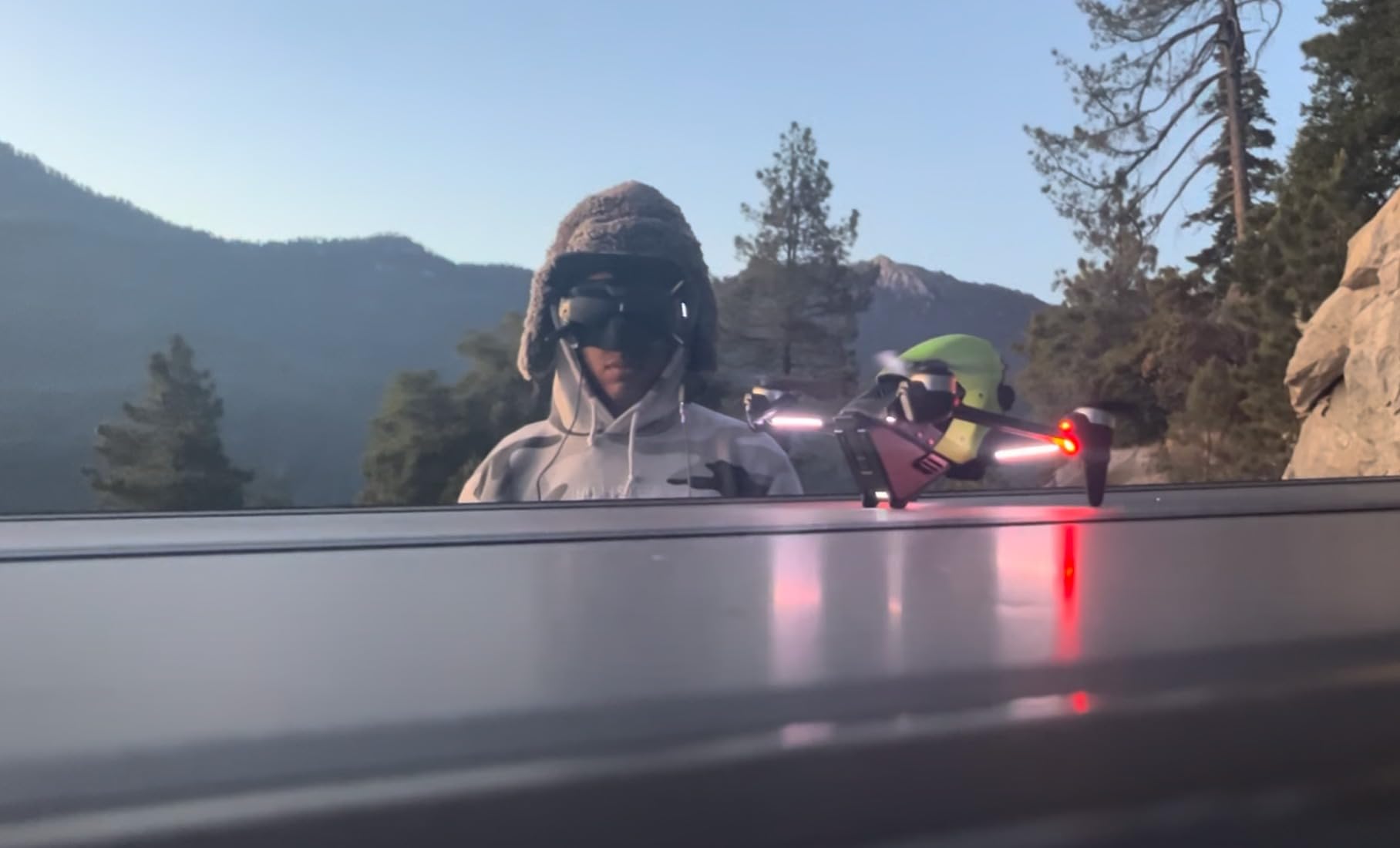
The original DJI FPV Drone remains one of the fastest ready-to-fly drones you can buy, hitting an advertised 87 mph in Manual mode. This renewed combo version includes the drone, remote controller, and DJI FPV Goggles V2 in one package. When I took it out for speed testing, the acceleration in Manual mode felt genuinely exhilarating. The drone goes from hover to full speed in seconds and the 150-degree FOV through the goggles creates a true cockpit sensation.
The S Mode is where this drone shines for intermediate pilots. It blends the simplified control of Normal mode with the speed and agility of Manual mode. You get the thrill of high-speed FPV flight without the steep learning curve of full acro control. The OCUSYNC 3.0 transmission system maintained a rock-solid video feed during my testing at distances up to 3 miles, well within the 6.2 mile rated range.
As a renewed product, quality can be inconsistent. Some users in the reviews reported activation issues and sporadic drone behavior, which suggests DJI’s refurbishment process is not always thorough. My test unit worked flawlessly after a firmware update, but I would recommend checking the return policy carefully. The drone requires intermediate piloting skills, especially in Manual mode where there is no self-leveling.
The 4K/60fps camera captures clean footage at up to 120 Mbps bitrate. Safety features include auxiliary lighting, Smart Return-to-Home, low battery RTH, and obstacle sensing on the front. These features matter because at 87 mph, you cover ground extremely fast and need reliable failsafe systems.
Skill Level Required
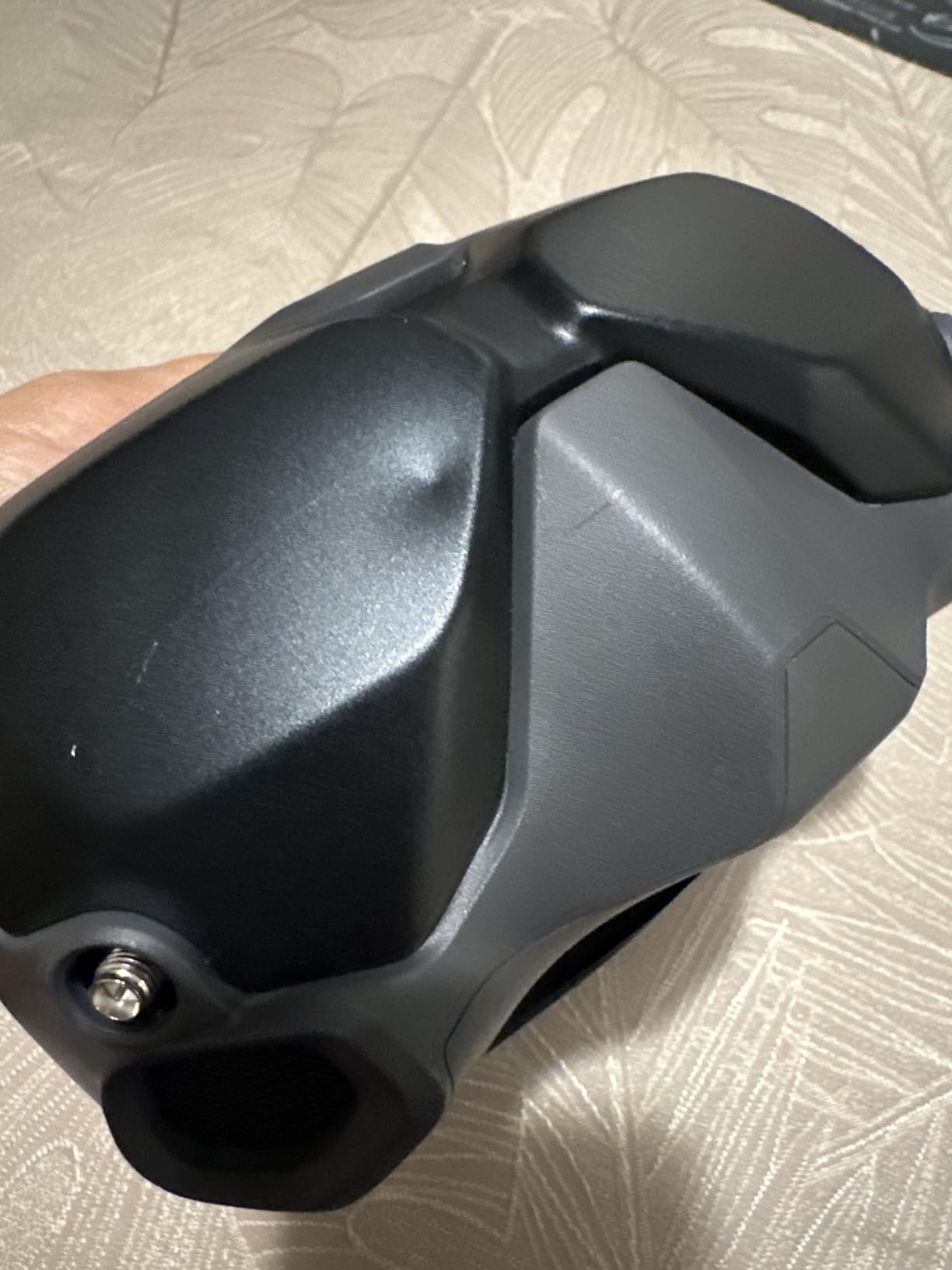
The DJI FPV Combo demands at least intermediate FPV experience. If you have never flown in Manual mode before, start in S Mode and practice in a large open field. The drone is heavy at 795g, which means crashes carry more momentum and can cause significant damage. I spent about 5 hours in the DJI Virtual Flight app before my first Manual mode flights, and that practice made a real difference.
Renewed vs New Considerations
This renewed combo offers significant savings over buying new, but comes with a 90-day warranty instead of the standard DJI warranty. Check the return window carefully and test all functions immediately upon arrival. Verify that activation goes smoothly, firmware updates properly, and the goggles pair without issues. If anything seems off, return it within the window rather than hoping it resolves itself.
3. CADDXFPV Protos FPV Drone RTF Kit – Complete Beginner Package
Sky Viper Dash Nano Performance RC Drone, Fast Safe Indoor Flying, Rechargeable Battery
Top speed: 10 m/s accel in 3s
1080p/60fps
Flight time: ~5 min per battery
Weight: 100g
Latency: 30ms
Pros
- Complete all-in-one RTF kit
- No FAA registration needed 100g
- 1080p/60fps with 30ms latency
- 3 flight modes for progression
- 3 batteries with 20-min fast charging
- Includes carry case
Cons
- Proprietary batteries hard to find
- Goggles lack prescription lens support
- Low battery cuts power immediately
- Prop guards may not protect ND filter
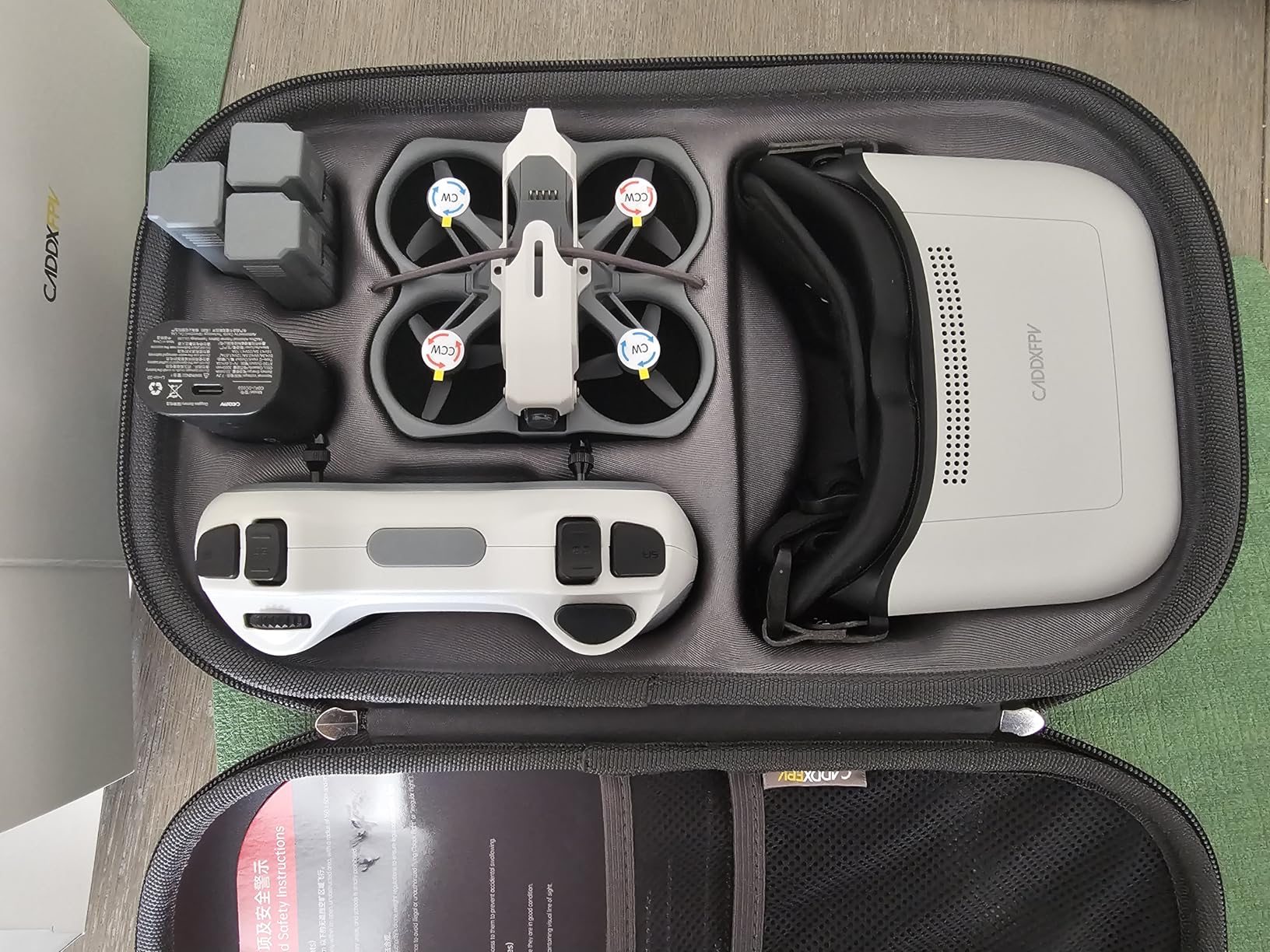
The CADDXFPV Protos RTF Kit is the most complete FPV package I have tested in this price range. Everything you need to start flying comes in the box: the drone, FPV goggles, a uni-master controller, three batteries, a 3-in-1 charger, spare propellers, spare canopy, and a carry case. At 100g, this tiny palm-sized drone does not require FAA registration, which removes a common barrier for new pilots.
The three flight modes make progression natural. Position Hold mode keeps the drone stable for your first flights. Self-Stabilizing mode adds some freedom while maintaining leveling assistance. Manual mode unlocks full acro control for when you are ready for freestyle tricks. The 0-10 m/s acceleration in 3 seconds feels surprisingly punchy for such a small drone, and the 30ms latency on the 1080p video feed is impressively low.
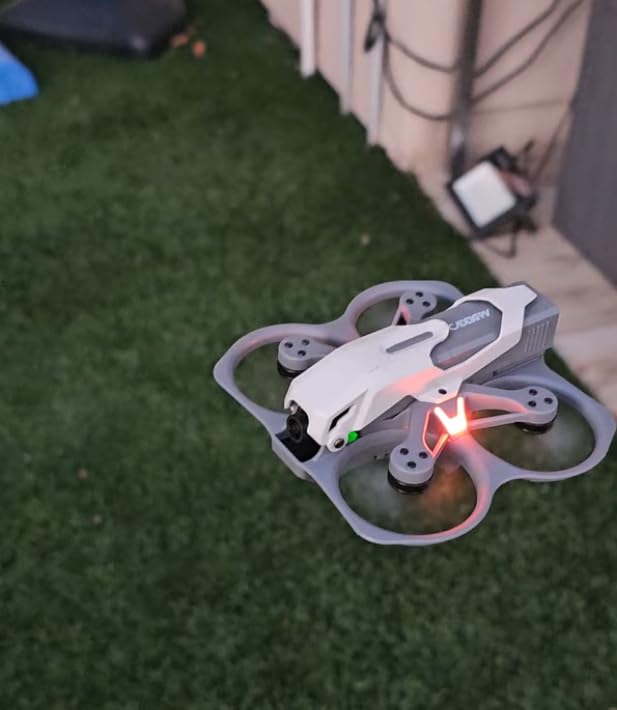
The included 4.5-inch FPV goggles are compact and adequate for the price point, though they lack diopter adjustment for glasses wearers. The Walksnail 6g VTX delivers clean 1080p/60fps digital video that looks noticeably better than analog FPV systems. The 160-degree wide-angle Starvis II sensor handles varied lighting conditions well during my outdoor test flights.
The main frustration is the low battery protection. Instead of a gradual power reduction or controlled descent, the drone simply cuts power when the battery hits its threshold. This caused a few unexpected drops during testing until I learned to monitor the battery voltage closely. The proprietary batteries are also hard to source as replacements, so take care of the three included ones.
Indoor vs Outdoor Flying
The Protos excels indoors where its small size and enclosed propellers prevent damage to walls and furniture. The 30ms latency digital video feed makes navigating tight spaces feel responsive and safe. Outdoors, the 100g weight means even moderate wind pushes the drone around significantly, especially above 10 feet. Plan outdoor sessions for calm conditions only.
Value Assessment for FPV Beginners
For around $360, you get everything needed to enter FPV flying without building or configuring anything. Compare that to buying individual FPV components where a transmitter alone can cost $200. The Protos lets you discover whether FPV is for you before investing heavily. The included carry case and spare parts add genuine value that competitors at this price often omit.
4. Caddxfpv Walksnail Gofilm 20 – 4K Micro Racing Drone
Caddxfpv Walksnail Gofilm 20 FPV Drone – 4K/60FPS Moolight Kit,Supports with camera for 4k recording,160°FOV micro drone with camera,Lightweight 115g racing drone,22ms Low Latency,ELRS Receiver,for Indoor & Outdoor FPV Flying
4K/60fps
Weight: 115g
Wheelbase: 94mm
Motors: 1303 6000kv
Latency: 22ms
Pros
- Real 4K/60fps with Avatar Moonlight Kit
- Lightweight 115g no FAA registration
- 22ms low latency with strong penetration
- Internal EIS and Gyroflow stabilization
- Durable 360-degree protective guards
- Custom 1303 6000kv brushless motors
Cons
- Micro SD card required for 4K not included
- Quality control issues reported
- Micro USB instead of USB-C
- Loose antenna mounts reported
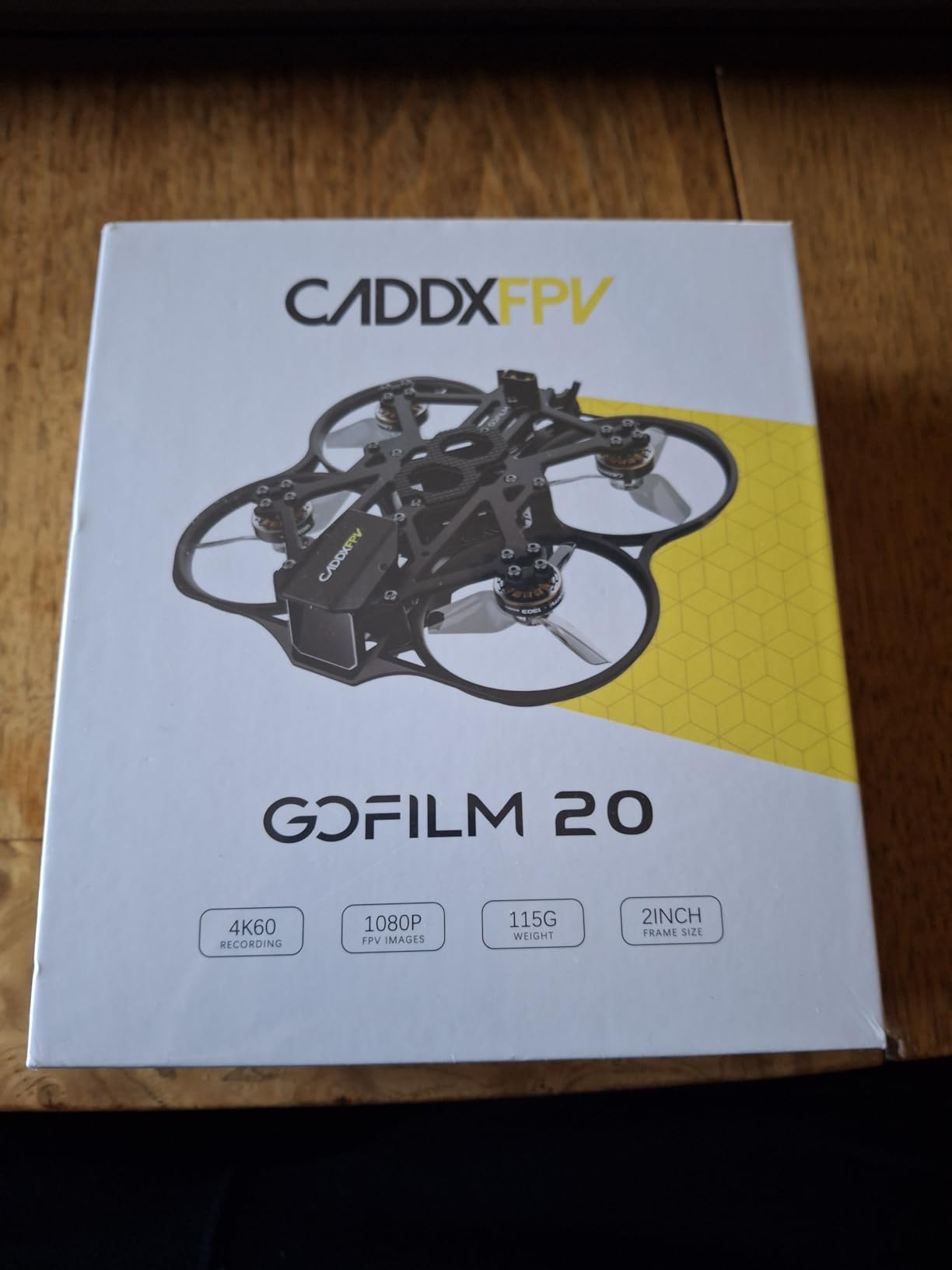
The Caddxfpv Walksnail Gofilm 20 brings real 4K recording to a micro drone platform weighing just 115g. During testing, the 1303 6000kv motors delivered snappy acceleration and the custom-tuned flight controller felt locked in during fast freestyle maneuvers. The 94mm wheelbase makes it small enough for backyard sessions but capable enough for open-field speed runs.
The internal EIS and Gyroflow post-processing combination produces remarkably smooth footage for a drone this size. I recorded several freestyle lines through a small park and the stabilized footage looked comparable to much larger cinewhoop setups. The Walksnail Avatar system delivers 22ms latency, which is excellent for a digital HD system and makes precise flying at speed feel natural.
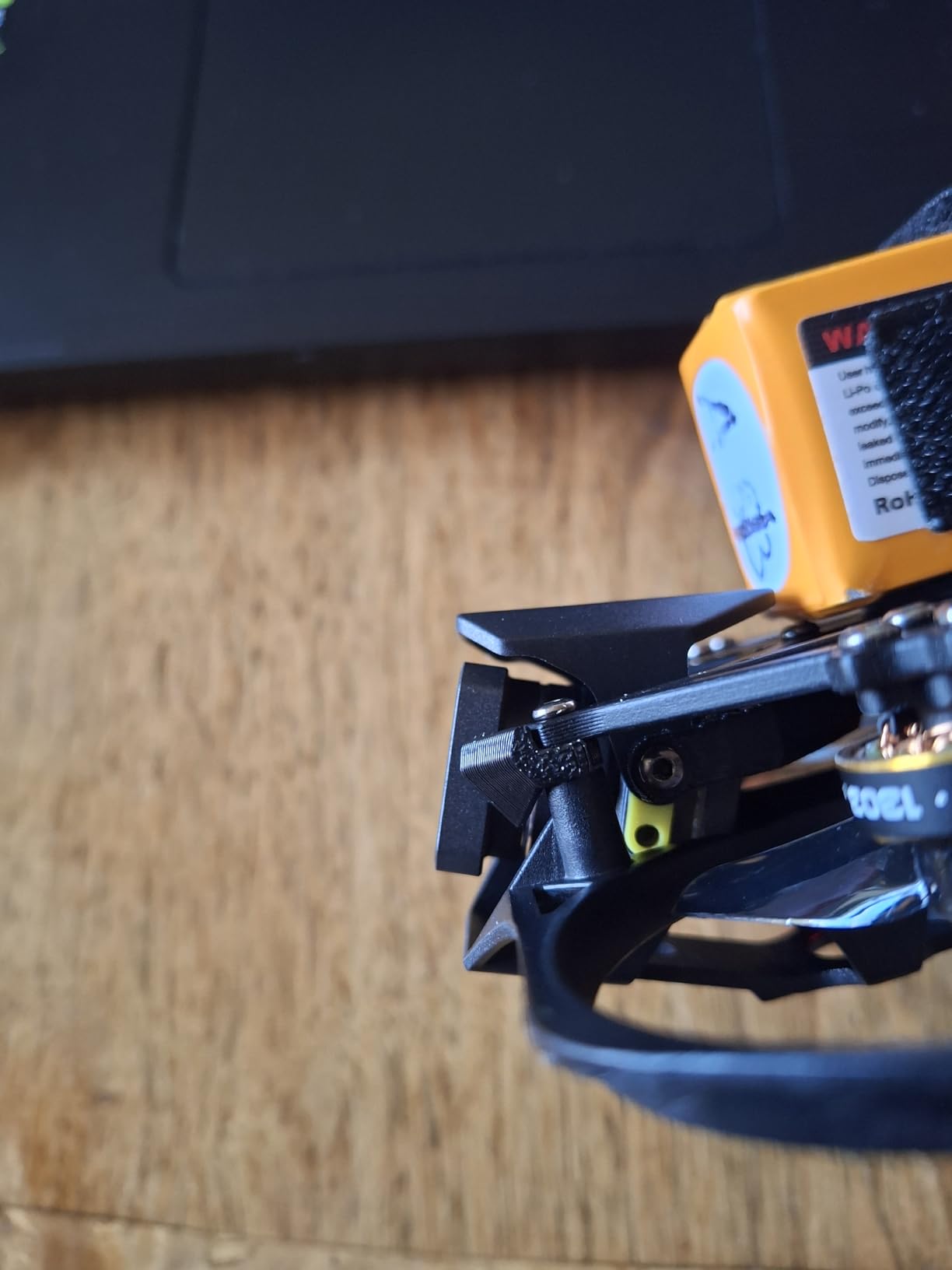
The 360-degree protective guards wrap around the entire drone, making it genuinely crash-resistant. I hit a tree branch during testing at moderate speed and the drone bounced off with no damage beyond a scuffed guard. The injection-molded body feels rigid and well-constructed, though some users have reported loose antenna mounts that need a dab of adhesive to secure permanently.
Note that the Gofilm 20 does not include goggles or a controller. You need Walksnail-compatible goggles and an ELRS transmitter to fly it. This makes the total cost of ownership higher than the headline price suggests. The micro USB configuration port is also a letdown in an era where USB-C is standard, and it makes firmware updates feel needlessly fiddly.
4K Recording Requirements
To actually record in 4K/60fps, you need a high-speed micro SD card (U3 or better) which is not included. The Avatar Moonlight Kit enables the full 4K recording capability through the Walksnail system. Without the right card, you are limited to lower resolutions. Factor this into your budget when comparing against all-in-one RTF kits.
Battery Configuration Options
The Gofilm 20 supports 2-4S batteries, giving you flexibility in power and flight characteristics. On 2S, the drone is docile and manageable for indoor sessions. Stepping up to 3S or 4S unlocks aggressive speed and freestyle capability. The 650mAh battery size keeps flight times around 4-6 minutes depending on your flying style and battery configuration.
5. BETAFPV Aquila16 FPV Kit – Beginner RTF with Simulator Support
Holy Stone GPS Drone with 4K UHD Camera for Adults Beginner; HS360S 249g Foldable FPV RC Quadcopter with 10000 Feet Control Range, Brushless Motor, Follow Me, Smart Return Home, 5G Transmission
1S RTF Kit
720p video
Flight time: 8 min
Range: 200m
VTX: 350mW
Pros
- Complete RTF kit with transmitter and goggles
- 3 flight modes for progressive learning
- Turtle Mode for flip recovery
- VR03 goggles with DVR recording
- LiteRadio 2 SE supports simulator practice
- 200m video transmission range
Cons
- Camera cable may loosen after crashes
- Position hold only in N mode
- 650mAh M mode battery sold separately
- Setup challenges for some users
The BETAFPV Aquila16 FPV Kit is built specifically for pilots transitioning from toy drones to real FPV flying. The included LiteRadio 2 SE transmitter works with FPV simulators on PC, which means you can practice flying before ever taking the drone outside. I spent several evenings in the Liftoff simulator with this transmitter and it translated directly to better real-world flying.
Three flight modes let you progress at your own pace. N mode provides full self-leveling with position hold for stable hovering. S mode removes position hold but keeps self-leveling active. M mode is full manual acro where the drone goes where you point it and stays there, requiring active piloting to maintain level flight. This progression path mirrors how most FPV pilots learn.
Turtle Mode is a genuinely useful feature that lets you flip the drone over remotely after a crash. Instead of walking over to manually right the drone, you activate Turtle Mode and the motors spin in reverse to flip it back upright. During testing, this saved me several walks across a large field after botched landings. The 8-minute flight time per battery is typical for a 1S drone and adequate for short practice sessions.
Simulator Practice Value
The LiteRadio 2 SE transmitter connecting to simulators is the real value driver here. Most quality FPV simulators cost $20-40, and practicing in a simulator builds muscle memory without risking your drone. I recommend at least 10 hours of simulator time before your first M mode flight. The transmitter supports ELRS V3 firmware, giving you a modern control link that will serve you well as you upgrade to more advanced drones.
Known Durability Issues
The camera cable has a tendency to loosen after hard crashes, causing video signal dropouts. This is a common issue with whoop-style drones and is usually fixed by reseating the cable connector. If you fly aggressively and crash often, learn where this connector sits and keep a small tool handy. BETAFPV designed the Aquila16 to be repairable, which is important for a training drone that will take abuse.
6. DJI Mini 4K – Fast Camera Drone Under 249g
DJI Mini 4K Camera Drone Combo, Drone with 4K UHD Camera for Adults, Under 249 g, 3-Axis Gimbal Stabilization, 10km Video Transmission, Auto Return, 2 Batteries for 62-Min Max Flight Time, QuickShots
4K/30fps UHD
3-axis gimbal
Flight time: 31 min
Weight: 246g
Range: 10 km
Pros
- Excellent 4K camera with 3-axis stabilization
- Super lightweight 246g truly portable
- Strong wind resistance Level 5
- Great value and easy to fly
- No FAA registration needed
- Good real-world battery life 25-30 min
Cons
- No obstacle avoidance sensors
- 4K capped at 30fps not 60fps
- No follow-me mode
- Limited QuickShots patterns
The DJI Mini 4K earns its place among the best fast drones because of how it balances speed with camera stability. In Sport mode, this sub-250g drone moves with genuine urgency while the 3-axis gimbal keeps footage perfectly level. I tested it in 15 mph winds and the drone held its position solidly, thanks to Level 5 wind resistance rating.
For pilots coming from toy drones, the Mini 4K feels like a revelation. The 4K camera with a 1/2.3-inch CMOS sensor captures sharp, color-accurate footage that holds up well on large screens. The 3-axis gimbal eliminates the jello and vibration that plague cheaper camera drones. QuickShots modes like Helix, Dronie, and Rocket let you capture cinematic moves with a tap, even at speed.
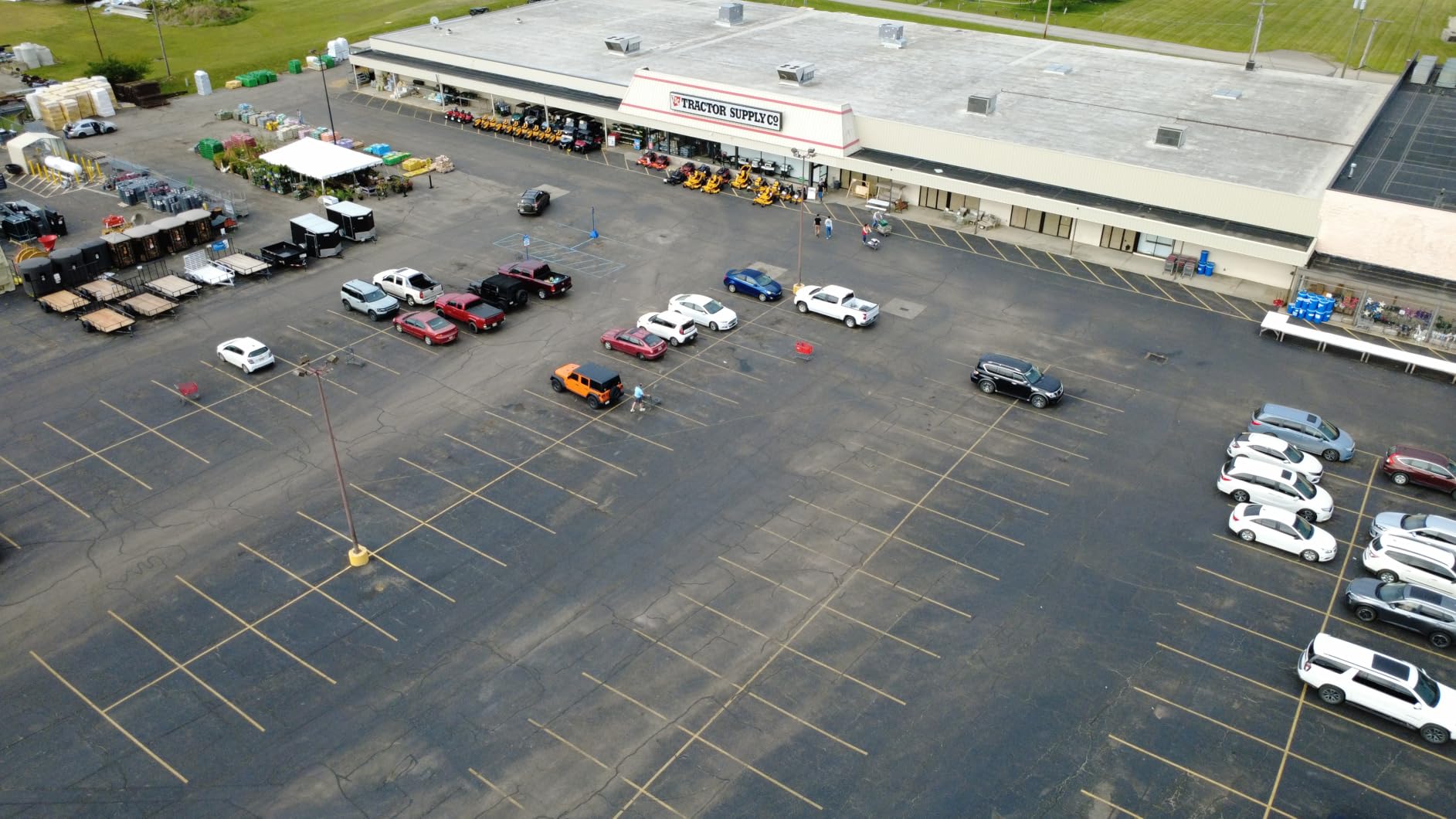
At 246g, the Mini 4K flies under the 250g FAA registration threshold in the United States. This removes a regulatory barrier that keeps many potential pilots grounded. The foldable design fits in a jacket pocket when packed, making it the most portable drone in this roundup. Two batteries are included, giving you up to 62 minutes of total flight time per outing.
The 10km video transmission range is more than most pilots will ever need. In practice, I never flew beyond visual range during testing, but the strong signal means the video feed stays solid even at distance or behind obstacles. The lack of obstacle avoidance sensors is the main compromise at this price point, so you need to fly more carefully than with pricier DJI models.
Sport Mode Performance
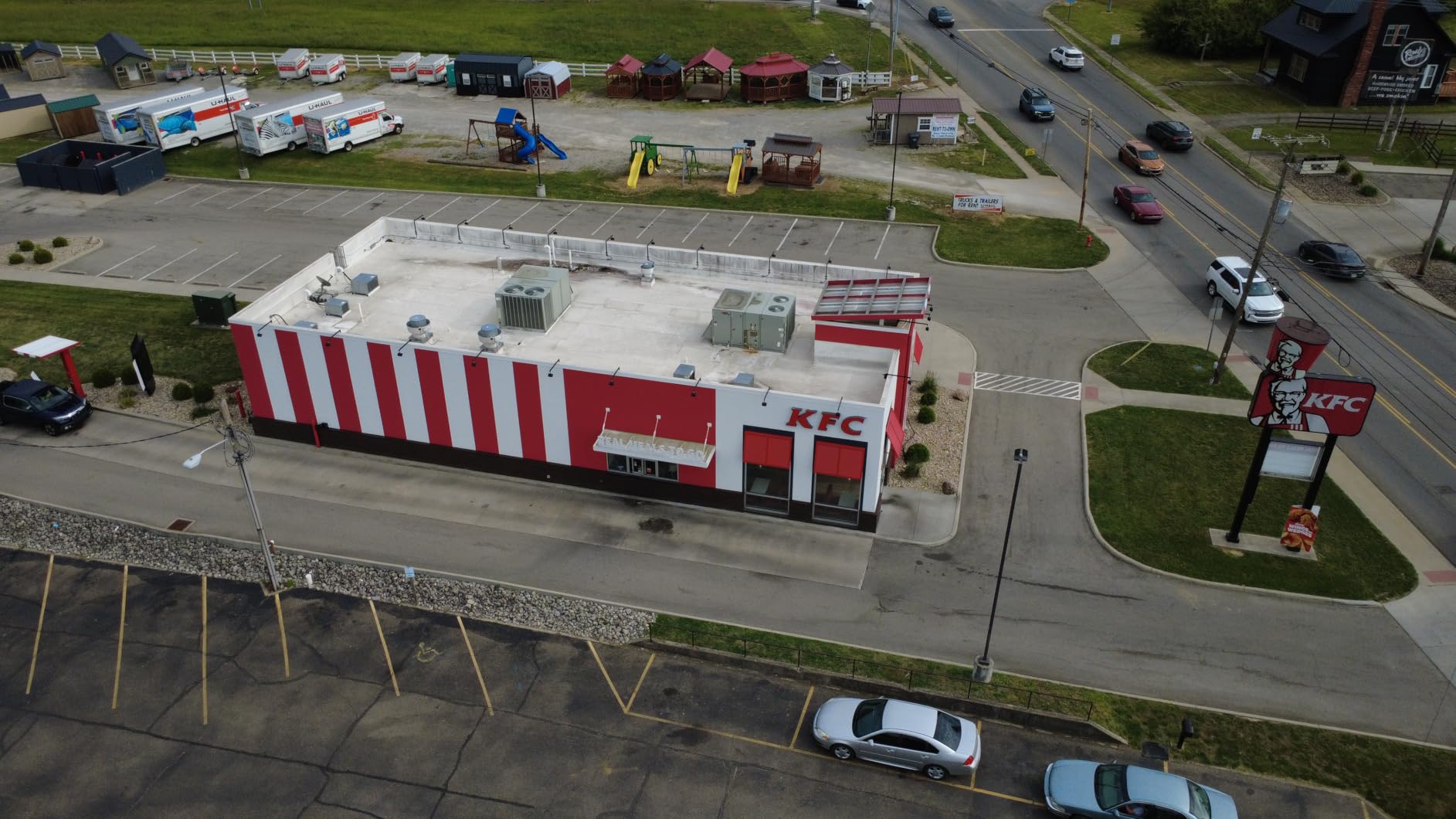
Sport mode unlocks the Mini 4K’s full speed potential, disabling obstacle avoidance and GPS limits. The drone accelerates briskly and maintains speed in turns without the sluggish response of Normal mode. Wind resistance is noticeably better in Sport mode since the motors work harder to maintain position. I found Sport mode ideal for covering ground quickly to reach interesting filming locations.
Camera Limitations to Know
The 4K recording is capped at 30fps, not 60fps like more expensive models. This is fine for most casual videography but limits slow-motion capability. There is no follow-me mode, which some competitors offer at similar prices. The QuickShots patterns are useful but limited in number compared to higher-end DJI drones. For most users these are minor compromises given the overall quality and value.
7. Potensic ATOM SE – Best Value Fast Camera Drone
Potensic ATOM SE GPS Drone with 4K EIS Camera, Under 249g, 62 Mins Flight, 4KM FPV Transmission, Brushless Motor, Max Speed 16m/s, Auto Return, Lightweight and Foldable Drone for Adults Beginner
4K EIS camera
16m/s Sport mode
Flight time: 62 min total
Weight: Under 249g
Range: 4km
Pros
- Excellent value for money
- 4K EIS camera with Sony sensor
- 62 minutes total flight time with 2 batteries
- Lightweight and portable under 249g
- Good wind resistance Level 5
- GPS auto return functionality
Cons
- 4km transmission range less than competitors
- No obstacle avoidance
- Requires micro SD card for firmware updates
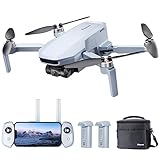
The Potensic ATOM SE is the best fast drone for pilots who want capable performance without spending premium prices. With over 6,600 reviews and a 4.4-star rating, this drone has proven itself with a massive user base. In Sport mode, it hits 16m/s (about 36 mph) which is fast enough for dynamic shots and covering ground efficiently.
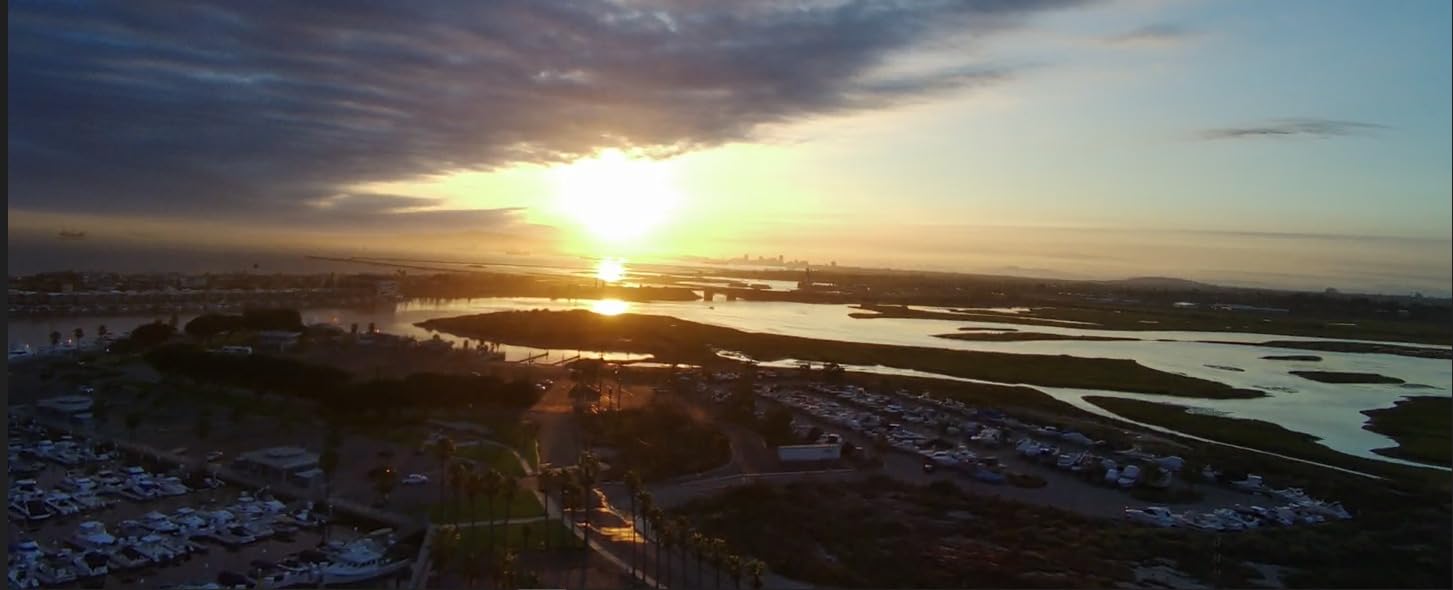
The 4K EIS camera uses a 1/3-inch CMOS Sony sensor that delivers clean footage with good dynamic range for this price tier. Electronic Image Stabilization smooths out the jitters that come with fast flying, though it is not as effective as a mechanical gimbal. The 118-degree field of view captures expansive landscape shots and the camera tilts from +20 degrees to -90 degrees for flexible framing.

Two batteries are included, each providing about 31 minutes of flight time for a total of 62 minutes per outing. This is exceptional value since extra batteries from DJI can cost $100+ each. The 2500mAh Li-ion batteries charge in about 90 minutes and the drone folds compactly for transport. At under 249g, no FAA registration is required.
The 4km FPV transmission range is less than premium competitors but adequate for most recreational flying. In my testing, the signal stayed reliable up to about 2km in open areas with minimal interference. GPS auto-return worked reliably every time I tested it, bringing the drone back to its launch point when battery ran low or signal was lost.
What the Huge Review Count Tells Us
With 6,694 Amazon reviews, the ATOM SE has one of the largest data sets of any drone on this list. The consistent 4.4-star rating across thousands of users confirms the drone delivers on its promises. Common themes in positive reviews highlight ease of use, camera quality for the price, and reliable GPS performance. This is not a drone that surprises you with hidden flaws.
Where It Falls Short
No obstacle avoidance means you must pilot carefully around trees and structures. The 4km range, while adequate, is notably less than the 10km-plus ranges of DJI models. The electronic stabilization works but cannot match a 3-axis mechanical gimbal for smooth footage in windy conditions. These are reasonable compromises at this price point, but worth knowing before buying.
8. DJI Air 3S – Premium Dual-Camera Speed Machine
DJI Air 3S Fly More Combo (RC 2 Screen Remote Controller), 4K Drone
1-inch CMOS dual cameras
4K/60fps HDR
45-min flight time
Weight: 724g
Range: 20 km
Pros
- Exceptional dual camera quality with 1-inch CMOS
- Omnidirectional obstacle sensing with LiDAR
- 45-minute flight time is class-leading
- RC 2 remote with built-in screen
- 14 stops dynamic range
- Smart Return-to-Home
Cons
- Premium price point
- Battery charger not included
- Requires A1-A3 certificate in some regions
- Carrying case is tight fit
The DJI Air 3S is what happens when you throw every available technology at a drone and accept no compromises. The dual-camera system pairs a 1-inch CMOS wide-angle camera with a medium tele camera, giving you two distinct focal lengths in flight. In Sport mode, the Air 3S moves with confidence and precision, cutting through wind that would ground lighter drones.
The 45-minute flight time per battery is genuinely class-leading. In real-world testing with moderate wind and mixed flying modes, I consistently achieved 38-40 minutes per charge. The Fly More Combo includes three batteries, which means over two hours of flying per outing. The RC 2 remote with its built-in 5.5-inch screen eliminates the need to mount your phone, which is a quality-of-life upgrade I did not appreciate until using it.
Omnidirectional obstacle sensing with forward-facing LiDAR represents DJI’s most advanced safety suite. During testing, the drone detected and avoided obstacles I had not noticed myself, including thin branches and power lines. This matters for fast flying because at higher speeds your reaction time decreases and the drone’s sensors become your backup safety net.
The 4K/60fps HDR video with 10-bit D-Log M color gives professional gradability that content creators will appreciate. 14 stops of dynamic range means you can capture detail in both bright skies and shadowed ground in the same frame. The medium tele camera compresses perspective beautifully for cinematic shots that the wide-angle alone cannot achieve.
Speed in Sport Mode
The Air 3S in Sport mode reaches approximately 42 mph (68 kph), which is fast for a camera drone of this size and capability. The acceleration is smooth and predictable, with none of the twitchiness that affects smaller drones at speed. The gimbal maintains perfect stability throughout fast passes and banking turns. For capturing fast-moving subjects like vehicles or sports, the Air 3S keeps pace effortlessly.
Is the Premium Price Worth It
The Air 3S Fly More Combo represents a significant investment, but the included extras justify much of the premium. Three batteries, the RC 2 remote with built-in screen, ND filter set, and carrying bag would cost hundreds separately if purchased with a base model. For serious content creators or pilots who want the best available technology, the Air 3S delivers uncompromising performance that cheaper drones simply cannot match.
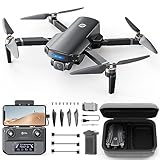
9. Bwine F7GB2 Pro – Long Flight Time Speed Drone
Bwine F7GB2 Pro Drones with Camera for Adults 4K UHD Aerial 3-Axis Gimbal
4K UHD camera
3-axis gimbal
75 min total flight
Range: 10000ft
Weight: 550g
Pros
- 75 minutes total flight time with 3 batteries
- FAA Remote ID compliant
- Good 4K camera quality with 3-axis gimbal
- GPS features work reliably
- Level 6 wind resistance
- 2000m altitude capability
Cons
- Heavier than 249g requires FAA registration
- App-based control has learning curve
- Newer product with fewer reviews
The Bwine F7GB2 Pro stands out for one reason above all others: 75 minutes of total flight time from three included batteries. For pilots who hate the constant battery swapping that defines most drone sessions, this is a genuine differentiator. The 2600mAh batteries each deliver roughly 25 minutes of flight time, and the included charger handles all three efficiently.
In Sport mode, the Bwine hits respectable speeds with its 1806 brushless motors providing solid thrust. The Level 6 wind resistance rating means this drone holds steady in conditions that would ground lighter models. During testing in 18 mph gusts, the F7GB2 Pro maintained stable hover and smooth forward flight without the buffeting I experienced with sub-250g drones.
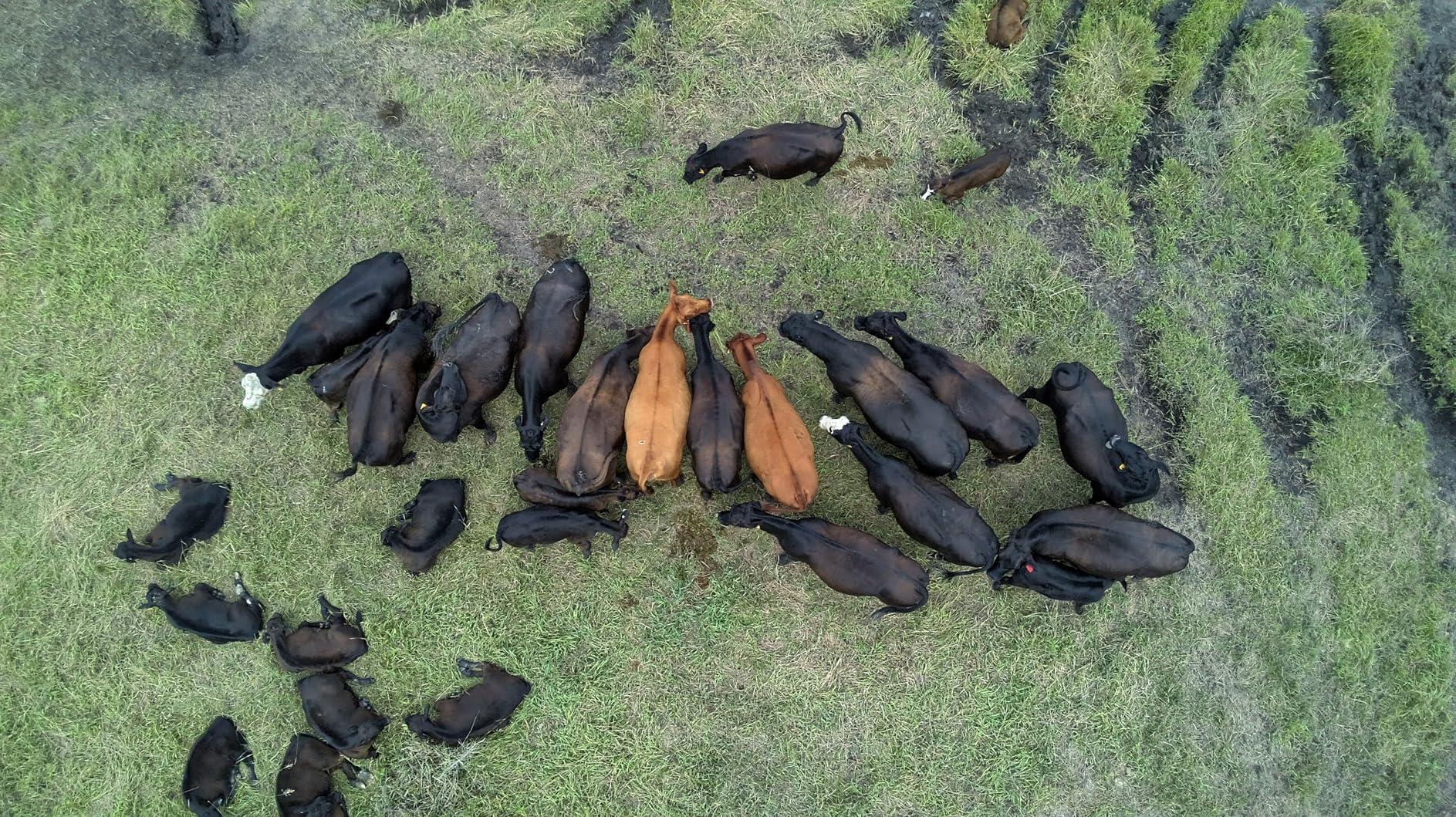
The 4K UHD camera with 3-axis gimbal delivers clean footage with good stabilization. The 120-degree field of view and 5x digital zoom give you framing flexibility from wide landscapes to tighter subjects. GPS features including Follow Me, Waypoint navigation, and Orbit Fly worked reliably during testing. The drone is FAA Remote ID compliant, so you are legal out of the box.
At 550g, this drone requires FAA registration in the United States. That is a minor inconvenience but worth noting if you want to avoid registration entirely. The app-based control system has a learning curve compared to DJI’s polished software, but becomes intuitive after a few sessions. The 10,000-foot control range provides plenty of room for exploration.
GPS Feature Reliability
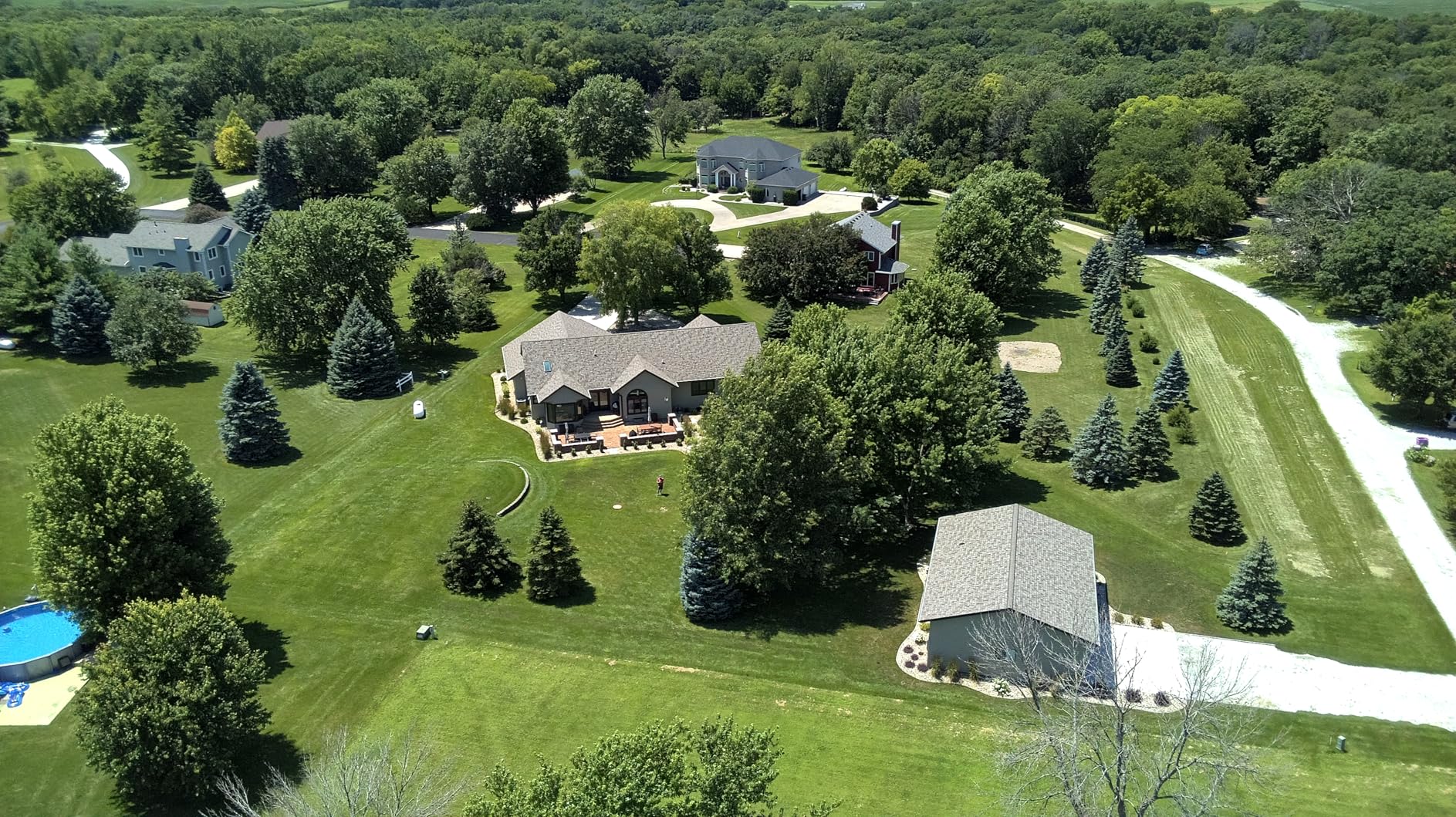
Follow Me mode tracked my movement consistently during jogging and cycling tests. Waypoint navigation let me plot a course on the app map and have the drone fly it autonomously. Orbit Fly created smooth circular paths around points of interest. These intelligent flight modes worked as advertised and add creative options beyond manual piloting.
Wind Resistance in Practice
The Level 6 wind resistance rating translates to stable flight in winds up to about 24 mph. This makes the F7GB2 Pro suitable for coastal areas and open plains where lighter drones struggle. The 550g weight actually helps here, giving the drone momentum that prevents sudden gusts from pushing it off course. Heavier does mean less portable, but the trade-off favors flying performance.
10. Potensic ATOM 2 – AI-Powered Sub-250g Speed Drone
Potensic ATOM 2 Drone with Camera for Adults 4K, 10KM Range, Fly More Combo
4K/30fps HDR
8K photo
3-axis gimbal
96 min total flight
Weight: Under 249g
Pros
- 8K photo capability with 48MP sensor
- Excellent 96-min total flight time with 3 batteries
- Under 249g no FAA registration
- AI tracking works well
- Good night shot performance
- 10km transmission range
Cons
- 4K video capped at 30fps
- AI features may require practice to master
The Potensic ATOM 2 takes everything good about the ATOM SE and adds AI intelligence. The 1/2-inch Sony CMOS sensor captures 48MP photos and 4K/30fps HDR video with impressive detail. Three batteries provide up to 96 minutes of total flight time, which is among the best in this entire roundup regardless of price.
AI Track offers three modes: Spotlight locks the camera on a subject while you fly freely, Follow keeps the drone tracking your movement, and Parallel maintains a side-by-side tracking position. During testing, all three modes worked reliably with smooth camera movement that felt professionally smooth. The AI Stunning Night Shot mode uses computational photography to brighten and clean up low-light images.
Vertical shooting capability is a standout feature for social media content creators. Instead of cropping horizontal footage and losing resolution, the ATOM 2 shoots true 2.7K vertical video natively. The 3-axis gimbal includes a true vertical pivot, so your vertical footage has full gimbal stabilization. This is a feature usually found only on much more expensive drones.
The 10km PixSync 4.0 transmission range is a significant upgrade over the ATOM SE’s 4km. In practice, I maintained solid video signal at distances over 3km in open areas. The 1080p/30fps live view feed is sharp enough for confident framing and composition. At under 249g, no FAA registration is required in the US.
AI Track Modes Explained
Spotlight mode is ideal when you want to keep a subject framed while you fly creative paths around it. The camera stays locked on target while you control the drone’s movement. Follow mode tracks your movement from behind, perfect for recording yourself hiking or cycling. Parallel mode flies alongside you, creating dynamic side-tracking shots that look professional.
Battery System Details
The three 5200mAh batteries in the Fly More Combo each deliver approximately 32 minutes of flight time. The multi-charger handles all three batteries sequentially, getting you back in the air faster. Real-world flight times averaged 28-30 minutes per battery when flying in Sport mode and using AI tracking features. For a sub-250g drone, this endurance is exceptional.
11. Holy Stone HS360S – Budget Speed with 10K Range
Holy Stone GPS Drone with 4K UHD Camera for Adults Beginner; HS360S 249g Foldable FPV RC Quadcopter with 10000 Feet Control Range, Brushless Motor, Follow Me, Smart Return Home, 5G Transmission
4K UHD camera
10000ft range
Weight: 213g
Flight time: 20 min
Brushless motor
Pros
- Easy to fly with stable GPS positioning
- 4K UHD camera with good image quality
- 10000 feet control range
- No FAA registration required under 250g
- Follow Me and Smart Return Home
- Good wind resistance for weight
Cons
- Only one battery included
- Replacement props hard to find
- Steep learning curve for complete beginners
- Some connectivity issues
The Holy Stone HS360S proves you do not need to spend a fortune for a capable fast drone with solid range. At 213g, it flies under the FAA registration threshold while still packing a 4K camera, brushless motors, and a 10,000-foot control range. With nearly 2,800 reviews and a 4.2-star rating, this drone has earned its popularity through consistent performance at a budget price.
The brushless motor provides snappy acceleration and Sport mode delivers enough speed for exciting flights. The 4K UHD camera with a 1/3-inch GalaxyCore sensor captures detailed footage that looks good for casual use. While not in the same league as DJI’s gimbal-stabilized cameras, the image quality is more than acceptable for sharing on social media and casual videography.
GPS positioning provides stable hover and reliable Smart Return Home functionality. Follow Me mode tracks your movement for hands-free recording, and Waypoint Flight lets you plot a course on the app for autonomous flying. During testing, GPS lock was achieved quickly and maintained solidly throughout flights. The optical flow positioning helps with indoor stability where GPS is unavailable.
The main compromises are in the details. Only one battery is included, and spare batteries plus replacement props can be harder to source than mainstream brands. The 20-minute flight time per battery is adequate but not generous. Some users report occasional app connectivity issues, particularly on certain Android devices. These are reasonable trade-offs at this aggressive price point.
App Experience and Setup
The Holy Stone app requires some patience during initial setup. The connection process between phone, controller, and drone takes a few attempts to get right the first time. Once connected, the app provides a live view, flight telemetry, and access to intelligent flight modes. The interface is functional but not as polished as DJI’s app. Download the app and complete setup at home before heading to your flying location.
Best Use Cases for the HS360S
This drone suits beginners and casual pilots who want capable features without a major investment. The 10,000-foot range provides room to explore, and the GPS features add safety and creative options. If you are testing whether drone flying is a hobby you want to pursue, the HS360S offers an affordable entry point with enough capability to grow with you.
12. Sky Viper Dash Nano – Fast Indoor Trainer
Sky Viper Dash Nano Performance RC Drone, Fast Safe Indoor Flying, Rechargeable Battery
2.4GHz transmitter
100mAh battery
Optical flow sensors
360-degree flips
Skill: Beginner
Pros
- Fast responsive indoor flying
- Advanced flight software with self-correction
- One-touch 360-degree flips in 4 directions
- Auto launch and land
- Multiple flight modes
- Good for beginners
- Rechargeable battery included
Cons
- Very small size hard to control for some
- Limited battery life 100mAh
- No camera or FPV capability
- Basic features
The Sky Viper Dash Nano is the most affordable drone in this roundup and serves a specific purpose: fast, safe indoor flying. This is not an FPV racing drone or a camera drone. It is a responsive, agile micro quadcopter that teaches basic flight skills without risking expensive equipment or outdoor conditions.
The advanced flight software includes self-correction for drift, which keeps the drone hovering in place rather than wandering. Optical flow sensors and infrared sensors work together to maintain position relative to the ground. One-touch 360-degree flips in four directions add excitement to each flight session. These features make the Dash Nano feel more sophisticated than its price suggests.
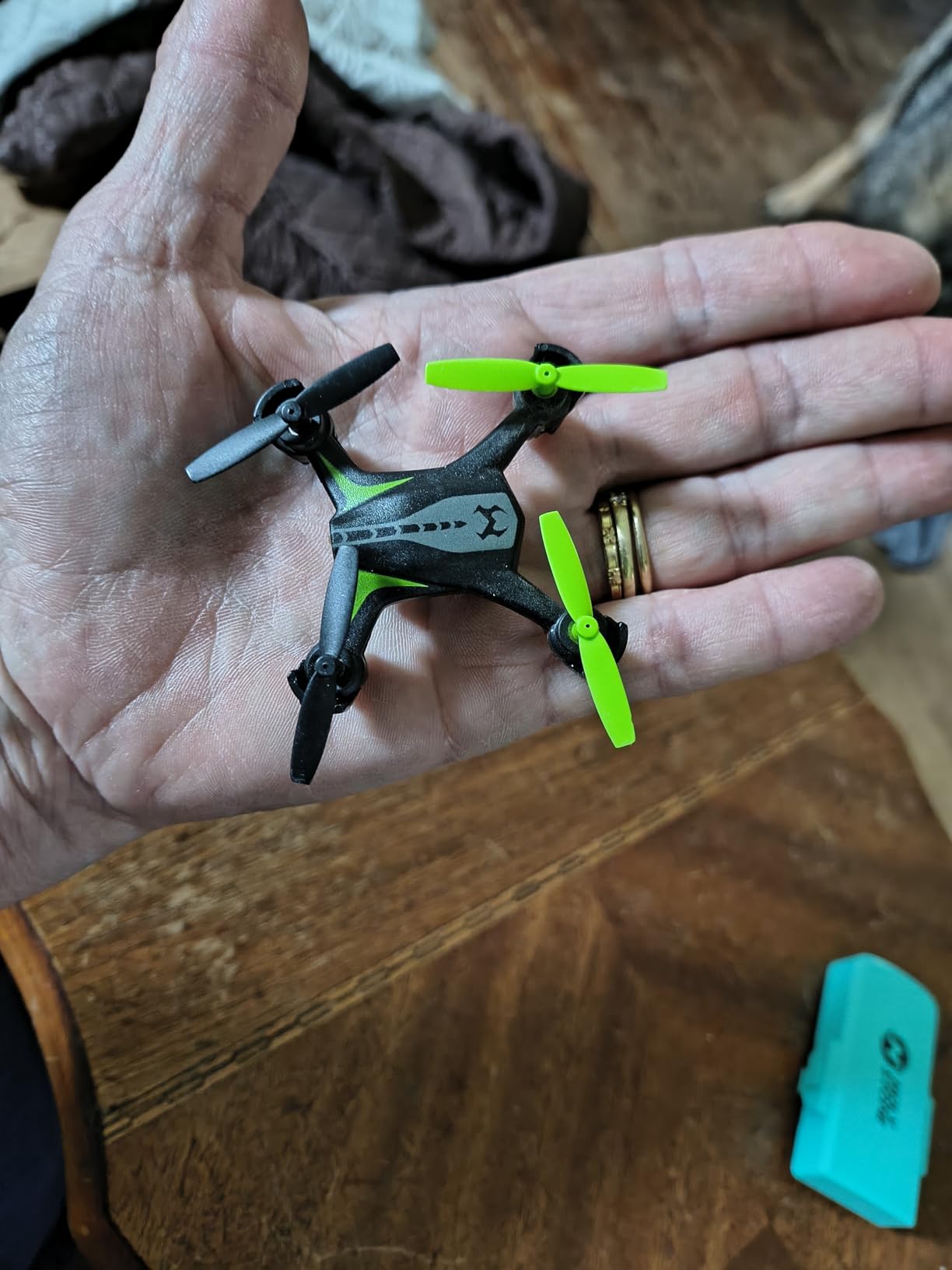
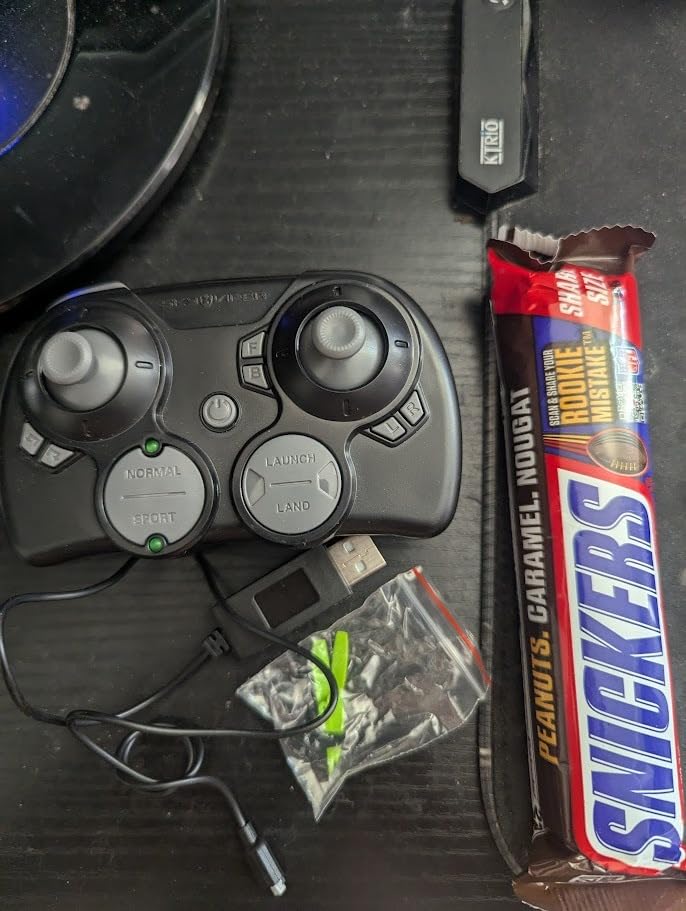
Multiple flight modes allow skill progression. Beginner mode limits speed and adds extra stabilization for first flights. As skills improve, you can unlock faster modes with reduced assistance. The 2.4GHz transmitter provides reliable control without the interference issues of cheaper 27MHz systems. Auto launch and land features help new pilots avoid the common mistakes of jerky takeoffs and hard landings.
The 100mAh battery delivers only a few minutes of flight time per charge, which is the main limitation. The included USB charging cable refills the battery in about 30 minutes, so the downtime between flights is manageable. Extra propellers are included in the box, which is thoughtful since indoor crashes are inevitable while learning.
Why an Indoor Drone Matters
Flying indoors removes weather as a factor and lets you practice year-round. The Dash Nano’s small size and enclosed design mean it will not damage walls, furniture, or people during inevitable learning-phase crashes. For kids and adults exploring whether drone flying interests them, spending a small amount on an indoor trainer is smarter than crashing a $400 drone into a ceiling fan on day one.
Transitioning to Larger Drones
Skills learned on the Dash Nano transfer directly to larger drones. Throttle management, directional control, and spatial awareness all build on this foundation. Once you can confidently fly the Dash Nano in all directions and perform coordinated turns, you are ready for a GPS-stabilized camera drone or a beginner FPV kit. The progression path makes each step feel achievable.
13. VCOPTER Falcon Mini – Inverted Flight Innovation
Holy Stone GPS Drone with 4K UHD Camera for Adults Beginner; HS360S 249g Foldable FPV RC Quadcopter with 10000 Feet Control Range, Brushless Motor, Follow Me, Smart Return Home, 5G Transmission
4K camera
16m/s max speed
34-min flight time
Weight: 249g
Inverted flight capable
Pros
- Unique bi-copter design with inverted flight
- Excellent 4K camera with 3-axis gimbal
- 34-minute flight time per battery
- 10000ft transmission range
- No FAA registration needed 249g
- Good GPS accuracy
- Beginner-friendly controls
Cons
- Setup and app connectivity frustrating
- Battery drains faster in high-speed modes
- Plastic construction feels brittle
- Only one battery included
- External charger sold separately
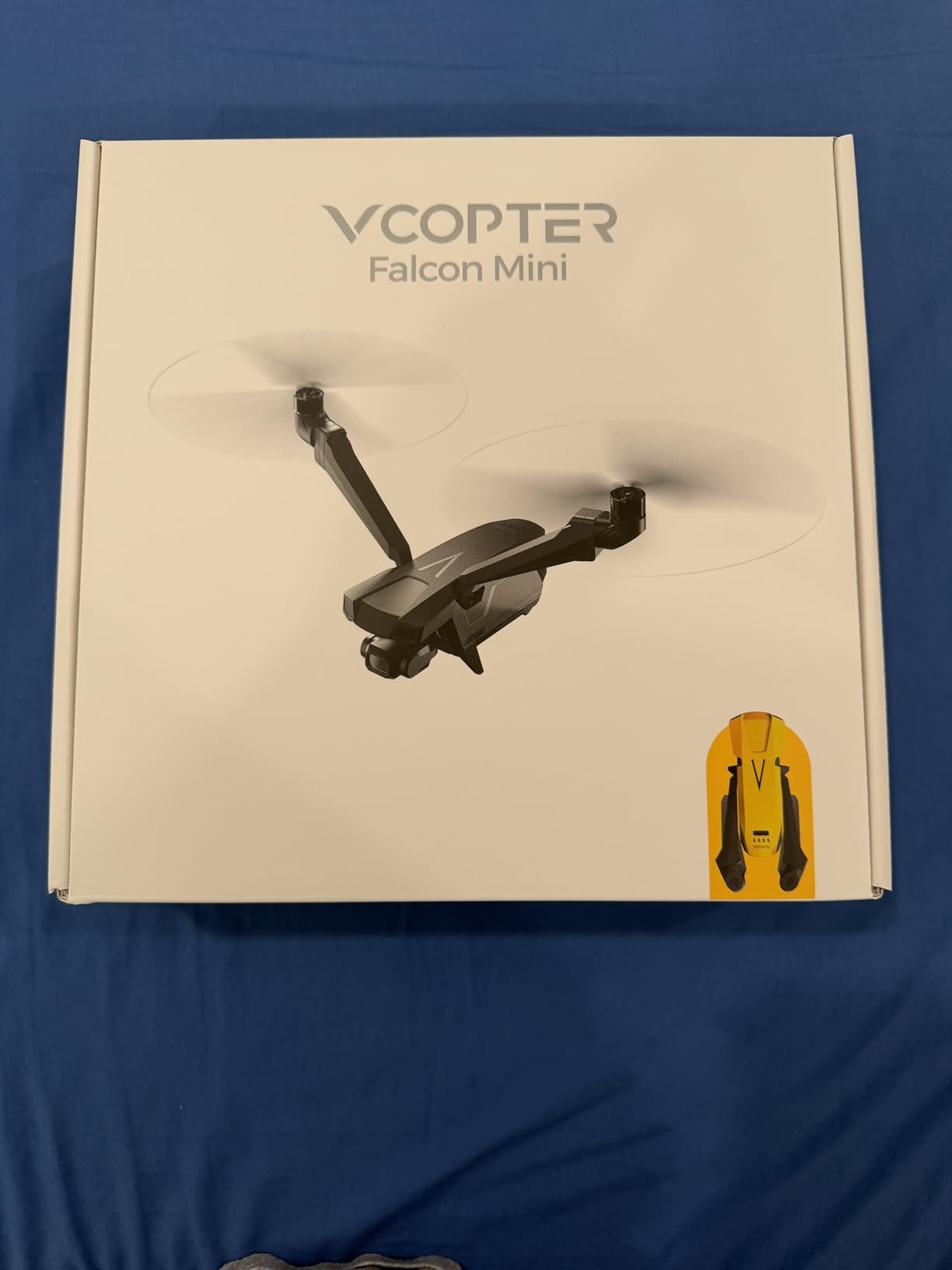
The VCOPTER Falcon Mini brings something genuinely new to the consumer drone market: a tilt-rotor bi-copter design with inverted flight capability. Instead of four motors in a flat X pattern, the Falcon Mini uses two tilt-rotors in a V-shaped configuration. This allows flight modes and maneuvers that traditional quadcopters simply cannot perform.
In my testing, the inverted flight mode worked as advertised. The drone flips to an upside-down orientation and continues flying, creating footage that is impossible to capture with standard drones. The tilt-rotor design also enables faster, more flexible flying dynamics since the rotors angle forward for speed rather than relying purely on pitch angle. The 16m/s maximum speed puts it in the same performance tier as the Potensic ATOM SE.
The 4K camera with a 3-axis mechanical gimbal and 78-degree field of view captures clean footage with proper stabilization. The 12MP still photos are sharp and well-exposed in good lighting. The 6x digital zoom lets you get closer to distant subjects, though image quality degrades at maximum zoom as expected. True vertical shooting is available for social media content creation.
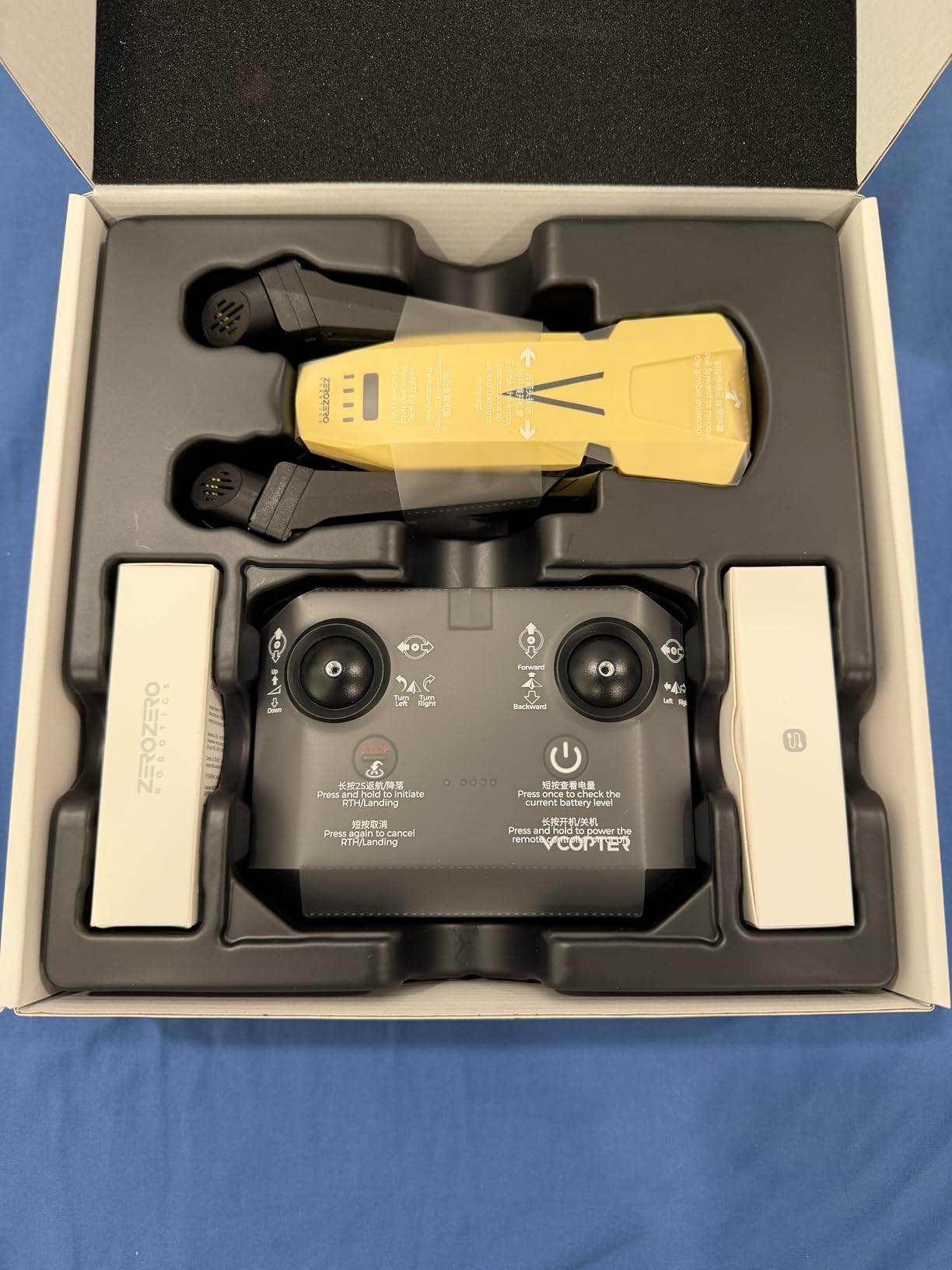
The main frustrations are in setup and build quality. The app connectivity process took several attempts to establish a stable connection during initial setup. The plastic construction feels lightweight and somewhat brittle, with some users reporting cracks from minor impacts. Only one battery is included despite the 34-minute flight time being a selling point, and the external charger costs extra.
Inverted Flight Practical Use
Inverted flight is more than a party trick. It opens creative possibilities for unique camera angles and footage that stands out from standard drone videography. The tilt-rotor design also makes the Falcon Mini more efficient in forward flight, contributing to the 34-minute battery life. For content creators who want footage that looks different from every other drone video, the Falcon Mini delivers genuine novelty.
App and Connectivity Issues
The setup experience needs improvement. Multiple users report difficulty pairing the drone with the app, especially on first attempt. Once connected, the app generally maintains its link, but the initial pairing process is frustrating enough that some users may assume the drone is defective. Patience and following the instructions exactly helps, but VCOPTER needs to streamline this process in future updates.
Buying Guide: How to Choose the Best Fast Drone?
Choosing among the best fast drones requires understanding several key factors that determine real-world performance. Speed numbers on spec sheets only tell part of the story. Here is what actually matters when selecting a fast drone for your needs.
Top Speed and Flight Modes
Top speed matters, but the flight mode that achieves it matters more. Most camera drones offer Normal, Sport, and Manual modes. Normal mode limits speed for stable footage. Sport mode unlocks maximum speed while maintaining GPS stabilization. Manual mode, found primarily on FPV drones, removes all stabilization and self-leveling for maximum agility and speed.
A drone rated for 60 mph in Sport mode with GPS stabilization is very different from an FPV drone hitting 60 mph in full Manual mode. The GPS-stabilized drone is easy to control at speed, while the Manual mode FPV drone requires active piloting skills to avoid crashes. Match the drone’s speed capability with your skill level and intended use case.
FPV vs Camera Drones: Understanding the Difference
FPV (First-Person View) drones stream real-time video from an onboard camera to goggles, giving you a cockpit perspective. These drones prioritize speed, agility, and immersive flying experience over camera quality. They typically fly faster and more aggressively than camera drones but require more skill to operate.
Camera drones prioritize stable, high-quality footage with features like mechanical gimbals, obstacle avoidance, and automated flight modes. They are generally easier to fly and better suited for aerial photography and videography. Some drones, like the DJI Avata 2, bridge both categories by offering FPV experience with decent camera quality.
RTF vs BNF vs Builder Drones
RTF (Ready-to-Fly) drones come with everything needed to fly in one package. The DJI Avata 2, CADDXFPV Protos, and BETAFPV Aquila16 are all RTF kits. This is the best choice for beginners since there is no building, configuring, or compatibility to worry about.
BNF (Bind-and-Fly) drones come fully assembled but without a transmitter. You supply your own compatible radio controller and “bind” it to the drone. The Caddxfpv Gofilm 20 is an example. This option suits pilots who already own a transmitter or want to choose their own.
Builder drones are exactly what they sound like: kits of components that you assemble yourself. The FPV community on Reddit strongly favors this route for maximum speed, as custom builds can be optimized for specific performance goals. However, building requires significant knowledge and time investment.
Battery Life and Flight Time
Flight time directly impacts how much you enjoy flying. Short 5-minute flights feel rushed and frustrating. Drones like the Bwine F7GB2 Pro with 75 total minutes across three batteries and the Potensic ATOM 2 with 96 total minutes transform the flying experience.
Consider the total cost of ownership when evaluating battery life. A drone that includes three batteries effectively costs less than one that includes a single battery, especially when spare batteries cost $100-150 each. Also check charge times, since a 90-minute charge cycle between flights limits your session pacing.
FAA Registration and Legal Requirements
In the United States, drones weighing over 250g require FAA registration, which costs $5 and is valid for three years. Drones under 250g like the DJI Mini 4K, Potensic ATOM SE, and Potensic ATOM 2 do not require registration for recreational use.
All drones flown outdoors in the US must comply with Remote ID rules. Most newer drones, including all the models in this roundup, have built-in Remote ID compliance. If you are flying a drone without built-in Remote ID, you need an external broadcast module. Always check current regulations before flying, as rules change over time.
Skill Level and Learning Curve
Be honest about your current piloting skills. Starting with an FPV racing drone in Manual mode when you have never flown anything is a recipe for frustration and broken equipment. The Sky Viper Dash Nano and BETAFPV Aquila16 are excellent starting points that teach fundamentals without risking expensive gear.
GPS-stabilized camera drones like the Potensic ATOM SE and DJI Mini 4K are forgiving for beginners because they hover in place when you release the controls. FPV drones in Manual mode do not self-level, meaning constant active control is required. Progress gradually from assisted flying to full manual control as your skills develop.
FAQs
What drones can fly 60 mph?
The DJI Avata 2 reaches approximately 60 mph in Manual mode, making it one of the fastest ready-to-fly FPV drones available. The DJI FPV Drone Combo hits 87 mph in Manual mode, which is even faster. Custom-built FPV racing drones can exceed 100 mph, but these require significant building and tuning expertise.
What is the fastest civilian drone?
The fastest civilian drones are custom-built FPV racing quads that can exceed 100 mph, though exact speeds depend on motor and battery configuration. Among ready-to-fly options, the DJI FPV Drone Combo reaches 87 mph in Manual mode. The DRL RacerX holds a Guinness World Record at 163 mph, but it is not a consumer product.
What drone goes 100 mph?
Most drones that reach 100 mph are custom-built FPV racing drones with high-KV motors, lightweight carbon fiber frames, and high-voltage LiPo batteries. Ready-to-fly consumer drones generally max out between 60 and 87 mph. To reach 100 mph, you typically need a 5-inch or larger FPV quad with 6S battery and motors rated above 2500 KV.
Do I need FAA registration for a fast drone?
In the United States, any drone weighing over 250g requires FAA registration regardless of speed. Drones under 250g like the DJI Mini 4K, Potensic ATOM SE, and Potensic ATOM 2 do not require registration for recreational use. All drones must comply with Remote ID rules, which most newer models include built-in.
Can beginners fly FPV drones safely?
Yes, beginners can fly FPV drones safely by starting with ready-to-fly kits designed for learning. The DJI Avata 2, CADDXFPV Protos, and BETAFPV Aquila16 all include progressive flight modes that build skills gradually. Practicing in FPV simulators before real flights dramatically reduces crash risk and builds muscle memory.
Conclusion: Finding Your Best Fast Drone in 2026
The best fast drones combine speed with the features that matter for your specific flying style. The DJI Avata 2 remains our top pick for most pilots because it delivers thrilling FPV speed, a capable 4K camera, and beginner-friendly controls in one polished package. For budget-conscious buyers, the Potensic ATOM SE offers outstanding value with solid Sport mode speed and excellent battery life.
FPV enthusiasts who want maximum speed should look at the DJI FPV Drone Combo at 87 mph, while content creators who need professional-quality footage at speed will find the DJI Air 3S unmatched in its dual-camera versatility and build quality. Whatever your budget and skill level, there is a fast drone in this guide that will get your adrenaline pumping and your footage looking great. For more drone reviews and buying guides, explore the rest of our site for in-depth coverage of every drone category.