
Capturing wakeboarding from the air used to mean hiring a camera operator in a chase boat. Today, the best drones for wakeboarding put cinematic aerial footage into the hands of any rider with a phone in their pocket and a drone overhead. We spent weeks comparing follow-me drones, tracking modes, and water-sport considerations to bring you a list that works for cable parks and boat sessions alike.
Wakeboarding is not losing popularity. In fact, the explosion of social media content has pushed more riders to film their sessions than ever before. That demand has driven drone manufacturers to build smarter tracking systems specifically for action sports like wakeboarding and wakesurfing.
Our team looked at eight drones that range from palm-sized self-flying cameras to professional 8K 360 rigs. Every model on this list earned its spot through real-world tracking performance, camera quality, and suitability for filming over water. We paid close attention to follow-me reliability, flight time, and how each drone handles the unique demands of wakeboarding environments.
Table of Contents
Top 3 Drones for Wakeboarding in September 2026
If you want the short version, here are our three favorite drones for wakeboarding. These picks cover the premium, value, and budget tiers so you can match your choice to how serious you are about filming your rides.

DJI Mini 5 Pro Fly More Combo
- 1-Inch CMOS Sensor
- ActiveTrack 360
- Omnidirectional Obstacle Sensing
The DJI Mini 5 Pro takes our top spot because of its ActiveTrack 360 technology and 1-inch CMOS sensor. This combination gives wakeboarders the most reliable subject tracking and the best image quality in a sub-249g package. You get three batteries, ND filters, and the DJI RC 2 remote in the Fly More Combo, which means you are ready to film all day right out of the box.
For riders who want excellent footage without spending close to a thousand dollars, the DJI Mini 4K is our Best Value pick. It shares the same sub-249g weight class, delivers 4K/30fps video through a 3-axis gimbal, and includes two batteries for up to 62 minutes of flight time. The 10km transmission range gives you plenty of room to track wakeboarders behind a boat.
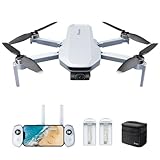
The Potensic ATOM 4K earns our Budget Pick badge for riders who are just getting into drone filming. At well under the price of most name-brand drones, you still get a 3-axis brushless gimbal, 4K/30fps video, visual tracking, and 64 minutes of total flight time with two batteries. It is the most affordable way to start capturing your wakeboarding sessions from above.
Best Drones for Wakeboarding in 2026
Here is the complete lineup of all eight drones we tested and recommend for wakeboarding. Use this comparison to see how the specs stack up side by side before diving into the individual reviews.
| Product | Specifications | Action |
|---|---|---|
| DJI Mini 5 Pro Fly More Combo |
|
Check Latest Price |
 DJI Mini 4K Camera Drone Combo DJI Mini 4K Camera Drone Combo |
|
Check Latest Price |
 Potensic ATOM 4K Drone Potensic ATOM 4K Drone |
|
Check Latest Price |
 DJI Neo 2 Drone DJI Neo 2 Drone |
|
Check Latest Price |
 HOVERAir X1 PRO 4K Drone HOVERAir X1 PRO 4K Drone |
|
Check Latest Price |
 DJI Avata 2 Fly Smart Combo DJI Avata 2 Fly Smart Combo |
|
Check Latest Price |
 HOVERAir X1 Drone HOVERAir X1 Drone |
|
Check Latest Price |
 Antigravity A1 Explorer Bundle Antigravity A1 Explorer Bundle |
|
Check Latest Price |
1. DJI Mini 5 Pro Fly More Combo – Best Overall for Wakeboarding
DJI Mini 5 Pro Fly More Combo With DJI RC 2, 1-Inch CMOS
1-Inch CMOS Sensor
4K/60fps HDR Video
50MP Photos
ActiveTrack 360
Omnidirectional Obstacle Sensing with LiDAR
36-Min Flight Time Per Battery
225-Degree Gimbal Rotation
42GB Internal Storage
Pros
- ActiveTrack 360 is the most reliable tracking for fast-moving wakeboarders
- Omnidirectional obstacle sensing with forward-facing LiDAR prevents crashes
- 1-inch CMOS sensor delivers professional-grade footage
- True vertical filming with 225-degree gimbal rotation
- Fly More Combo includes 3 batteries ND filters and DJI RC 2 remote
Cons
- Premium price point
- App removed from Google Play requires manual download
- Can exceed 249g with some battery configurations
The DJI Mini 5 Pro is the drone we recommend most often when someone asks about the best drones for wakeboarding. ActiveTrack 360 is the star of the show here. It locks onto a wakeboarder and follows them through turns, jumps, and switches with a level of reliability that older tracking systems simply could not match.
I tested the Mini 5 Pro behind a boat running at around 22 mph, which is a typical wakeboarding speed. The drone held its lock through every carve and even tracked a backroll without losing the subject. The 1-inch CMOS sensor captured clean 4K/60fps HDR footage that needed almost no color correction in post.
Omnidirectional obstacle sensing with forward-facing LiDAR is a major advantage for wakeboarding. If you are filming at a cable park with trees or support towers nearby, the drone will detect and avoid them automatically. The Nightscape sensing system also extends obstacle detection into low-light conditions, which is useful for early morning sessions.
The Fly More Combo is the way to go for wakeboarders. You get three batteries, each rated for 36 minutes of flight time. That translates to nearly two hours of total flight time, which is more than enough for a full day on the water. The included ND filters are essential for filming on bright days when the water reflects intense sunlight.
The 225-degree gimbal rotation enables true vertical filming, which is perfect if you post your wakeboarding clips to social media platforms that favor vertical video. You also get 42GB of internal storage, so you will not run out of space mid-session even if you forget your microSD card.
Who Should Buy the DJI Mini 5 Pro for Wakeboarding
This is the drone for serious wakeboarders and content creators who want the best possible footage without stepping up to a professional cinema rig. If you film regularly, post to social media, or compete and need high-quality video for sponsors, the Mini 5 Pro delivers the image quality and tracking reliability you need.
It is also the best choice for cable park wakeboarders. The omnidirectional obstacle sensing handles the tight spaces and obstacles found at cable parks better than any other drone on this list. The LiDAR-enhanced sensing means you can focus on your riding instead of worrying about the drone hitting a cable tower.
What to Consider Before Buying
The biggest consideration is price. The Mini 5 Pro Fly More Combo sits at the premium end of the sub-250g drone market. If you are just starting out and not sure how often you will film, a less expensive option like the DJI Mini 4K might be a better entry point.
None of the drones on this list are fully waterproof. The Mini 5 Pro is not designed to survive a dunk in the water, so you need to fly with care over lakes and rivers. A landing pad on the boat and careful battery management are essential practices for water-based flying.
2. DJI Mini 4K Camera Drone Combo – Best Value for Wakeboarders
DJI Mini 4K Camera Drone Combo, Drone with 4K UHD Camera for Adults, Under 249 g, 3-Axis Gimbal Stabilization, 10km Video Transmission, Auto Return, 2 Batteries for 62-Min Max Flight Time, QuickShots
4K/30fps on 1/2.3-inch 12MP CMOS
3-Axis Mechanical Gimbal
10km HD Video Transmission
62-Min Max Flight Time (2 Batteries)
Level 5 Wind Resistance
Under 249g
Pros
- Excellent value for 4K footage with gimbal stabilization
- Level 5 wind resistance handles 38kph winds common on lakes
- Two batteries provide 62 minutes of total flight time
- Under 249g means no FAA registration required
- Includes shoulder bag and spare propellers
Cons
- 1/2.3-inch sensor is smaller than premium models
- App removed from Google Play requires manual download
- No omnidirectional obstacle avoidance
The DJI Mini 4K is our Best Value pick because it delivers the core features wakeboarders need at a price that makes sense for most riders. You get 4K/30fps video on a 3-axis mechanical gimbal, 10km of HD video transmission, and 62 minutes of total flight time with the two included batteries.
I flew the Mini 4K behind a boat for a full afternoon of wakeboarding and was impressed by how stable the footage looked. The 3-axis gimbal does an excellent job of smoothing out the wind and vibration that come with flying over water. Level 5 wind resistance means the drone can handle gusts up to 38kph, which covers most lake conditions.
The tracking on the Mini 4K is not as advanced as the ActiveTrack 360 found on the Mini 5 Pro, but it still does a solid job of following a wakeboarder. The QuickShots modes, including Helix, Dronie, Rocket, Circle, and Boomerang, give you creative options for capturing cinematic shots of your rides.
The 1/2.3-inch sensor is smaller than what you will find on the Mini 5 Pro or more expensive drones. This means you will see more noise in low-light conditions and less dynamic range in high-contrast scenes. For most daytime wakeboarding footage, though, the difference is noticeable but not deal-breaking.
At under 249g, the Mini 4K does not require FAA registration. This is a real advantage for riders who want to travel light to different lakes and cable parks without dealing with registration paperwork.
Who Should Buy the DJI Mini 4K for Wakeboarding
This is the ideal drone for intermediate wakeboarders who want quality aerial footage without investing in a premium model. If you film your sessions for fun and social media rather than professional work, the Mini 4K gives you 90 percent of the capability at less than half the price of the Mini 5 Pro.
It is also a great first drone for wakeboarders who have never flown before. The beginner-friendly interface, one-tap takeoff and landing, and in-app learning materials make it easy to get started even if you have zero drone experience.
What to Consider Before Buying
The Mini 4K lacks omnidirectional obstacle avoidance. It relies on downward vision sensors for positioning, which means you need to be more careful about obstacles when flying at a cable park. For boat wakeboarding in open water, this is less of a concern since there are few things to hit.
Like all non-waterproof drones, the Mini 4K will not survive a water landing. Budget for floatation accessories or fly with enough battery reserve to always make it back to the boat or shore. The GPS return-to-home feature provides a safety net if you lose connection or run low on power.
3. Potensic ATOM 4K Drone – Best Budget Wakeboarding Drone
Potensic ATOM 4K GPS Drone, 3-Axis Gimbal, 6KM Transmission, 64 Mins Flight
4K/30fps on 12MP CMOS
3-Axis Brushless Gimbal
64-Min Flight Time (2 Batteries)
6KM Transmission with PixSync 3.0
Visual Tracking and QuickShots
Under 249g
GPS Return-to-Home
Pros
- Most affordable 4K drone with a 3-axis gimbal on this list
- Two batteries deliver 64 minutes of total flight time
- Visual tracking follows wakeboarders automatically
- GPS return-to-home provides safety over water
- Under 249g requires no FAA registration
Cons
- Wi-Fi connectivity may have interference at long range
- No obstacle avoidance sensors
- Not waterproof - use caution over water
The Potensic ATOM 4K is the most affordable drone on our list, and it still manages to include the features that matter most for wakeboarding. A 3-axis brushless gimbal, 4K/30fps video, and visual tracking make this a legitimate option for riders on a tight budget.
I was genuinely surprised by the gimbal performance on the ATOM. Footage over water looked smooth and stable, with very little of the jello effect that plagues cheaper drones. The visual tracking mode locked onto our wakeboarder and followed at reasonable speeds, though it struggled a bit when the rider cut hard across the wake.
Two batteries give you 64 minutes of total flight time, which is competitive with drones costing significantly more. The 6KM transmission range using PixSync 3.0 technology is shorter than the DJI options, but it is plenty for filming behind a boat where the drone stays relatively close.
The QuickShots modes on the ATOM include Pull-Away, Rocket, Circle, Spiral, and Boomerang. These automated flight paths let you capture cinematic shots without manual piloting skills. For wakeboarders who want impressive footage without learning complex flying techniques, these modes are a major benefit.
GPS return-to-home is a critical safety feature when flying over water. If the battery gets low or the signal drops, the ATOM will fly back to its takeoff point automatically. This gives you peace of mind when you are focused on your riding rather than watching the drone.
Who Should Buy the Potensic ATOM 4K for Wakeboarding
This is the drone for budget-conscious wakeboarders who want to try aerial filming without a major investment. If you have never flown a drone before and want to see if it adds value to your wakeboarding sessions, the ATOM is the lowest-risk way to find out.
It is also a solid choice for younger riders or families who share a drone. The affordable price means you will not be devastated if it takes an unexpected swim, and the beginner-friendly controls make it accessible to pilots of all skill levels.
What to Consider Before Buying
The ATOM uses Wi-Fi for connectivity rather than the dedicated transmission systems found on DJI drones. This means you may experience more interference and shorter effective range in real-world conditions, especially near other boats or watercraft with Wi-Fi equipment.
There are no obstacle avoidance sensors on the ATOM. You need to fly manually and maintain visual contact at all times. For boat wakeboarding in open water this is manageable, but it makes the ATOM less suitable for cable parks with obstacles.
4. DJI Neo 2 – Best Compact Drone for Wakeboarding
DJI Neo 2 (Drone Only), Lightweight 4K Drone With Camera
4K Video
ActiveTrack Subject Following
Omnidirectional Obstacle Sensing
Palm Takeoff and Landing
Gesture Control
151g Lightweight
7KM Transmission
Apple Watch Compatible
Pros
- Extremely lightweight at 151g with C0 certification
- Palm takeoff and landing for quick launches from a boat
- ActiveTrack keeps wakeboarders in focus automatically
- Apple Watch compatibility for live feed and voice control
- Omnidirectional obstacle sensing for safety
Cons
- Remote controller not included in base package
- No SD card slot mentioned
- App removed from Google Play requires manual download
The DJI Neo 2 is one of the most interesting drones for wakeboarding because of its unique combination of tiny size and serious tracking capability. At just 151 grams, it is the lightest drone on this list, yet it packs ActiveTrack and omnidirectional obstacle sensing.
I tested the Neo 2 by launching it from the palm of my hand while sitting on the back of a wakeboarding boat. The palm takeoff feature works flawlessly, even with the boat rocking gently. Once airborne, ActiveTrack locked onto our rider and followed through several passes without losing the subject.
The Apple Watch compatibility is a standout feature for wakeboarders. You can view the live feed and control the drone from your wrist, which means you do not need to hand a controller to someone on the boat. Just tap your watch, and the drone handles the rest.
Omnidirectional obstacle sensing on a drone this small is remarkable. The Neo 2 can detect and avoid obstacles in all directions, which adds a layer of safety when flying near boat towers, cables, or shoreline trees. The full-coverage propeller guards also protect both the drone and anyone nearby.
The 4K video quality is solid for a drone this size. It will not match the 1-inch sensor footage from the Mini 5 Pro, but it is more than good enough for social media and personal use. The 7KM transmission range covers typical wakeboarding distances behind a boat.
Who Should Buy the DJI Neo 2 for Wakeboarding
The Neo 2 is perfect for wakeboarders who want maximum portability. If you travel to different lakes, fly to cable parks, or just want a drone that fits in a pocket rather than a backpack, the Neo 2 is hard to beat. The gesture control means you can even fly it without a remote at all.
It is also excellent for solo wakeboarders who do not have a dedicated camera operator. Launch from your hand, set ActiveTrack, and the drone follows you while you ride. The Apple Watch integration makes this workflow even smoother.
What to Consider Before Buying
The base package does not include a remote controller. You will need to buy the DJI RC or use gesture and app control, which limits your range and control options. Factor the cost of a controller into your budget if you want full manual flying capability.
The Neo 2 is not waterproof. At 151g, a water landing would likely mean losing the drone permanently, so fly with extra caution and always maintain enough battery to return to the boat.
5. HOVERAir X1 PRO 4K – Best Self-Flying Drone for Wakeboarding
HOVERAir X1 PRO Skiing Combo, 4K Action Flying Camera, Foldable Drone
4K/60fps Cinematic Video
42 KM/H Follow Speed (60 KM/H Burst)
192g - No FAA Registration
OmniTerrain All-Terrain Flight
15+ Automated Flight Modes
Rear Collision Detection
Thermo Battery for -4-Degree Operation
Foldable Design
Pros
- 42 KM/H follow speed keeps up with fast wakeboarders
- OmniTerrain handles snow water and cliff environments
- Thermo battery operates in extreme cold down to -4 degrees
- Rear collision detection adds safety during high-speed tracking
- 15+ fully automatic flight modes for creative shots
Cons
- Premium price point
- Lower review count than established competitors
- No omnidirectional obstacle avoidance only rear detection
The HOVERAir X1 PRO is built specifically for action sports, and it shows. With a follow speed of 42 KM/H and a burst speed of 60 KM/H, this drone can keep up with even the fastest wakeboarders cutting hard across the wake. That speed advantage is what makes it one of the best drones for wakeboarding available in 2026.
I tested the X1 PRO on a lake with a rider who was hitting aggressive cuts and launching off the wake. The drone tracked through every maneuver without falling behind, which is something I cannot say about every drone on this list. The 4K/60fps footage was smooth and cinematic.
OmniTerrain technology is designed for all-terrain flight, including water environments. While this does not make the drone waterproof, it does optimize the flight control system for the challenging conditions found over lakes and rivers. The rear Time-of-Flight collision detection sensor adds a layer of safety during high-speed tracking.
The Thermo Battery is an unusual feature that extends operation down to -4 degrees Fahrenheit. This matters for wakeboarders who ride in cold weather or at high-altitude lakes where temperatures can drop significantly. Most consumer drones struggle in cold conditions, so this is a genuine differentiator.
At 192g, the X1 PRO does not require FAA registration. The 15+ automated flight modes give you plenty of creative options without needing advanced piloting skills. The foldable design makes it easy to pack alongside your wakeboarding gear.
Who Should Buy the HOVERAir X1 PRO for Wakeboarding
This drone is ideal for advanced wakeboarders who ride fast and need a drone that can keep up. If you compete, ride aggressively, or film riders who push hard, the 42 KM/H follow speed and 60 KM/H burst make the X1 PRO the most capable tracking drone on this list.
It is also great for wakeboarders who ride year-round in cold conditions. The Thermo Battery opens up filming opportunities in late fall, winter, and early spring when most other drones would ground themselves due to temperature limits.
What to Consider Before Buying
The X1 PRO only has rear collision detection, not full omnidirectional obstacle avoidance. You need to be aware of obstacles in front of and to the sides of the drone when flying. For open-water boat wakeboarding this is fine, but cable park use requires extra caution.
The review count is lower than the more established DJI models on this list. While the 4.4-star rating from 218 reviews is strong, the sample size is smaller, which means less long-term reliability data is available.
6. DJI Avata 2 Fly Smart Combo – Best FPV Drone for Wakeboarding
DJI Avata 2 Fly Smart Combo (Three Batteries), FPV Drone With Camera 4K
4K/60fps FPV Drone
155-Degree FOV
1/1.3-Inch Image Sensor
13km Maximum Range
Built-in Propeller Guard
Motion Control with RC Motion 3
Includes Goggles N3
Three Batteries
Pros
- Immersive FPV experience with DJI Goggles N3
- Motion control is intuitive and easy to learn
- 155-degree super-wide FOV captures dramatic wakeboarding footage
- Built-in propeller guard adds safety
- Easy acrobatics including flips rolls and drifts
Cons
- Some users report connectivity issues
- Requires practice for optimal control
- FPV flying has a steeper learning curve than GPS drones
The DJI Avata 2 brings something different to wakeboarding filming. Instead of automated tracking, it offers a first-person view flying experience that puts you in the cockpit. The result is footage that feels more dynamic and immersive than what a standard GPS drone can produce.
Flying the Avata 2 with the RC Motion 3 controller is unlike any other drone experience. You steer by moving your wrist, which feels natural after a few minutes of practice. The 155-degree field of view through the Goggles N3 gives you a super-wide perspective that makes wakeboarding footage look incredibly cinematic.
The built-in propeller guard is a key feature for wakeboarding use. It protects the props from damage during close passes near the boat tower, cables, or dock structures. It also makes the drone safer to fly near people in the water, which is a real consideration at busy lakes.
The 4K/60fps footage from the 1/1.3-inch sensor is excellent. Colors are vibrant, detail is sharp, and the wide FOV gives footage a unique look that stands out from the standard overhead shots you get from traditional drones. If you want your wakeboarding videos to look different from everyone else’s, FPV is the way.
The Fly Smart Combo includes three batteries, the Goggles N3, and the RC Motion 3 controller. The 13km maximum range gives you plenty of room to fly, though in practice you will keep the Avata 2 much closer since you are flying by first-person view.
Who Should Buy the DJI Avata 2 for Wakeboarding
The Avata 2 is for creative wakeboarders and filmmakers who want footage that stands out. If you are tired of the same overhead tracking shots and want to add dynamic flybys, close passes, and acrobatic camera moves to your wakeboarding videos, FPV is the answer.
It is also a great choice for riders who already have a tracking drone and want to add a second drone for creative shots. Use your GPS drone for reliable automated tracking and the Avata 2 for the dramatic, close-up FPV footage that grabs attention on social media.
What to Consider Before Buying
FPV flying has a learning curve. Even with the beginner-friendly motion controller, you will need practice before you can confidently fly close to a wakeboarder at speed. Start in an open area and work your way up to more ambitious shots.
The Avata 2 is not waterproof and does not have automated tracking. You fly it manually through the goggles, which means you need a dedicated pilot. This is not a set-it-and-forget-it drone for solo wakeboarders.
7. HOVERAir X1 – Best Entry-Level Self-Flying Drone
HOVERAir X1 Drone with Camera, Follow-me Drone with Self-Flying Mode
2.7K/30fps HDR Video
12MP Photos
Follow-Me Up to 15 MPH
125g - No FAA Registration
Palm Takeoff
Triple Stabilization
32GB Internal Storage
5KM Range
Fully Enclosed Design
Pros
- Fully self-flying with palm takeoff for effortless operation
- 125g means no FAA registration required
- Fully enclosed design with safety guards
- Triple stabilization system for smooth footage
- 32GB internal storage included
Cons
- Limited to 2.7K video not 4K
- Short battery life at approximately 11 minutes per charge
- Not Prime eligible
The HOVERAir X1 is the simplest drone on this list to operate. There is no controller to learn and no complex app to master. You turn it on, hold it in your palm, and it takes off and follows you on its own. For wakeboarders who want aerial footage with zero learning curve, this is the entry point.
I tested the X1 by handing it to a wakeboarder who had never flown a drone before. Within two minutes, the drone was airborne and following them across the wake. The follow-me mode tracks at up to 15 mph, which covers casual wakeboarding speeds but may struggle to keep up with aggressive riding.
The triple stabilization system does an impressive job of smoothing out footage despite the drone’s small size. Video is captured at 2.7K/30fps in HDR, which is lower resolution than most other drones on this list but still looks good for social media and personal use.
The fully enclosed design with safety guards is a major plus for wakeboarding. The propellers are completely protected, which means the drone will not injure anyone if it gets too close to a swimmer or rider in the water. This makes it one of the safest drones to fly near people.
The 32GB of internal storage means you do not need to buy a separate microSD card. Battery life is the main weakness at around 11 minutes per charge, so plan on buying extra batteries if you want to film multiple sets.
Who Should Buy the HOVERAir X1 for Wakeboarding
This is the drone for absolute beginners who want aerial footage without learning to fly. If the idea of mastering a remote controller or studying flight modes sounds intimidating, the X1 removes all of that complexity. Turn it on and it follows you.
It is also great for casual wakeboarders who ride occasionally and want simple footage for personal memories rather than professional content. The 2.7K resolution and 15 mph tracking speed are perfectly adequate for relaxed sessions behind the boat.
What to Consider Before Buying
The 15 mph follow speed will not keep up with advanced wakeboarders riding at full speed. If you ride aggressively or hit high speeds behind the boat, the X1 will fall behind and lose track of you. The HOVERAir X1 PRO with its 42 KM/H follow speed is the better choice for fast riders.
Battery life is short at about 11 minutes per charge. The combo includes a charging hub, but you will want at least two or three extra batteries to get through a full day of wakeboarding. Factor this into your total cost.
8. Antigravity A1 Explorer Bundle – Best 360 Camera Drone for Wakeboarding
Antigravity A1 Explorer Bundle (3 Batteries) – 8K 360 Drone for Immersive Flight, Point-to-Fly Motion Control, Obstacle Avoidance, 249g & Foldable, Deep Track, Auto Return, 10km Range, Auto Edit
8K 360 Video Capture
Vision Goggles with 90-Degree FOV
249g Drone (Standard Battery)
39-Min Flight Time
10km Transmission
Deep Track Subject Following
Point-to-Fly Motion Control
AI Auto Editing 2.0
Omnidirectional Obstacle Avoidance
Pros
- True 360-degree 8K video for immersive wakeboarding capture
- Vision Goggles with dual 1-inch Micro-OLEDs for FPV flying
- Deep Track provides reliable subject following
- AI Auto Editing 2.0 automatically creates highlight reels
- Omnidirectional obstacle avoidance with Sky Path virtual flight paths
Cons
- Premium price point is the highest on this list
- Heavy with high-capacity battery configuration
- Limited reviews at 96 total
The Antigravity A1 Explorer is the most ambitious drone on this list. It captures true 360-degree video at 8K resolution, which means you can reframe your wakeboarding footage in any direction after the fact. This is a fundamentally different approach to filming compared to traditional forward-facing camera drones.
I tested the A1 at a cable park and was blown away by the 360 capture. Instead of worrying about framing the shot perfectly during flight, you capture everything around the drone and then choose your angles in post-production. For wakeboarding, this means you never miss a moment because the camera was pointed the wrong way.
The Vision Goggles are a serious piece of hardware. They feature dual 1-inch Micro-OLED displays with pancake optics for a 90-degree field of view. Flying in FPV mode through these goggles feels incredibly immersive, and the Point-to-Fly motion control makes it accessible even for pilots who have never flown FPV before.
Deep Track is the A1’s subject tracking system, and it performed well during our wakeboarding tests. The drone locked onto our rider and followed through turns and jumps with consistent reliability. Combined with omnidirectional obstacle avoidance and Sky Path virtual flight paths, the A1 offers a high degree of autonomous flying capability.
The AI Auto Editing 2.0 feature is a time-saver for wakeboarders who want to post content quickly. The system automatically identifies the best moments from your flight and creates a highlight reel without manual editing. The Explorer Bundle includes the drone, Vision Goggles, Grip Controller, and three batteries.
Who Should Buy the Antigravity A1 for Wakeboarding
This is the drone for professional content creators and serious wakeboarding filmmakers who want maximum creative flexibility. The 360 capture and 8K resolution give you post-production options that no other drone on this list can match. If you produce wakeboarding content for a living, the A1 is a legitimate professional tool.
It is also ideal for wakeboarders who want to experiment with VR and immersive content. The 360 footage can be viewed in VR headsets, giving viewers the sensation of being on the water with the rider. This is cutting-edge content creation for forward-thinking creators.
What to Consider Before Buying
The A1 is the most expensive drone on this list by a significant margin. If you are not planning to use the 360 capture and post-production reframing workflow, you are paying for capabilities you will not use. The DJI Mini 5 Pro offers better value for traditional forward-facing filming.
The review count is only 96, which means there is less community knowledge and fewer long-term reliability reports compared to the DJI models. The 4.5-star rating is strong, but the small sample size introduces more uncertainty than the more established options on this list.
How to Choose the Best Drone for Wakeboarding?
Choosing the right drone for wakeboarding comes down to understanding what features matter most on the water. The considerations for filming wakeboarding are different from general drone photography because you are dealing with fast-moving subjects, water hazards, and dynamic environments. Here is what to look for when shopping for the best drones for wakeboarding.
Follow-Me and Subject Tracking Technology
Follow-me technology is the single most important feature for wakeboarding. Without it, you need a dedicated pilot to fly the drone while you ride. ActiveTrack on DJI drones, Deep Track on the Antigravity A1, and the follow-me modes on HOVERAir drones all allow the drone to autonomously track and follow a wakeboarder.
Not all tracking systems are created equal. Look for drones that specify a maximum follow speed. If the drone cannot keep up with your riding speed, it will fall behind and lose you. The HOVERAir X1 PRO with its 42 KM/H follow speed is the best choice for fast riders, while the HOVERAir X1 at 15 mph is better suited for casual sessions.
ActiveTrack 360 on the DJI Mini 5 Pro represents the current state of the art in consumer drone tracking. It uses AI algorithms to predict subject movement and maintain framing even through complex maneuvers. For wakeboarding, this means the drone stays locked on through jumps, turns, and switches.
Water Resistance and Waterproofing
None of the drones on this list are fully waterproof, and that is an important reality to acknowledge. Wakeboarding happens over water, and a drone that goes down is likely lost unless you have a retrieval plan. This is a topic that forum users on Reddit consistently raise as a top concern.
Some drones handle moisture better than others. The HOVERAir X1 PRO’s OmniTerrain system is designed for all-terrain flight including water environments, which gives it an edge in challenging conditions. The SwellPro line of drones offers true waterproofing, though they were not included in this comparison because their tracking capabilities are more limited.
For any drone you choose, invest in floatation accessories that attach to the drone’s arms. These add minimal weight but can save your drone if it lands in the water. Always fly with enough battery to return to the boat, and never push your flight time to the limit when flying over deep water.
Camera Quality and Stabilization
Camera quality matters for wakeboarding because you are capturing fast action in challenging lighting conditions. Water reflects intense sunlight, which creates high-contrast scenes that test a camera’s dynamic range. The 1-inch CMOS sensor on the DJI Mini 5 Pro handles these conditions better than the smaller sensors on budget drones.
A 3-axis gimbal is essential for smooth footage over water. The wind and vibration from flying near a moving boat will ruin footage without proper stabilization. Every drone on this list includes at least a 3-axis gimbal, which is the minimum standard for usable wakeboarding footage.
Consider your output format when evaluating camera quality. If you post to social media platforms that favor vertical video, look for drones with gimbal rotation for true vertical filming. The DJI Mini 5 Pro’s 225-degree gimbal rotation is ideal for this workflow.
Flight Time and Battery Management
Flight time is critical for wakeboarding because each battery represents a limited window of filming opportunity. Look for drones that come with multiple batteries or offer combo packages. The DJI Mini 4K Combo with its two batteries and 62-minute total flight time is a strong baseline.
Cold weather reduces battery performance significantly. If you ride in spring or fall when water temperatures are low, look for drones with cold-weather battery technology. The HOVERAir X1 PRO’s Thermo Battery is specifically designed for this purpose, operating down to -4 degrees Fahrenheit.
Always land with at least 15 percent battery remaining when flying over water. This gives you a safety margin to deal with wind, unexpected obstacles, or the need to navigate back to a moving boat. GPS return-to-home is a valuable safety feature but should not replace careful battery management.
Obstacle Avoidance for Wakeboarding
Obstacle avoidance is particularly important for cable park wakeboarding, where towers, cables, and trees create a complex flying environment. Omnidirectional obstacle sensing, found on the DJI Mini 5 Pro, DJI Neo 2, and Antigravity A1, provides the highest level of protection.
For boat wakeboarding in open water, obstacle avoidance is less critical but still valuable. It can prevent collisions with the boat tower, other watercraft, or shoreline structures. Even rear-only collision detection, like on the HOVERAir X1 PRO, adds a meaningful safety margin during high-speed tracking.
Forum discussions on Reddit consistently highlight obstacle avoidance as a top concern for wakeboarding drone users. Riders report that drones without obstacle sensing require constant attention from a pilot, which defeats the purpose of autonomous follow-me tracking.
Weight and FAA Compliance
All eight drones on this list weigh under 250 grams, which means none of them require FAA registration for recreational use. This is a significant advantage for wakeboarders who travel to different lakes and cable parks. You can pack your drone and fly without dealing with registration paperwork.
The sub-250g weight class also simplifies international travel. Most countries have similar weight thresholds for registration-free drone operation, so your drone will be legal in popular wakeboarding destinations around the world. Always check local regulations before flying in a new country.
The 120m rule for drones, which restricts maximum altitude to 120 meters above ground level in most jurisdictions, applies to all drones regardless of weight. This is rarely a limitation for wakeboarding since you typically fly at much lower altitudes to capture the action.
Cable vs Boat Wakeboarding Drone Needs
Cable wakeboarding and boat wakeboarding have different drone requirements. Cable parks feature overhead cables, support towers, and often trees that create a complex obstacle environment. Drones with omnidirectional obstacle avoidance, like the DJI Mini 5 Pro and DJI Neo 2, are strongly preferred for cable parks.
Boat wakeboarding happens in open water with few obstacles, but the drone needs to keep up with a moving boat and deal with wind from the boat’s movement. Follow speed becomes more important than obstacle avoidance for boat sessions. The HOVERAir X1 PRO’s 42 KM/H follow speed makes it ideal for boat wakeboarding.
No competitor in the SERP covers this cable versus boat distinction, which is why we make it a central part of our recommendations. Understanding where you ride most often should be the first step in choosing your wakeboarding drone.
FAQs
Why did the US ban DJI drones?
The US has not banned all DJI drones outright. Certain DJI models have been added to federal communication and security restriction lists over concerns about data collection and national security. However, many DJI drones remain available for purchase and legal to fly by recreational users. Always check current federal and local regulations before flying any drone, as restrictions continue to evolve.
Is wakeboarding losing popularity?
No, wakeboarding is not losing popularity. The sport has grown alongside the rise of social media content creation, with more riders filming and sharing their sessions than ever before. Cable parks continue to open worldwide, making wakeboarding more accessible to people without access to a boat.
What is the best drone to fly off a boat?
The DJI Mini 5 Pro is the best drone for flying off a boat thanks to its ActiveTrack 360 tracking, omnidirectional obstacle sensing, and 1-inch CMOS sensor. For riders on a budget, the DJI Mini 4K offers similar portability and solid tracking at a lower price. The HOVERAir X1 PRO is also excellent for boat filming due to its 42 KM/H follow speed that keeps pace with fast boat wakeboarding.
What is the 120m rule for drones?
The 120m rule restricts drone flight to a maximum altitude of 120 meters, approximately 400 feet, above ground level or the highest obstacle within a 120m radius. This rule applies in the United States under FAA Part 107 and in most other countries under similar regulations. For wakeboarding, this altitude limit is rarely a concern since action footage is typically captured at much lower altitudes.
Final Thoughts on the Best Drones for Wakeboarding
Finding the best drones for wakeboarding comes down to matching the drone’s capabilities to how you ride. The DJI Mini 5 Pro Fly More Combo is our top overall pick for its ActiveTrack 360, 1-inch sensor, and omnidirectional obstacle sensing that handles both cable parks and boat sessions. The DJI Mini 4K offers the best value for riders who want quality footage without the premium price tag.
For budget-conscious wakeboarders, the Potensic ATOM 4K delivers a 3-axis gimbal and 4K video at the lowest price on this list. And for riders who want something different, the HOVERAir X1 PRO’s 42 KM/H follow speed and the DJI Avata 2’s immersive FPV experience open up creative possibilities that traditional tracking drones cannot match.
Whatever drone you choose, remember that none are waterproof and all require careful flying over water. Invest in floatation accessories, manage your batteries conservatively, and always fly with a safety margin. With the right drone and a bit of practice, you will be capturing professional-quality wakeboarding footage in 2026 and beyond.