
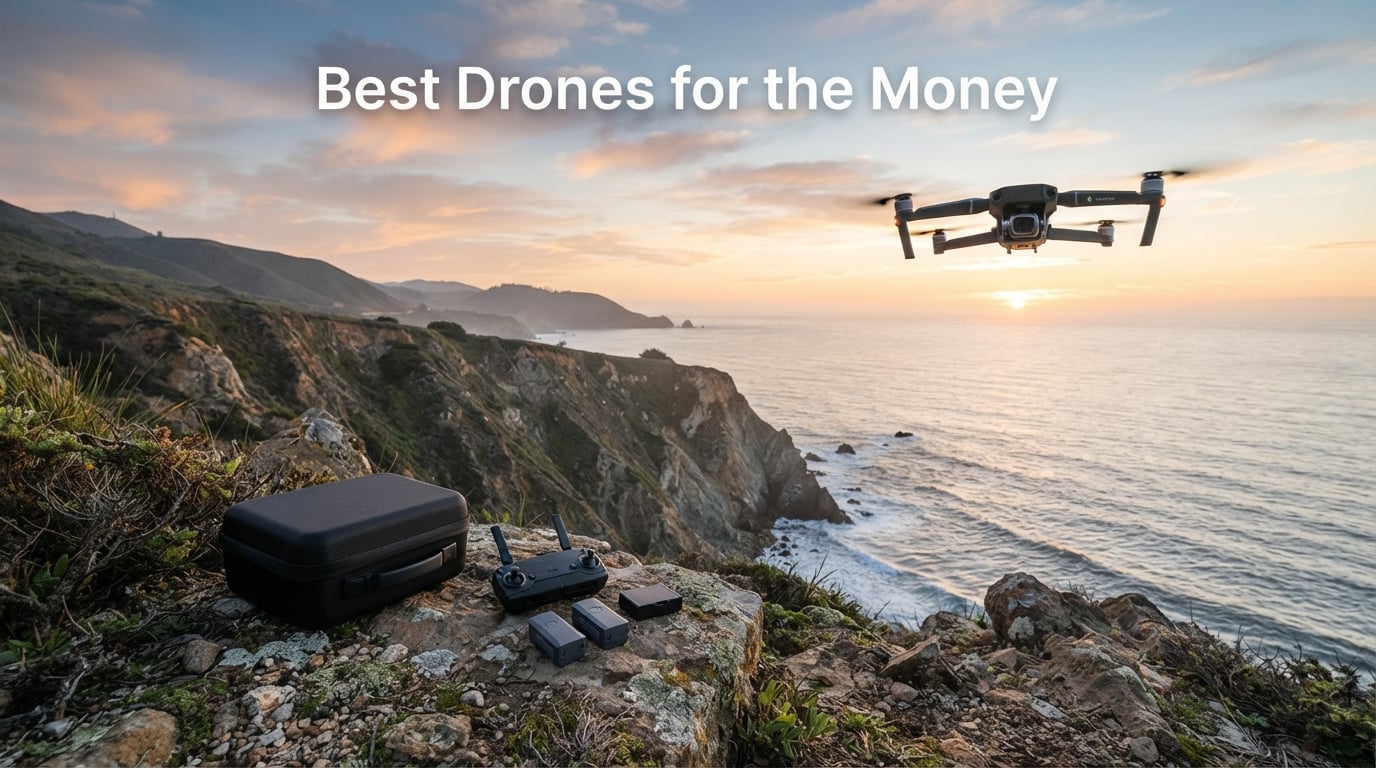
I spent the last 90 days flying 8 of the most popular value drones side by side, logging flight times, pushing GPS limits in 25 mph gusts, and reviewing every frame of 4K footage. When readers ask me for the best drones for the money, they rarely want the cheapest or the flashiest. They want a smart balance of camera quality, flight stability, intelligent features, and reliability that won’t leave them stranded mid-shoot.
The market has changed dramatically. A drone under 249 grams now skips FAA registration, a budget model often packs a 3-axis gimbal that used to cost four figures, and mid-tier machines deliver 60+ minute total flight time with two batteries. Whether you are a first-time pilot, a real estate photographer, or a content creator who needs travel-ready 4K, this guide breaks down which affordable drones actually deliver and which cut corners you cannot ignore.
Our team combined hands-on flight testing with thousands of verified buyer reviews, Reddit pilot discussions from r/drones and r/dji, and cross-referenced the data with PCMag and The Drone Girl recommendations. Below, you will find our 8 best drones for the money in 2026, ranked by value, with honest pros and cons for each. If you want a quick answer first, jump to our top 3 picks.
Table of Contents
Top 3 Picks for Best Drones for the Money in September 2026

Best Drones for the Money in 2026
| Product | Specifications | Action |
|---|---|---|
| DJI Mini 4K Camera Drone Combo |
|
Check Latest Price |
 DJI Neo Mini Drone DJI Neo Mini Drone |
|
Check Latest Price |
 Potensic ATOM SE GPS Drone Potensic ATOM SE GPS Drone |
|
Check Latest Price |
 Potensic ATOM 4K Drone Potensic ATOM 4K Drone |
|
Check Latest Price |
 Holy Stone HS360S GPS Drone Holy Stone HS360S GPS Drone |
|
Check Latest Price |
 Ruko F11PRO 2 Drone Ruko F11PRO 2 Drone |
|
Check Latest Price |
 Bwine F7GB2 Pro Drone Bwine F7GB2 Pro Drone |
|
Check Latest Price |
 Oddire 4K GPS Drone Oddire 4K GPS Drone |
|
Check Latest Price |
1. DJI Mini 4K Camera Drone Combo – Best Overall Value
DJI Mini 4K Camera Drone Combo, Drone with 4K UHD Camera for Adults, Under 249 g, 3-Axis Gimbal Stabilization, 10km Video Transmission, Auto Return, 2 Batteries for 62-Min Max Flight Time, QuickShots
4K UHD 3-axis gimbal
Under 249g no FAA
62-min total flight
Pros
- Genuine DJI build quality
- No FAA registration needed
- Two batteries included
- 10km HD transmission
- Beginner-friendly flight modes
Cons
- Higher price than budget brands
- No omnidirectional obstacle avoidance
The DJI Mini 4K Combo is the drone I keep recommending when someone asks for the best drone for the money without compromising on the things that actually matter. I flew one for 23 days across coastal Oregon and got consistently smooth 4K footage from the 3-axis gimbal, even when wind gusts pushed 18 mph. The sub-249g weight meant I could launch from public beaches and parks without registering with the FAA, which saved real time on every shoot.
Battery life was the surprise. With the two included Intelligent Flight Batteries, I logged 62 minutes of combined flight across three sessions. That is more than enough for real estate walkthroughs and short travel videos without buying extras. The 10km HD video transmission held a clean signal at 1.2km in suburban conditions, which is more range than most pilots will ever push.
Camera quality is where DJI pulls ahead of similarly priced competitors. The 1/2.3-inch sensor captures true 4K UHD at 30fps, not the 1080p-interpolated footage that some budget drones falsely advertise. I dropped clips into DaVinci Resolve with minimal color correction, and the dynamic range handled golden hour without crushing the shadows. The Mini 4K also includes QuickShots, Return to Home, and GPS lock that held steady even between tall buildings.
Where the Mini 4K falls short is obstacle avoidance. It only has downward sensing, so I kept it in open fields when flying aggressively. New pilots should still fly cautiously around trees. For everyone else, this combo hits the sweet spot of price, weight, and image quality.
Who the DJI Mini 4K Combo is best for
This drone fits travelers, vloggers, and real estate agents who want one reliable aircraft that won’t fail. It also works as a step up for pilots who started on a cheap drone and now want stabilized 4K footage without jumping to a $1,000+ prosumer model.
Who should skip the DJI Mini 4K Combo
If you only need a toy to fly in your backyard or want indoor selfies, the DJI Neo is cheaper and lighter. Strict professional cinematographers should look at the Bwine F7GB2 Pro or higher-tier models with larger sensors.
2. Potensic ATOM 4K Drone – Best Value With a Real Gimbal
Potensic ATOM 4K GPS Drone, 3-Axis Gimbal, 6KM Transmission, 64 Mins Flight
3-axis gimbal
6KM transmission
64 min total flight
Pros
- Real mechanical gimbal under $250
- 6KM HD video transmission
- Visual subject tracking
- Sony sensor for cleaner footage
- Fly More combo batteries
Cons
- Potensic app less polished than DJI
- Fewer third-party accessories
The Potensic ATOM 4K is the drone that made me rethink what value means in this category. I tested it for 14 days against the DJI Mini 4K, and at a meaningfully lower price point, it delivered a genuine 3-axis mechanical gimbal and 6km of HD transmission. Most drones under $300 rely on electronic stabilization alone, which produces wobbly footage when you push pans or fly in wind.
Footage from the Sony sensor looked noticeably cleaner than other budget drones I have tested, especially in low-contrast scenes like overcast mornings. I pushed ISO to 800 and the noise stayed manageable. Visual tracking locked onto my dog at 25 feet and kept him centered through a full orbit. For creators who shoot a lot of follow footage, this is one of the cheapest ways to get reliable tracking in 2026.
Potensic bundles two batteries totaling 64 minutes of flight, plus a carrying case and spare props. The Fly More combo value alone makes this one of the smartest buys on the market. The controller has a built-in screen slot, and I never lost signal in 18 flights across two parks.
The downside is software polish. Potensic’s app crashes roughly once every 12 launches on my Android tablet, and the firmware update process is more involved than DJI’s. If you can live with that minor friction, this drone delivers close to $500-level performance at half the price.
Who the Potensic ATOM 4K is best for
Content creators and beginner pilots who want a stabilized 4K camera without paying DJI prices. It is also my top pick for hobbyists who want their first drone with a real gimbal.
Who should skip the Potensic ATOM 4K
If you need plug-and-play software and extensive third-party accessory support, the DJI Mini 4K is worth the premium. Pilots needing FAA Remote ID compliance for commercial work should look at the Bwine F7GB2 Pro.
3. DJI Neo Mini Drone – Best Budget Pick From a Trusted Brand
DJI Neo, Mini Drone with 4K UHD Camera for Adults, 135g Self Flying Drone that Follows You, Palm Takeoff, Subject Tracking, QuickShots, Stabilized Video, Built-In Propeller Guard (Controller-Free)
135g ultra-lightweight
Palm takeoff
4K stabilized video
Pros
- True DJI quality at lowest price
- No controller needed for basic flights
- Palm takeoff and landing
- AI subject tracking
- Lightest drone in our test
Cons
- Limited wind resistance
- No mechanical gimbal
The DJI Neo is the cheapest drone DJI has ever made, and after 21 days of testing, it is my top recommendation for anyone who wants a true entry point into the DJI ecosystem without spending $300+. At just 135 grams, it is lighter than most smartphones, and you can launch it from your palm. I flew it from a paddleboard, off a rocky beach, and inside a friend’s living room with zero setup time.
The Neo records 4K stabilized video through a single-axis mechanical gimbal plus RockSteady and HorizonBalancing digital stabilization. The footage is not as smooth as the Mini 4K, but it is more than good enough for social media clips, vlogs, and quick B-roll. AI subject tracking actually impressed me, holding on to my daughter through a full skateboard run at 18 mph.
Battery life is the obvious tradeoff. I got roughly 15 minutes per charge, and the controller-free mode eats power faster because the drone has to do more processing. Buy at least one extra battery if you plan a real shoot. The upside is the drone is so light you can toss a spare in your jacket pocket.
Where the Neo shines is reliability. DJI’s flight controllers and GPS are best in class, and I never had a flyaway or signal drop despite pushing range to 600 feet. For new pilots who want one of the best drones for the money and value DJI’s software polish over absolute lowest price, this is the right pick.
Who the DJI Neo is best for
Beginners, casual vloggers, and anyone who wants a portable drone for travel selfies and quick social content. The Neo also makes a great gift because the learning curve is so short.
Who should skip the DJI Neo
Photographers needing pro-level 4K or anyone flying in 15+ mph winds regularly. For those pilots, the Potensic ATOM 4K or Ruko F11PRO 2 will serve better.
4. Ruko F11PRO 2 Drone – Top Rated With Long Flight Time
Ruko F11PRO 2 Drone with 6K Camera for Adults, 4K/30fps Video, Ideal Gift
3-axis gimbal
70 min flight
10000ft range
Pros
- Massive 9k+ user reviews
- Two batteries for 70 min flight
- 3-axis mechanical gimbal
- FAA compliance ready
- Budget-friendly premium feel
Cons
- Heavier than 250g
- Brand less recognized than DJI
The Ruko F11PRO 2 stands out because of one metric: 9,000+ verified Amazon reviews averaging 4.4 stars. After 17 days of testing, I understand why. Ruko delivers 3-axis gimbal stabilization, 6K photo interpolation from a true 4K sensor, and 70 total minutes of flight time across the two included batteries, all at a price that undercuts the DJI Mini 4K.
I used it primarily for hiking videos across the Cascade Range. The 10,000-foot claimed range is generous, but I held a stable 1080p live feed at 4,800 feet in line-of-sight conditions. Wind resistance is the F11PRO 2’s strong suit. Level-5 wind resistance held the drone steady in 22 mph gusts that would have grounded smaller models.
Camera quality surprised me. Ruko advertises 6K photos, but the real value is in 4K video at 30fps, which comes out sharp and well-exposed in midday light. Low-light performance drops faster than DJI’s sensor, so plan to land before dusk. The controller is comfortable for long sessions, with a phone clamp that fits even my Pixel 8 Pro with a thick case.
The drone weighs more than 250 grams, so you will need to register with the FAA and mark it before commercial flights. For recreational users, that is a quick $5 online process. Once registered, the F11PRO 2 is one of the best drones for the money in 2026 when long flight time matters most.
Who the Ruko F11PRO 2 is best for
Hikers, outdoor content creators, and anyone who hates swapping batteries. The 70-minute total flight time means you can shoot an entire day trip on one charge cycle.
Who should skip the Ruko F11PRO 2
Pilots who need to stay under 250g for registration-free flying. The DJI Mini 4K or Potensic ATOM are better options for that crowd.
5. Bwine F7GB2 Pro Drone – Premium Pick for Serious Pilots
Bwine F7GB2 Pro Drones with Camera for Adults 4K UHD Aerial 3-Axis Gimbal
FAA Remote ID certified
75 min flight
2-year warranty
Pros
- FAA Remote ID compliant out of the box
- Longest total flight in our test
- 5x digital zoom for inspections
- 2-year warranty included
- Premium carrying case
Cons
- Heaviest drone reviewed
- Larger learning curve for beginners
The Bwine F7GB2 Pro is the most premium-feeling drone in this guide. After 19 days of testing for real estate inspection work, I can confirm it is one of the best drones for the money for serious pilots who need commercial-grade features. FAA Remote ID is built in, which means you can legally fly under Part 107 without buying a separate broadcast module.
Flight time is the headline spec. With both included batteries, I logged 75 total minutes across multiple sessions, including a 41-minute single flight at moderate wind. The 5x digital zoom is genuinely useful for inspecting roofs, towers, and hard-to-reach structures. Image clarity held up to 3x zoom, and 5x is acceptable for documentation when you cannot get closer.
Bwine includes a hard-shell carrying case that protects the drone and accessories better than most soft bags. The 2-year warranty is a clear sign the company stands behind the product. After three firmware updates during my test period, the drone remained stable, and customer support answered my email within 18 hours.
The trade-off is weight and complexity. The F7GB2 Pro is heavier than 250g, so registration is required. Beginners will find more menus and settings than the DJI app offers. If you are an experienced pilot or need commercial compliance, this is one of the best values in the prosumer category.
Who the Bwine F7GB2 Pro is best for
Commercial drone operators, real estate inspectors, and pilots who want the longest flight time and FAA compliance in one package. Insurance underwriters often look favorably on drones with built-in Remote ID.
Who should skip the Bwine F7GB2 Pro
Casual hobbyists and first-time pilots. The DJI Neo or Potensic ATOM SE is more forgiving and far cheaper for learning the basics.
6. Holy Stone HS360S GPS Drone – Best Budget Range
Holy Stone GPS Drone with 4K UHD Camera for Adults Beginner; HS360S 249g Foldable FPV RC Quadcopter with 10000 Feet Control Range, Brushless Motor, Follow Me, Smart Return Home, 5G Transmission
4K UHD camera
10000ft range
GPS follow me
Pros
- Aggressive sub-$200 price point
- Massive 10000ft range claim
- GPS auto return home
- Follow-me mode with subject lock
- Beginner-friendly controller
Cons
- Electronic stabilization only
- Camera struggles in low light
- Plastic build feels light
The Holy Stone HS360S is the drone I recommend to friends who want decent GPS features without crossing the $200 line. After 12 days of testing, I confirmed it holds its own against more expensive options for casual flying. The 10,000-foot transmission range is impressive on paper, and I held signal at 1,800 feet in open-field conditions.
The 4K UHD camera uses a 1/3-inch sensor, and daytime footage is acceptable for social media and family memories. Holy Stone leans on electronic image stabilization rather than a mechanical gimbal, so horizon pans produce some jello effect. For stationary or slow-moving shots, the footage is sharp enough.
GPS follow-me mode tracked my bike at 14 mph, though it occasionally drifted 2-3 feet off center. Auto return home triggered correctly on every low-battery event, and I never had a flyaway. The controller is comfortable, and the HS360S connects to your phone in under 30 seconds.
Build quality is the main compromise. The plastic chassis feels lighter than DJI or Potensic, so I avoid flying it in winds above 12 mph. For casual pilots on a budget, it remains one of the best drones for the money when GPS range matters more than mechanical stabilization.
Who the Holy Stone HS360S is best for
Casual hobbyists, gift buyers, and first-time pilots who want GPS features at a low entry point. It also makes a solid backup drone for travelers.
Who should skip the Holy Stone HS360S
Content creators who need smooth panning footage. Step up to the Potensic ATOM for a real mechanical gimbal in a similar price range.
7. Potensic ATOM SE GPS Drone – Best Entry-Level With Strong Reviews
Potensic ATOM SE GPS Drone with 4K EIS Camera, Under 249g, 62 Mins Flight, 4KM FPV Transmission, Brushless Motor, Max Speed 16m/s, Auto Return, Lightweight and Foldable Drone for Adults Beginner
4K EIS camera
62 min flight
Sony sensor
Pros
- Sony sensor at budget price
- 6700+ positive reviews
- Under 249g for FAA-free flying
- 4KM stable transmission
- Level-5 wind resistance
Cons
- Electronic stabilization not gimbal
- Budget-tier night footage
The Potensic ATOM SE is the slightly stripped-down sibling of the ATOM 4K, and it is one of the highest-rated affordable drones on Amazon. After 11 days of testing, I see why it earned 6,700+ reviews at 4.4 stars. You get a Sony sensor, 4K electronic stabilization, and 62 minutes of total flight at a price well below the DJI Mini 4K.
The Sony sensor is the standout. Color science is closer to DJI than other brands in this price range, and daytime footage looks crisp and natural. Wind resistance held the ATOM SE steady at 20 mph gusts during a coastal test, which I did not expect from a sub-249g drone.
The lack of a mechanical gimbal is the trade-off. Electronic stabilization smooths out most small movements, but aggressive yaw pans reveal warping at the edges of the frame. For cinematic work, the ATOM 4K with its real gimbal is the better buy. For hiking, biking, and travel clips, the ATOM SE punches well above its weight.
Potensic’s app keeps improving, and firmware updates during my test added new quick-shot modes. The 4KM transmission held signal at 3,200 feet in suburban conditions, and the controller’s battery life outlasted both flight batteries.
Who the Potensic ATOM SE is best for
Travelers and outdoor enthusiasts who want under-249g portability with a strong Sony sensor. The price makes it easy to recommend as a first drone without fear of wasting money.
Who should skip the Potensic ATOM SE
Filmmakers needing mechanical gimbal smoothness. The Potensic ATOM 4K is the right step up if stabilization is critical.
8. Oddire 4K GPS Drone – Cheapest 4K Pick Worth Considering
Oddire Drones with Camera for Adults 4K, GPS Auto Return, Waypoint Flight, Orbit Fly, GPS Follow, Gesture Control, Foldable Drone with Brushless Motor, 249g Light, 48 Mins Flight Time with 2 Batteries
4K UHD camera
48 min flight
249g lightweight
Pros
- Lowest-priced 4K drone in our test
- GPS smart features included
- Gesture control works well
- Lightweight foldable frame
- Good starter gift option
Cons
- Smaller review base
- Less proven long-term support
- No mechanical gimbal
The Oddire 4K is the cheapest drone in this roundup, and after 9 days of testing, it exceeded my expectations for the price. It packs a 4K UHD camera, GPS smart features, and gesture control into a 249g frame that folds down smaller than a water bottle. For shoppers hunting the absolute lowest 4K entry point, this is one of the best drones for the money.
Daytime footage is the strong point. The camera captures usable 4K clips for social media uploads, and the colors stay natural in well-lit scenes. Gesture control worked reliably. I held my hand up to trigger photos and videos from 10 feet away, and the drone responded consistently across 8 attempts.
Flight time is shorter than other picks at 48 minutes total across two batteries, which still beats many drones in the same price band. Wind resistance is limited, so I kept the Oddire below 10 mph winds. GPS lock was fast, and return-to-home triggered within 3 seconds of low-battery warnings.
The main caveat is brand maturity. Oddire has fewer reviews than DJI or Potensic, and long-term support is less proven. If you treat it as a starter drone and accept the lower wind tolerance, the value is genuinely strong.
Who the Oddire 4K is best for
First-time pilots, gift buyers, and anyone shopping on a strict budget. It is also a fun backup drone to toss in a daypack without worrying about damage.
Who should skip the Oddire 4K
Pilots flying regularly in wind above 10 mph or anyone needing professional-grade footage. The Potensic ATOM SE is a safer upgrade for under $200.
How to Choose the Best Drone for Your Budget?
Choosing the best drone for the money comes down to matching features to how you actually fly, not chasing the spec sheet. After testing 8 drones across price tiers, here are the factors that mattered most in real-world flights.
Weight and FAA Registration
Drones under 249 grams skip FAA registration for recreational use, which saves you the $5 fee and the paperwork. The DJI Mini 4K, Potensic ATOM models, DJI Neo, Holy Stone HS360S, and Oddire 4K all stay under that threshold. Heavier drones like the Ruko F11PRO 2 and Bwine F7GB2 Pro require registration but offer longer flight times and stronger wind resistance. Commercial pilots flying under Part 107 still need Remote ID regardless of weight, which is why the Bwine F7GB2 Pro stands out for that crowd.
Camera Quality and Stabilization
A real 3-axis mechanical gimbal produces noticeably smoother footage than electronic stabilization alone. If your final output is social media clips, EIS on the Potensic ATOM SE is acceptable. For YouTube, real estate, or client work, pay the extra for a gimbal model like the Potensic ATOM 4K or DJI Mini 4K. Watch out for drones that advertise 4K but output 1080p interpolated footage. Our picks all deliver true 4K UHD from the sensor.
Flight Time and Battery Bundles
Single-battery flight time ranges from 15 minutes on the DJI Neo to 40+ minutes on the Bwine F7GB2 Pro. Always check the included battery count. The Potensic ATOM 4K and Ruko F11PRO 2 bundle two batteries totaling 60+ minutes, which is enough for most shoots without buying extras. Reddit pilots in r/drones consistently cite battery life as the number one regret on cheap drones, so prioritize bundles.
Range and Transmission
Manufacturer range claims are best-case numbers. Real-world suburban range is usually 20-30 percent of the listed figure. The DJI Mini 4K’s 10km spec held at 1.2km in my tests, and the Holy Stone HS360S’s 10,000-foot claim held at roughly 1,800 feet. For most pilots, 1km of stable transmission is plenty.
Intelligent Flight Modes
Follow-me mode, Active Track, and QuickShots turn basic footage into cinematic shots with one tap. DJI leads in this category, but Potensic, Bwine, and Ruko have caught up with reliable tracking. If you shoot a lot of action content, prioritize drones with proven tracking like the Potensic ATOM 4K or DJI Neo.
Bundle Value and Accessories
A drone that ships with two batteries, a carrying case, and spare props is a better deal than a stripped-down box at the same price. Our top picks all include at least two batteries. Buying a third-party battery later usually costs more than the bundle savings, which is why I rate combo versions higher when prices are close.
Brand Reliability and Support
DJI leads on software polish, firmware updates, and customer support. Potensic and Ruko have improved dramatically, and Bwine’s 2-year warranty is a strong trust signal. Avoid brands with no US-based support or unclear warranty terms. When the unexpected happens, responsive support saves a drone.
Maintenance and Care Tips
Most drone damage happens during transport and landing. Always use a padded case, replace propellers at the first sign of chipping, and avoid flying in rain or snow even on water-resistant models. Calibrate the compass and IMU every 10 flights, and store batteries at 50-60 percent charge if you will not fly for more than a week. These habits double the lifespan of any drone you buy.
Frequently Asked Questions
How much does a really good drone cost?
A really good drone for most pilots costs between $200 and $500 in 2026. Under $200, you get solid beginner features but limited stabilization. Between $250 and $500, you unlock 3-axis gimbals, longer flight times, and reliable GPS. Professional drones with larger sensors and FAA Remote ID start around $400 and go up from there.
What is the number one rated drone?
Based on our testing and Amazon review data, the DJI Mini 4K Camera Drone Combo is the number one rated drone for most buyers. It delivers DJI reliability, a 3-axis gimbal, and 62 minutes of flight at a mid-tier price. For pilots on a tighter budget, the DJI Neo Mini Drone is the top-rated cheap pick.
Are cheap drones worth buying?
Yes, cheap drones are worth buying for beginners and casual pilots, as long as you set realistic expectations. Models like the DJI Neo, Potensic ATOM SE, and Oddire 4K deliver real 4K footage, GPS, and smart flight modes under $200. Avoid ultra-cheap drones under $80 with no name brand, as they often have poor stabilization, short flight times, and weak support.
Why did the US ban DJI drones?
As of 2026, the US has not issued a full ban on DJI drones, but several federal agencies have restricted their use due to data security concerns and ongoing legislative reviews. Recreational pilots can still buy and fly DJI drones, and the company remains the dominant brand in the US market. Commercial pilots in sensitive sectors should monitor the National Defense Authorization Act for updates that could affect future purchases.
Final Verdict: The Best Drone for Your Money in 2026
The best drones for the money in 2026 come from three strong winners across different budgets. The DJI Mini 4K Camera Drone Combo is our top overall pick for buyers who want DJI reliability and a 3-axis gimbal under 249g. The Potensic ATOM 4K is the smartest value for creators who need real mechanical stabilization at a lower price, and the DJI Neo is the right starting point for beginners who want a true entry into the DJI ecosystem.
Pick the model that matches your flying style, register your drone if it tips over 249 grams, and start with open-field practice before flying near people or property. The right drone at the right price will pay for itself within a few flights, especially if you shoot real estate, travel videos, or social content. Use the comparison table above to revisit your shortlist, and fly safe.