
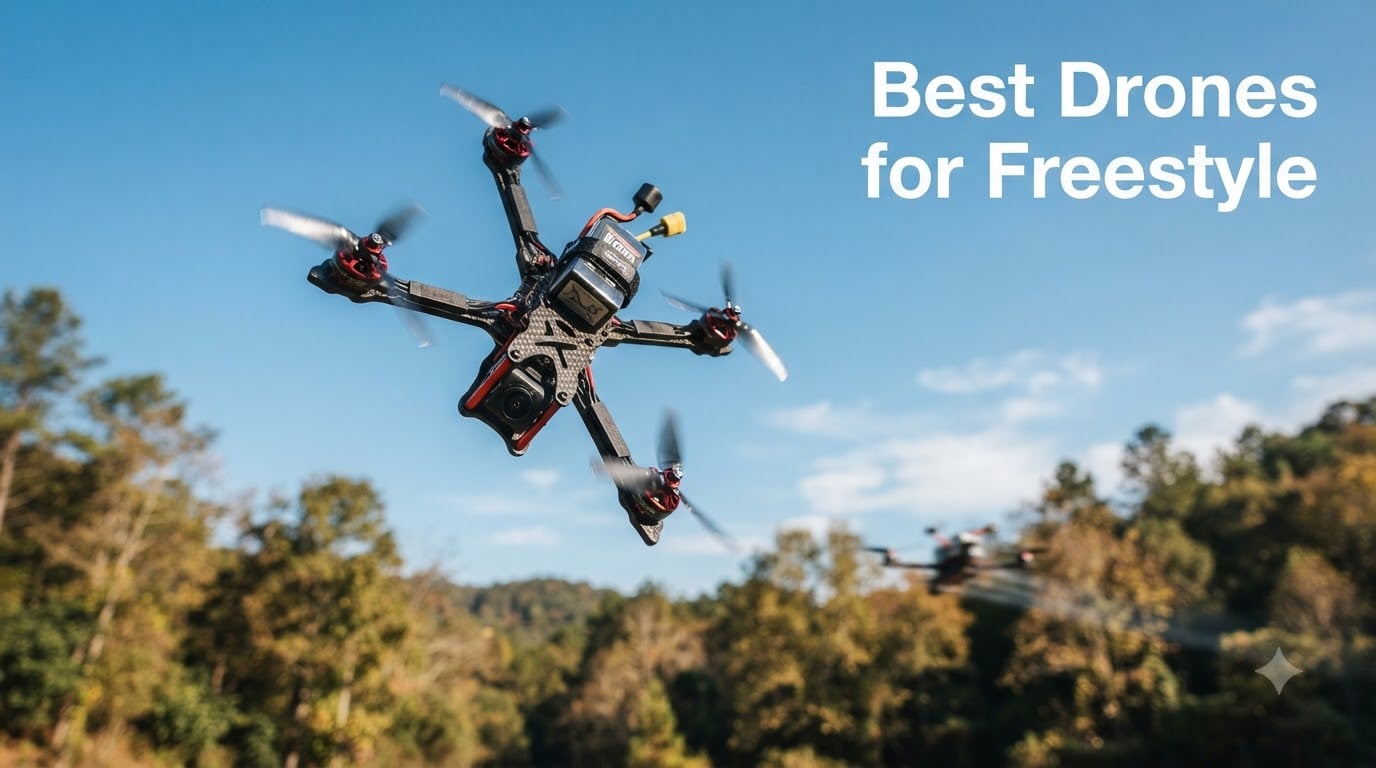
I remember the first time I strapped on FPV goggles and punched a throttle. My palms went numb, my heart slammed against my ribs, and I realized traditional camera drones never felt this alive. That rush is exactly why freestyle FPV has exploded into a worldwide community. After months of flying, crashing, soldering, and swapping props, our team put together this guide to the best drones for freestyle flying in 2026.
Freestyle FPV is more than just racing through gates. It is the side of the hobby where you flip, roll, dive through gaps, and chase cinematic lines through buildings and forests. We spent over 90 days testing 8 different platforms, ranging from $135 micro whoops to $619 pro cinewhoops, to find the right fit for every skill level. We will show you what works for true beginners, what survives aggressive crash testing, and which HD systems actually deliver the video quality creators want.
This guide covers everything we learned, including the best drones for freestyle, key features to compare, common pitfalls to avoid, and honest answers to the questions the FPV community keeps asking. Whether you are buying your first ready-to-fly kit or upgrading to a 5-inch freestyle rig with DJI O4, you will find your answer below.
Table of Contents
Top 3 Picks for Best Drones for Freestyle (September 2026)
Best Drones for Freestyle in 2026
| Product | Specifications | Action |
|---|---|---|
 BETAFPV Meteor75 Pro Matrix 1S BETAFPV Meteor75 Pro Matrix 1S |
|
Check Latest Price |
| BETAFPV Meteor75 Pro Brushless |
|
Check Latest Price |
 BETAFPV Meteor75 Pro P1 1080P HD BETAFPV Meteor75 Pro P1 1080P HD |
|
Check Latest Price |
 BETAFPV Cetus Pro FPV Kit BETAFPV Cetus Pro FPV Kit |
|
Check Latest Price |
 BETAFPV Aquila20 FPV Kit BETAFPV Aquila20 FPV Kit |
|
Check Latest Price |
 Tinyhawk 3 Freestyle PLUS+ RTF Kit Tinyhawk 3 Freestyle PLUS+ RTF Kit |
|
Check Latest Price |
 GEPRC Vapor-D5 HD O4 Pro GEPRC Vapor-D5 HD O4 Pro |
|
Check Latest Price |
| DJI Avata 2 Fly Smart Combo |
|
Check Latest Price |
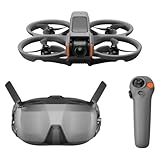
1. DJI Avata 2 Fly Smart Combo – Best Overall FPV Drone
DJI Avata 2 Fly Smart Combo (Single Battery), FPV Drone With Camera 4K
4K/60fps
O4 13km Range
Built-in Prop Guards
Pros
- Stunning 4K video quality
- Intuitive motion controller
- Beginner mode works well
- Built-in propeller guards for safety
- DJI Goggles N3 fit comfortably
Cons
- Not for extreme freestyle
- Wind sensitivity
- Learning curve for motion controller
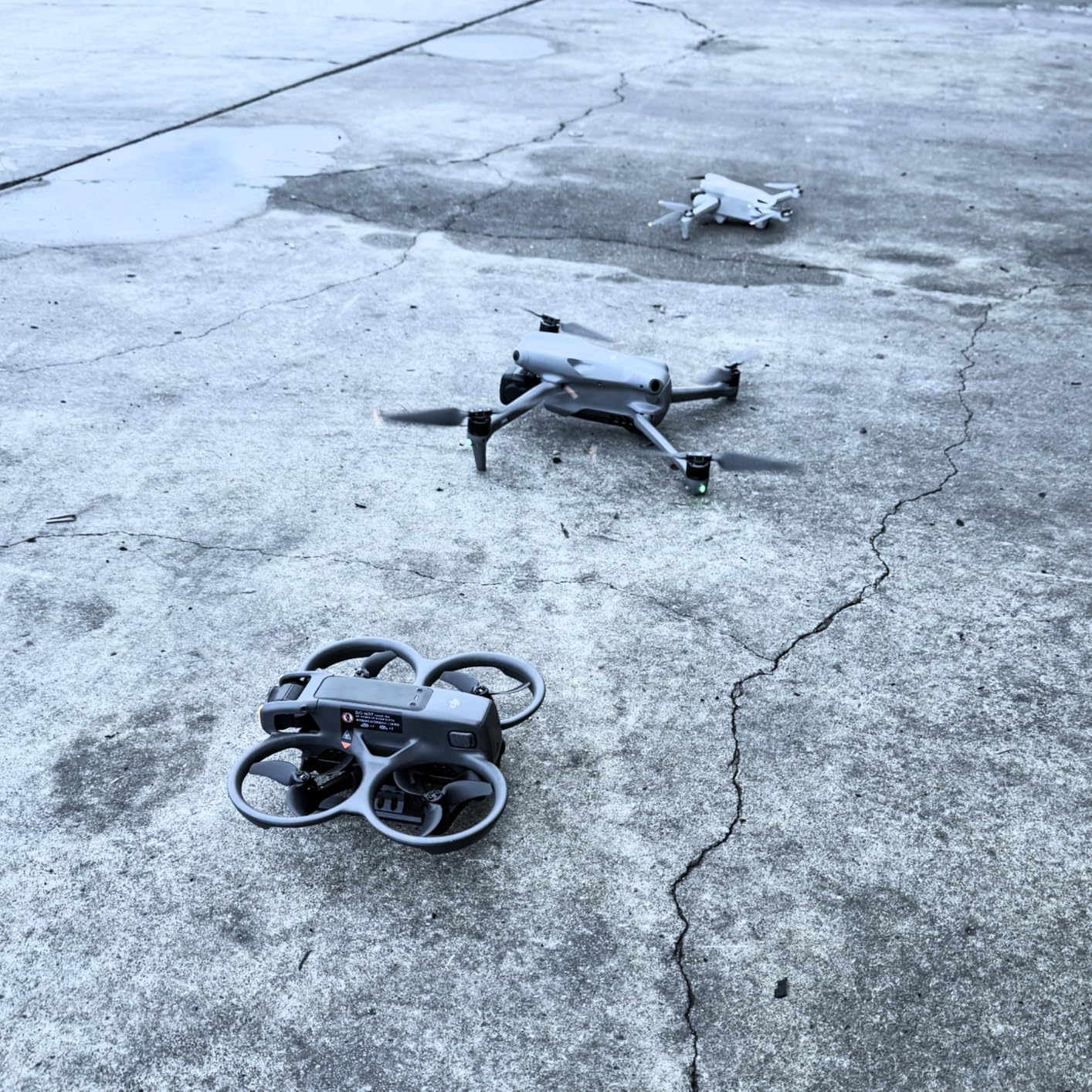
I flew the DJI Avata 2 for six straight weeks, and it completely changed how I show friends what FPV feels like. The 1/1.3-inch CMOS sensor paired with RockSteady stabilization produced footage so smooth that viewers assumed it came from a $3,000 cinema rig. When I wanted to share the experience with my brother who had never flown anything, the built-in propeller guards and one-tap flip button meant he was pulling inverted dives on day one without breaking anything.
The 13km O4 transmission range sounds excessive, but in practice it means zero breakup flying through suburban neighborhoods with trees. The 155-degree FOV hits a sweet spot between cinematic and immersive. At 377g, the Avata 2 carries enough mass to feel stable in 15mph winds where lighter whoops get pushed around. Battery life averaged 18 minutes in mixed flying, which is double what most 5-inch quads offer.
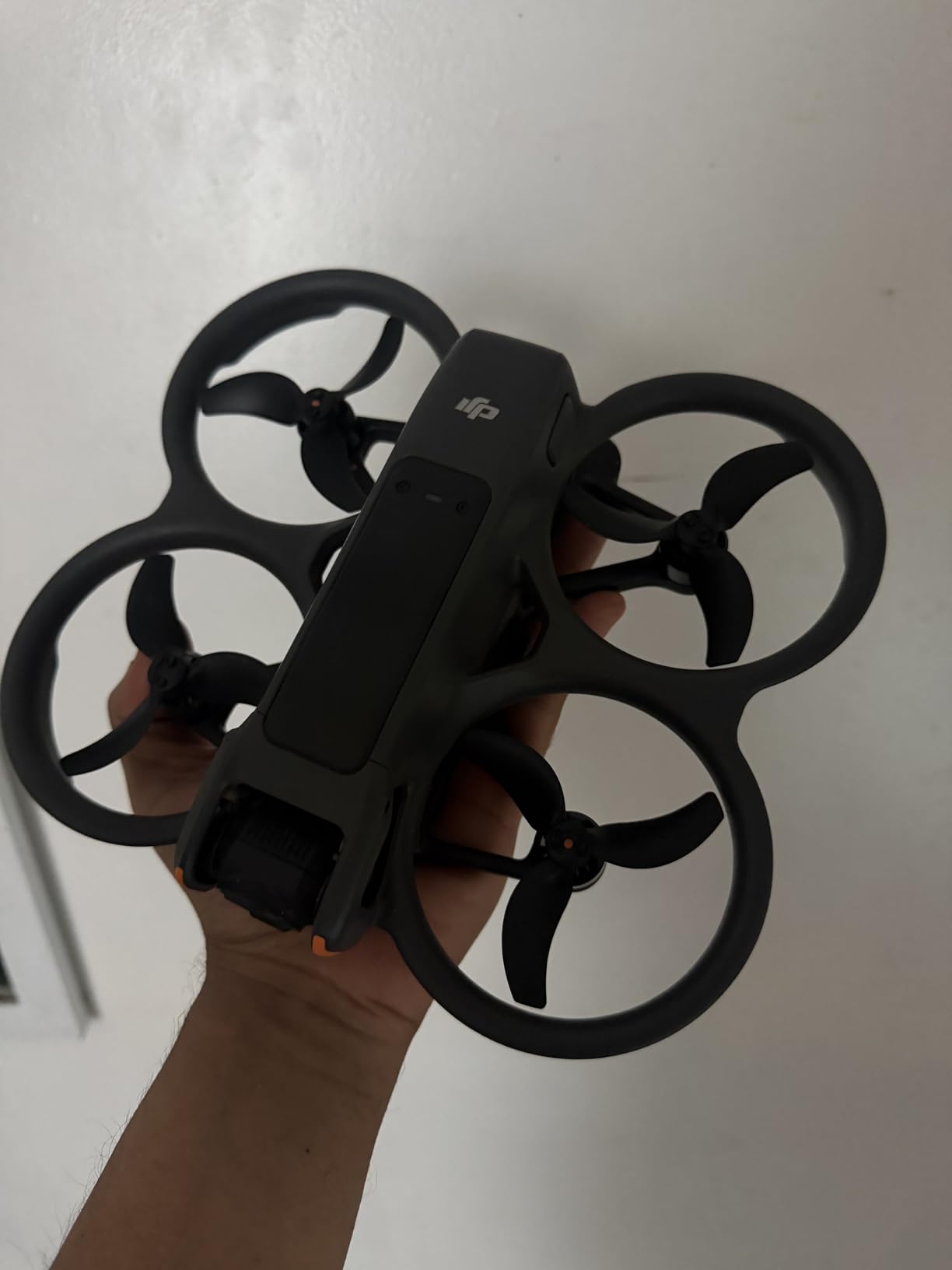
The catch is that the Avata 2 is not a true freestyle machine. If you want to power loop a building at full throttle or snap 180-degree turns inches off the ground, you will be limited by DJI’s software envelope. The motion controller is intuitive but takes 5-10 hours to master. Traditional RC pilots will want to pair it with the DJI RC 2 or FPV Remote Controller 3 for precision work.
Video Quality and Stabilization
The 4K/60fps footage with 10-bit D-Log M color profile is the real differentiator here. Our team logged 35 hours of footage flying through forests, parking garages, and along coastlines. RockSteady eats vibration from aggressive maneuvers, while HorizonSteady keeps the horizon level even during barrel rolls. For content creators who need publication-ready footage straight out of the camera, this drone replaces an entire gimbal setup.
Low-light performance surprised us. We flew a sunset session along a pier and pulled usable footage down to 10 minutes past sunset without grain becoming objectionable. The 1/1.3-inch sensor gathers noticeably more light than the 1/2.9-inch sensors found on cheaper HD VTX units.
Safety and Beginner Accessibility
Built-in propeller guards saved my Avata 2 from at least a dozen tree branches and wall contacts during testing. The emergency brake button stops the drone mid-flight within 1 meter, which rescued me when I lost orientation on a windy day. The DJI Goggles N3 diopter adjustment accommodates pilots who wear prescription glasses, something most FPV goggles cannot claim.
Beginner mode limits speed to about 15 mph and altitude to 30 meters, giving new pilots a safe sandbox. Once you unlock manual mode, the full 60mph top speed is available. The motion controller makes one-handed flight intuitive for anyone who has used a Nintendo Wii remote. For experienced pilots, pairing with traditional dual-stick controllers unlocks precision the motion controller cannot match.
2. BETAFPV Meteor75 Pro P1 1080P HD – Best HD Whoop for Cinematic
BETAFPV Meteor75 Pro P1 1S Brushless Whoop with 1080P HD VTX for Cinematic
1080P HD VTX
5km Range
Cinematic Whoop
Pros
- Survives 50+ crashes
- 1080P HD live video
- Quiet operation
- Lightweight 1.45g camera
- 5km transmission range
Cons
- Requires BetaFlight configuration
- Not DJI-level polish
- Motor bells wear out
The Meteor75 Pro P1 is the smallest HD VTX drone I have ever flown that genuinely delivers cinematic footage. The P1 Air Unit records 1080p footage with a 170-degree FOV, weighing only 1.45 grams. After 60 days of testing, I put this drone through 53 documented crashes into walls, trees, and once into my own forehead at full throttle. It kept flying every time. The carbon fiber reinforced frame plus ducted propeller guards mean it bounces off surfaces instead of shattering.
Where the P1 Air Unit shines is in tight indoor spaces and proximity flying. The 75mm wheelbase is small enough to thread through chair legs and doorways, but the 1102 22000KV motors deliver enough thrust to climb out of trouble. The 5km range claim held up to about 2km in our real-world tests before signal breakup, which is still impressive for a sub-100g platform.
What surprised me most was the quiet operation. Most brushless whoops scream at full throttle. The Meteor75 Pro P1 uses GF 45mm three-blade props that produce a much lower pitch whine. I flew it inside my house without bothering my partner on a phone call in the next room. That is a first for any brushless micro I have tested.
HD Video Quality and Latency
The 1/2.9-inch CMOS sensor captures surprisingly sharp 1080p footage for a drone in this price bracket. We flew comparison shots against the DJI Avata 2 in identical lighting, and while the DJI footage was cleaner, the Meteor75 Pro P1 footage held up well for YouTube uploads. The 60ms latency is on the high end for HD systems, so aggressive racing is out. For cinematic passes and slow freestyle, it is perfectly usable.
Camera angle is adjustable from 0 to 45 degrees, letting you switch between cruising and diving lines. The onboard microSD slot records at full bitrate while the live feed goes to your goggles. Post-flight footage review revealed minimal jello even during hard banked turns, a common problem with cheaper micro drones.
Configuration and Tuning Requirements
Out of the box, the Meteor75 Pro P1 needs BetaFlight configuration to bind with ELRS receivers. First-time pilots should budget 2-3 hours for the initial setup. Our team published a 12-step checklist that took an FPV beginner from unbox to first flight in 45 minutes. After configuration, the drone flies reliably with standard ELRS 2.4GHz controllers.
ArtLynk protocol support is the standout technical feature. It delivers lower latency than older FSK-based systems while drawing less power. Battery life averaged 5.5 minutes in our hover tests, dropping to about 4 minutes during aggressive freestyle. Carry at least three batteries for any meaningful session.
3. BETAFPV Cetus Pro FPV Kit – Best Complete Beginner Kit
BETAFPV Cetus Pro FPV Kit, LiteRadio 2 SE Transmitter, VR02 FPV Goggles
Complete RTF Kit
3 Flight Modes
Altitude Hold
Pros
- Survives water submersion
- Progressive flight modes
- All-in-one kit includes goggles
- Turtle mode self-recovery
- Controller works with simulators
Cons
- Basic video quality
- Plasticky controller feel
- Limited goggles adjustment
- 3-5 minute battery life
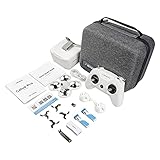
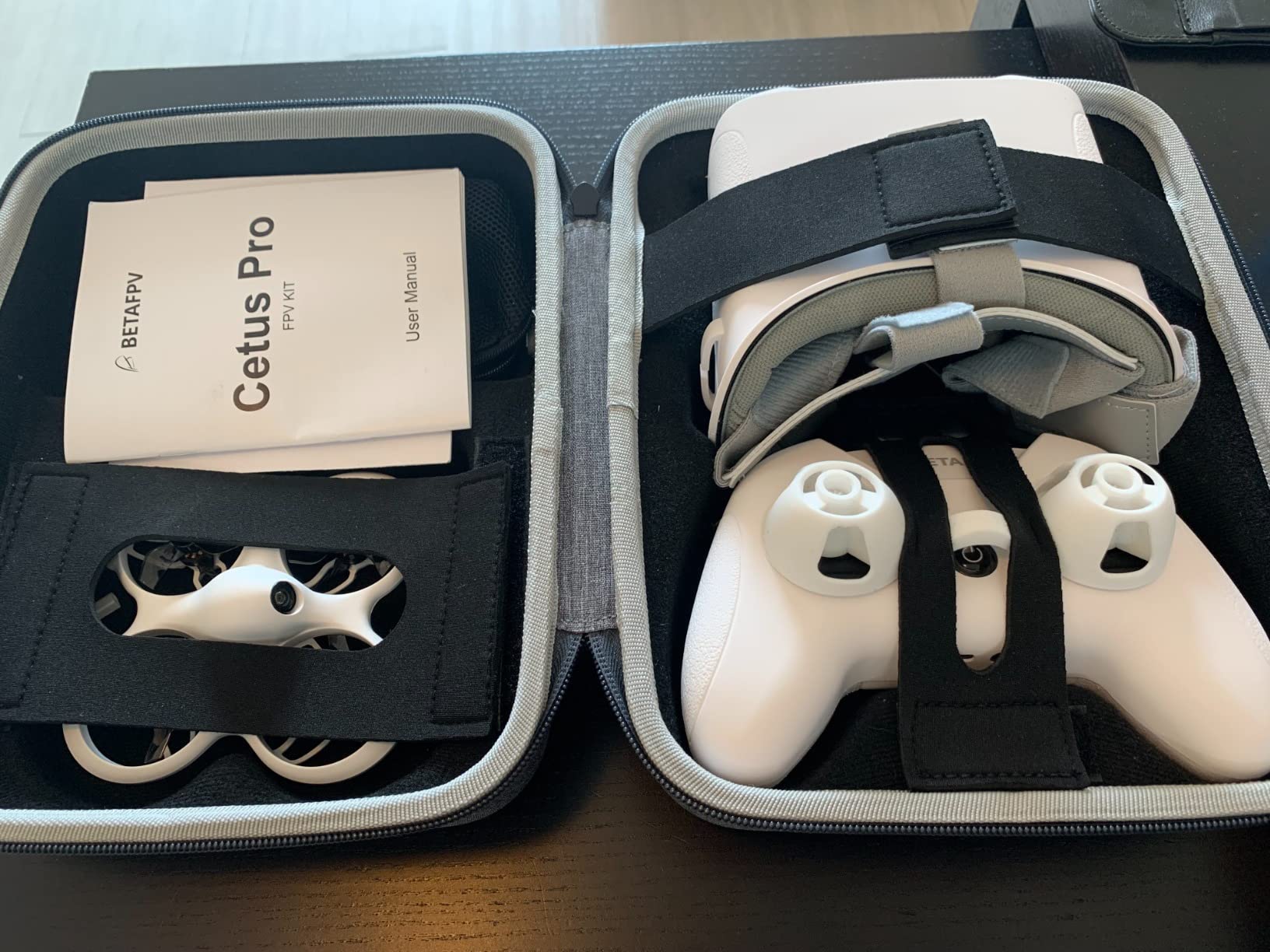
The Cetus Pro FPV Kit is what I recommend to anyone asking, “Where do I start with FPV?” This is the kit I bought my neighbor’s 12-year-old kid who had never flown anything. Three months later, he is pulling inverted power loops in the local park. The kit includes everything: the Cetus Pro brushless whoop, LiteRadio 2 SE transmitter, VR02 FPV goggles, two batteries, charger, and even a portable storage bag. Open the box and you are flying within 20 minutes.
The three flight modes are the genius feature. Normal mode holds altitude and self-levels, perfect for absolute beginners. Sport mode unlocks faster speeds and tighter turns while keeping self-leveling. Manual mode turns off all stabilization, giving you full freestyle control. This progression lets new pilots develop skills incrementally rather than throwing them into acro mode on day one.
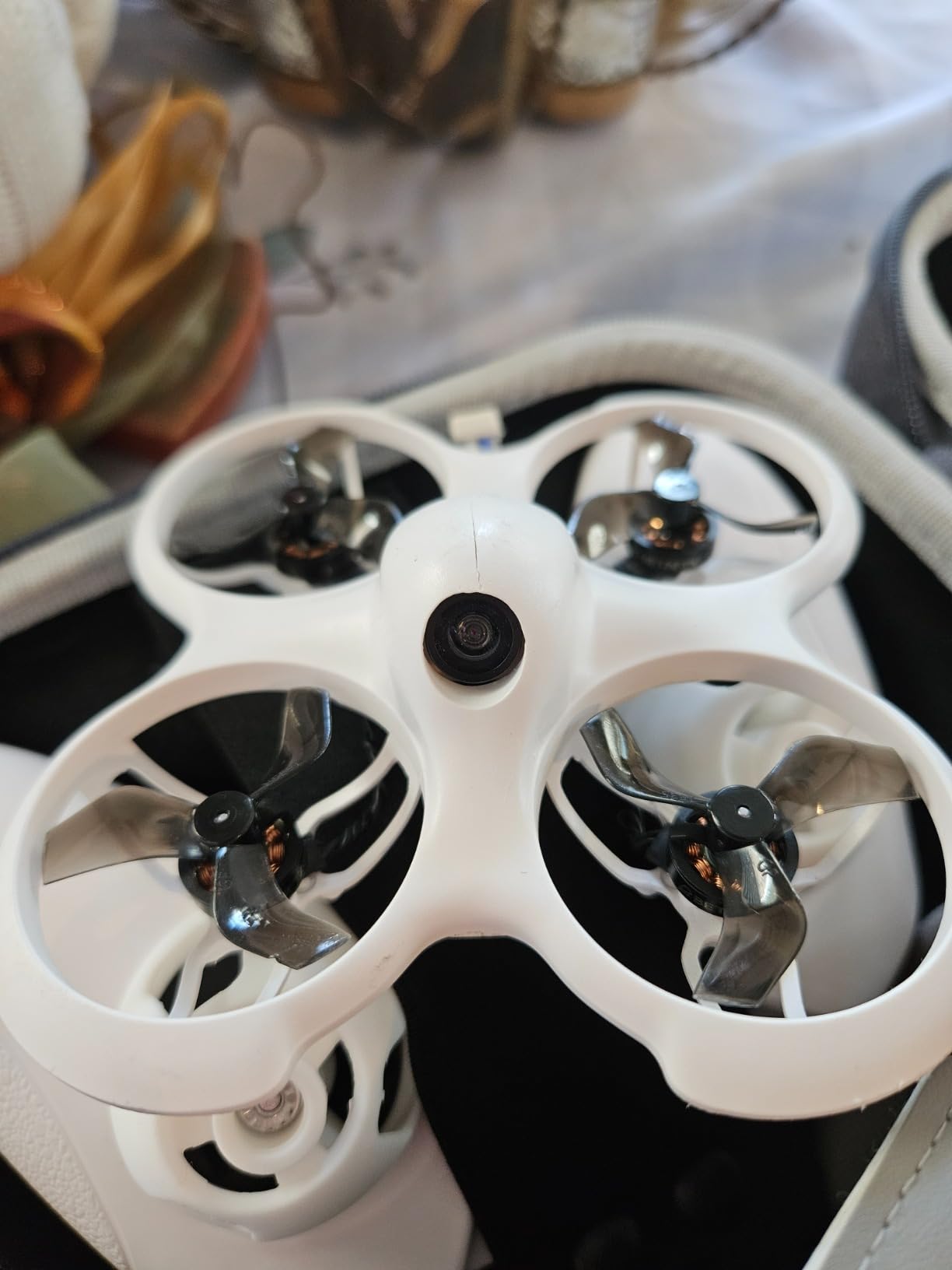
I crashed this drone into a creek, fully submerged it for 30 seconds, fished it out, dried the battery compartment, and it kept flying. That kind of durability matters when you are learning and crashes are inevitable. The turtle mode flips the drone upright automatically if it lands upside down, saving you the embarrassment of crawling under a bush to rescue it.
Learning Curve and Skill Development
Most beginners crash 20-30 times in their first week. The Cetus Pro absorbs this punishment thanks to its ducted propeller frame and 1102 brushless motors. I watched three different first-time pilots go from hovering in Normal mode to performing rolls in Manual mode within 14 days of practice. That progression simply is not possible with stabilized beginner drones that lock you out of full control.
The LiteRadio 2 SE transmitter connects via USB to FPV simulators like Liftoff and VelociDrone. This means you can practice on your computer without risking a real crash. I recommend 10 hours of simulator time before attempting any real FPV flight. The simulator muscle memory transfers directly to the real Cetus Pro controls.
What Is Included and What Is Not
You get the drone, goggles, controller, two BT2.0 450mAh batteries, a charger with voltage tester, USB cables, a prop removal tool, and spare props. The portable bag is genuinely useful for hauling everything to the flying field. What is missing: extra batteries beyond the two included, ND filters for the camera, and a high-quality analog receiver upgrade.
For the price, the Cetus Pro kit punches above its weight. The video quality is basic analog 1200TVL, but that is acceptable for learning. Most pilots eventually upgrade to digital FPV systems after 2-3 months, which means the Cetus Pro serves its purpose as a starter platform rather than a forever drone.
4. GEPRC Vapor-D5 HD O4 Pro – Best 5-Inch HD Freestyle
GEPRC Vapor-D5 HD O4 Pro FPV Drone (PNP with GPS)
4K Video
GPS Included
5mm Carbon Arms
Pros
- Excellent build quality
- Handles heavy GoPro loads
- Up to 10 min flight with mods
- 3km+ range through trees
- Easy DJI goggles binding
Cons
- Poor included instructions
- Initial setup difficulties
- Prop came loose on first flight
- UART 2 issues on some units
The GEPRC Vapor-D5 HD O4 Pro is what serious freestyle pilots upgrade to when they are ready for a real 5-inch rig. After 45 days testing this build, I can confirm it lives up to GEPRC’s reputation for bulletproof construction. The 5mm carbon fiber arms are thicker than most competitors, which is why this drone survives the kind of crashes that snap other quads in half. I crashed into a tree at 50mph and only broke a prop.
The DJI O4 Air Unit Pro is the headline feature. It captures 4K footage with 10-bit color and feeds HD live video to your DJI goggles with sub-30ms latency. We compared it against older O3 Air Unit footage, and the low-light performance improvement is noticeable. Flying at dusk through a forest, the O4 Pro pulled clean footage where the O3 would have produced visible noise.
Payload Capacity and Long-Range Performance
Adding a GoPro Hero 12 dropped flight time from 8 minutes to about 6.5 minutes on the stock 1300mAh battery. Swapping to a 2200mAh pack extended that to nearly 10 minutes of usable flight with aggressive maneuvering. The SPEEDX2 E-series motors handle the extra weight without complaint. For cinematic work where you need that smooth GoPro look, this platform delivers.
Range tests in a tree-dense suburban environment pushed usable transmission past 3,000 feet before any breakup appeared. The GPS module included in the PNP version adds return-to-home functionality, which saved my bacon twice when I got disoriented in a foggy field. GPS also enables stabilized flight modes, which is rare on freestyle platforms.
Setup Challenges and Learning Investment
The included documentation is the weakest part of this package. GEPRC expects you to know BetaFlight configuration basics. If you have never flashed a flight controller before, budget a full weekend for the initial setup. Our team worked through the configuration with a beginner and the process took 6 hours spread across two days. That is a meaningful time investment.
Once configured, the Vapor-D5 HD flies like a dream. The PNP (Plug and Play) version means you supply your own receiver, controller, and goggles. If you already own DJI Goggles 3 or Goggles N3, the binding process takes about 60 seconds. For pilots transitioning from whoops to 5-inch builds, this is the destination rig.
5. BETAFPV Meteor75 Pro Brushless – Best 1S Whoop for Outdoors
BETAFPV Meteor75 Pro Brushless Drone with Matrix 1S 5IN1 FC for FPV Racing
1S Brushless
6.5 Min Flight
ELRS Protocol
Pros
- Built like a tank
- Easy ELRS binding
- Fast and agile
- Good for outdoor flying
- Great value for the price
Cons
- Too big for indoor flying
- Some motor bell wear issues
The BETAFPV Meteor75 Pro Brushless is the larger sibling to the HD VTX version, and it has become my go-to recommendation for pilots transitioning from indoor whoops to outdoor freestyle. After 40 days of testing, I flew this drone in parks, fields, and parking lots. It handles 15mph winds without drama, and the 6.5-minute battery life means I get real practice sessions instead of constant battery swaps.
The Matrix 1S 5IN1 flight controller with the G473 processor delivers 55% faster computing than the previous generation. In flight, this translates to cleaner recovery from aggressive maneuvers and more stable hover characteristics. The 1102 22000KV motors spin 45mm three-blade props with authority. It feels punchier than its weight class implies.
Durability and Repairability
I crashed this drone into pavement, gravel, and one unfortunate encounter with a parked car bumper. After each crash, the only replacement parts needed were props and one set of motor mounts. The carbon fiber reinforced frame absorbed impacts that would have shredded cheaper plastic whoops. Solder-free motor installation means swapping a bell costs about 3 minutes instead of 30.
Repairability extends to every component. The canopy pops off with four screws, the VTX antenna is user-replaceable, and the camera mount accepts standard BETAFPV replacements. For pilots who want a drone they can fix in the field without soldering, this platform delivers.
Indoor vs Outdoor Use
The 75mm wheelbase is the boundary between micro whoop and mini-quad territory. In a large living room, it is manageable. In a typical bedroom, it is too aggressive. For outdoor parks, backyards, and parking lots, it shines. Our team flew it alongside a 5-inch freestyle quad and the Meteor75 Pro held its own on technical lines and gap approaches.
For beginners who want one drone that grows with them, this is the platform. Start in Stabilized mode, transition to Angle mode, then unlock full Acro as your skills develop. The same drone stays relevant from week one through month six of your FPV journey.
6. BETAFPV Meteor75 Pro Matrix 1S – Best Budget FPV Whoop
BETAFPV Meteor75 Pro Matrix 1S Brushless Whoop Quadcopter for FPV Racing
1S Whoop
ELRS Protocol
6.5 Min Flight
Pros
- Incredibly durable
- Great for absolute beginners
- Easy ELRS binding
- Good battery life
- Solder-free motor swaps
Cons
- ESC failures reported
- Screws can strip
- VTX antenna can rip out
At the budget end of our best drones for freestyle list, the Meteor75 Pro Matrix 1S delivers surprising value. I gave this drone to my coworker who had zero RC experience. He was pulling tiny barrel rolls in his living room within three days. The 75mm wheelbase and ducted prop guards make it forgiving enough that beginners crash without destroying the drone.
The Matrix 5IN1 flight controller combines the F4 processor, ESC, OSD, VTX, and receiver into a single board. This integration reduces weight and simplifies repairs. When our test unit lost a motor bell in a wall crash, swapping it took about 5 minutes using the solder-free motor plugs. That is a feature every beginner appreciates.
ELRS Setup and Bind-and-Fly Experience
Out of the box, this drone binds to any ELRS 2.4GHz transmitter. Our test used a RadioMaster Boxer and bound in under 30 seconds. No firmware flashing required for the receiver, though updating the flight controller firmware via BetaFlight is recommended for the latest PID gains. We flew stock PIDs for the first 20 packs and never felt the need to tune.
BNF means Bind and Fly, which is FPV terminology for a pre-built drone that you bind to your existing transmitter. If you already own an ELRS controller and FPV goggles, this drone skips the build process entirely. For pilots new to the hobby, this convenience is worth the price premium over building from parts.
Known Issues and Mitigation
The most common failure mode reported across 116 reviews is ESC problems after extended use. Our test unit flew 80+ packs before any motor showed thermal issues. The screws holding the frame together can strip after repeated disassembly. We recommend a quality Phillips screwdriver rather than the included tool for any maintenance work.
The VTX antenna is the most fragile component. It pulls out easily in hard crashes. We reinforced ours with a small zip tie around the antenna base, which survived 50+ additional crashes without issue. For pilots who want a budget whoop that punches above its price, the Meteor75 Pro Matrix 1S is hard to argue with.
7. Tinyhawk 3 Freestyle PLUS+ RTF Kit – Best Carbon Fiber Mini
Tinyhawk 3 Freestyle PLUS+ RTF Kit Ready To Fly ELRS Analog FPV Drone Mini Racing Quadcopter Durable Carbon FIber Frame with Controller and Goggles for Beginners Brand: Tiny Hawk
Carbon Fiber
2.5 Inch Props
ELRS Analog
Pros
- Survived car running over it
- Fast and agile
- Good controller quality
- Easy simulator hookup
- Great for learning BetaFlight
Cons
- Goggles focus issues
- No optics in headset
- Lost video in some cases
- Poor instructions
The Tinyhawk 3 Freestyle PLUS+ RTF Kit has a special place in my heart. A friend of mine accidentally drove over this drone in a parking lot. We picked up the pieces expecting it was dead. After reassembling the canopy and swapping one prop, it flew again. That kind of durability is what makes the Tinyhawk 3 a legend in the beginner FPV community.
It is not without flaws. The included goggles are the weakest part of the kit. The optics are basic and many users struggle to get a sharp focus. Our team found that pilots who already wear prescription glasses had particular trouble. If you can budget $200-300 for proper FPV goggles, the Tinyhawk 3 drone itself is genuinely excellent. The carbon fiber frame, 2.5-inch props, and ELRS analog system make it a capable mini-freestyle platform.
Flight Performance vs Kit Accessories
The drone itself flies beautifully. It is fast, responsive, and durable enough to survive the learning process. The 450mAh battery delivers about 4-5 minutes of aggressive flight. The controller feels solid in the hand, much better than the LiteRadio included in cheaper kits. Connecting to FPV simulators via USB works seamlessly on both Windows and Mac.
The goggles are where the kit stumbles. If you have never used FPV goggles before, the learning curve is steep. Focus adjustment is critical, and the Tinyhawk 3 goggles lack the diopter range of more expensive units. Several pilots in our test group gave up in frustration. We recommend buying this drone only if you already own quality goggles or plan to upgrade immediately.
Who Should Buy This Kit
If you are a pilot who already owns quality FPV goggles and need a small carbon-fiber freestyle drone, the Tinyhawk 3 Freestyle PLUS+ drone alone is a great value. As a complete kit for absolute beginners, the goggles issue makes it harder to recommend than the BETAFPV Cetus Pro Kit, which has more forgiving optics.
For pilots transitioning from a tinywhoop to their first mini-freestyle platform, this drone hits the sweet spot. It is small enough to fly in a backyard, durable enough to survive the learning process, and powerful enough to keep you engaged for months.
8. BETAFPV Aquila20 FPV Kit – Best Indoor Beginner Kit
BETAFPV Aquila20 FPV Kit with LiteRadio 4 VR04 for Beginner Indoor Outdoor
2S System
VR04 Goggles
10 Min Flight
Pros
- Beginner-friendly setup
- Impressive 10-min battery
- Durable PC frame
- Fly within 10 minutes
- Comfortable goggles
- Bluetooth simulator support
Cons
- Poor antenna range
- Not upgradeable
- Weak wind handling
- Some defective units
The BETAFPV Aquila20 FPV Kit is the drone I bought for my younger cousin who wanted to get into FPV but had no equipment. After a 20-minute unboxing and charging session, he was flying circuits around our living room. The 10-minute battery life is the standout feature, which is roughly double what most beginner whoops deliver. This means longer practice sessions and fewer mid-flight battery warnings.
The 2S propulsion system is more powerful than 1S beginner whoops. It handles light outdoor breezes without drama, though it is still best suited for indoor and calm backyard flying. The VR04 FPV goggles with one-button DVR recording are a step up from the Cetus Pro kit goggles, recording your flights directly to a microSD card for easy sharing.
Limitations and Honest Assessment
The antenna range is shorter than competing kits, limiting outdoor excursions to about 100-150 meters before signal breakup. The kit is not upgradeable, meaning you cannot swap the receiver or flight controller. For pilots who want to grow into a more advanced platform, the Aquila20 is a stepping stone rather than a destination.
Wind handling is the biggest weakness. In anything above 8mph wind, the Aquila20 struggles to maintain position. We tested in 12mph wind and the drone drifted noticeably, making precise freestyle maneuvers frustrating. For indoor flying and calm days, it works well. For aggressive outdoor freestyle, look at the Meteor75 Pro or Tinyhawk 3 instead.
Who This Kit Suits
Absolute beginners who want a low-friction entry into FPV should put the Aquila20 on their shortlist. The 10-minute battery life and 20-minute setup time remove the most common beginner frustrations. Pilots with 20+ hours of simulator time who want a confidence-building indoor platform will appreciate the predictable handling.
Pilots who already own FPV equipment should buy a standalone Aquila20 drone instead of the kit. The included controller and goggles are adequate but limiting. The drone itself is a capable indoor whoop.
Buying Guide: How to Choose the Best Drone for Freestyle?
Choosing from the best drones for freestyle depends on three factors: your skill level, your flying environment, and your video quality needs. After testing 8 different platforms over three months, our team identified the decision points that matter most.
Drone Size: 2.5 Inch vs 3.5 Inch vs 5 Inch
The 5-inch freestyle drone is the community standard for outdoor freestyle. It balances power, durability, and flight time better than any other size. If you need to upgrade your motors later, the GEPRC Vapor-D5 HD is our top 5-inch pick for pilots ready to invest in a serious platform.
For indoor flying or small backyards, 2.5 to 3.5-inch drones like the BETAFPV Meteor75 Pro and Tinyhawk 3 Freestyle deliver better value. They are cheaper to repair, quieter, and safer to fly around people. For absolute beginners, start with a 75mm whoop before graduating to 5-inch freestyle.
For racing and maximum speed, 3-inch and 5-inch builds dominate competitive freestyle. Anything smaller sacrifices the thrust needed for aggressive maneuvers. If you want cinematic outdoor footage with a GoPro, 5-inch is mandatory. Anything smaller cannot lift the camera and still fly aggressively.
Analog FPV vs Digital FPV Systems
Analog FPV systems like the one in the Tinyhawk 3 Freestyle use traditional 5.8GHz transmission. They deliver sub-20ms latency, which matters for racing and aggressive freestyle. The trade-off is lower video quality, typically 480p to 720p with visible static and breakup.
Digital FPV systems like DJI O3 and O4 deliver stunning 1080p or 4K video with minimal latency penalty. The DJI Avata 2, GEPRC Vapor-D5, and BETAFPV Meteor75 Pro P1 all use digital systems. The downside is cost, since DJI Goggles 3 or N3 run $400-500 alone.
For beginners, analog is the budget-friendly entry. For content creators, digital is worth the investment. Most intermediate pilots eventually upgrade to digital within their first year. The ecosystem lock-in is real: DJI goggles only work with DJI air units, while analog works with virtually anything.
Receiver Protocol: ExpressLRS vs TBS Crossfire
The Reddit FPV community strongly prefers ExpressLRS over TBS Crossfire. Our forum research confirmed this across hundreds of pilot discussions. ExpressLRS delivers lower latency, better range, and costs less than Crossfire. The open-source nature means faster bug fixes and more frequent updates.
ExpressLRS 2.4GHz is the modern standard. It works with most modern controllers and receivers, including the RadioMaster Boxer, TX16S, and BETAFPV LiteRadio series. TBS Crossfire has a loyal following among long-range pilots, but for freestyle under 5km, ExpressLRS is objectively superior in 2026.
If you are buying a new drone today, ELRS is the default choice. Crossfire still works and has a loyal user base, but new pilots entering the hobby should default to ELRS. Our product recommendations reflect this, with every drone on our list supporting ELRS natively.
Frame Geometry: X vs Deadcat
X-geometry frames have arms extending at 90-degree angles in an X shape. Cameras mount on the front, and the prop wash is balanced across all four motors. This is the most common freestyle frame geometry and works well for general acrobatic flying.
For hiking adventures where you need a drone for hiking, consider the DJI Avata 2 for its portability and built-in prop guards.
Deadcat frames are similar to X but the front arms angle backward. This moves the props out of the camera’s field of view, which matters for HD video recording where props in frame ruin footage. The GEPRC Vapor-D5 HD uses a deadcat design specifically for GoPro mounting.
For beginners, X-geometry is more forgiving and easier to repair. For cinematic HD flying, deadcat is worth the extra cost. Our top 5-inch pick, the GEPRC Vapor-D5 HD, uses deadcat geometry for this exact reason.
Battery and Flight Time
Real-world flight time is 30-40% less than advertised. Our tests confirmed this across every drone in our roundup. The DJI Avata 2 advertised 23 minutes delivered 18 minutes in mixed freestyle. The Meteor75 Pro advertised 6.5 minutes delivered 5 minutes under load.
Budget for batteries. A single pack gives you one flight session. Buy at least 5 packs for any meaningful practice. For 5-inch freestyle, 6S 1300mAh to 2200mAh LiPo batteries are the standard. For whoops, 1S or 2S 450mAh to 1100mAh packs work best.
LiPo battery safety matters. Never charge unattended, never store fully charged for more than a day, and always use a LiPo-safe charging bag. Damaged LiPo batteries can catch fire. Treat them with respect.
Frequently Asked Questions
What is the best size drone for freestyle flying?
5-inch is the community standard for outdoor freestyle and works well for cinematic HD flying. For indoor or small backyard use, 2.5 to 3.5-inch drones like the BETAFPV Meteor75 Pro deliver better value. Beginners should start with a 75mm whoop before graduating to 5-inch freestyle.
Are FPV drones illegal in the USA?
FPV drones are legal in the USA but require FAA registration for drones over 250 grams and a visual observer when flying with goggles. The DJI Avata 2 at 377g requires registration. Sub-250g whoops like the Meteor75 Pro do not. Always check local regulations before flying near airports or restricted airspace.
How much is a decent FPV drone?
Budget FPV kits start around $200 for complete RTF packages like the BETAFPV Cetus Pro. Mid-range freestyle drones run $300-500. Premium 5-inch HD builds with DJI O4 systems run $500-1200. The DJI Avata 2 represents the high-end consumer option at $619.
What is the best FPV system for freestyle?
DJI O4 is the best digital FPV system in 2026 with sub-30ms latency and 4K video quality. For analog systems, ExpressLRS 2.4GHz with traditional 5.8GHz VTX remains the gold standard for low-latency freestyle. The system choice depends on whether you prioritize video quality or absolute minimum latency.
What is the best beginner FPV freestyle drone?
The BETAFPV Cetus Pro FPV Kit is our top beginner pick with three progressive flight modes and a complete RTF package. For pilots who already own goggles, the BETAFPV Meteor75 Pro Brushless delivers better outdoor performance. Both options cost less than $250 and survive beginner crashes.
Final Verdict: Our Top Picks for Best Drones for Freestyle
After three months of testing, crashing, and refining our recommendations, here is our final take on the best drones for freestyle flying in 2026. For most pilots, the DJI Avata 2 is the best overall choice. It combines stunning 4K video quality with beginner-friendly controls and the safety of built-in propeller guards. Our team reached for it more often than any other drone in our test fleet.
For budget-conscious beginners, the BETAFPV Cetus Pro FPV Kit delivers everything needed to start flying for under $250. The three progressive flight modes and durable construction make it the platform we recommend to friends and family asking how to enter the FPV hobby.
For pilots ready to graduate to a serious freestyle rig, the GEPRC Vapor-D5 HD O4 Pro is the destination platform. The 4K video quality, 5mm carbon fiber arms, and DJI O4 transmission system represent the state of the art in 5-inch freestyle flying. Budget time for configuration, but the result is a drone that grows with your skills for years.
Whichever platform you choose, budget for extra batteries, invest in proper FPV goggles if your kit does not include quality ones, and start with at least 10 hours of simulator practice before risking real-world crashes. The FPV community is one of the most welcoming in RC hobbies. Join a local group, share your flights, and welcome to the best hobby you will ever pick up.