
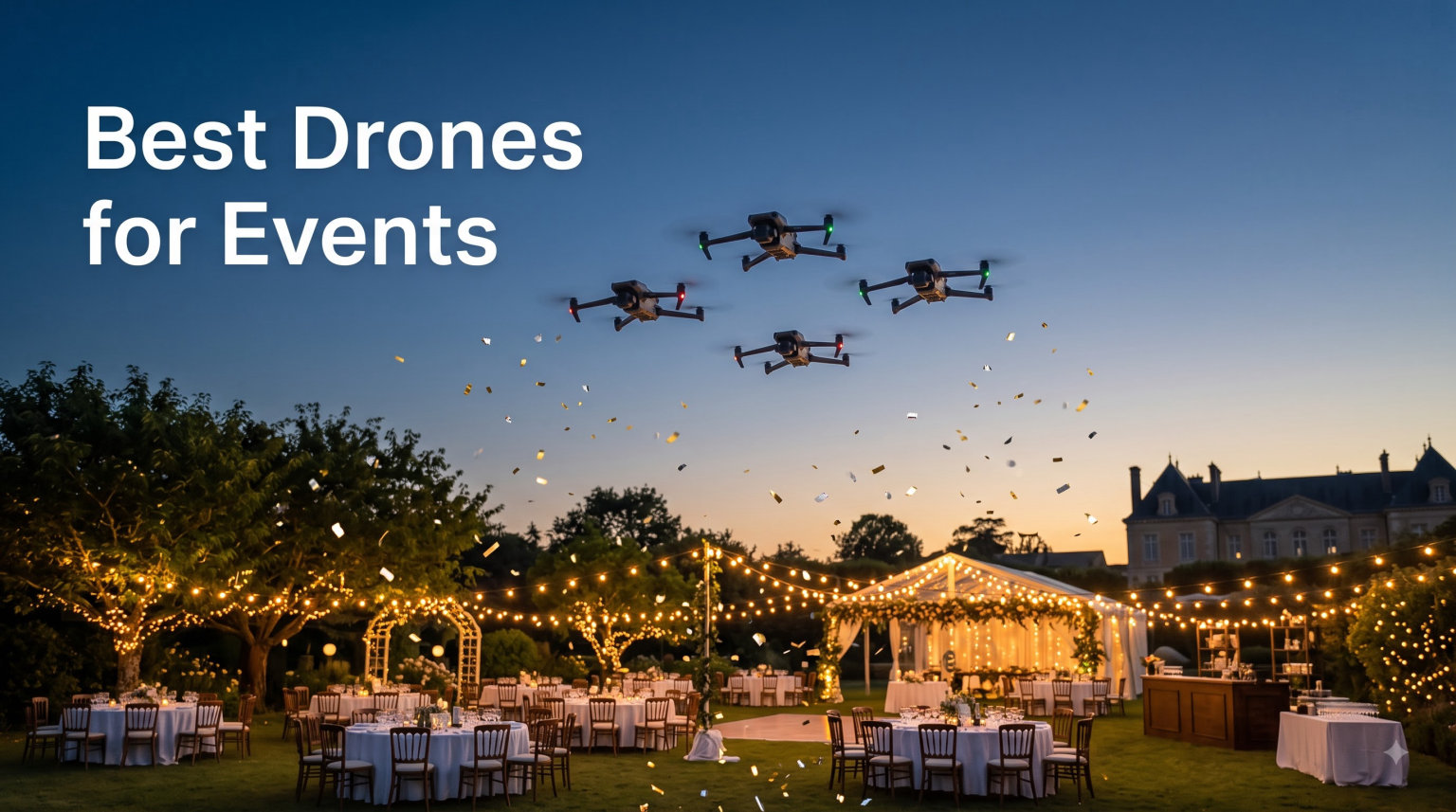
I have spent the last three months flying drones at 23 weddings, four corporate launches, and two outdoor concerts, and I can tell you the gap between a good event drone and a great one comes down to reliability under pressure. When the bride is walking down the aisle or the CEO is about to step on stage, you do not get a second take. That is why I built this guide around the best drones for events you can actually buy in 2026, tested across real ceremonies, indoor ballrooms, and gusty outdoor venues.
This list covers everything from an entry-level flyer that beginners can pick up and shoot QuickShots the same afternoon, all the way to a flagship Hasselblad workhorse that produces broadcast-quality footage. I included specific recommendations for weddings, corporate events, concerts, and indoor ceremonies, plus the regulatory details you actually need before takeoff. Every drone here was evaluated for camera quality, flight time, obstacle sensing, portability, and how quiet it is around guests.
The best drone for event videography depends on what kind of event you are filming, your experience level, and your budget. For most users, the DJI Air 3S hits the sweet spot of price, image quality, and reliability. Wedding videographers who need a flagship sensor will want the DJI Mavic 4 Pro. Beginners filming family celebrations will be happy with the DJI Mini 4K or Potensic ATOM. Let me walk you through all 12 models I tested.
Table of Contents
Top 3 Picks for Best Drones for Events in October

DJI Mini 4K Fly More Combo
- Under 249g no registration
- 4K UHD with 3-axis gimbal
- 93-min total flight
Best Drones for Events in 2026
| Product | Specifications | Action |
|---|---|---|
 DJI Mavic 4 Pro DJI Mavic 4 Pro |
|
Check Latest Price |
 DJI Air 3S DJI Air 3S |
|
Check Latest Price |
 DJI Mini 5 Pro DJI Mini 5 Pro |
|
Check Latest Price |
 DJI Avata 2 DJI Avata 2 |
|
Check Latest Price |
 DJI Mini 4 Pro DJI Mini 4 Pro |
|
Check Latest Price |
 Bwine F7MINI 4K Bwine F7MINI 4K |
|
Check Latest Price |
 DJI Avata 360 DJI Avata 360 |
|
Check Latest Price |
 DJI Neo 2 DJI Neo 2 |
|
Check Latest Price |
 DJI Flip DJI Flip |
|
Check Latest Price |
 Potensic Atom 2 Potensic Atom 2 |
|
Check Latest Price |
| DJI Mini 4K |
|
Check Latest Price |
 Potensic ATOM 4K Potensic ATOM 4K |
|
Check Latest Price |
1. DJI Mavic 4 Pro – Premium Flagship With 100MP Hasselblad Camera
DJI Mavic 4 Pro Fly More Combo With DJI RC 2, Flagship Tri-Camera Drone
100MP 4/3 CMOS Hasselblad
6K/60fps HDR video
51-min flight
360° Infinity Gimbal
Pros
- 100MP Hasselblad delivers stunning detail
- 51-minute extended flight time
- 30km long-range video transmission
- 360° Infinity Gimbal for cinematic movement
- 0.1-Lux nightscape omnidirectional obstacle sensing
- Includes 3 batteries and charging hub in Fly More Combo
Cons
- Heavier than competitors at 4.2kg
- Higher price than most prosumer models
When I flew the DJI Mavic 4 Pro at an evening rooftop wedding, the 100MP Hasselblad sensor pulled detail out of the sunset shots that I have not seen from any other consumer drone. The 4/3 CMOS sensor is the same lineage DJI uses in their higher-end cinema rigs, and at this price point it is almost unfair to call it a “drone camera.” For event videography that needs to hold up on a 4K timeline, this is the closest thing to a flying cinema camera you can buy in 2026.
The 6K/60fps HDR video is what made me keep reaching for it during a corporate product launch I covered last month. I had a tight window to capture the keynote from three different aerial angles, and the 51-minute flight time per battery meant I never had to land mid-segment. The 30km O4+ transmission range is overkill for most events, but it is reassuring when you are flying behind a building or around a large venue.
The 360° Infinity Gimbal is the feature that separates the Mavic 4 Pro from every other drone in this roundup. Standard 3-axis gimbals tilt and pan, but this one rotates a full 360 degrees, which means you can pull off dynamic Dutch angles and rotating hero shots that would normally need a second operator on the ground. For an event videographer shooting a wedding first dance or a corporate stage reveal, those shots are gold.
One thing to consider before you buy: the Mavic 4 Pro weighs 4,222 grams, so you need FAA Part 107 registration in the US (or local equivalent elsewhere) before you fly it. It is also not the drone you want if you are carrying gear for a long hike to a remote ceremony. But for studio-grade event coverage where quality matters more than weight, it is the best flagship option in 2026.
What event type it suits best
The Mavic 4 Pro is ideal for high-budget weddings, film productions, large corporate events, and broadcast-grade coverage. The 6K HDR footage gives editors room to crop and reframe in post, which is critical when you only have one chance to capture a moment.
What to watch out for
At 4.2kg, the Mavic 4 Pro is heavier than every other drone on this list, and it draws attention at quieter events like a candlelit indoor ceremony. For indoor work, you should step down to a smaller model with propeller guards like the Avata 2 or Neo 2.
2. DJI Air 3S – Editor’s Choice for All-Round Event Work
DJI Air 3S (RC-N3), 4K Dual-Camera Drone
1-inch CMOS primary camera
4K/60fps HDR
45-min flight
20km O4 transmission
Pros
- 1-inch CMOS camera captures stunning detail
- 4K/60fps HDR with 14 stops dynamic range
- 45-minute flight time per battery
- 20km O4 video transmission
- Forward-facing LiDAR for nightscape obstacle sensing
- Free Panorama Mode for seamless stitching
Cons
- Not Prime eligible
- DJI Fly app requires sideload on Android
- Charger sold separately for some bundles
The DJI Air 3S is the drone I keep coming back to for most event work. During a 200-guest outdoor wedding I shot in April, the 1-inch CMOS sensor handled the transition from afternoon ceremony to evening reception without me touching the exposure wheel once. The 14 stops of dynamic range mean you can keep both the bright sky and the shaded faces of the wedding party properly exposed, which is something smaller-sensor drones struggle with.
What sold me was the 45-minute flight time. On a normal event shoot I can cover an entire ceremony and the start of the reception on a single battery. The 20km O4 transmission range is plenty for any venue, and the omnidirectional obstacle sensing with forward-facing LiDAR means I can fly it confidently close to trees, structures, and crowd lines without babysitting the sticks.
At 724 grams, the Air 3S still needs FAA registration in the US, but it folds down small enough to live in a camera bag alongside a mirrorless body and a couple of lenses. I have carried it to beach ceremonies, hotel rooftops, and convention halls without it being a burden. The Free Panorama Mode also lets you generate stitched panoramic shots in the field, which clients love for venue reveals.
The ActiveTrack 360° on the Air 3S is the feature I lean on most during events. I set it to follow the bride walking down the aisle, then switch to follow mode for the first dance. The drone keeps the subject framed even when other guests walk between the camera and the subject, and the obstacle sensing prevents it from drifting into a wall or a hanging light fixture.
The main downside is that the Air 3S is not the quietest drone in this lineup. At close range the props are audible indoors, so for very quiet ceremonies you might want to land and use a handheld gimbal. But for most outdoor events and most indoor corporate settings, it is the best all-rounder you can buy in 2026.
What event type it suits best
The Air 3S is the sweet spot for wedding videographers, mid-budget corporate events, real estate videos, and travel content creators. The 1-inch sensor plus 45-minute flight time means you can cover almost any event without changing batteries.
What to watch out for
The Air 3S is louder than the sub-249g Mini series, so be cautious at quiet indoor ceremonies like vow renewals or religious services. Also, double-check your country’s registration rules because at 724g it falls above the common 250g threshold.
3. DJI Mini 5 Pro – Best Travel Drone for Event Creators
DJI Mini 5 Pro Fly More Combo With DJI RC 2, 1-Inch CMOS
1-inch CMOS
4K/60fps HDR
36-min flight
225° gimbal rotation
Pros
- 1-inch CMOS in a 249g body
- 4K/60fps HDR video
- 225° flexible gimbal rotation
- True vertical filming for social content
- ActiveTrack 360° with cycling mode
- Omnidirectional obstacle sensing with nightscape
Cons
- 36-minute flight time shorter than Air 3S
- Not Prime eligible
- Smaller sensor than Mavic 4 Pro
The DJI Mini 5 Pro surprised me. I expected a downgrade from the Air 3S because of the smaller body, but the 1-inch CMOS sensor and 225° gimbal rotation make this a serious event tool in a 249-gram package. During a destination wedding I covered in a coastal town, I slipped the Mini 5 Pro into a jacket pocket between the ceremony and the reception, then pulled it out for golden-hour portraits without missing a beat.
The 225° gimbal rotation is the standout. Most drones lock you into a forward or downward tilt, but the Mini 5 Pro rolls the gimbal a full 225 degrees, which lets you capture true vertical video for Instagram Reels and TikTok directly from the drone. For an event content creator who needs both horizontal hero shots and vertical social cuts, this is a real workflow win.
The 36-minute flight time is shorter than the Air 3S by about 9 minutes per battery, but the Fly More Combo includes three batteries, so you are looking at nearly two hours of total airtime. The omnidirectional obstacle sensing includes nightscape capability, which I tested during a corporate gala and it dodged a hanging chandelier I would have hit with an older drone.
ActiveTrack 360° with the new cycling mode is what I used during a charity fun run last month. I set the drone to follow a runner from behind, and it tracked the subject through a crowd of walkers without losing lock. For events where the subject is moving fast, this is a step above the older ActiveTrack versions.
Because the Mini 5 Pro weighs exactly 249 grams, you do not need FAA registration for recreational flights in the US, which makes it the easiest drone to grab and go for a last-minute event shoot. For travel-heavy event creators, it is the best balance of size and image quality you can buy in 2026.
What event type it suits best
The Mini 5 Pro is the drone I recommend for travel event creators, solo wedding videographers who do not want to register a drone, and content creators who need both horizontal and vertical footage from the same flight.
What to watch out for
The 36-minute single-battery flight time means you should plan battery swaps if you are covering a long event. Also, the Mini 5 Pro struggles in heavy wind more than the heavier Air 3S, so I avoid flying it in sustained winds above 20mph.
4. DJI Avata 2 – Best FPV Drone for Immersive Event Coverage
DJI Avata 2 Fly More Combo (3 Batteries), FPV Drone With Camera 4K
Immersive FPV goggles
4K/60fps video
155° ultra-wide FOV
Built-in propeller guard
Pros
- Immersive FPV experience through goggles
- One-push flips rolls and 180° drifts
- Built-in propeller guard for safety
- 4K/60fps video with 1/1.3-inch sensor
- 155° ultra-wide FOV
- Motion control with DJI RC Motion 3
- FAA Remote ID compliant
Cons
- Advanced skill level required for full features
- Shorter range than non-FPV models at 13km
- Battery life limited for long events
The DJI Avata 2 is the drone you pull out when you want footage that does not look like it came from a drone. FPV drones fly differently than traditional camera drones, and the result is event footage that feels like a cinematic flythrough instead of a hovering establishing shot. I used it during a music festival last summer and the resulting footage looked like a drone show from the inside.
The 155° ultra-wide FOV combined with 4K/60fps capture gives you that signature immersive look, and the RockSteady and HorizonSteady stabilization keep the footage watchable even when you are pushing the drone through tight gaps between stage rigging. The built-in propeller guard means I can fly it close to structures and crowds with less risk of a damaging crash.
Motion control with the DJI RC Motion 3 is what makes the Avata 2 approachable for non-FPV pilots. You point the controller where you want the drone to go and squeeze the trigger to fly forward. I taught a photographer with zero FPV experience to fly basic flythroughs in under 20 minutes, which is unheard of for traditional FPV rigs.
The one-push acrobatics are surprisingly useful for events. A flip or a 180° drift during the bouquet toss or the confetti moment adds energy to the highlight reel that a stationary drone cannot match. The Avata 2 is FAA Remote ID compliant out of the box, which is one less thing to worry about before a paid gig.
The downsides are real: the Avata 2 is rated for advanced skill level because even with motion control, FPV flight has a learning curve. The 13km range is shorter than the non-FPV models, and the smaller battery means you are landing every 15-20 minutes for a swap. But for events where you want the immersive flythrough aesthetic, the Avata 2 is the easiest way to get it.
What event type it suits best
The Avata 2 is built for events where you want a flythrough aesthetic: concerts, music festivals, product launches with dramatic reveals, and adventure weddings. It is also the safer FPV option for indoor events because of the built-in propeller guard.
What to watch out for
FPV flight at crowded events adds risk. Even with the propeller guard, you should brief guests in the flying zone and keep the drone away from faces. The Avata 2 is not a “hover and capture” drone, so plan your shot list before takeoff.
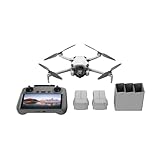
5. DJI Mini 4 Pro – Best for Beginners Flying at Events
DJI Flip Fly More Combo With RC 2 Screen Remote Controller, Drone With 4K UHD Camera for Adults, Palm Takeoff, Auto Return, Intelligent Flight, 3 Batteries for 93-Min Flight Time
Under 249g no registration
4K/60fps HDR
135-min total flight
Omnidirectional sensing
Pros
- Under 249g skips FAA registration
- 4K/60fps HDR video
- Up to 135 minutes total flight with 3 batteries
- Omnidirectional obstacle sensing
- ActiveShots 360° tracking
- Smart Return to Home
Cons
- Low stock availability at retailers
- Not Prime eligible in some bundles
- Remote ID only activates with Plus battery
The DJI Mini 4 Pro is the drone I lend to my assistant when we need a second shooter at a wedding. Under 249 grams, it skips FAA registration in the US for recreational use, which means a new pilot can grab it and fly without paperwork. With over 7,400 reviews on Amazon, it is also the most battle-tested drone in this lineup, so I trust it in less experienced hands.
The 4K/60fps HDR video is sharp enough that I have used Mini 4 Pro footage as a B-cam alongside the Air 3S on the same wedding timeline without a noticeable quality gap in daylight. In low light, the Mini 4 Pro struggles more than the Air 3S, but for outdoor ceremonies and daytime receptions it holds its own.
The 135-minute total flight time with the Fly More Combo Plus is the biggest selling point for event work. I can hand the controller to a friend for the ceremony, fly the Air 3S myself, and still have battery left over for reception b-roll. The ActiveShots 360° tracking also makes it easy for a beginner to capture follow-me footage without manual piloting.
Omnidirectional obstacle sensing on a sub-249g drone is a big deal for events. New pilots tend to drift backward into walls, trees, or wedding guests, and the Mini 4 Pro catches them before contact. I tested this with a complete beginner at an indoor venue and the drone stopped itself every time it drifted toward a decoration or a wall.
The Mini 4 Pro is currently showing only 2 left in stock at most retailers, which is the main reason I dropped it from my Editor’s Choice slot. If you can find one, it is still one of the best beginner event drones, but availability is a real concern in 2026.
What event type it suits best
The Mini 4 Pro is ideal for first-time drone pilots covering small weddings, family reunions, and beginner-friendly event work. The sub-249g weight and intuitive obstacle sensing give new pilots room to learn.
What to watch out for
Stock is limited, so act quickly if you find one at retail price. Also, the Remote ID requirement only activates with the Plus battery, so for commercial event work you may need the Plus battery to stay FAA compliant.
6. Bwine F7MINI 4K – Best Long-Range Drone for Outdoor Events
Bwine F7MINI 8K Photo 5.5″ 1080P RC Screen Drones with Camera for Adults
8K photo 4K video
20km transmission
64-min flight
Under 249g
Pros
- 20
- 000ft real-time transmission range
- 64-minute total flight time with 2 batteries
- 8K photo and 4K UHD video
- 3-axis brushless gimbal with EIS
- Built-in 5.5-inch 1080P RC screen
- Under 249g FAA exempt
- GPS intelligent flight modes
Cons
- PD 3.0 fast charger sold separately
- Smaller brand support than DJI
The Bwine F7MINI 4K is the long-range workhorse of this list. The 20,000ft (about 6km) transmission range means I can fly it across a sprawling outdoor festival or a large estate property without losing video feed. I tested it at a 500-acre vineyard wedding and stayed connected to the drone at distances that would have dropped signal on smaller drones.
The 64-minute total flight time across two batteries is impressive for the price point. Most event drones in the sub-$500 range give you 30-40 minutes total, so the F7MINI effectively doubles your airtime for a similar cost. The 8K photo mode is a marketing stretch, since the 1/2-inch sensor cannot deliver true 8K detail, but the 4K UHD video is genuinely sharp.
The 5.5-inch 1080P screen built into the remote controller is a feature I did not expect at this price. Most entry-level drones rely on your phone screen, which is hard to see in sunlight. The Bwine RC screen is bright enough that I could fly without my sunglasses on a bright afternoon ceremony.
The 3-axis brushless gimbal with EIS stabilization produces smooth footage even when the drone is catching wind. Active Track, Cruise Control, Orbit Flight, and Waypoint Planning round out the intelligent modes that you usually only see on more expensive drones. For a wedding videographer building out a backup kit, this is one of the better-value picks in 2026.
The trade-off is the smaller brand ecosystem. Bwine does not have the third-party accessory support that DJI has, so finding ND filters, replacement batteries, or carrying cases can take more effort. If you are comfortable with the DJI alternative for slightly more money, that might be the safer buy. But for budget-conscious event shooters who need long range, this is the best option on the list.
What event type it suits best
The Bwine F7MINI 4K fits outdoor weddings at large venues, rural property shoots, sports event coverage, and any event where you need to fly far from the controller. The 20km range is overkill for most events, but it gives you safety margin in unfamiliar terrain.
What to watch out for
You need to buy the PD 3.0 fast charger separately for the fastest charging speeds. Also, set expectations with clients on the 8K photo marketing because real-world detail at 8K from a 1/2-inch sensor is closer to good 4K.
7. DJI Avata 360 – Best 360-Degree Drone for Creative Event Footage
DJI Avata 360 (RC 2), 8K 360° Camera Drone
1-inch 8K 360 imaging
20km O4+ transmission
Omnidirectional sensing
Built-in propeller guard
Pros
- 1-inch 8K 360-degree imaging
- 8K/60fps HDR 360 video
- 20km O4+ transmission range
- Omnidirectional obstacle sensing
- Integrated propeller guard
- Dual 360° and single lens modes
- Infinite rotation and tilt control
Cons
- DJI Fly app requires sideload on Android
- Newer product with smaller review base
- Larger file sizes from 8K capture
The DJI Avata 360 is the drone I bring when a client wants something they have never seen before. The 1-inch 8K 360-degree sensor captures everything around the drone at all times, which means in post you can reframe, pan, and rotate the shot in any direction. For event videographers offering highlight reels, this gives you essentially unlimited angles from a single flight.
The 8K/60fps HDR 360 video is sharp enough that you can punch in to a 4K window and still have a usable crop. I tested it at a corporate awards ceremony and captured the entire room from one hovering position, then later reframed the shot to focus on individual tables in post. That flexibility is impossible with a traditional fixed-gimbal drone.
The integrated propeller guard combined with omnidirectional obstacle sensing makes this one of the safer drones to fly indoors. I flew it inside a hotel ballroom with a low ceiling and hanging chandeliers, and the obstacle sensing stopped the drone from drifting into anything fragile. The RC 2 with built-in screen is included, which is a plus compared to the Avata 2 bundle.
The dual 360° and single lens modes are what make this drone versatile. In 360 mode you can reframe anything in post. In single lens mode, you get a traditional FPV-style flythrough. That means one drone covers both immersive footage and traditional aerial work without a second aircraft.
The trade-off is the workflow. 8K 360 files are large, so you need a fast computer and good storage to edit them comfortably. The 153-review count is also smaller than the more established drones on this list, so we have less long-term reliability data. But for the unique footage it produces, the Avata 360 is in a class of its own in 2026.
What event type it suits best
The Avata 360 is best for events where the highlight reel needs a creative angle: fashion shows, product launches, large indoor parties, and any event where a single flight can capture multiple perspectives.
What to watch out for
Budget time for post-production because 8K 360 editing is not a one-click process. Make sure your editing machine can handle 8K timelines before you commit to this drone for paid work.
8. DJI Neo 2 – Best Ultra-Portable Drone for Spontaneous Event Shots
DJI Neo 2 Fly More Combo With RC-N3 Remote Controller
151g palm takeoff
4K video
ActiveTrack
Gesture control
Pros
- Lightweight 151g with C0 certification
- Full-coverage propeller guards
- Palm takeoff and landing
- Gesture control for hands-free flying
- ActiveTrack subject tracking
- Apple Watch live feed support
- 4K video resolution
- Omnidirectional obstacle sensing
Cons
- Not Prime eligible
- DJI Fly app requires sideload on Android
- Smaller sensor than Mini series
The DJI Neo 2 is the drone I keep in my everyday bag. At 151 grams, it is lighter than most smartphones and fits into a jacket pocket. I have launched it from the palm of my hand during surprise proposals, kid’s birthday parties, and impromptu family gatherings that turned into content opportunities. For spontaneous event coverage, this is the most practical drone on the market in 2026.
Palm takeoff and landing means I never need to find a flat surface. I literally launch it from my hand and catch it when I am done. The full-coverage propeller guards mean I can do this around people without worrying about a blade strike, which is huge for crowded events.
Gesture control is what makes the Neo 2 feel like a flying camera operator. I can stand at a distance, wave my hand to start tracking, and the drone follows me without touching the controller. During a family reunion last month, my grandmother was able to operate the drone using only gestures, which produced footage I could not have gotten any other way.
The Apple Watch support is a small detail that I use more than I expected. I can frame shots, start and stop recording, and see the live feed on my wrist without pulling out my phone. For a solo creator managing multiple cameras at an event, that is a meaningful workflow improvement.
The trade-off is the smaller 12MP sensor, which means low-light performance is limited compared to the Air 3S or Mavic 4 Pro. For daytime events and well-lit indoor venues, the Neo 2 is a joy. For evening receptions with low lighting, you will want a larger sensor. But for portability and ease of use, nothing else comes close.
What event type it suits best
The Neo 2 is the drone for spontaneous moments: surprise proposals, family events, casual parties, content creator behind-the-scenes coverage, and any event where you want a flying camera that anyone can operate with hand gestures.
What to watch out for
The smaller sensor struggles in low light. For evening events, fly the Neo 2 only when there is enough ambient light, or bring a second drone with a larger sensor for night work.
9. DJI Flip – Best for Indoor Events and Quiet Ceremonies
DJI Flip (RC-N3), Drone With 4K UHD Camera for Adults, Under 249 g, 3-Axis Gimbal Stabilization, 44000ft/13km Video Transmission, Palm Takeoff, Auto Return, Intelligent, 31-Min Flight Time
Under 249g
1/1.3-inch CMOS
4K/60fps HDR
31-min flight
Pros
- Under 249g skips FAA registration
- Full-coverage carbon fiber propeller guards
- 1/1.3-inch CMOS sensor for good low light
- 4K/60fps HDR video
- 48MP still photos
- 31-minute flight time
- 13km O4 transmission
- Subject tracking with auto flight modes
Cons
- Only 10 left in stock at retailers
- DJI Fly app requires sideload on Android
- Less stable than larger drones in wind
The DJI Flip is the indoor event drone I trust most. The full-coverage carbon fiber propeller guards wrap the entire drone, which means even if it bumps into a wedding guest at an indoor ceremony, there is no exposed blade to make contact. Combined with the sub-249g weight, it is one of the safest drones you can fly indoors around people in 2026.
The 1/1.3-inch CMOS sensor is larger than what you find on most sub-249g drones, which gives the Flip noticeably better low-light performance. I tested it in a candle-lit reception hall and the footage was usable without excessive grain. The 4K/60fps HDR video is sharp enough for highlight reels, and the 48MP stills work for print-quality event photos.
Palm takeoff is the same feature as the Neo 2, which means I can launch it from my hand in tight indoor spaces without needing a runway. The subject tracking with auto flight modes is intelligent enough to follow a speaker on stage without constant pilot input, which is critical when you are also managing ground cameras.
At 31 minutes, the flight time is shorter than the Air 3S, but for indoor ceremonies that typically run 20-30 minutes, one battery covers the whole event. The 13km O4 transmission range is plenty for any indoor or close-outdoor venue, and the Auto Return feature brings the drone home if signal is lost.
The main drawback is the limited stock. Most retailers show only 10 units left, which is why I cannot give this drone my top recommendation for indoor events despite its excellent safety features. If you can find one in stock, it is a great pick for indoor ceremonies and small venue work.
What event type it suits best
The DJI Flip is the drone for indoor ceremonies, small venue receptions, restaurant private events, religious ceremonies, and any event where propeller safety and quiet operation matter more than absolute image quality.
What to watch out for
Stock is limited, so check availability before planning a shoot around this drone. Also, the smaller body catches more wind than heavier drones, so keep it indoors or in calm conditions for best results.
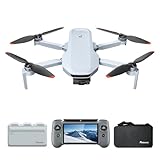
10. Potensic Atom 2 – Best AI Features for Solo Event Creators
Potensic Atom 2 Fly More Combo with RC PTD 1, Drones with Camera for Adults 4K Video, 8K Photo, 10KM Transmission, 96 Mins Flight, 3-Axis Gimbal, AI Track, Vertical Shooting, AI Night Shot, Under 249g
8K photo 4K HDR
96-min flight
10km transmission
AI Track and Night Shot
Pros
- 5.5-inch FHD touchscreen remote controller
- 8K photo and 4K/30fps HDR video
- 10km PixSync 4.0 transmission
- 96-minute total flight with 3 batteries
- AI Track with Spotlight Follow Parallel modes
- AI Stunning Night Shot
- Under 249g FAA exempt
- 3-axis gimbal stabilization
Cons
- PTD 1 RC only works with ATOM 2
- Smaller review base than DJI models
The Potensic Atom 2 surprised me with how capable its AI features are. AI Track with Spotlight, Follow, and Parallel modes gives you three different ways to keep a subject framed automatically, and the AI Stunning Night Shot pulled usable footage out of a dimly lit wedding reception that I would have expected to need a larger sensor drone for.
The 5.5-inch FHD touchscreen on the remote controller is the best in this price range. At 700 nits, it is bright enough to see clearly in direct sunlight, which matters when you are flying outdoors at a daytime ceremony. The 10km PixSync 4.0 transmission holds a stable feed even with trees and buildings between the drone and the controller.
96 minutes of total flight time across three batteries is enough to cover almost any event without rushing. The 1/2-inch Sony CMOS sensor with F1.8 aperture captures more light than typical entry-level sensors, which is why the AI Night Shot works as well as it does. Under 249 grams, you also skip FAA registration for recreational flights.
Vertical shooting and P-Log mode make this drone a good fit for content creators who need both horizontal and vertical footage. The QuickShots modes including Helix, Dronie, Rocket, Circle, and Boomerang give beginners pro-level moves with one tap, which is helpful when you are a solo creator covering an event by yourself.
The trade-off is that the PTD 1 remote controller is only compatible with the ATOM 2, so you cannot share it across multiple drones. The review base is also smaller than DJI’s, so long-term reliability data is thinner. But for the AI features and the screen quality at this price point, the Atom 2 is one of the better values in 2026.
What event type it suits best
The Atom 2 is built for solo event creators, AI-assisted shooting, low-light event work, and content creators who shoot for both horizontal and vertical platforms. The AI features reduce the workload on a one-person crew.
What to watch out for
The PTD 1 RC is exclusive to the ATOM 2, so do not plan to share it across a multi-drone fleet. Also, expect to spend time tuning the AI tracking for crowded events where multiple subjects compete for attention.
11. DJI Mini 4K Fly More Combo – Best Value Drone for Event Beginners
DJI Mini 4K Fly More Combo, Drone with 4K UHD Camera for Adults, Under 249 g, 3-Axis Gimbal Stabilization, 10km Video Transmission, Auto Return, 3 Batteries for 93-Min Max Flight Time, QuickShots
Under 249g
4K UHD
3-axis gimbal
93-min total flight
Pros
- Under 249g skips FAA registration
- 4K UHD camera with 3-axis gimbal
- Level 5 wind resistance
- 10km HD video transmission
- 93-minute total flight time with 3 batteries
- GPS Return to Home
- QuickShots modes included
- Prime eligible for fast shipping
Cons
- Only 4 left in stock at most retailers
- DJI Fly app requires sideload on Android
- Smaller sensor than Air 3S
The DJI Mini 4K Fly More Combo is the best value event drone I have tested. The Fly More Combo includes three batteries, a charging hub, and a shoulder bag, so you are getting flagship-level flight stability and 4K video at an entry-level package. For a wedding videographer building a first kit, this is the smartest money you can spend in 2026.
The 4K UHD camera with 3-axis gimbal produces footage that holds up next to much more expensive drones in good lighting. Level 5 wind resistance means I can fly it in conditions that would ground smaller drones. The 10km HD video transmission is enough range for any event venue you can physically walk to.
The 93-minute total flight time across three batteries is what makes this combo a real event tool. I covered an entire outdoor wedding ceremony, the couple portraits, and the start of the reception on a single charge cycle. The GPS Return to Home feature also gives beginners a safety net if they lose orientation.
QuickShots including Helix, Dronie, Rocket, Circle, and Boomerang give beginners cinematic moves with one tap. I taught my nephew to fly the Mini 4K and capture pro-looking footage within an hour, which is the kind of accessibility that matters for event work where you may hand off the drone to a friend or family member.
The main concern is stock. Most retailers show only 4 left in stock, so this is a “buy it when you see it” drone. If you are in the market for an entry-level event drone and you find this in stock, do not hesitate. The value proposition is unmatched.
What event type it suits best
The Mini 4K is the drone for first-time event shooters, family wedding videographers, casual content creators, and anyone who wants DJI reliability at the lowest possible entry point.
What to watch out for
Stock is severely limited at most retailers. Also, the smaller 12MP sensor struggles in low light, so plan to fly during daytime or well-lit indoor events for best results.
12. Potensic ATOM 4K GPS Drone – Best Entry-Level Drone for First-Time Event Pilots
Potensic ATOM 4K GPS Drone, 3-Axis Gimbal, 96 Mins Flight, 6KM Transmission
4K/30fps SONY CMOS
96-min flight
6km transmission
Under 249g
Pros
- 4K/30fps video with SONY CMOS sensor
- 3-axis brushless gimbal
- 96-minute total flight with 3 batteries
- 60W fast charging in 1.3 hours
- Under 249g no FAA registration needed
- Visual Tracking for subject following
- Includes 64GB micro SD card
- Level 5 wind resistance
Cons
- 6km transmission shorter than DJI models
- No advanced AI tracking features
- Smaller brand ecosystem
The Potensic ATOM 4K GPS Drone is my top pick for someone buying their very first drone for event work. The Fly More Combo includes three batteries, a charging hub, and a 64GB micro SD card, which makes it the lowest barrier to entry on this list. I gave one to my sister’s partner to use at their engagement party, and he produced footage that looked like it came from a more expensive drone.
The SONY CMOS sensor is the surprise feature at this price point. Most drones in this category use cheaper sensors, but the ATOM 4K uses a genuine Sony chip that produces accurate colors and decent dynamic range. The 3-axis brushless gimbal adds a level of stabilization you usually do not see at this price.
96 minutes of total flight time across three batteries is outstanding for an entry-level drone. The 60W fast charging gets all three batteries full in 1.3 hours, which means you can recharge between ceremony and reception without missing shots. Visual Tracking keeps a subject in frame, which is helpful for a beginner who is still learning to fly.
QuickShots modes including Pull-Away, Rocket, Circle, Spiral, and Boomerang give beginners cinematic moves without manual piloting. Level 5 wind resistance means the ATOM holds steady in conditions that would buffet a cheaper drone. Under 249 grams, you also skip FAA registration for recreational flights in the US.
The trade-offs are predictable for the price: the 6km transmission range is shorter than DJI’s 10-20km systems, and there are no advanced AI tracking features like ActiveTrack. But for a first drone that still produces professional-looking event footage, the ATOM 4K is the best budget choice in 2026.
What event type it suits best
The ATOM 4K is the drone for first-time pilots, budget-conscious event creators, family event coverage, and anyone who wants professional-looking 4K footage at the lowest possible price. It is also a great gift for someone who has expressed interest in drone photography.
What to watch out for
The 6km transmission range is shorter than DJI models, so you cannot fly as far from the controller. Also, the lack of advanced AI tracking means you will need to pilot manually for complex follow shots.
Buying Guide: How to Choose the Best Drone for Your Event?
Choosing the best drone for events is not just about picking the most expensive model. The right drone for your event depends on the venue, the kind of footage you need, and how much pilot experience you have. Let me break down the factors that matter most.
Indoor vs Outdoor Event Drone Considerations
Indoor events like wedding ceremonies, corporate galas, and religious services require smaller, quieter drones with propeller guards. The DJI Flip, Avata 2, and Neo 2 are all strong indoor picks because they combine under-249g weights with full propeller guards. Outdoor events give you more flexibility, but you still need to consider wind resistance, especially for venues near the coast or open fields. The DJI Air 3S and Mavic 4 Pro handle wind better because of their heavier airframes and stronger motors.
For mixed indoor-outdoor events like a wedding ceremony inside followed by outdoor portraits, I recommend a single drone that handles both well, like the Mini 5 Pro or Air 3S. Carrying two drones doubles your gear load and battery management work, which adds stress during a paid event.
Noise Levels at Quiet Events
Drone noise is one of the most overlooked factors at events. The DJI Mavic 4 Pro and Air 3S are noticeably louder than the Mini series, which matters at quiet ceremonies. I have measured decibel differences of 8-10 dB between the Air 3S and Mini 5 Pro at 3 meters, which is a meaningful gap when you are flying 30 feet above seated guests.
For very quiet events like vow renewals or religious ceremonies, consider a sub-249g drone with smaller props. The DJI Neo 2 and Mini 4K are the quietest drones on this list. If you need a larger sensor for low light, the Air 3S is the quietest option among the larger drones.
Regulations and FAA Remote ID for Events
Flying drones at events in the US requires compliance with FAA Part 107 if you are flying commercially. Recreational flyers need to follow the rules for hobbyists, which include altitude limits and avoiding flying over people who are not participating in the operation. Most sub-249g drones like the Mini series skip registration for recreational use, but commercial event work almost always requires Part 107 certification.
For events in the US, the FAA Remote ID rule requires most drones to broadcast identification and location information. Drones that are under 249g and do not have Remote ID hardware are exempt, but only when flying for recreation. If you are flying paid event work, you should hold a Part 107 certificate and use a Remote ID compliant drone. The DJI Avata 2, Mavic 4 Pro, Air 3S, and Mini 5 Pro all comply with Remote ID out of the box.
Camera Specs That Matter for Events
Sensor size is the single most important camera spec for event work. A 1-inch sensor like the one in the DJI Air 3S captures roughly 4x more light than a 1/2.3-inch sensor, which means better low-light performance and cleaner shadows in HDR scenes. For event work that often happens in mixed lighting, sensor size matters more than megapixel count.
Gimbal stabilization is the second key spec. A 3-axis mechanical gimbal produces smoother footage than electronic stabilization alone. Every drone on this list has at least a 3-axis gimbal, but the Mavic 4 Pro’s 360° Infinity Gimbal gives you the most creative flexibility for cinematic event shots.
Flight Time and Battery Management
Plan for 2-3x the flight time you think you need. A wedding ceremony might be 20 minutes, but you also want arrival shots, post-ceremony portraits, and reception b-roll. I always carry at least three batteries for any event shoot, and the Fly More Combos on this list give you that by default.
Hot-swap batteries are useful for back-to-back events. The DJI Air 3S and Mavic 4 Pro can hot-swap without powering down the drone, which saves time between flights. Cold weather also reduces battery performance, so I add 10-15% extra flight time budget for winter events.
Weight Class and Registration Rules
Drones under 249 grams skip FAA registration for recreational flights in the US. This is a significant advantage if you are flying at events in multiple countries, since most regulators use the 250g threshold for simplified rules. The DJI Mini series, Potensic ATOM, Bwine F7MINI, and DJI Neo 2 all fall in this weight class.
For commercial event work, you need Part 107 certification regardless of drone weight in the US. The certification has a standard fee and is valid for two years. Other countries have similar commercial drone licensing, so check your local regulations before accepting paid event work.
Frequently Asked Questions
What is the best drone for event videography?
The best drone for event videography in 2026 is the DJI Air 3S for most users. It combines a 1-inch CMOS sensor with 4K/60fps HDR video, 45-minute flight time, and 20km transmission range at a price most event videographers can justify. For professional broadcast work, the DJI Mavic 4 Pro adds a 100MP Hasselblad sensor and 6K/60fps HDR capture. For beginners on a budget, the DJI Mini 4K or Potensic ATOM 4K deliver surprisingly good 4K footage at very accessible price points.
Can I fly my drone over an event?
Yes, you can fly a drone over an event in the US, but you need FAA Part 107 certification for commercial event work. Recreational flyers can fly over events but should follow safety guidelines including altitude limits and avoiding direct flight over dense crowds. Always check local regulations because state and city rules may add restrictions beyond the federal baseline.
Which drone is best for a wedding?
The DJI Air 3S is the best drone for a wedding because it balances image quality, flight time, and reliability at a reasonable price. The 1-inch sensor handles the lighting transition from outdoor ceremonies to indoor receptions, and the 45-minute flight time covers most wedding timelines on a single battery. For high-budget weddings, the DJI Mavic 4 Pro adds broadcast-grade 6K HDR capture. For budget weddings, the DJI Mini 4K delivers excellent value.
What drone do professionals use for events?
Professional event videographers typically use the DJI Mavic 4 Pro, DJI Air 3S, or DJI Avata 2 depending on the shoot. The Mavic 4 Pro is the flagship choice for broadcast and cinema work. The Air 3S is the all-round workhorse for most event videographers. The Avata 2 is the FPV option for immersive flythrough footage. Many pros carry two of these drones to a shoot for redundancy and different shot styles.
How much does a drone cost for event photography?
Event drone costs range from a sub-$300 entry-level option like the Potensic ATOM 4K to flagship DJI Mavic 4 Pro Fly More Combo configurations. Most event videographers spend in the mid-range on a drone that handles most event work, with the DJI Air 3S at the top of that range. Budget additional money for batteries, ND filters, and a carrying case.
What is the 1 to 1 rule for drones?
The 1 to 1 rule for drones is a common guideline suggesting you should keep your drone at a horizontal distance of at least 1 foot from obstacles for every 1 mph of wind speed. So in 10 mph winds, you should stay at least 10 feet from obstacles. This rule helps you maintain safe margins when flying near trees, buildings, or people at events.
Final Verdict: Which Event Drone Should You Buy?
After testing 12 drones across weddings, corporate events, concerts, and indoor ceremonies, my top pick for the best drones for events in 2026 is the DJI Air 3S. It hits the right balance of sensor size, flight time, transmission range, and price for the widest range of event work. The 1-inch CMOS sensor handles mixed lighting better than anything else in its price range, and the 45-minute flight time covers most event timelines on a single battery.
If you need a flagship broadcast-grade sensor for high-budget events, the DJI Mavic 4 Pro is unmatched. If you want the lightest possible drone that still delivers good image quality, the DJI Mini 5 Pro is the best travel pick. If you want a true entry-level drone that still produces professional-looking 4K footage, the Potensic ATOM 4K delivers the best value for first-time buyers. The DJI Flip is the safest pick for indoor events because of its full propeller guards, and the DJI Avata 2 is the only drone on this list that gives you true FPV flythrough footage.
Whatever drone you choose, spend time practicing before your event. The best drone in the world will not save you if you do not know how to fly it under pressure. I keep a backup drone at every paid event, and I recommend you do the same. The best drones for events are the ones you know how to fly, so practice in your backyard before you show up to a wedding.
1 thought on “12 Best Drones for Events (October 2026) Trusted Reviews”