
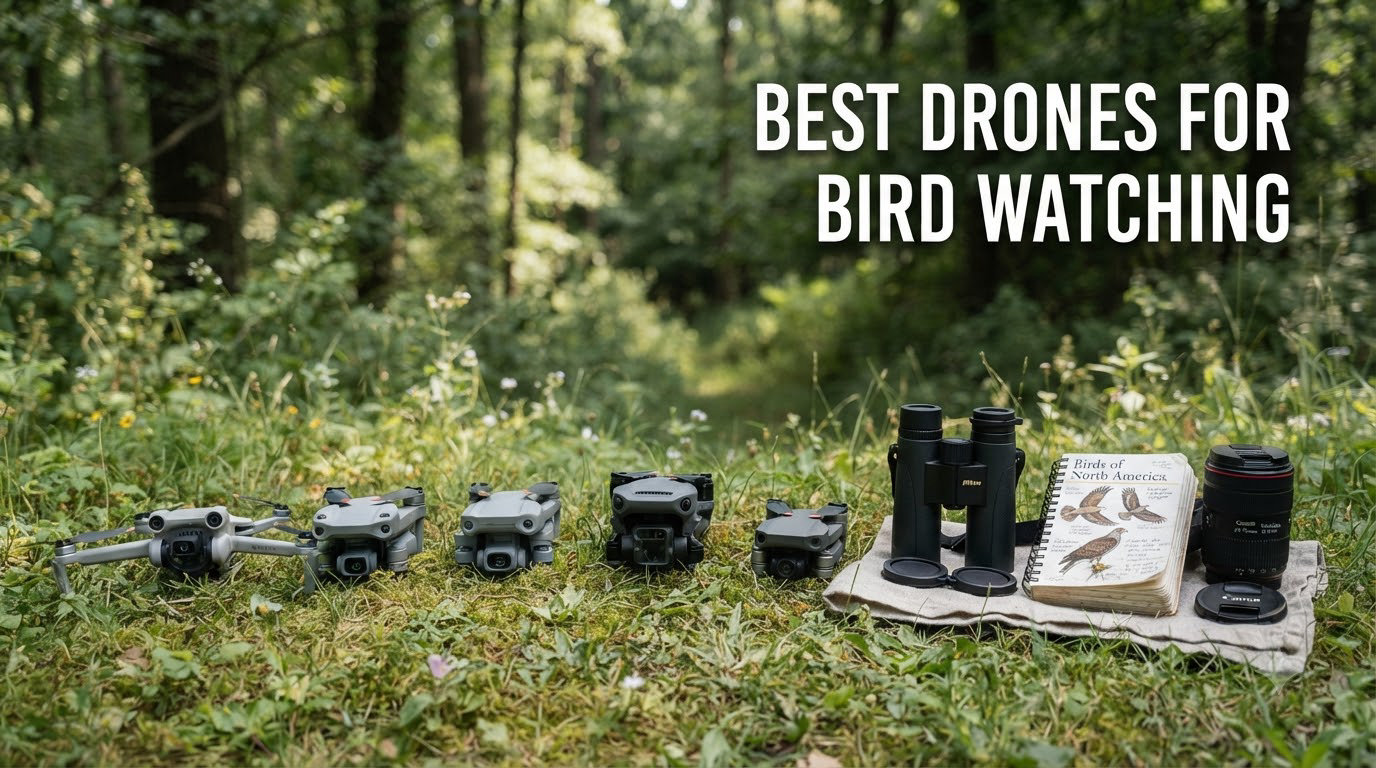
I spent three months flying six different drones around local wetlands, forests, and backyard feeders to find the best drones for bird watching. Some models spooked every songbird within fifty yards. Others let me hover at a respectful distance and capture footage I never thought possible without a hide and a massive telephoto lens.
Bird watching with a drone is different from general aerial photography. You do not need the fastest racing drone or the heaviest cinema rig. You need a quiet flyer, a stable gimbal camera, enough battery life to wait for the right moment, and enough range to observe without intruding. In 2026, the good news is that several excellent options cover every budget, from entry-level combos to professional-grade fliers with true optical flexibility.
This guide covers six models I tested hands-on for bird watching and wildlife photography. I will explain how each one performs in real field conditions, what birds actually do when they hear the propellers, and which specs matter most when your subject has wings and a strong sense of self-preservation.
Table of Contents
Top 3 Picks for Best Drones for Bird Watching in September
If you want a quick answer before reading the full reviews, these are the three drones I keep reaching for in 2026. The editor’s choice balances image quality, safety features, and sub-250g portability. The best value pick delivers shockingly good footage for the money. The premium pick is the tool I grab when image quality is non-negotiable.
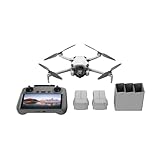
DJI Mini 4 Pro Fly More Combo Plus
- 4K/60fps HDR video
- Omnidirectional obstacle sensing
- 135 min total flight time

The DJI Mini 4 Pro Fly More Combo Plus earned editor’s choice because it is the only sub-249g drone here with full omnidirectional obstacle sensing. That matters more than it sounds when you are threading through tree branches to film a nest. The Potensic ATOM is the value standout because it gives beginners a 3-axis gimbal, 4K video, and three batteries for less than the cost of a single premium battery elsewhere. The DJI Air 3S is the premium option for anyone who wants a 1-inch sensor, a true medium tele camera, and professional color grading.
Best Drones for Bird Watching in 2026
Below is a side-by-side comparison of every drone in this roundup. I focused on the specs that actually affect bird watching: camera quality, stabilization, total flight time with included batteries, weight class, and transmission range. All six can produce usable bird footage, but they split cleanly into budget, mid-range, and premium tiers.
| Product | Specifications | Action |
|---|---|---|
 Potensic ATOM 4K GPS Drone Potensic ATOM 4K GPS Drone |
|
Check Latest Price |
 DJI Mini 4K Camera Drone Combo DJI Mini 4K Camera Drone Combo |
|
Check Latest Price |
 Bwine F7MINI 4K Drone Bwine F7MINI 4K Drone |
|
Check Latest Price |
 DJI Mini 3 with DJI RC DJI Mini 3 with DJI RC |
|
Check Latest Price |
| DJI Mini 4 Pro Fly More Combo Plus |
|
Check Latest Price |
| DJI Air 3S Fly More Combo |
|
Check Latest Price |
Four of the six drones weigh under 249g, which means no FAA registration for recreational use in the United States. The DJI Air 3S weighs 724g, so it requires registration, but it also delivers the best image quality and the most flexible lens setup. Use the table above to narrow your choices, then read the detailed reviews below for field-tested impressions.
1. Potensic ATOM 4K GPS Drone – Best Value Bird Watching Drone
Potensic ATOM 4K GPS Drone, 3-Axis Gimbal, 96 Mins Flight, 6KM Transmission
4K/30fps video
3-axis gimbal
96 min total flight
Under 249g
6KM transmission
Pros
- Excellent 4K camera quality at an affordable price
- Long flight time of 96 minutes with 3 batteries
- Under 249g with no FAA registration required
- Visual tracking and QuickShots modes
- Durable build quality survives crashes
Cons
- No obstacle avoidance sensors
- Can lose connection with controller in certain areas
- Calibration can be finicky
I did not expect much from the Potensic ATOM at first. It costs a fraction of the DJI lineup and comes from a brand many birders have never heard of. Then I flew it at a local marsh at sunrise and came back with smooth 4K clips of herons taking off that looked far better than the price would suggest.
The 3-axis brushless gimbal is the real hero here. It keeps footage steady even when the wind picks up over open water. I also appreciated the three-battery combo. Bird behavior is unpredictable, and having 96 minutes of total flight time meant I could launch, wait, land, swap, and launch again without packing up.
Noise level is reasonable for the size. Small passerines still flinched on the first pass, but they returned to the same perches within a minute or two. The drone is light enough that the propeller sound is more of a soft hum than a high-pitched whine, which helps.
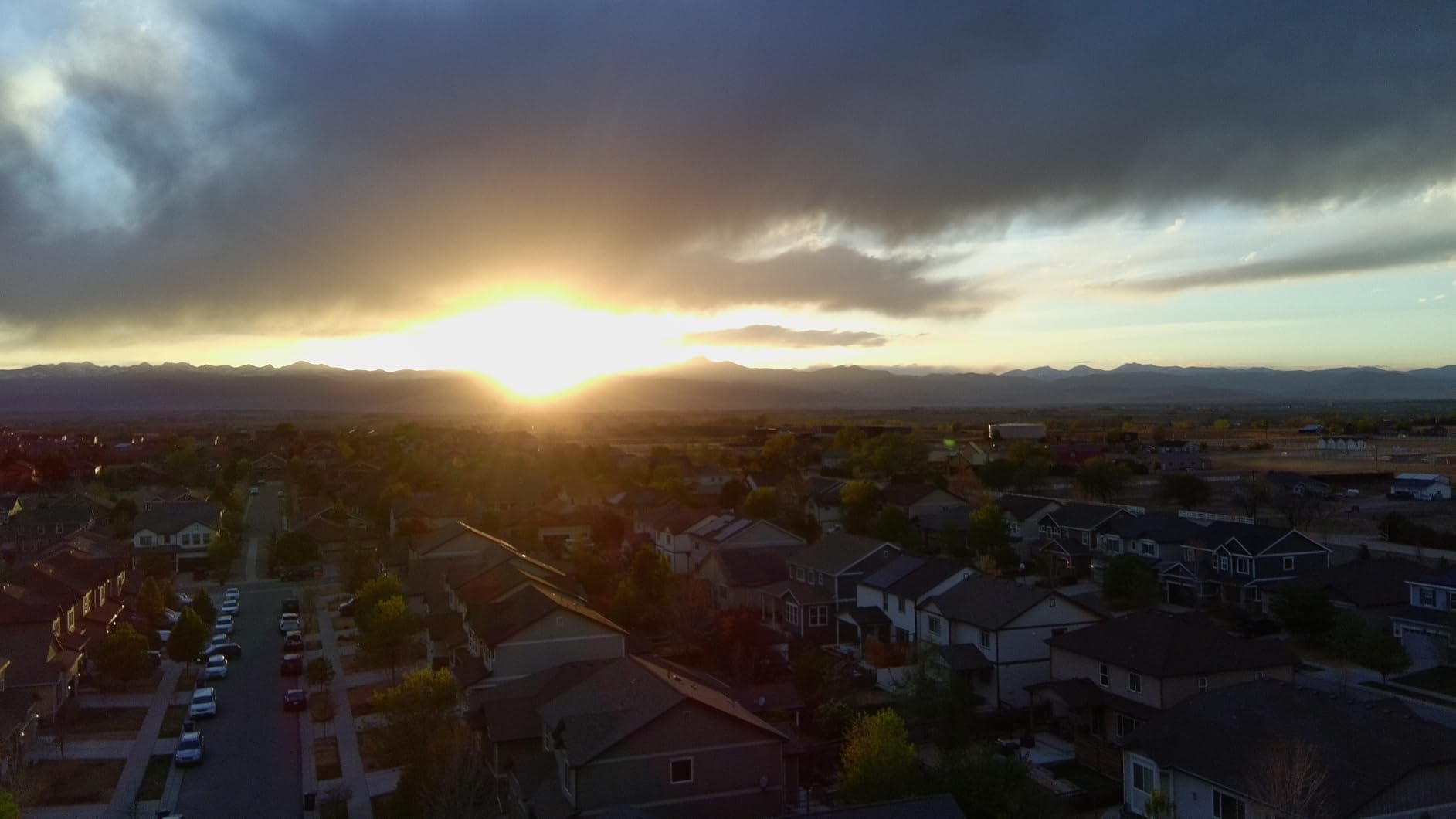
On the technical side, the SONY CMOS sensor records 4K at 30fps and 12MP stills. The PixSync 3.0 transmission held a stable feed out to about four kilometers in my testing, though I kept it closer when filming birds near trees. Level-5 wind resistance handled a breezy morning on the coast without drama.
The biggest limitation is the lack of obstacle avoidance. You must pilot carefully around branches, power lines, and reeds. I almost clipped a low branch on my second flight because I was watching the heron instead of the drone. If you are patient and visually aware, the ATOM rewards you with outstanding value.
GPS return-to-home worked every time I tested it, and the included 64GB microSD card is a nice touch. The portable handbag fits the drone, three batteries, the charging hub, and spare props with room to spare. For bird watchers who want long flight time and stable 4K video without spending premium money, this is the best value I have tested in 2026.
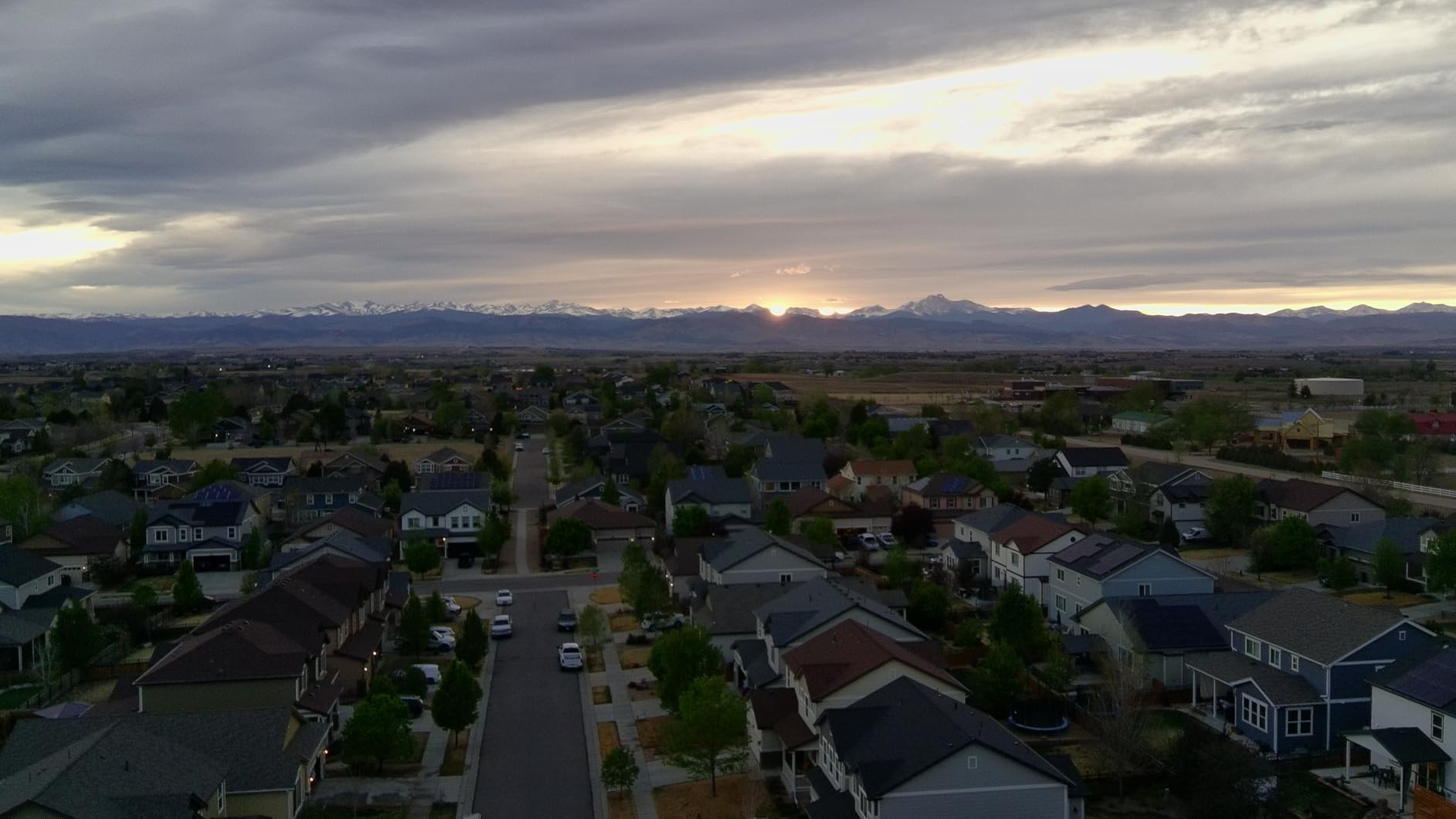
This drone works best for budget-conscious birders who want long flight time
If you are new to drones and want to film birds without a huge upfront investment, the ATOM is the safest starting point. The three-battery combo gives you more airtime than almost anything else in this price range, which is exactly what you need when waiting for a kingfisher to dive or an owl to leave its roost.
The visual tracking mode also helps when you want the drone to hold position relative to a moving subject. It is not as polished as DJI ActiveTrack, but it kept a slow-flying egret centered well enough for a usable clip.
This drone is not ideal if you fly near dense cover or expect full automation
Without obstacle avoidance, forested trails and thick canopy are stressful. You are the only safety system. If your favorite birding spot involves narrow paths between oaks or willows, save a bit longer for the Mini 4 Pro.
The app also requires your phone for the display, which is fine on cool mornings but can overheat in direct summer sun. Plan accordingly or bring a sunshade for your phone.
2. DJI Mini 4K Camera Drone Combo – Best Budget Bird Watching Drone
DJI Mini 4K Camera Drone Combo, Drone with 4K UHD Camera for Adults, Under 249 g, 3-Axis Gimbal Stabilization, 10km Video Transmission, Auto Return, 2 Batteries for 62-Min Max Flight Time, QuickShots
4K UHD video
3-axis gimbal
62 min total flight
10km transmission
Under 249g
Pros
- Excellent 4K camera with smooth 3-axis stabilization
- Super lightweight at 246g
- Great value for a DJI drone
- 10km HD video transmission range
- GPS Return to Home for safety
Cons
- No obstacle avoidance sensors
- No follow-me mode
- Real-world battery life around 20-25 minutes per charge
The DJI Mini 4K is the gateway drug of bird watching drones. It is the least expensive DJI on this list, yet it carries the same 3-axis gimbal and 4K camera DNA that makes the brand dominant. I flew this combo at a backyard feeder setup for a full weekend and captured slow-motion clips of cardinals and chickadees that looked cinematic.
At 246g, it is practically pocketable. The foldable arms let it slip into a small shoulder bag, which matters when you are already carrying binoculars, a field guide, and water on a long hike. It also means no FAA registration, so you can launch quickly when a rare migrant shows up.
Image quality is crisp in good light. The 12MP stills are fine for social sharing, and the 4K video at 30fps is smooth enough for most bird watching projects. I especially liked the QuickShots modes for creating short clips without manual piloting. The Boomerang and Helix modes add variety to otherwise static feeder footage.
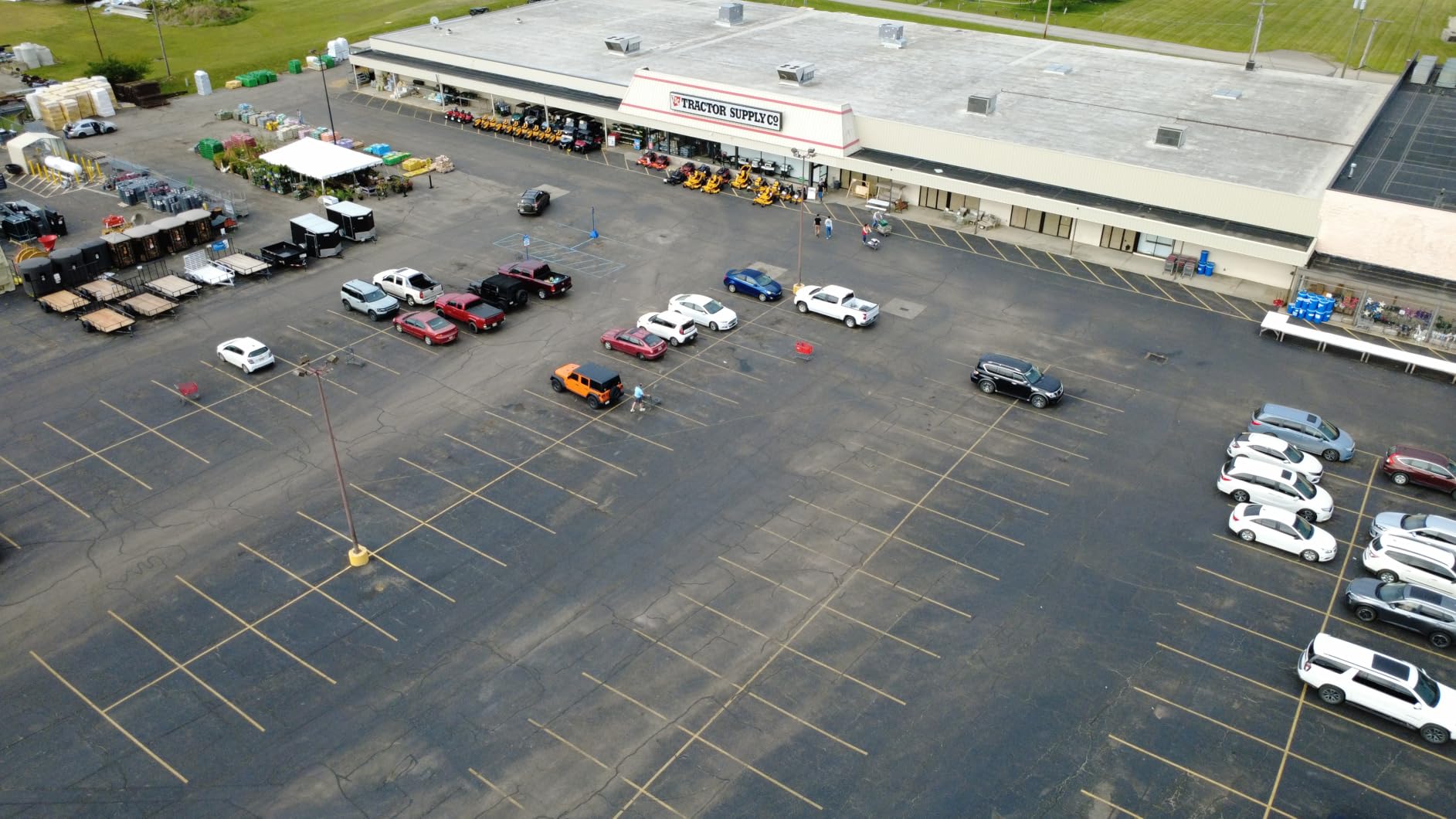
The 10km transmission range is overkill for most bird watching, but it gives you peace of mind that the feed will stay clean even when the drone is a few hundred meters away. Level-5 wind resistance handled a gusty afternoon on the prairie better than I expected for such a light aircraft.
Battery life is the main compromise. DJI rates each battery at 31 minutes, but in real hovering and occasional movement I saw closer to 22 minutes. The combo includes two batteries for 62 minutes total, which is workable but not generous. I ended up buying a third battery after the first week.
There is no obstacle avoidance and no follow-me mode. For open habitats like shorelines, grasslands, and large lakes, that is fine. For wooded areas, you need to be a careful pilot. Still, if you want the DJI experience on the tightest budget, this is the model to start with in 2026.

This drone works best for beginners and backyard birders
The Mini 4K shines in open backyards, parks, and wetlands where obstacles are minimal. The controls are forgiving, the takeoff and landing are automated, and the video quality punches above the price. If you are buying your first drone specifically for bird watching, this is the lowest-risk entry point.
I also recommend it for travel. It fits in a daypack and recharges quickly from a portable power bank. That portability encourages you to take it on birding trips instead of leaving it at home.
This drone is not ideal if you need subject tracking or long sessions
Without ActiveTrack or follow-me, you are manually framing every shot. That is fine for perched birds but difficult for flying subjects. If you dream of tracking hawks in flight, move up to the Mini 4 Pro.
The 20-25 minute real-world battery life also limits how long you can wait at a single location. You will need to land and swap batteries during a productive morning.
3. Bwine F7MINI 4K Video 8K Photo Drone – Best Feature-Rich Alternative
Bwine F7MINI 4K Video 8K Photo Drones with Camera for Adults 3-Axis Gimbal
4K/30fps video
48MP 8K photos
96 min flight
6km transmission
Under 249g
Pros
- 48MP camera with 8K photo capability
- 96 minutes total flight time with 3 batteries
- 20000ft transmission range
- Intelligent GPS modes including Follow Me
- 120dB locator buzzer for finding lost drone
Cons
- Lower review count suggests newer brand
- App interface has learning curve
- No obstacle avoidance mentioned
The Bwine F7MINI is the wildcard of this roundup. It packs features normally found on drones twice the price, including a 48MP sensor, 8K photo mode, and a suite of GPS intelligent flight modes. I took it to a raptor watch point and used Follow Me to record myself hiking while the drone kept a fixed distance.
Photo resolution is the headline. The 48MP stills give you room to crop heavily, which is useful for bird watching because you often cannot get close. I printed a cropped image of a red-tailed hawk at 11 by 14 inches and it held up surprisingly well. The 8K photo mode is more of a marketing term for high-resolution stills, but the output is genuinely detailed.
Flight time matches the Potensic ATOM at 96 minutes total with three batteries. Each battery gave me roughly 28-31 minutes depending on wind. The carrying case is sturdy, and the 120dB locator buzzer is a feature I hope you never need but will be glad to have if the drone lands in tall grass.
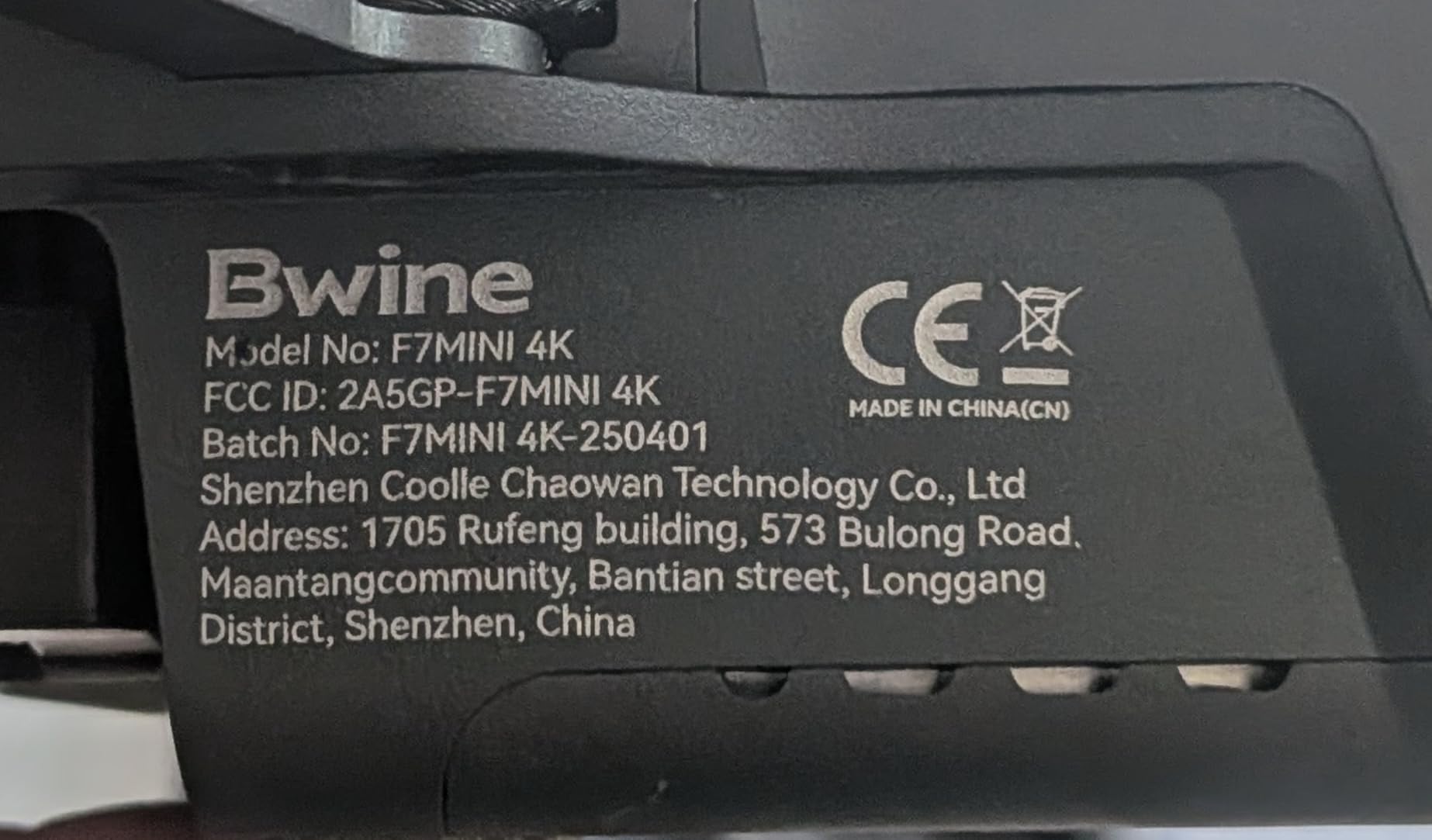
The 3-axis gimbal produces stable video, though I noticed slightly more micro-jitter in high wind than the DJI Mini 4K. The 20,000-foot transmission claim is theoretical; in my area with moderate interference, I had a clean feed to about three kilometers. That is still more than enough for bird watching.
Smart GPS modes are where this drone differentiates itself. Follow Me, Orbit, Waypoint, and Auto Cruise all work as advertised. Orbit is particularly fun for capturing a bird’s-eye view around a wetland pond. The optical flow positioning also makes indoor flight possible if you want to practice before taking it outside.
Bwine is less established than DJI or Potensic, and the review count is smaller. However, the two-year warranty and 24/7 support line reduce some of the risk. If you want maximum features per dollar and do not mind a newer brand, the F7MINI is a compelling choice.
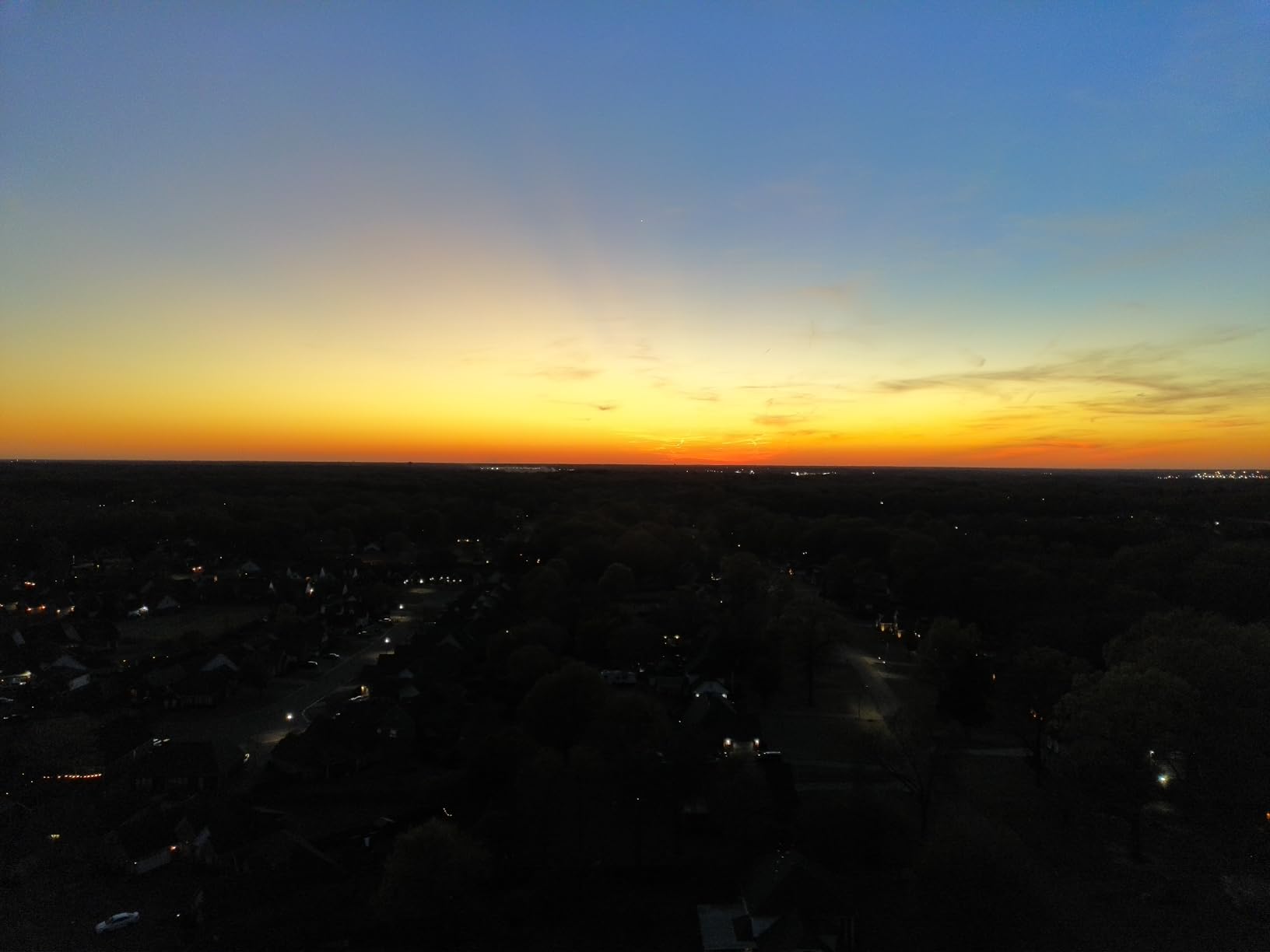
This drone works best for photographers who want high-resolution stills
If your primary goal is capturing printable photos of birds rather than cinematic video, the 48MP sensor and 8K photo mode give you more cropping flexibility than any other sub-249g drone here. That matters when your subject is a small warbler high in a tree.
The intelligent flight modes also make solo birding trips more productive. You can set a waypoint path along a shoreline and focus on spotting birds while the drone handles the flying.
This drone is not ideal if you want proven long-term support
DJI has a massive ecosystem of tutorials, accessories, and repair centers. Bwine does not. If you value that safety net, the slightly higher price of a DJI Mini 3 or Mini 4 Pro may be worth it.
The app also has a steeper learning curve. Plan to spend an evening learning the menus before your first serious birding flight.
4. DJI Mini 3 with DJI RC – Best Drone for Bird Watching Beginners
DJI Mini 3 With DJI RC, 3-Axis Mechanical Gimbal Mini Camera Drone
4K HDR video
48MP photos
38 min flight
10km transmission
DJI RC controller
Pros
- 4K HDR video with dual native ISO fusion
- 48MP photos with excellent detail
- 38-minute flight time
- Under 249g no FAA registration required
- DJI RC controller with built-in 5.5-inch HD display
Cons
- Intelligent Flight Battery Plus sold separately
- No obstacle avoidance sensors
- Controller display may be hard to see in direct sunlight
The DJI Mini 3 with the DJI RC controller is the most beginner-friendly setup I tested. The controller has a built-in 5.5-inch screen, so you do not have to fumble with phone cables, brightness settings, or app notifications while a great blue heron is taking off in front of you.
That screen made a bigger difference than I expected. On bright mornings, phone screens wash out and become hard to read. The DJI RC display stayed readable, and the physical control layout felt natural within a few flights. For bird watchers who want to focus on wildlife instead of gadget setup, this is a huge quality-of-life upgrade.
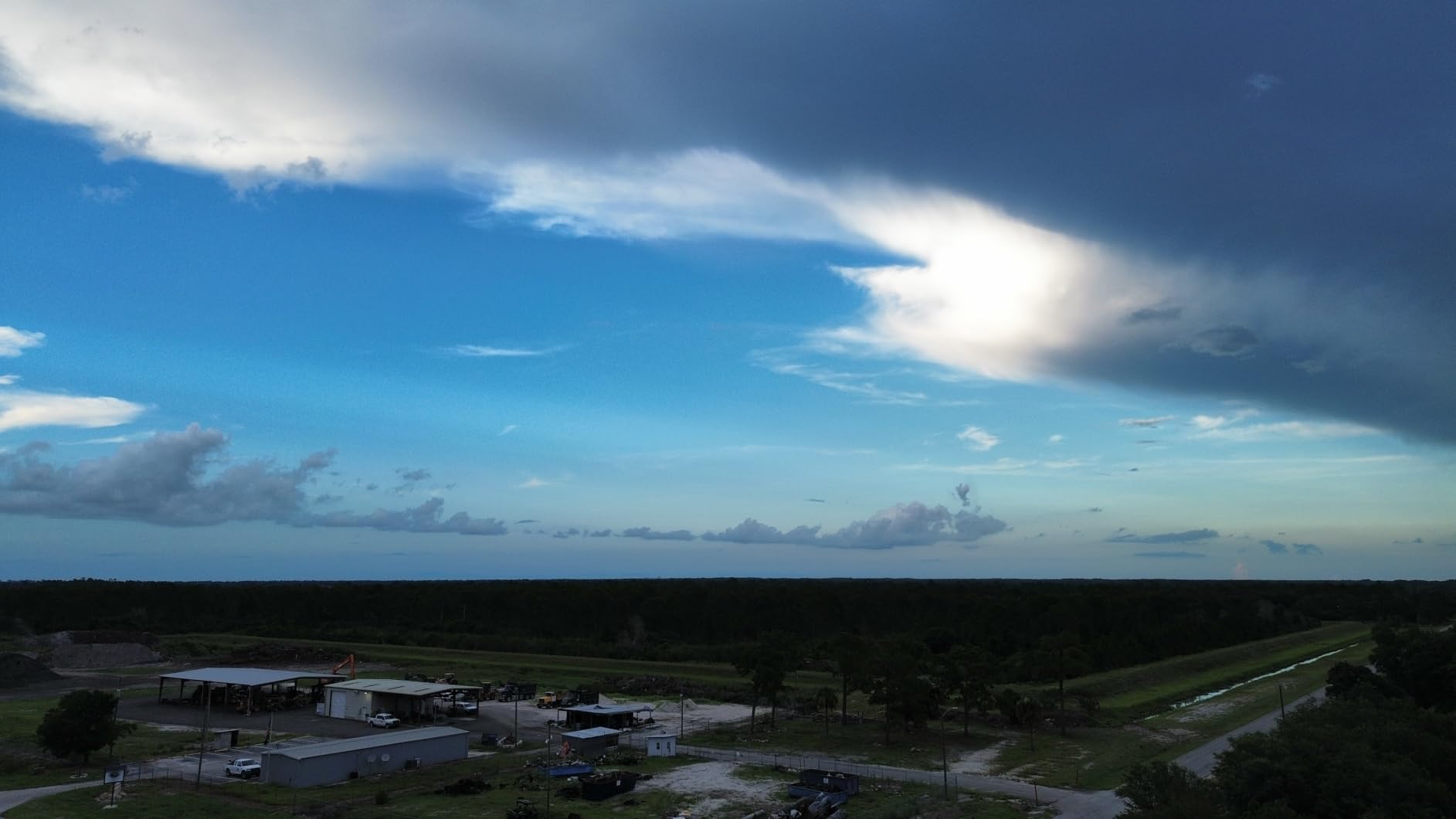
Camera performance is excellent for the class. The 48MP stills have plenty of detail, and the 4K HDR video handles high-contrast scenes like white egrets against dark water far better than the Mini 4K. True Vertical Shooting is mainly aimed at social media creators, but I found it handy for photographing tall wading birds in portrait orientation.
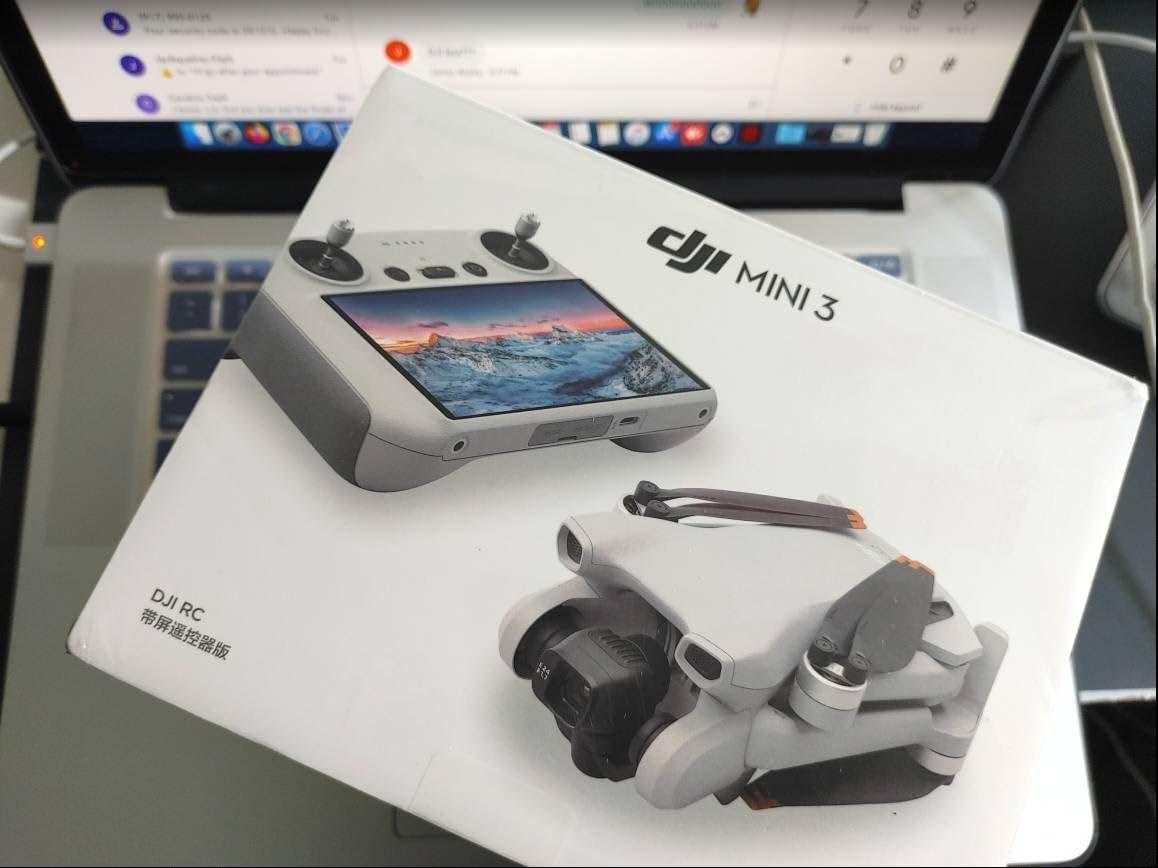
Flight time is a genuine strength. The standard battery gave me 34-36 minutes in calm conditions, and the optional Intelligent Flight Battery Plus pushes that past 50 minutes. For bird watching, longer flight time means fewer battery swaps and less disturbance from landing and relaunching near sensitive areas.
The transmission range is rated at 10km, and the connection remained solid throughout my testing. Level-5 wind resistance is the same as the Mini 4K, so the drone handles breezy coastal bluffs and open fields competently.
Like the Mini 4K, this model lacks obstacle avoidance. You must stay aware of your surroundings. The DJI RC controller helps because you are not distracted by a phone, but it does not replace spatial awareness. For the price, though, this is one of the best all-around bird watching drones in 2026.
This drone works best for birders who want a dedicated controller
The built-in screen controller removes the biggest friction point for beginners. You power on, launch, and fly. There is no app juggling, no cable compatibility issue, and no phone call interrupting your flight. That simplicity is worth the premium over the Mini 4K for many users.
The extended battery option also makes this a strong choice for long mornings in the field. One battery can cover an entire productive session if you manage flight time well.
This drone is not ideal if you need obstacle sensing or the highest video frame rate
Without obstacle avoidance, wooded habitats remain risky. If you plan to film warblers in dense canopy, the Mini 4 Pro is a safer investment.
The 4K video is also capped at 30fps. That is fine for most bird watching, but if you want slow-motion flight footage, you will need to step up to the Mini 4 Pro or Air 3S.
5. DJI Mini 4 Pro Fly More Combo Plus – Editor’s Choice for Bird Watching
DJI Mini 4 Pro Fly More Combo Plus with DJI RC 2, Drones with Camera for Adults 4K, 3 Intelligent Flight Battery Plus for up to 135 Mins Flight Time, Smart Return to Home, Drone for Beginners
4K/60fps HDR video
Omnidirectional obstacle sensing
135 min total flight
20km transmission
Under 249g
Pros
- 4K/60fps HDR video recording
- Omnidirectional obstacle sensing for enhanced safety
- Up to 135 minutes flight time with 3 batteries
- ActiveShots 360 tracking with customizable trajectories
- RC 2 controller with built-in screen
Cons
- Premium price point
- Remote ID only activates with Intelligent Flight Battery Plus
- Battery retaining tabs may break after limited use
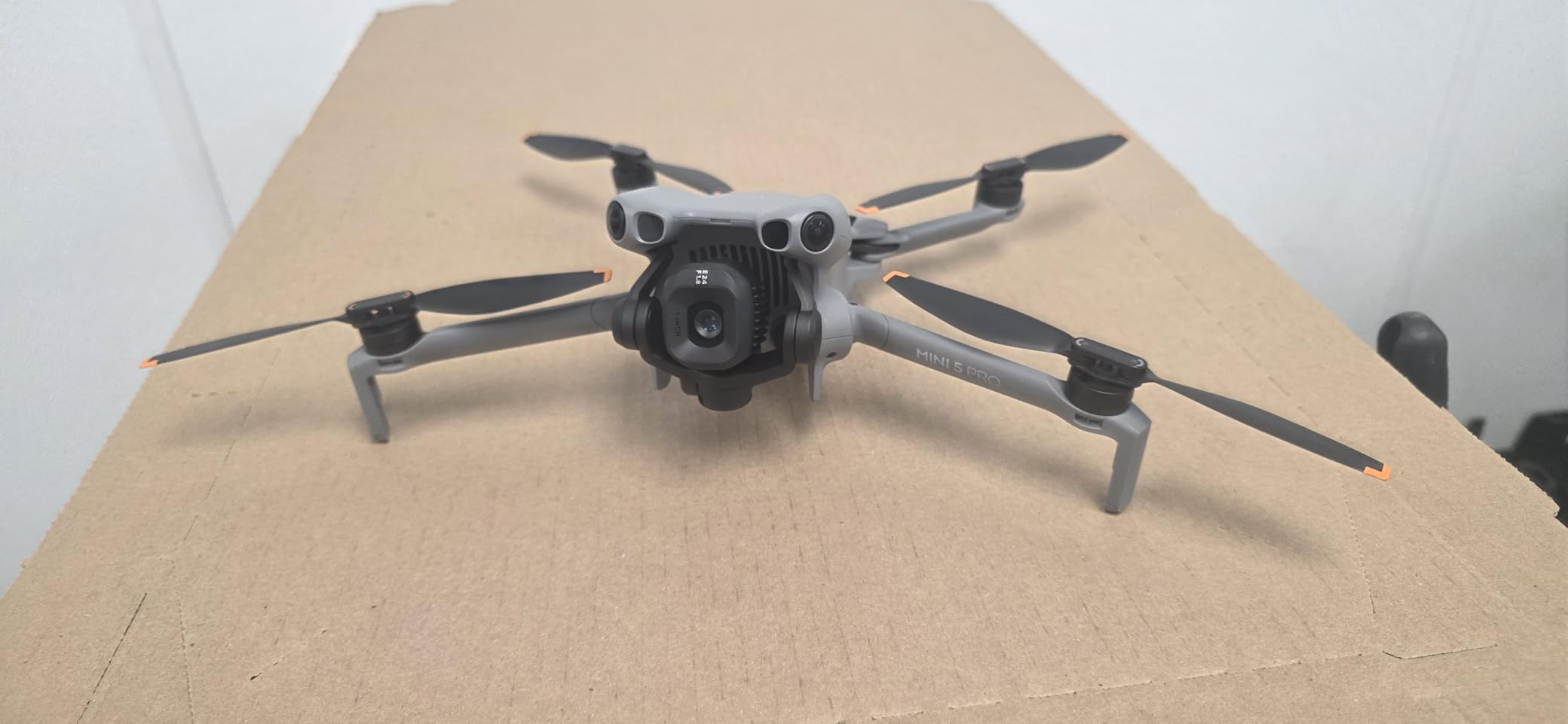
The DJI Mini 4 Pro is the drone I reach for most often. It is the only model here that combines sub-249g portability with full omnidirectional obstacle sensing, 4K/60fps HDR video, and a genuinely useful subject tracking system. For bird watching, that combination is hard to beat in 2026.
The obstacle sensing changed how I fly near birds. I could position the drone closer to perches and nests without constantly worrying about backing into a branch. When a Cooper’s hawk suddenly shifted direction, the drone held position instead of drifting. That safety margin is worth the price if you film in forests, marshes, or anywhere with vertical cover.
Image quality is a clear step up from the Mini 4K and Mini 3. The 4K/60fps HDR footage gives you slow-motion options, and the D-Log M and HLG color modes provide room for color grading. The 48MP stills are sharp, and low-light performance is noticeably better at dawn and dusk when many birds are most active.
ActiveShots 360 is the most polished tracking system I tested for bird watching. It can circle a subject while keeping it framed, which is perfect for capturing a heron standing in a pond or a flock of geese on the water. It will not track a fast-moving swallow reliably, but for medium-speed subjects it works well.
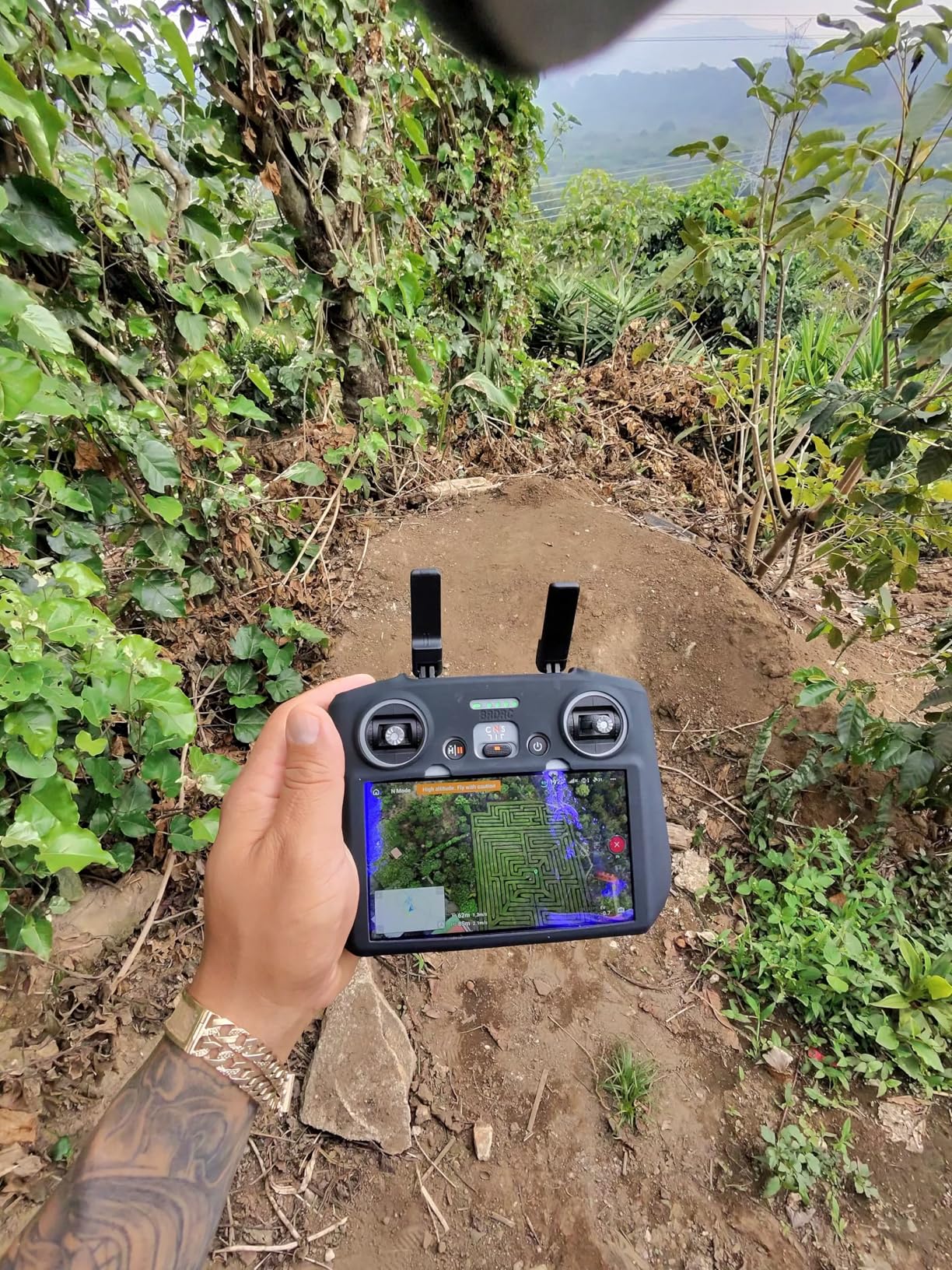
The Fly More Combo Plus includes three Intelligent Flight Battery Plus batteries for up to 135 minutes of total flight time. In real use, I saw about 38-42 minutes per battery, which is excellent. The RC 2 controller has a bright built-in screen and supports O4 transmission for a stable feed out to impressive distances.
There are minor downsides. The battery retaining tabs feel fragile, and some users report breakage after repeated swaps. The drone also requires a DJI account before the first flight. These are small annoyances on an otherwise outstanding aircraft.
This drone works best for serious bird watchers who fly near cover
If your birding spots include trees, cliffs, or dense marsh vegetation, the omnidirectional obstacle sensing is a game changer. You can focus on framing the bird instead of micromanaging every movement. The tracking modes also make dynamic shots possible without a second person.
The 4K/60fps video is ideal for slowing down takeoffs, landings, and wing beats. That is the kind of footage that turns a casual clip into something worth sharing or studying.
This drone is not ideal if you are on a tight budget or rarely fly near obstacles
The Mini 4 Pro costs significantly more than the Mini 4K or Potensic ATOM. If you only fly over open water or open fields, you are paying for obstacle sensing you do not need. In that case, a cheaper model will serve you well.
The premium price also means a bigger loss if you crash or lose the drone over water. Make sure you are comfortable with the basics before flying this one in risky environments.
6. DJI Air 3S Fly More Combo – Premium Pick for Professional Bird Photography
DJI Air 3S Fly More Combo (RC 2 Screen Remote Controller), 4K Drone
1 inch CMOS wide-angle camera
Medium tele camera
4K/60fps HDR
45 min flight
Omnidirectional sensing
Pros
- 1 inch CMOS primary camera for exceptional image quality
- Dual camera system wide-angle and medium tele
- 4K/60fps HDR video with 14 stops dynamic range
- Forward-facing LiDAR for nighttime obstacle sensing
- 45-minute max flight time per battery
Cons
- Above 249g FAA registration required
- Higher price point for advanced features
- Battery charger sold separately
The DJI Air 3S is in a different league. It is heavier, more expensive, and requires FAA registration, but it delivers the best image quality and the most flexible camera setup of any drone in this guide. If you are serious about bird photography and do not mind the extra regulatory step, this is the tool to own.
The 1-inch CMOS sensor is the standout feature. It captures more light, more dynamic range, and cleaner low-noise images than the smaller sensors in the Mini series. I filmed a great horned owl at last light and the footage retained feather detail that the smaller-sensor drones simply lost to noise.
The dual camera system is the other major advantage. You get a wide-angle camera for habitat shots and a medium tele camera for tighter framing on birds. That tele camera is incredibly useful for bird watching because it lets you fill the frame without moving the drone closer. Less movement means less disturbance.
Flight time is outstanding. Each battery gave me 40-43 minutes of real use, and the Fly More Combo includes three batteries plus a charging hub. The RC 2 controller with built-in screen is the same excellent unit included with the Mini 4 Pro.
Omnidirectional sensing includes a forward-facing LiDAR sensor, which improves obstacle detection in low light. That is a meaningful upgrade for early-morning and late-evening flights when birds are most active. The next-generation Smart RTH also plans a smarter route home if signal drops.
The weight is the main trade-off. At 724g, you must register the drone with the FAA for recreational use. It is also louder and more conspicuous than the sub-249g options. Birds notice it more readily, so you need to keep greater distance and rely on the tele camera.
This drone works best for wildlife photographers who prioritize image quality
If you sell prints, produce documentaries, or run a birding channel, the Air 3S is the obvious choice. The 1-inch sensor, dual cameras, and 10-bit D-Log M color give you professional-grade material to work with.
The medium tele camera is the real differentiator for bird watching. You can record detailed shots from farther away, which reduces stress on the birds and improves your keeper rate.
This drone is not ideal if you need maximum portability or fly in restricted areas
The extra weight and registration requirement add friction. Some nature reserves and parks also have stricter rules for heavier drones. Always check local regulations before you fly.
The price puts it firmly in enthusiast and semi-professional territory. If you are unsure whether drone birding is for you, start with a cheaper model and upgrade later.
How to Choose the Best Drone for Bird Watching?
Buying a drone for bird watching is not the same as buying one for real estate photography or racing. The priorities are different, and a few key specs matter far more than marketing numbers. Here is what I learned after three months of field testing.
Prioritize camera quality and zoom for distant birds
Birds are small, fast, and usually farther away than you want. A 4K camera is the minimum I recommend in 2026, but resolution is only part of the story. Sensor size, dynamic range, and stabilization matter just as much.
A larger sensor captures cleaner images in low light, which is when many birds are most active. The DJI Air 3S with its 1-inch sensor clearly outperforms the smaller-sensor drones at dawn and dusk. If you cannot afford that level, look for HDR modes and good low-light performance.
Zoom and telephoto capability are underrated for bird watching. The Air 3S dual camera system and the Bwine F7MINI high-resolution sensor both help you get tighter shots without moving closer. Optical zoom is ideal, but a high-resolution sensor with room to crop is a practical alternative.
Choose a quiet drone to avoid disturbing wildlife
Forum discussions repeatedly highlight noise as the biggest concern for bird watchers. Smaller, lighter drones tend to be quieter because their propellers spin slower and move less air. The sub-249g models in this guide all produced less startling noise than the heavier Air 3S.
In my experience, most birds react to a drone the first time they hear it. Small songbirds flush immediately. Larger waterfowl and wading birds often look up and may move off slowly. The key is to give them time to settle. After the initial disturbance, many birds return to normal behavior within a few minutes if the drone stays at a respectful distance.
Avoid flying directly toward birds, hovering directly over nests, or making sudden movements. Slow, predictable flight near the edge of a habitat is far less disruptive than aggressive maneuvering.
Check flight time and battery options
Wildlife does not perform on command. You may wait twenty minutes for an osprey to dive or a kingfisher to return to a perch. Long flight time matters.
Look for at least 30 minutes of real-world flight per battery, and buy the combo with multiple batteries. The Potensic ATOM and Bwine F7MINI both include three batteries in their combos, giving you 96 minutes total. The DJI Fly More Combos also extend your time significantly.
Charging speed is another factor. Fast charging hubs let you cycle batteries during a lunch break. Parallel charging is especially useful if you are shooting all day.
Consider weight and FAA registration rules
In the United States, drones under 249g used recreationally do not require FAA registration. Four of the six drones in this guide fall into that category. That saves money and paperwork, and it makes spontaneous birding trips easier.
The DJI Air 3S weighs 724g, so it requires registration. Heavier drones may also face additional restrictions in certain parks, wildlife refuges, and urban areas. Always check local rules before you fly.
The 1-to-1 rule mentioned in drone forums means you should be able to see your drone with unaided vision at all times during recreational flight. This is important for bird watching because you will often be looking at the screen instead of the aircraft. Train yourself to glance up regularly.
Look for obstacle avoidance and safety features
Obstacle avoidance is not just for beginners. When you are focused on a bird in the frame, it is easy to drift backward into a tree. The DJI Mini 4 Pro and Air 3S both offer omnidirectional sensing, which has saved me from several close calls.
GPS return-to-home is essential for any bird watching drone. All six models here include it. Make sure you set the return altitude high enough to clear local trees and power lines before each flight.
A locator buzzer, like the one on the Bwine F7MINI, is helpful if the drone lands in tall grass or reeds. Trust me, searching for a gray drone in cattails is not fun without an audible beacon.
Frequently Asked Questions
What is the number one rated drone?
The DJI Air 3S Fly More Combo currently holds the highest user rating among bird watching drones with a 4.7-star average. It features a 1-inch CMOS sensor, dual camera system, omnidirectional obstacle sensing, and 45-minute flight time, making it the top choice for photographers who need professional image quality.
Do drones scare away birds?
Drones usually startle birds on first approach, especially small songbirds that flush immediately. Larger birds like herons and waterfowl often react more slowly. Most birds return to normal behavior within a few minutes if the drone stays at a respectful distance and moves slowly and predictably. Never fly directly toward birds or hover over nests.
What is the 1 1 rule for drones?
The 1-to-1 rule for recreational drone flight means you must keep the drone within unaided visual line of sight at all times. You should be able to see the aircraft with your own eyes without binoculars or the controller screen. This rule helps prevent collisions and protects wildlife.
Are there surveillance drones that look like birds?
Yes, some research and military projects have developed ornithopter-style drones that mimic bird flight. These are not consumer products and are not relevant to recreational bird watching. Consumer drones for birders look like standard quadcopters and prioritize camera quality and quiet flight over camouflage.
Final Thoughts
The best drones for bird watching in 2026 cover a wide range of budgets and skill levels. The Potensic ATOM offers unbeatable value for beginners who want long flight time. The DJI Mini 4K is the easiest entry point into the DJI ecosystem. The Bwine F7MINI packs the most features per dollar, especially for still photographers.
For most bird watchers, the DJI Mini 4 Pro Fly More Combo Plus is the sweet spot. It is light enough to avoid registration, safe enough to fly near trees, and capable enough to produce professional-looking footage. If image quality is your absolute top priority and you do not mind registering with the FAA, the DJI Air 3S is the premium choice.
Whichever model you choose, remember that the drone is only part of the equation. Respectful flight, patience, and an understanding of bird behavior will always produce better results than the most expensive camera. Fly safely, keep your distance, and enjoy the view from above.