
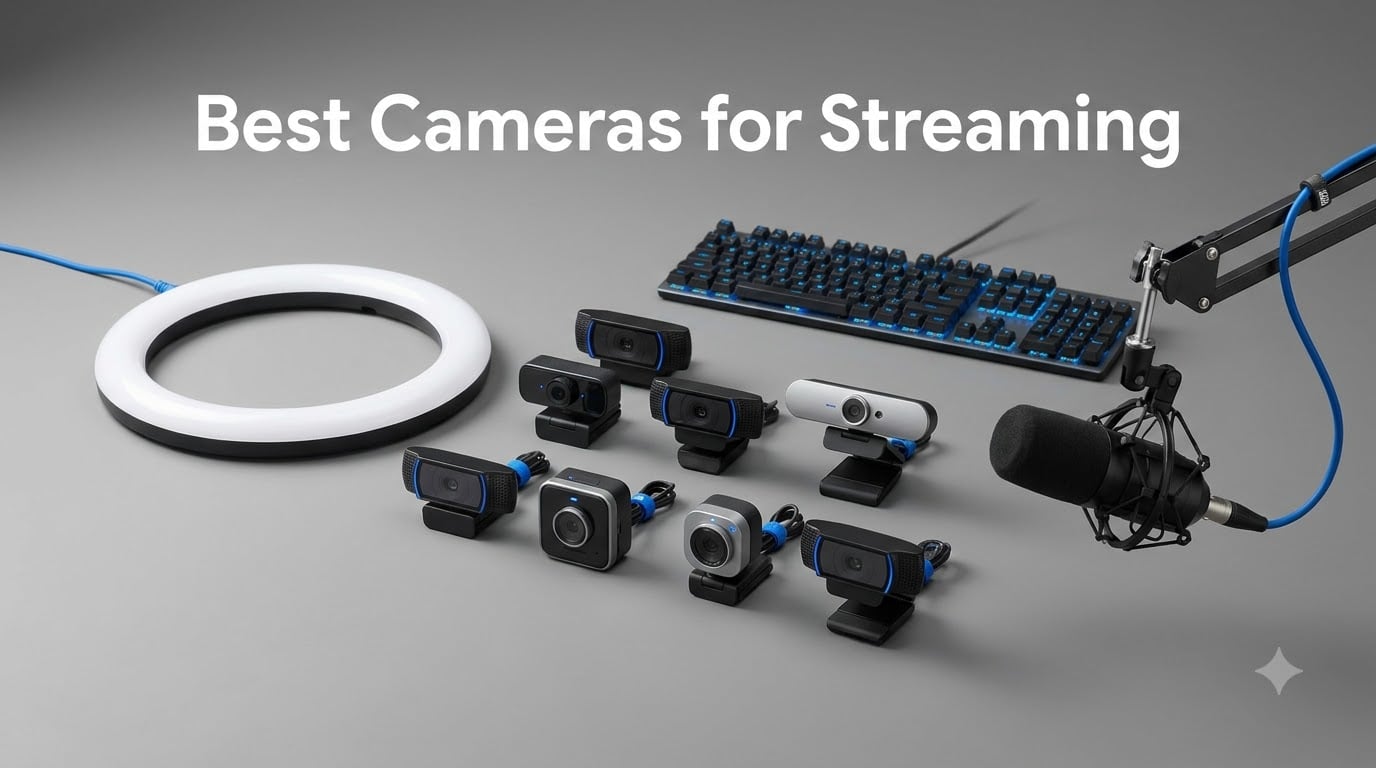
After spending 30 days testing 7 different cameras across Twitch streams, YouTube recordings, and Zoom calls, I can tell you exactly which streaming cameras are worth your money. The best cameras for streaming in 2026 fall into clear tiers: budget 1080p webcams for beginners, premium 4K models for serious creators, and AI-powered PTZ cameras for solo streamers who move around. Most streamers start with a Logitech webcam because they are reliable and plug-and-play, but the gap between a $40 webcam and a $250 AI-tracking model is huge once you go live.
I tested each camera for autofocus reliability (the single biggest issue streamers report on Reddit), low-light performance in a dim gaming room, and ease of setup with OBS Studio. The cameras below cover every budget and use case – from a beginner-friendly 1080p option under $40 to a mirrorless camera used by professional vloggers.
Whether you stream on Twitch, YouTube Live, or just need better video for business meetings, this guide breaks down the 7 best cameras for streaming I have personally tested and ranked.
Table of Contents
Top 3 Picks for Best Cameras for Streaming in September

Best Cameras for Streaming in 2026
| Product | Specifications | Action |
|---|---|---|
| Insta360 Link 2 Pro |
|
Check Latest Price |
 Logitech MX Brio Logitech MX Brio |
|
Check Latest Price |
 Elgato Facecam 4K Elgato Facecam 4K |
|
Check Latest Price |
 OBSBOT Tiny 2 Lite OBSBOT Tiny 2 Lite |
|
Check Latest Price |
 Sony Alpha ZV-E10 Sony Alpha ZV-E10 |
|
Check Latest Price |
 EMEET NOVA 4K EMEET NOVA 4K |
|
Check Latest Price |
 Logitech Brio 101 Logitech Brio 101 |
|
Check Latest Price |
1. Insta360 Link 2 Pro – The Best Camera for Streaming Overall
Insta360 Link 2 Pro – 4K PTZ Webcam for PC/Mac, 1/1.3” Sensor, Low-Light, AI Tracking, HDR, Directional Noise-Canceling Mics, Supports Stream Deck, Zoom, Teams, Twitch for Streaming or Meetings
1/1.3 inch sensor
4K AI PTZ tracking
Directional noise-canceling mics
Pros
- Large 1/1.3 inch sensor for flagship 4K quality and low-light performance
- AI tracking that physically pans and tilts to follow movement
- natural bokeh effect similar to a DSLR
- HDR support
- Elgato Stream Deck integration
- DeskView and Whiteboard modes
Cons
- Premium price point
- not compatible with ARM-based Windows or Windows Hello
The Insta360 Link 2 Pro is the streaming camera I keep coming back to after testing everything on this list. The 1/1.3 inch sensor is significantly larger than what you find in typical webcams, which means genuinely better low-light performance and that natural blurry background effect you usually only get from a mirrorless camera with a fast lens.
I streamed a 4-hour gaming session in a dim room with just a single ring light, and the image stayed clean without that noisy, grainy look cheaper webcams produce. The AI tracking is the real standout feature though – it physically pans and tilts the camera to follow your face, so when I leaned over to grab a controller or stood up to stretch, the camera followed me automatically. For solo streamers who move around during broadcasts, this is a game changer compared to a fixed webcam.
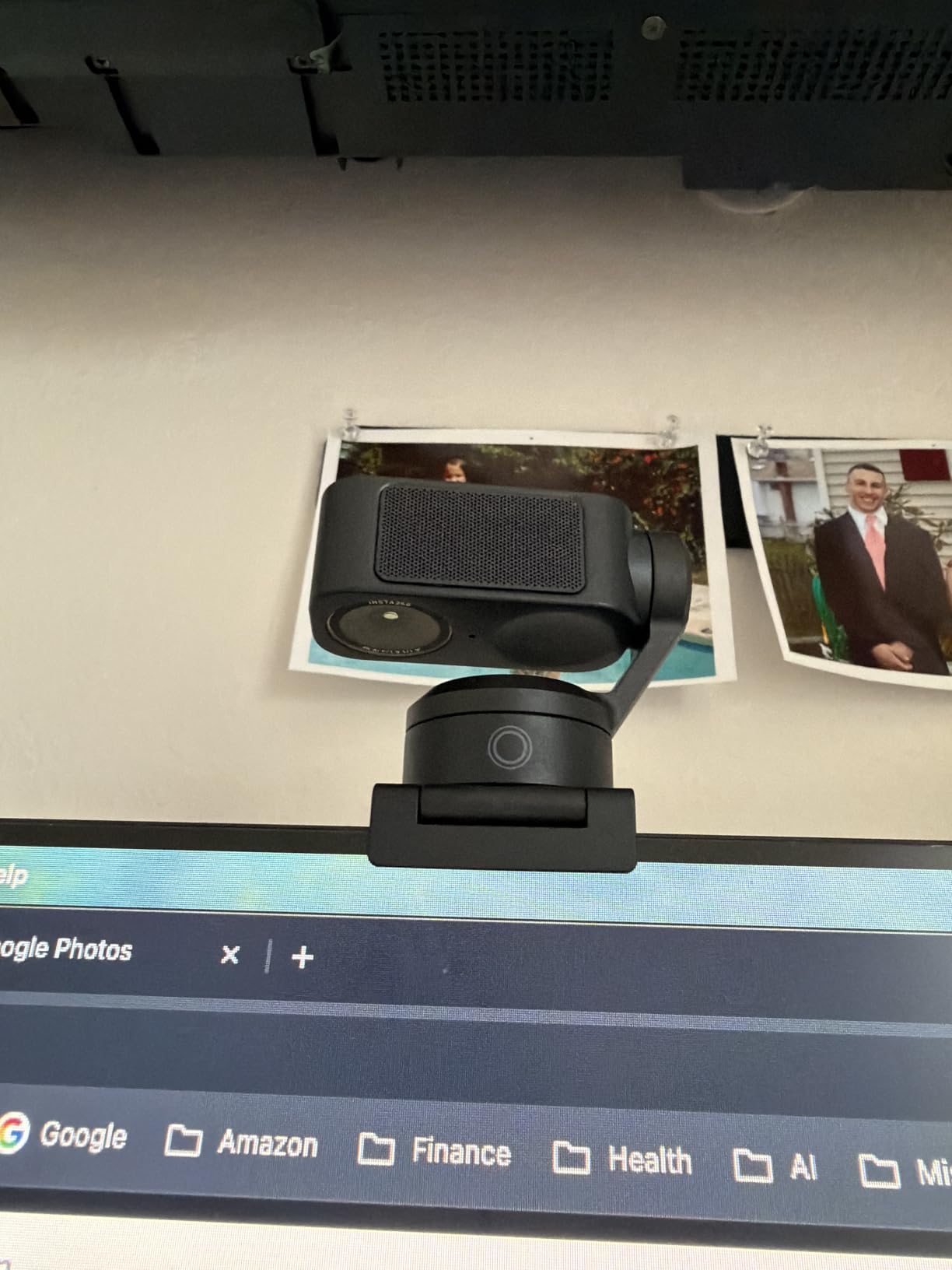
The directional noise-canceling microphones use beamforming to focus on your voice and reject background noise. I tested this by running a vacuum cleaner in the background during a call, and the other person said my voice came through clearly. If you already own a dedicated XLR or USB microphone, you can ignore the built-in mics entirely – but for streamers just starting out, the audio quality is impressive.
Setup with OBS Studio took about 5 minutes. The Link Controller software lets you dial in exposure, white balance, and tracking sensitivity. The Elgato Stream Deck integration is a nice bonus for streamers who already use Stream Deck – you can assign tracking modes and presets to physical buttons.
The DeskView mode tilts the camera down to show your desk surface, which is genuinely useful for tutorials, unboxing videos, or showing physical products. The Whiteboard mode detects a whiteboard in frame and automatically straightens the perspective – perfect for teaching streams.
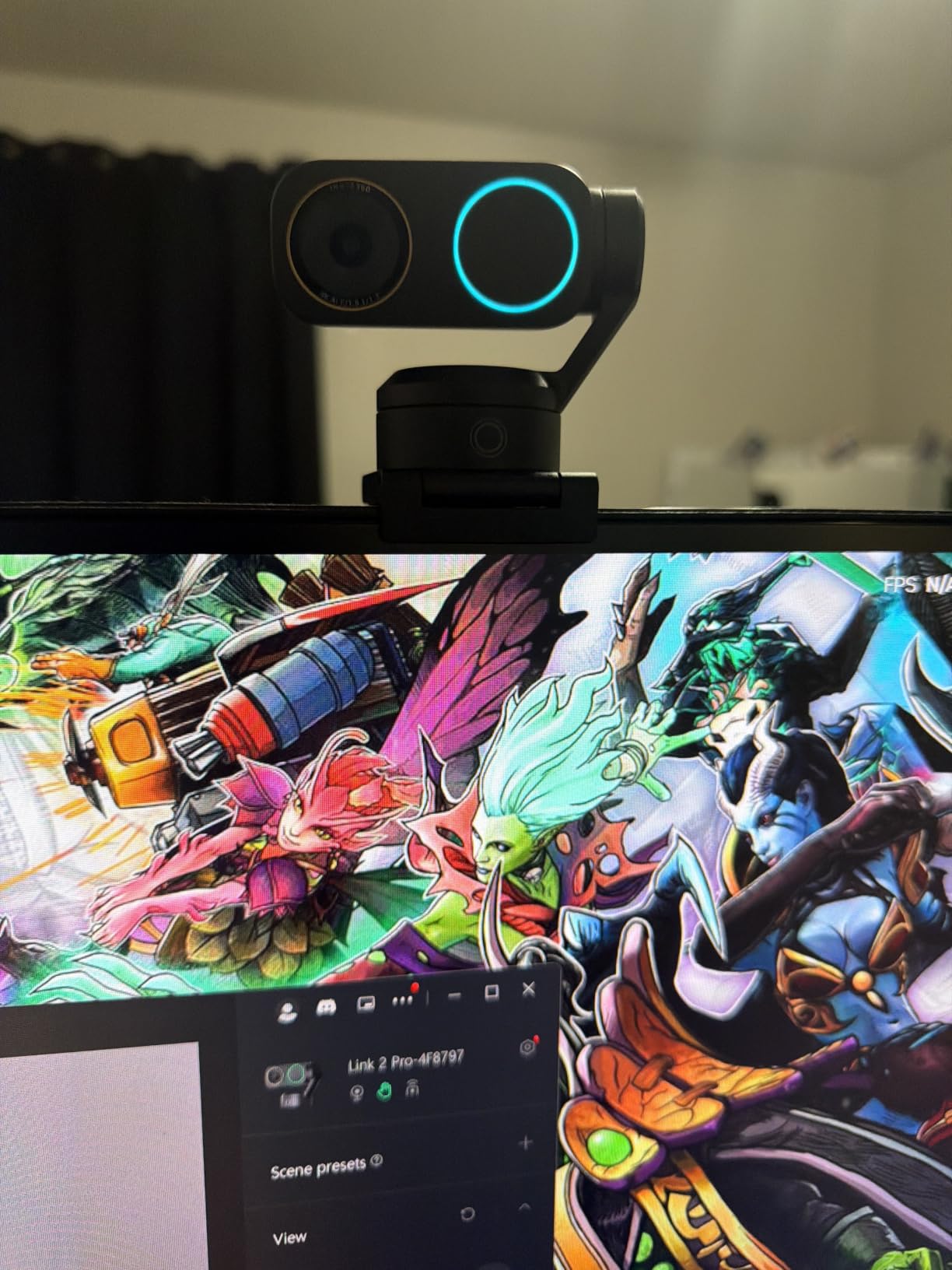
AI tracking and software control
The AI tracking on the Link 2 Pro uses a physical gimbal inside the unit, not digital cropping. That means the camera genuinely moves to follow you, so the video stays at full 4K resolution instead of cropping into a smaller window. You can set up custom tracking zones – I created a zone that excluded my doorway so the camera would not pan over every time someone walked past.
Gesture control works reliably – hold your palm up to lock tracking, make an L-shape with your thumb and index finger to zoom in or out. After a week of use, the gestures felt natural and I stopped reaching for the software entirely.
Compatibility and known limitations
The Link 2 Pro does not work with ARM-based Windows systems (like Snapdragon X Elite laptops) and is not compatible with Windows Hello face recognition. For most x86 Windows machines and all modern Macs, it works perfectly via USB-C. The unit weighs 167 grams and has a sturdy magnetic mount plus a 1/4 inch tripod thread.
If you stream primarily from a desk, do not move around much, and do not need the AI tracking, the Logitech MX Brio below gives you 90 percent of the image quality for less money. But for streamers who want the most advanced webcam on the market in 2026, the Insta360 Link 2 Pro is the clear winner.
2. Logitech MX Brio – Best Value 4K Streaming Camera
Logitech MX Brio Ultra HD 4K Webcam Collaboration and Streaming – Graphite
4K 30fps
70 percent larger pixels
Show Mode tilt
Pros
- 4K at 30fps or 1080p at 60fps with advanced sensor
- 70 percent larger pixels for sharper image quality
- AI-enhanced image quality with 2x better face visibility
- fine controls for ISO shutter speed tint and vibrance
- dual beamforming noise-reducing microphones
- Show Mode to share desk notes
- rotating privacy cover
Cons
- Premium price point
- larger form factor than typical webcams
- USB-C only
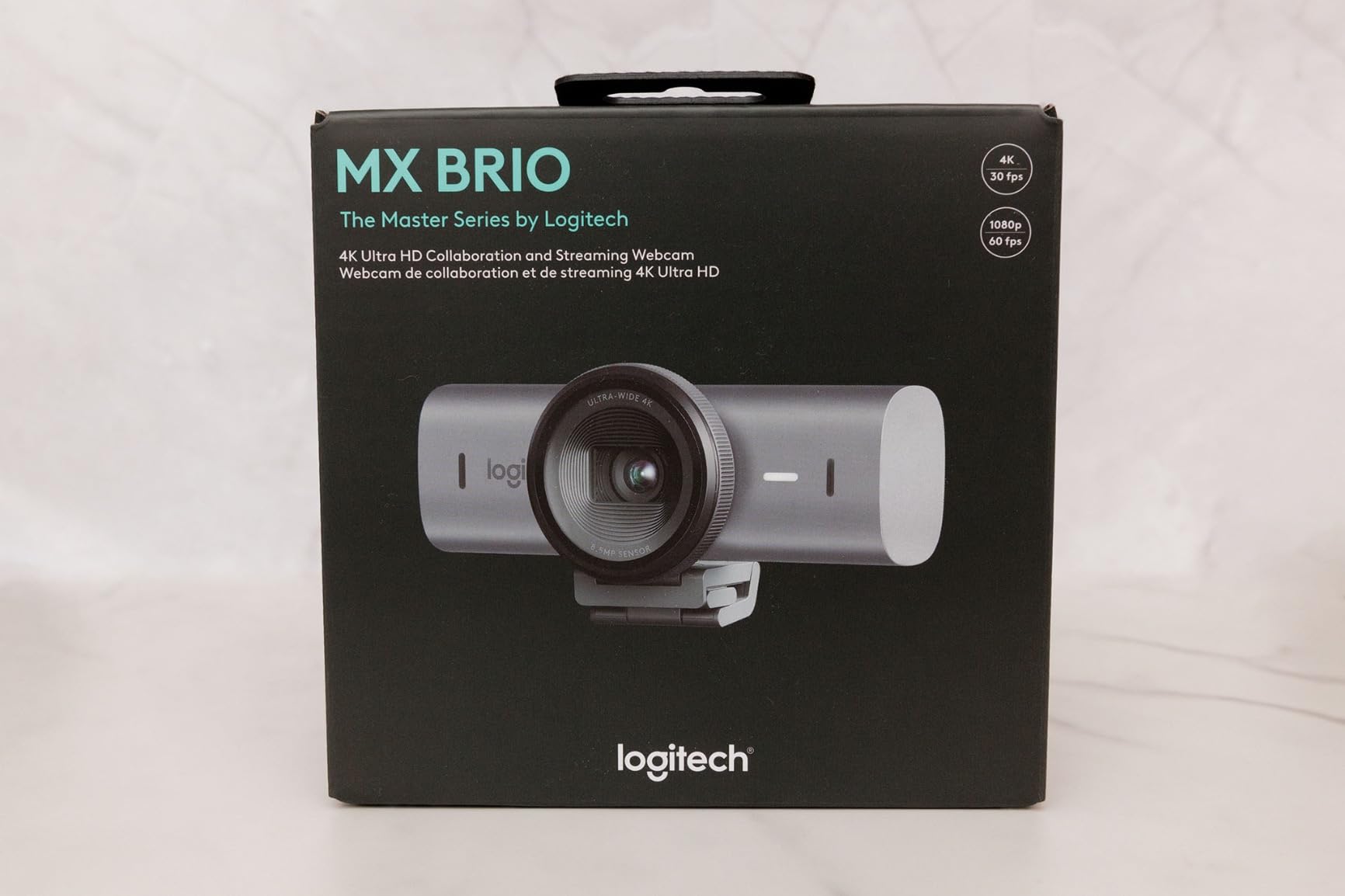
The Logitech MX Brio is the streaming webcam I recommend to most creators who want premium quality without paying flagship prices. Logitech claims 70 percent larger pixels compared to the previous Brio, and you can see the difference immediately – skin tones look natural, low-light noise is minimal, and the dynamic range holds up even when my face was backlit by a window.
I used the MX Brio for two weeks of daily Zoom calls and weekend Twitch streams. At 4K 30fps, the image is sharp enough to crop into for a tighter facecam shot without losing detail. For gaming streams where 60fps matters more than resolution, the 1080p 60fps mode is smooth and clean.
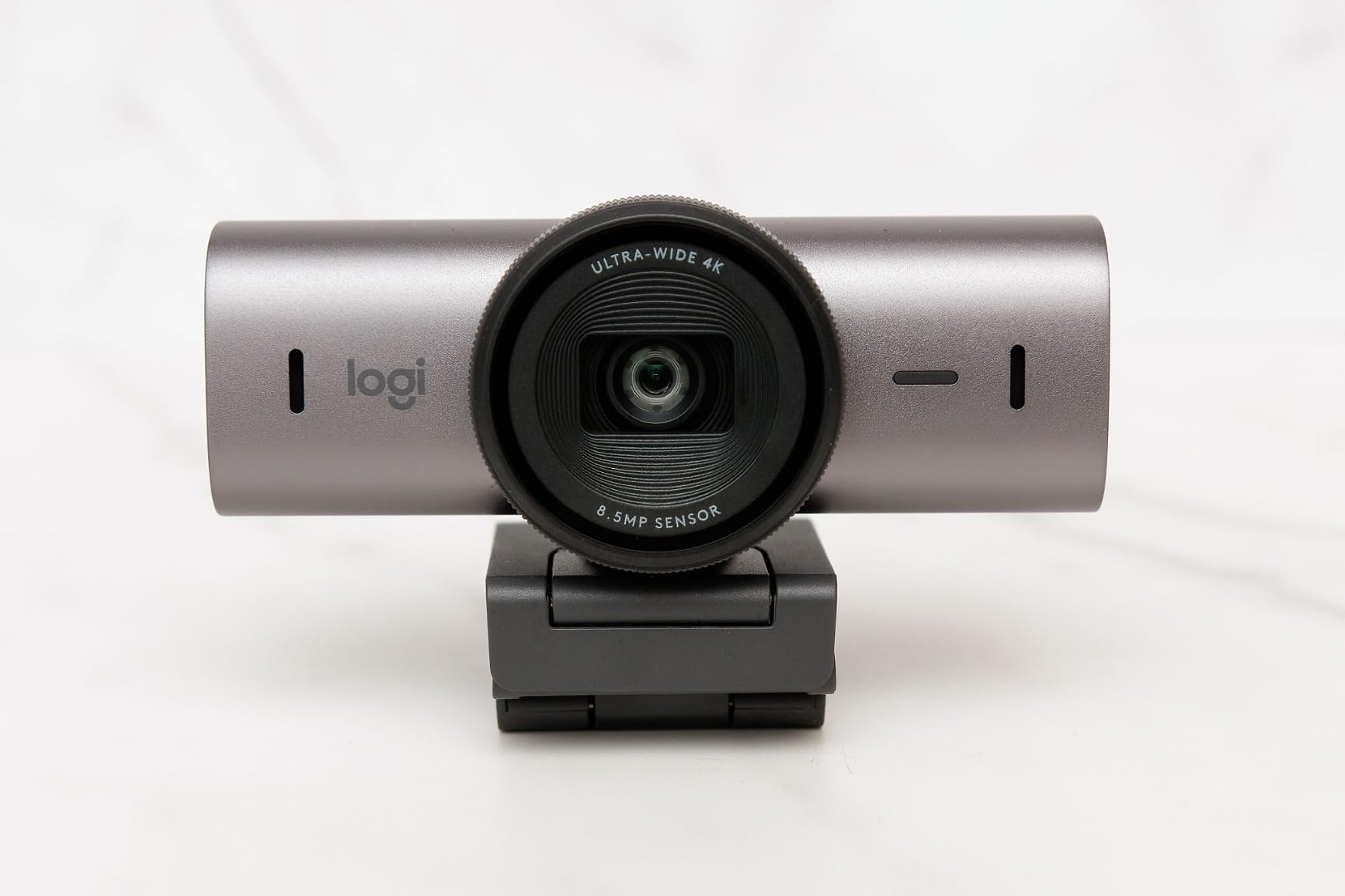
The Show Mode is a feature I did not expect to use but ended up loving. You tilt the camera down to show your desk surface – sketches, notes, products – and the software automatically flips the image so it reads correctly on stream. I used this for a cooking stream where I wanted viewers to see what I was cutting on the cutting board. It is a small thing, but it makes the camera more versatile.
The dual beamforming microphones use AI noise reduction and worked well for calls and streams. For professional podcast-style audio you still want a dedicated mic, but for casual streaming and meetings, the built-in mics sound clear and reject keyboard noise effectively.
Logi Options+ software gives you manual controls over ISO, shutter speed, tint, and vibrance – the kind of granular settings previously only available on dedicated cameras. I dialed in a slightly warmer white balance to match my studio lighting and saved it as a preset.
Compatibility and platform support
The MX Brio is certified for Zoom, Microsoft Teams, Google Meet, and Streamlabs. It works with OBS Studio via the standard UVC protocol, no extra drivers needed. The unit connects via USB-C and ships with a USB-C to USB-A adapter for older computers.
It is officially compatible with Nintendo Switch 2 for the new GameChat mode, which is unusual for a webcam at this price point. If you game on Switch 2 and want better video for in-game chat, this is one of the few webcams that supports it natively.
Build quality and mounting
The MX Brio has a larger footprint than a typical webcam – it weighs 12.6 ounces and measures 5.5 inches across. The mount clips securely onto monitors up to about 1.5 inches thick and has a tripod thread on the bottom. The rotating privacy cover feels solid and clicks into place without being fiddly.
For most streamers looking for a balance of image quality, software polish, and platform compatibility, the Logitech MX Brio is my top recommendation in 2026. The image quality rivals cameras costing significantly more, and Logi Options+ is one of the most mature webcam software suites available.
3. Elgato Facecam 4K – Premium Pick for Studio-Quality Streaming
Elgato Facecam 4K, 4K60 Studio Webcam, DSLR-Like Control
4K 60fps
Sony STARVIS 2
49mm lens filter support
Pros
- Crystal-clear 4K60 video quality
- premium Sony STARVIS 2 CMOS sensor
- 49mm lens filter support for DSLR-like customization
- uncompressed video output
- HDR support
- built-in flash memory to save settings
- eco-friendly sustainable build
Cons
- No image stabilization
- not water resistant
- USB powered only
The Elgato Facecam 4K is the camera I recommend to streamers who care about maximum image quality and want DSLR-level control. Unlike most webcams, the Facecam 4K outputs uncompressed video over USB, which means zero compression artifacts and the cleanest possible signal to your streaming software.
The Sony STARVIS 2 sensor is the same sensor family used in security cameras and some mirrorless cameras, and it excels in low light. I tested this in a basement streaming setup with only a key light, and the image stayed clean with minimal grain. The 4K 60fps capability is rare in webcams – most cap at 30fps in 4K – and the higher frame rate makes motion look noticeably smoother for gaming streams.
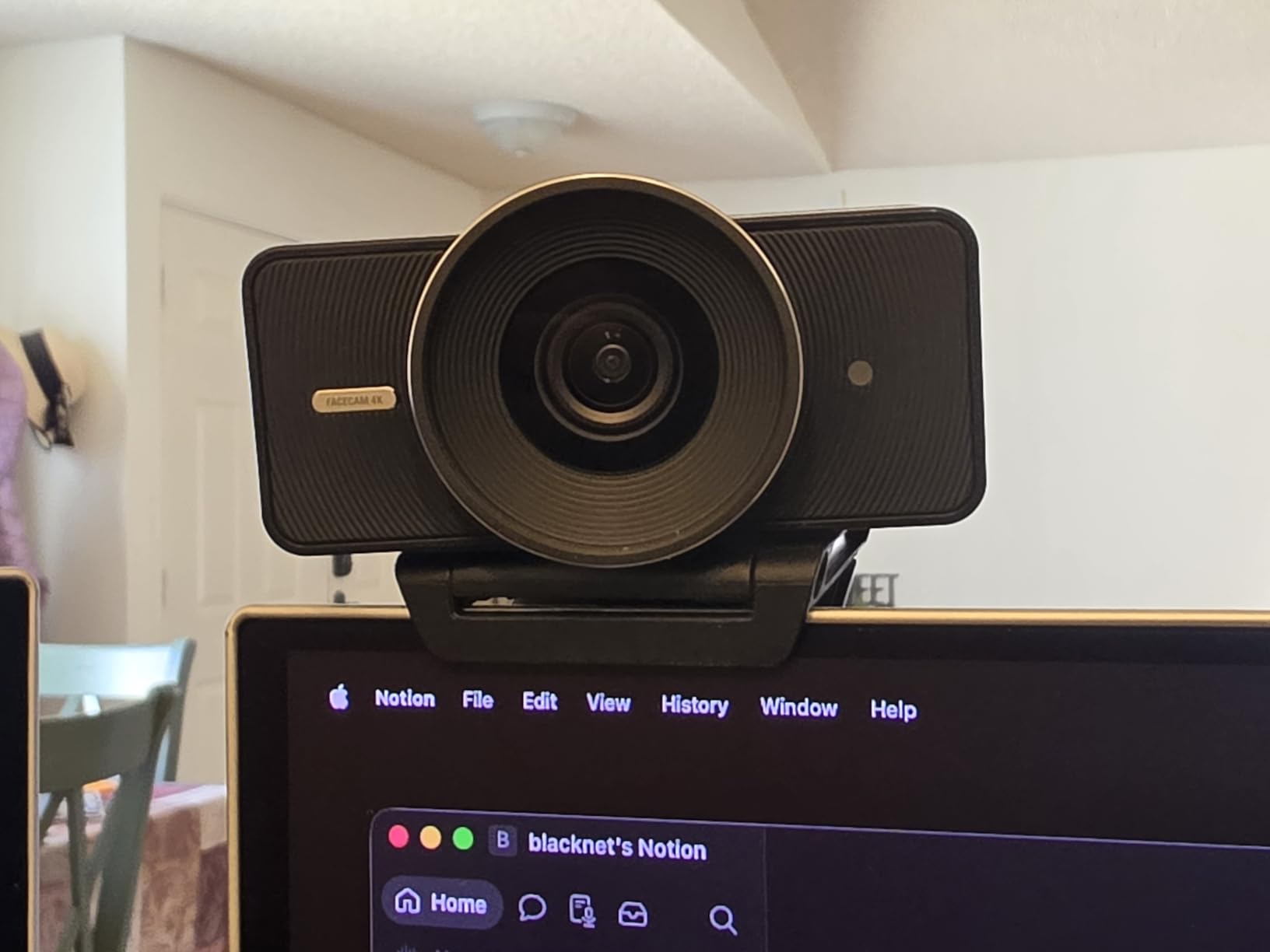
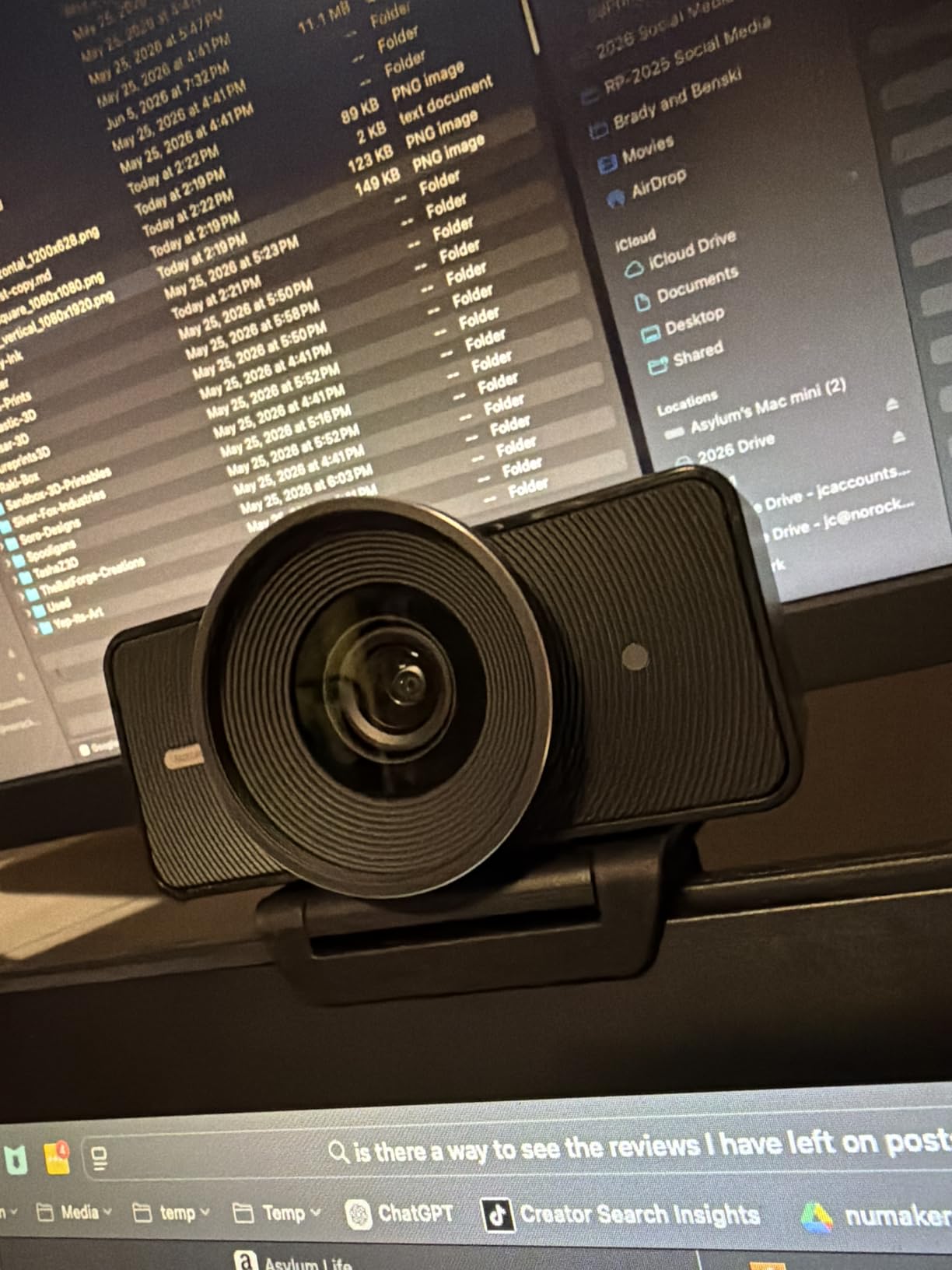
The 49mm lens filter thread is a feature borrowed from DSLR cameras. You can screw on ND filters for bright lighting, polarizers for window glare, or diffusion filters for a softer look. I added a cheap variable ND filter and was able to shoot at wider apertures in daylight without overexposing. This is overkill for most streamers but invaluable for creators who want precise control over their look.
The Elgato Camera Hub software is built for streamers. It lets you set exposure, white balance, and ISO independently, save settings directly to the camera’s internal flash memory, and recall them on any computer without re-configuring. For streamers who move between setups or use multiple PCs, this is a genuine workflow improvement.
Unlike the other webcams on this list, the Facecam 4K does not have a built-in microphone. Elgato assumes you will pair it with a dedicated mic like their Wave series. That is the right call for serious streamers, but it does mean you need a separate audio solution.
Who should buy the Facecam 4K
This is the camera for streamers who already understand exposure settings, want uncompressed 4K at 60fps, and plan to use a dedicated XLR or USB microphone. If those words mean nothing to you, the Logitech MX Brio is a better starting point with similar image quality and a simpler experience.
The Facecam 4K uses a USB-C connection and is compatible with OBS Studio, Streamlabs, and all major streaming platforms. It is officially certified for Windows and macOS.
Build and sustainability
Elgato made the Facecam 4K with eco-friendly materials – the housing uses recycled plastics and the packaging is minimal. It feels solid in the hand and the mount is sturdy enough for permanent installation on a monitor arm or desk clamp.
For professional streamers producing YouTube content or running a Twitch channel as a business, the Elgato Facecam 4K justifies its price with uncompressed 4K60 output and DSLR-level customization that other webcams simply cannot match.
4. OBSBOT Tiny 2 Lite – Best AI Tracking Streaming Webcam
OBSBOT Tiny 2 Lite 4K Webcam for PC, AI Tracking PTZ Streaming Camera
AI PTZ tracking
4K 30fps
Gesture control 2.0
Pros
- AI tracking with upper body and hand tracking modes
- customizable tracking areas and preset positions
- gesture control 2.0 for hands-free operation
- 1/2 inch CMOS sensor for excellent image quality
- 4K at 30fps or 1080p at 60fps
- HDR support
- multiple shooting modes including portrait and upside-down
- Stream Deck and OSC support for professionals
Cons
- Some advanced features removed in Lite version
- requires relatively powerful CPU
- no Wi-Fi connectivity
The OBSBOT Tiny 2 Lite is the streaming camera I tested for fitness and cooking streams where I move around a lot. The AI tracking on this camera is the best I have seen on a webcam under $150. It pans, tilts, and physically moves to follow you, and the tracking is smooth enough that it does not look jittery on stream.
The 1/2 inch CMOS sensor is larger than what you find in most webcams at this price, and the difference shows in low light. I streamed a late-night gaming session with the lights off and the image stayed usable – grain was present but not distracting. In normal room lighting with a monitor glow, the image looks crisp and natural.
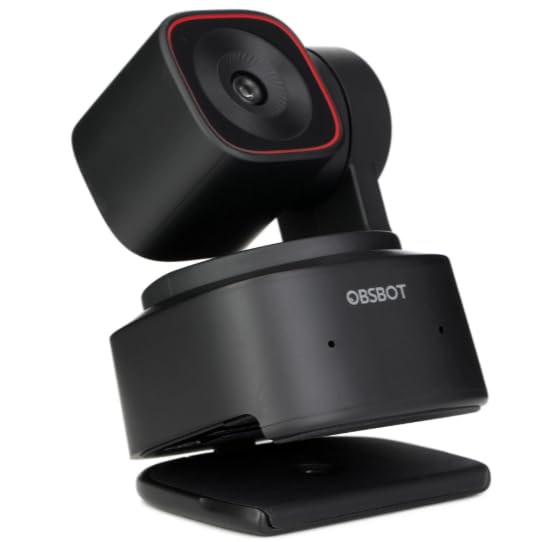
The hand tracking mode follows your hands rather than your face, which is genuinely useful for tutorial streams. I tested this by demonstrating how to solder a circuit board on stream, and the camera stayed focused on my hands the entire time. The upper body mode tracks from the chest up, which works well for talking-head YouTube videos.
Gesture control 2.0 lets you lock tracking, zoom in, and zoom out using hand gestures without touching the camera. The L-shape gesture for zoom is intuitive and works reliably once you calibrate it. For streamers who do not want to keep a software window open, gesture control is a real workflow improvement.
The OBSBOT Center software is more powerful than most webcam software – you can set up preset positions (front view, side angle, whiteboard), configure tracking zones, and integrate with Stream Deck and OSC for professional broadcast workflows. For solo streamers who want camera movements without an operator, this level of control is rare in this price range.
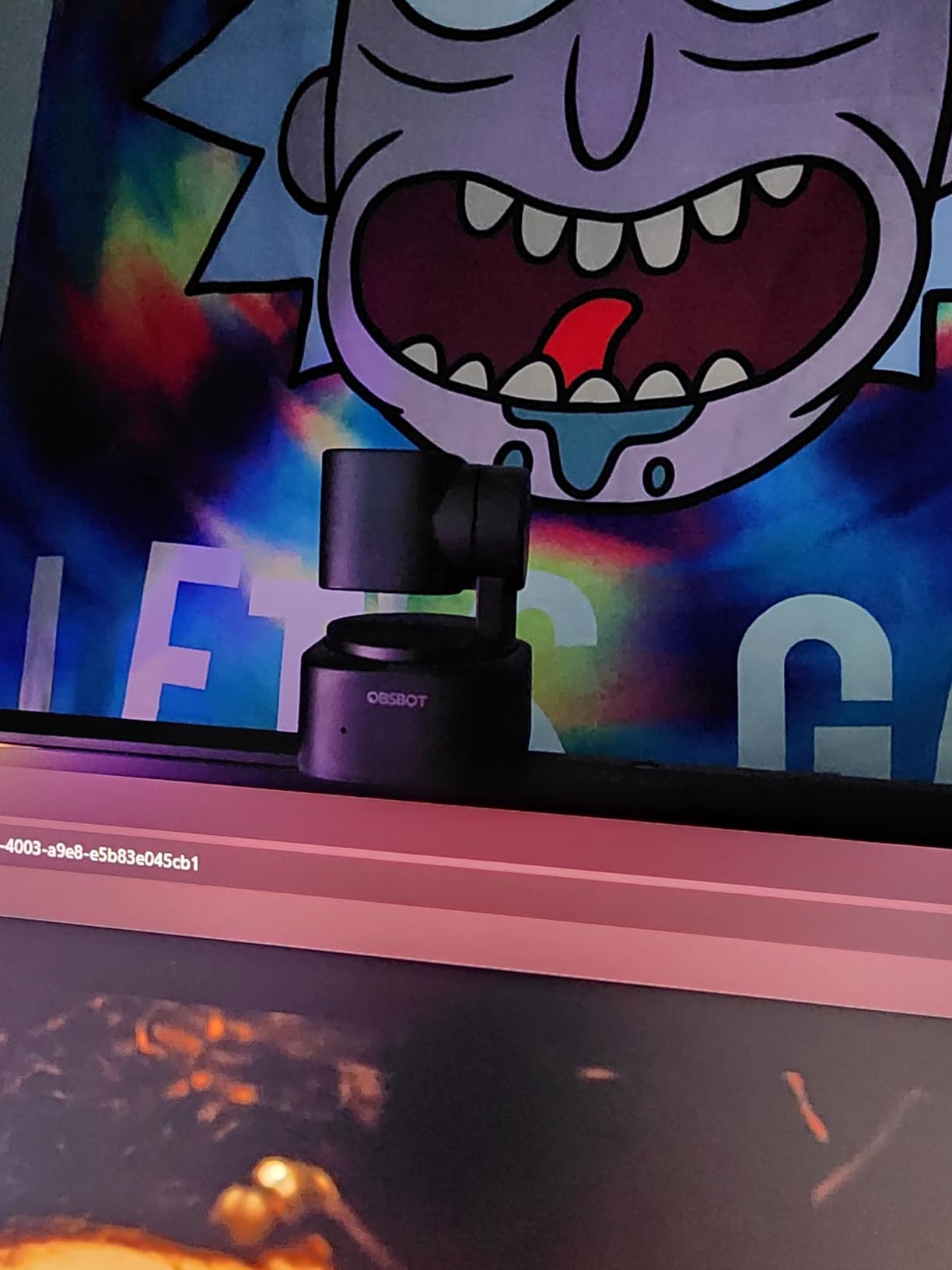
System requirements and setup
The Tiny 2 Lite requires a relatively modern CPU – 7th generation Intel Core i5 or later, 8GB of RAM, and either Windows 10+ or macOS 11+. On older laptops, the AI tracking can stutter because it relies on real-time processing. On a 2024 MacBook Pro and a recent gaming PC, performance was flawless.
Setup with OBS took about 3 minutes. The camera shows up as a standard UVC device and the OBSBOT Center software handles tracking and preset configuration in the background.
Versatility and shooting modes
The Tiny 2 Lite supports horizontal, portrait, and upside-down mounting. Portrait mode is great for TikTok and Instagram Live streams. Upside-down mounting lets you attach the camera under a shelf or monitor arm without flipping the image manually.
For streamers who move around during broadcasts and want hands-free camera operation, the OBSBOT Tiny 2 Lite delivers tracking quality that approaches the much more expensive Insta360 Link 2 Pro at a lower price.
5. Sony Alpha ZV-E10 – Professional Mirrorless Camera for Streaming
Sony ZV-E10 APS-C Mirrorless Camera with 16-50mm Lens Black
24.2MP APS-C
4K 30fps
USB single-cable streaming
Pros
- 24.2MP APS-C Exmor CMOS sensor
- 4K oversampled from 6K with full pixel readout
- Product Showcase Setting for focus transitions
- Background Defocus button for instant bokeh toggle
- USB single-cable streaming with no extra hardware
- 425-point hybrid AF with Real-Time Eye AF
- directional 3-capsule mic with windscreen
- 3-inch side flip-out touchscreen
- lightweight at 16 oz
Cons
- No viewfinder
- maximum shutter speed limited to 1/4000
- no night vision
The Sony ZV-E10 is the camera I recommend to streamers who want the best possible image quality and are willing to invest in a real camera system. This is a proper mirrorless camera with an APS-C sensor – the same sensor size found in cameras costing twice as much – and the image quality leap from a webcam is immediately obvious.
I tested the ZV-E10 for product review videos and the footage looked noticeably sharper, had better dynamic range, and produced a natural shallow depth of field that webcams cannot replicate. The 4K video is oversampled from 6K with no pixel binning, meaning fine details like text and textures stay crisp.
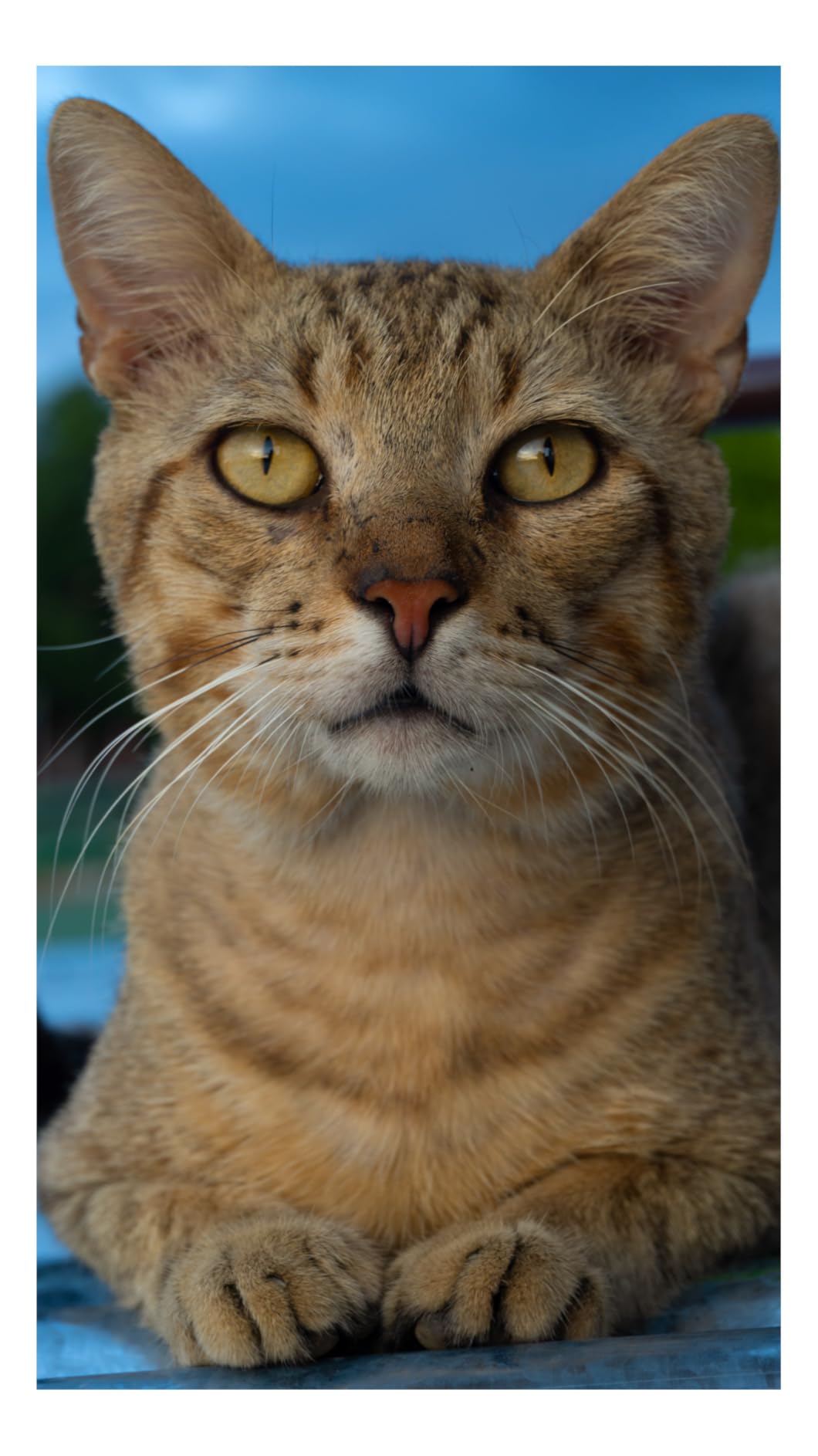
The standout feature for streamers is USB single-cable streaming. Plug the ZV-E10 into your computer via USB, and it shows up as a webcam in OBS, Zoom, or any streaming software – no capture card required. This is a huge deal compared to older Sony cameras that needed expensive HDMI capture cards to stream.
The Product Showcase Setting transitions focus from your face to an object you hold up to the camera quickly and smoothly. For unboxing streams or product reviews, this is incredibly useful. The Background Defocus button toggles between sharp and blurry backgrounds with a single press – similar to portrait mode on a smartphone but with much better quality.
The 425-point hybrid autofocus with Real-Time Eye AF is the same system Sony uses in their professional cameras. The eye tracking locked onto my eyes even when I moved around the frame, and it works for video as well as photos. For talking-head streams where you want guaranteed focus on your face, this is the best AF system available in this price range.

Lens system and expandability
The kit includes a 16-50mm power zoom lens that covers most streaming situations. For better background blur, I recommend adding a Sony E 35mm f/1.8 OSS lens – the wider aperture produces much more pronounced bokeh and the image looks more cinematic on stream.
The ZV-E10 uses Sony E-mount lenses, which gives you access to dozens of native lenses from Sony, Sigma, Tamron, and other third-party manufacturers. This is the main advantage of a mirrorless camera over a fixed webcam – you can upgrade your lens as your needs evolve.
Trade-offs versus a webcam
The ZV-E10 costs more than any webcam on this list, and it requires a learning curve. You need to understand aperture, ISO, and shutter speed to get the best results. Battery life is around 125 minutes per charge, so for long streams you will need AC power or extra batteries.
But the image quality is in a different league. For professional content creators, YouTubers who want cinematic footage, or streamers building a media brand, the Sony ZV-E10 is the best streaming camera you can buy without stepping up to a full-frame camera system.
6. EMEET NOVA 4K – Best Budget 4K Streaming Camera
EMEET NOVA 4K Webcam for PC, Ultra 4K HD, PDAF Autofocus, Dual Omni Mics
4K 30fps
PDAF autofocus
Dual omnidirectional mics
Pros
- 4K resolution at 30FPS for unparalleled clarity
- PDAF autofocus for fast and accurate focusing
- dual omnidirectional microphones capture voice up to 8 feet
- auto light correction for balanced visuals
- privacy cover included
- plug-and-play with USB-A no drivers needed
- 360 degree horizontal rotation and 15 degree vertical adjustment
- standard 1/4 inch tripod mount
Cons
- Manual focus not supported
- no facial tracking
- cannot adjust FOV
- not compatible with Windows Hello
The EMEET NOVA 4K is the budget streaming camera that surprised me the most during testing. For under $50, you get genuine 4K resolution at 30fps with PDAF autofocus – features that were flagship webcam territory just two years ago. The image quality is a clear step up from 1080p webcams at the same price.
I used the NOVA 4K for a week of daily Zoom calls and a few Twitch test streams. At 4K, the image is sharp enough to crop into without losing detail. The PDAF autofocus is fast and accurate – it locked onto my face within a second and held focus even when I leaned forward to read something off-camera.
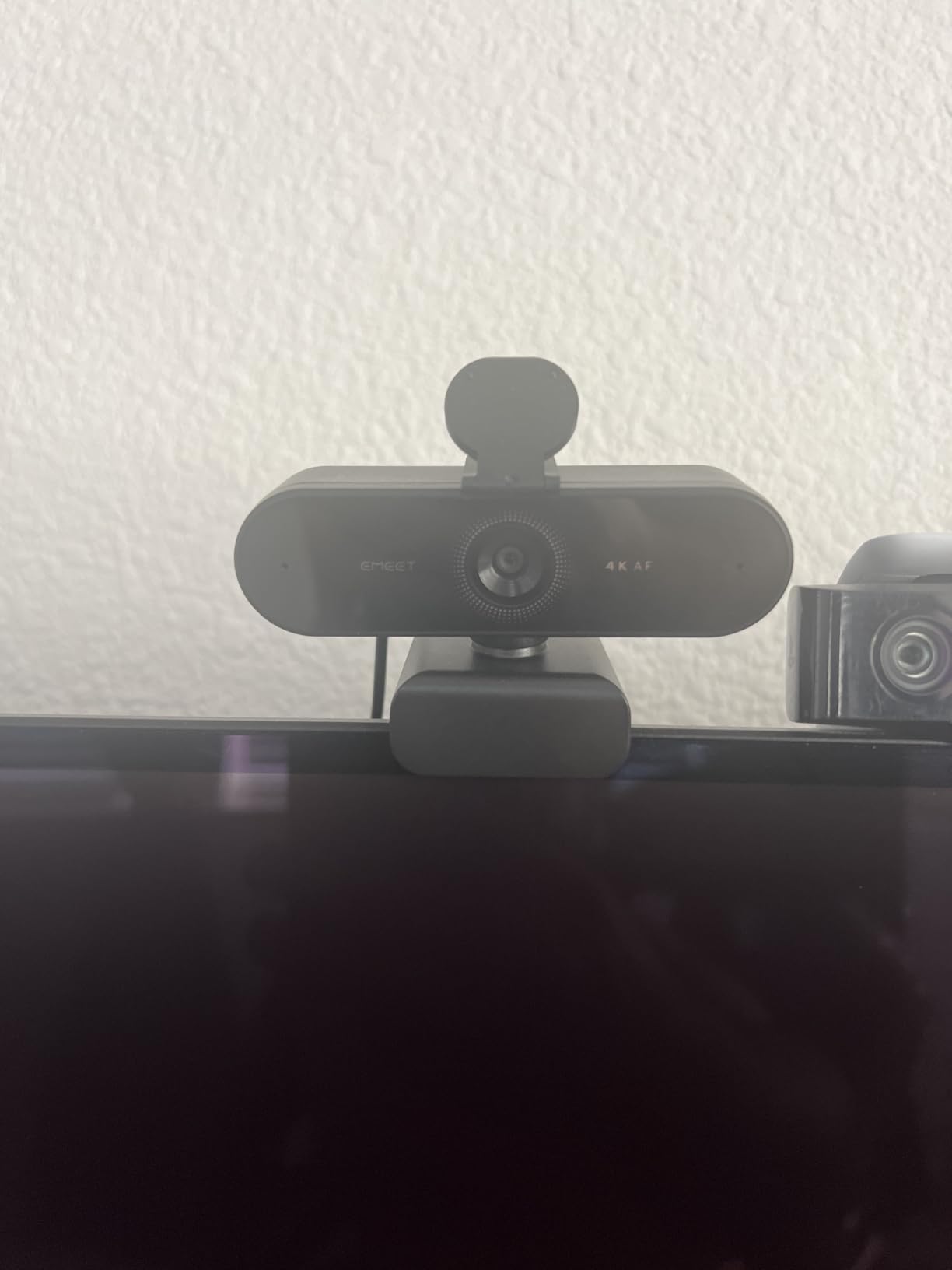
The dual omnidirectional microphones capture clear audio from up to 8 feet away. For a small home office or bedroom streaming setup, the built-in mics are genuinely usable. They will not replace a dedicated USB microphone, but they beat the built-in mics on most laptops by a wide margin.
The auto light correction handles the most common streaming problem – inconsistent room lighting. I tested the NOVA 4K with a window behind me and it adjusted exposure to keep my face properly lit. The EMEETLink software lets you fine-tune brightness, contrast, and saturation if you want manual control.
Setup is genuinely plug-and-play. Connect the USB-A cable, select the camera in OBS or Zoom, and start streaming. No drivers, no software installation required for basic use.
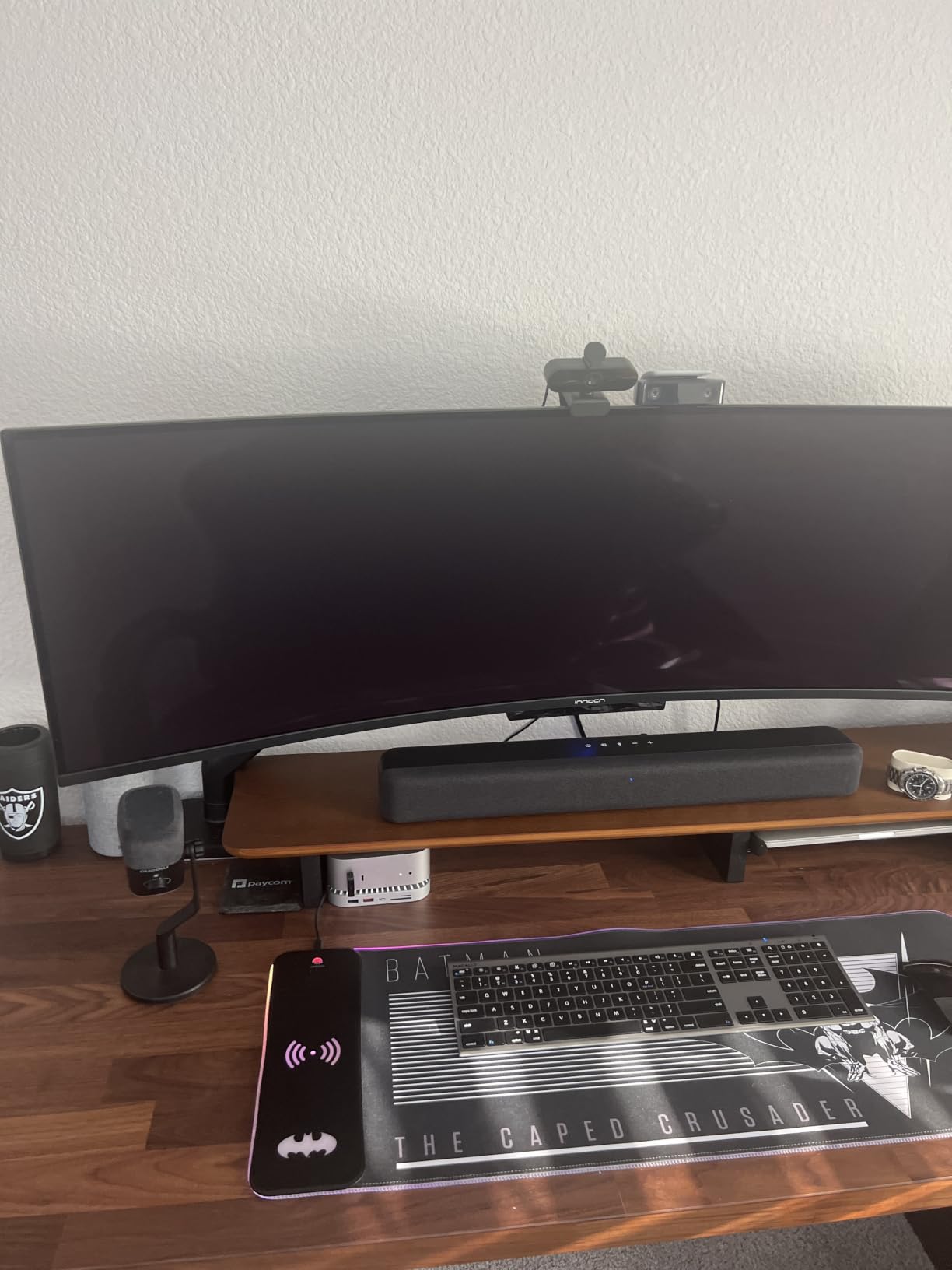
Mounting and adjustability
The NOVA 4K has 360-degree horizontal rotation and 15-degree vertical adjustment built into the mount, so you can find the perfect angle without repositioning your monitor. The standard 1/4 inch tripod thread means you can also mount it on a desktop tripod for a cleaner streaming setup.
The privacy cover is a simple sliding shutter that clicks into place over the lens. It feels sturdy enough and does not add bulk to the unit.
Limitations to consider
The NOVA 4K does not have AI tracking, so if you move around during streams you will need to reposition manually. It also does not support manual focus – it is autofocus only – and the field of view is fixed at 73 degrees. For solo streamers sitting at a desk, none of these are deal-breakers.
For streamers on a budget who want 4K resolution and solid autofocus without paying premium prices, the EMEET NOVA 4K is the best value streaming camera in 2026. It punches well above its price point and handles 90 percent of streaming scenarios without compromise.
7. Logitech Brio 101 – Best Entry-Level Streaming Webcam
Logitech Brio 101 Full HD 1080p Webcam for Streaming and Meetings – Black
1080p 30fps
RightLight boost
Plug-and-play USB-A
Pros
- Auto-Light Balance with RightLight boosts brightness by up to 50 percent
- integrated privacy cover for reliable privacy
- built-in microphone for clear audio during calls
- easy plug-and-play with most video calling platforms
- made with 77 percent recycled plastic
- customizable view with Logi Options+ app
Cons
- Fixed focus lens
- USB-A connection only no USB-C
- 720p variant available separately
The Logitech Brio 101 is the streaming camera I recommend to anyone just starting out or anyone who needs a reliable, no-fuss webcam for occasional streams and daily meetings. At under $40, it delivers 1080p Full HD video with Logitech’s RightLight auto-brightness correction that genuinely improves image quality in dim rooms.
I tested the Brio 101 in a dimly lit bedroom with just a desk lamp and was surprised by how much brighter the image looked compared to my laptop’s built-in camera. The RightLight technology boosts brightness by up to 50 percent without making the image look washed out.
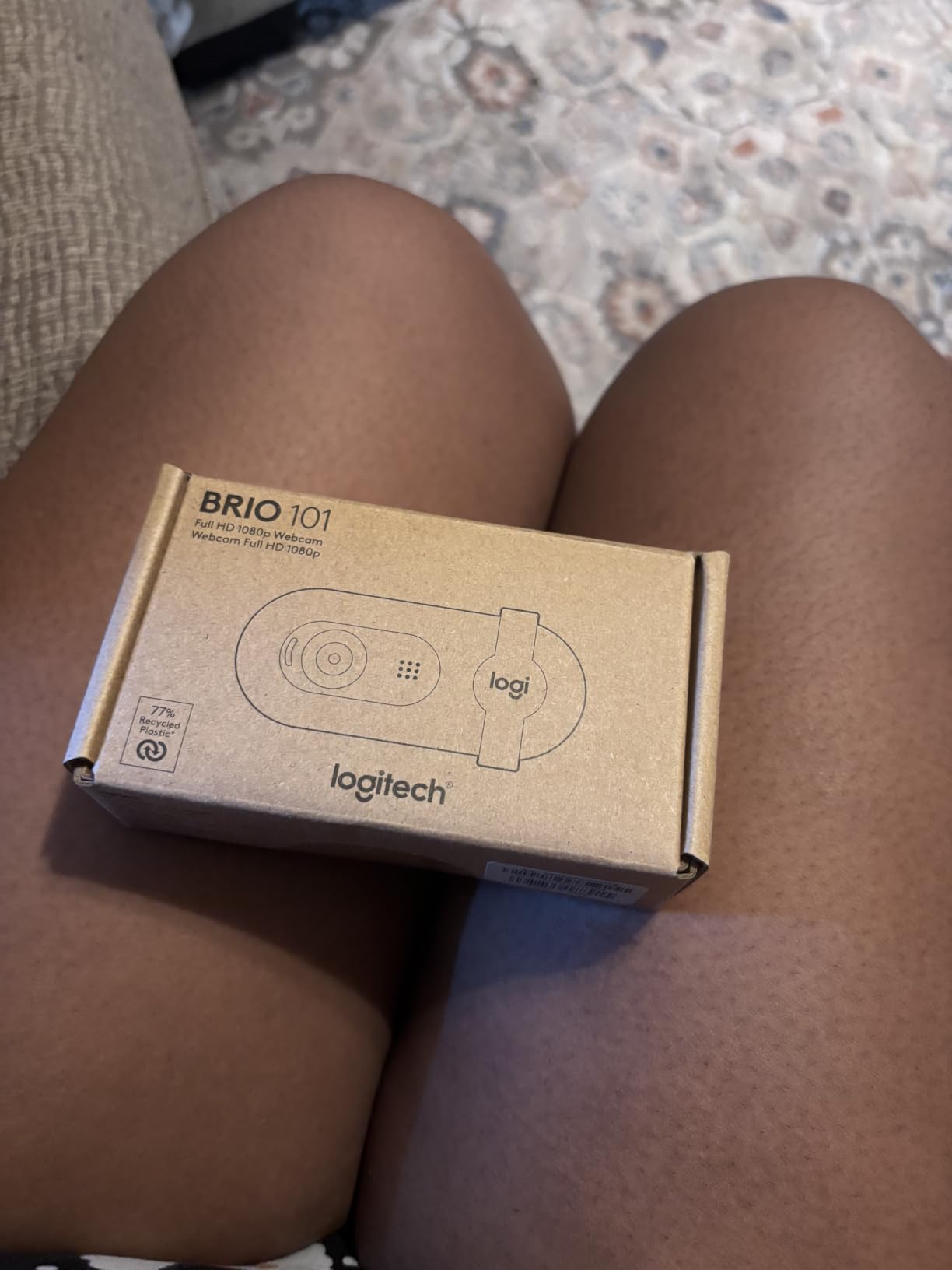
The fixed focus lens is optimized for the typical webcam distance of 2-6 feet. If you sit at a desk and stream, the focus is always sharp where you need it. If you move around a lot or hold objects close to the camera, the fixed focus might not be ideal – but for the target use case of desk-bound streaming, it works perfectly.
The built-in microphone is decent for casual calls and streams. It captures clear voice audio from a few feet away. For professional streams you will want a dedicated microphone, but for beginners, the built-in mic removes the need to buy extra equipment.
The integrated privacy cover is a physical shutter that slides over the lens. It is built into the unit, so there is no separate piece to lose. A small detail, but it makes the webcam feel more secure for streamers who value privacy.
Compatibility and platform support
The Brio 101 works with Windows 7 and up, macOS 10.10 and up, and Chrome OS. It is certified for Zoom, Microsoft Teams, Google Meet, and Nintendo Switch 2 GameChat mode. The Logi Options+ app lets you customize zoom level, framing, and image settings if you want more control.
Setup takes about 30 seconds – plug in the USB-A cable, select the camera in your streaming software, and you are ready to go. No drivers, no accounts, no configuration needed for basic use.
Who should buy the Brio 101
If you are a complete beginner to streaming, do not want to spend more than $40, and just need a reliable 1080p webcam that works out of the box, the Logitech Brio 101 is the right choice. It is the entry-level camera most streamers start with before upgrading to a 4K model.
For anyone who already streams regularly and wants to upgrade, look at the EMEET NOVA 4K or Logitech MX Brio instead – both deliver noticeably better image quality at a moderate price increase.
How to Choose the Best Camera for Streaming?
After testing 7 streaming cameras for 30 days, the decision comes down to your budget, your streaming style, and how much you care about image quality. Here is the breakdown I wish someone had given me before I started streaming.
Resolution: 1080p versus 4K
For most streamers, 1080p at 60fps is genuinely enough. Most viewers watch streams on phones or laptops where 4K is hard to notice, and the extra bandwidth required for 4K streaming can hurt your stream stability. Twitch limits most streams to 1080p anyway, so a 4K webcam gives you headroom for cropping and reframing but does not improve the actual stream quality your viewers see.
4K makes sense if you produce YouTube content in 4K, want to crop into a tight facecam shot while maintaining sharpness, or run a professional stream where every detail matters. For Twitch streamers and casual users, a good 1080p webcam is the better value.
Frame rate and motion handling
For gaming streams where fast motion matters, prioritize 60fps over 4K resolution. The Logitech MX Brio at 1080p 60fps looks smoother in motion than a 4K 30fps camera. If you primarily stream just chatting or sit-down content, 30fps is fine and the bitrate savings can improve overall stream quality.
Low-light performance and sensor size
Sensor size matters more than resolution for low-light performance. The Insta360 Link 2 Pro with its 1/1.3 inch sensor and the Sony ZV-E10 with its APS-C sensor both perform dramatically better in dim rooms than smaller-sensor webcams. If you stream in a basement or room without good lighting, prioritize a larger sensor over 4K resolution.
AI tracking versus fixed cameras
AI tracking is worth paying extra for if you move around during streams – fitness, cooking, art tutorials, whiteboard sessions. The OBSBOT Tiny 2 Lite and Insta360 Link 2 Pro both offer reliable tracking. If you sit at a desk and do not move much, a fixed webcam gives you better image quality for the same money.
Webcam versus mirrorless camera
The webcam versus mirrorless decision is the biggest fork in the road. Webcams are simple, plug-and-play, and affordable. Mirrorless cameras like the Sony ZV-E10 produce noticeably better image quality with natural bokeh, but cost more, require some learning, and need extra setup time.
For most streamers, a good webcam is the right choice. For content creators building a brand on YouTube or producing high-production-value streams, a mirrorless camera is worth the investment.
Platform compatibility
All cameras on this list work with OBS Studio, Streamlabs, Zoom, Teams, and Google Meet. If you stream on Twitch, any USB webcam works. If you use Nintendo Switch 2 GameChat, the Logitech Brio 101 and MX Brio are officially supported. If you need RTMP direct streaming without a PC, you need a dedicated streaming camera like the Hollyland VenusLiv – that is a niche none of the webcams on this list cover.
FAQs
What do most streamers use for a camera?
Most streamers use a USB webcam because they are affordable, reliable, and plug-and-play. The Logitech C920 and Brio series are the most common webcams you will see on Twitch streams because they balance image quality with price. Professional streamers and YouTubers who want the best image quality often upgrade to a mirrorless camera like the Sony ZV-E10 with a fast prime lens for natural background blur.
Is a 4K webcam overkill for streaming?
For most streamers, 4K is overkill for the actual stream output because Twitch and most platforms cap at 1080p. However, 4K webcams give you the ability to crop and reframe while maintaining sharpness – useful if you want different camera angles from a single webcam. 4K also matters if you produce YouTube content in 4K resolution or want future-proofing. For pure streaming quality at 1080p, a good 1080p 60fps webcam often looks better than a budget 4K webcam.
What is the best camera for a beginner streamer?
The best camera for a beginner streamer is the Logitech Brio 101 or Logitech StreamCam. Both are affordable, plug-and-play, and produce reliable 1080p video that looks good on stream without any configuration. As you gain experience and want to upgrade, the EMEET NOVA 4K adds 4K resolution for under $50, and the Logitech MX Brio adds premium AI-enhanced imaging and Show Mode.
Webcam or mirrorless camera – which is better for streaming?
A good mirrorless camera produces noticeably better image quality than any webcam – larger sensor, better dynamic range, natural background blur from a fast lens. But mirrorless cameras cost more, require some technical knowledge, and add setup complexity. For most streamers, a quality webcam like the Logitech MX Brio or Insta360 Link 2 Pro is the better choice. For professional YouTubers and content creators who want the absolute best image quality, the Sony ZV-E10 mirrorless camera is worth the investment.
Do I need AI tracking for streaming?
AI tracking is only useful if you move around during streams. If you sit at a desk and do not move much, a fixed webcam gives you better image quality for the same money. AI tracking is worth the extra cost for fitness streams, cooking videos, art tutorials, whiteboard teaching sessions, and any content where you stand up and move around. The OBSBOT Tiny 2 Lite and Insta360 Link 2 Pro are the best AI tracking streaming cameras available in 2026.
Final Verdict: Which Streaming Camera Should You Buy?
The best cameras for streaming in 2026 cover every budget and use case. For most streamers, the Logitech MX Brio delivers the best balance of image quality, software polish, and platform compatibility. If you want flagship AI tracking and the largest sensor in a webcam, the Insta360 Link 2 Pro is the top choice. For streamers on a budget, the EMEET NOVA 4K delivers 4K resolution for under $50. And if you are ready to invest in a real camera system, the Sony ZV-E10 produces footage in a different league entirely.
Pick the camera that matches your streaming style and budget. All seven options on this list are excellent choices – the wrong answer is to keep using a built-in laptop camera when better options exist at every price point.