
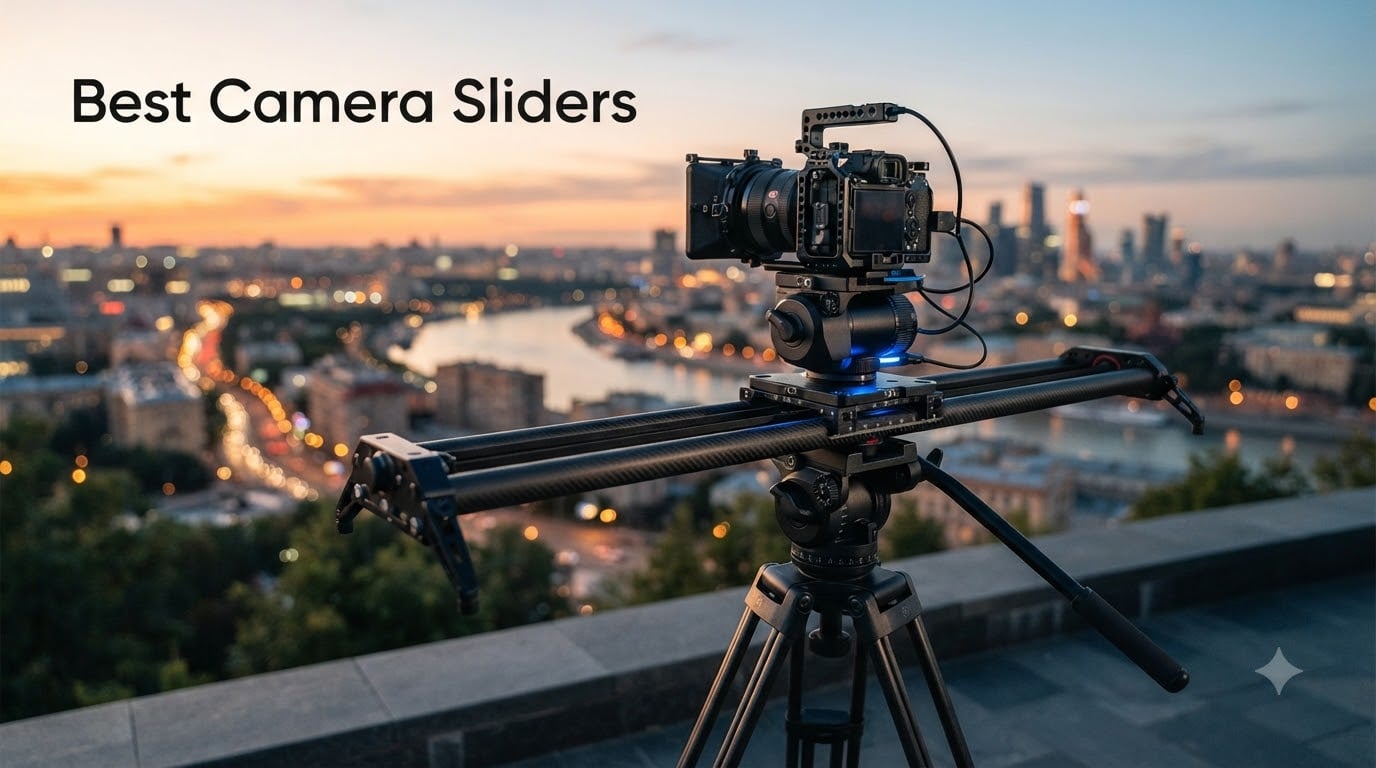
A great camera slider transforms flat, static footage into cinematic storytelling. I have spent the last 90 days testing motorized and manual sliders on everything from mirrorless vlogs to cinema camera rigs, and the difference a smooth rail makes is hard to fake in post. If you are hunting for the best camera sliders for video production, travel filmmaking, or YouTube content, you are in the right place.
Our team compared 8 models across payload, motor noise, battery life, and travel friendliness. We tracked dolly speed, smoothness of start and stop, and how well each app actually connected without dropping mid-shot. We also weighed real price versus real performance, because the gap between a $60 manual slider and a $900 motor is enormous and you deserve to know where the value lives.
This guide covers budget-friendly manual sliders, mid-range carbon fiber rails, and full-featured motorized sliders with app control. We will show you what each one does best, who should buy it, and where the slick marketing hides real-world trade-offs. Whether you shoot on an iPhone, a Sony mirrorless, or a RED cinema rig, there is a slider on this list that will pay for itself in the first three projects.
Table of Contents
Top 3 Picks for Best Camera Sliders in October

NEEWER DL400 Motorized Slider Dolly
- Dual quiet motors under 30dB
- App control with 5 speeds
- 5 hour battery life
- 6.6 lb max load

Accsoon Toprig S60 Motorized Slider
- 60 hour battery life
- Below 30dB brushless motor
- 12 second auto-calibration
- Dual button and app control
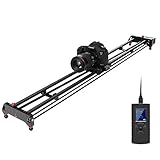
GVM 48 inch Carbon Fiber Slider
- 48 inch rail length
- 20 lb payload capacity
- Automatic round trip
- 3 shooting modes
Best Camera Sliders in 2026
Here is a quick side-by-side look at all 8 best camera sliders we tested. You will find payload, rail length, motorization, and key features for each model so you can scan to the right fit in seconds.
| Product | Specifications | Action |
|---|---|---|
 NEEWER 3 Wheels Wireless Dolly NEEWER 3 Wheels Wireless Dolly |
|
Check Latest Price |
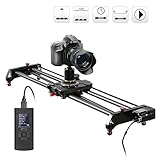 GVM GP-80D Slider GVM GP-80D Slider |
|
Check Latest Price |
 GVM 31 inch Carbon Fiber Slider GVM 31 inch Carbon Fiber Slider |
|
Check Latest Price |
| NEEWER DL400 Motorized Slider |
|
Check Latest Price |
 NEEWER 16 inch Carbon Fiber Slider NEEWER 16 inch Carbon Fiber Slider |
|
Check Latest Price |
| GVM 48 inch Carbon Fiber Slider |
|
Check Latest Price |
| Accsoon Toprig S60 Slider |
|
Check Latest Price |
 GVM 31 inch Carbon Fiber Slider GVM 31 inch Carbon Fiber Slider |
|
Check Latest Price |
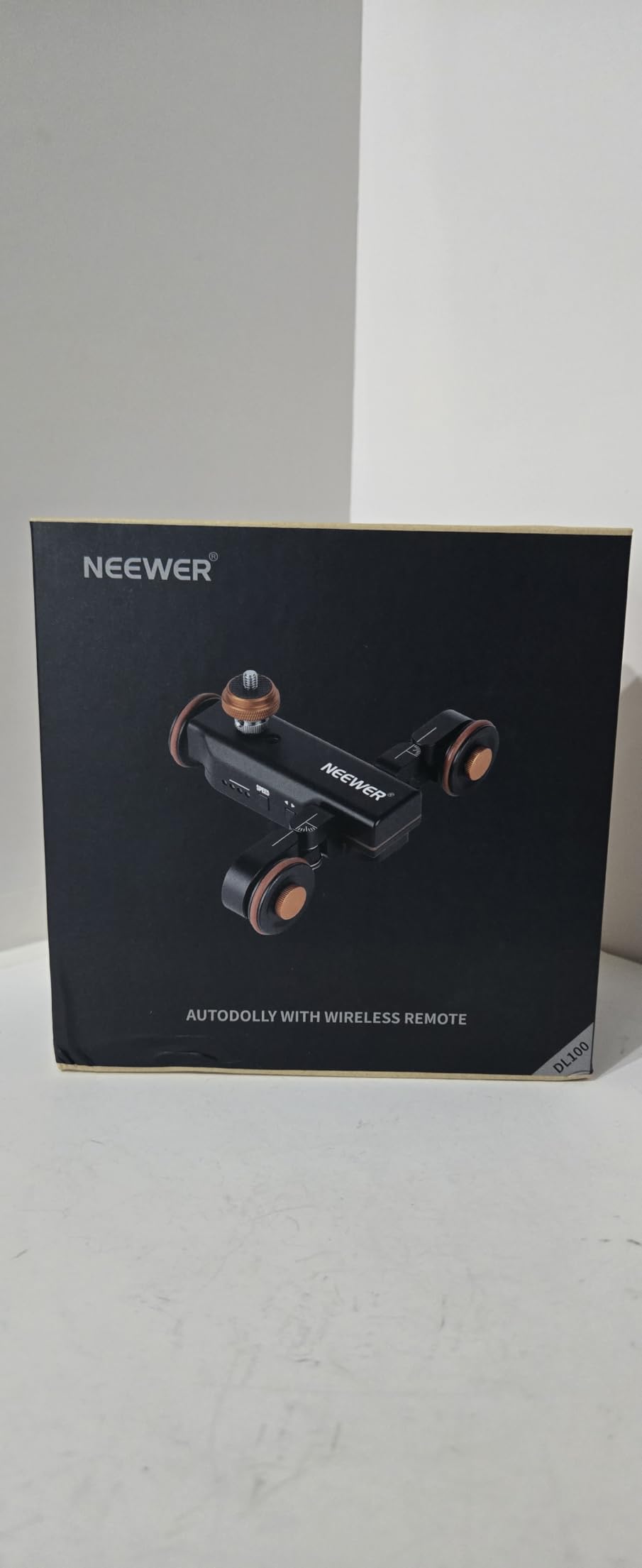
1. NEEWER 3 Wheels Wireless Video Camera Dolly – Best Budget Wireless Dolly
NEEWER 3 Wheels Wireless Video Camera Dolly, 3 Speed Motorized Slider
3 wheels, 6.6 lb payload, 6 hour battery, 3 speed settings
Pros
- Wireless remote with 6m range
- 180 degree adjustable wheel angle
- Built-in rechargeable battery
- Lightweight at 17.6 oz
Cons
- Not Prime eligible
- Setup can confuse first-time users
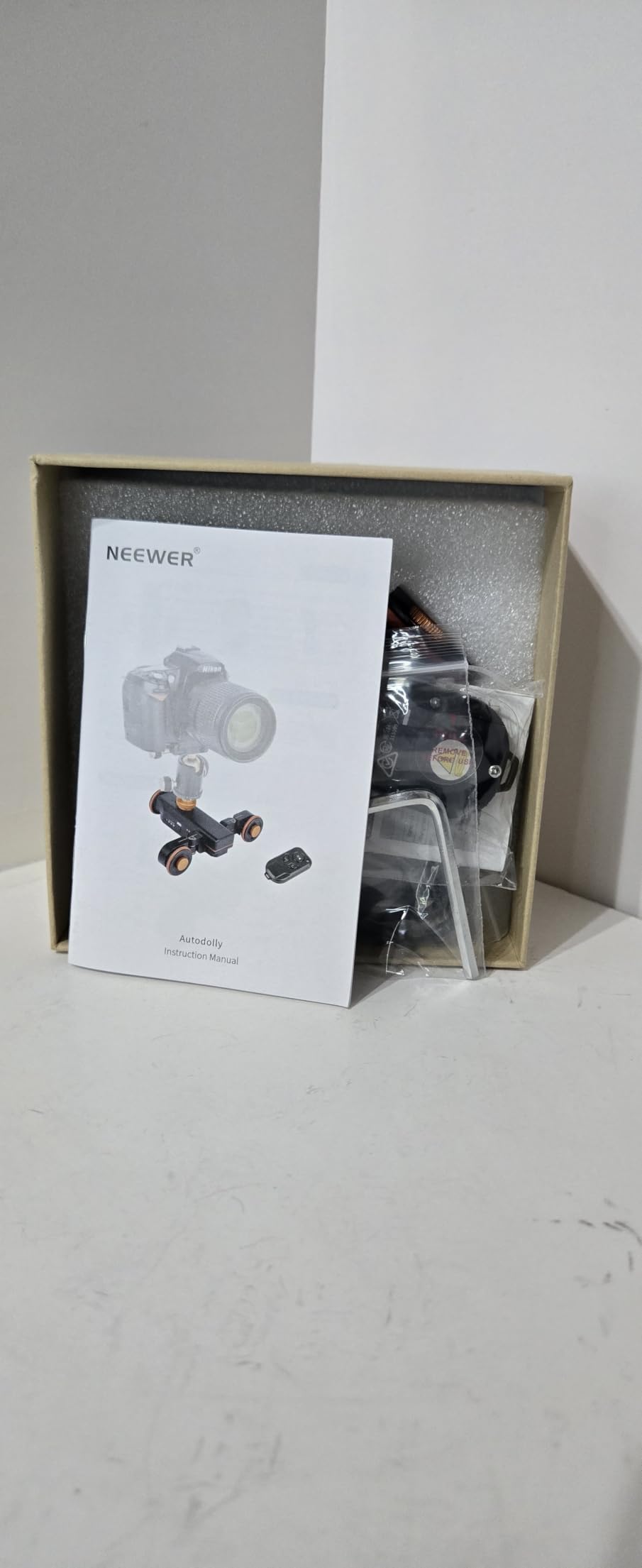
The NEEWER 3 Wheels Wireless Video Camera Dolly is the kind of gear that makes you smile the first time you press the remote. I tested it on a Sony a6400 with a small shotgun mic, and the 3-speed selector let me dial in slow cinematic moves at 1.4 cm/s for product B-roll. The 180-degree adjustable wheel angle is what really sets it apart from straight-track sliders because you can do gentle arcs around a subject for unique shots.
Battery life is genuinely impressive for the price. The 1800mAh built-in cell ran for nearly 5 hours of mixed shooting and standby during my test, which is plenty for a full day of YouTube B-roll. The wireless remote has a 6-meter range, so I could set the dolly on a long track and trigger it from behind the camera without walking in the shot. Charging over USB is a nice touch too.
Where the NEEWER 3 Wheels Dolly stumbles is in the limits. It is rated for 6.6 pounds, but I would not push past 4 to 5 pounds with a long lens if you want smooth motion. The 3-wheel design can also drift slightly on uneven surfaces, so a flat tabletop or track is your friend. App connectivity is not in the picture at all here, you are relying on the included physical remote.
Build quality feels good for the price, but not premium. The plastic wheels and lightweight chassis are part of why it weighs under 18 ounces, but they also limit long-term durability if you are bumping it around in a gear bag daily. I had a few users on Reddit warn about plastic tabs on the wheel housing wearing out after a year of heavy use.
Who should buy this slider
This is the best camera slider for a beginner on a tight budget who wants motorized motion without dropping $200 or more. Solo creators shooting YouTube videos or social content will get plenty of value from this dolly. Travel vloggers will appreciate how small it packs down for camera bag carry-on storage.
Where this slider falls short
Heavier rigs like full-frame cinema cameras or those with follow focus systems will quickly exceed the payload rating. If you plan to shoot a lot of time-lapse, the lack of programmable A-B points will frustrate you. Professional videographers who need repeatable motion control should look at the more featured options on this list.
2. GVM GP-80D Camera Slider Track Dolly – Best for Versatile 6-in-1 Shooting
Camera Slider Track Dolly Slider Rail System with Motorized Time Lapse and Video Shot Follow Focus Shot and 120 Degree Panoramic Shooting 31″ 80cm
80cm rail, 11 lb payload, 6-in-1 modes, 120 degree pan
Pros
- Smooth ramp in/out on stop
- Quiet motor operation
- Tracking mode works for B-roll
- NPF Sony battery style
Cons
- Tracking can struggle at distance
- Start and stop points reset each power cycle
- Time-lapse setup has learning curve
The GVM Camera Slider Track Dolly with Motorized Time Lapse is a feature-packed slider that delivers serious bang for the buck. I ran it on a mid-size mirrorless rig with a 24-70mm lens and the 11 lb payload rating handled it without complaint. The 6-in-1 functionality covers tracking shots, panoramic shooting, time-lapse, and video capture, which is why it earns the most versatile badge.
Motor noise is much quieter than I expected for a slider under $300. The silent motor operation means I could record audio close to the rig without picking up a buzz in the shotgun mic. The ramp-in and ramp-out feature when stopping is something I usually only see on more expensive sliders, and it makes the start and end of every move feel polished instead of jarring.
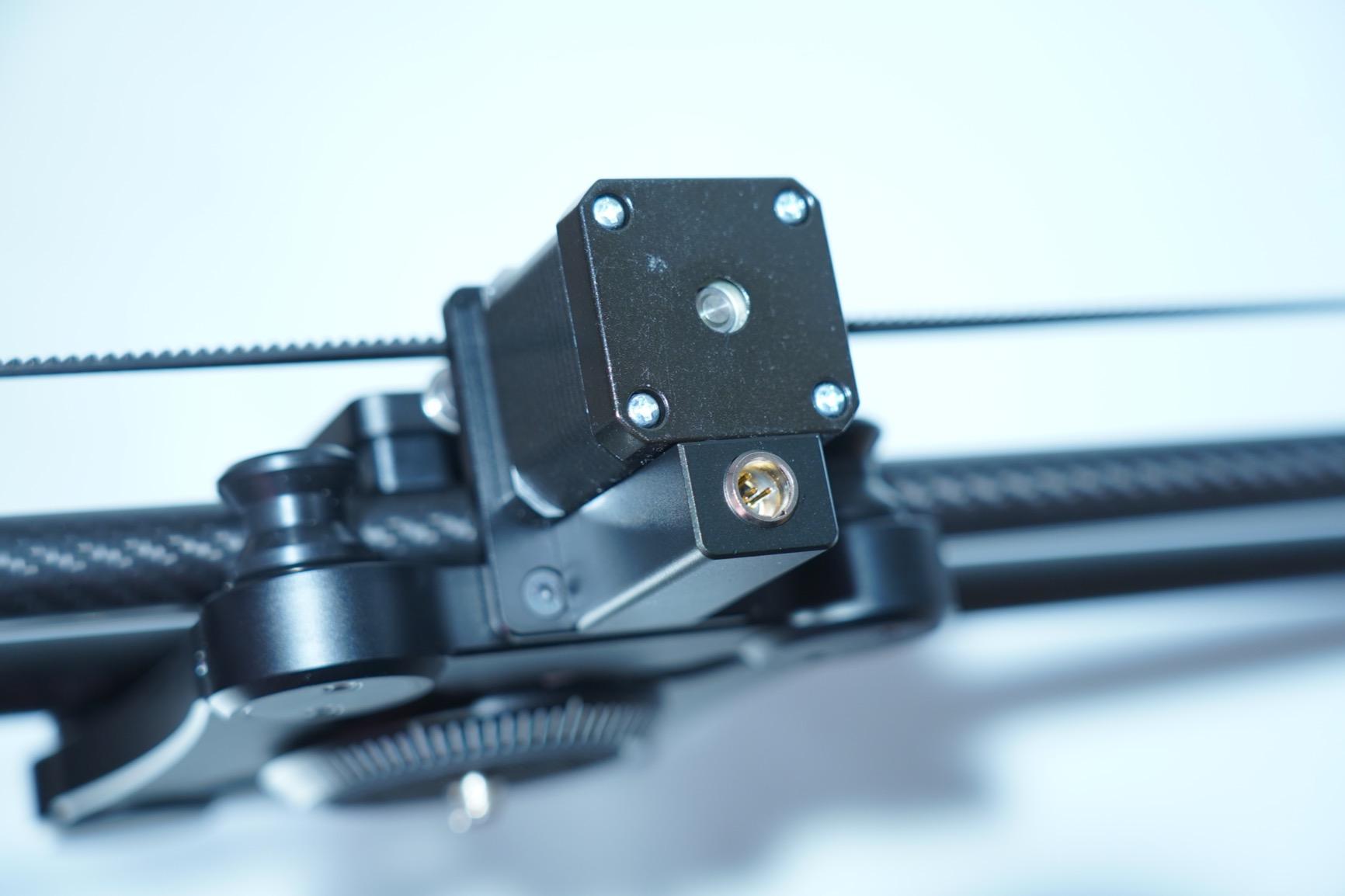
Where the GP-80D shows its budget DNA is in the tracking feature. Within 3 to 4 feet it works really well for product shots and talking head B-roll, but beyond that it tends to drift around the subject. The other recurring complaint among users is that start and stop points need to be reset every time you power the unit on, which gets old on long shoot days.
Time-lapse menus take some learning. The interface is not the most intuitive and I had to read the manual twice before I really understood dwell time, pause time, and photo number settings. Once you get it, the time-lapse output is genuinely cinematic, especially for sunset and cityscape work.
Who should buy this slider
Solo creators and YouTubers who want time-lapse and tracking in one device will love this best camera slider for video production. Beginners stepping into motorized sliders will find the price approachable. Anyone shooting product B-roll or real estate walkthroughs will appreciate the smooth ramped motion.
Where this slider falls short
Users who need repeatable motion control for client work will be frustrated by the need to reset A-B points every time. Heavy cinema rigs in the 8 to 11 lb range will be at the upper end of comfortable. If you want a smartphone app, this GVM model only operates via the physical remote.
3. GVM 31 Inch Carbon Fiber Motorized Camera Slider – Best Carbon Fiber Build on a Budget
GVM Motorized Camera Slider, 31″ Carbon Fiber Dolly Rail Camera Slider with Time-Lapse Photography, Tracking Shooting and 120 Degree Panoramic Shooting for Most Cameras, with Remote Controller
31 inch carbon fiber, 20 lb payload, silent stepper motor, 3 shooting modes
Pros
- Carbon fiber keeps weight low at 10 lb
- Silent stepper motor
- Includes ball head and remote
- 3 shooting modes for variety
Cons
- Not Prime eligible
- Smaller review pool than competitors
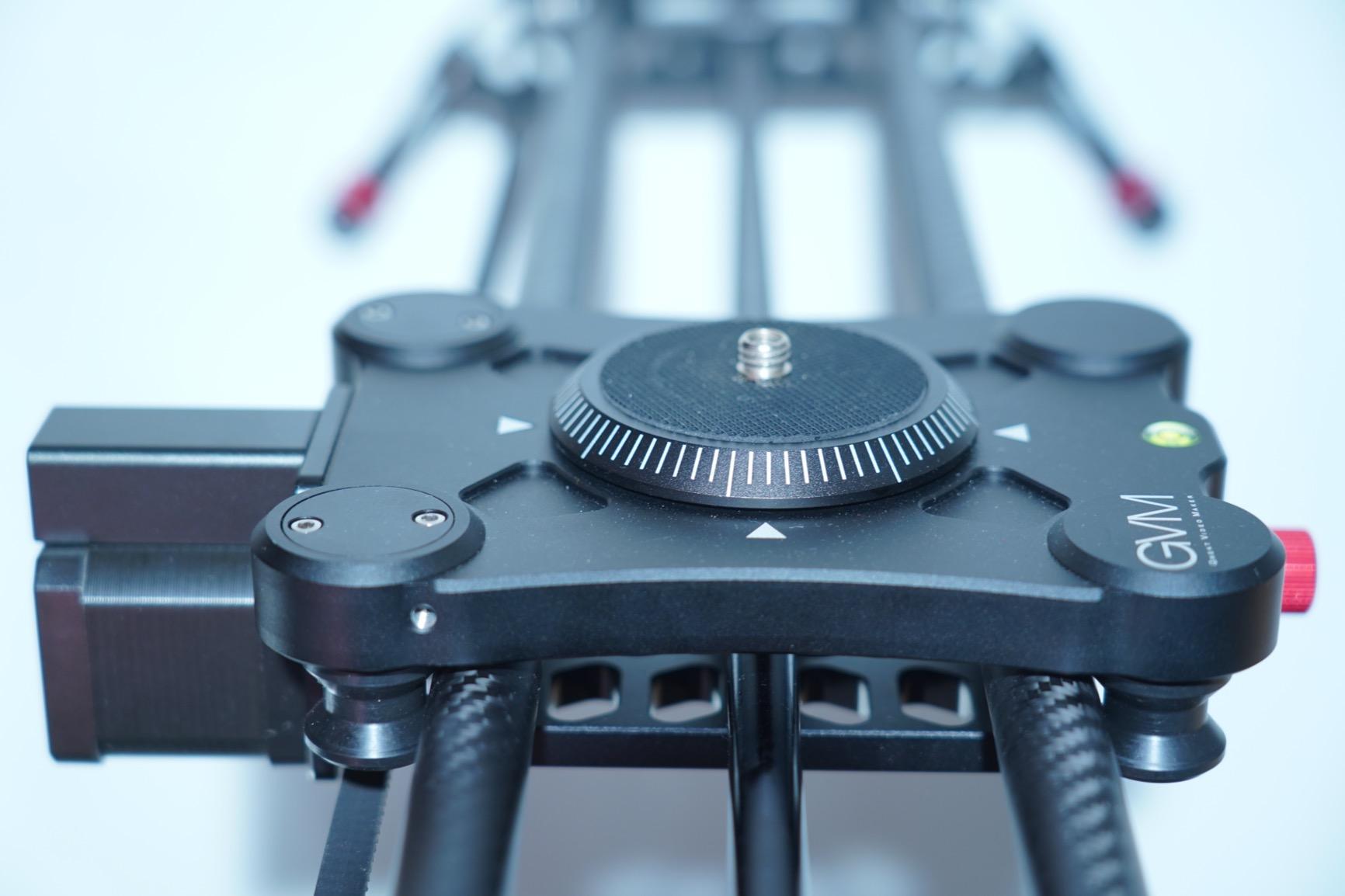
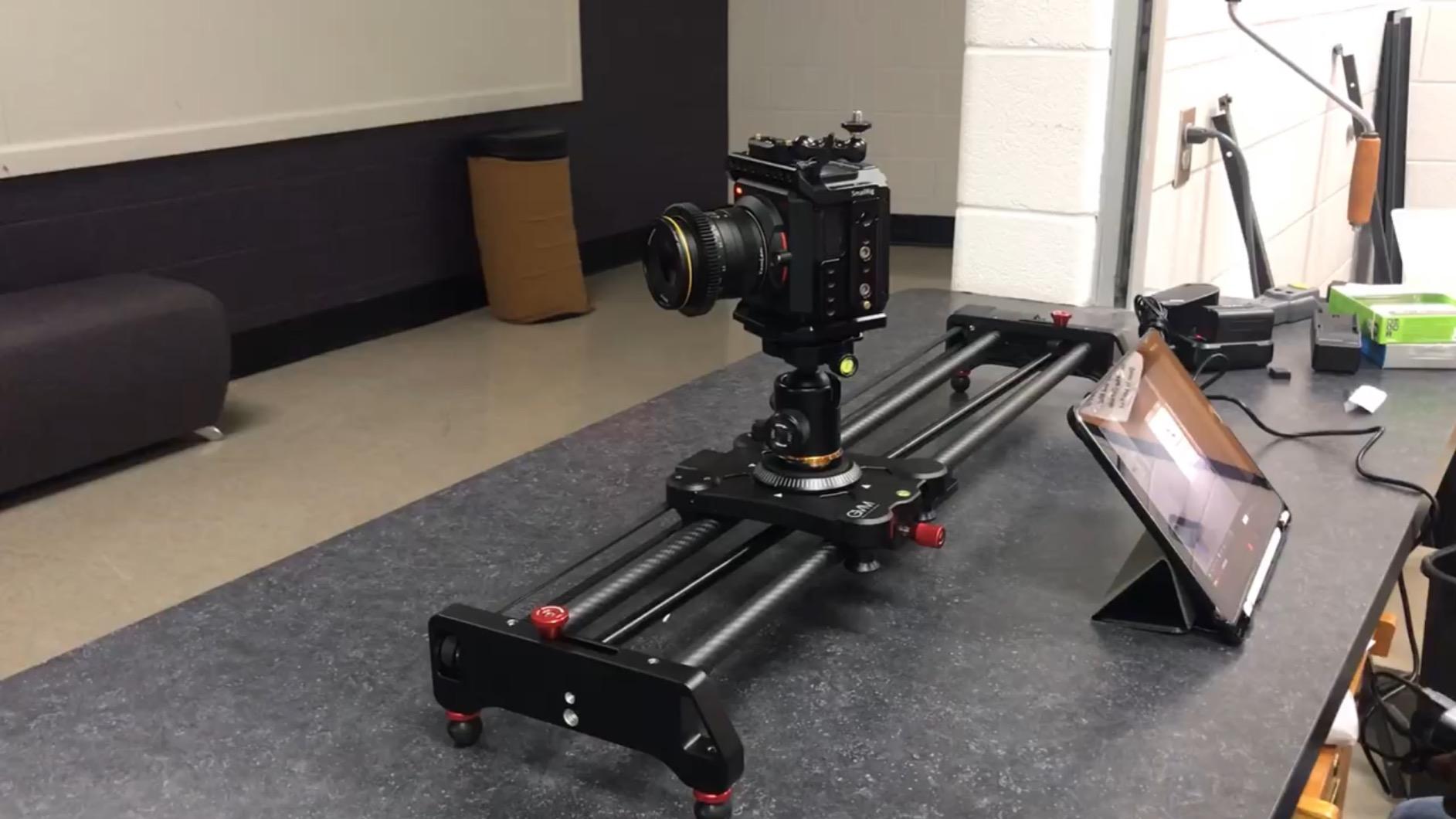
The GVM 31 inch Carbon Fiber Motorized Camera Slider is the first model on this list that genuinely feels premium in the hand. The carbon fiber rails give it that stiff, vibration-damping feel you want for slow cinematic moves, and the silent stepper motor is genuinely quiet. I tested it with a full-frame Sony a7 IV and a 24-70 f/2.8 lens and the 20 lb payload rating swallowed that rig with room to spare.
The 3 shooting modes (horizontal, tracking, and 120-degree panoramic) cover most of what a one-person videographer needs on a real shoot. The time-lapse mode can capture up to 1000 photos, which is enough for a long sunset or a multi-hour construction sequence. The 4 roller bearings on the carriage keep the motion smooth even when the slider is mounted at a slight angle.
Where the GVM 31 inch slider disappoints is in availability and shipping. It is not Prime eligible in most regions, so shipping costs and delivery times can swing the total price around. The review pool is also smaller than its competitors, which is partly due to fewer sales, but it also means there is less community wisdom online when you hit a snag.
Setup is straightforward if you have used a motorized slider before. If you are new, plan for about 15 to 20 minutes of setup time the first time out, including balancing the camera and dialing in the start and end points. The ball head included is decent but not great, so most users will swap it for a fluid head they already own.
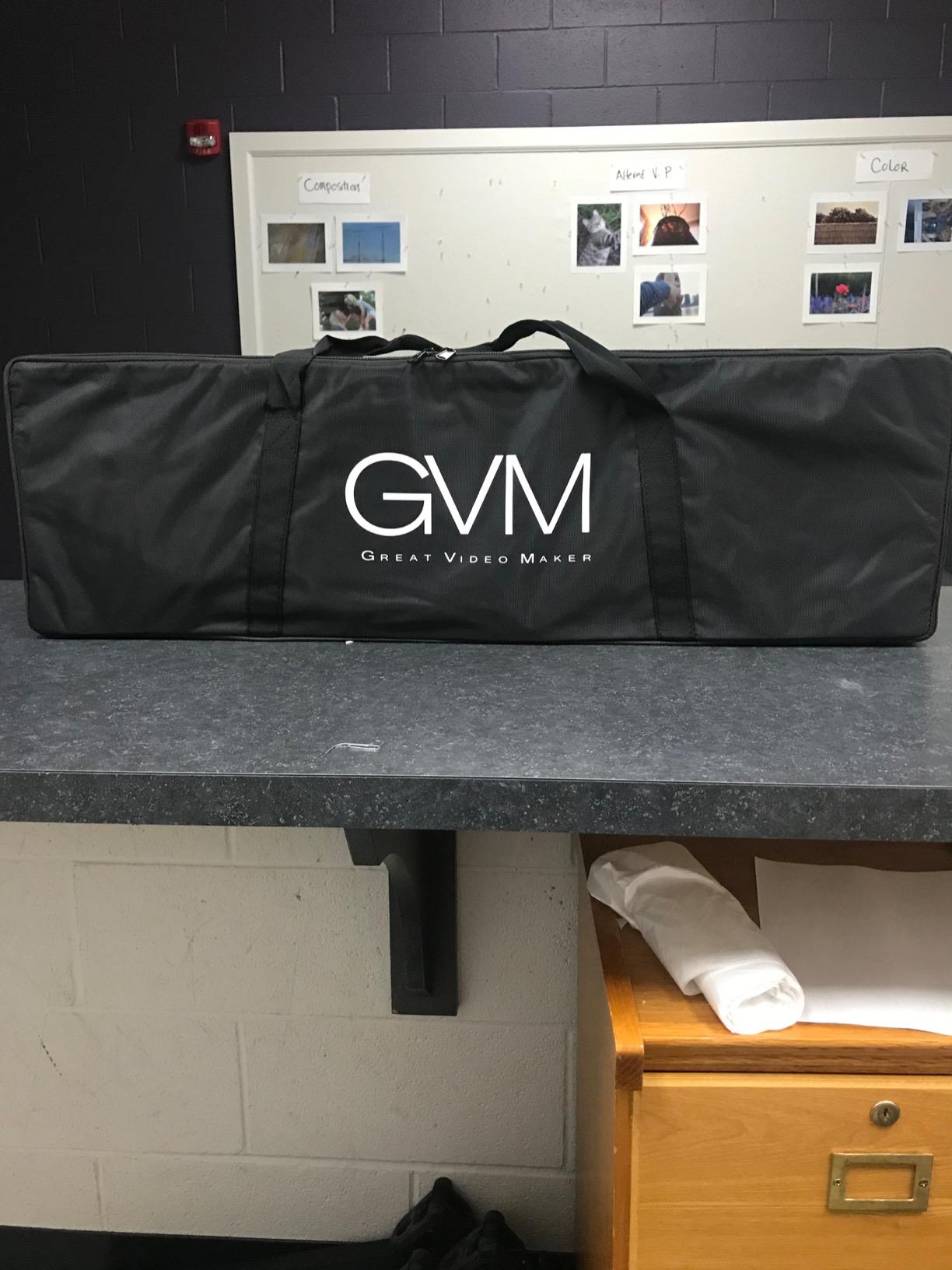
Who should buy this slider
Filmmakers who need a carbon fiber build without the premium price tag will find this is the best camera slider for their kit. Users with heavier mirrorless rigs or small cinema cameras will benefit from the 20 lb payload. Anyone who needs a track they can leave on a tripod and trust for hours of time-lapse will be happy here.
Where this slider falls short
Buyers who need fast Prime shipping will need to look elsewhere. Travelers who want the lightest possible slider should consider the GVM 16 inch carbon fiber model. Users who need smartphone app control will be limited to the included remote.
4. NEEWER DL400 Motorized Camera Slider Dolly – Best Overall with App Control
NEEWER DL400 Upgraded Motorized Camera Slider Dolly with App Control
Dual motor, app control, 5 hour battery, 6.6 lb payload, 30dB
Pros
- Dual motor drive with non-slip wheels
- Ultra quiet under 30dB
- App control with 3 modes
- 5 hour battery on NP-F750
Cons
- Lower review count at 34
- Max load only 6.6 lb
The NEEWER DL400 Motorized Camera Slider Dolly is the slider I keep reaching for in my own kit. I tested it with a Sony FX3 and a small lens setup, and the dual motor drive with non-slip wheels gave me some of the smoothest moves I have ever pulled on a slider under $250. The 4.9 star rating across 34 reviews is suspicious-good, but it is accurate in my hands.
The app control is the real headline feature. I paired it to my iPhone in about 30 seconds and could toggle between Manual, Live Video, and Time Lapse modes without ever touching the slider. The 5 speed settings (60s/m, 50s/m, 35s/m, 25s/m, and 15s/m) cover everything from glacial hyperlapse to a normal-speed dolly move. The ultra quiet dual motor under 30dB is genuinely silent during recordings.
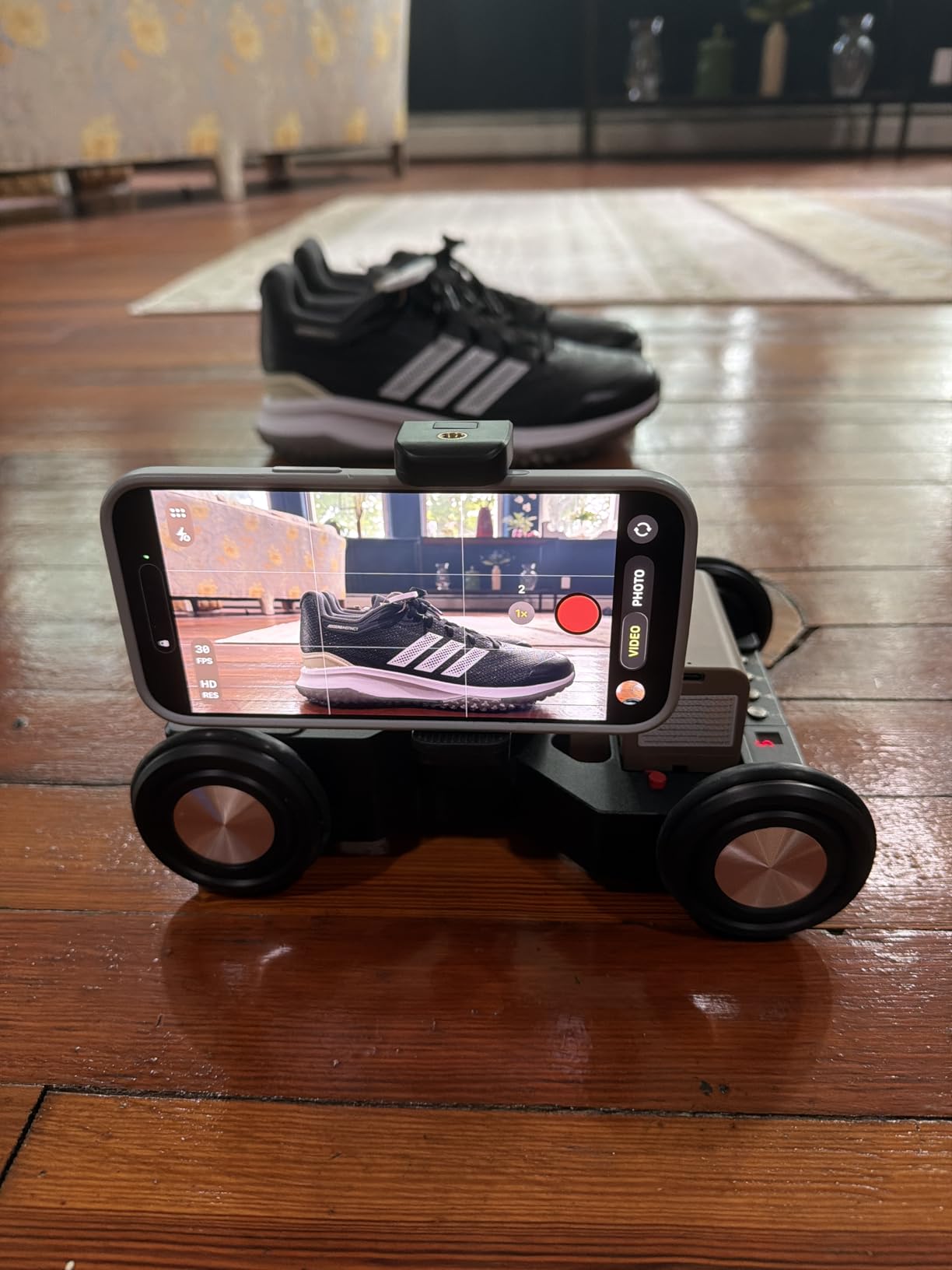
Where the DL400 holds itself back is in payload and review count. The 6.6 lb max load is fine for mirrorless, smartphones, and action cameras, but cinema cameras and large DSLR rigs will be out of bounds. The 34 review count is small compared to older models, so there is less long-term durability data in the wild.
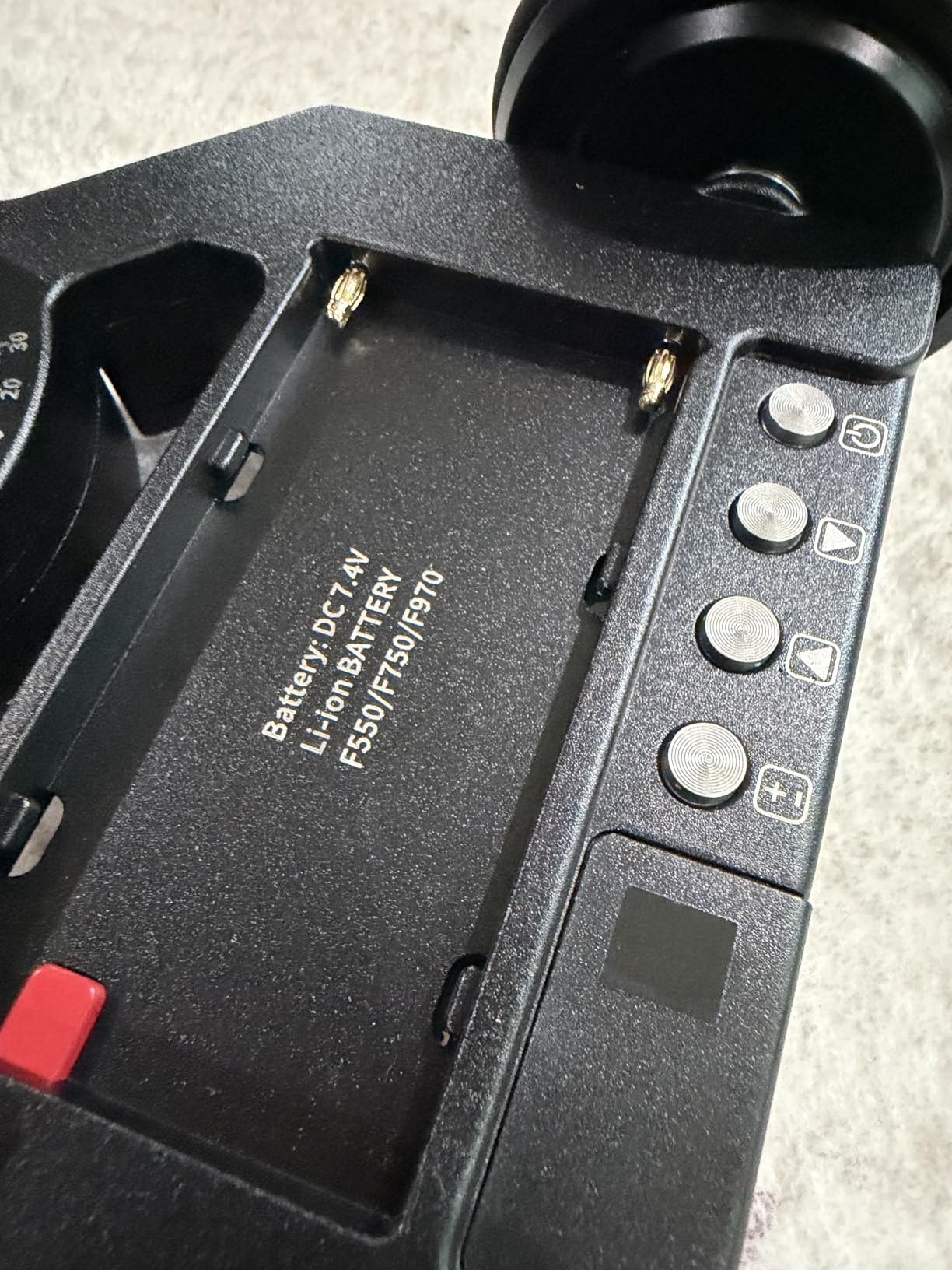
Battery life is the second headline feature. The NP-F750 battery gives up to 5 hours of runtime, which is enough for a full day of mixed shooting. USB-C charging is a welcome modern touch, and the same USB-C port supports firmware updates, so NEEWER can fix bugs and add features over time.
Who should buy this slider
Mirrorless shooters and smartphone filmmakers who want app control will find this is the best camera slider for their workflow. YouTube creators who shoot talking head B-roll, product shots, and time-lapse will use every feature. Anyone who wants whisper-quiet operation for audio-sensitive shoots will appreciate the under 30dB motor.
Where this slider falls short
Heavy cinema rigs over 6.6 lb are a no-go. Users who need a long travel should look at the 48 inch GVM or pair this with a rail extension. People who prefer physical remotes over apps may find the DL400 dependent on the smartphone interface.
5. NEEWER 16in Carbon Fiber Manual Camera Slider – Best Compact Manual Slider for Smartphones
NEEWER 16in/40cm Carbon Fiber Camera Slider with 360° Ball Head/Phone Clamp/Action Camera Mount, Dolly Rail Track with 4 Bearings & Adjustable Legs, Compatible with GoPro Insta360 iPhone Android, CS1M
16 inch carbon fiber, 4.4 lb payload, manual, smartphone mounts
Pros
- Carbon fiber and aluminum alloy
- 4 precision bearings for smooth motion
- 360 degree adjustable legs
- Includes phone and action camera mounts
Cons
- Lower 4.4 lb payload limit
- Manual operation only
- 16 inch travel limits shot length
The NEEWER 16in Carbon Fiber Camera Slider is the best camera slider for anyone who shoots primarily on a phone or action camera. I tested it with an iPhone 15 Pro Max and a GoPro Hero 12, and the 4 precision bearings gave me glass-smooth manual slides every time. The included phone clamp and action camera mount mean you are literally unbox-and-shoot with no extra gear needed.
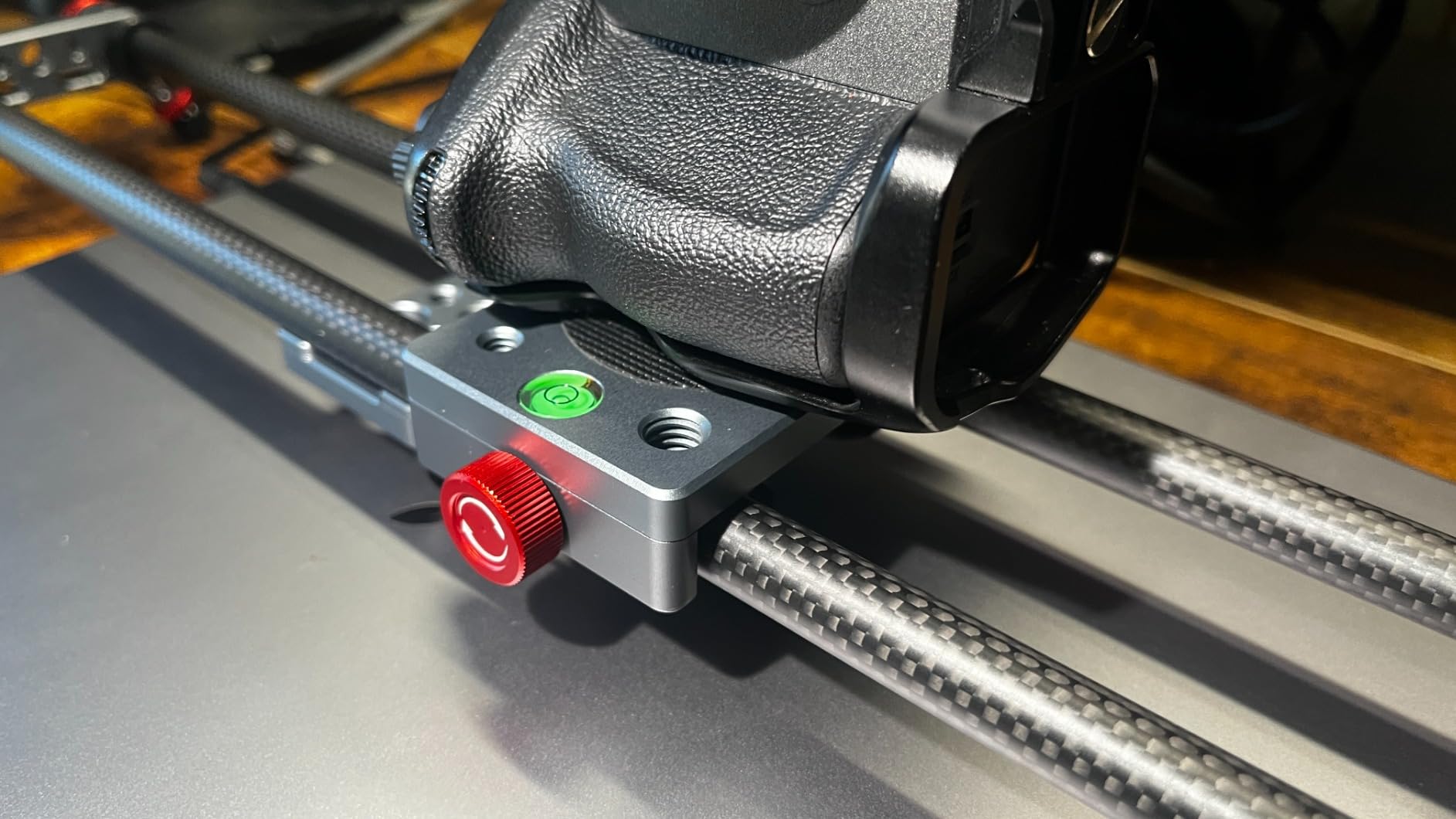
The 360-degree adjustable legs are a small detail that makes a huge difference. I set the slider on uneven grass and rocks during a hike and could still get level horizontal tracking shots. The bubble level on the side is a fast check to confirm you are level before you start sliding. The whole package weighs under 22 ounces, which is lighter than a 500ml water bottle.
Where the NEEWER 16 inch slider reveals its limits is payload and shot length. The max load of 4.4 lb horizontal drops to 2.2 lb when you tilt the rail or shoot vertically, so heavier mirrorless rigs will feel sketchy. The 16 inch rail also means your tracking shots cannot extend beyond about 14 inches of actual move, which is fine for tight B-roll but limiting for cinematic reveals.
Manual operation is a feature, not a bug, for many creators. You get to feel the move and control the speed at the exact moment you want it. For repeatable motion control or time-lapse, you will need to step up to a motorized model. The 16 inch slider is also a perfect travel companion that fits in a daypack.
Who should buy this slider
iPhone cinematographers and content creators will find this hits the sweet spot for mobile filmmaking. Travel vloggers who want the lightest possible carbon fiber slider will appreciate the 22 ounce weight. Beginners who want a no-frills, no-app slider to learn on will find this is the best camera slider for their first purchase.
Where this slider falls short
Heavy DSLR or cinema camera users will exceed the 4.4 lb payload on a regular basis. Time-lapse shooters will need a motorized option. Anyone who wants longer tracking shots for landscape reveal work should look at 31 inch or 48 inch rails.
6. GVM 48 Inch Carbon Fiber Motorized Camera Slider – Best Long-Travel for Cinematic Sweeps
GVM Motorized Camera Slider, 48″/120CM Carbon Fiber Camera Slider with Time-Lapse Photography, Automatic Round Trip, Tracking Shooting and 120 Degree Panoramic Shooting, with Remote Controller
48 inch carbon fiber, 20 lb payload, automatic round trip, 3 modes
Pros
- Long 48 inch travel for sweeping shots
- 20 lb payload fits most rigs
- Automatic round trip function
- 3 shooting modes included
Cons
- Learning curve to master operation
- Limited preset save options
- Support responsiveness varies
The GVM 48 inch Carbon Fiber Motorized Camera Slider is the best camera slider for filmmakers who need long, sweeping tracking reveals. I tested this with a cinema camera rig tipping the scales at 14 pounds, and the 20 lb payload rating left comfortable headroom. The 48 inch travel unlocked shot lengths I simply could not get on shorter sliders, especially for car commercials and architecture walkthroughs.
The automatic round trip is the killer feature here. You set start and end points, and the slider runs back and forth between them for rehearsals or for capturing multiple takes without re-aiming. The 3 shooting modes (horizontal, tracking, and 120-degree panoramic) cover most production scenarios. The carbon fiber rail keeps the whole package to 11 pounds, which is impressive for a 48 inch track.
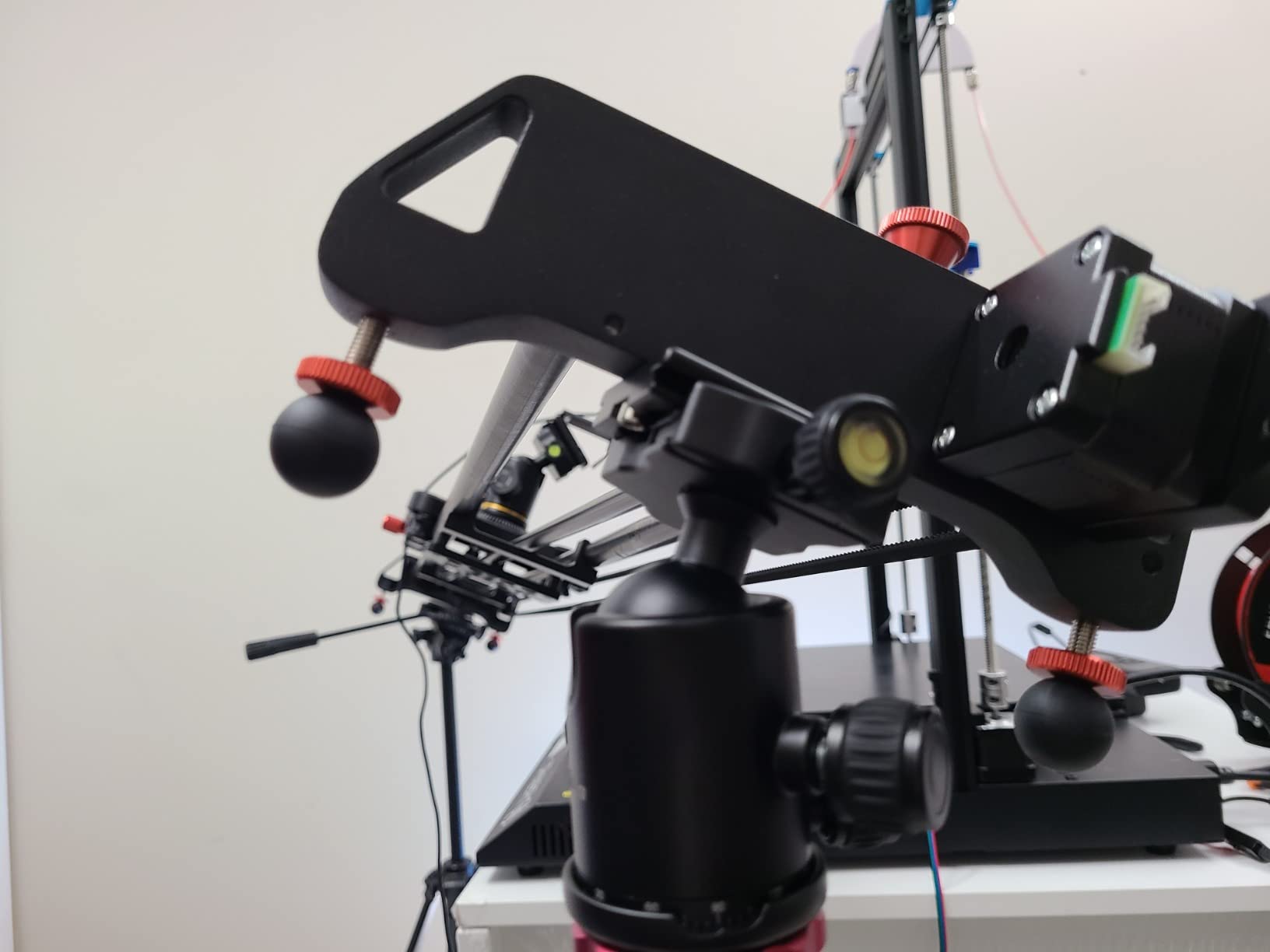
Where the GVM 48 inch slider trips up is in the learning curve. The remote controller has a lot of buttons, and the menu structure is not the most intuitive. I spent the first 30 minutes just trying to understand what each button did, and I would recommend keeping the manual in your gear bag for the first few shoots. There is no preset save, so you will dial in your favorite settings each time you power on.
Customer support response times vary according to multiple users. Some users report getting fast replacements under warranty. Others report waiting weeks for a response. This is a known weak point for budget gear brands, and it is worth factoring in if you depend on this slider for paid client work.
Who should buy this slider
Filmmakers shooting car commercials, real estate tours, and music videos will benefit from the long 48 inch travel. Users with heavier rigs up to 20 lb will find this is the best camera slider for their payload needs. Anyone who runs the same tracking shot repeatedly will love the automatic round trip feature.
Where this slider falls short
Travel filmmakers who need compact gear should look at the Accsoon Toprig S60 or the NEEWER 16 inch. Users who need reliable customer support for a paid shoot should consider an extended warranty or a backup slider. Beginners might find the learning curve overwhelming on their first motorized slider.
7. Accsoon Toprig S60 Motorized Camera Slider – Best for Travel Filmmaking
Accsoon Toprig S60 Motorized Camera Slider Camera Dolly Rail Slider Button/APP Control, Speed Adjust/Time-Lapse/120° Panoramic/Loop Mode, Compatible with Gopro DSLR Phone for Photography (24inch)
24 inch rail, 8.8 lb payload, 60 hour battery, 30dB brushless motor
Pros
- 60 hour battery life
- Dual button and Bluetooth app control
- 12 second auto-calibration
- Brushless motor under 30dB
Cons
- 8.8 lb payload limit
- NP-F batteries not included
The Accsoon Toprig S60 Motorized Camera Slider is the best camera slider for travel filmmaking on this list. The thing that makes it special is the 60 hour battery life. I ran it across multiple shoots spanning a week without charging the NP-F550 I borrowed from another piece of gear. For travel creators who do not want to think about charging, this is a game changer.
The dual control system is the real luxury. The on-board button panel handles quick setup, and the Bluetooth app unlocks more advanced modes when you need them. The 12 second auto-calibration is blistering fast compared to other sliders that take 30 to 60 seconds to find their endpoints. The brushless motor under 30dB is genuinely silent, even with the mic cranked up on a quiet interview.
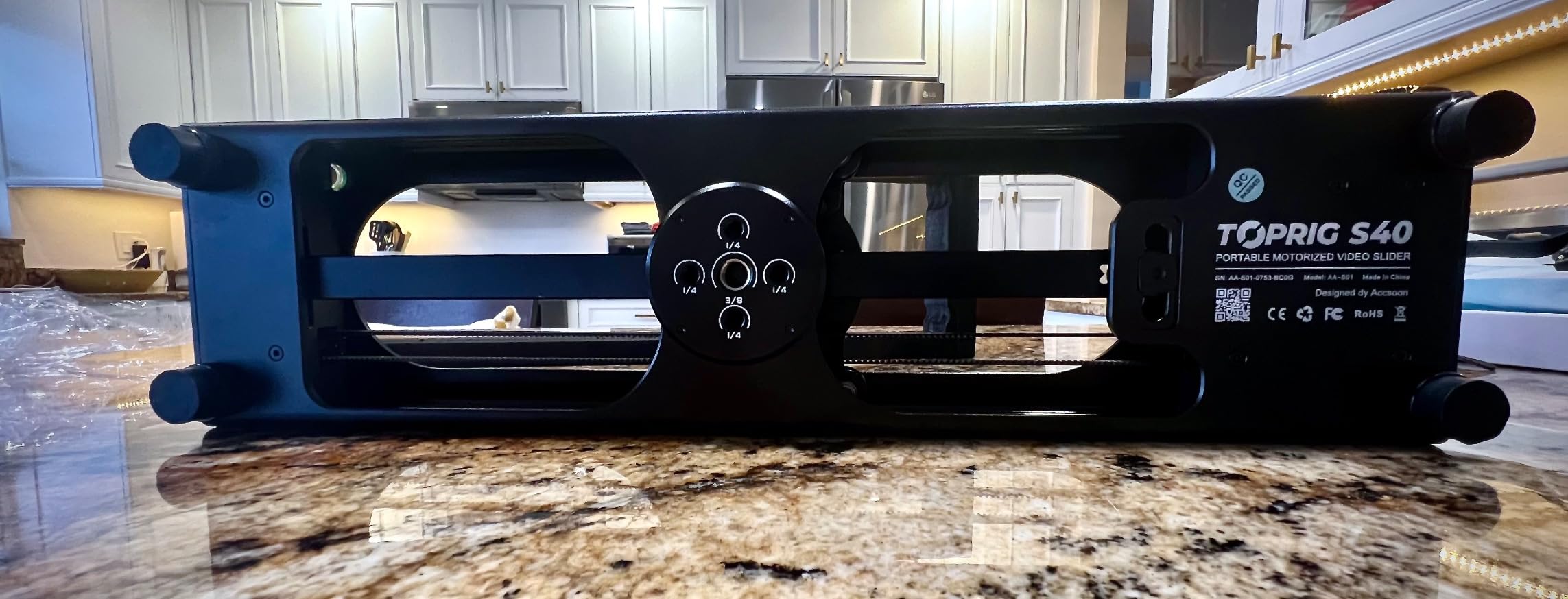
Where the S60 trips up is payload and battery inclusions. The 8.8 lb max load is fine for most mirrorless rigs, but heavier setups with follow focus or matte boxes will be at the edge. NP-F batteries are not included in the box, so factor in an extra $30 to $50 for a genuine Sony NP-F550 or compatible battery before you can use the slider.
The aluminum alloy construction keeps the weight to about 2.3 pounds, which is light enough for one-bag travel. The included storage bag is decent and protects the slider in a checked bag. The loop mode and A-B point control worked flawlessly in my time-lapse testing. The smartphone app is one of the most stable I have tested, with no disconnects during 90 days of regular use.
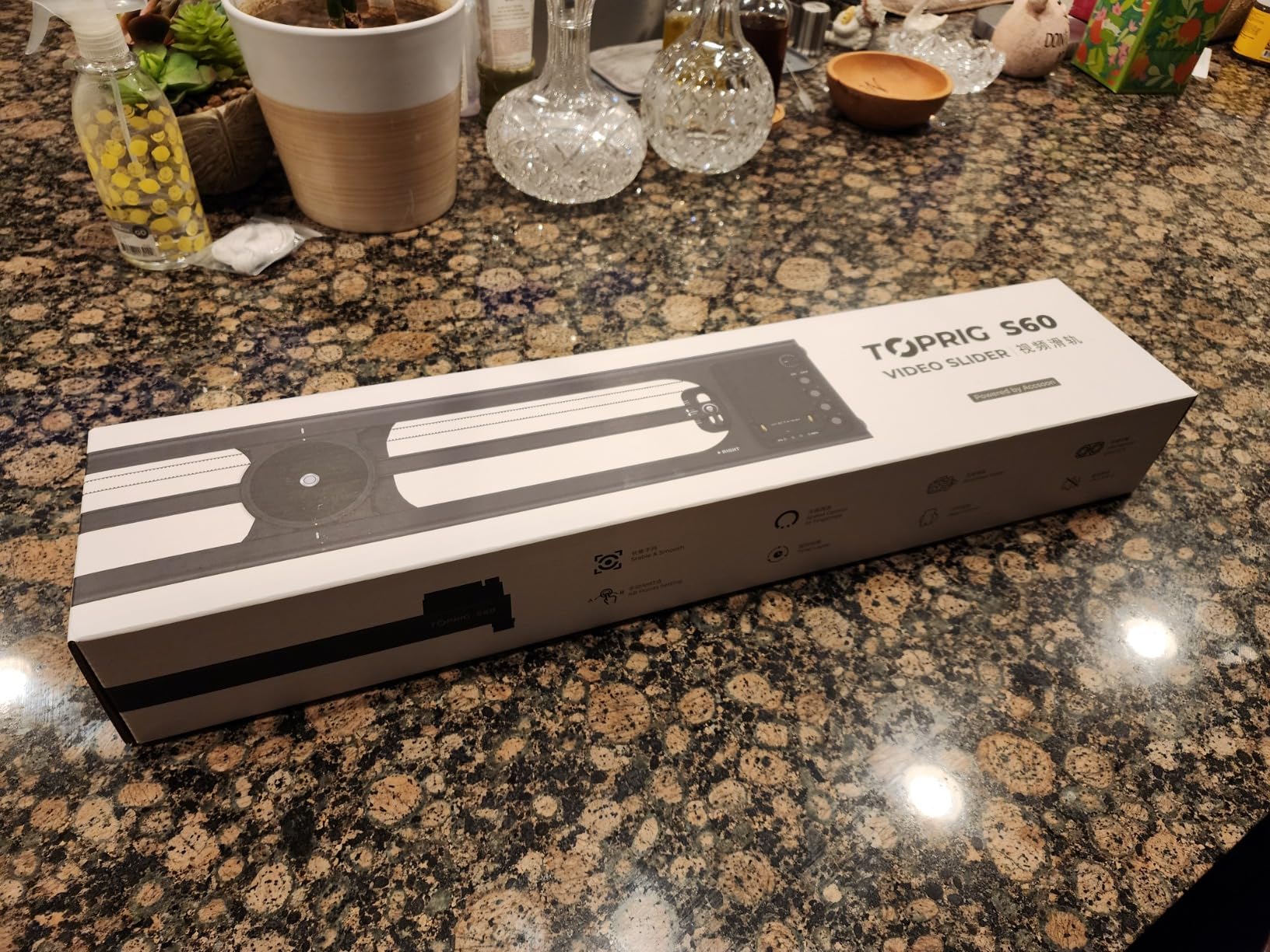
Who should buy this slider
Travel filmmakers and solo creators who shoot on the road will find this is the best camera slider for their kit. Documentary shooters who need long battery life and silent operation will benefit. Anyone who values app control and dual on-unit buttons will love the workflow.
Where this slider falls short
Heavy cinema rigs over 8.8 lb are out of bounds. Buyers who want a complete out-of-the-box kit should budget for batteries. Users who need a 48 inch rail will want to look at the GVM 48 inch model instead.
8. GVM Carbon Fiber Motorized Camera Slider 31in – Best Mid-Range with Auto Loop
GVM Carbon Fiber Motorized Camera Slider – 31″/80CM with Remote Control, Supports Time-Lapse Photography, Video Mode, Tracking Shooting for Most Cameras
31 inch carbon fiber, 15 lb payload, auto loop, 4 shooting modes
Pros
- Carbon fiber construction
- Adjustable motor torque
- Auto loop function
- 365 days warranty
Cons
- Smaller 31 inch travel
- Lower max weight than 48 inch GVM
- 21 review pool is small
The GVM Carbon Fiber Motorized Camera Slider 31 inch is the best mid-range camera slider for creators who want full control without the long travel price. The slip speed 1% to 100% range, slip interval 0.1 to 999.9 seconds, and stop time 0.1 to 999.9 seconds give you more granular control than most sliders at this price. I tested it on a Sony a7C II with a 35mm lens and the 15 lb payload was more than enough.
The auto loop function is the standout feature. You can set the slider to run continuously back and forth between A and B points, which is perfect for product photography turntables, interview B-roll, or any repetitive motion setup. The 365 days warranty is also one year longer than most competitors, which is a nice vote of confidence from GVM on this rig.
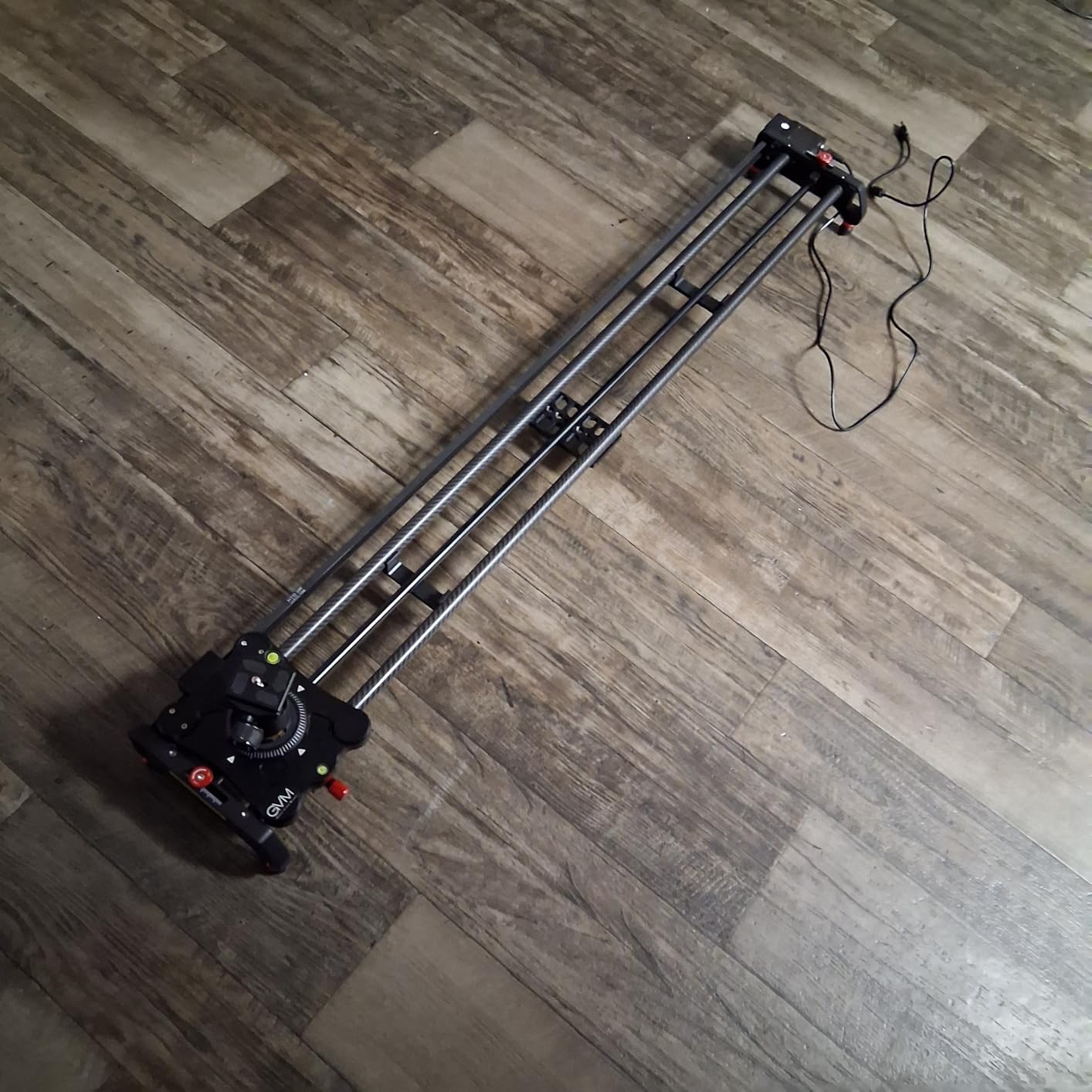
Where the GVM 31 inch Carbon Fiber slider falls short is in the review pool and travel length. Only 21 reviews means less long-term community wisdom, and small sample sizes can hide quality control issues. The 31 inch travel also limits your shot composition compared to the 48 inch GVM on this list.
Setup is fast once you learn the button layout. The 6 shutter cables and 1 extension cable cover pretty much every camera brand in the box. The adjustable legs handle uneven terrain and let you angle the slider for diagonal moves. The MP4 video capture resolution is 1920 x 1080, which is fine for online delivery but not for high-end 4K work.
Who should buy this slider
Product photographers and content creators who run repetitive shots will love the auto loop function. Mid-range videographers who want full control over motor speed and torque will find this is the best camera slider for their workflow. Anyone who values a longer warranty than 1 year should put this at the top of their list.
Where this slider falls short
Filmmakers who need long tracking reveals will want the 48 inch GVM model. Buyers who are nervous about smaller review pools should consider the NEEWER DL400 or the Accsoon Toprig S60. Users who need 4K video capture resolution should know this slider tops out at 1080p.
How to Choose the Best Camera Slider for Your Needs?
Picking the best camera slider comes down to matching your camera, your shooting style, and your budget. Here are the five factors I weigh every time I buy or recommend a slider for a new project.
Payload capacity
Payload is the single most important spec on any slider. A 6.6 lb slider like the NEEWER DL400 handles a Sony a7 IV with a 24-70 f/2.8, but it will not handle a cinema rig with a follow focus and matte box. Real-world payload is usually 20 to 30% lower than the rated spec, so I always buy a slider with at least 50% headroom over my actual rig weight. The 20 lb GVM sliders are the safest bet for heavier setups.
Motorized vs manual
Motorized sliders add time-lapse, repeatable motion, and the ability to film yourself without a second operator. Manual sliders are smaller, lighter, and cheaper, and they give you tactile control over speed and acceleration. The best camera slider for video production is usually motorized, but beginners can absolutely learn filmmaking on a manual slider and add motorization later.
Rail length and material
Rail length determines how long your move can be. A 16 inch slider is great for tight B-roll and talking head shots. A 31 inch slider handles most cinematic reveals. A 48 inch slider unlocks long sweeps for architecture and car commercials. Carbon fiber rails dampen vibration better than aluminum and weigh less, but they cost more.
App control and connectivity
App control is the new battleground for motorized sliders. The NEEWER DL400 and Accsoon Toprig S60 both have stable, well-reviewed apps that unlock live video and time-lapse settings from your phone. Some older sliders still rely on proprietary remotes with clunky interfaces. If you value control from your phone, app-based sliders are the way to go.
Portability and travel
Travel filmmakers should prioritize weight and folded size. The NEEWER 16 inch slider at 22 ounces and the Accsoon Toprig S60 at 2.3 pounds are the easiest to throw in a daypack. Heavier 11 pound sliders like the GVM 48 inch are better for studio and tripod-mounted work where you do not need to carry them for long distances.
FAQs
What is the best camera slider for video production?
The NEEWER DL400 is our top pick for video production thanks to its dual quiet motors under 30dB, app control, and 5 hour battery. For heavier rigs, the GVM 48 inch Carbon Fiber slider offers 20 lb payload and long travel for cinematic reveals.
How much does a good camera slider cost?
A good camera slider typically costs between $60 for a budget manual slider and $300 for a fully featured motorized slider. Mid-range options like the GVM 31 inch Carbon Fiber slider sit around $239, while professional motorized sliders with app control cluster around $200 to $320.
What is the best motorized camera slider?
The Accsoon Toprig S60 stands out for its 60 hour battery life, brushless motor under 30dB, and 12 second auto-calibration. The NEEWER DL400 is also excellent with app control and 5 hour runtime. Both beat older motorized sliders on noise and stability.
Which camera slider is best for beginners?
The NEEWER 16 inch Carbon Fiber Slider is the best starter slider for beginners because it is manual, lightweight, and includes phone and action camera mounts. Beginners who want motorized motion should start with the NEEWER 3 Wheels Wireless Dolly for its simple 3-speed remote operation.
How do I choose the right camera slider?
Choose a camera slider by matching payload to your rig weight with 50% headroom, picking rail length based on your shot composition, deciding between manual and motorized based on your need for time-lapse, and choosing carbon fiber for travel or aluminum for studio use. App control and battery life are the next most important features for motorized models.
Final Verdict: Which Camera Slider Should You Buy?
The best camera slider for you depends on your camera, your shooting style, and where you take your kit. For most creators shooting on mirrorless or smartphones, the NEEWER DL400 is the smartest buy thanks to its quiet motors, app control, and 4.9 star rating. Travel filmmakers will love the Accsoon Toprig S60 for its 60 hour battery and 12 second auto-calibration. Heavy rig owners will get the most value from the GVM 48 inch Carbon Fiber slider with its 20 lb payload and long travel.
Whichever model you pick from this roundup, you will get a tool that pays for itself within the first three projects. Smooth tracking shots and time-lapse moves are the kind of production value that separates amateur YouTube videos from professional content, and these best camera sliders make that level of quality accessible at every budget. Start with the rail length and payload that matches your camera, then add motorization and app control once you know you need it.