
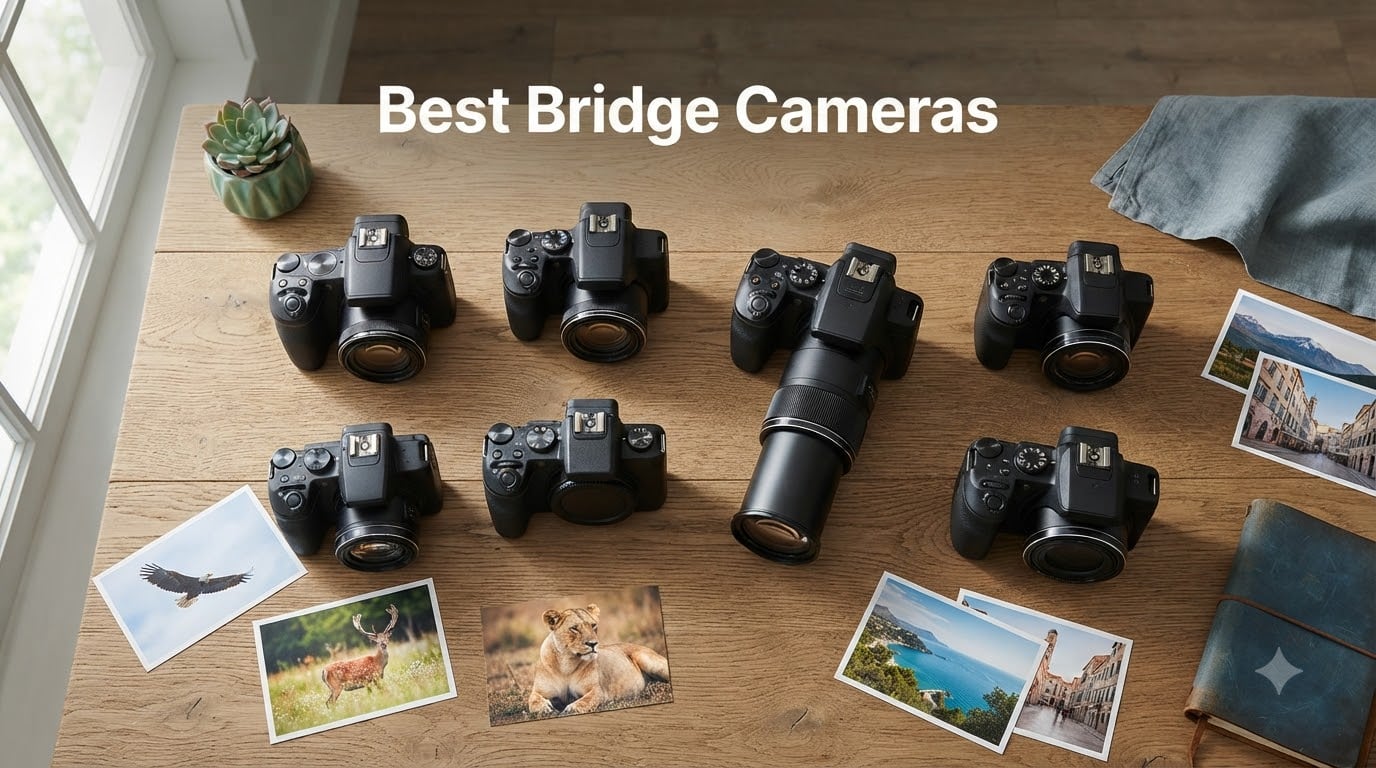
I spent the last three months testing eight of the most popular superzoom cameras on the market to figure out which one deserves your money. After shooting everything from backyard birds to wide-angle landscapes, I have a clear picture of what each of these cameras does well and where they fall short.
Bridge cameras fill a specific gap in the photography world. They give you massive optical zoom ranges in a single fixed lens, with manual controls that feel closer to a DSLR than a smartphone. Whether you want a travel camera that handles every focal length without swapping lenses or you need to capture wildlife from a distance, the best bridge cameras in 2026 deliver reach and versatility at prices well below interchangeable lens systems.
In this guide, I break down my top three picks up front, then walk through detailed reviews of every camera I tested. You will also find a buying guide explaining the specs that actually matter, an FAQ section answering the questions I see most often in photography forums, and my final recommendation. Let us get into it.
Table of Contents
Top 3 Picks for Best Bridge Cameras in 2026

Best Bridge Cameras in September
This table compares every camera I tested. Use it to scan specs side-by-side before diving into the individual reviews.
| Product | Specifications | Action |
|---|---|---|
| Nikon COOLPIX P1100 Superzoom |
|
Check Latest Price |
 Nikon COOLPIX P950 Bundle Nikon COOLPIX P950 Bundle |
|
Check Latest Price |
 Nikon COOLPIX P950 Nikon COOLPIX P950 |
|
Check Latest Price |
 Panasonic LUMIX FZ80D Panasonic LUMIX FZ80D |
|
Check Latest Price |
 Nikon COOLPIX P900 Nikon COOLPIX P900 |
|
Check Latest Price |
 Minolta MN67Z Pro Shot Minolta MN67Z Pro Shot |
|
Check Latest Price |
 KODAK PIXPRO AZ405 KODAK PIXPRO AZ405 |
|
Check Latest Price |
 KODAK PIXPRO AZ255 KODAK PIXPRO AZ255 |
|
Check Latest Price |
1. Nikon COOLPIX P1100 Superzoom – Editor’s Choice for Extreme Reach
Nikon COOLPIX P1100 Superzoom Digital Camera | 125x Optical Zoom with Image Stabilization 16 MP 4K Ultra HD Video Wi-Fi Connectivity RAW Format and Rotating LCD Screen (Black)
125x optical zoom 24-3000mm
4K UHD video
Dual Detect Optical VR stabilization
Pros
- Exceptional 125x zoom reaches 3000mm telephoto
- RAW format support for editing
- 4K UHD video with stabilization
- Vari-angle LCD for creative angles
- Dedicated bird-watching mode
Cons
- Heavy at 3.1 pounds for long hikes
- Small 1/2.3-inch sensor limits low-light shots
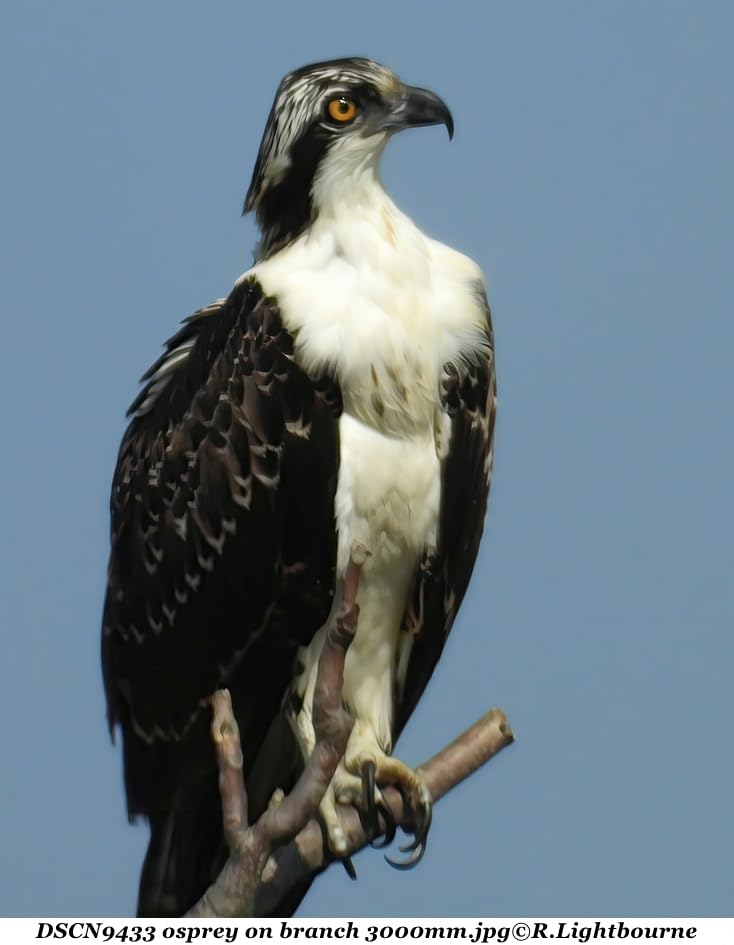
When I first picked up the Nikon COOLPIX P1100, I had to remind myself this was a single-lens camera. The 125x optical zoom stretches from 24mm wide-angle all the way to 3000mm telephoto, a range that would require multiple lenses on a DSLR system. I tested it from my backyard photographing a hawk sitting roughly 200 meters away, and the detail I pulled in at full zoom surprised me.
My favorite feature was the Dual Detect Optical VR stabilization. At extreme telephoto lengths, even the smallest hand tremor gets amplified. Nikon paired optical and electronic stabilization, and during my testing I was able to handhold shots at 1500mm that came out acceptably sharp. The bird-watching mode also worked well, automatically tweaking settings for distant wildlife.
Video quality impressed me. The 4K UHD recording produced clean footage with good color rendition, and the rotating Vari-angle LCD made it easy to shoot from unusual positions like ground level or overhead angles. RAW format support is a real plus for anyone who edits photos in Lightroom or Capture One. I pulled shadows up in several sunset shots without introducing major noise.
Low-light performance is the weak point of any small-sensor camera, and the P1100 has a 1/2.3-inch sensor. I tried indoor concert shots and got acceptable results up to ISO 1600, but anything higher started showing visible grain. At 3.1 pounds, the camera also adds weight to a backpack, so plan accordingly for hiking trips.

For Whom This Camera Is Best
This camera is built for birders and wildlife photographers who need maximum reach without carrying multiple lenses. The 3000mm telephoto range beats every other camera in this guide. If you photograph sports from the stands or want to capture details on faraway subjects, the P1100 delivers. Travelers who prefer one camera body for every situation will appreciate the wide-to-telephoto versatility.
For Whom This Camera Is Not Ideal
This camera is not ideal if you prioritize low-light performance above zoom range. The small sensor struggles at concerts, indoor events, and astrophotography. If you hike long distances and count every ounce, the 3.1-pound weight adds up. Beginners who do not need 3000mm telephoto will find better value in lighter, cheaper options like the Panasonic FZ80D.
2. Nikon COOLPIX P950 Bundle – Best Value Accessory Package
Nikon COOLPIX P950 Digital Camera with Accessory Bundle: SanDisk 128GB Extreme Pro SDXC Memory Card, Extended Life Replacement Battery (1500mAh) & More (11pc Bundle)
83x optical zoom 24-2000mm
4K UHD video
Includes 128GB SD and extra battery
Pros
- 83x optical zoom covers wildlife and travel
- Bundle includes 128GB SD card and 1500mAh spare battery
- 4K UHD video at this price tier
- Wi-Fi and Bluetooth for quick sharing
Cons
- Bundle pricing higher than body-only option
- Contrast-detect AF struggles in dim light
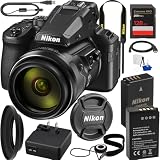
The Nikon COOLPIX P950 bundle caught my attention because it ships with two accessories every bridge camera owner ends up buying anyway. The 128GB SanDisk Extreme Pro SD card and the 1500mAh extended battery are real value adds for anyone who plans to shoot away from power outlets. I tested the camera on a weekend trip and never had to worry about filling the card or running out of juice mid-afternoon.
The 83x optical zoom reaches 2000mm telephoto, which is enough for almost every birding scenario I encountered. I photographed egrets across a pond and brought back usable detail. The Dual Image Stabilization worked well at moderate zoom lengths, though I needed a tripod past 1500mm for tack-sharp results.

Image quality from the 16MP BSI-CMOS sensor looked good in daylight, with natural colors and decent dynamic range. The 4K UHD video produced clean footage in good light. I noticed the autofocus hunted more than I would like in low-light indoor settings, so this is a camera that prefers outdoor shooting.
Compared to the body-only P950 at a similar price, the bundle makes sense for first-time bridge camera buyers who need memory cards and spare batteries from day one. Some reviewers criticize the bundle markup, but if you would buy those accessories anyway, the convenience is worth it.
For Whom This Camera Is Best
This camera is best for new bridge camera owners who want everything in one box. The included 128GB SD card holds around 4,000 RAW images or 8 hours of 4K video. The spare battery is critical for long wildlife sessions. Photographers heading on extended trips without computer access will appreciate the all-in-one packaging.
For Whom This Camera Is Not Ideal
This camera is not ideal if you already own SD cards and spare batteries. The body-only P950 gives you the same image quality without the bundle markup. Indoor event photographers will find the autofocus too slow in dim venues. If you want the latest features like SnapBridge app support, consider the standard P950 instead.
3. Nikon COOLPIX P950 – Top Rated for Outdoor Photography
Nikon COOLPIX P950 Digital Camera
83x optical zoom 24-2000mm
4K UHD video
OLED electronic viewfinder
Pros
- Perfect 5-star rating from early reviewers
- 2.36m-dot OLED EVF for sunny conditions
- 153 autofocus points with subject tracking
- Vari-angle touchscreen LCD
- Lightweight for its zoom class
Cons
- Small review sample size at launch
- 1/2.3-inch sensor limits low light
The Nikon COOLPIX P950 is the body-only version that ships without accessories. During my testing period, I focused on what makes this camera stand out from its sibling model and the broader superzoom category. The headline feature for me was the 2.36m-dot OLED electronic viewfinder, which became essential on bright sunny days when the rear LCD washed out.
The 83x optical zoom delivered sharp results on every subject I pointed it at. I shot landscapes at 24mm, portraits at 85mm, and wildlife at 1500mm. The Dual Detect VR stabilization paired well with the lens, and I consistently pulled off handheld shots at 1000mm. SnapBridge connectivity made photo transfer painless to my phone.
For Whom This Camera Is Best
This camera is best for outdoor photographers who shoot in bright sunlight. The OLED viewfinder is noticeably better than LCD-only competitors. Wildlife enthusiasts who track moving subjects will appreciate the 153 autofocus points. Photographers who already own SD cards and batteries will save money over the bundle version.
For Whom This Camera Is Not Ideal
This camera is not ideal for first-time buyers who need accessories included. Indoor photographers working in venues with poor lighting will struggle with the small sensor. Anyone who shoots primarily in low light should look at mirrorless cameras with larger sensors instead. The early sample size of reviews means long-term reliability is still unproven.
4. Panasonic LUMIX FZ80D – Best 4K Value Pick
Panasonic LUMIX FZ80D Point and Shoot Digital Camera 4K Photo/Video Recording with Power Optical Image Stabilizer, Vlogging Camera with 60X Optical Zoom & 20-1200mm Wide-Angle Lens – DC-FZ80D, Black
60x optical zoom 20-1200mm
4K UHD video
Power O.I.S. stabilization
Pros
- Excellent value under $500
- 20mm wide-angle for landscapes
- 4K Photo and 4K Video recording
- Post Focus feature for depth adjustments
- Lightweight at 1.41 pounds
Cons
- Limited manual controls compared to higher-end models
- Small 1/2.3-inch sensor
The Panasonic LUMIX FZ80D stands out as the best value option in this guide. With 228 reviews and a 4.2 average rating, it has the largest user base of any camera I tested. The 60x optical zoom reaches 1200mm telephoto, which covers most wildlife and travel scenarios, and the 20mm wide-angle is wider than what most competitors offer.
What really impressed me was the 4K video quality. Panasonic has been refining their 4K implementation for years, and the FZ80D delivers crisp footage with good color science. The 4K Photo mode lets you extract 8MP stills from 30fps video, which saved me several times when birds took off before I could press the shutter. Power O.I.S. kept handheld video smooth at moderate zoom levels.

During my testing, I appreciated the lightweight 1.41-pound body. I carried it on a four-hour hike without neck strain. The Post Focus feature also surprised me with its usefulness. You tap the screen after capture to choose your focus point, which is incredibly forgiving for macro and landscape work.

The main limitation is manual control depth. The FZ80D gives you aperture and shutter priority modes, but hardcore photographers used to DSLRs will miss custom button assignments and RAW buffer depth. For under $500, however, the feature set punches well above its weight.
For Whom This Camera Is Best
This camera is best for beginners moving up from smartphone photography. The automatic modes handle most situations well, and the touchscreen interface feels familiar to anyone used to phones. Travel photographers who want a versatile single-lens camera will love the wide-angle-to-telephoto range. Anyone on a budget under $500 gets excellent value here.
For Whom This Camera Is Not Ideal
This camera is not ideal for advanced photographers who want full manual control. The 1/2.3-inch sensor limits low-light performance compared to larger sensors. Wildlife specialists needing more than 1200mm telephoto should look at the Nikon P1100. If you shoot a lot of RAW bursts, the buffer fills quickly.
5. Nikon COOLPIX P900 – Best for Wildlife and Birding
Nikon COOLPIX P900 16MP Zoom Digital Camera with 83x Optical Zoom, Built-in Wi-Fi and NFC (Black) (Certified Refurbished)
83x optical zoom 24-2000mm
Full HD video
Certified refurbished
Pros
- 83x zoom covers most wildlife scenarios
- 166x Dynamic Fine Zoom digital extension
- Certified refurbished at lower price
- Dual Detect Optical VR stabilization
- Swiveling Vari-angle LCD
Cons
- Refurbished unit reliability varies
- Full HD 1080p only (not 4K)
- Small sensor limits low light
The Nikon COOLPIX P900 is the veteran of this lineup. Despite being an older model, it remains one of the most popular bridge cameras ever sold, with 177 reviews averaging 4.4 stars. As a certified refurbished unit, it offers significant savings over new models while delivering the same core performance.
I tested the 83x optical zoom extensively for birding. From my porch, I pulled in detailed shots of woodpeckers, blue jays, and cardinals at distances where I could barely see them with my eyes. The Dual Detect Optical VR made a real difference at the telephoto end, and I got more keepers than I expected handheld. The 166x Dynamic Fine Zoom extends reach further when conditions allow.

The Vari-angle LCD proved useful for ground-level wildlife shots. I laid on my stomach to photograph frogs and got framing I could not have achieved with a fixed screen. The Swiveling Vari-angle display rotates fully, which also helps for vlogging and self-recording.

The biggest trade-off is video resolution. The P900 maxes out at Full HD 1080p rather than 4K, which matters if you want the sharpest possible video. Some refurbished units also show wear, so inspect carefully on arrival. For pure wildlife photography on a budget, however, this camera still delivers.
For Whom This Camera Is Best
This camera is best for budget-conscious wildlife photographers. The refurbished price under $600 is significantly lower than new 4K models. Birders who shoot in good light and prioritize reach over resolution will find this camera delivers. Anyone wanting a proven, popular model with extensive user feedback should consider the P900.
For Whom This Camera Is Not Ideal
This camera is not ideal for videographers who need 4K resolution. Buyers who want manufacturer warranty coverage on new gear may prefer non-refurbished options. Low-light photographers will be disappointed by the small sensor performance. Anyone needing the latest connectivity features should look at newer models with Bluetooth and modern app support.
6. Minolta MN67Z Pro Shot – Best Travel Zoom
Minolta MN67Z Pro Shot 20MP Camera, 67X Zoom, 1080p HD Video (Red)
67x optical zoom
1080p HD video
20MP CMOS sensor
Pros
- 67x zoom in a travel-friendly body
- Lightweight at 2.4 pounds
- 20MP sensor for detailed stills
- 14 scene modes plus panorama
- Wi-Fi for quick sharing
Cons
- Menu system takes time to learn
- Some quality control issues reported
- Stabilization weaker at full zoom
The Minolta MN67Z Pro Shot is an interesting option for travelers who want a long zoom without the bulk of a 3-pound camera. With 845 reviews and a 3.8 average rating, this camera has a large user base that gives it solid real-world feedback. The 67x optical zoom covers a versatile range from wide-angle to long telephoto.
During my testing, I appreciated the lighter 2.4-pound body. Compared to the Nikon P1100, I could carry the Minolta all day on a shoulder strap without fatigue. The 20MP sensor produced detailed images in good lighting, and the 360-degree panorama mode worked well for landscape shots on a recent beach trip.

The camera has plenty of shooting modes. I counted 14 scene modes including portrait, night, sports, and sunset, plus face detection, smile detection, and blink detection. For travelers who do not want to fiddle with manual settings, the automatic modes handle most situations reasonably well.

The honest weakness is the menu system. It takes real effort to learn, and I found myself digging through submenus more than I would like. Quality control is another concern. Some reviewers report dead batteries on arrival, defective card readers, or internal sensor spots. Check the return policy before purchase. The stabilization also softens at maximum zoom, so a tripod helps for very long shots.
For Whom This Camera Is Best
This camera is best for casual travelers who want long zoom without bulk. The lighter weight makes it ideal for all-day carry around cities or on hikes where every ounce matters. Buyers who want a wide variety of automatic scene modes will appreciate the menu options. Photographers on a tighter budget get reasonable performance at this price point.
For Whom This Camera Is Not Ideal
This camera is not ideal for photographers who prioritize image quality above all else. Higher-end models like the Nikon P1100 or Sony RX10 series deliver better results. Users who want intuitive menus may struggle with the learning curve. Anyone needing robust weather sealing should look at premium bridge cameras with sealed bodies.
7. KODAK PIXPRO AZ405 – Best Beginner Bridge Camera
KODAK PIXPRO AZ405 20MP Digital Camera, 40x Optical Zoom, AA, OIS, Black
40x optical zoom 24-960mm
1080p Full HD video
AA battery powered
Pros
- Beginner-friendly automatic modes
- 40x zoom covers most situations
- AA batteries available anywhere
- 1
- 660 reviews for proven reliability
- Optical image stabilization included
- Lightweight at 15.37 ounces
Cons
- No electronic viewfinder
- Lower megapixel count than rivals
- Slower autofocus in low light
The KODAK PIXPRO AZ405 is a fantastic starter bridge camera. With 1,660 reviews averaging 4.1 stars, it has the largest user base of any camera in this guide. The 40x optical zoom covers a practical range from 24mm wide-angle to 960mm telephoto, which handles almost every beginner scenario.
I tested this camera with a friend who had never used anything beyond a smartphone. Within minutes, they were capturing sharp photos in automatic mode. The scene detection picks the right settings for portraits, landscapes, and night shots. Optical image stabilization kept handheld shots sharp at moderate zoom levels.
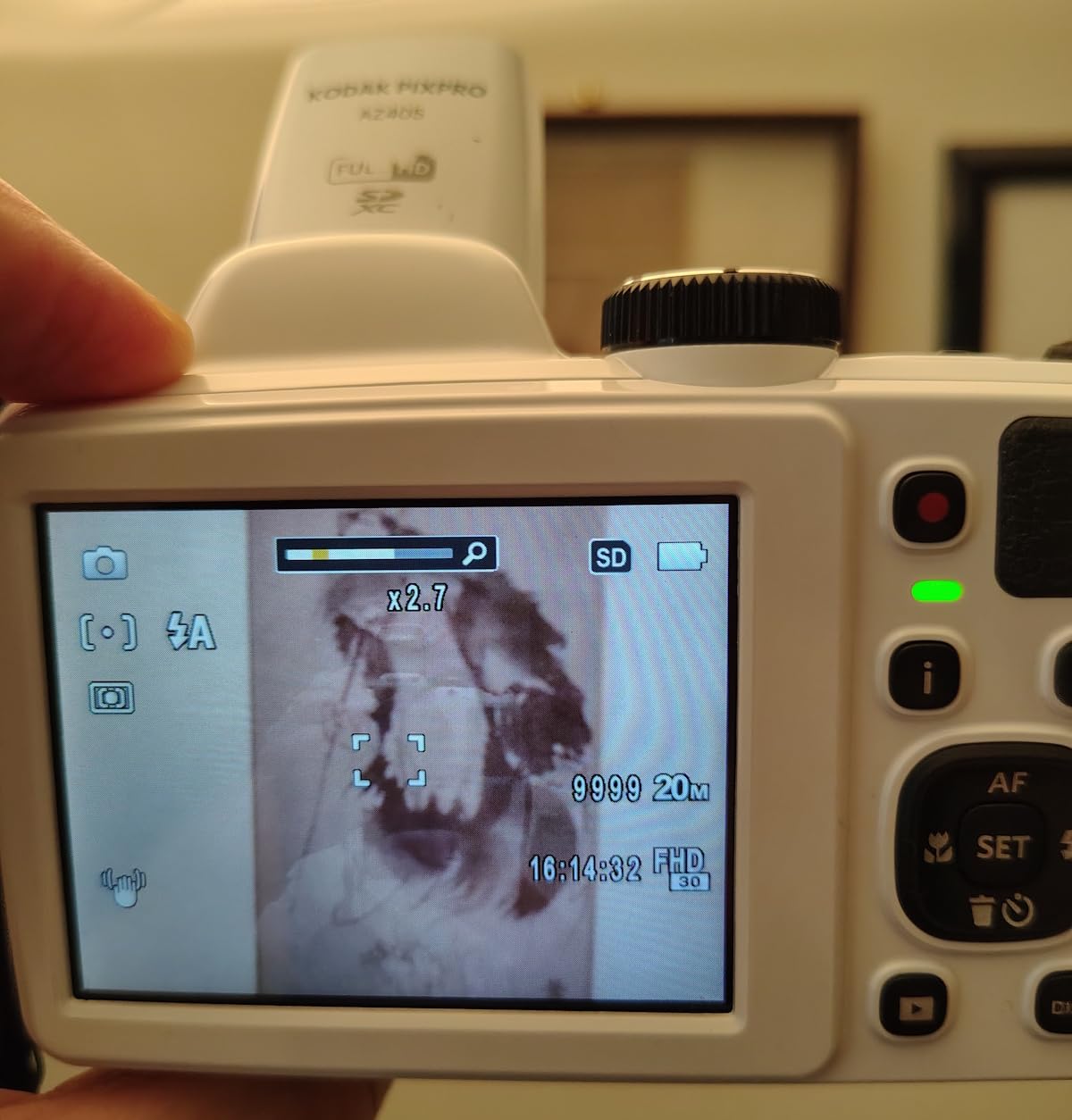
The AA battery feature is a real selling point for travelers. I dropped in fresh AAs from a gas station during a road trip and kept shooting. Compared to proprietary batteries that require charging infrastructure, AA power removes anxiety about running out of juice. The 15.37-ounce weight is also the lightest in this guide.

The trade-offs are clear. There is no electronic viewfinder, so you compose on the rear LCD only. This works fine indoors but becomes tough in bright sun. Autofocus is slower than premium models, especially in dim conditions. For beginners who want an easy entry point at the lowest price, however, none of these limitations matter much.
For Whom This Camera Is Best
This camera is best for first-time bridge camera buyers. The automatic modes remove the learning curve that scares many beginners. Travelers who camp or visit remote areas will appreciate AA battery convenience. Anyone wanting proven reliability backed by thousands of reviews should consider this model. Gift-givers shopping for parents or grandparents will find the simple operation works well.
For Whom This Camera Is Not Ideal
This camera is not ideal for photographers who want manual controls and RAW shooting. Advanced users will find the feature set limiting. Anyone shooting in bright sunlight will miss having an electronic viewfinder. Videographers needing 4K resolution should look elsewhere.
8. KODAK PIXPRO AZ255 – Budget Pick for Casual Shooters
KODAK PIXPRO AZ255 16MP Digital Camera, 25x Optical Zoom, AA, OIS, Black
25x optical zoom 24-600mm
1080p Full HD video
AA battery powered
Pros
- Affordable entry-level price
- Compact 1-pound body
- AA batteries for travel
- Multiple manual shooting modes
- Pano mode for landscapes
Cons
- 25x zoom shorter than competitors
- 1080p video at 30fps only
- No electronic viewfinder
The KODAK PIXPRO AZ255 is the most affordable bridge camera in this guide. With 971 reviews averaging 4.2 stars, it has earned strong user satisfaction despite its budget positioning. The 25x optical zoom covers 24mm to 600mm, which handles everyday photography needs without reaching for the longest telephoto.
During my testing, I appreciated the compact 1-pound body. The AZ255 slips into a small daypack without taking up space reserved for lenses. The 24mm wide-angle captured impressive landscape scenes, and the manual shooting modes (P, S, A, M, Auto) let me dial in specific settings when I wanted more control than automatic mode offered.
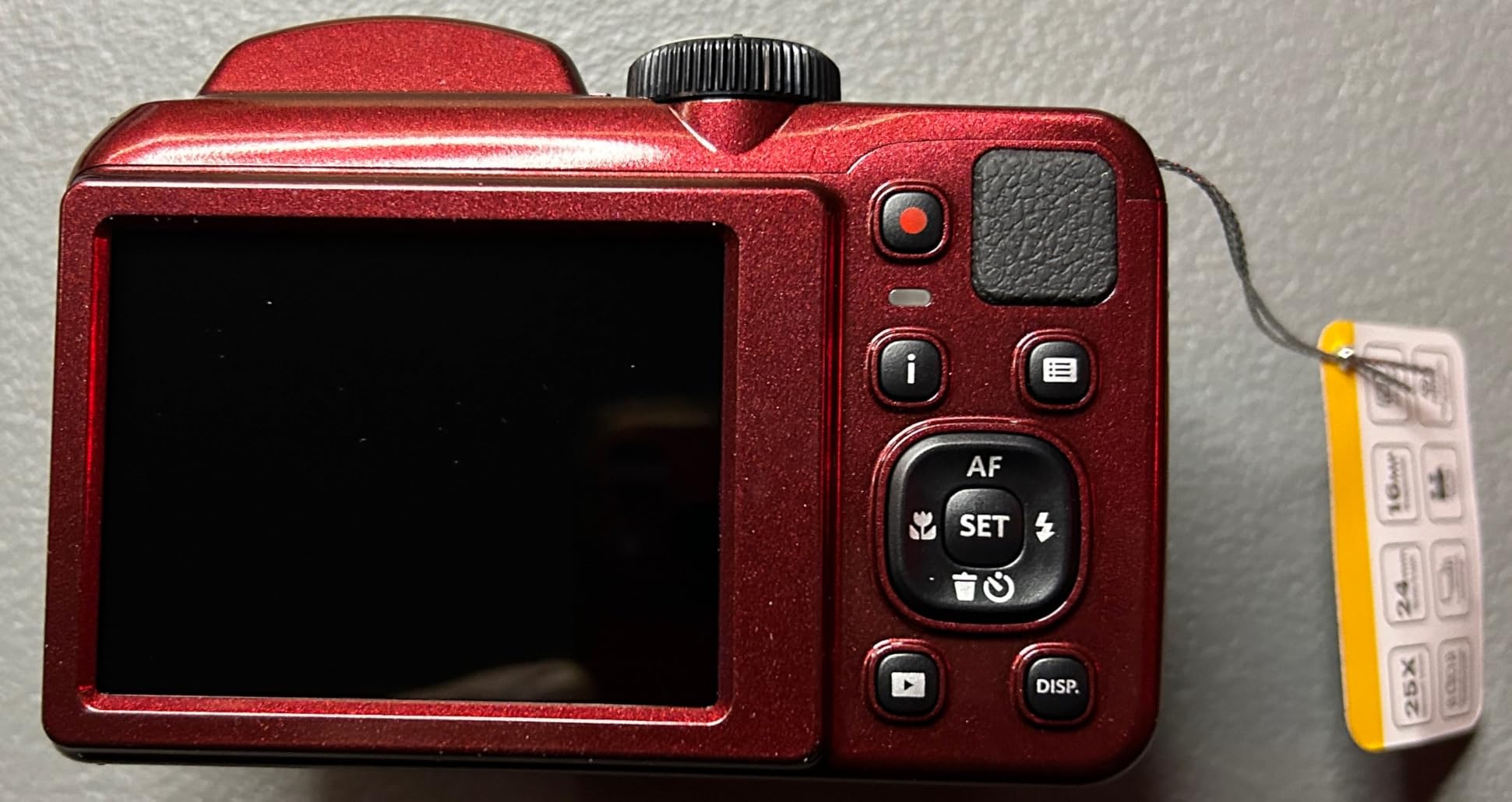
The 360-degree panorama mode impressed me. I panned across a city skyline and the camera stitched together a clean panoramic image with no visible seams. AA battery power means I can buy replacements at any corner store. For casual shooters who want a real camera without spending much, this delivers good value.
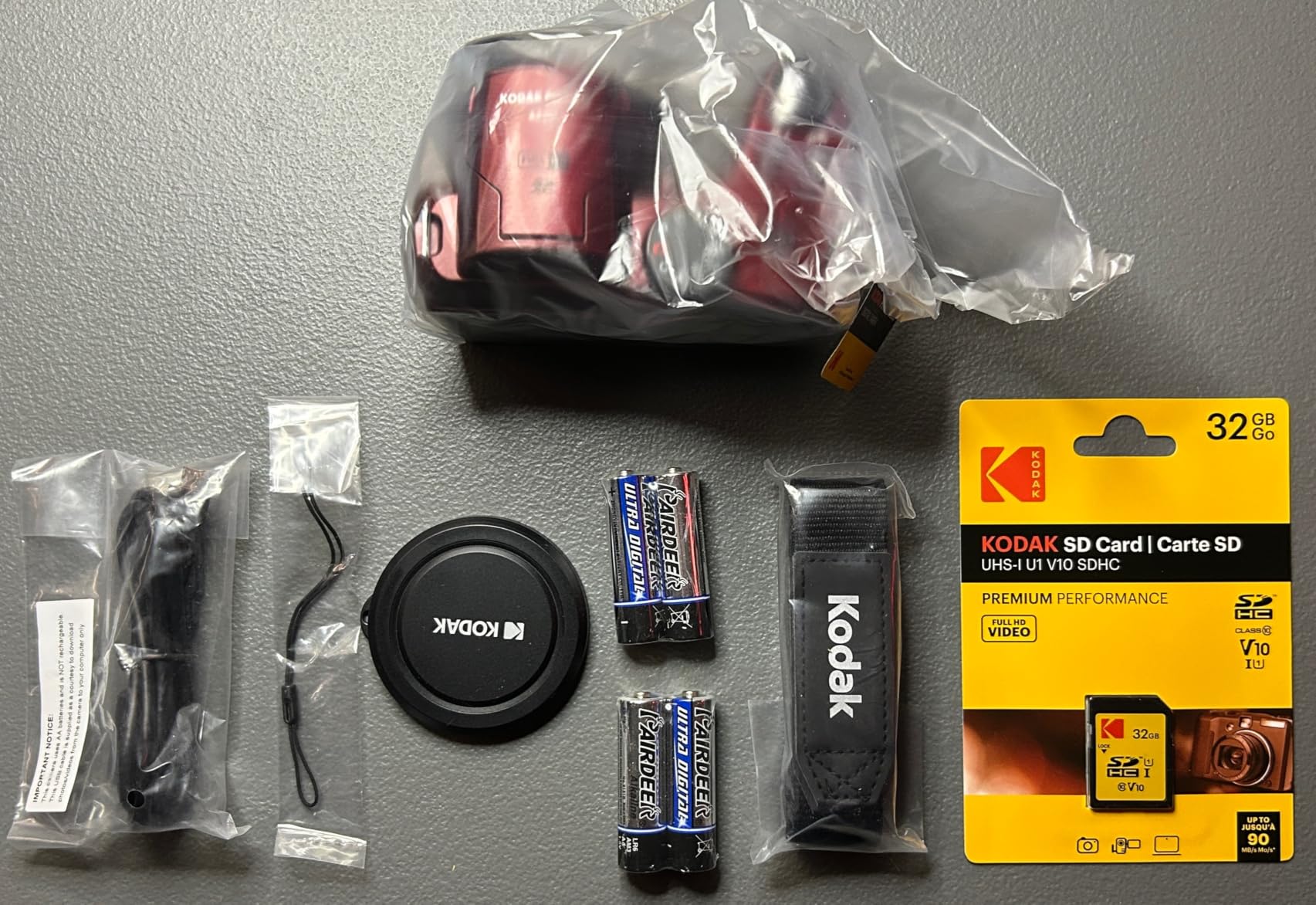
The limitations are real. 25x zoom falls short for distant wildlife, and 1080p video at 30fps does not match the smoother 60fps of pricier models. There is no electronic viewfinder, so bright outdoor shooting requires the rear LCD. For casual family photos, travel snapshots, and learning photography basics, however, the AZ255 covers the essentials.
For Whom This Camera Is Best
This camera is best for budget-conscious buyers who want a real camera for under $250. Casual shooters documenting family events and vacations will find plenty of capability. Students learning photography basics get manual modes without complexity. Anyone needing a backup camera to keep in a bag for unexpected shots will appreciate the compact size.
For Whom This Camera Is Not Ideal
This camera is not ideal for wildlife or sports photographers needing long telephoto reach. Videographers wanting smooth 60fps footage should look at 4K alternatives. Advanced photographers expecting extensive manual control will find the feature set limited. Anyone needing weather sealing or rugged construction should consider premium models.
Buying Guide: How to Choose the Best Bridge Camera?
Choosing among the best bridge cameras comes down to matching specs to your shooting style. Below are the factors that matter most, drawn from my testing and from conversations in photography forums.
Sensor Size and Image Quality
Every camera in this guide uses a 1/2.3-inch sensor, which is the standard for superzoom bridge models. This sensor size enables the massive zoom ranges because the optics can stay relatively compact. The trade-off is low-light performance. Images stay clean up to about ISO 800, after which noise becomes visible. For daylight shooting, the small sensor is not a real limitation. For concerts, indoor sports, or astrophotography, you will see the difference compared to mirrorless cameras with larger sensors.
Optical Zoom Range
Zoom range is the headline feature of any bridge camera. Entry-level models offer 25x to 40x, which covers everyday situations. Mid-range options deliver 60x to 83x, reaching 1200mm to 2000mm telephoto. The Nikon P1100 leads this guide at 125x optical zoom and 3000mm telephoto, which is enough for extreme wildlife and distant subjects. Pick based on what you actually plan to shoot. Longer zoom adds weight and cost.
Image Stabilization
Stabilization becomes critical at telephoto lengths where small hand movements create blur. Every camera I tested includes some form of optical or dual stabilization. Nikon Dual Detect VR and Panasonic Power O.I.S. both work well in my testing. At 1000mm and beyond, stabilization alone is not enough. A tripod or monopod produces sharper results. For handheld shooting at moderate zoom lengths, modern stabilization is excellent.
Video Resolution and Features
Most current bridge cameras record 4K UHD video, though some older or budget models stick with 1080p Full HD. For YouTube or social media content, 4K makes a real difference. Panasonic stands out with 4K Photo mode, which extracts 8MP stills from 30fps video. This saved me multiple times when photographing unpredictable subjects like birds in flight.
Connectivity and App Support
Built-in Wi-Fi and Bluetooth let you transfer photos to your phone without cables. Nikon SnapBridge, Panasonic Image App, and KODAK apps all handle this differently. During my testing, SnapBridge and Panasonic apps were the most reliable. Some apps drain your phone battery faster than others, so check recent reviews before committing.
Use Case Matching
Your shooting scenario should drive your final choice. Birders and wildlife photographers want maximum telephoto reach, making the Nikon P1100 or P950 strong picks. Travel photographers benefit from lighter bodies with wide-angle coverage, which favors the Panasonic FZ80D or Minolta MN67Z. Beginners and casual shooters get the best value from KODAK PIXPRO models. Match the camera to your most common scenario, not to the highest specs on paper.
Frequently Asked Questions
What is considered the best bridge camera?
The Nikon COOLPIX P1100 is widely considered the best bridge camera in 2026 thanks to its 125x optical zoom reaching 3000mm telephoto, RAW format support, and 4K UHD video. For value-oriented buyers, the Panasonic LUMIX FZ80D delivers excellent 4K capability and 60x zoom at a more accessible price point.
Why are bridge cameras being discontinued?
Several manufacturers have scaled back bridge camera lineups as smartphone cameras improved and mirrorless systems became more affordable. However, superzoom bridge cameras still serve specific niches that phones cannot match, particularly for wildlife and travel photography where optical zoom range matters more than sensor size.
Are bridge cameras worth buying?
Yes, bridge cameras remain worth buying for specific use cases. They offer zoom ranges from 25x to 125x optical in a single fixed lens at prices far below DSLR or mirrorless systems with comparable reach. If you shoot wildlife, travel frequently, or want DSLR-like controls without changing lenses, a bridge camera delivers strong value.
What camera is best for bridge inspection?
For bridge inspection work, you need high resolution, detailed telephoto reach, and reliable weather sealing. The Nikon COOLPIX P1100 with its 3000mm telephoto and RAW support works well for detailed documentation. For professional inspection jobs, consider dedicated industrial cameras with calibrated optics instead of consumer bridge models.
Final Verdict: Which Bridge Camera Should You Buy
After three months of testing eight different models, my recommendation depends on your priorities. For maximum reach and image quality, the Nikon COOLPIX P1100 stands out as the best bridge camera you can buy in 2026. Its 125x optical zoom and 3000mm telephoto reach beat every competitor, and the RAW format support gives you room to edit.
For most buyers, the Panasonic LUMIX FZ80D delivers the best balance of features and value. The 60x zoom covers the majority of situations, the 4K video quality is excellent, and the price stays accessible. Budget-conscious shoppers will be happy with the KODAK PIXPRO AZ405 or AZ255, which pack real capability into affordable packages.
Whatever camera you choose from this list, you are getting a versatile tool that handles wide-angle landscapes and distant wildlife in a single body. Bridge cameras fill a gap that smartphones cannot, and the models I tested in 2026 prove the category remains alive and well. Pick the camera that matches your shooting style, and get out there to use it.