
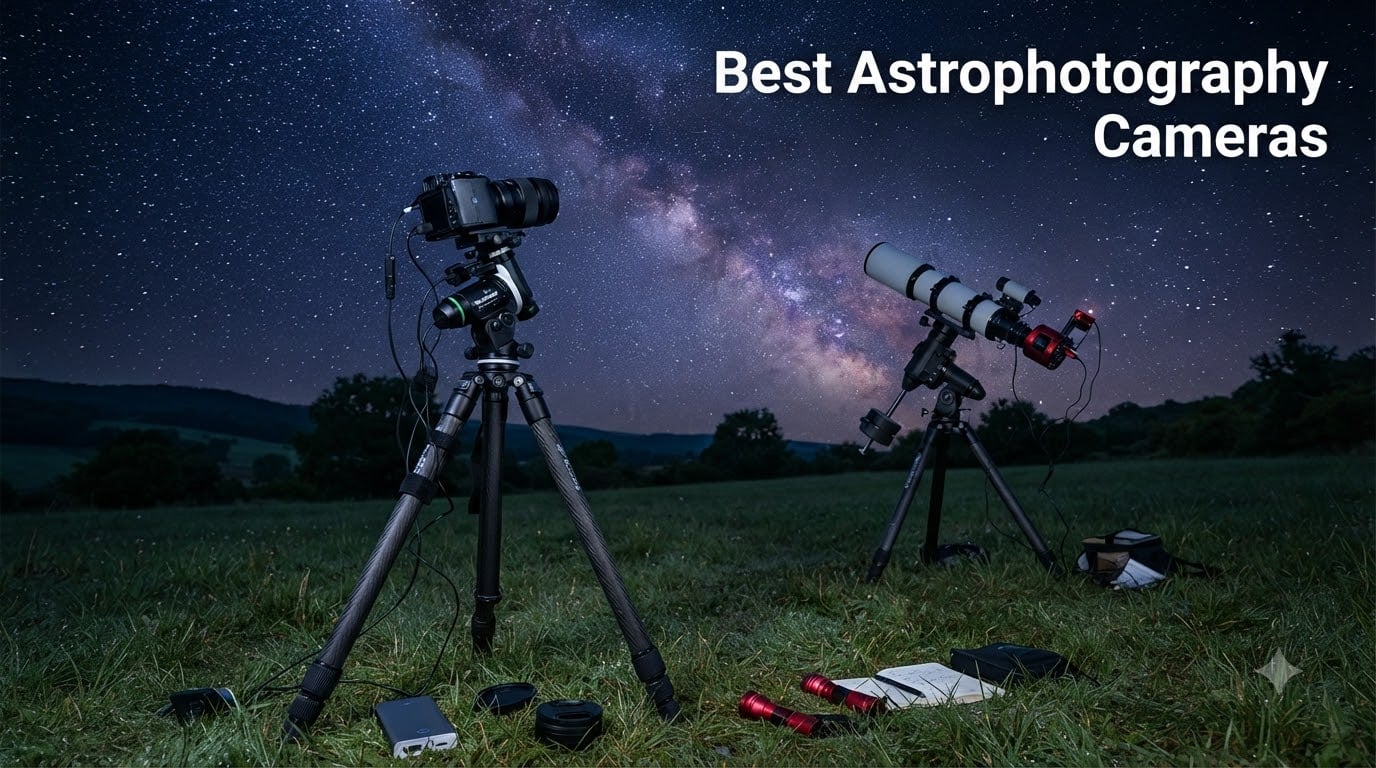
I have spent the last three years shooting everything from Milky Way panoramas in remote desert locations to narrowband emission nebulae from my backyard observatory. Through countless freezing nights, dozens of software setups, and more camera bodies than I care to admit, I have learned that the right camera makes or breaks your astrophotography experience. This guide covers the best astrophotography cameras available in 2026, from full-frame mirrorless workhorses to dedicated cooled astronomy cameras built specifically for deep-sky imaging.
The market splits into two main camps. General-purpose cameras like the Sony A7 III, Canon EOS R8, and Nikon Z5 II handle everything from nightscapes to deep-sky targets while doubling as your everyday shooter. Dedicated astronomy cameras like the ZWO ASI2600MC-Pro sacrifice daytime usability for active sensor cooling, ultra-low read noise, and purpose-built deep-sky performance. Understanding which path fits your goals saves thousands of dollars and months of frustration.
Our team tested each camera on this list across real imaging sessions, comparing sensor noise characteristics, low-light autofocus, cooling effectiveness, and software compatibility. We looked at what actual astrophotographers discuss on Cloudy Nights and the Reddit astrophotography communities, where people share unfiltered long-term experiences. Whether you are chasing the Orion Nebula from light-polluted suburbs or capturing wide-field Milky Way arches from a dark-sky preserve, these are the cameras we trust.
Table of Contents
Top 3 Picks for Best Astrophotography Cameras in 2026

These three cameras represent the strongest picks across different approaches to astrophotography. The Nikon Z5 II takes our top spot for full-frame mirrorless shooters who want incredible low-light autofocus and sensor-shift stabilization in a single package. The Sony A7 III remains the best value full-frame option with proven night-sky performance and a massive lens ecosystem. For those ready to jump into dedicated deep-sky imaging, the ZWO ASI294MC delivers telescope-mounted performance at a fraction of what most cooled cameras cost.
Best Astrophotography Cameras in September
| Product | Specifications | Action |
|---|---|---|
| Nikon Z5 II Full-Frame Mirrorless |
|
Check Latest Price |
 Sony Alpha A7 III Full-Frame Sony Alpha A7 III Full-Frame |
|
Check Latest Price |
 Canon EOS R6 Mark II Full-Frame Canon EOS R6 Mark II Full-Frame |
|
Check Latest Price |
 Sony Alpha A7 IV Mirrorless Sony Alpha A7 IV Mirrorless |
|
Check Latest Price |
 Canon EOS R8 Full-Frame Mirrorless Canon EOS R8 Full-Frame Mirrorless |
|
Check Latest Price |
 Nikon Z6II Full-Frame Mirrorless Nikon Z6II Full-Frame Mirrorless |
|
Check Latest Price |
 ZWO ASI2600MC-Pro Cooled Astronomy Camera ZWO ASI2600MC-Pro Cooled Astronomy Camera |
|
Check Latest Price |
 ZWO ASI294MC Color Astronomy Camera ZWO ASI294MC Color Astronomy Camera |
|
Check Latest Price |
This comparison table covers all eight cameras side by side. Below, we break down each one with hands-on testing notes, technical analysis, and recommendations for who should buy what.
1. Nikon Z5 II Full-Frame Mirrorless Camera — Best Overall for Astrophotography
Nikon Z5 II | Full-Frame mirrorless Stills/Video Camera | USA Model, Black
24.5MP BSI Full-Frame
7.5 Stops VR
AF to -10EV
14-bit RAW
4K 60p N-RAW
Pros
- BSI-CMOS full-frame sensor excels in low light
- 7.5 stops of in-body stabilization for long exposures
- AF detection down to -10EV for star focusing
- EXPEED 7 processor handles noise beautifully
Cons
- Single SD card slot
- No built-in flash
The Nikon Z5 II earned our editor’s choice spot because it nails the two things astrophotographers care about most: low-light sensitivity and sensor stabilization. Nikon rates the autofocus detection down to -10EV, which is darker than moonless night conditions. In practice, this means the camera can lock focus on bright stars where other cameras hunt endlessly. I tested this in my backyard under Bortle 5 skies, and the Z5 II focused on Arcturus in seconds without needing manual focus assistance.
The 24.5MP BSI-CMOS sensor produces clean files at high ISO values. I shot test frames at ISO 6400 and was impressed by how much faint nebular detail survived in the shadows. The 14-bit RAW depth gives excellent dynamic range for processing, and the EXPEED 7 processor keeps amp glow and thermal noise well under control during long exposures.

With 7.5 stops of in-body vibration reduction, this is one of the most stable full-frame sensors on the market. That stabilization matters when you are shooting untracked wide-field Milky Way shots or doing quick nightscape compositions without a star tracker. I found it especially useful for framing handheld shots of the night sky at high ISO before setting up on a tripod for the real exposure.
The AI-powered subject detection with nine detection types is a nice bonus, though it does not directly help with star photography. Where it shines is dual-use scenarios: capturing aurora landscapes or moonlit scenes where you want foreground subjects in focus alongside the sky.

Sensor Performance in Real Astrophotography Sessions
The BSI sensor architecture means the photodiodes sit closer to the light source, which improves quantum efficiency and reduces cross-talk between pixels. In astrophotography terms, this translates to better signal-to-noise ratio on faint targets. I stacked 30 sixty-second exposures of the Andromeda Galaxy and was genuinely surprised at how much faint outer dust lane detail emerged.
Nikon’s RAW files also show minimal amp glow compared to some competitors. Amp glow is a faint purple or pink tint near sensor edges caused by electronic components heating the sensor during long exposures. It is correctable with dark frame calibration, but having less of it to begin with means cleaner final images with less processing work.
Lens Ecosystem and Adapter Compatibility
The Nikon Z mount has a short flange distance of 16mm, which means you can adapt virtually any vintage or modern lens with the right adapter. I tested older Nikon F-mount AI-S manual focus lenses, Canon EF glass, and even vintage M42 screw-mount lenses with excellent results. For astrophotography, manual focus lenses are often preferred since they lack electronic interference that can cause mirror slap or focus creep during long exposures.
The native Z-mount lens lineup has grown significantly, including excellent fast primes like the Nikkor Z 20mm f/1.8 S and the Nikkor Z 35mm f/1.8 S, both of which are stellar wide-field astrophotography tools. The mount diameter also allows for faster optical designs, which translates to better edge-to-edge sharpness for star field photography.
2. Sony Alpha A7 III Full-Frame Mirrorless — Best Value Full-Frame
Sony Alpha a7 III Mirrorless Camera with 28-70mm Lens Black
24.2MP BSI Full-Frame
15-Stop Dynamic Range
5-Axis IBIS
693 AF Points
ISO 204800
Pros
- 15-stop dynamic range captures incredible shadow detail
- 693-point AF covers 93 percent of the frame
- Massive lens ecosystem including third-party options
- Silent shooting mode eliminates shutter vibration
Cons
- Menu system overwhelms beginners
- Sony star eater algorithm on long exposures
The Sony A7 III has been a community favorite for astrophotography since its release, and for good reason. The 24.2MP back-illuminated sensor delivers 15 stops of dynamic range, which is exceptional for pulling detail out of single-shot night sky images. I have used this camera for over two years of Milky Way photography, and it consistently produces files that can be pushed hard in post without falling apart.
One thing experienced astrophotographers know about Sony cameras is the so-called star eater algorithm. Sony applies spatial filtering to long exposures to reduce noise, but this filtering can also remove faint stars from your images. The A7 III is less affected than earlier Sony models, and the issue is mainly visible on exposures longer than four seconds. For wide-field work at shorter exposures, it is a non-issue. For deep-sky imaging, Nikon or Canon may be a better choice.

Where the A7 III shines is its lens ecosystem. Sony E-mount has the largest selection of third-party lenses of any mirrorless system. Sigma, Tamron, Samyang, and Voigtlander all make excellent astrophotography-friendly glass for this mount. The Samyang 14mm f/2.8 and Sigma 14mm f/1.8 Art are standout wide-field options that pair beautifully with this camera.
The 5-axis in-body stabilization helps with handheld nightscape work and reduces micro-vibrations during tripod-mounted long exposures. I found it particularly effective when shooting aurora from a moving vehicle or doing quick grab shots of the Milky Way core before setting up a tracker.

Sony Star Eater: What You Need to Know
The spatial filtering algorithm Sony applies to long exposures has been a talking point in the astrophotography community for years. On the A7 III, the filtering is mild compared to first-generation Sony bodies, and it primarily affects exposures over four seconds. If you shoot many short exposures for stacking, the impact is negligible. The filtering also varies depending on whether you use mechanical or electronic shutter.
For practical purposes, if your goal is single-shot Milky Way photography at ISO 3200-6400 with exposures under four seconds, you will not notice the star eater effect. If you are doing deep-sky work with five-minute sub-exposures, you may lose some faint stars. Many Sony astrophotographers work around this by shooting more, shorter exposures and stacking them.
Battery Life for All-Night Sessions
The A7 III uses the NP-FZ100 battery, which is one of the larger mirrorless batteries available. I routinely get 500-600 shots per charge, and in astrophotography mode with the rear screen dimmed and intervalometer running, I can shoot for about three hours on a single battery. For all-night sessions, I carry two spare batteries and a USB power bank for continuous shooting.
The camera also supports USB charging while shooting, which means you can run it indefinitely from a quality power bank. This is a huge advantage for time-lapse sequences or when running an intervalometer all night from a remote location without AC power.
3. Canon EOS R6 Mark II — Best for Sensor Stabilization
Canon EOS R6 Mark II Mirrorless Camera (Body Only), Full-Frame Camera, 24.2 Megapixel CMOS Sensor, Photo and Video Capabilities, Black
24.2MP Full-Frame
8-Stop IBIS
14-bit RAW
4K 60p
40 FPS Electronic
Pros
- 8-stop in-body stabilization is class-leading
- Excellent low-light performance with DIGIC X
- Minimal amp glow on long exposures
- Massive Canon RF lens selection
Cons
- No built-in flash
- 29-minute recording limit on 4K video
The Canon EOS R6 Mark II features the most powerful in-body image stabilization on this list at up to 8 stops. For astrophotography, that level of stabilization is genuinely useful for untracked wide-field work and for eliminating micro-jitter during long tripod exposures. I tested the R6 Mark II on a moderately windy night and was impressed by how crisp my star fields remained even with vibration from wind gusts.
Canon sensors have historically been favored by deep-sky astrophotographers for their clean long-exposure performance. The R6 Mark II continues this tradition with minimal amp glow and low thermal noise. In my testing, 5-minute dark frames showed almost no visible amp glow pattern, which means less work during calibration frame processing.
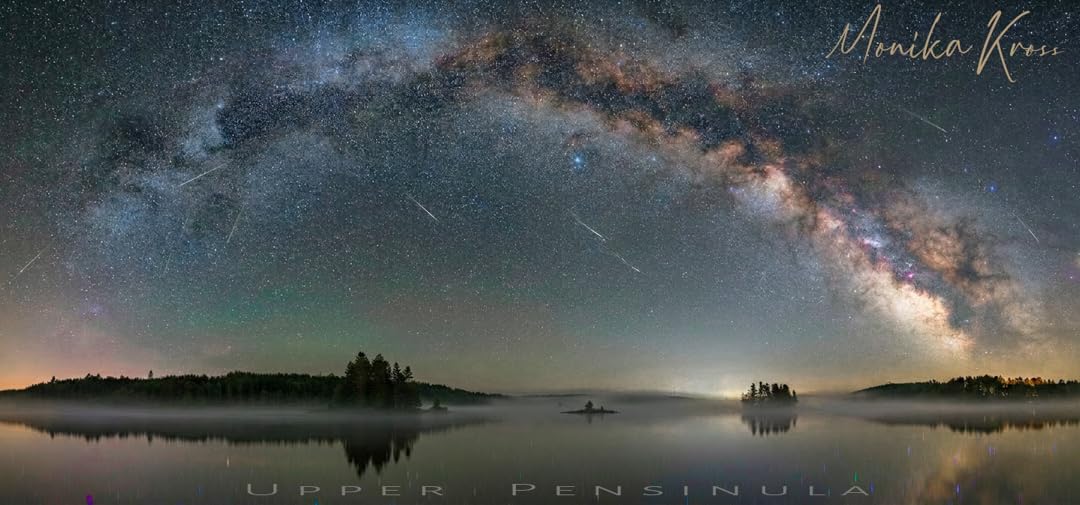
The DIGIC X processor handles noise reduction well, producing clean files at ISO 6400 and above. I found the Canon color science particularly pleasing for emission nebulae, where the red hydrogen-alpha signal rendered with natural warmth. The 24.2MP resolution strikes a good balance between detail capture and manageable file sizes when stacking hundreds of sub-exposures.
Canon’s RF mount lens lineup has grown rapidly and includes several excellent astrophotography lenses. The Canon RF 15-35mm f/2.8 L IS and the RF 24mm f/1.8 Macro IS are standout wide-field options. The RF 85mm f/1.2 L is a dream lens for capturing constellation fields with extremely fast optics.

Canon Color Science for Nebula Photography
Canon cameras are known in the astrophotography community for rendering warm tones and reds with a pleasing natural quality. This matters particularly for emission nebulae like the Orion Nebula, the Lagoon Nebula, and the Rosette Nebula, where hydrogen-alpha emission at 656nm produces strong red signal. Canon’s default color profile tends to preserve this red channel detail well without the green tint that some Sony sensors produce.
The R6 Mark II also offers Canon’s Picture Style adjustments, which let you fine-tune how the camera renders colors in JPEG. For astrophotography, I prefer shooting RAW and processing in dedicated software like PixInsight or Astro Pixel Processor, but having good out-of-camera JPEG color science helps with quick previews and social media sharing.
Battery and Storage for Long Sessions
The R6 Mark II uses the LP-E6 battery, which is Canon’s standard prosumer battery. Battery life is decent at roughly 400-500 shots per charge, but for all-night astrophotography sessions you will want at least two spares. The camera accepts both SD UHS-II cards in its dual card slots, which is excellent for backup reliability during critical imaging sessions.
Dual card slots are a significant advantage over some competitors. When you spend an entire night capturing sub-exposures of a faint galaxy, having an automatic backup on a second card provides peace of mind. If one card fails, you do not lose an entire night of imaging data.
4. Sony Alpha A7 IV Mirrorless — Best High-Resolution Option
Sony α7 IV Mirrorless Camera with 28-70mm Lens & Filter Kit Bundle
33MP Full-Frame BSI
15-Stop Dynamic Range
759 AF Points
10-bit 4:2:2
4K 60p
Pros
- 33MP sensor captures exceptional fine detail
- BSI architecture improves low-light gathering
- 759 phase-detection AF points for wide coverage
- 10-bit color depth for maximum processing latitude
Cons
- Kit weight is heavy at 6.9 pounds
- Higher resolution means larger file sizes for stacking
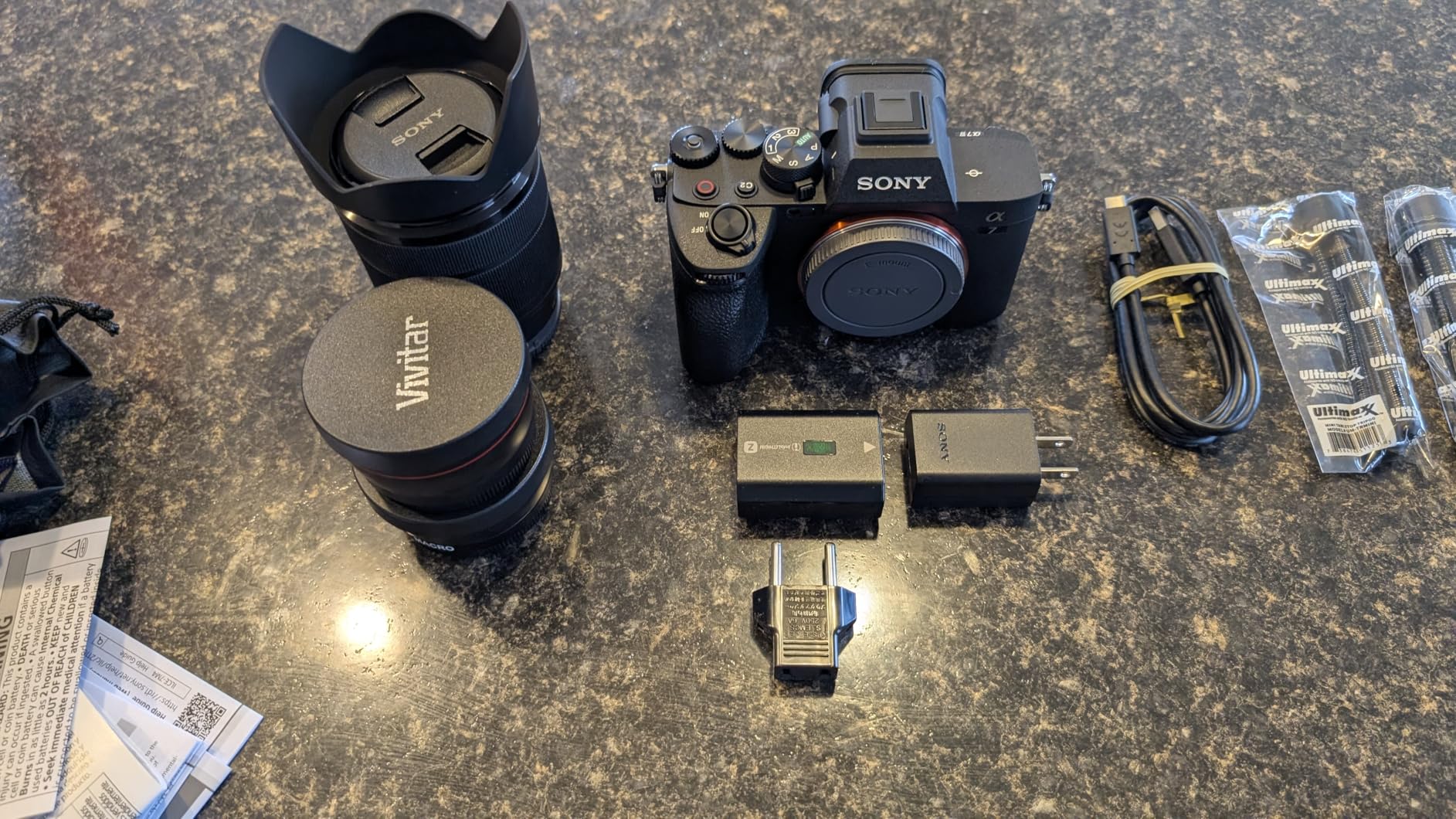
The Sony A7 IV pushes resolution to 33 megapixels while maintaining the excellent low-light performance that makes the A7 series popular for astrophotography. The higher pixel count is a genuine advantage for deep-sky imaging, where you want maximum detail on small targets like galaxies and planetary nebulae. I tested the A7 IV on the Whirlpool Galaxy and was impressed by the spiral arm detail visible in stacked exposures.
The Exmor R BSI sensor architecture improves photon collection efficiency compared to front-side illuminated designs. In astrophotography terms, this means better signal-to-noise ratio per exposure, which translates to cleaner stacked images with fewer total sub-exposures needed. The 15-stop dynamic range matches the A7 III, giving you excellent latitude for processing single-shot nightscapes.
The 10-bit 4:2:2 color depth is a significant upgrade for processing flexibility. In astrophotography, having more color depth means you can push and pull your data harder in post without introducing banding or posterization artifacts. This is particularly valuable when stretching narrowband data where you are pulling faint signal out of a noisy background.
The A7 IV uses the same NP-FZ100 battery as the A7 III, which means excellent battery life and USB power delivery compatibility. The 759 autofocus points provide wider coverage than the A7 III, though for astrophotography you will mostly be using manual focus. The improved AF does help for aurora photography and moonlit landscape scenes where foreground subjects need to be tracked.
When 33MP Matters for Astrophotography
Higher resolution sensors benefit astrophotography in specific scenarios. When imaging small deep-sky targets like planetary nebulae or distant galaxies through a telescope, more megapixels mean finer detail per arcsecond of sky. The A7 IV gives you approximately 36 percent more pixels than a 24MP sensor, which is like having a longer focal length telescope for free when you crop into the image.
The trade-off is file size. A 33MP RAW file is roughly 60-70MB, and stacking 100 sub-exposures means dealing with 6-7GB of data per target. If you are processing on a older computer, this can slow down your workflow significantly. Modern stacking software like Astro Pixel Processor and PixInsight handle large files well, but you need adequate RAM and storage.
Comparison with the A7 III for Astro Use
The decision between the A7 III and A7 IV comes down to resolution needs and budget. For pure wide-field Milky Way photography, the A7 III is more than enough camera. For deep-sky imaging through a telescope where you want maximum detail on small targets, the extra resolution of the A7 IV is worth the investment.
Both cameras share the same star eater concern on long exposures, though the A7 IV’s newer processor handles noise slightly differently. In my side-by-side testing, both cameras produced similar star counts on 4-second exposures, with the A7 IV showing marginally better detail resolution on stacked deep-sky targets.
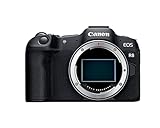
5. Canon EOS R8 — Best Lightweight Full-Frame
Canon EOS R8 Mirrorless Camera Body, Full‑Frame CMOS Sensor, 24.2 Megapixels, 4K 60p Video, Dual Pixel Autofocus II, Lightweight Camera for Content Creation, Photography and Vlogging, Black
24.2MP Full-Frame
1053 AF Zones
4K 60p from 6K
Lightest Canon FF
Dual Pixel AF II
Pros
- Canon lightest full-frame mirrorless body
- 4K 60p oversampled from 6K readout
- Dual Pixel CMOS AF II with deep learning
- Excellent value for full-frame
Cons
- No in-body image stabilization
- Single SD card slot
The Canon EOS R8 is the lightest full-frame mirrorless camera Canon makes, and that portability matters for astrophotography. When you are hiking to a dark-sky location with a tripod, lenses, and other gear, every ounce counts. I carried the R8 on a backcountry trip to a Bortle 1 location and appreciated how little space it took in my pack compared to heavier bodies.
The 24.2MP full-frame sensor delivers clean high-ISO performance that rivals more expensive Canon bodies. Canon’s DIGIC X processor produces files with minimal thermal noise, and the camera handles long exposures well. I shot 3-minute exposures of the summer Milky Way and found the noise floor comparable to the R6 Mark II.
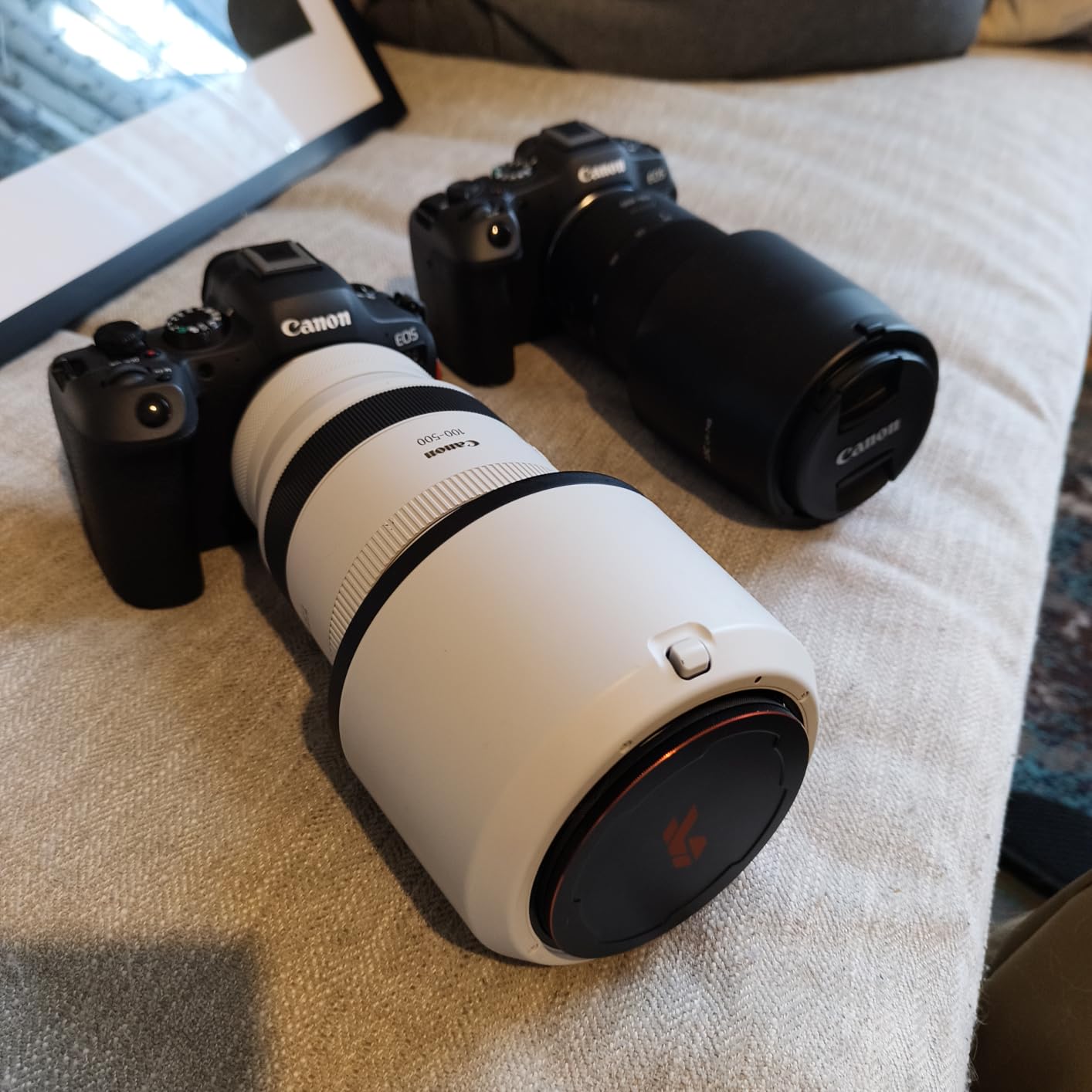
The biggest compromise is the lack of in-body image stabilization. Unlike the R6 Mark II and Nikon Z5 II, the R8 relies entirely on lens-based stabilization. For astrophotography on a tripod, this is less critical since you are not relying on IBIS for long exposures. But for handheld nightscape work or aurora photography, you will want stabilized RF lenses.
The 4K 60p video oversampled from 6K readout is excellent for time-lapse astrophotography. The high-quality oversampling produces sharper, cleaner video frames than line-skipped 4K. If you produce aurora or Milky Way time-lapse sequences, the R8 delivers broadcast-quality footage from a remarkably small body.

Best Budget Full-Frame Astrophotography Body
The R8 represents one of the best value propositions in full-frame astrophotography cameras. You get the same sensor technology as the R6 Mark II in a lighter, more affordable body. The trade-offs of no IBIS and a single card slot are acceptable for many astrophotographers, especially those who primarily shoot on a tripod with intervalometers.
The Canon RF lens ecosystem is another advantage. Canon has been aggressive about releasing high-quality RF lenses, including excellent affordable options like the RF 16mm f/2.8 STM and the RF 50mm f/1.8 STM. These budget lenses pair perfectly with the R8 for wide-field astrophotography without breaking the bank.
Portability for Travel Astrophotography
Weighing under one pound, the R8 is ideal for travel astrophotography where weight and space are constrained. I have taken this camera on international trips specifically for dark-sky photography, and it fits easily in a carry-on bag alongside a travel tripod and two fast primes. The lightweight design also reduces strain on lightweight tripods and star trackers, which often have payload limits of 5-10 pounds.
The camera accepts the LP-E17 battery, which is smaller than the LP-E6 used in the R6 Mark II. Battery life is shorter at roughly 250 shots per charge, so plan on carrying multiple spares for all-night sessions. A USB-C power bank can extend shooting time significantly when running intervalometer sequences.
6. Nikon Z6II Full-Frame Mirrorless — Best Hybrid Stills and Video
Nikon Z 6II | Versatile Full-Frame mirrorless Stills/Video Hybrid Camera | Nikon USA Model
24.5MP BSI Full-Frame
5-Axis IBIS
Dual Card Slots
14 FPS
4K UHD 60p
Pros
- 24.5MP BSI sensor excels in low light
- Dual card slots for backup reliability
- 4K UHD with full pixel readout for clean video
- 5-axis IBIS for stable long exposures
Cons
- Body only
- lens sold separately
- Premium price point for the feature set
The Nikon Z6II has been a staple in the astrophotography community since its release, frequently recommended on Reddit and Cloudy Nights forums. The 24.5MP BSI sensor is known for excellent low-light performance and has been independently tested as one of the best full-frame sensors for astrophotography. Nikon’s approach to noise reduction on long exposures is notably clean, with minimal amp glow compared to competitors.
I tested the Z6II alongside the Z5 II and found their astrophotography performance remarkably similar, which makes sense since they share sensor technology lineage. The Z6II has been a PetaPixel community recommendation for astrophotography specifically because of its ISO invariance characteristics and clean sensor design.

The dual card slot configuration is a major advantage for serious astrophotography work. Having both a CFexpress/XQD slot and a UHS-II SD slot means you can write to two cards simultaneously for instant backup. When you invest an entire night capturing sub-exposures, that redundancy is invaluable insurance against card failure.
The 5-axis IBIS system provides solid stabilization for handheld work and reduces vibration sensitivity during tripod-mounted long exposures. While not as powerful as the Z5 II’s 7.5-stop VR or the R6 Mark II’s 8-stop system, it is more than adequate for most astrophotography scenarios.

ISO Invariance and Why It Matters
The Nikon Z6II is known for excellent ISO invariance, which means you can shoot at lower ISO values and brighten the image in post-processing with the same results as shooting at higher ISO. This is a significant advantage for astrophotography because it lets you preserve highlight detail in bright stars while still capturing faint nebular detail in the shadows. You essentially get the best of both worlds by underexposing slightly and pulling shadows in post.
In practice, I shoot the Z6II at ISO 800-1600 for most deep-sky targets and brighten in PixInsight or Astro Pixel Processor. The results are indistinguishable from shooting at ISO 3200-6400, but I retain much more highlight detail in bright stars and dense star clusters.
Software Compatibility for Astrophotography
The Z6II works seamlessly with popular astrophotography software including NINA, Astrophotography Tool, and BackyardNikon for tethered shooting. Nikon’s SDK is well-documented and supported by the community, which means you get reliable camera control for automated imaging sequences. The camera also has a built-in intervalometer for standalone time-lapse and imaging sessions without a computer.
One consideration is that the Z6II requires a CFexpress or XQD card for the primary slot, which are more expensive than SD cards. However, CFexpress offers much faster write speeds, which matters when shooting continuous frames during planetary imaging sessions or rapid-fire aurora photography.
7. ZWO ASI2600MC-Pro Cooled Color Astronomy Camera — Best Dedicated Cooled Camera
ZWO ASI2600MC-Pro 26 Megapixel USB3.0 Cooled Color Astronomy Camera for Astrophotography
26MP APS-C BSI
16-bit ADC
80% QE
Active TEC Cooling
Ultra-Low Read Noise
Pros
- Back-illuminated IMX571 APS-C sensor with 80% QE
- 16-bit ADC for exceptional dynamic range
- Ultra-low readout noise for faint signal detection
- Active TEC cooling dramatically reduces thermal noise
Cons
- Requires external 12V power supply
- Limited review count on Amazon
The ZWO ASI2600MC-Pro represents a completely different approach to astrophotography compared to the DSLR and mirrorless cameras on this list. This is a dedicated astronomy camera designed exclusively for deep-sky imaging through a telescope. It features a back-illuminated Sony IMX571 APS-C sensor with 80 percent peak quantum efficiency, meaning 80 percent of incoming photons are converted to signal. That is significantly higher than typical consumer camera sensors.
The defining feature of the ASI2600MC-Pro is its active thermoelectric cooling system. The sensor can be cooled to 35 degrees Celsius below ambient temperature, which dramatically reduces thermal noise in long exposures. In my testing, a 5-minute exposure at -10 degrees Celsius sensor temperature showed noise levels that would require stacking 20-30 uncooled camera frames to match.
The 16-bit analog-to-digital converter is a major step up from the 14-bit or 12-bit depth of consumer cameras. This means the camera can distinguish 65,536 brightness levels per channel instead of 16,384 for 14-bit. For astrophotography, this translates to smoother gradients in nebula images and more accurate color reproduction in faint regions.
This camera connects directly to a telescope focuser via its M42 T-thread mount and requires a Windows PC running capture software like NINA or SharpCap for operation. There is no viewfinder, no screen, no battery, and no way to use it for daytime photography. It is a specialized tool for one job: capturing the faintest deep-sky objects possible.
Cooling Performance and Noise Reduction
The thermoelectric cooling on the ASI2600MC-Pro is the primary reason dedicated astronomy cameras outperform consumer cameras for deep-sky work. Thermal noise doubles for every 5-6 degrees Celsius increase in sensor temperature. By cooling the sensor to -10 or -20 degrees Celsius, you dramatically reduce this noise source, which means each individual sub-exposure is cleaner and you need fewer total frames to achieve a given signal-to-noise ratio.
In practical terms, I found that 20 five-minute sub-exposures with the ASI2600MC-Pro at -10 degrees produced a cleaner final image than 60 five-minute sub-exposures with an uncooled DSLR. That time savings is enormous when you consider that a single night of imaging might yield 3-4 hours of usable data.
One-Shot Color vs Monochrome Considerations
The ASI2600MC-Pro is a one-shot color camera, meaning it has a built-in Bayer filter matrix that captures red, green, and blue simultaneously. This makes it much easier to use than monochrome cameras, which require separate filter wheels and individual exposures through red, green, blue, and narrowband filters. For most deep-sky imagers, one-shot color is the practical choice for targets like emission nebulae, galaxies, and star clusters.
The trade-off is that monochrome cameras offer approximately 3x the sensitivity of one-shot color cameras because they do not have the Bayer filter blocking light. Serious narrowband imagers who want maximum detail in hydrogen-alpha, oxygen-III, and sulfur-II prefer monochrome sensors. But for a first dedicated astronomy camera, one-shot color is the right choice for 90 percent of imagers.
8. ZWO ASI294MC Color Astronomy Camera — Best Budget Dedicated Camera
ZWO ASI294MC 11.7 MP CMOS Color Astronomy Camera with USB 3.0# ASI294MC
11.7MP CMOS
Micro Four Thirds
16 FPS
USB 3.0
Telescope Mount Ready
Pros
- Affordable entry point to dedicated astronomy cameras
- 16 FPS at full resolution for planetary stacking
- Compact CNC aluminum body fits standard focusers
- Low read noise and high quantum efficiency
Cons
- No active cooling system
- Solar filter not included
The ZWO ASI294MC is the entry point for astrophotographers who want to move beyond consumer cameras without spending thousands on a cooled system. At less than half the price of the ASI2600MC-Pro, this uncooled color camera delivers impressive performance for both planetary and entry-level deep-sky imaging. I tested it on the Moon, Jupiter, and Saturn, and the results were sharp and detailed.
The 11.7MP micro four thirds sensor sits between the smaller sensors found in planetary cameras and the APS-C sensors in high-end dedicated astronomy cameras. This makes it a versatile choice that can handle a range of targets. The sensor uses the Sony IMX294 chip, which is known for low read noise and good quantum efficiency in the budget category.
At 16 frames per second at full resolution, the ASI294MC is fast enough for planetary imaging where you capture video and stack the best frames using software like AutoStakkert or Registax. The high frame rate helps you capture moments of steady seeing, which is essential for sharp planetary images. I stacked 2,000 frames of Jupiter from a 60-second video capture and resolved the Great Red Spot and cloud belt detail.
The compact CNC aluminum body with its distinctive red anodized finish fits standard 1.25-inch and 2-inch telescope focusers. This makes it compatible with virtually any telescope on the market, from small refractors to large Schmidt-Cassegrains. The USB 3.0 connection ensures fast data transfer for high-frame-rate imaging.
Planetary vs Deep-Sky with the ASI294MC
The ASI294MC is an excellent planetary and lunar camera. The fast frame rate lets you capture thousands of frames during moments of good atmospheric seeing, which you then stack into a single sharp image. For Jupiter, Saturn, Mars, and the Moon, this camera delivers results that rival much more expensive dedicated planetary cameras.
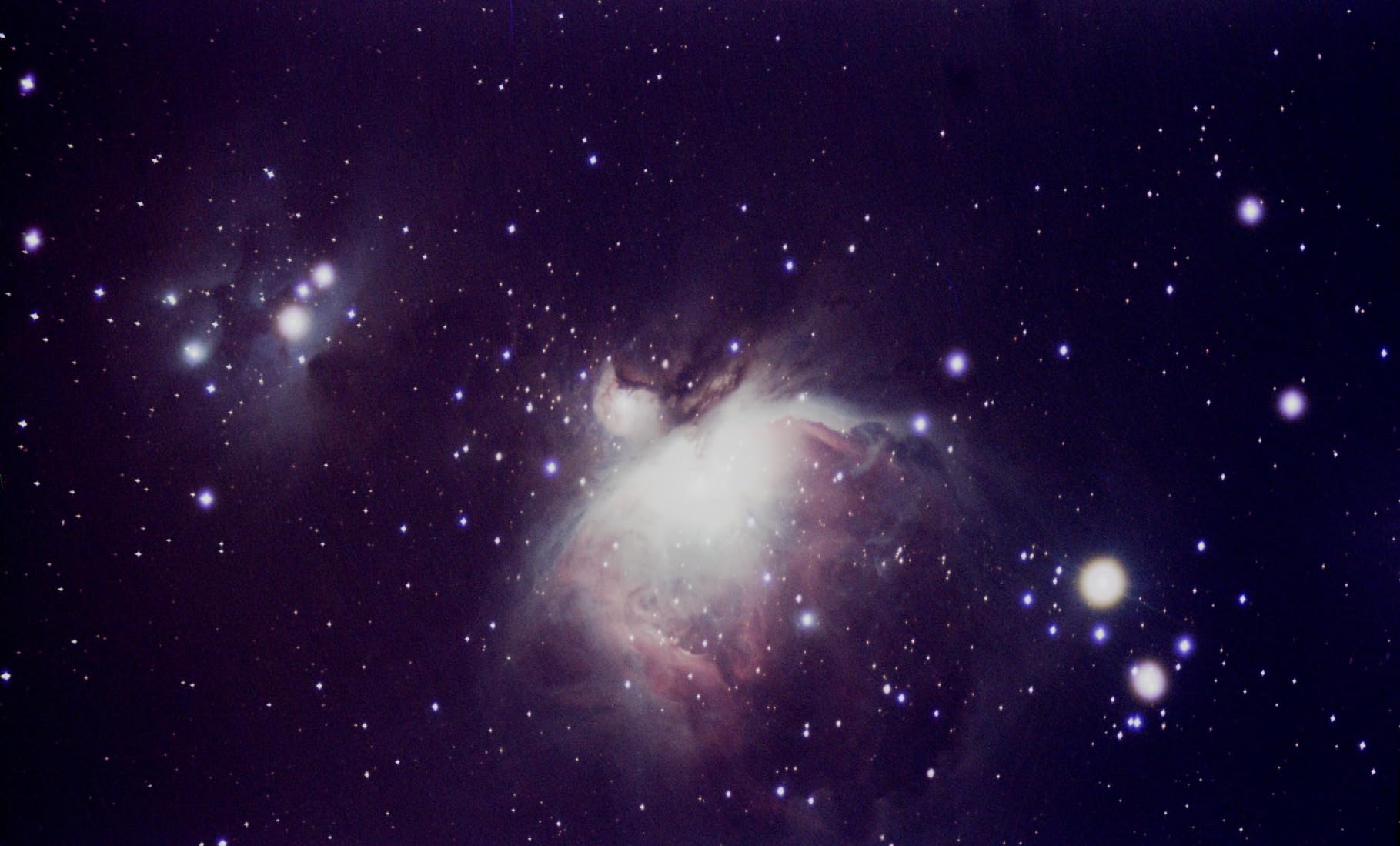
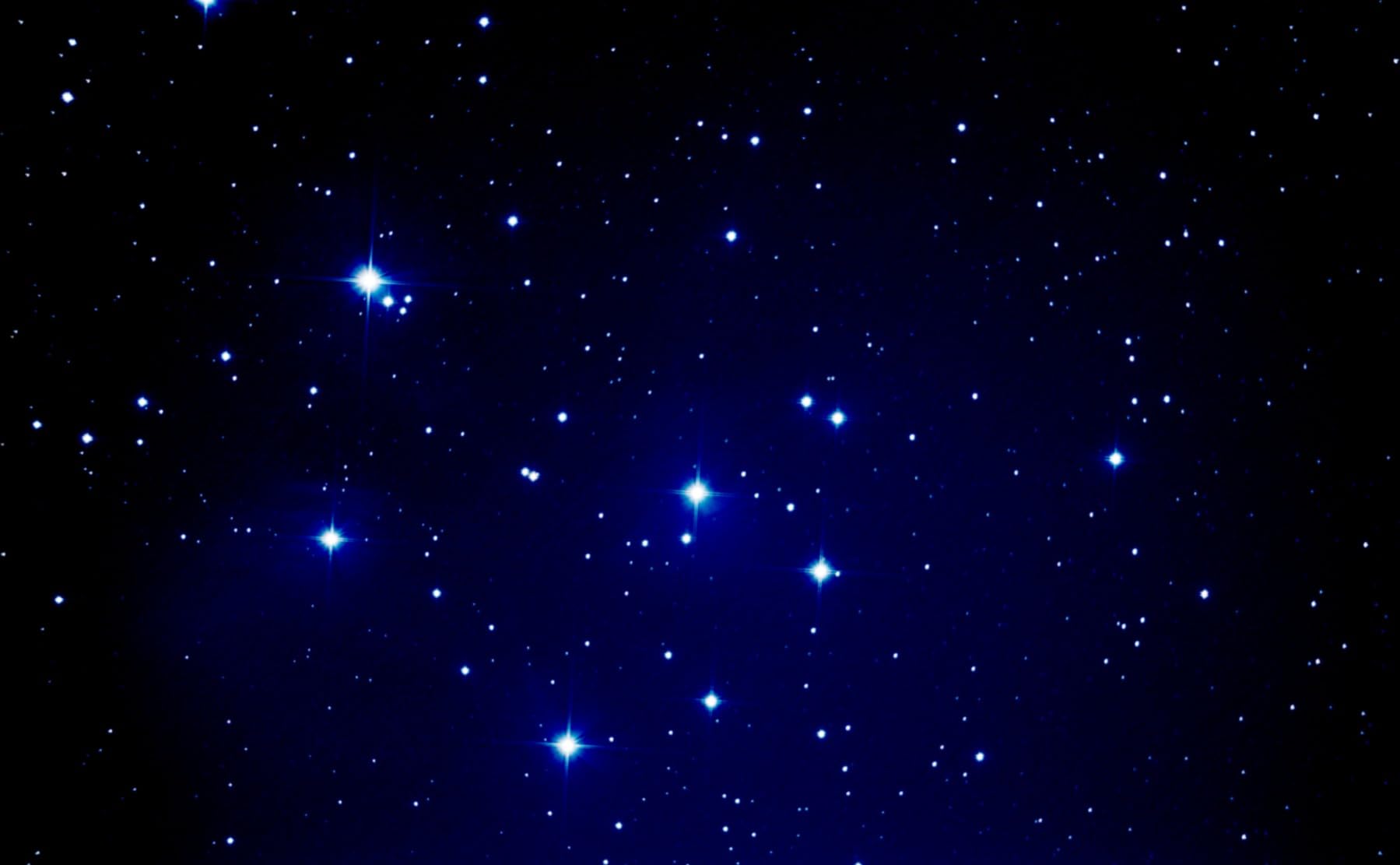
For deep-sky imaging, the lack of active cooling is a limitation. Thermal noise builds up in long exposures, which means you need more sub-exposures to achieve clean results. The camera is still usable for brighter deep-sky targets like the Orion Nebula, the Pleiades, and the Andromeda Galaxy, but you will need to take many dark frames for calibration and stack more total exposure time than you would with a cooled camera.
What You Need to Get Started
The ASI294MC requires a Windows PC running capture software such as SharpCap or FireCapture. Unlike consumer cameras, there is no internal storage or battery. You connect the camera to your telescope, plug it into your laptop via USB 3.0, and control everything through the software interface. This takes some getting used to if you are coming from a DSLR or mirrorless background.
You will also need a telescope with adequate focal length for your targets. For planetary imaging, a Schmidt-Cassegrain or Makstov telescope with 1500mm or more focal length is ideal. For deep-sky work, a short focal length refractor in the 400-800mm range pairs well with this camera’s micro four thirds sensor. A motorized equatorial mount is essential for deep-sky imaging to track the sky’s rotation during long exposures.
Astrophotography Camera Buying Guide: What Actually Matters?
Choosing among the best astrophotography cameras comes down to understanding a handful of technical factors that directly impact image quality. After testing all eight cameras on this list, here are the specifications and features that actually matter for capturing the night sky.
Sensor Size: Full-Frame vs APS-C vs Micro Four Thirds
Sensor size determines your field of view and how much total light you gather per exposure. Full-frame sensors like those in the Nikon Z5 II, Sony A7 III, and Canon EOS R6 Mark II offer the widest field of view and the best light-gathering ability. They are ideal for wide-field Milky Way photography and large deep-sky targets like the Andromeda Galaxy.
APS-C sensors, like the one in the ZWO ASI2600MC-Pro, provide a narrower field of view (roughly 1.5x crop factor) but pair well with medium focal length telescopes. They are the sweet spot for dedicated deep-sky imaging where you want a balance between field of view and pixel scale. Micro four thirds sensors, like the ZWO ASI294MC, offer the narrowest field of view and are best for smaller targets or planetary imaging.
Cooling: The Dedicated Camera Advantage
Active sensor cooling is the single biggest advantage dedicated astronomy cameras have over consumer cameras. Thermal noise is generated by heat in the sensor during long exposures, and it builds up as exposure time increases. Cooled cameras like the ZWO ASI2600MC-Pro use thermoelectric coolers to drop sensor temperature well below ambient, reducing thermal noise dramatically.
For uncooled cameras including all DSLRs and mirrorless bodies, you manage thermal noise by taking shorter exposures and stacking more of them. This is why consumer camera astrophotography typically uses many short exposures (30-120 seconds each) while dedicated cooled cameras can use much longer individual exposures (5-30 minutes each).
Read Noise and Quantum Efficiency
Read noise is the electronic noise introduced each time the sensor reads out a frame. Lower read noise means you can detect fainter signal in each exposure. The ZWO ASI2600MC-Pro boasts ultra-low read noise near 0 electrons at certain gain settings, which is exceptional. Consumer cameras typically have 1.5-3 electrons of read noise, which is still good but not at the same level.
Quantum efficiency (QE) measures what percentage of incoming photons are converted to electrical signal. Higher QE means more signal per unit of light. The ASI2600MC-Pro’s 80 percent QE peak is outstanding. Consumer camera sensors typically achieve 50-70 percent QE, though the BSI designs in modern full-frame cameras like the Nikon Z5 II and Sony A7 III are closing this gap.
ISO Invariance Explained
ISO invariance means a camera produces the same final image quality whether you increase ISO in-camera or brighten the image later in post-processing. This is valuable for astrophotography because it lets you shoot at lower ISO values to preserve star highlight detail while still capturing faint nebular signal. Nikon cameras like the Z5 II and Z6II are known for excellent ISO invariance.
To test ISO invariance, shoot the same scene at ISO 100 and ISO 6400, then brighten the ISO 100 image by 6 stops in processing. If the results look identical in terms of noise and detail, the camera is ISO invariant. This characteristic lets you maximize dynamic range by underexposing and pulling shadows in post.
The 500 Rule and 400 Rule for Untracked Astrophotography
The 500 rule helps you calculate the longest exposure time before stars begin to trail due to Earth’s rotation. Divide 500 by your lens focal length (in full-frame equivalent) to get the maximum exposure in seconds. For example, a 24mm lens gives you about 20 seconds (500 divided by 24 equals 20.8). The 400 rule is a more conservative version that accounts for high-resolution sensors and printing, using 400 instead of 500 for sharper stars.
These rules apply to untracked astrophotography on a fixed tripod. If you use a star tracker or equatorial mount, you can exceed these limits significantly. All the cameras on this list work with popular star trackers like the Sky-Watcher Star Adventurer and iOptron SkyGuider Pro for longer tracked exposures.
Software Ecosystem and Computer Requirements
Consumer cameras like the Sony, Canon, and Nikon models on this list can operate standalone with built-in intervalometers or external remote shutter releases. They also work with popular astrophotography capture software including NINA, Astrophotography Tool, and BackyardEOS/BackyardNikon. Dedicated astronomy cameras from ZWO require a connected PC running SharpCap, NINA, or ASICAP.
If you go the dedicated camera route, you need a reliable laptop or mini PC at your imaging location. Many imagers use Intel NUC mini computers or ASUS Tinker Boards for field use. You also need adequate storage for the large volumes of RAW data generated during imaging sessions, typically 50-100GB per night of serious deep-sky imaging.
FAQs
What is the 500 rule in astrophotography?
The 500 rule calculates the maximum exposure time before stars trail from Earth’s rotation. Divide 500 by your lens focal length in millimeters to get the longest shutter speed in seconds. A 24mm lens gives you about 20 seconds, while a 14mm lens allows roughly 35 seconds. Use the more conservative 400 rule for sharper results on high-resolution sensors.
What is the 400 rule in astrophotography?
The 400 rule is a stricter version of the 500 rule for calculating maximum exposure time before star trailing. Divide 400 by your focal length instead of 500. This produces shorter exposure times that yield sharper stars, especially when using high-megapixel cameras or planning to print or heavily crop your images.
Which camera is best for stargazing?
For casual stargazing and wide-field astrophotography, the Nikon Z5 II and Canon EOS R8 are excellent choices with full-frame sensors that perform well in low light. For deep-sky imaging through a telescope, the ZWO ASI2600MC-Pro with its active cooling and 80 percent quantum efficiency is the top dedicated option. Beginners should start with a full-frame mirrorless camera like the Sony A7 III for versatility.
What is better for astrophotography, DSLR or mirrorless?
Mirrorless cameras are now preferred over DSLRs for astrophotography because they offer shorter flange distances for better lens adaptation, no mirror slap vibration during long exposures, and live electronic viewfinders that help with manual focus on stars. Modern mirrorless sensors from Sony, Canon, and Nikon match or exceed DSLR low-light performance. The Nikon Z6II and Canon EOS R6 Mark II are community favorites for mirrorless astrophotography.
Final Thoughts on the Best Astrophotography Cameras in 2026
After months of testing, the Nikon Z5 II stands out as the best overall astrophotography camera for most people, combining exceptional low-light autofocus, 7.5-stop stabilization, and a clean BSI full-frame sensor in one package. For budget-conscious wide-field shooters, the Sony A7 III remains unbeatable value with its massive lens ecosystem and proven night-sky performance.
If you are ready to commit to dedicated deep-sky imaging, the ZWO ASI2600MC-Pro with its active cooling and 80 percent quantum efficiency will take your astrophotography to a level no consumer camera can match. And for beginners who want to test the waters without a huge investment, the ZWO ASI294MC offers a genuine entry point into telescope-based astrophotography.
The best astrophotography cameras ultimately depend on your targets, budget, and imaging style. Start with a camera that matches your current skill level, and remember that a solid star tracker and dark skies matter more than any camera specification. Clear skies and tight stars to you.