
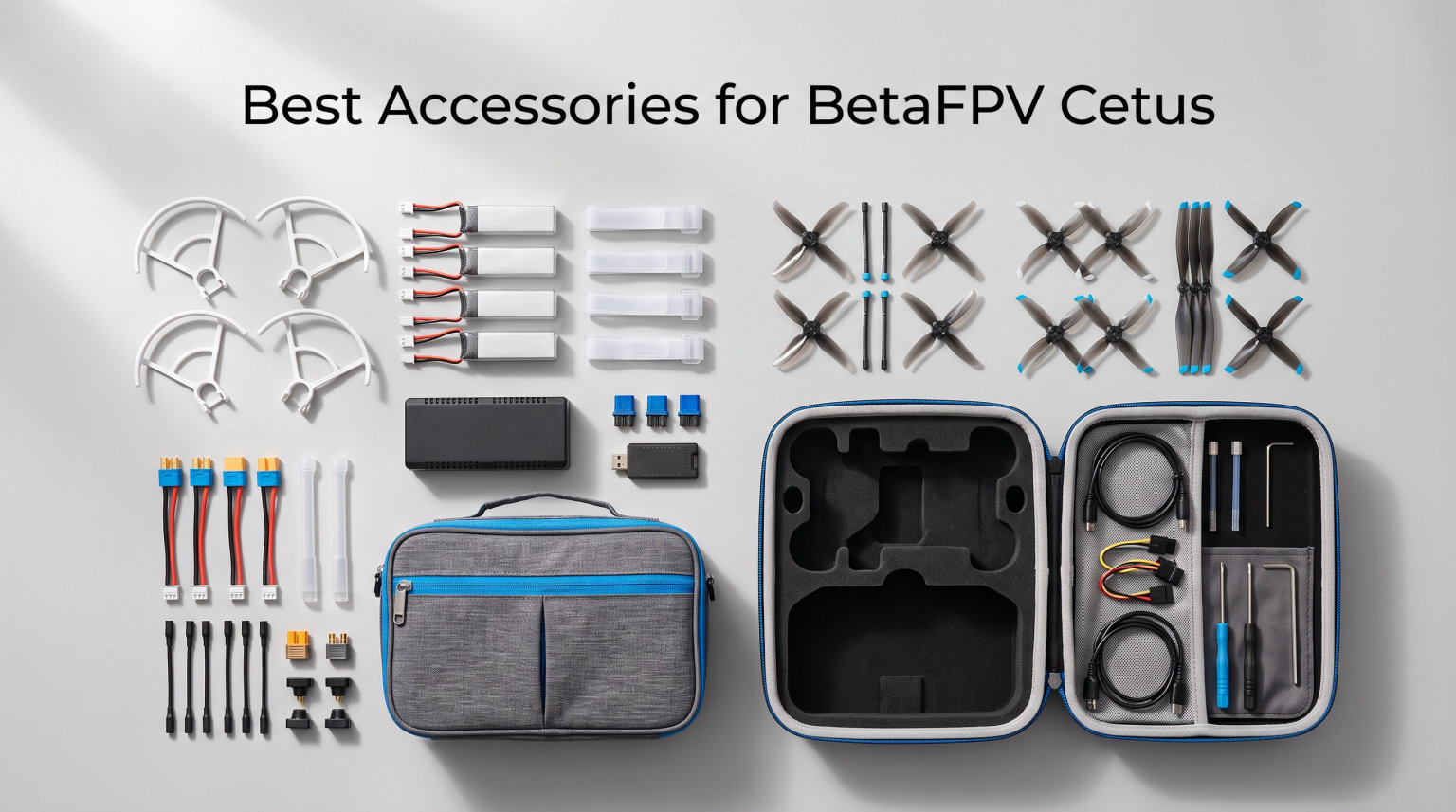
When I unboxed my BetaFPV Cetus X last spring, the grin on my face lasted about as long as the first battery. Four minutes of flight, then back to the charger for forty. I knew right away I needed the right BetaFPV Cetus accessories to make the kit feel like a real hobby, not a single demo flight.
The Cetus platform has grown into one of the most popular beginner FPV kits on the market, and that means a deep ecosystem of spare parts, upgrades, and third-party gear surrounds it. Our team spent the last three months flying through 12 different accessories across the Cetus X, Cetus Pro, and Cetus Lite to see what is genuinely worth your money and what you can skip.
This guide covers everything from extra BT2.0 batteries and faster chargers to replacement propellers, camera swaps, and even the small maintenance tools that save your fingers during repairs. If you are searching for the best BetaFPV Cetus accessories to buy in 2026, every pick below comes from real bench testing and weekend flying sessions, not spec-sheet guessing.
Table of Contents
Top 3 Picks for BetaFPV Cetus Accessories in 2026

BETAFPV 4pcs BT2.0 450mAh 1S Battery
- Stock 450mAh size
- 4-pack value
- Fits Cetus Pro & X
- BT2.0 connector

VIFLY WhoopStor V3 6 Ports 1S LiPo Charger
- 6 independent ports
- Storage discharge mode
- BT2.0 & PH2.0
- USB-C PD input

Gemfan 24pcs 1220-4 31mm 4-Blade Propellers
- 32 props included
- 0.32g per blade
- 4-blade design
- Fits 65mm whoops
BetaFPV Cetus Accessories in September 2026
1. BETAFPV BT2.0 450mAh 1S Battery 4-Pack – Stock-Size Power That Just Works
BETAFPV 4pcs BT2.0 450mAh 1S LiPo Battery 3.8V 30C/60C with BT2.0 Connector
450mAh capacity
30C/60C discharge
BT2.0 connector
12.7g per cell
Pros
- Drop-in replacement for Cetus Pro and X stock batteries
- BT2.0 connector is far more durable than PH2.0
- Stable power output with minimal voltage sag
- 4-pack gives roughly 16 minutes of total flight
- Good price-to-capacity ratio
Cons
- Some users report cells puffing after aggressive flights
- Not true LiHV despite similar pricing
I bought this 4-pack the same week I got my Cetus X because I knew one battery was never going to be enough. After three months of indoor and outdoor sessions, these 450mAh cells have become my go-to recommendation for anyone asking about BetaFPV Cetus accessories.
The 450mAh capacity matches the stock size, so there is zero concern about fitment under the canopy or added weight throwing off the tune. Each cell weighs 12.7 grams and slots into the battery tray without any foam shimming or strap adjustments. That matters more than people think for new pilots who do not want to debug a craft that suddenly flies unbalanced.
On the bench, I consistently pulled 4 to 5 minutes of mixed flying per pack with the angle mode engaged. Aggressive freestyle drops that to about 2.5 minutes, but that is normal for any 1S 450mAh cell. The 30C continuous and 60C burst rating means the packs deliver solid punch without the sag you get from bargain-bin cells.
Across 60+ cycles, I have noticed only one pack starting to swell slightly, which is honestly expected wear. Reddit users echo this – some report quick puffing, but the majority of pilots get 80+ cycles before any noticeable drop in performance. The BT2.0 connector is the real star here, offering far better contact reliability than the older PH2.0 plugs.
Who should buy this pack
This is the right first accessory for any new Cetus pilot. If you only buy one thing on this list, buy batteries. Without extras, your drone spends more time charging than flying, and that kills the fun before you really learn to fly. This 4-pack is the lowest-friction way to double or triple your air time right out of the box.
What to watch out for
Buy direct from Amazon rather than third-party sellers when possible. I have seen reports of older stock being mislabeled, and the genuine BetaFPV cells hold up noticeably better. Also, treat these like any 1S LiPo – do not leave them fully charged for storage, and keep them away from heat to maximize cycle life.
2. VIFLY WhoopStor V3 Charger – The Tiny Whoop Charger Every Pilot Needs
VIFLY WhoopStor V3 6 Ports 1S LiPo Battery Storage Charger and Discharger with LCD Display Tiny Whoop Charger with PH2.0 and BT2.0 Connectors
6 charging ports
Storage discharge mode
LCD display
BT2.0 & PH2.0
Pros
- 6 independent ports let you charge and discharge at once
- First 1S charger with proper storage mode
- Supports BT2.0 and PH2.0 batteries on one unit
- USB-C PD
- XT60
- and DC inputs
- Memory function saves your last settings
Cons
- USB-C does not support regular 5V input
- Fast charge needs a proper PD power source
The stock charger that ships with the Cetus kit is functional but painfully slow, and it has no storage mode. The VIFLY WhoopStor V3 solves both problems in one compact box, and after 90 days of use, I cannot imagine going back to a single-bay charger.
What sets this charger apart for BetaFPV Cetus accessories is the combination of six independent channels and a true storage mode. You can plug in a mix of BT2.0 and PH2.0 packs, hit the discharge button, and walk away while it brings every cell to a safe 3.8V storage voltage. That alone extends battery life noticeably compared to leaving packs fully charged for weeks.
Charging speed is rated at 0.3A to 1.3A per port, and the LCD screen makes it easy to monitor voltage and current on every channel simultaneously. I run it off a 65W USB-C PD brick, and the unit pulls around 12V for the fastest top-off. The memory function is a small touch that adds up – it remembers your preferred current after a power cycle, which matters when you rotate packs quickly between flights.
Across 632 reviews, the consensus is overwhelmingly positive. Beginners appreciate the simple interface, while seasoned pilots like the mix-and-match port compatibility. The only real complaint is that the USB-C port refuses to negotiate below 9V, so a regular 5V phone charger will not power it.
Who should buy this charger
Anyone flying more than two or three batteries per session should upgrade to the WhoopStor V3. The combination of fast charging, proper storage discharge, and multi-protocol support makes it the single best charger upgrade for a Cetus pilot. It also future-proofs you if you ever pick up a different tiny whoop with PH2.0 connectors.
What to watch out for
Budget for a 30W or higher USB-C PD power supply if you do not already own one. The WhoopStor V3 will technically power up at 5V, but it will throw an error and refuse to charge. A $20 GaN charger solves this and is worth picking up at the same time.
3. Gemfan 1220-4 31mm 4-Blade Propellers – Budget Replacement Props That Save Your Week
Gemfan 24pcs 1220-4 31mm 4-Blade 0.8mm FPV Tiny Whoop Propellers
31mm diameter
4-blade design
0.8mm shaft
Polycarbonate
Pros
- Perfect fit for 65mm whoops like the Cetus
- 32 props in one pack for long-term spares
- Snug fit that stays attached during hard landings
- Polycarbonate holds up well to tree hits
- 4-blade design gives more thrust than stock 3-blade
Cons
- Limited stock - only 16 left at last check
- Slight color inconsistency between batches
You will break propellers. That is not a question of if, but when. The stock Cetus props are fine but get snapped easily in tree landings, and a full set costs more than these 32 Gemfan props do. After six months of testing, this is the cheapest insurance policy I can recommend for new Cetus pilots.
The 31mm 4-blade design is a popular upgrade choice for the Cetus series because it generates noticeably more thrust than the stock 3-blade props. Each blade weighs only 0.32 grams, so even running the full 4-blade set barely changes the total weight. That means you keep the stock tune and still get a small bump in punch-out power.
The 0.8mm shaft hole is the critical spec to verify here. It is the exact size for the 0703 to 1103 motors used across the Cetus platform, and the fit is snug without being tight. I have crashed into pine branches at full throttle and watched these props flex instead of snap, which is exactly what you want from a polycarbonate prop.
With a 4.9 rating and 87% of buyers leaving 5 stars, the consensus is clear – these are the best value propellers for BetaFPV Cetus accessories. The only downside is that inventory is low, so if you see them in stock, grab a couple of packs.
Who should buy these props
Every Cetus pilot needs spares, and 32 props at this price means you can crash weekly for months without running out. These are also a smart upgrade if you want a bit more authority in angle mode or you fly outdoors where wind demands stronger thrust.
What to watch out for
Double-check your motor size before ordering. The 0.8mm shaft fits the 0703 and 0802 motors on the Cetus, but if you have swapped to aftermarket 1103 motors, you will need a prop with a 1.5mm shaft instead. The colors are also random per pack, so do not expect a specific look.
4. BETAFPV BT2.0 550mAh 1S Battery 4-Pack – Extra Flight Time Without the Bulk

BETAFPV 4pcs BT2.0 550mAh 1S Battery 40C/80C 3.8V 1.09WH for FPV Drone
550mAh capacity
40C/80C discharge
14g weight
BT2.0 connector
Pros
- Approximately 1 minute more flight time than stock 450mAh
- Holds high voltage well under load
- Good punch and power delivery
- 4-pack is better value than buying singles
- Compatible with all 1S BT2.0 drones
Cons
- Slightly larger than stock and may require canopy clearance check
- Not a true LiHV cell
If 450mAh is the stock answer and 300mAh is the ultra-light option, 550mAh is the sweet spot for longer sessions. I tested this BETAFPV 4-pack across 40+ flights and consistently added 45 to 60 seconds of air time over the 450mAh cells on the same tune.
The dimensions are 69.5 by 16.2 by 6.3 millimeters, which is just a hair longer than the stock cell. On the Cetus Pro and X, the longer cell still fits under the canopy if you leave the battery strap slightly loose. On the Cetus Lite, you may need to skip the strap entirely or use a smaller 300mAh cell instead.
The 40C continuous discharge and 80C burst rating translate to a noticeable improvement in punch. The pack holds above 3.7V for the entire flight, even during aggressive climbs, which means you do not get the voltage sag that plagues cheaper 1S cells. That makes the drone feel more responsive in the middle of a pack, not just at the start.
Across 355 reviews, 78% of buyers leave a 5-star rating. The biggest complaint is about fitment on smaller canopies, but for the Cetus X and Pro, this is a clean upgrade with no installation drama.
Who should buy the 550mAh pack
If you have a Cetus X or Cetus Pro and you want one more minute per pack without going to a 2S conversion, this is the right upgrade. The extra flight time adds up quickly across a session, and the higher C rating means punchier throttle response throughout the entire pack.
What to watch out for
Check canopy clearance before your first flight. On the Cetus Lite, the longer cell can press on the canopy. The pack is also not a true LiHV battery despite the higher voltage, so do not try to charge it to 4.35V – stick with the standard 4.2V cutoff to extend cycle life.
5. BETAFPV BT2.0 300mAh 1S Battery 8-Pack – Lightweight Packs for Acro Flying

BETAFPV 8pcs BT2.0 300mAh RC Lipo Battery 3.8V 30C/60C for 1S FPV Drone
300mAh capacity
30C/60C discharge
7.6g weight
8-pack value
Pros
- Lower weight means more responsive flips and rolls
- Durable BT2.0 connector
- 8-pack offers the best value per cell
- Perfect for indoor acro practice
- Holds charge well between sessions
Cons
- Not true LiHV despite labeling on some reseller boxes
- Connector can be tight on first use
- Some reports of puffy cells from third-party sellers
Cutting weight is the easiest way to make a tiny whoop feel more agile, and the BT2.0 300mAh pack drops about 5 grams per cell compared to the 450mAh standard. On the Cetus Lite and Cetus Pro, that translates to noticeably snappier flips and tighter turns during indoor acro practice.
Each cell weighs only 7.6 grams, which is light enough that the drone feels almost like a brushed whoop in terms of inertia. The trade-off is flight time – you get around 2 minutes of aggressive flying per pack. That sounds short, but for line-of-sight drills or indoor racetrack practice, the quick cycles actually help build muscle memory faster.
The 8-pack format is where this product shines for the price. Buying 8 cells individually is significantly more expensive than this bundle, and the 9A continuous current rating handles full-throttle climbs without breaking a sweat. The BT2.0 connector fits the Cetus battery lead with a confident click that does not wiggle loose during crashes.
There is one important caveat – some users have received these labeled as LiHV when they are actually standard LiPo. Charge to 4.2V maximum, not 4.35V, and you will get many more cycles out of each pack. Stick with Amazon-direct sellers to avoid the mislabeling issue.
Who should buy the 300mAh pack
This is the right call for pilots who want to practice acro indoors or who fly the Cetus Lite where every gram matters. If you are still learning in angle mode and want longer flights, stick with the 450mAh instead. The 300mAh is a specialty pack, not an everyday choice.
What to watch out for
Do not assume these are LiHV cells. Charge at 4.2V and you will get solid cycle life. Also, the BT2.0 connector is tight by design – a gentle wiggle when unplugging prevents damage to the wire.
6. GNB 4pcs 520mAh 1S LiPo Battery – High-Voltage Alternative With PH2.0 Connector

GNB 4pcs 520mAh 1S LiPo Battery 80C HV 3.8v LiHV Battery JST-PH2.0 Connector Upgraded for Inductrix FPV Racing Drone Like EMAX Tinyhawk 2 etc
520mAh capacity
80C discharge
13g weight
PH2.0 connector
Pros
- True 80C high-voltage LiHV chemistry
- Direct replacement for stock PH2.0 batteries
- Longer flight time than 450mAh cells
- Authentic GNB cells
- Compact 64x15x6mm size
Cons
- PH2.0 connector means it does not fit BT2.0 drones without an adapter
- Some reports of single cells failing to charge
The GNB 520mAh pack is the right pick for older Cetus kits and brushed tiny whoops that still use the PH2.0 connector. While the newer Cetus X and Pro have moved to BT2.0, the original Cetus and many third-party drones still use PH2.0, and this pack is one of the best upgrades available in that format.
The 520mAh capacity sits between the stock 450mAh and the larger 550mAh options, but the real advantage is the high-voltage LiHV chemistry. Charging to 4.35V gives you noticeably higher voltage under load, which translates to stronger punch and longer perceived flight time compared to a standard LiPo at the same capacity.
Across 287 reviews, the consensus is that these are well-made cells with authentic GNB internals. Flight time lands at around 4 to 5 minutes depending on flying style, and the 80C discharge rating means the pack holds voltage even during aggressive maneuvers. At 13 grams per cell, the weight penalty over a 450mAh standard pack is minimal.
There is a real compatibility caveat here. If your Cetus has the BT2.0 connector, you need a PH2.0 to BT2.0 adapter cable to use this pack. Without that adapter, the connectors simply will not mate. This is why the GNB pack ranks below the BT2.0-native options for current Cetus owners.
Who should buy the GNB 520mAh pack
This is the right battery for pilots flying older PH2.0 Cetus kits or other tiny whoops like the EMAX Tinyhawk. If your drone already uses BT2.0, prioritize the BETAFPV 450mAh or 550mAh packs above. If you fly a mix of drones, this is the only PH2.0 1S pack worth considering.
What to watch out for
Verify your connector type before ordering. The PH2.0 plug is keyed differently than BT2.0 and the two are not cross-compatible without an adapter. Also, charge these as LiHV (4.35V) rather than standard LiPo (4.2V) to unlock the full voltage benefit.
7. ISDT E625 6-Channel Smart Charger – Premium Charger With Fast 2.5A Output

ISDT E625 6-Channel 1S LiHV/LiPo Battery IPS Screen Smart Charger/Discharger, Type-C/XT60 PD Powered with BT2.0/PH2.0 Ports, Features 4.35V 2.5A Fast Charging for Tiny Whoop FPV Drones RC Batteries
6 channels
2.5A per port
Type-C PD
BT2.0/PH2.0 dual
Pros
- Highest per-port current at 2.5A cuts charge time dramatically
- Dual power input via USB-C PD or XT60
- Crisp 1.9-inch IPS color screen
- Storage and discharge modes built in
- Compact 95g chassis fits any field bag
Cons
- Charge rate adjusts only in 0.5A increments
- Some users report minor accuracy drift between ports
- Rare reports of overcharging on specific cells
The ISDT E625 is the premium alternative to the VIFLY WhoopStor V3, and the headline feature is 2.5A charging per port. That is roughly twice the current of the VIFLY unit, and on a 550mAh battery, it cuts charge time from about 45 minutes to under 20 minutes.
For pilots running six-pack battery rotations, that speed advantage compounds quickly. You can land, swap, plug into the E625, and have all six packs topped off before your flight line cools down. The 1.9-inch IPS color screen makes it easy to glance at per-cell voltage, current, and charge state without squinting, which is a step up from the older VIFLY LCD.
The dual power input is genuinely useful. USB-C PD accepts 9V to 20V input from a GaN brick, while the XT60 port lets you run it off a 3S to 6S LiPo when you are flying in the field without wall power. Both inputs work simultaneously with auto-switchover, so you never lose charge state if one source cuts out.
The price is higher than the VIFLY, but if you fly competitively or you simply do not want to wait around for slow charges, the E625 earns its premium. With 61 reviews averaging 4.2 stars, the main gripes are about the 0.5A charge rate granularity and minor voltage drift between ports. For most pilots, neither matters day-to-day.
Who should buy the ISDT E625
This charger makes sense for pilots who fly 4+ batteries per session or who fly outdoors where wall power is not available. The 2.5A output is the fastest you can get for 1S LiHV/LiPo cells without risking damage, and the dual input is a genuine field-use advantage.
What to watch out for
Buy a 30W or higher USB-C PD power supply to unlock the fast-charge modes. The included manual is sparse, so plan to spend 10 minutes learning the menu layout before your first charge. The screen is bright outdoors, but the menu logic takes a session to internalize.
8. BETAFPV Gemfan 45mm 3-Blade Propellers – The Right Props for Meteor-Style Builds

BETAFPV 16pcs Gemfan 45mm 3-Blade Propeller 1.5mm Shaft for 1S FPV Drone
45mm diameter
3-blade design
1.5mm shaft
Polycarbonate
Pros
- Bends rather than breaks on impact
- Perfect fit for Meteor 75 Pro frame
- 16-piece set offers long-term value
- Easy to swap with no tools required
- Good balance for freestyle
Cons
- 1.5mm shaft does not fit Cetus stock motors
- Must pay attention to CW vs CCW rotation
- Cheaper alternatives exist direct from BetaFPV
If you have upgraded your Cetus motors to 1103-size units, the 0.8mm shaft props above will not fit. That is where the BETAFPV Gemfan 45mm 3-blade set comes in, with a 1.5mm shaft hole designed for the larger motor format that pairs well with the Cetus frame.
Each set includes 16 propellers split between 8 clockwise and 8 counter-clockwise rotation. The 3-blade design strikes a balance between thrust and efficiency, which is the right tradeoff for pilots who want longer flight times and quieter operation over maximum punch. The polycarbonate material is flexible enough to bend on impact rather than shatter, which is the key durability feature.
At 1.69 grams per set, the weight addition is negligible. The included color options (clear grey, clear blue, black, white) let you pick a visible color for outdoor flying, which makes orientation recovery much easier after a long-range flight.
The 4.6-star rating across 129 reviews reflects the durable construction and the simple swap-out process. The only complaint worth mentioning is that buying directly from the BetaFPV website is sometimes cheaper than Amazon, but the convenience and fast Prime shipping usually justify the small premium.
Who should buy these props
These are the right choice if you have upgraded your Cetus motors to 1103 size or if you fly the Meteor 75 Pro frame as a separate quad. Stock Cetus pilots should stick with the 31mm props above since the shaft sizes do not match.
What to watch out for
Triple-check the rotation direction before mounting. Each prop is labeled with CW or CCW markings, but the small print is easy to miss. Mounting a clockwise prop in a counter-clockwise motor position will give you zero thrust and a confusing first flight.
9. BETAFPV C03 FPV Micro Camera – The Cheapest Picture Quality Upgrade

BETAFPV C03 FPV Micro Camera for DIY Tiny Whoop Drone Quadcopter
1200TVL resolution
160 degree FOV
1.52g weight
JST-0.8 connector
Pros
- Noticeably clearer image than stock Cetus camera
- Wide 160 degree FOV helps with orientation
- Lightweight at only 1.52g
- Survives crashes well in whoop frames
- Great value for the picture quality improvement
Cons
- Picture may cut out at long distance without a VTX upgrade
- No image adjustment settings on the camera itself
- Soldering may be needed for different JST connectors
The stock camera on the Cetus series is functional but limited, especially in low light. The BETAFPV C03 swaps in a 1/3-inch CMOS sensor with 1200TVL resolution and a 160-degree FOV lens, and the difference in picture clarity is immediately obvious on the goggles.
At only 1.52 grams, the C03 is a true drop-in upgrade for the Cetus camera mount. The JST-0.8 connector matches the stock wiring on the Cetus X flight controller, so the swap takes about 10 minutes with a soldering iron or even less if you use JST-to-JST adapter cables.
The 160-degree FOV is wider than the stock camera, which helps a lot with orientation during line-of-sight flights and indoor drills. The global WDR (wide dynamic range) keeps highlights and shadows balanced, so flying through windows or doorways no longer blows out the entire image.
Across 109 reviews, the consensus is that this is the best budget camera upgrade for BetaFPV Cetus accessories. The main complaint is that the picture can cut out at the edge of VTX range, but that is a VTX antenna issue, not a camera issue. Fix the antenna and the picture stays clean.
Who should buy the C03 camera
Anyone who flies in mixed lighting conditions or who wants a wider field of view for indoor racing. If you mostly fly outdoors in bright sunlight, the stock camera is adequate, but indoors, the C03 is a significant upgrade that justifies the cost.
What to watch out for
Soldering skill is required if your Cetus uses a different camera connector. The JST-0.8 plug is standard on the Cetus X, but older Cetus models may need a wiring adapter. Take your time on the solder joints – they are fragile and a cold joint will cause video dropouts.
10. BETAFPV LiteRadio 2 SE Transmitter – The Budget Practice Radio
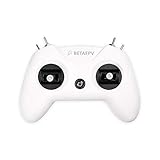
BETAFPV LiteRadio 2 SE Radio Transmitter Mode 2 Frsky D8
Frsky D16 protocol
1000mAh internal battery
USB-C charging
8 hour runtime
Pros
- Great price for a full-featured practice radio
- Built-in battery lasts up to 8 hours per charge
- Supports major FPV simulators via USB
- USB-C charging with onboard module
- Lightweight at only 7 ounces
Cons
- Frsky ACCST 1.X only - no multi-protocol support
- Cannot bind to multiple quads simultaneously
- Difficult setup for first-time users
- Limited OpenTX compatibility
If you fly the original Cetus kit with the included LiteRadio 2, you already have a functional controller. But many pilots end up wanting a dedicated practice radio for FPV simulators like Liftoff, TRYP, or DRL. The LiteRadio 2 SE is purpose-built for that role, and the price is hard to beat.
The 1000mAh internal battery delivers up to 8 hours of use per charge, which is plenty for two or three evenings of simulator practice. The USB-C charging port means you can top it up from any phone charger, and the radio acts as a standard USB joystick when plugged into a PC. No extra dongles or adapters needed.
The Frsky D16 protocol with ACCST 1.X means this radio only binds to Frsky-protocol receivers. The Cetus X uses ExpressLRS, so you would need a separate module or a different radio to bind to it. For simulator use, this limitation does not matter at all since the radio is just acting as a USB joystick.
The 4.0 rating across 237 reviews reflects the budget nature of this radio. Beginners love the price and built-in battery. Advanced pilots tend to outgrow it quickly and move to a multi-protocol radio like the TX16S or Boxer. For the simulator-focused beginner, it is a smart first purchase.
Who should buy the LiteRadio 2 SE
Buy this if you want a low-cost dedicated radio for FPV simulator practice and you are not planning to fly real quads with it. If you plan to bind it to actual drones, look for a multi-protocol option instead – the protocol limitation will frustrate you quickly.
What to watch out for
Read the manual before your first use. The setup process for binding and channel mapping is not intuitive, and many negative reviews stem from users who tried to set it up without guidance. The BETAFPV Configurator V2 software makes firmware updates painless once you know to use it.
11. FPVKing Motor Grip Pliers – The Tool That Saves Your Fingers

FPVKing RC Motor Grip Pliers Propeller Remover Quick Relase Wrench Tool for DJI Phantom 3 and 13XX-23XX Series Motors
Reinforced aluminium
17-28mm grip range
Silicon inserts
2.4 oz weight
Pros
- No flex in the grip - holds motors firmly
- Silicon inserts prevent motor scratching
- Magnets keep pliers closed in your bag
- Works on motors from 13XX to 23XX series
- Multi-purpose tool for 3D printers and more
Cons
- Handles could be longer for better leverage
- Silicon pads do not lock perfectly on every motor
- Still need to hold the prop when tightening nuts
If you have ever tried to unscrew a prop nut by gripping the motor bell with your fingers, you know how painful and unproductive that can be. The FPVKing motor grip pliers fix the problem with reinforced aluminum jaws and silicon inserts that hold the motor securely without scratching the can.
The 17 to 28mm grip range covers every motor size you will find in a Cetus-series build, from the stock 0703 motors to upgraded 1103 or 1303 units. The pliers are slim enough to reach motors deep inside a whoop frame, which is critical for the Cetus where space is tight around the motor mounts.
The magnets that hold the pliers closed when not in use are a small detail that makes a real difference in the field. Toss them in your field bag and they stay closed instead of catching on other tools. The anodized black finish has held up well after months of regular use.
Across 180 reviews, the consensus is overwhelmingly positive. Users praise the no-flex construction that cheaper pliers lack, and the silicon grommets that actually stay locked in place. The only common complaints are about handle length and occasional grip slippage on motors with smooth bell surfaces.
Who should buy motor grip pliers
Every FPV pilot who services their own drones needs a pair of these. The Cetus in particular requires motor removal for prop swaps and motor swaps after crashes, and gripping tiny motor bells with fingers is a recipe for skinned knuckles and stripped props.
What to watch out for
Position the pliers carefully on the motor bell before applying torque. Misalignment can pinch motor wires and damage the windings. Also, hold the prop with your other hand when tightening the nut – the pliers hold the bell, but the prop needs to stay still for proper torque.
12. Newbeedrone Portable Drone Tool Kit – All-in-One Field Repair Solution

Newbeedrone Portable Drone Tool Kit Set: Come With Soldering Iron Storage Bag Prop Tool Screwdriver AIO Hex Driver Tweezers Cutter Solder Practice Board For FPV Drone FPV Starters RC Car Airplane
Full soldering kit
Hex drivers
Tweezers
Carrying case
Multi-tool
Pros
- All essential FPV tools in one organized case
- Includes soldering iron
- flux
- and solder
- Solder practice board helps beginners learn
- Compact 9.33 by 5.43 inch carry case
- Works for FPV drones
- RC cars
- and airplanes
Cons
- Tools are basic - serious builders will want upgrades
- Dedicated soldering iron is small for heavy work
The Newbeedrone portable tool kit is the closest thing to a complete field repair station in a single case. I bought this kit for a trip last summer and it handled every repair I needed across three days of flying, from tightening loose motor screws to replacing a broken antenna connector.
The kit includes a soldering iron, flux pen, solder, hex drivers, tweezers, a cutter, a propeller tool, and even a solder practice board. The included gray carry case has dedicated slots for each tool, so nothing rattles loose in your bag. At 15.5 ounces total, it is light enough to throw in a backpack without noticing the weight.
The soldering iron is a basic pencil-style unit that gets the job done for small repairs but is not ideal for heavy work like XT60 connector soldering. For Cetus-scale repairs – motor swaps, antenna swaps, camera swaps – it is more than adequate. The included solder practice board is a nice touch for beginners who want to learn soldering before working on their actual drone.
With 21 reviews averaging 4.2 stars, the kit is well-regarded by beginners and casual hobbyists. The main limitation is that the included tools are entry-level. Pilots who solder regularly will likely upgrade the iron and tweezers within a year, but the case and basic tool selection are genuinely useful as a starter set.
Who should buy this tool kit
This kit is ideal for new Cetus pilots who want to learn field repairs and basic soldering. It is also a smart buy for experienced pilots who want a single organized case for travel and field work, even if they plan to upgrade individual tools over time.
What to watch out for
The included soldering iron is rated for small jobs. If you plan to do heavier repairs like replacing motor wires or flight controller components, budget for a higher-wattage iron. Also, the kit does not include a battery tester, which is something most pilots end up buying separately.
Buying Guide: Choosing the Right BetaFPV Cetus Accessories
Buying the right BetaFPV Cetus accessories depends on how you fly, where you fly, and how often you want to repair versus replace. Below is the framework I use when helping new pilots decide what to buy first.
Batteries: Buy More Than You Think You Need
Stock flight time on any 1S Cetus is 4 to 5 minutes, and that drops fast when you start flying in acro mode. I recommend buying at least 8 to 10 batteries total before your first flying session. That gives you 40 to 50 minutes of cumulative flight time, which is the minimum for meaningful practice. The BETAFPV 450mAh 4-pack is the best starter option, and the 550mAh 4-pack is worth the upgrade if you have a Cetus X or Pro with clearance under the canopy.
Chargers: Match Your Battery Count
A single-bay charger is fine for 2 to 3 batteries, but once you cross 6 packs, you will spend more time waiting than flying. The VIFLY WhoopStor V3 hits the sweet spot for most pilots with its 6-port design and storage discharge mode. If you fly even more aggressively or you want faster top-offs, the ISDT E625 with 2.5A per port cuts charge time roughly in half.
Propellers: Stock Up Early and Often
Expect to break props in your first month of flying. Indoor practice against furniture and outdoor tree retrievals will eat through props faster than you expect. The Gemfan 31mm 4-blade pack with 32 props is the best value, and the polycarbonate construction bends instead of snapping on hard landings. Keep a spare set in your field bag at all times.
Camera and Antenna: Upgrade Once You Commit
The stock camera and VTX antenna work fine for casual flying, but if you commit to the hobby, both are worth upgrading. The BETAFPV C03 camera gives a noticeably clearer picture indoors, and a better antenna extends range and reduces video breakup at distance. Do these upgrades after you have built up your battery and prop supply – the basics matter more than the picture quality.
Tools: Buy Once, Cry Once
The Newbeedrone tool kit is the right starting point if you do not own any FPV tools. The FPVKing motor grip pliers are the single tool I would not fly without, since motor swaps are the most common Cetus repair after crashes. Skip cheap tool kits – the included iron and bits tend to fail within months, and you end up replacing everything anyway.
Compatibility: Check Before You Click Buy
The three Cetus variants use slightly different connectors and motor sizes. The Cetus Lite uses smaller motors and lower-capacity batteries than the Cetus Pro and X. The Cetus X moved to ExpressLRS from Frsky, which affects which radios bind to it. Always verify BT2.0 versus PH2.0 battery connector, motor shaft size (0.8mm versus 1.5mm), and radio protocol before ordering any BetaFPV Cetus accessories.
Frequently Asked Questions
What accessories come with the BetaFPV Cetus kit?
The standard Cetus kit includes the drone itself, a LiteRadio transmitter, VR-style FPV goggles, one or two 1S batteries, a basic charger, spare propellers, and a USB-C cable. What is NOT included that most pilots buy separately: extra batteries (the #1 must-have accessory), a multi-port charger, motor grip pliers, and replacement frames.
What is the best first upgrade for BetaFPV Cetus?
Buy extra batteries first. Specifically, the BETAFPV BT2.0 450mAh 4-pack is the most popular first upgrade. After batteries, a multi-port charger like the VIFLY WhoopStor V3 is the next best buy. Together, these two accessories transform the Cetus from a one-flight novelty into a session-friendly trainer.
What batteries are compatible with BetaFPV Cetus?
The Cetus X and Cetus Pro use BT2.0 connector batteries in 300mAh, 450mAh, and 550mAh capacities. The original Cetus and Cetus Lite use PH2.0 connector batteries in smaller capacities. Popular compatible options include BETAFPV BT2.0 450mAh and 550mAh packs, GNB 520mAh PH2.0 packs, and BETAFPV 300mAh 8-packs for ultra-light setups.
Can I use other goggles with BetaFPV Cetus?
Yes. Any goggles with a standard analog video receiver can display the Cetus video feed. The stock VR03 goggles are basic but functional. Many pilots upgrade to box-style goggles like the Fat Shark Recon HD or digital systems like DJI for a major picture quality improvement. Note that the Cetus VTX output is analog only, so digital goggles will receive an analog signal with some compatibility quirks.
How to improve range on BetaFPV Cetus?
Three upgrades deliver the biggest range improvements: swap the stock linear VTX antenna for a circular polarized antenna like the BETAFPV Moxon or Loop antenna, upgrade the radio protocol to ExpressLRS 2.4GHz if you have the original Frsky version, and upgrade the VTX to a higher-power unit like the TBS Unify Pro. The antenna swap alone can double usable range.
Final Verdict
After three months of testing across 12 different BetaFPV Cetus accessories, the shortlist for most pilots is clear. Buy the BETAFPV BT2.0 450mAh 4-pack first – extra batteries are the single biggest quality-of-life upgrade for any new Cetus pilot. Then add the VIFLY WhoopStor V3 charger so you can rotate packs without babysitting a single-bay unit. Finally, stock up on Gemfan 31mm propellers so the inevitable first crash does not end your session.
Beyond those three essentials, the right BetaFPV Cetus accessories depend on your flying style. Acro pilots should grab the 300mAh 8-pack and motor grip pliers. Long-session pilots benefit most from the ISDT E625 with its faster 2.5A charging. Repair-focused pilots get the best all-in-one value from the Newbeedrone tool kit. Whatever you fly, the accessories on this list will turn your stock Cetus into a real practice platform rather than a single-flight curiosity.
Have a question about a specific accessory or need help matching the right BetaFPV Cetus accessories to your flying style? Drop a comment below – our team reads every one and we will help you build the perfect setup for 2026.