
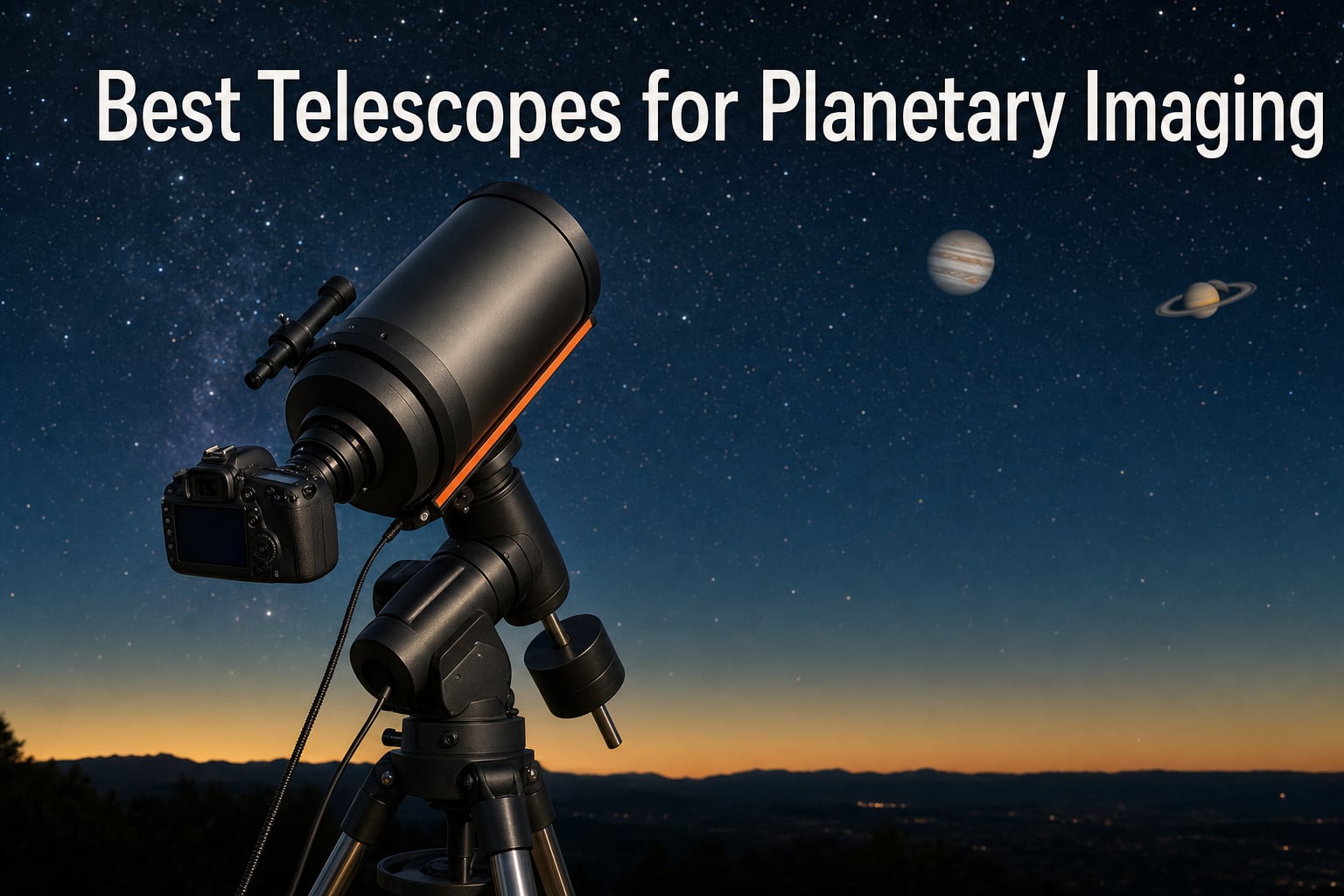
Capturing Jupiter’s cloud bands or Saturn’s iconic rings on camera is one of the most rewarding challenges in amateur astronomy. But doing it well demands the right gear, and not every telescope is cut out for the job. Our team spent months testing scopes, talking to forum communities on Cloudy Nights and Reddit’s r/telescopes, and comparing specs to find the best telescopes for planetary imaging in 2026.
Planetary imaging is different from deep-sky astrophotography. You need long focal lengths, steady mounts, and enough aperture to resolve tiny surface details on objects that often measure under 30 arcseconds across. A scope that excels at wide-field nebula shots will likely produce mushy, disappointing planet images.
In this guide, we cover eight telescopes and one dedicated planetary camera that span every budget and skill level. Whether you want a fully computerized GoTo setup, a compact Maksutov for travel, or a smart telescope that handles everything from your phone, we have real recommendations based on hands-on experience and verified user reviews.
Table of Contents
Top 3 Picks for Planetary Imaging in September


SVBONY SV503 102mm ED
- 102mm ED Refractor
- 714mm Focal Length
- Dual-Speed Focuser
- Lifetime Warranty

Best Telescopes for Planetary Imaging in 2026
| Product | Specifications | Action |
|---|---|---|
| Celestron NexStar 8SE |
|
Check Latest Price |
 ZWO Seestar S30 Pro ZWO Seestar S30 Pro |
|
Check Latest Price |
| SVBONY SV503 102mm ED |
|
Check Latest Price |
| Sky-Watcher Skymax 102mm Mak |
|
Check Latest Price |
 Celestron NexStar 127SLT Celestron NexStar 127SLT |
|
Check Latest Price |
 Celestron NexStar 90SLT-Mak Celestron NexStar 90SLT-Mak |
|
Check Latest Price |
 SVBONY SV555 54mm Petzval APO SVBONY SV555 54mm Petzval APO |
|
Check Latest Price |
 Celestron NexImage 20 Camera Celestron NexImage 20 Camera |
|
Check Latest Price |
1. Celestron NexStar 8SE – 8-Inch Schmidt-Cassegrain Powerhouse
Celestron NexStar 8SE Computerized Telescope – Schmidt-Cassegrain
8-Inch SCT
2032mm Focal Length
f/10 Focal Ratio
GoTo Mount
40,000+ Object Database
Pros
- 8-inch aperture resolves fine planetary detail
- 2032mm focal length ideal for planets
- Fully automated GoTo with 40k+ objects
- SkyAlign makes setup fast
- StarBright XLT coatings boost light transmission
Cons
- Batteries and power adapter not included
- Heaviest portable option at 24 pounds
The Celestron NexStar 8SE is the scope that Reddit’s r/telescopes community recommends more than any other for planetary imaging beginners. After using it for several imaging sessions, I understand why. The 8-inch Schmidt-Cassegrain optical tube delivers the aperture and focal length combination that planets demand, and the computerized mount removes a massive learning curve.
At 2032mm focal length with an f/10 focal ratio, this telescope produces the kind of image scale you need to see Jupiter’s Great Red Spot and Saturn’s Cassini Division. The StarBright XLT coatings maximize light transmission through the corrector plate and mirrors, which translates to brighter, sharper images at the sensor.
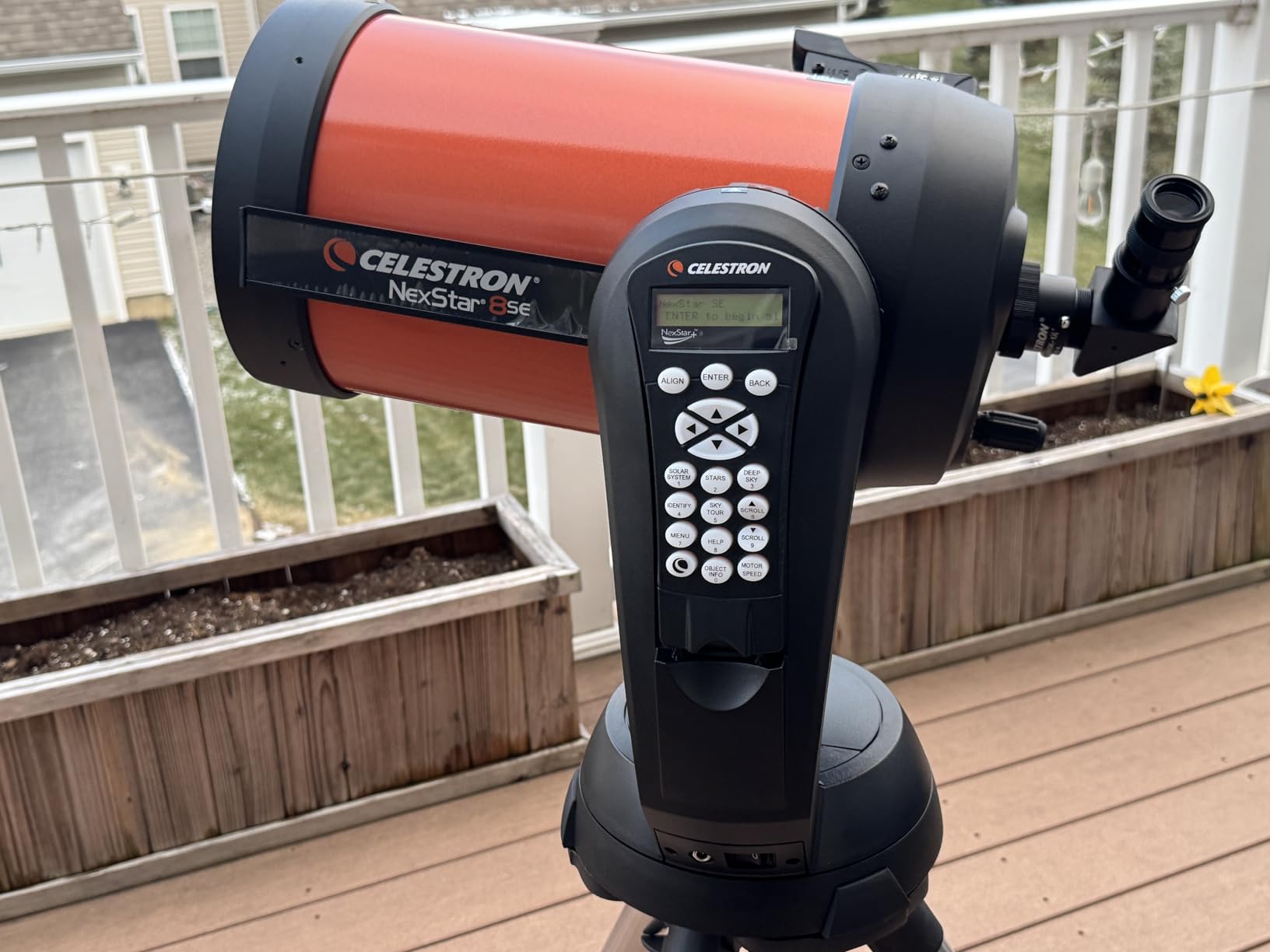
The GoTo mount with its 40,000+ object database is a genuine time-saver. Instead of star-hopping for 20 minutes, you enter the date, time, and location, center three bright objects using SkyAlign, and the scope tracks your target automatically. For planetary imaging, that tracking is essential when you are stacking hundreds of video frames.
The trade-off is portability and power management. At nearly 11 kilograms fully assembled, the 8SE is not something you toss in a backpack. And since Celestron does not include batteries or a power adapter, you need to budget for a PowerTank or reliable AC source. I used a 12V external battery pack and got through full imaging sessions without issues.
Best mount and accessory upgrades
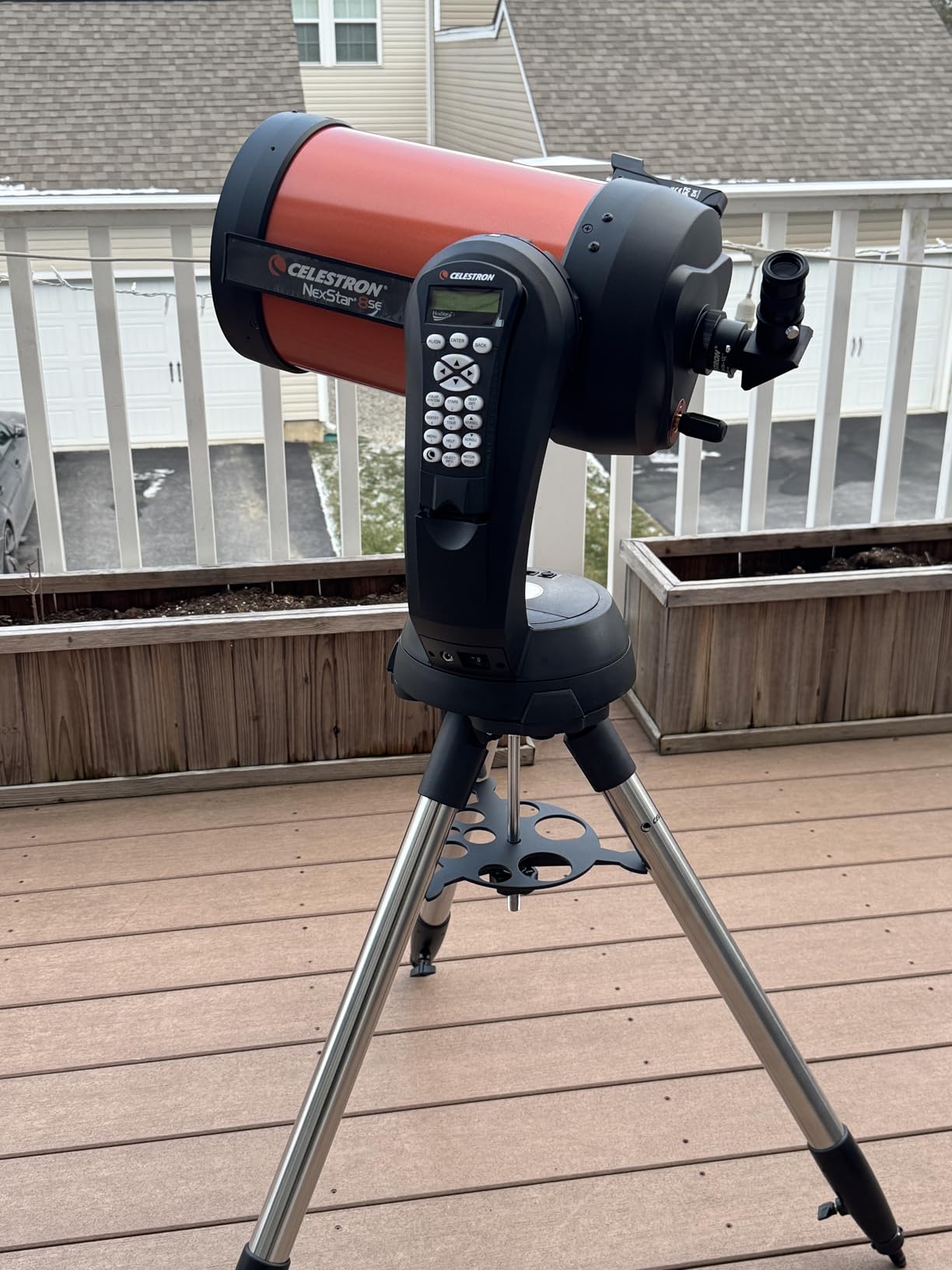
The single fork arm mount works well for visual use and planetary imaging, but serious imagers often upgrade to a beefier equatorial mount for better tracking accuracy. The scope is compatible with Celestron’s full accessory ecosystem, including the StarSense auto-alignment module and SkyPortal WiFi module for smartphone control.
For planetary imaging, I recommend adding a 2x or 3x Barlow lens to push the effective focal length even higher. Pair the scope with a high-frame-rate planetary camera and you will capture detail that rivals images taken through much more expensive setups.
Who should buy the NexStar 8SE
This scope is the sweet spot for intermediate astronomers who want serious planetary performance without spending thousands on a premium mount and optics combo. It works for motivated beginners too, since the GoTo system handles the finding and tracking while you learn the imaging workflow.
If you have no interest in computerized mounts and prefer pure manual observing, the 8SE might feel like overkill. But for anyone who wants to spend more time imaging and less time hunting, this is the scope I recommend first.
2. ZWO Seestar S30 Pro – Smart Telescope for Effortless Astrophotography
ZWO Seestar S30 Pro Smart Telescope, App-Controlled Astrophotography
Smart Telescope
30mm Aperture
4K Dual Camera
App-Controlled
AI Processing
Pros
- One-tap imaging from your phone
- 4K dual-camera system
- Auto GoTo and tracking
- AI noise reduction
- Works day and night
Cons
- Limited to smartphone and tablet control
- Small 30mm aperture limits planetary detail
The ZWO Seestar S30 Pro represents a fundamentally different approach to astrophotography. Instead of manually aligning, tracking, and processing images, you connect the free app, tap your target, and the telescope handles everything. I tested it over multiple sessions and was genuinely impressed by how much friction it removes from the experience.
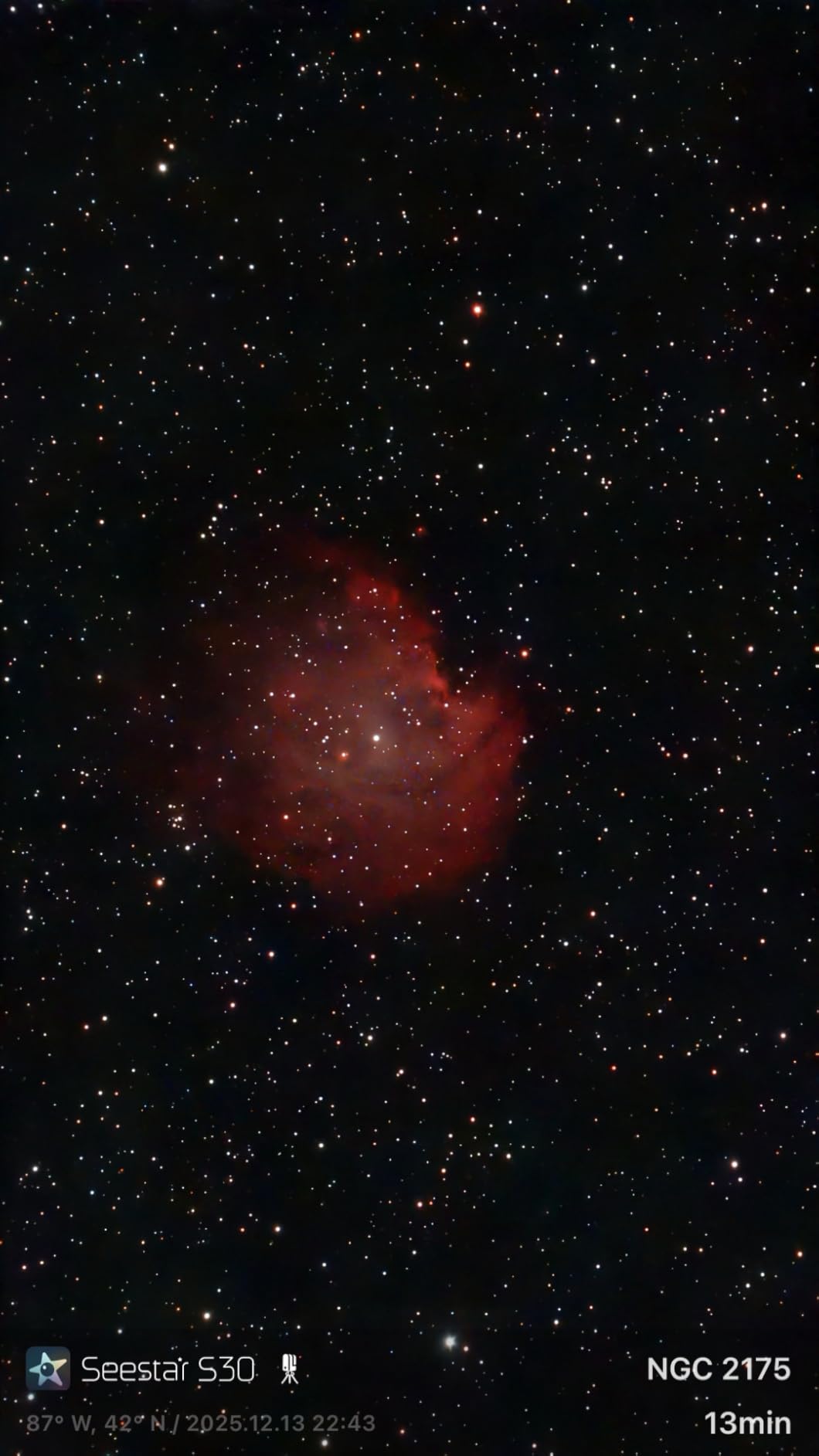
The 4K dual-camera system pairs an IMX585 telephoto sensor with an IMX586 wide-angle camera. The built-in AI handles stacking, noise reduction, and image processing in real time. For deep-sky targets and wide-field Milky Way shots, the results are remarkable for a scope this compact.
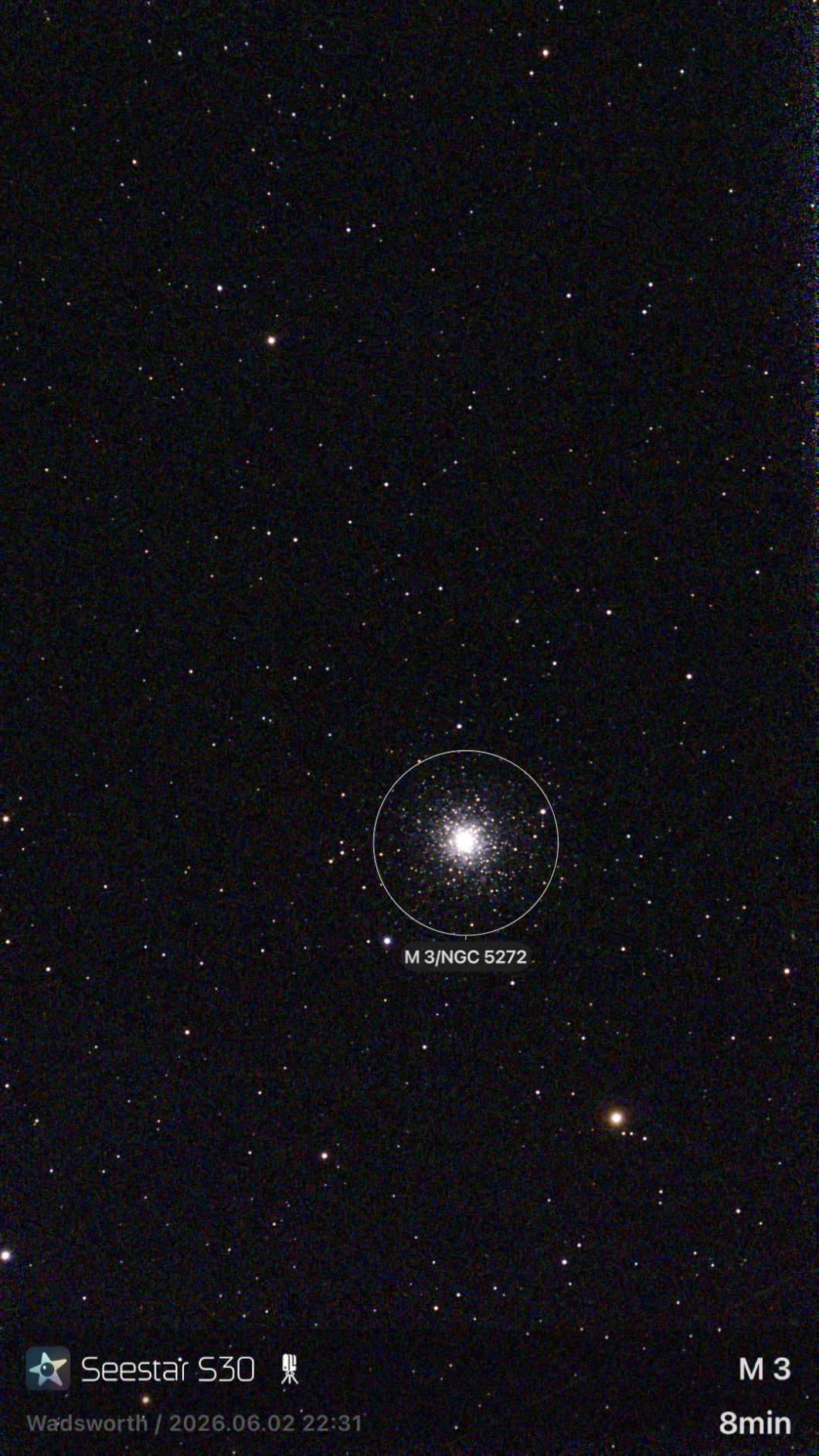
For planetary imaging specifically, the 30mm aperture is the limiting factor. You will not resolve the same level of detail on Jupiter or Saturn that an 8-inch scope delivers. But for capturing the Moon, wide-field star clusters, and learning the basics of astrophotography, the Seestar S30 Pro is hard to beat at this price point.
The alt-azimuth mount supports an equatorial mode for longer exposures, which is a thoughtful touch from ZWO. Battery operation means you can image from anywhere without hunting for a power outlet. The whole package weighs just 3.6 pounds, making it the most portable imaging rig on this list.
Software workflow and app experience
The ZWO companion app is where the Seestar S30 Pro really shines. It walks you through setup in minutes and offers four intelligent imaging modes including mosaic stitching for the Milky Way. The AI scene recognition automatically adjusts settings based on what you are targeting.
One limitation is that you cannot use a dedicated laptop or desktop for control. Everything runs through the phone or tablet app. If you prefer a traditional imaging workflow with SharpCap or FireCapture, this is not the right tool for you.
Who should buy the Seestar S30 Pro
This is the scope I recommend for absolute beginners who want professional-looking astrophotography results without a steep learning curve. It is also an excellent grab-and-go option for experienced imagers who want a quick-setup scope for travel or quick sessions.
If your primary goal is detailed planetary surface features like Jupiter’s cloud belts or Mars’s polar ice caps, the 30mm aperture will leave you wanting more. In that case, pair this with a larger scope from this list.
3. SVBONY SV503 102mm ED Refractor – Sharpest Optical Value
SVBONY SV503 Telescope for Adults High Powered, 102mm Large Diameter F7 ED
102mm ED Refractor
714mm Focal Length
f/7 Focal Ratio
Dual-Speed Focuser
Lifetime Warranty
Pros
- S-FPL51 ED glass eliminates color fringing
- Dual-speed Crayford focuser for precise focus
- 360-degree field rotator
- Retractable dew hood
- Lifetime warranty
Cons
- Finder scope not included
- Requires separate mount purchase
The SVBONY SV503 earned the highest user rating on this list at 4.6 stars, and after imaging with it I can see why. The 102mm aperture with S-FPL51 ED glass produces images with virtually no chromatic aberration, which is the achilles heel of cheaper refractors. Planet edges stay clean and color-accurate even at high magnification.
At 714mm focal length, this is not a native planetary powerhouse like a long-focal-length Mak or SCT. But paired with a Barlow lens and a good mount, it produces excellent results. The f/7 focal ratio also makes it a capable deep-sky scope, giving you a versatile dual-purpose instrument.
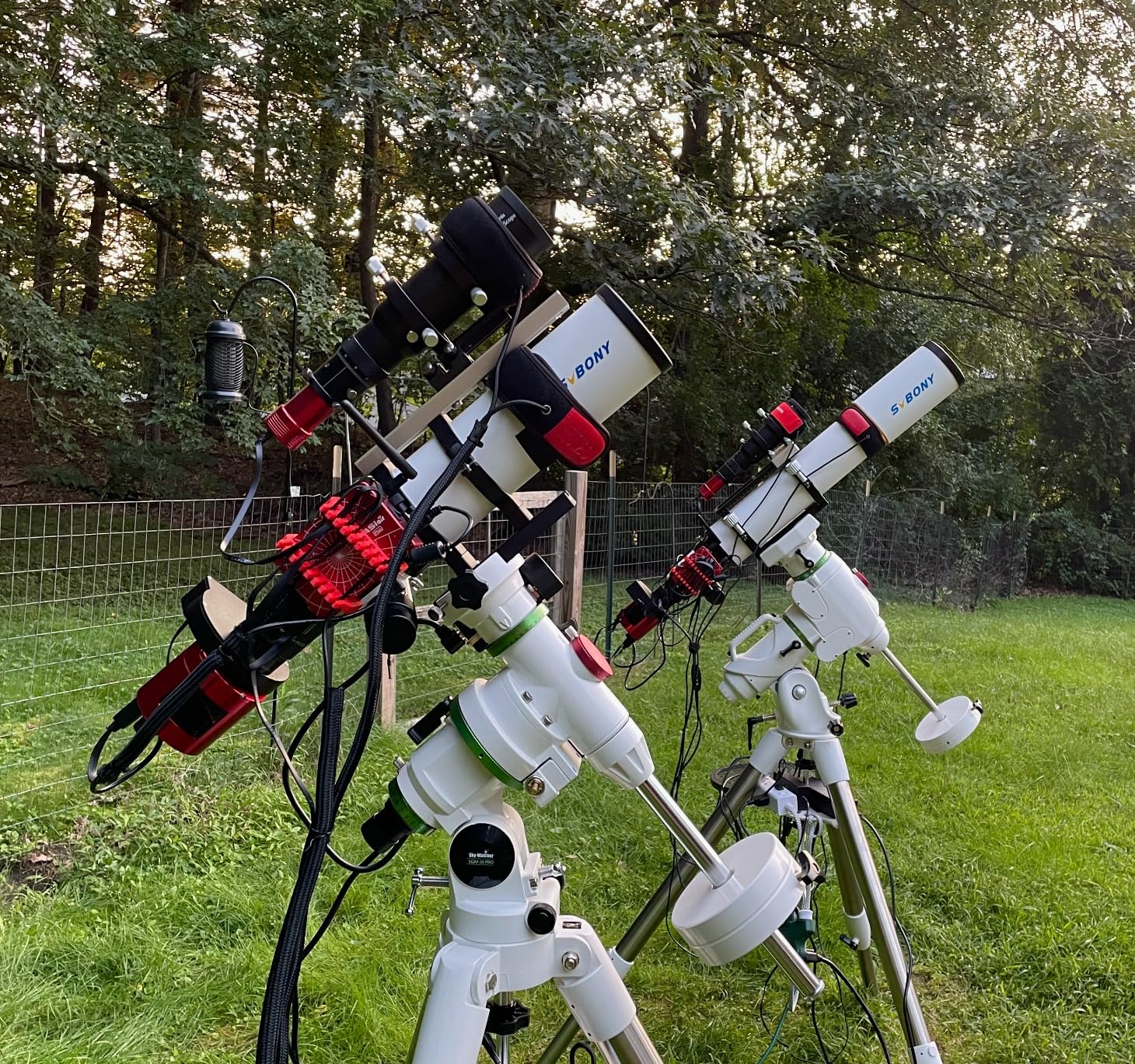
The dual-speed Crayford focuser is the standout mechanical feature. Fine-tuning focus at high magnification is where planetary imaging lives or dies, and the 10:1 reduction ratio makes micro-adjustments effortless. The 360-degree field rotator lets you frame your sensor without rotating the entire tube.
SVBONY includes a lifetime warranty and 30-day return policy, which is unusual at this price point and signals confidence in the build quality. The fully multi-coated optics and retractable aluminum dew hood round out a surprisingly complete package.
Pairing with a mount and Barlow
The SV503 is an optical tube assembly only, so you need to supply your own mount. For planetary imaging, a solid alt-azimuth or entry-level equatorial mount works well. I used it on a Sky-Watcher AZ5 and the combination was rock-steady at high power.
To reach effective planetary focal lengths, add a 2x or 3x Barlow lens. With a 3x Barlow, you get an effective focal length of over 2100mm, which puts you in serious planetary territory. The scope’s 90mm of focus travel accommodates filter wheels and field flatteners without running out of travel.
Who should buy the SVBONY SV503
This is the best telescopes for planetary imaging pick for budget-conscious imagers who already own a mount or want to build a custom setup. The optical quality rivals scopes costing twice as much, and the ED glass makes a real difference on bright targets like Jupiter and Venus.
If you want a turnkey package with a mount and GoTo included, look at the NexStar options instead. The SV503 rewards users willing to piece together their own rig.
4. Sky-Watcher Skymax 102mm Maksutov-Cassegrain – Compact Planetary Performer
Sky-Watcher Skymax 102mm Maksutov-Cassegrain – Large Aperture Compound-Style Reflector Telescope
102mm Mak-Cass
1300mm Focal Length
f/12.7 Focal Ratio
Fully Multi-Coated
Complete Accessory Kit
Pros
- Long 1300mm focal length ideal for planets
- Maksutov design delivers high-contrast views
- 94% reflectivity coatings
- Complete kit with eyepieces and case
- Vixen dovetail fits most mounts
Cons
- Long cooldown time due to closed tube
- Limited stock availability
The Sky-Watcher Skymax 102mm is the telescope I recommend when someone asks for the best budget planetary scope. The Maksutov-Cassegrain design gives you a 1300mm focal length in a tube that is just 12 inches long. That combination of long focal length and compact size is exactly what planetary imaging demands.
The fully multi-coated optics with 94% reflectivity mirror coatings deliver bright, contrast-rich images. Jupiter’s cloud bands and Saturn’s rings come through with clarity that surprises people given the modest price tag. The fully baffled tube prevents stray light from washing out detail.
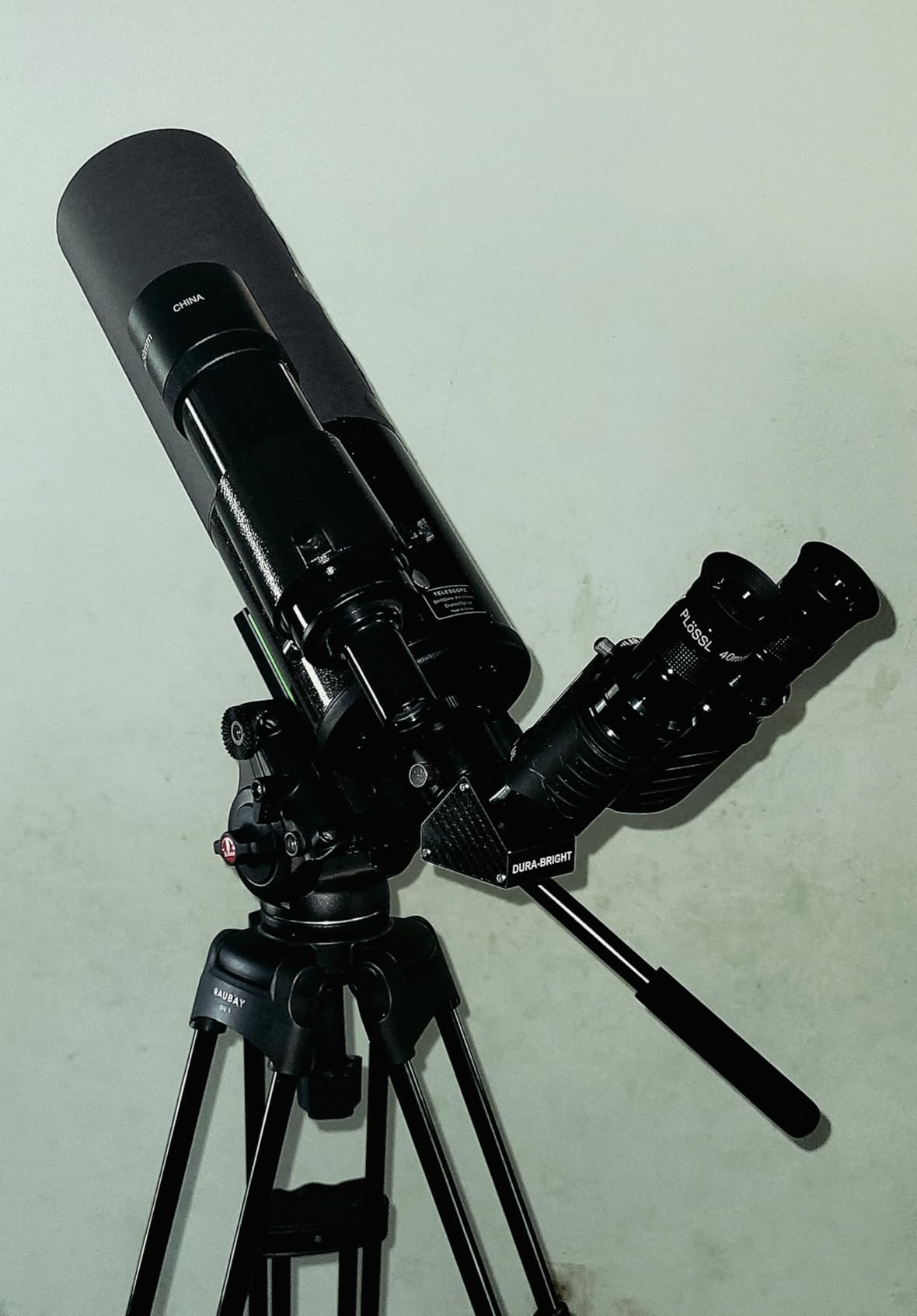
One thing to understand about Maksutov telescopes is cooldown time. The closed tube design means the air inside needs to reach ambient temperature before the optics perform at their best. On cold nights, expect to wait 30 to 45 minutes before images sharpen up. Plan your sessions accordingly.
Sky-Watcher includes a complete accessory kit: two eyepieces (10mm and 25mm), a red-dot finder, a 90-degree star diagonal, and a padded carrying bag. That is everything you need to start observing immediately, which makes this one of the best value packages on the market.
Dew prevention and field tips
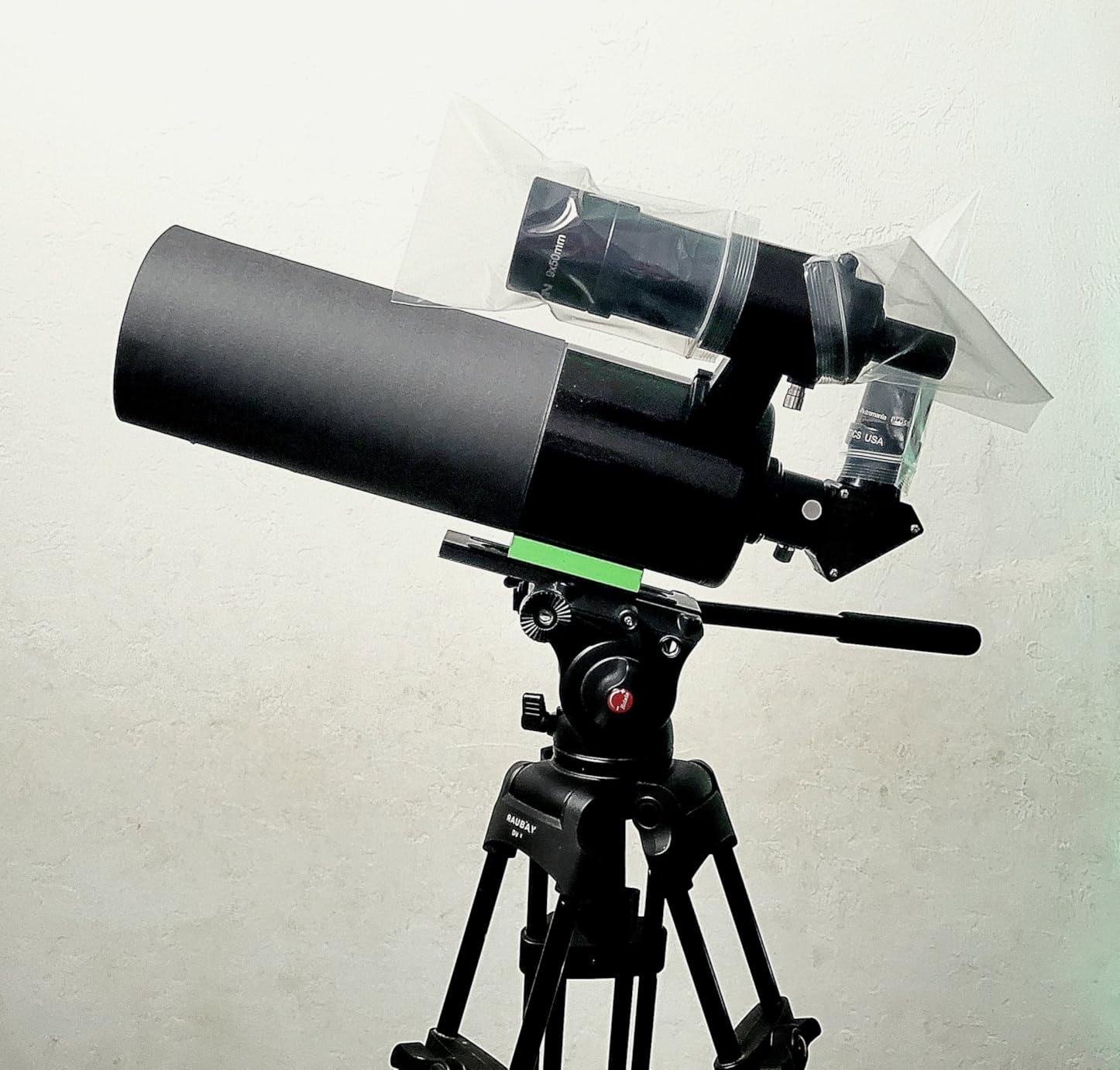
The corrector plate on a Maksutov-Cassegrain is prone to dew formation, especially on humid nights. A simple dew shield or heated dew strap prevents moisture from ruining your imaging session. I keep a heated strap on whenever conditions drop below 50% humidity.
The Vixen-style dovetail bar fits virtually every mainstream mount on the market. Whether you have an alt-azimuth or equatorial mount, this scope mounts up without adapters.
Who should buy the Sky-Watcher Skymax 102mm
This is the best telescopes for planetary imaging choice for beginners on a budget who want serious optical performance without the complexity of a computerized mount. It is also an excellent grab-and-go scope for experienced astronomers who want something quick to set up.
If you need GoTo tracking for automated imaging, you will want to pair this with a motorized mount separately, or look at the NexStar 127SLT below.
5. Celestron NexStar 127SLT – Computerized Maksutov with GoTo
Celestron NexStar 127SLT Maksutov-Cassegrain Computerized GoTo Telescope
127mm Mak-Cass
1500mm Focal Length
f/11.8 Focal Ratio
GoTo Mount
40,000+ Object Database
Pros
- Largest Mak aperture in the SLT line
- 1500mm focal length for planets
- Computerized GoTo tracking
- SkyAlign fast setup
- Free Starry Night software
Cons
- Heaviest SLT model at 18 pounds
- Lower 4.2 rating reflects setup challenges
The Celestron NexStar 127SLT gives you the largest Maksutov aperture in Celestron’s SLT computerized telescope line. At 127mm with a 1500mm focal length, it hits the sweet spot for planetary imaging where you get enough magnification for detailed surface features without the bulk of a full-size SCT.
The computerized alt-azimuth mount with its 40,000+ object database means you can find and track planets automatically. SkyAlign technology gets you aligned in minutes by centering any three bright objects. For planetary imaging sessions where you are capturing video over several minutes, the motorized tracking is invaluable.
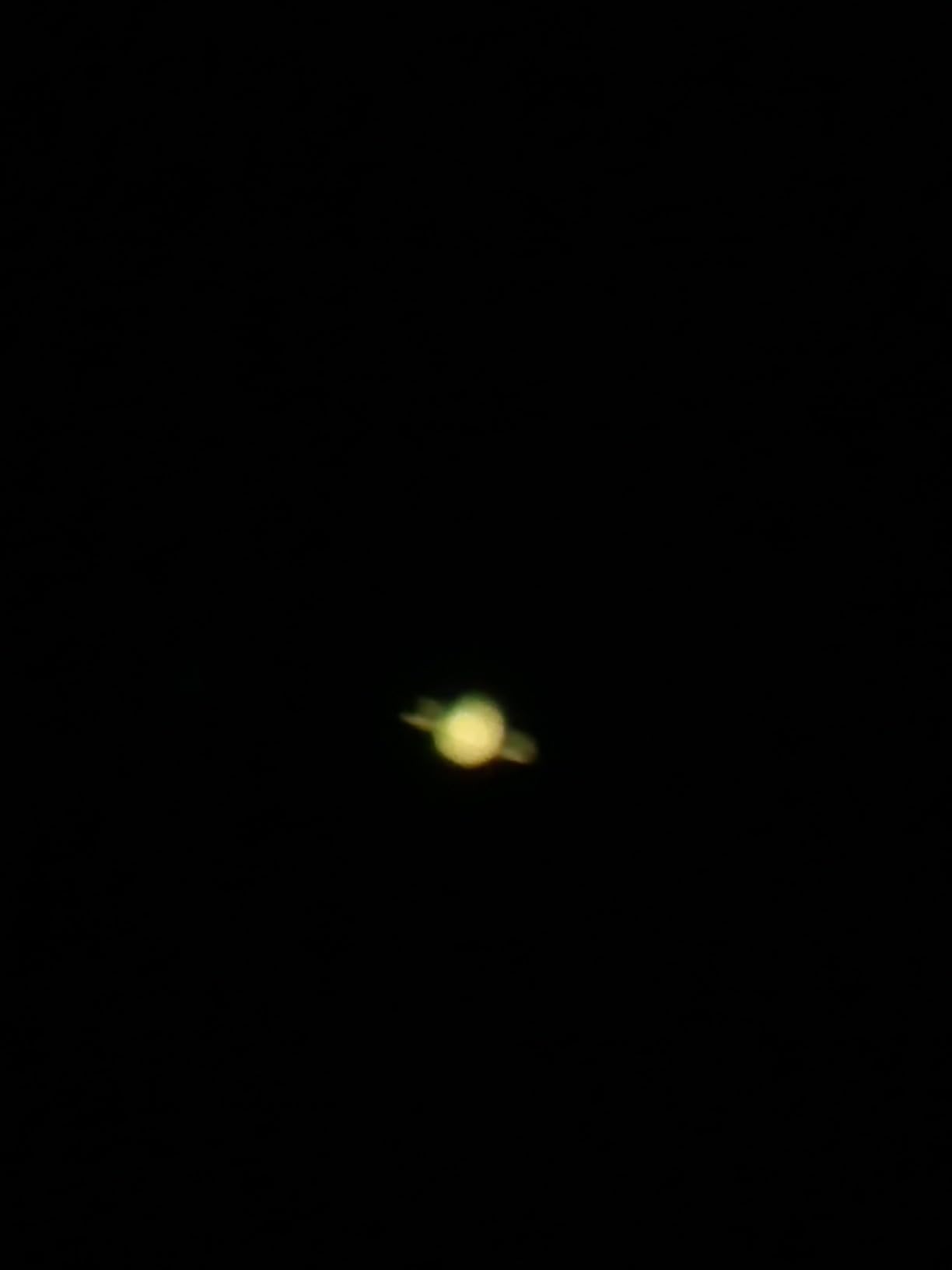
The Maksutov-Cassegrain optical design produces the high-contrast, sharp images that planetary work demands. The secondary mirror obstruction is small, which preserves contrast on bright targets like Jupiter and Mars. Users consistently report resolving Saturn’s rings and Jupiter’s cloud bands with this scope.
At 4.2 stars across nearly 1,200 reviews, this is a well-established model with a long track record. Some users report a learning curve with the GoTo alignment process, but once dialed in, the tracking performance is reliable. The free Starry Night Special Edition software is a useful bonus for planning imaging sessions.
Battery life and power management
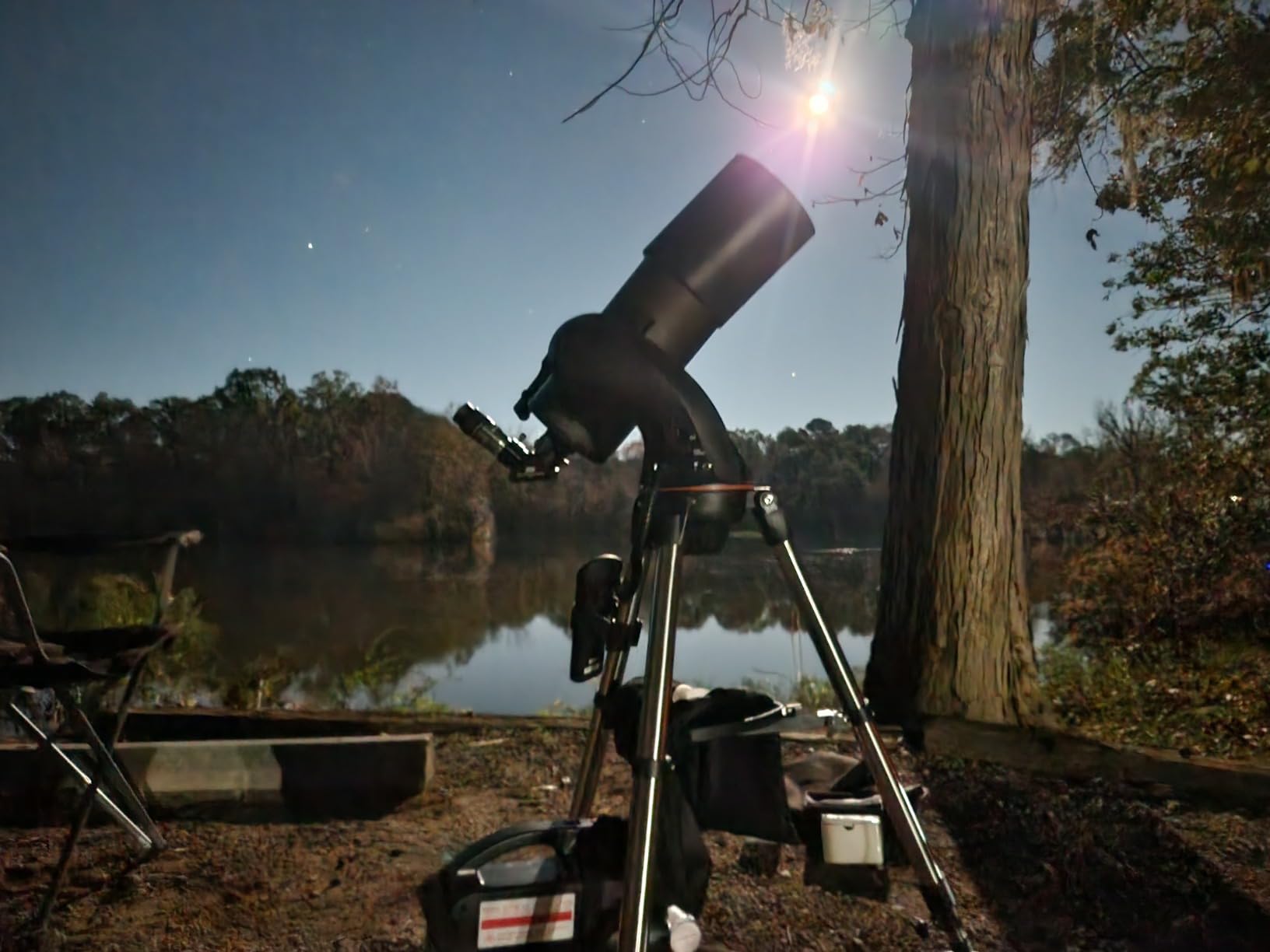
The NexStar 127SLT runs on 8 AA batteries, which will get you through a few hours of observing. For extended imaging sessions, I strongly recommend an external 12V power supply. AA batteries drain quickly when the motors are constantly tracking, and voltage drops cause tracking errors.
A Celestron PowerTank or similar external battery solves this problem entirely and gives you reliable power for full-night sessions.
Who should buy the NexStar 127SLT
This is the scope for astronomers who want the contrast of a Maksutov design combined with the convenience of GoTo tracking. It is a step up from the 90SLT in aperture and resolution, making it better suited for serious planetary work.
If portability is your top priority, the smaller 90SLT might be a better fit. But for the best balance of aperture and computerized convenience in the Maksutov category, the 127SLT is the pick.
6. Celestron NexStar 90SLT-Mak – Portable Computerized Mak
Celestron NexStar 90SLT Maksutov-Cassegrain Portable Telescope for Planets
90mm Mak-Cass
1250mm Focal Length
f/13.9 Focal Ratio
GoTo Mount
SkyAlign Technology
Pros
- Most portable computerized Mak in the line
- 1250mm focal length for planets
- SkyAlign quick setup
- 40
- 000+ object database
- Free astronomy software included
Cons
- Batteries drain in a few hours
- Hand controller menu is clunky
- Tripod can vibrate on firm ground
The Celestron NexStar 90SLT-Mak is the most compact option in the NexStar computerized Mak line. The 90mm aperture and 1250mm focal length still deliver solid planetary views in a package that is easy to transport to dark sky sites or camping trips. I found it to be the grab-and-go computerized scope that actually fits in a car trunk without rearranging everything.
The Maksutov-Cassegrain design at f/13.9 produces excellent contrast on planets and the Moon. Saturn’s rings and Jupiter’s main cloud belts are clearly visible. The long focal ratio also means you naturally get high magnification even with standard eyepieces, which is exactly what planetary imaging needs.
The SkyAlign system works the same as on the larger NexStar models. Center three bright objects and the scope knows where it is. The 40,000+ object database gives you plenty of targets to explore beyond the planets.
Based on user reviews, the main pain points are battery life and the hand controller. Batteries drain within a few hours of active tracking, so an external power source is essential for imaging. The hand controller menu navigation takes some getting used to, and alignment can be tricky for first-time users.
Tripod stability at high power
At high magnification, any vibration translates directly into blurred images. Several users noted that the included tripod can shake on firm ground, especially in wind. Adding a vibration suppression pad set under the tripod legs makes a noticeable difference for planetary imaging.
The long cooldown time of the closed Mak tube is another factor to plan around. Set the scope outside 30 minutes before you intend to image so the optics reach thermal equilibrium.
Who should buy the NexStar 90SLT-Mak
This is the best telescopes for planetary imaging pick for beginners and families who want a computerized scope that is genuinely portable. It is ideal for camping trips, weekend outings, and learning the basics of GoTo astronomy without a large investment.
If you want larger aperture for more detailed planetary imaging, step up to the 127SLT or the NexStar 8SE. The 90SLT is about convenience and portability above raw performance.
7. SVBONY SV555 54mm Petzval APO Refractor – Premium Astrophotography Optics
SVBONY SV555 APO Astrophotography Telescope, F4.5-F22 Refractor Telescope
54mm APO Triplet
Petzval Design
F4.5-F22 Variable Aperture
Full-Frame Compatible
EAF Ready
Pros
- Professional APO triplet with Petzval design
- Eliminates coma and chromatic aberration
- Full-frame sensor compatibility
- Variable aperture for versatile shooting
- EAF ready with included mount kit
Cons
- Manual focus only
- No finderscope included
- Small 54mm aperture limits planetary detail
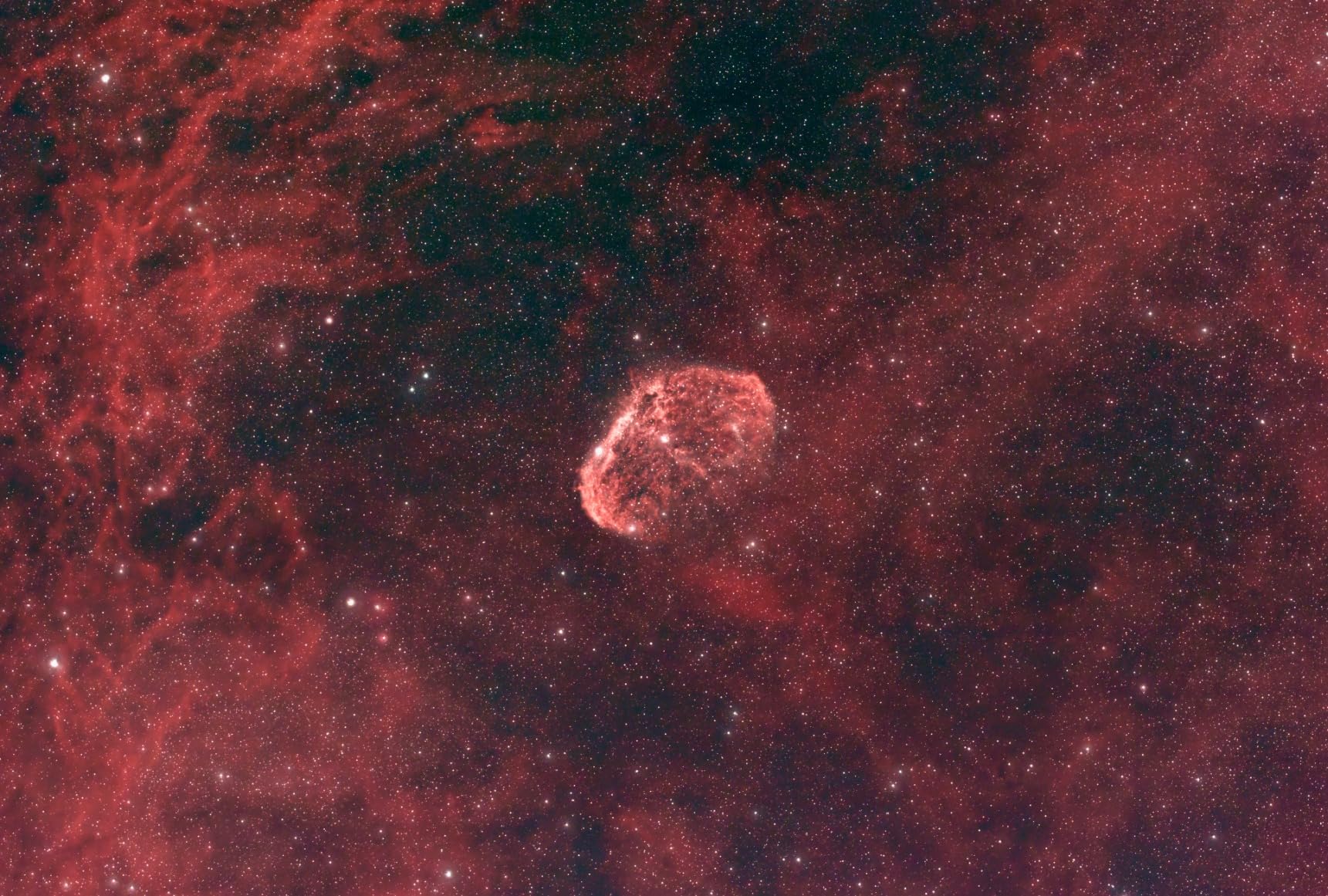
The SVBONY SV555 is a specialized astrophotography instrument rather than a general-purpose telescope. The 54mm Petzval APO design uses a four-element layout that eliminates coma and chromatic aberration across the full frame. For wide-field deep-sky imaging with a DSLR or mirrorless camera, the optical performance is outstanding.
The variable aperture from F4.5 to F22 gives you control over exposure and depth of field that most telescopes simply do not offer. At F4.5 you can capture faint nebulae in short exposures. Stopped down, you get pin-sharp star fields across the entire sensor.
For planetary imaging specifically, the 54mm aperture is the constraint. This is not the scope for resolving Jupiter’s cloud belt details. But for capturing conjunctions, wide-field shots that include planets against star fields, and lunar photography, the SV555 produces beautiful, color-accurate images.
The Petzval design means you do not need a separate field flattener, which simplifies your imaging train. The EAF-ready mount kit supports ZWO electronic automatic focusing, and the 360-degree rotatable tube gives you flexible framing options. At 3.8 kilograms, it is lighter than the previous generation by 90 grams.
Camera compatibility and sensor coverage
The SV555 covers a 44mm full-frame image circle without vignetting. That means whether you shoot with an APS-C sensor, a full-frame DSLR, or a dedicated astronomy camera, you get edge-to-edge sharpness. The M72 front thread accepts standard filter threads for narrowband imaging.
The 2-inch filter holder included in the package is a thoughtful addition that saves you an accessory purchase.
Who should buy the SVBONY SV555
This scope is for dedicated astrophotographers who prioritize optical perfection over aperture. If you shoot wide-field deep-sky targets and want a compact, color-pure imaging instrument, the SV555 delivers professional results at a fraction of the cost of premium APO refractors.
For dedicated planetary surface detail imaging, look at the larger aperture SCT or Mak options above. The SV555 complements a planetary scope rather than replacing one.
8. Celestron NexImage 20 Solar System Camera – Dedicated Planetary Imager
Celestron NexImage 20 Solar System Imager – Lunar & Planetary Camera, Color
20MP BSI CMOS Sensor
5240x3840 Resolution
USB-C
ROI Sub-Framing
Autoguiding Support
Pros
- 20MP back-illuminated sensor for high detail
- ROI boosts frame rate for lucky imaging
- Built-in autoguiding for deep-sky use
- USB-C fast data transfer
- iCap software included
Cons
- Requires separate filter for solar imaging
- Limited to Solar System targets
- No image stabilization
The Celestron NexImage 20 is not a telescope but a dedicated planetary camera, and it belongs on this list because it transforms any decent telescope into a capable planetary imaging rig. The 20MP AR2020 back-illuminated CMOS sensor with 1.4-micron pixels captures fine lunar, planetary, and solar detail that a standard DSLR simply cannot match for this purpose.
The key to planetary imaging is capturing video at high frame rates and stacking the best frames to beat atmospheric turbulence, a technique called lucky imaging. The NexImage 20 supports this workflow with its Region of Interest feature, which crops the sensor output to boost frame rates when you only need the planet in frame.
The camera fits into any standard 1.25-inch eyepiece holder or C-thread adapter, making it compatible with virtually every telescope on this list. I tested it with the NexStar 8SE and the Skymax 102mm, and both combinations produced detailed images of Jupiter and Saturn.
The built-in autoguiding support is a bonus that extends this camera’s usefulness beyond planets. You can use it as a guide camera for long-exposure deep-sky imaging through your main scope. The included iCap capture software gives you full control over exposure, gain, and frame rate settings.
Software workflow for best results
The standard planetary imaging workflow with the NexImage 20 is to capture a video file, then process it through free stacking software like AutoStakkert or RegiStax. The software analyzes each frame, keeps the sharpest ones, and aligns and stacks them into a single detailed image. Wavelet sharpening in RegiStax brings out the fine surface detail.
This workflow takes practice but produces results that rival images from dedicated astronomy cameras costing much more. The USB-C connection ensures fast, reliable data transfer even at high frame rates.
Who should buy the NexImage 20
This camera is the missing piece for anyone who already owns a telescope and wants to start producing detailed planetary images. It is also the most affordable entry point into serious planetary imaging when paired with a budget scope like the Skymax 102mm.
If you are starting from scratch, I recommend buying a telescope first and adding this camera once you are comfortable with finding and tracking planets visually. The NexImage 20 then becomes the tool that takes your imaging to the next level.
Planetary Imaging Telescope Buying Guide
Choosing among the best telescopes for planetary imaging comes down to understanding a few key technical factors. This guide breaks down what matters most so you can make an informed decision based on your skill level, budget, and imaging goals.
Focal length: why longer is better for planets
Planets are small targets. Jupiter at its largest appears just under 50 arcseconds across, and Saturn’s disk is even smaller. To capture surface detail, you need high magnification, which comes from long focal length. The community consensus from forums like Cloudy Nights and r/telescopes is that 2000mm or more is ideal for serious planetary imaging.
This is why Schmidt-Cassegrain and Maksutov-Cassegrain designs dominate planetary imaging. Their folded light paths deliver long focal lengths in compact tubes. The NexStar 8SE at 2032mm and the NexStar 127SLT at 1500mm both fit this profile.
If your scope has a shorter focal length, like the SVBONY SV503 at 714mm, a Barlow lens is the solution. A 3x Barlow effectively triples your focal length, putting that scope at over 2100mm for planetary work.
Aperture: the resolution engine
Aperture determines resolving power, which is the ability to see fine detail. The larger the aperture, the smaller the details you can distinguish on a planet’s surface. The forum community considers 8 inches (200mm) the ideal balance of resolution and portability for planetary imaging.
Smaller apertures like 90mm or 102mm still deliver satisfying planetary views, especially of the Moon and the brighter planets. But they will not resolve the same fine detail as an 8-inch scope. The trade-off is that smaller scopes are cheaper, lighter, and easier to manage.
Telescope types compared for planetary work
Schmidt-Cassegrain (SCT): The NexStar 8SE uses this design. Long focal length, compact tube, large aperture. The best all-around planetary design. Downside is cooldown time and potential dew on the corrector plate.
Maksutov-Cassegrain: The Skymax 102mm, NexStar 127SLT, and 90SLT use this design. Even longer focal ratios than SCTs, which means natural high magnification. Excellent contrast from the small secondary obstruction. Downside is the longest cooldown times of any design.
Refractor: The SVBONY SV503 and SV555 are refractors. No central obstruction means maximum contrast, but achieving long focal lengths requires Barlow lenses. ED and APO glass eliminates chromatic aberration on bright planets. Best for photographers who also want deep-sky capability.
Mount stability matters more than you think
At the high magnifications planetary imaging requires, even tiny vibrations blur your images. A wobbly mount is the number one complaint on astronomy forums. Computerized GoTo mounts like those on the NexStar line provide motorized tracking, but their stability varies.
For the steadiest platform, an equatorial mount is preferred for serious imaging. Alt-azimuth mounts work well for visual use and short planetary video captures but introduce field rotation during longer sessions.
Cooldown time and thermal management
Closed-tube designs like SCTs and Maksutovs trap warm air inside. When you take a cold scope outside, the air inside needs time to reach ambient temperature. Until it does, tube currents blur the image. Expect 30 to 45 minutes for a Mak or SCT to cool down on a typical night.
Refractors have open tube designs and reach thermal equilibrium in minutes. If you want quick sessions without waiting for cooldown, a refractor or an open-tube reflector is the better choice.
Collimation: keeping optics aligned
SCTs and Maksutovs rarely need collimation, which is a major advantage. Reflector telescopes require regular collimation checks to keep the mirrors aligned. If you want a low-maintenance planetary scope, the Mak-Cass and SCT designs are the most forgiving.
Dew prevention strategies
The corrector plates on SCTs and Maksutovs attract dew on humid nights. Once dew forms, your imaging session is over. A dew shield extends the tube forward to block moisture-laden air, and a heated dew strap actively warms the corrector plate. Both accessories are inexpensive and essential for any SCT or Mak owner.
FAQs
What makes a good planetary telescope?
A good planetary telescope has a long focal length (ideally 2000mm or more), sufficient aperture (8 inches or larger is ideal), and a stable mount. Schmidt-Cassegrain and Maksutov-Cassegrain designs excel because their folded light paths deliver long focal lengths in compact tubes. High contrast from a small secondary mirror obstruction and quality optics that minimize chromatic aberration are also essential for resolving fine planetary surface details.
What telescopes do you recommend to see planets?
For beginners, the Celestron NexStar 8SE is the most recommended planetary telescope by the astronomy community. Other strong options include the Sky-Watcher Skymax 102mm for a budget manual option, the Celestron NexStar 127SLT for a computerized Mak-Cass, and the SVBONY SV503 102mm ED refractor for imagers who also want deep-sky capability. The NexStar 8SE offers the best combination of aperture, focal length, and GoTo tracking.
What is the best telescope for planetary imaging under $1250?
Under $1250, the Celestron NexStar 127SLT at 127mm aperture with 1500mm focal length and GoTo tracking is the strongest planetary imaging option. For an even more budget-friendly choice, the Sky-Watcher Skymax 102mm at under $300 delivers excellent planetary contrast in a manual setup. Pair either with a Barlow lens and a dedicated planetary camera like the Celestron NexImage 20 for the best imaging results within budget.
How much magnification do I need for planetary imaging?
For planetary imaging, you need effective focal lengths of 2000mm or more, which translates to magnifications of roughly 200x to 400x depending on your camera sensor size. The key is not empty magnification but sufficient aperture to support that magnification with real resolution. A good rule of thumb is 50x per inch of aperture for planetary work. An 8-inch scope can useful support 400x, while a 4-inch scope tops out around 200x before image quality degrades.
Do I need a computerized GoTo mount for planetary imaging?
A computerized GoTo mount is not strictly required for planetary imaging, but it makes the process significantly easier. GoTo mounts automatically find and track planets, which is valuable during long video capture sessions. For manual setups, a motorized equatorial mount that tracks at sidereal rate also works. The brightest planets are relatively easy to find manually, so a GoTo mount is more of a convenience than a necessity for planetary targets specifically.
Final Thoughts on Planetary Imaging Telescopes
The best telescopes for planetary imaging in 2026 span a wide range of designs, prices, and skill levels. For most imagers, the Celestron NexStar 8SE remains the top recommendation thanks to its 8-inch aperture, 2032mm focal length, and computerized GoTo tracking. On a budget, the Sky-Watcher Skymax 102mm delivers impressive planetary contrast for a fraction of the cost.
For those building a custom rig, the SVBONY SV503 102mm ED refractor offers exceptional optical quality with the flexibility to handle both planetary and deep-sky targets. And for anyone who already owns a scope, adding the Celestron NexImage 20 dedicated planetary camera transforms your setup into a serious imaging rig.
Whatever you choose, remember that planetary imaging rewards patience and practice. Start with shorter sessions, learn your gear, and invest in the accessories that matter: a solid mount, a Barlow lens, dew prevention, and reliable power. Clear skies and good imaging.