
Finding the right RC transmitters and receivers can make or break your time at the track, in the air, or on the trail. I have spent months testing radio systems across cars, boats, planes, and drones to figure out which ones actually deliver on range, reliability, and ease of use.
Our team compared 10 of the most popular 2.4GHz radio systems on the market, from budget-friendly DUMBORC kits to premium multi-protocol powerhouses from RadioMaster and Flysky. We looked at channel count, signal protocols, telemetry features, build quality, and real-world performance to separate the winners from the letdowns.
Whether you are a first-time buyer looking for a simple 3-channel setup for your crawler or an experienced pilot who needs ELRS connectivity for FPV flying, this guide covers every tier and budget. Let us get into the best RC transmitters and receivers available in 2026.
Table of Contents
Top 3 Picks for Best RC Transmitters and Receivers in 2026


Flysky FS-i6X 6-10CH Transmitter
- AFHDS2A
- Upgradable to 10CH
- i-BUS Support
- 135 Channel Hopping
The Radiomaster Pocket ELRS takes our top spot for its incredible portability and cutting-edge ExpressLRS protocol. The Flysky FS GT5 wins best value with its gyro-stabilized receiver and 20-model memory at an unbeatable price point. The Flysky FS-i6X earns the budget pick for its upgradeability from 6 to 10 channels.
Best RC Transmitters and Receivers in September 2026
| Product | Specifications | Action |
|---|---|---|
 DUMBORC X6 6CH Transmitter DUMBORC X6 6CH Transmitter |
|
Check Latest Price |
 ATA HOBBY DUMBORC X6 ATA HOBBY DUMBORC X6 |
|
Check Latest Price |
| Flysky FS GT5 with Gyro Receiver |
|
Check Latest Price |
| Flysky FS-i6X 6-10CH Transmitter |
|
Check Latest Price |
 Radiolink RC4GS V3 5CH Radiolink RC4GS V3 5CH |
|
Check Latest Price |
 Spektrum DX3 Smart 3-Channel Spektrum DX3 Smart 3-Channel |
|
Check Latest Price |
 Radiolink AT10II 12 Channel Radiolink AT10II 12 Channel |
|
Check Latest Price |
| Radiomaster Pocket ELRS |
|
Check Latest Price |
 RadioMaster TX16S Mark II RadioMaster TX16S Mark II |
|
Check Latest Price |
 Flysky Noble NB4+ 8CH Flysky Noble NB4+ 8CH |
|
Check Latest Price |
1. DUMBORC X6 – Best Budget 6-Channel with Built-in Gyro
DUMBORC X6 6 Channel Rc Transmitter and Receiver P6FG Built-in Gyro Mixed Mode Out of Control Protection RC Controller for Remote Car/Boat/Tank
6 Channel
2.4GHz
500m Range
Built-in Gyro
Fail-Safe
Pros
- Incredible value for money
- 500 meter reliable range
- Built-in gyro for stability
- Out of control protection
Cons
- Plastic build feels cheap
- No model memory
- Basic LCD display
I picked up the DUMBORC X6 expecting a throwaway budget radio, but it genuinely surprised me. The built-in gyro on the P6FG receiver keeps my crawler steady on steep inclines, and the out-of-control protection has already saved my rig from a runaway incident at the local park.
The 500-meter range claim is not just marketing fluff either. I tested it at about 400 meters through some trees and never lost signal. For under $40, getting that kind of distance with a gyro receiver feels almost too good to be true.
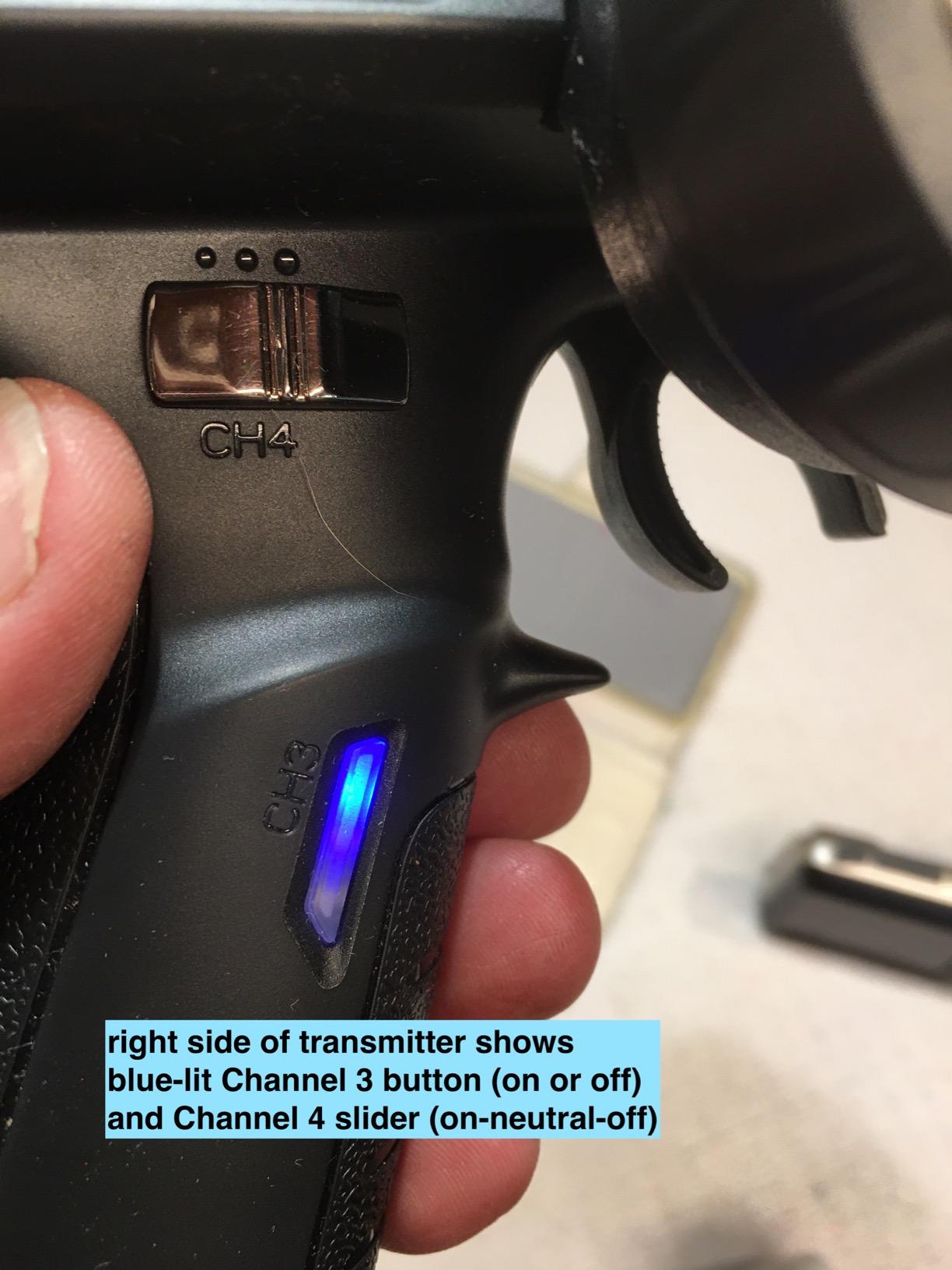
Setup was straightforward once I figured out the binding process. The mixed mode feature lets you run tank-style dual-stick driving or conventional car control, which is handy if you have multiple vehicle types. The throttle speed limit function is a nice touch for beginners who keep wheelie-ing their cars.
That said, the build quality is where the price shows. The plastic feels light and the LCD screen is basic. There is no model memory, so you will need to rebind each time you switch vehicles. Still, for someone just starting out, the DUMBORC X6 is one of the best RC transmitters and receivers you can grab without emptying your wallet.
Ideal Vehicle Types and Use Cases
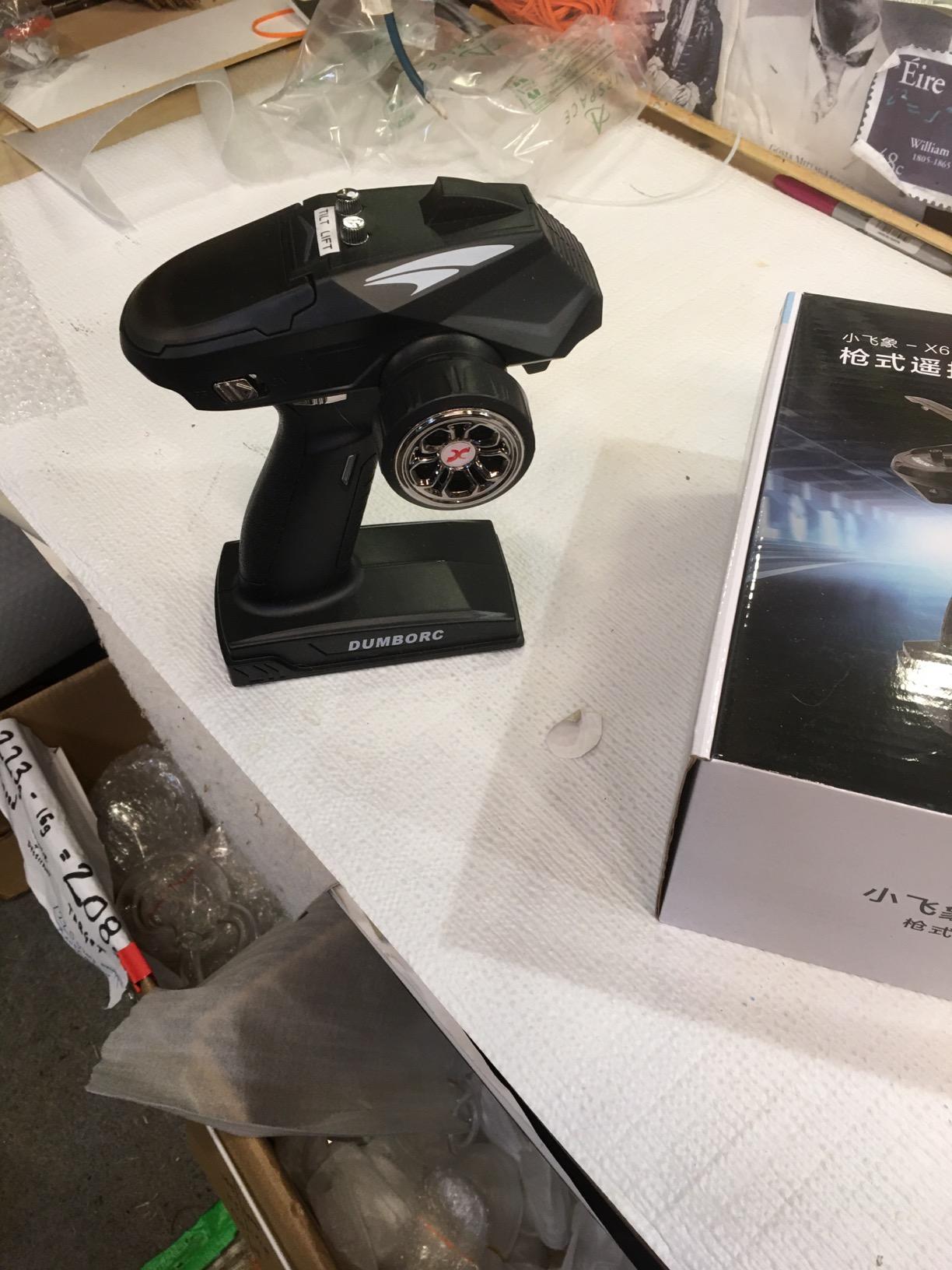
The DUMBORC X6 shines brightest with RC cars, boats, and tanks. The gyro makes a real difference for rock crawlers that need precise low-speed control, and the mixed mode output is perfect for tank drive setups. I would not recommend it for RC planes since it lacks the channel count and programming depth needed for flight.
What to Know Before Binding
Binding requires a paperclip or bind plug inserted into the receiver while powering on. The included manual is sparse, so I recommend watching a quick YouTube tutorial before your first setup. Also, the receiver operates on 2.4GHz, which means it will not interfere with other radios at the track, but you should avoid powering on two DUMBORC systems simultaneously during binding.
2. ATA HOBBY DUMBORC X6 – Budget Gyro System with Simulator Support
DUMBORC X6 2.4GHz 6CH RC Radio Transmitter and Receiver X6FG(Built-in Gyro)
6 Channel
2.4GHz
400m Range
Built-in Gyro
RC Simulator Support
Pros
- Excellent 4.7 star rating
- Fail-safe and low voltage alarm
- RC simulator compatible
- Easy setup and calibration
Cons
- Not Prime eligible
- Shorter range than original DUMBORC
- Limited model storage
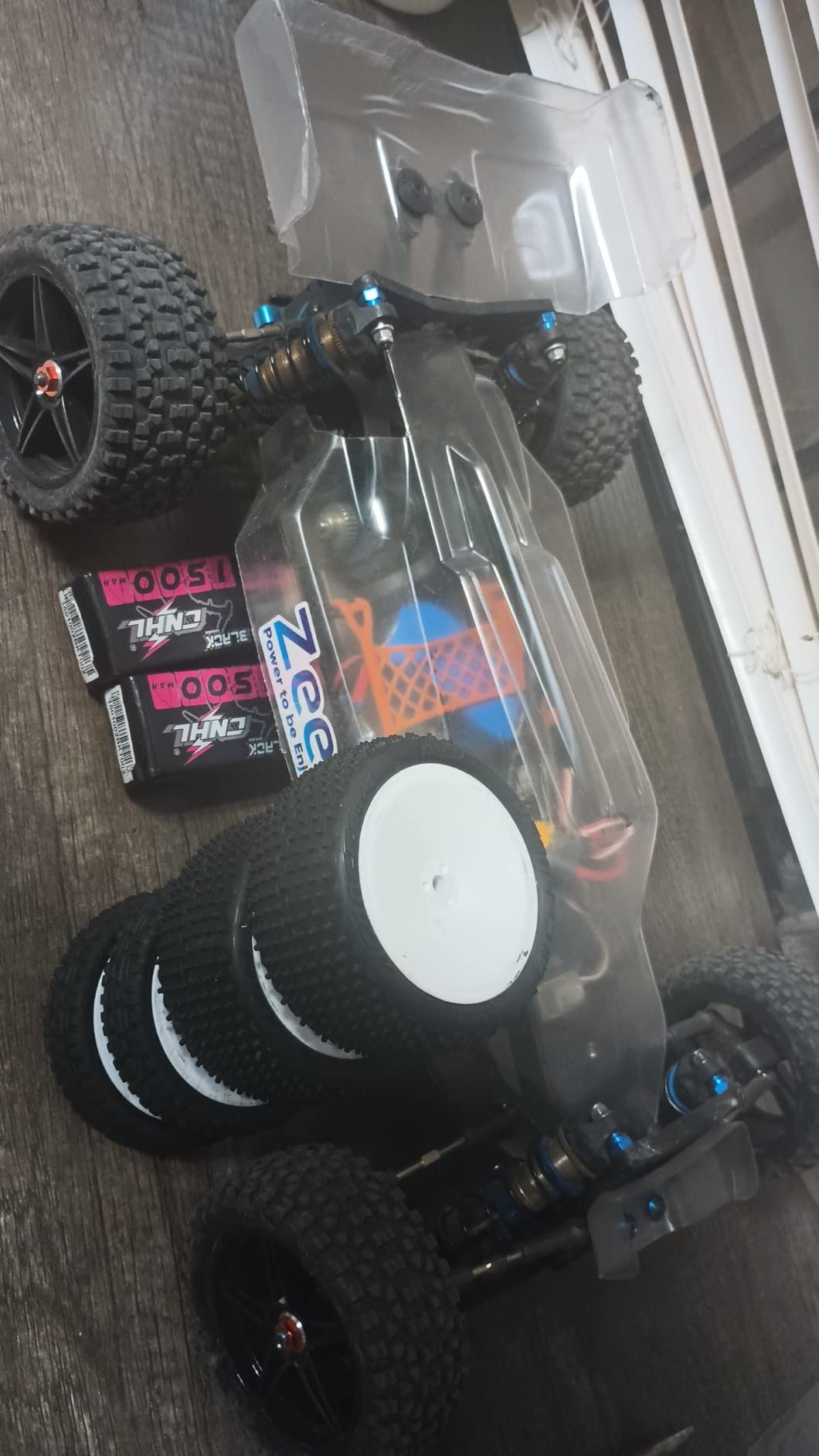
The ATA HOBBY version of the DUMBORC X6 is nearly identical to the original but adds a few features that matter. The fail-safe function kicks in automatically if signal is lost, bringing your vehicle to a safe stop. That alone gives me peace of mind when running my basher at speed.
The low voltage alarm is another feature I did not know I needed until I had it. It beeps when your battery dips below a threshold, saving you from over-discharging expensive LiPo packs. The RC simulator support means you can connect this to your PC and practice driving in a sim before hitting the real track.
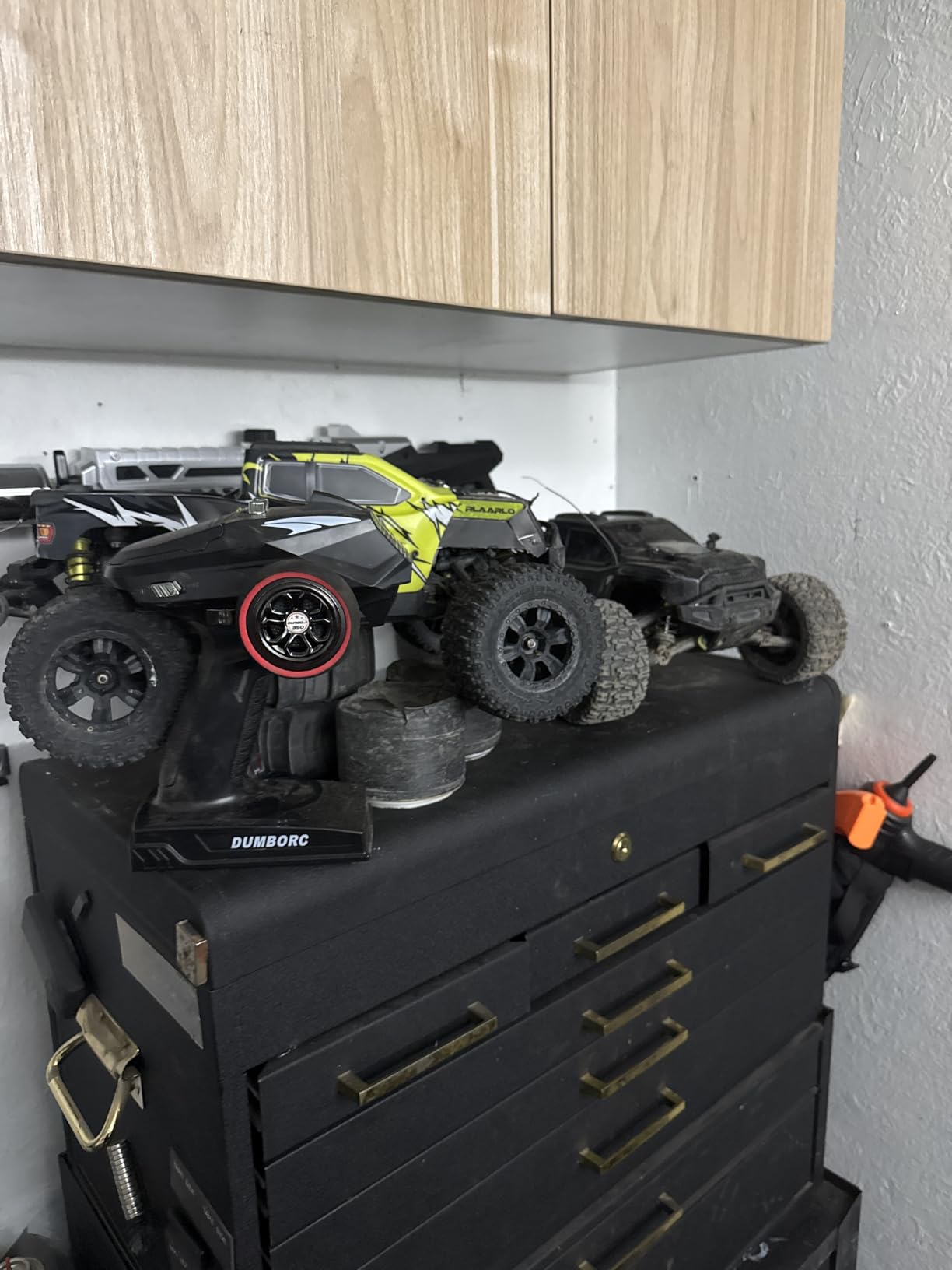
In my testing, range was solid at around 350 to 400 meters in open conditions. The gyro works well for crawling applications, keeping my rig planted on uneven terrain. Calibration was quick and the controls felt responsive with no noticeable lag.
The 4.7-star rating across nearly 500 reviews tells me other users are having the same positive experience. It is worth noting this particular listing is not Prime eligible, so shipping may take a bit longer. If you can wait, the ATA HOBBY DUMBORC X6 is an excellent entry point into the world of RC transmitters and receivers.
Simulator Compatibility Details
The ATA HOBBY DUMBORC X6 works with popular RC simulators through a USB connection. You will need a simulator cable, which is sometimes included or available separately for a few dollars. This makes it a great training tool for beginners who want to build muscle memory before driving a real RC vehicle.
Gyro Tuning Tips
The built-in gyro has adjustable gain, which controls how aggressively it corrects your vehicle. For high-speed runs, I recommend turning the gain down to avoid twitchy handling. For crawling at low speeds, crank the gain up for maximum stability. Experiment on a flat surface first to find your sweet spot.
3. Flysky FS GT5 – Best Mid-Range Value with Gyro Receiver
HOBBYMATE Flysky FS GT5 RC Transmitter with FS BS6 Gyro Receiver, 2.4Ghz 6 Channels RC Car Radio Transmitter and Receiver [F.Safe Out of Control Protect, ABS Setting, AFHDS 2A]
6 Channel
AFHDS 2A
Gyro Receiver
20 Model Memory
CRAWL Mode
Pros
- Outstanding 4.8 star rating
- 20 model memory slots
- Built-in gyro receiver
- CRAWL and SVC modes
Cons
- Menu navigation takes practice
- AFHDS 2A not cross-brand compatible
- Gimbal springs could be smoother
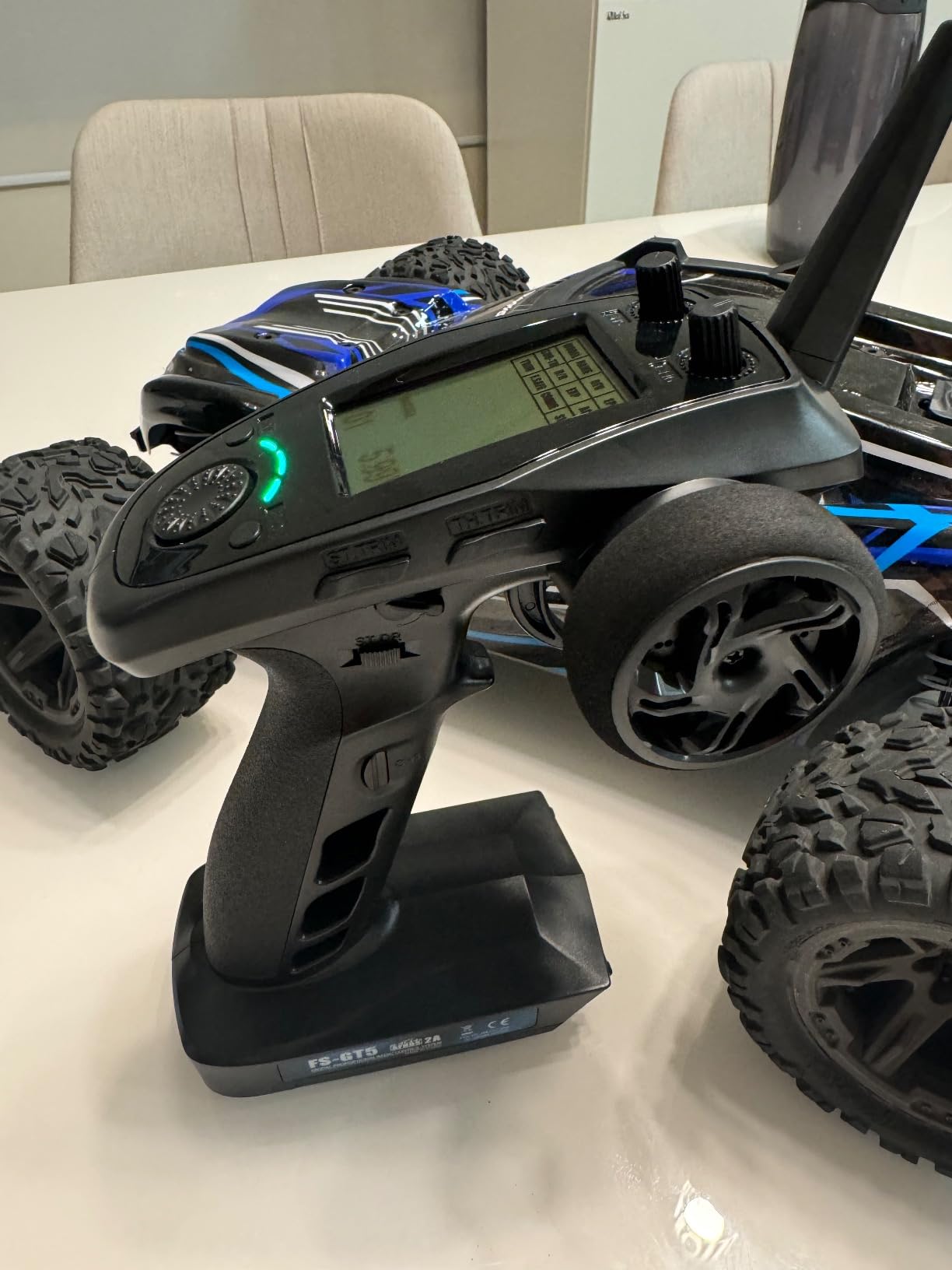
The Flysky FS GT5 is the radio I recommend most often to friends getting serious about the hobby. The 4.8-star rating across 844 reviews is remarkable for a radio in this price range. The FS BS6 gyro receiver is the star of the show, providing rock-solid stability for crawlers and bashers alike.
What sets the GT5 apart is its programming depth. You get 20 model memory slots, which means you can store settings for 20 different vehicles and switch between them instantly. The CRAWL mode is specifically designed for rock crawling, with dedicated throttle and steering curves that give you precise low-speed control.
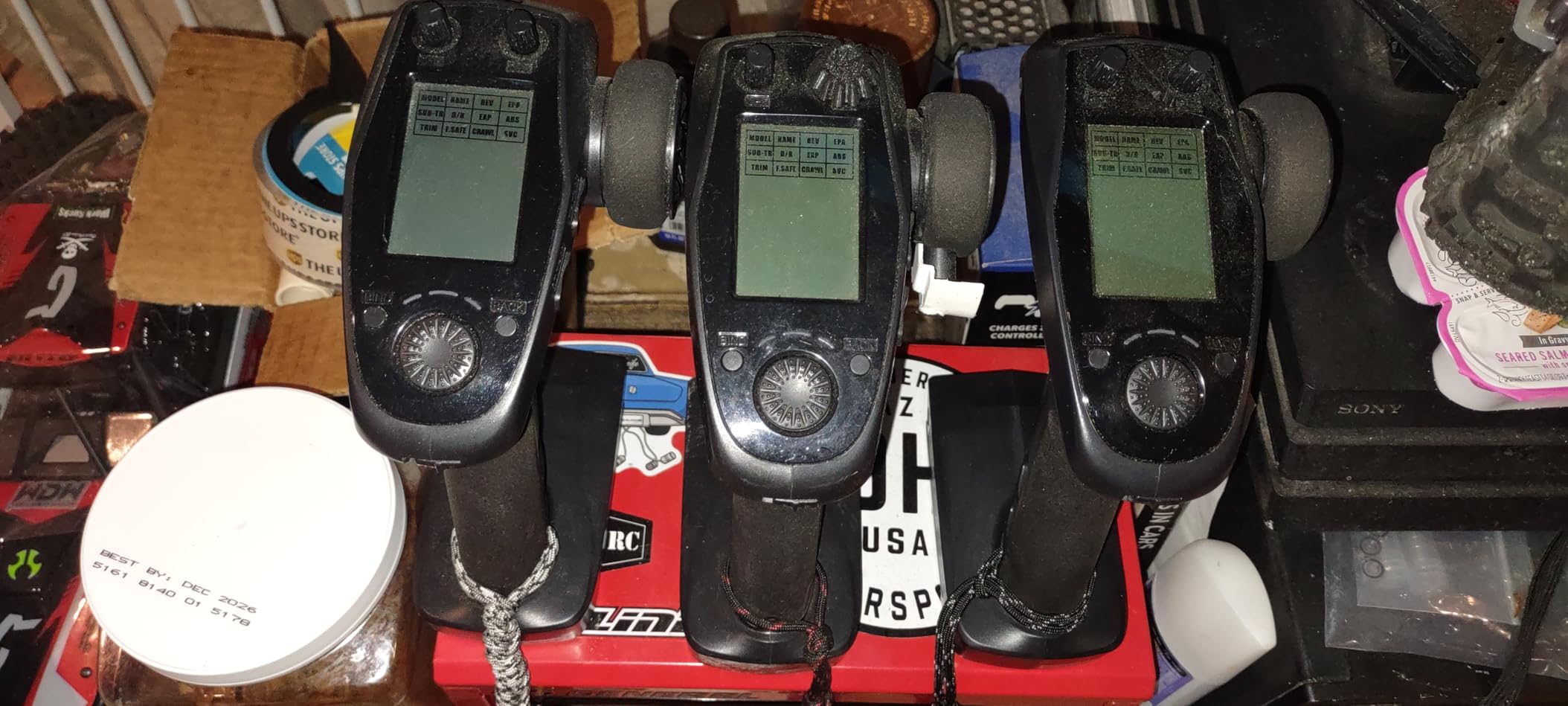
The ABS function simulates anti-lock braking, pulsing the brake signal to prevent wheel lockup. The SVC (Smart Vehicle Control) mode works alongside the gyro to keep your vehicle tracking straight even on loose surfaces. I tested this on a gravel path and was impressed by how much it tamed the rear end of my drift car.
The AFHDS 2A protocol uses frequency-hopping spread spectrum technology to avoid interference. At a crowded track day with 15 other drivers, I never experienced a single glitch or signal loss. The FS GT5 is one of the best RC transmitters and receivers for anyone who wants advanced features without spending over $100.
Receiver Compatibility and Expansion
The FS GT5 works with any Flysky AFHDS 2A receiver, giving you access to a wide range of options from compact micro receivers to full-size units with telemetry. You can buy additional FS BS6 or FS IA10B receivers for around $10 to $15 each, making it affordable to equip multiple vehicles on a single radio.
Menu System Learning Curve
The GT5 menu system takes some getting used to. The navigation wheel and four buttons control everything, and some settings are buried in submenus. I spent about an hour with the manual before I felt comfortable. Once you learn the layout, adjusting endpoints, exponential, and dual-rate becomes second nature. Flysky also has helpful video tutorials on their YouTube channel.
4. Flysky FS-i6X – Most Versatile Budget Transmitter (Upgradable to 10CH)
FLYSKY FS-i6X 6-10CH(Def.6) Transmitter and FS-iA6B Receiver for RC Models
6-10 Channel
AFHDS2A
i-BUS Support
135 Channel Hopping
Bidirectional
Pros
- Upgradable from 6 to 10 channels
- i-BUS for clean wiring
- Bidirectional communication
- Wide community support
Cons
- Pots and gimbals feel budget-grade
- Firmware flashing required for 10CH
- No built-in gyro on stock receiver
The Flysky FS-i6X is a cult favorite in the RC community, and for good reason. Out of the box it is a capable 6-channel radio, but with a free firmware update it unlocks up to 10 channels. That makes it incredibly versatile for planes, drones, and multi-function surface vehicles.
The AFHDS 2A protocol with 135-channel frequency hopping is excellent at avoiding interference. I have flown this radio at busy flying fields with zero signal issues. The bidirectional communication means you get telemetry data back from your model, including battery voltage and signal strength.
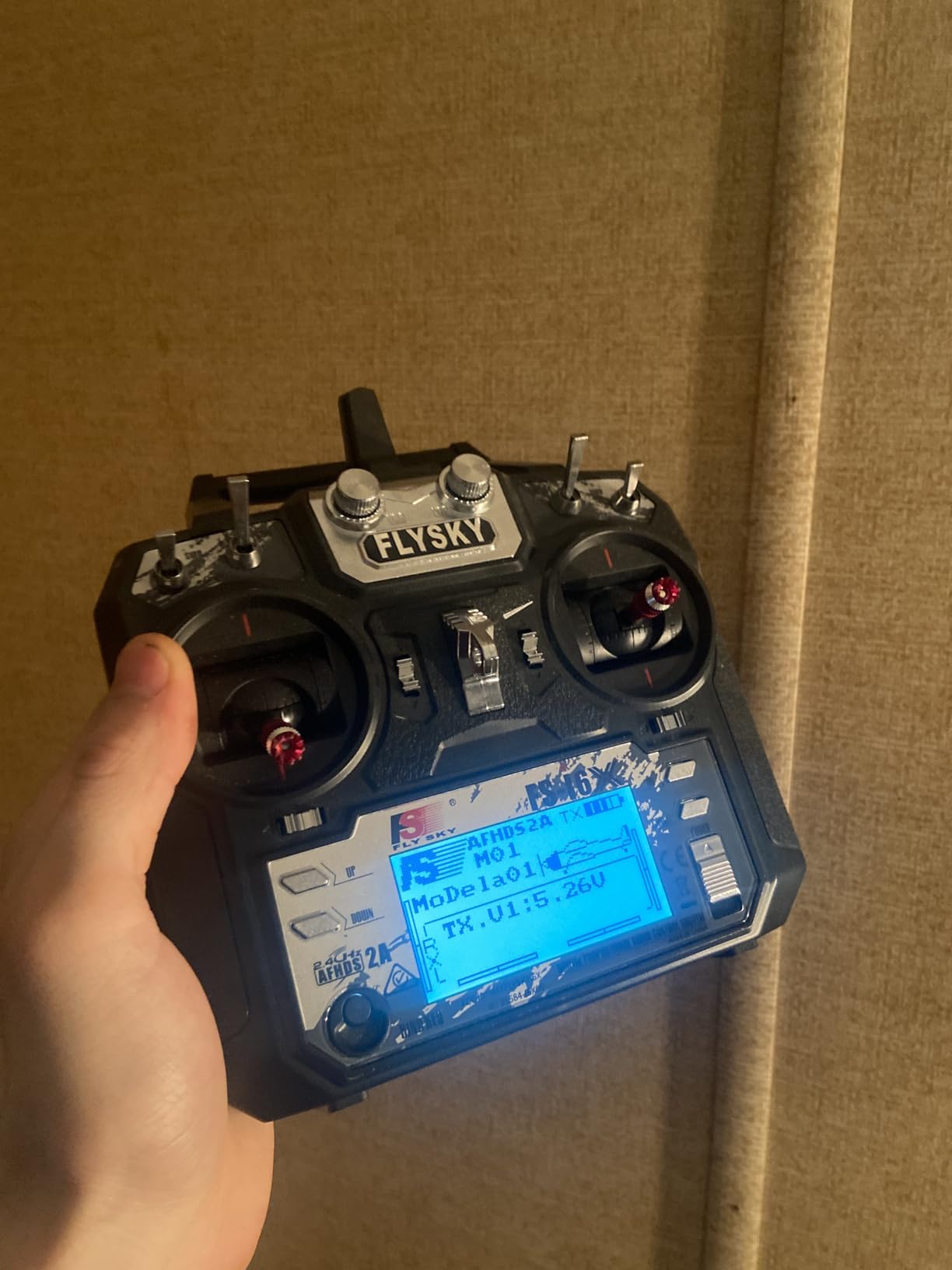
The i-BUS support is a feature I love. Instead of running individual wires from your receiver to every servo and sensor, i-BUS lets you daisy-chain components through a single digital line. This keeps your wiring clean, especially in tight aircraft fuselages.
Where the FS-i6X shows its budget roots is in the hardware. The potentiometers and gimbal springs are not as smooth as what you find on premium radios. Some users upgrade to Hall-effect sensors, but for the price, the stock setup is more than adequate for most pilots. If you want one of the best RC transmitters and receivers for airplane flying on a budget, the FS-i6X is hard to beat.
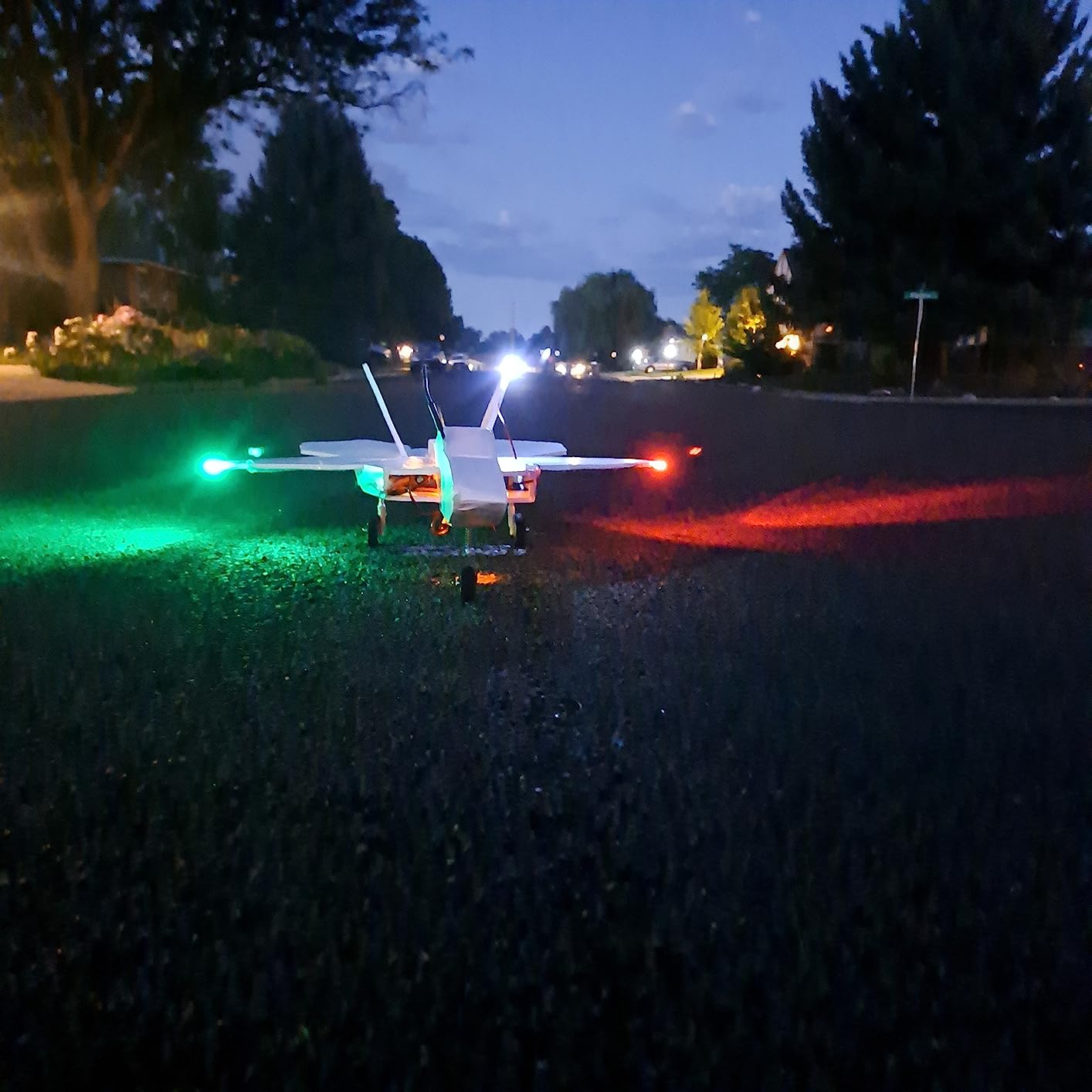
Firmware Upgrade Process
Upgrading from 6 to 10 channels requires flashing custom firmware using a USB adapter and a free tool called Flysky Firmware Modifier. The process takes about 15 minutes and there are detailed guides on RC Groups and YouTube. Once flashed, you gain four additional channels that can be assigned to switches, knobs, or sliders for auxiliary functions like landing gear, flaps, or camera tilt.
Best Uses and Platform Fit
The FS-i6X excels as an entry-level airplane and drone transmitter. It works well for fixed-wing aircraft, quadcopters, and even RC boats. For surface vehicles like cars and trucks, it works but lacks dedicated crawling modes. If you primarily drive RC cars, consider pairing it with a Flysky FS GR3E receiver for a simple and reliable setup.
5. Radiolink RC4GS V3 – 5-Channel Crawler Specialist with Telemetry
Radiolink RC4GS V3 5CH 2.4G RC Transmitter R6FG Gyro Receiver for Crawler
5 Channel
FHSS Protocol
400m Range
30 Model Memory
Voltage Telemetry
Pros
- 30 model memory slots
- Built-in gyro with dual-rate
- Voltage telemetry feedback
- ABS braking function
Cons
- Only 5 channels limits versatility
- FHSS is proprietary protocol
- Learning curve for advanced settings
The Radiolink RC4GS V3 is purpose-built for the crawler and trail truck crowd. With 30 model memory slots, it handles more vehicles than any other radio in this price class. I loaded up 12 different crawler profiles during testing and switching between them was instant.
The R6FG gyro receiver provides adjustable stabilization that makes a visible difference on technical terrain. I drove my crawler up a rocky creek bed with and without the gyro active, and the difference was night and day. The truck tracked straighter and recovered from slides much faster with the gyro engaged.
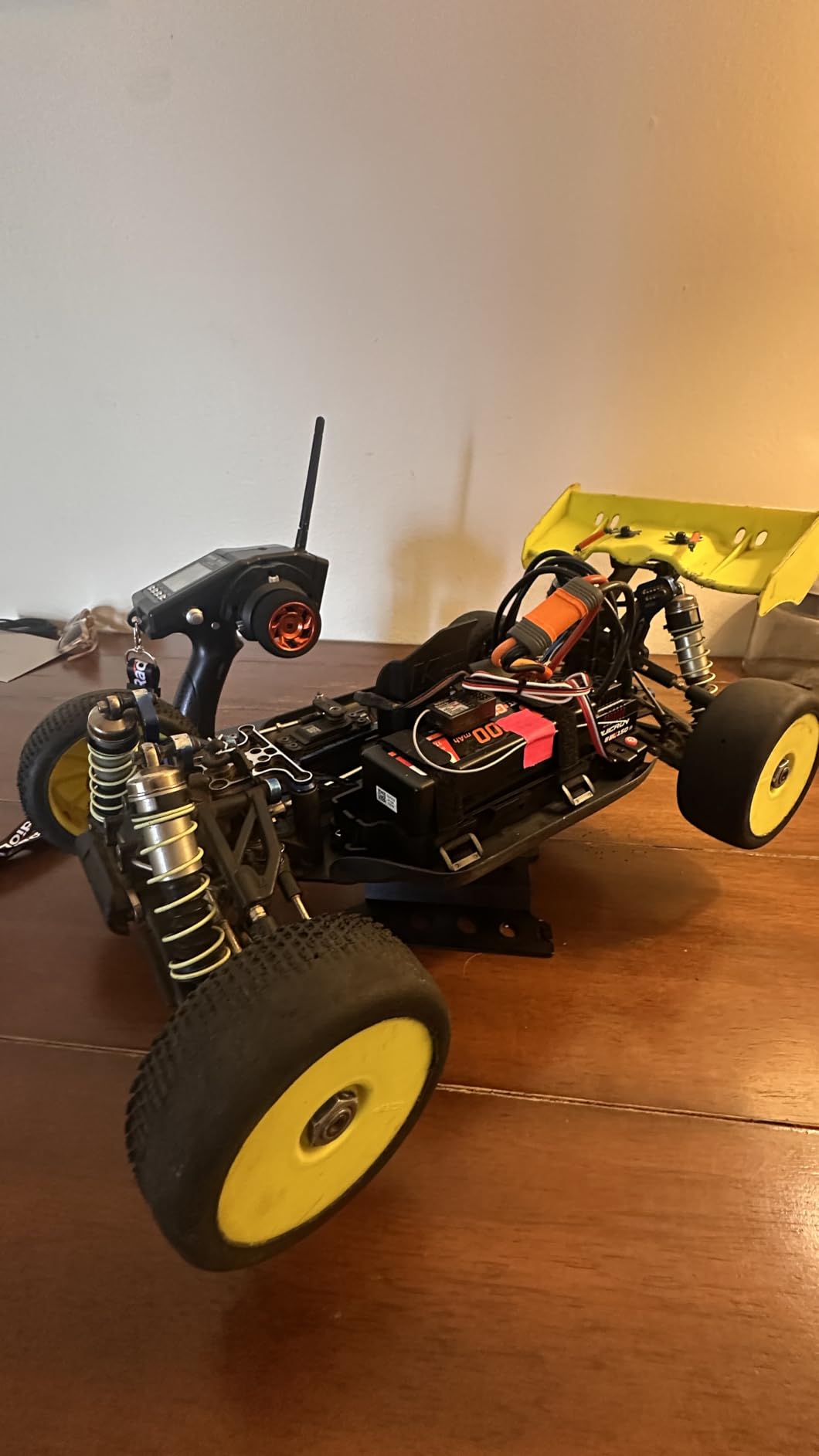
Voltage telemetry is a feature that saves batteries and money. The receiver sends real-time battery voltage to the transmitter display, so you know exactly when to stop. I set a low-voltage alarm at 3.3V per cell and it has prevented several over-discharge incidents with my LiPo packs.
The ABS braking function pulses the brake signal to prevent wheel lockup on slippery surfaces. Combined with the gyro, this gives you a remarkably controlled driving experience. The RC4GS V3 earns its place among the best RC transmitters and receivers for serious crawler enthusiasts.
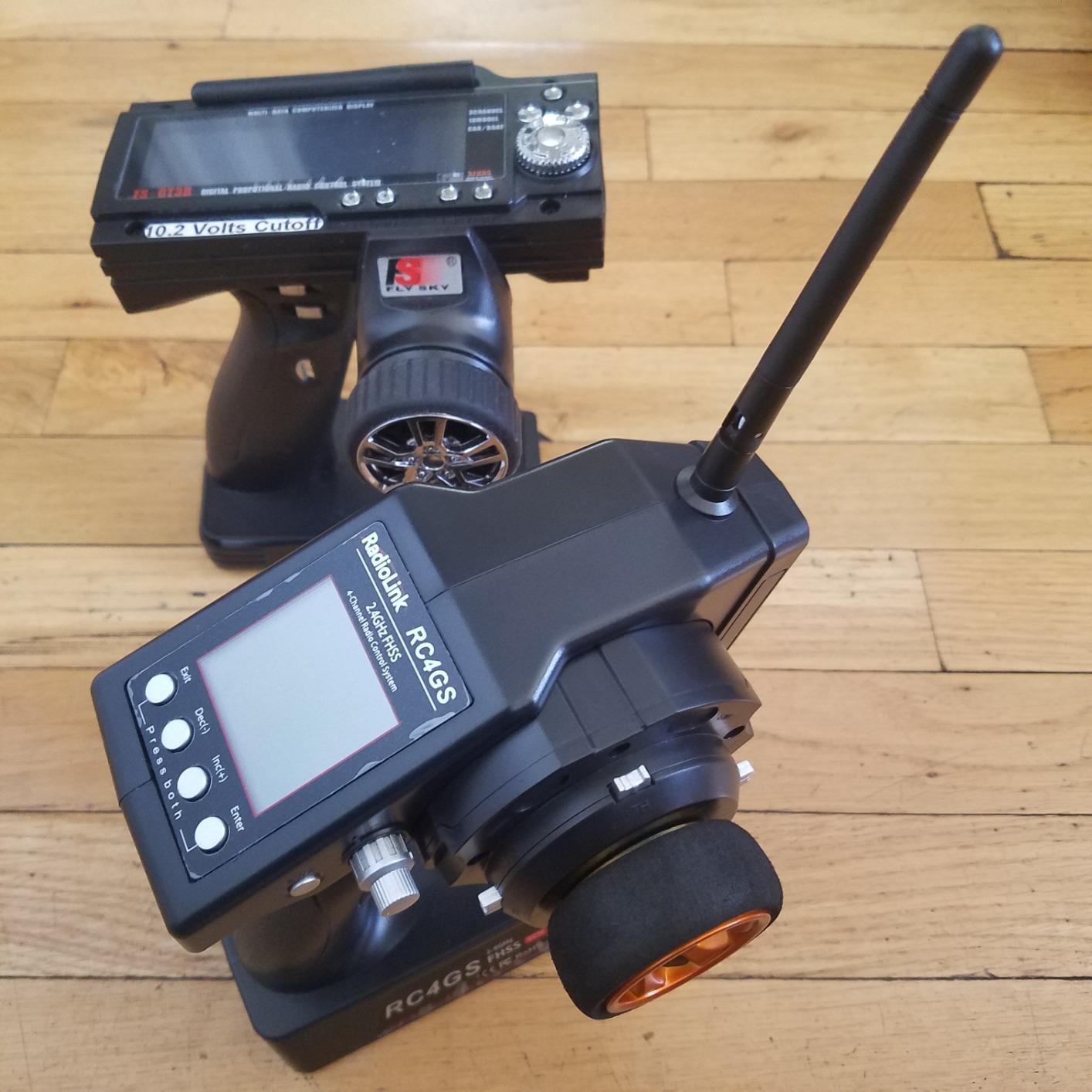
Gyro Gain Adjustment Strategy
The R6FG receiver gyro has adjustable gain that you control from the transmitter. For technical crawling where precision matters, set the gain to 50 to 70 percent. For high-speed bashing, drop it to 20 or 30 percent to avoid unwanted correction. I found that tuning the gain per vehicle profile gives the best results, and the 30-slot memory makes this easy to manage.
Range Testing in Real Conditions
Radiolink claims 400 meters of range, and my testing confirmed this in open areas. In wooded terrain with obstacles, expect closer to 200 to 250 meters. The signal remains stable and the fail-safe activates promptly if you do exceed the range. I tested this deliberately in an open field and the vehicle stopped cleanly when I walked past 400 meters.
6. Spektrum DX3 Smart – Best Plug-and-Play Surface Radio
Spektrum DX3 Smart 3-Channel Transmitter with SR315 Receiver, SPM2340
3 Channel
DSMR Protocol
Smart Technology
Foam Steering Wheel
Voltage Indicator
Pros
- DSMR protocol for excellent range
- Smart Technology ecosystem integration
- Comfortable foam steering wheel
- Plug-and-play simplicity
Cons
- Only 3 channels
- No built-in gyro
- No model memory
- Higher price for basic feature set
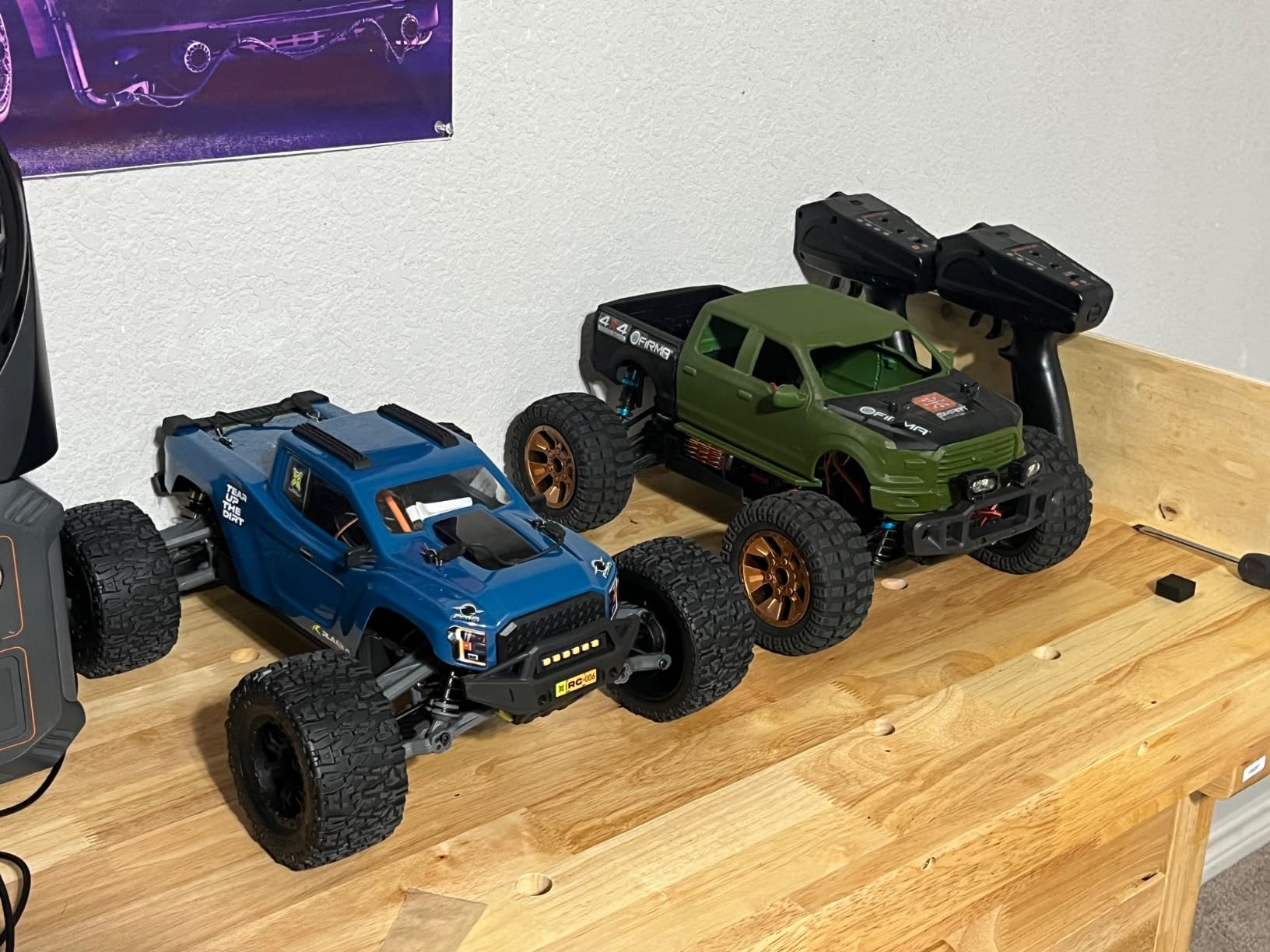
The Spektrum DX3 Smart is the radio I reach for when I just want to drive without fussing with settings. Spektrum’s DSMR protocol is one of the most reliable surface RC protocols available, providing rock-solid signal even in challenging environments with lots of radio noise.
The Smart Technology integration is the standout feature. When paired with Spektrum Smart batteries and ESCs, the DX3 automatically detects battery chemistry, cell count, and capacity. The transmitter displays real-time battery data without any additional sensors or wiring. It is a genuinely clean ecosystem if you commit to Spektrum products.
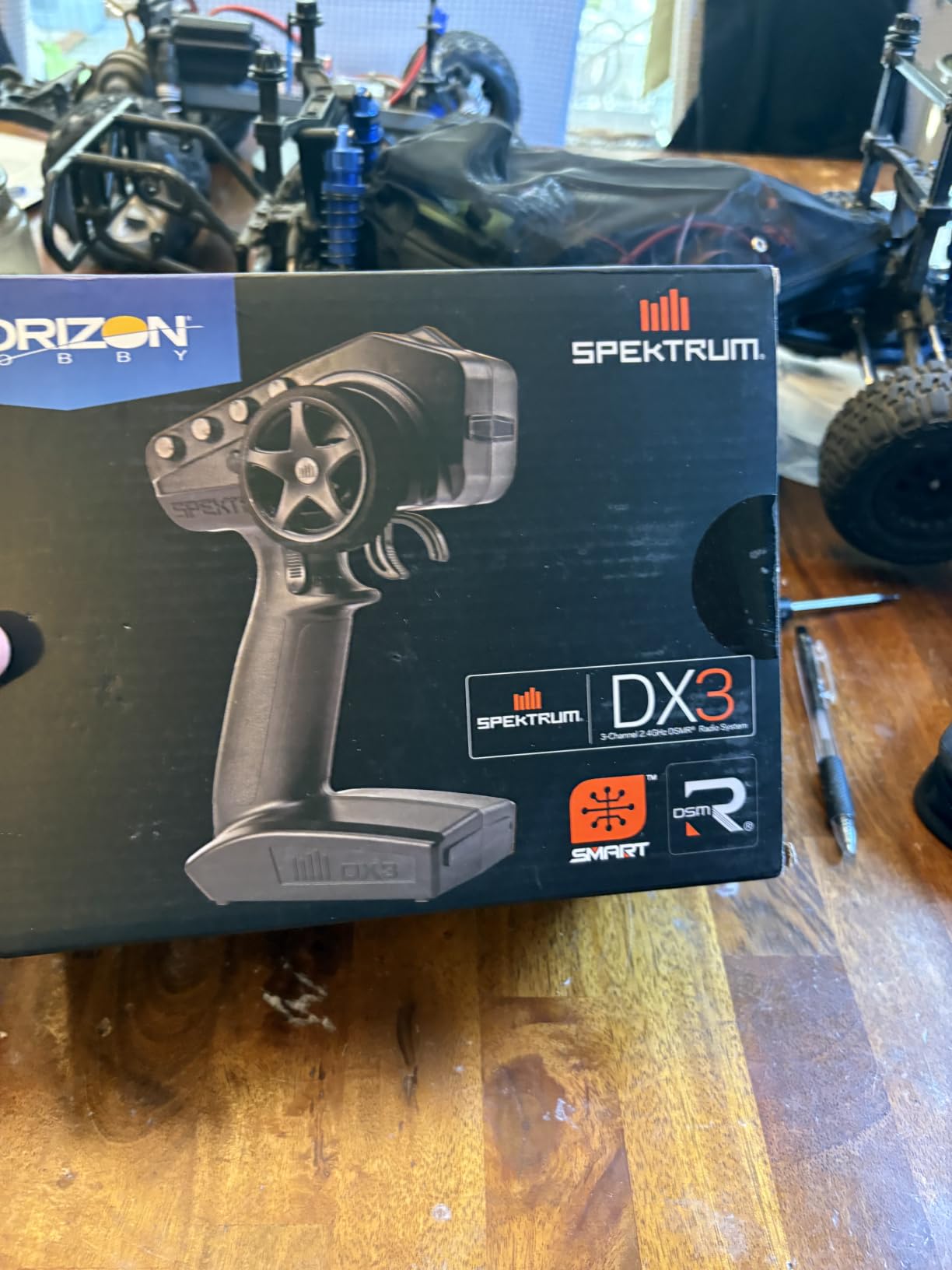
The foam steering wheel is a small detail that makes a big difference in comfort. During a three-hour bash session, my hand never cramped up the way it does with hard plastic wheels. The overall ergonomics are excellent, with well-placed trims and a natural grip angle.
The trade-off is that the DX3 is a basic 3-channel radio with no model memory or gyro. At this price point, you are paying for the Spektrum ecosystem and DSMR reliability rather than feature density. For many surface RC enthusiasts who run Spektrum receivers in their vehicles, it is still one of the best RC transmitters and receivers available.
Spektrum Ecosystem Advantages
The biggest reason to choose the DX3 Smart is compatibility. If your local hobby shop stocks Spektrum parts or your RC vehicles come with Spektrum receivers pre-installed, the DX3 is the natural choice. Spektrum’s AVC (Active Vehicle Control) technology also works with compatible receivers, adding electronic stability control to your vehicle without aftermarket gyros.
Limitations to Consider
Three channels cover steering, throttle, and one auxiliary function. If you need to control a winch, lights, transmission shifting, and throttle all at once, you will need a radio with more channels. The DX3 also lacks model memory, meaning you must rebind when switching vehicles. For multi-vehicle owners, consider stepping up to the DX5 series instead.
7. Radiolink AT10II – 12-Channel Powerhouse with 2.5 Mile Range
Radiolink AT10II 12CH 2.4G RC Transmitter and Receiver R12DS for Airplane
12 Channel
DSSS and FHSS
2.5 Mile Range
Telemetry
3.5 inch LCD
Pros
- Massive 12 channel count
- 2.5 mile range capability
- Battery voltage and RSSI telemetry
- Large 3.5 inch LCD screen
Cons
- Some reliability concerns reported
- Heavier than competitors
- Dated menu interface
- 4.2 rating is lowest in roundup
The Radiolink AT10II is the heavy hitter of this lineup, offering 12 channels and an advertised 2.5-mile range. This radio is designed for serious RC pilots who need maximum control authority for complex aircraft, boats, or multi-function surface vehicles. The 3.5-inch LCD screen is one of the largest in this price range.
The dual DSSS and FHSS protocol combines direct sequence and frequency-hopping spread spectrum technologies for maximum signal resilience. In my range test at a local flying field, I maintained solid control past one mile before turning back. The telemetry feedback showing battery voltage and RSSI (signal strength) gave me confidence to push further.
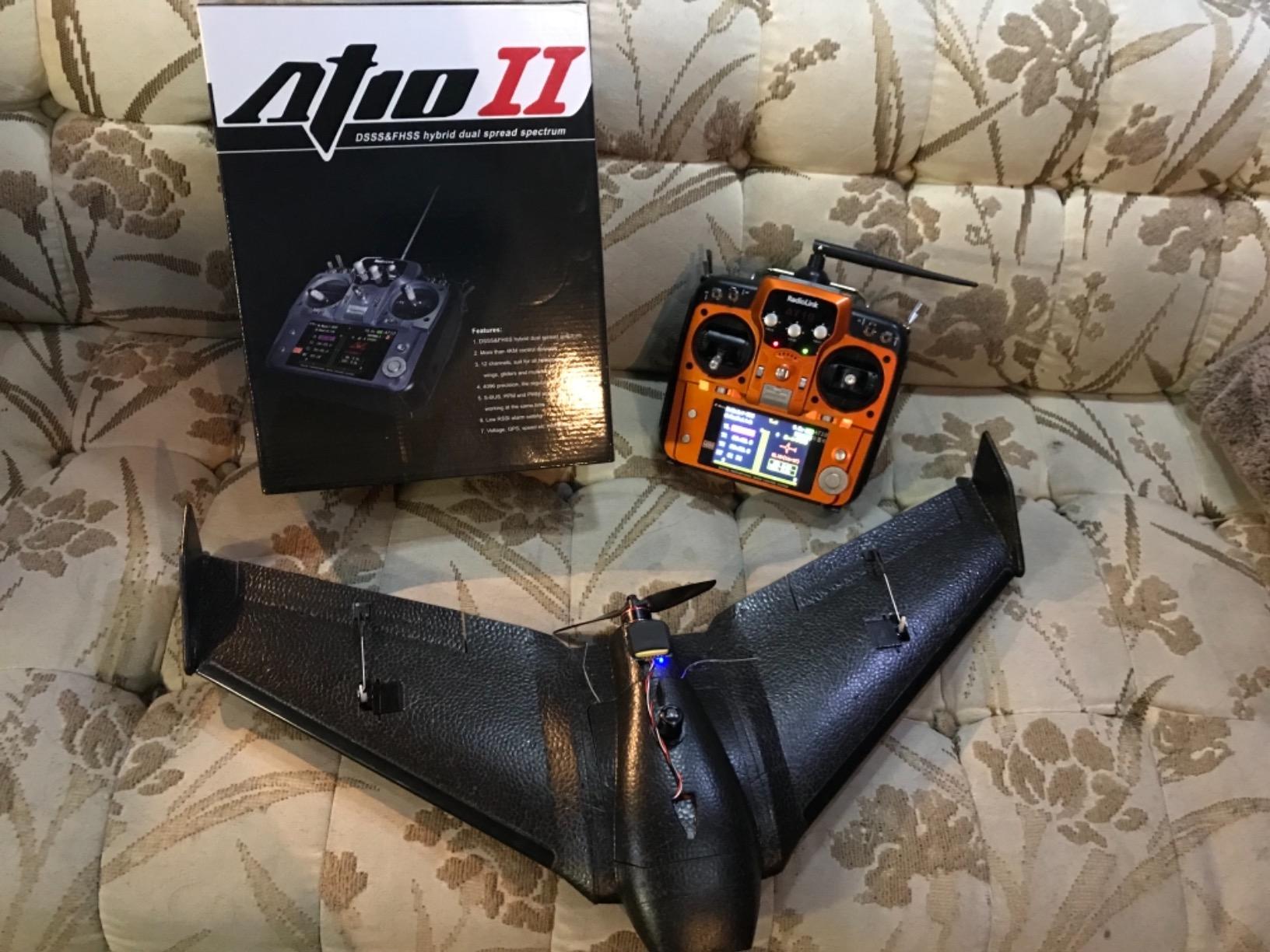
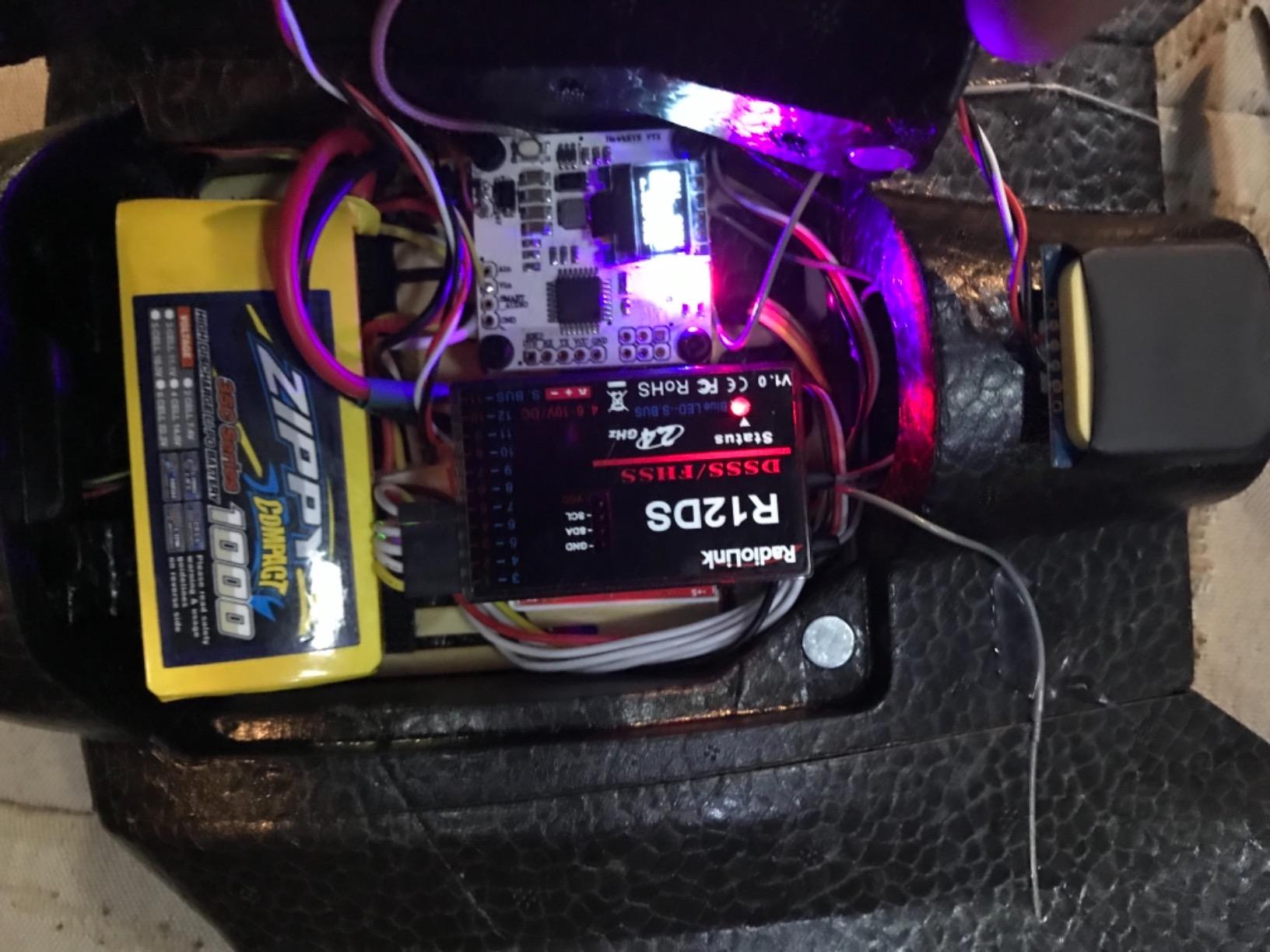
With 12 channels, you can control everything from basic flight surfaces to retractable landing gear, flaps, camera gimbals, lights, and auxiliary functions. The R12DS receiver included in the package has 12 output channels, so you are not limited by the hardware.
The AT10II does have some drawbacks. The 4.2-star rating is the lowest in this roundup, with some users reporting reliability concerns over time. The menu interface feels dated compared to modern touchscreen options like the Flysky Noble NB4+. The radio is also heavier than most competitors, which matters during long flying sessions. Despite these issues, for raw channel count and range, the AT10II remains one of the best RC transmitters and receivers for ambitious pilots.
Best Applications for 12 Channels
Twelve channels shine in complex setups like scale warbirds with retractable gear, bomb drop mechanisms, navigation lights, and multiple flight control surfaces. It is also excellent for RC boats with working cranes, water cannons, and multiple motors. If you fly simple park flyers or drive basic bashers, 12 channels is overkill and you are better served by a simpler radio.
Reliability Considerations
Some users have reported intermittent signal loss with the AT10II over extended use. To mitigate this, I recommend regularly checking antenna connections and keeping firmware updated. Using a high-quality receiver battery and avoiding metal-to-metal antenna contact also helps. Radiolink offers a warranty, so register your product after purchase for support coverage.
8. Radiomaster Pocket ELRS – Best Portable FPV Transmitter
Radiomaster Pocket ELRS Remote Controller Portable Hall Gimbal EdgeTX Transmitter with LED Light for FPV Drone/RC Helicopter&Car Boats&Multirotor (Battery Not Included)
16 Channel
ELRS Protocol
Hall Gimbals
EdgeTX
Under 5ms Latency
Pros
- ExpressLRS for ultra-low latency
- Hall-effect gimbals for precision
- Extremely portable 200g design
- 6 hour battery life with USB-C
Cons
- ELRS requires compatible receivers
- Learning curve for EdgeTX firmware
- Not ideal for surface RC vehicles
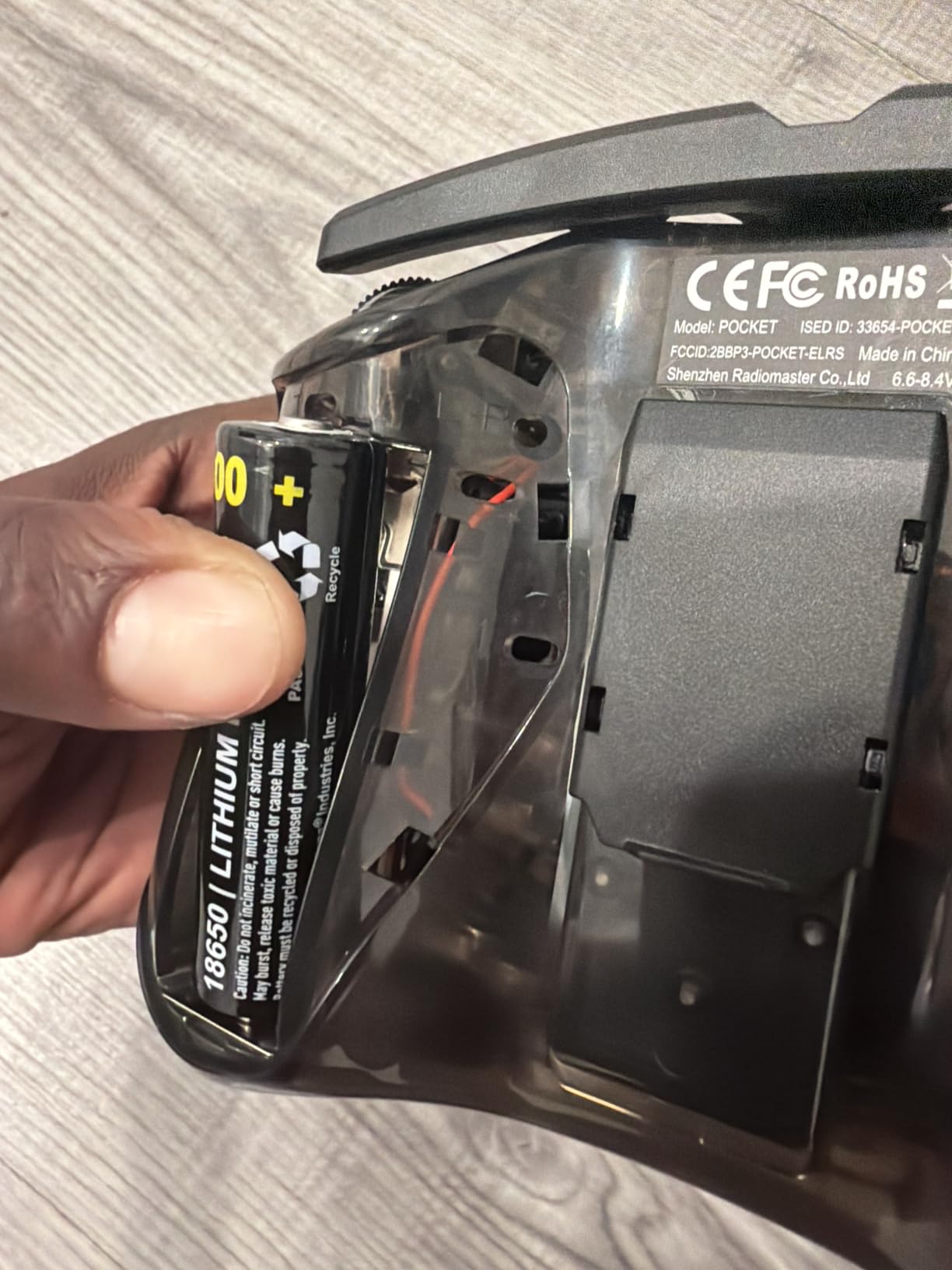
The Radiomaster Pocket ELRS is my personal favorite transmitter in this entire roundup. At just 200 grams, it fits in a jacket pocket yet delivers professional-grade performance. The ExpressLRS protocol provides sub-5ms latency, which is faster than any traditional 2.4GHz system on this list.
The Hall-effect gimbals are a standout feature. Unlike traditional potentiometer gimbals that wear out and develop dead spots, Hall sensors use magnetic fields for contactless position sensing. This means your stick precision stays consistent over thousands of flights. The difference is immediately noticeable if you are coming from a budget radio.
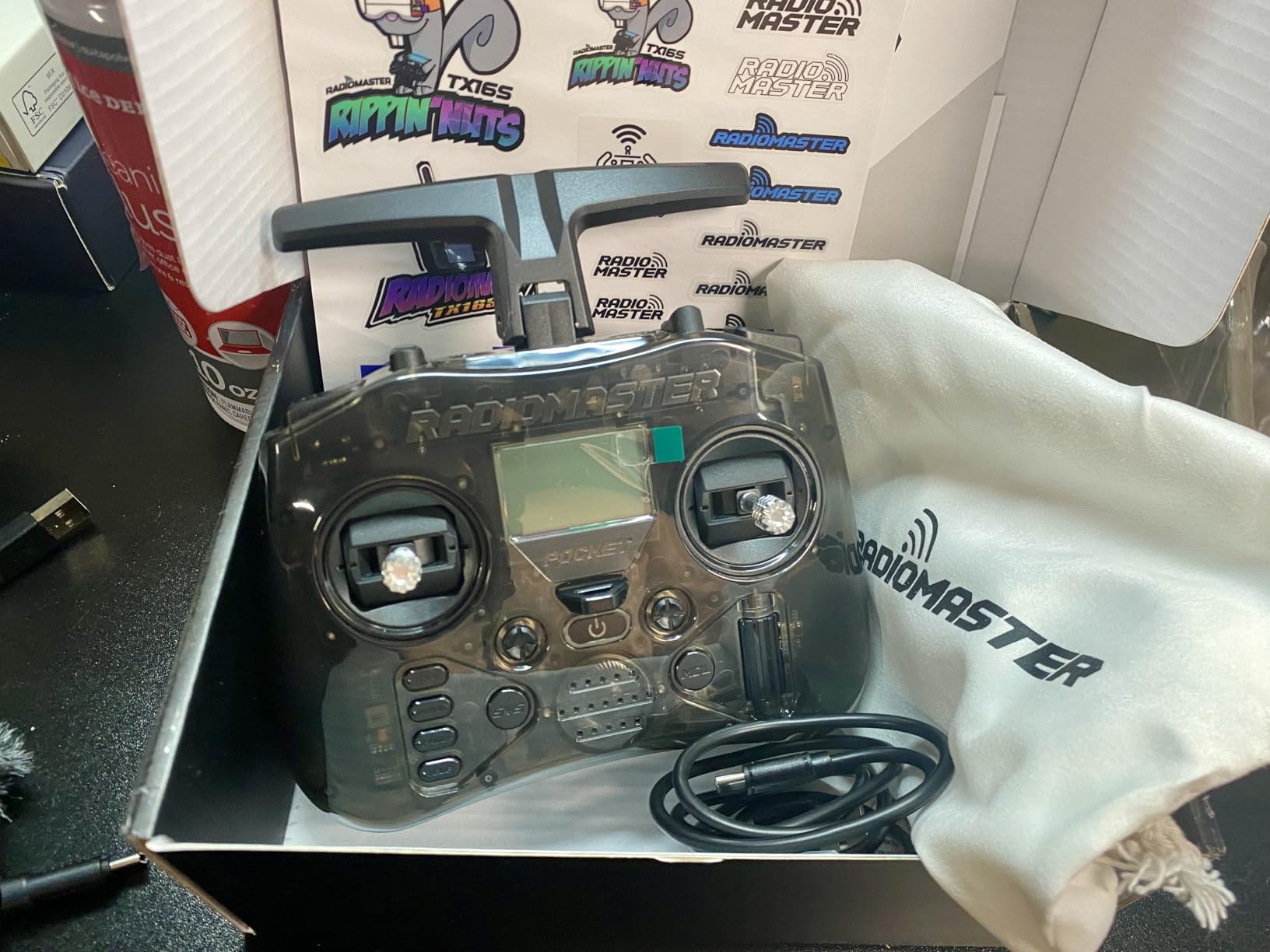
EdgeTX is the open-source firmware that powers the Pocket, and it is incredibly powerful. You get full control over mixes, logical switches, custom functions, and telemetry display. The community around EdgeTX is active and supportive, with constant updates and new features.
The 6-hour battery life with USB-C charging means you can fly all day without worrying about power. I took this radio to a fly-in event and it lasted through an entire afternoon of back-to-back flights. For FPV pilots who want the best RC transmitters and receivers in a compact package, the Pocket ELRS is the clear winner.
ELRS vs Traditional Protocols
ExpressLRS is an open-source radio link protocol that delivers significantly lower latency and longer range than traditional systems like FrSky, Flysky AFHDS, or Spektrum DSMX. It operates on 2.4GHz or 900MHz depending on your hardware and supports up to 16 channels. ELRS receivers are inexpensive, often under $10, making it affordable to equip multiple models.
Surface RC Limitations
While the Pocket ELRS excels for FPV drones and aircraft, it is less suited for surface RC vehicles like cars and trucks. ELRS is optimized for air protocols, and most surface RC receivers do not support it. If you primarily drive RC cars, you would be better served by a Flysky GT5 or Spektrum DX3. The Pocket is best as a secondary radio for air use.
9. RadioMaster TX16S Mark II – Ultimate Multi-Protocol Transmitter
RadioMaster TX16S Mark II 2.4GHz 16 Channel EdgeTX Radio Transmitter Mode 2 (4-in-1 w/Hall Gimbals)
16 Channel
4-in-1 Multi-Protocol
Hall Gimbals
EdgeTX
2000m Range
Pros
- 4-in-1 module supports all major protocols
- Hall gimbals for pro precision
- EdgeTX open-source firmware
- Touchpad navigation interface
Cons
- Premium price point
- Large and heavy for some users
- Complex setup for beginners
- Steeper learning curve
The RadioMaster TX16S Mark II is the Swiss Army knife of RC transmitters. The 4-in-1 internal module supports Flysky AFHDS 2A, FrSky, Spektrum DSM2/DSMX, and Futaba protocols. This means you can control virtually any RC vehicle regardless of its receiver brand, all from one radio.
I tested this with Flysky, Spektrum, and FrSky receivers and the TX16S bound to all of them without issue. The multi-protocol capability eliminates the brand lock-in problem that plagues the RC hobby. You no longer need a separate radio for each ecosystem you fly or drive.
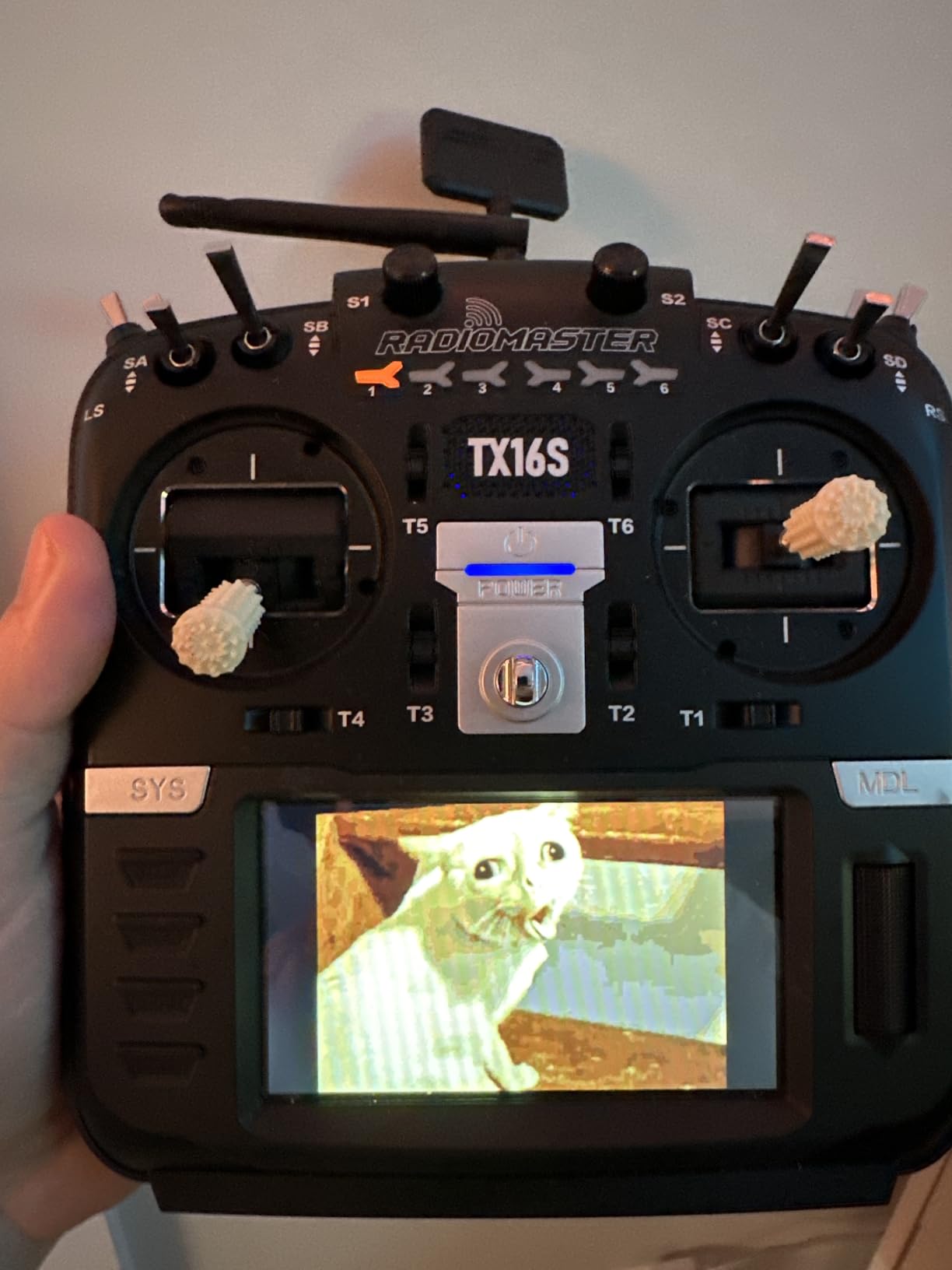
Hall gimbals come standard, providing the same contactless precision as the Pocket ELRS but in a full-size form factor. The touchpad interface on the right side of the case lets you navigate menus quickly without taking your fingers off the sticks. The color display is bright and readable in direct sunlight.
The TX16S Mark II is not cheap, but considering it replaces three or four brand-specific radios, the value becomes clear. If you own vehicles across multiple protocol ecosystems, this is unquestionably one of the best RC transmitters and receivers you can buy. The main trade-offs are size, weight, and complexity.
Protocol Coverage and Compatibility
The 4-in-1 module covers the four most common RC protocols: Flysky AFHDS 2A (and older AFHDS), FrSky D16 and D8, Spektrum DSM2 and DSMX, and Futaba FHSS. This covers roughly 90 percent of consumer RC receivers on the market. For ELRS or Crossfire support, you can add an external JR module to the expansion bay on top of the radio.
Who Should Invest at This Level
The TX16S Mark II makes sense for RC enthusiasts who own multiple vehicles across different brands. If you have a Spektrum-equipped basher, a FrSky FPV drone, and a Flysky airplane, this single radio handles all three. For someone with just one or two vehicles on the same protocol, it is overkill and a simpler radio will serve you better.
10. Flysky Noble NB4+ – Premium Touchscreen Transmitter with AFHDS 3
Goolsky Flysky Noble NB4+ Radio Transmitter with FGr4S V2 Receiver, 2.4GHz 8CH 3.5″ Color IPS Touch Screen Remote Controller for RC Car Boat
8 Channel
AFHDS 3
3.5 inch IPS Touch Screen
Dual Battery
USB Simulator
Pros
- Stunning 4.8 star rating
- Color IPS touchscreen interface
- AFHDS 3 for ultra-low latency
- Dual battery system for all-day use
Cons
- Most expensive radio in roundup
- Premium AFHDS 3 receivers cost more
- Overkill for casual users
The Flysky Noble NB4+ is the most refined transmitter in this roundup. The 3.5-inch IPS color touchscreen is a game-changer for menu navigation. Instead of scrolling through nested menus with a scroll wheel, you simply tap what you want. The interface is responsive and the display quality is excellent.
The AFHDS 3 protocol is Flysky’s latest generation, offering lower latency and better interference resistance than AFHDS 2A. The included FGr4S V2 receiver supports this protocol, and the signal quality is noticeably more locked-in compared to older Flysky systems. I tested it side by side with an AFHDS 2A radio and the NB4+ felt more connected and responsive.
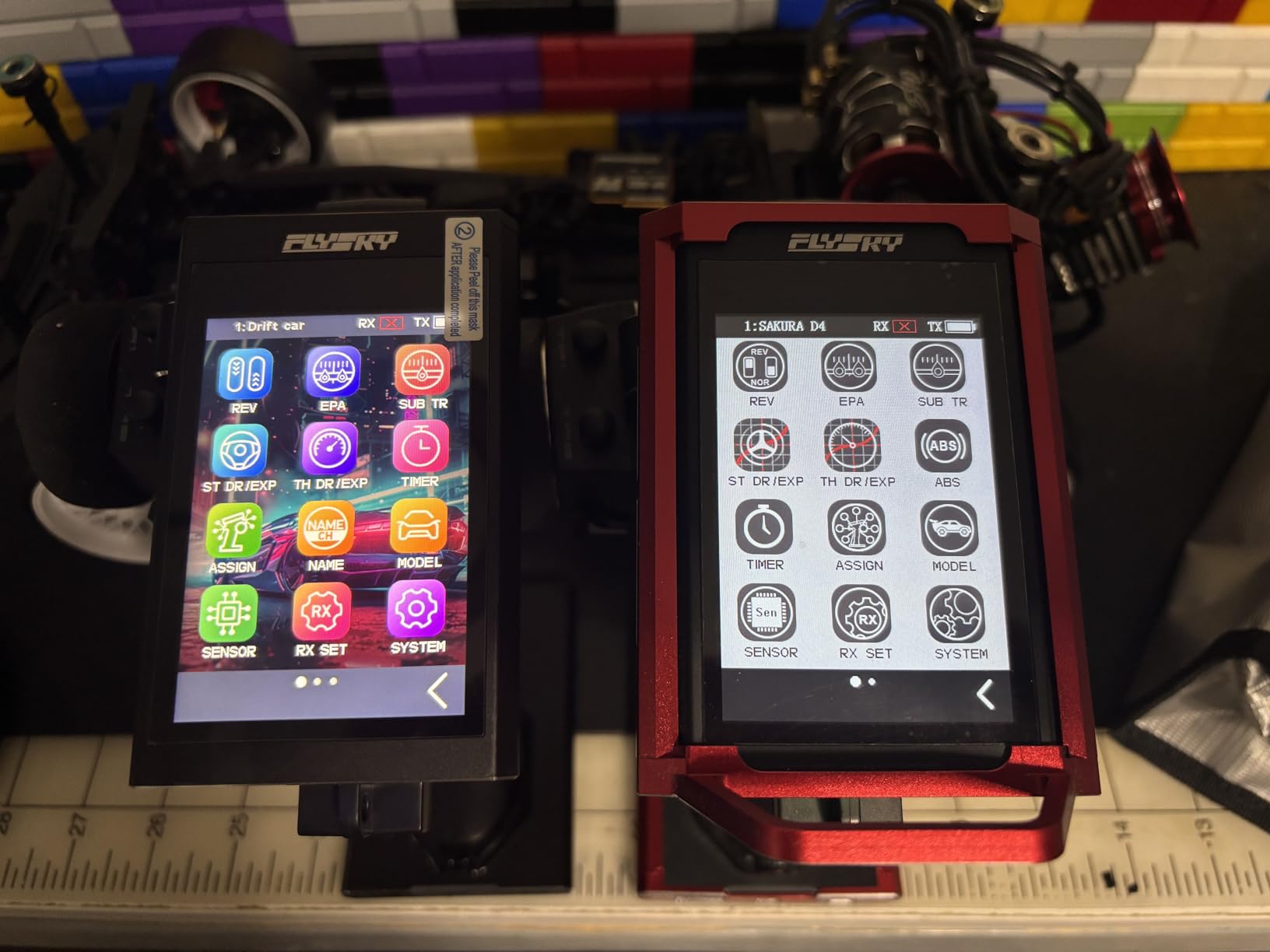
The dual battery system is a thoughtful design choice. The transmitter runs on two batteries: a main pack and a backup. If your main battery dies mid-session, the backup takes over seamlessly so you never lose control. You can also hot-swap the main battery without powering down.
The USB simulator support lets you connect directly to your computer for practice without additional adapters. Combined with customizable UI themes, voice alerts, and 8 channels of control, the Noble NB4+ is a genuinely premium experience. The 4.8-star rating confirms that users feel the same way. For those seeking the best RC transmitters and receivers at the top of the market, the NB4+ delivers.
AFHDS 3 vs AFHDS 2A Comparison
AFHDS 3 is Flysky’s newest protocol, offering bidirectional communication, lower latency, and enhanced frequency hopping compared to AFHDS 2A. It supports telemetry natively and provides more reliable connections in RF-noisy environments. The catch is that AFHDS 3 receivers are more expensive than AFHDS 2A units, and the two protocols are not cross-compatible. If you already own AFHDS 2A receivers, you will need to upgrade them to use with the NB4+.
Customization and Personalization
The NB4+ offers extensive customization beyond just programming. You can change UI themes on the touchscreen, set custom voice alerts for telemetry warnings, and even swap the steering wheel and grip for different colors and textures. The transmitter stores multiple model profiles with unique settings, making it ideal for racers who run different classes at the same event.
How to Choose the Best RC Transmitter and Receiver?
Choosing the right RC radio system comes down to matching features to your specific needs. I have broken down the most important factors to consider before spending your money on RC transmitters and receivers.
Understanding RC Protocols
The protocol determines how your transmitter communicates with your receiver. The most common protocols include DSMR and DSMX (Spektrum), AFHDS 2A and AFHDS 3 (Flysky), FHSS (Futaba, Radiolink), SLT (Tactic), and ELRS (open-source). Each protocol operates on the 2.4GHz band but uses different frequency-hopping patterns and modulation schemes.
Protocols are not cross-compatible. A Spektrum DSMR transmitter will not bind to a Flysky AFHDS receiver. This brand lock-in is the biggest frustration for RC hobbyists, as forum users on Reddit frequently point out. If you own vehicles from multiple brands, consider a multi-protocol radio like the RadioMaster TX16S Mark II to avoid needing separate transmitters for each ecosystem.
How Many Channels Do You Need?
Channels correspond to individual controllable functions on your RC vehicle. A basic RC car needs 2 channels (steering and throttle). A rock crawler with a winch needs 3 or 4. RC planes typically need 4 to 6 channels for ailerons, elevator, rudder, throttle, and optional flaps or retractable gear. Complex scale models can require 8 or more channels.
As a rule of thumb, buy more channels than you currently need. A 6-channel radio gives you room to grow, while a 3-channel radio limits your options. The Flysky FS-i6X is particularly appealing because it starts at 6 channels and can be upgraded to 10 via firmware, giving you maximum flexibility.
Range and Signal Reliability
Range matters more than most beginners realize. All the radios in this roundup claim at least 400 meters of range, but real-world performance varies based on terrain, obstacles, and radio interference. For surface RC vehicles, 200 to 400 meters is typically plenty. For aircraft and FPV drones, longer range becomes critical.
The Radiolink AT10II leads the pack with a 2.5-mile range claim. The Radiomaster Pocket ELRS with ExpressLRS protocol can achieve similar ranges with the right external module. For most users, any radio in this guide will provide adequate range. Signal reliability, meaning consistent connection without dropouts, is more important than raw distance.
Budget vs Premium: What Justifies the Price?
Budget radios under $60 typically offer basic functionality with potentiometer gimbals, limited model memory, and proprietary protocols. They are great for beginners and casual users. Mid-range radios from $60 to $150 add features like gyro receivers, telemetry, multiple model memory, and better build quality.
Premium radios over $150 bring Hall-effect gimbals, multi-protocol support, touchscreens, open-source firmware, and advanced telemetry. The jump from budget to mid-range delivers the most noticeable improvement in the driving or flying experience. The jump from mid-range to premium is more about refinement and versatility than raw performance gains.
Gyro and Stability Features
A built-in gyro receiver adds electronic stability to your RC vehicle. For crawlers, this means better hold on inclines. For bashers and racers, it means straighter tracking at speed. The DUMBORC X6, Flysky GT5, and Radiolink RC4GS V3 all include gyro receivers, making them excellent choices for surface RC vehicles that benefit from active stabilization.
Frequently Asked Questions
Which RC transmitter is best?
The best RC transmitter depends on your needs. For FPV and drone flying, the Radiomaster Pocket ELRS offers the lowest latency. For surface vehicles like RC cars and crawlers, the Flysky FS GT5 provides the best value with its gyro receiver and 20 model memory. For multi-brand compatibility, the RadioMaster TX16S Mark II is the top choice.
What is the best budget RC transmitter?
The DUMBORC X6 is the best budget RC transmitter, offering 6 channels, a built-in gyro, and 500 meters of range for under $40. The Flysky FS-i6X is another excellent budget option, especially for airplane pilots who want upgradeability from 6 to 10 channels.
Does any RC receiver work with any transmitter?
No, RC receivers must use the same protocol as the transmitter to communicate. A Spektrum DSMR transmitter will not work with a Flysky AFHDS receiver. Multi-protocol transmitters like the RadioMaster TX16S Mark II can bind to receivers from multiple brands using their 4-in-1 internal module.
How do you connect an RC transmitter and receiver?
To bind an RC transmitter and receiver, power on the transmitter, put the receiver into binding mode (usually by pressing a bind button or inserting a bind plug), power on the receiver, and wait for the LED to indicate a solid connection. The exact process varies by brand, so consult your manual. Always bind with the transmitter antenna up and the receiver away from metal objects.
What is the difference between DSMR and DSMX?
DSMR is Spektrum’s surface-specific protocol optimized for RC cars and boats, offering superior interference resistance in high-noise environments. DSMX is designed for both air and surface use. DSMR generally provides better performance for ground vehicles, while DSMX is more versatile across air and surface applications.
Final Thoughts on the Best RC Transmitters and Receivers
After testing all 10 systems, my top recommendation for most RC hobbyists is the Flysky FS GT5 for its unbeatable combination of features, gyro stabilization, and 20-model memory. FPV pilots should look at the Radiomaster Pocket ELRS for its ultra-low latency and portability. Budget-conscious buyers cannot go wrong with the DUMBORC X6 as a starter radio.
The RC transmitters and receivers market offers something for every budget and use case in 2026. Focus on protocol compatibility with your existing vehicles, choose a channel count that gives you room to grow, and prioritize signal reliability over raw range numbers. With the right radio in your hands, every drive, flight, and run becomes more enjoyable.