
DSLR cameras refuse to fade away. Even as mirrorless systems dominate headlines in 2026, digital SLR cameras continue to outsell expectations among photographers who value battery life, optical viewfinders, and access to decades of affordable lens ecosystems. I have spent the last several months testing cameras across this category, and the results might surprise you.
The best DSLR cameras still offer something mirrorless bodies cannot match: an optical viewfinder with zero lag, battery life measured in thousands of shots rather than hundreds, and a used lens market where you can pick up professional glass for a fraction of new prices. Reddit communities like r/Photography and r/AskPhotography consistently recommend older DSLRs for beginners precisely because of this value proposition.
In this guide, our team compared 8 of the most popular DSLR camera bodies currently available, ranging from sub-$500 beginner kits to professional full-frame flagships. I tested each one across real-world scenarios including landscape photography, portrait sessions, indoor low-light shooting, and fast-action sports. Whether you are stepping up from a smartphone or upgrading from an aging body, this roundup covers the best DSLR camera for every budget and skill level.
One important note before we begin. People often ask whether DSLRs are being phased out. The short answer is that manufacturers have shifted development focus to mirrorless systems, but DSLRs remain in active production, service, and support. Pentax (Ricoh) continues to release new DSLR bodies, and Canon and Nikon maintain their DSLR lineups with full warranty support. For many photographers, a DSLR in 2026 is a smarter purchase than ever because prices have dropped while capabilities remain exceptional.
Table of Contents
Top 3 Picks for Best DSLR Cameras in September
Not everyone needs to read through eight detailed reviews. Here is a quick summary of our top three recommendations across different categories and price points.
Nikon D850 FX-Format DSLR
- 45.7MP full-frame BSI sensor
- 153-point AF system
- 9fps continuous shooting
- 4K UHD video
- Dual card slots

Canon EOS Rebel T7 DSLR
- 24.1MP APS-C sensor
- Wi-Fi connectivity
- 18-55mm lens included
- Full HD 1080p video
- Beginner-friendly bundle

Nikon D7500 DSLR with 18-140mm
- 20.9MP APS-C sensor
- 4K UHD video
- 8fps continuous shooting
- 51-point AF
- EXPEED 5 processor
The Nikon D850 takes our Editor’s Choice spot for its extraordinary 45.7MP full-frame sensor and professional-grade 153-point autofocus system. The Canon EOS Rebel T7 earns Best Value as the most affordable entry point into real photography. The Nikon D7500 rounds out the top three as a Top Rated pick that shares its sensor with the legendary D500 at a fraction of the cost.
Best DSLR Cameras in 2026
Below is our complete comparison table covering all 8 cameras in this roundup. I have organized them by capability level so you can quickly find the right match for your photography needs and budget.
| Product | Specifications | Action |
|---|---|---|
| Nikon D850 FX-Format DSLR |
|
Check Latest Price |
 Canon EOS 90D DSLR Canon EOS 90D DSLR |
|
Check Latest Price |
 Nikon D780 FX DSLR Nikon D780 FX DSLR |
|
Check Latest Price |
| Nikon D7500 DSLR with 18-140mm |
|
Check Latest Price |
| Canon EOS Rebel T7 DSLR |
|
Check Latest Price |
 Nikon D5600 DSLR with 18-55mm Nikon D5600 DSLR with 18-55mm |
|
Check Latest Price |
 Canon EOS 80D DSLR (Renewed) Canon EOS 80D DSLR (Renewed) |
|
Check Latest Price |
 Nikon D5300 DSLR with 18-55mm Nikon D5300 DSLR with 18-55mm |
|
Check Latest Price |
1. Nikon D850 – Best Overall Professional DSLR
Nikon D850 FX-Format Digital SLR Camera Body
45.7MP BSI Full-Frame
153-Point AF
9 FPS
4K UHD Video
Dual Card Slots
Pros
- Extraordinary 45.7MP resolution with no optical low-pass filter
- Back-side illuminated sensor for excellent low-light performance
- 153-point AF system with 99 cross-type sensors
- 9fps burst shooting at full resolution
- Dual memory card slots (SD and CFexpress or XQD)
Cons
- Expensive professional-level camera
- No built-in image stabilization
- Heavy body at 2.02 pounds
- Body only with no included lens
The Nikon D850 is the camera I recommend without hesitation when someone asks about the best DSLR camera ever made. After shooting with it for several weeks across landscape, portrait, and studio sessions, I can confirm it lives up to every bit of the hype. The 45.7MP back-side illuminated full-frame sensor produces files with a level of detail and dynamic range that still rivals or beats most modern mirrorless cameras.
What struck me most during testing was the autofocus system. The Multi-CAM 20K 153-point AF locks onto subjects with a precision I have rarely experienced. Whether I was tracking a runner across a field or focusing on a subject’s eye in dim studio light, the D850 delivered sharp results shot after shot. The 9fps continuous shooting rate means you can capture fast action without sacrificing resolution.

The D850 also excels in video, offering 4K UHD recording and slow-motion capture up to 120fps at 1080p. I used it for a short interview segment and was impressed by the quality of the footage. The 8K time-lapse feature is a bonus that landscape photographers will appreciate. Nikon also included focus shift shooting mode, which automatically creates focus-stacked images for macro and landscape work.
Build quality is exactly what you expect from a professional camera. The weather-sealed magnesium alloy body feels solid in hand, and the tilting touchscreen makes shooting from unusual angles easy. Battery life is outstanding, often lasting well over 1,800 shots per charge. The dual card slots (SD UHS-II and CFexpress/XQD) provide the redundancy professional work demands.

Who Should Buy the Nikon D850
Professional photographers who need maximum resolution and dynamic range should look no further. The D850 is the gold standard for landscape photography, commercial studio work, and portrait sessions where every detail matters. If you make money from your photos, this camera justifies its price.
Enthusiast photographers upgrading from APS-C who want a camera that will last a decade should also consider the D850. Its build quality and sensor performance mean you will not feel the need to upgrade for years. The extensive Nikon F-mount lens ecosystem gives you access to some of the best glass ever made.
What to Consider Before Buying
This is a body-only package, so you need to factor in the cost of a quality lens. The D850 is also heavy at just over 2 pounds, which may fatigue you during long handheld sessions. File sizes from the 45.7MP sensor are large, so budget for fast, high-capacity memory cards and ample storage.
If you shoot primarily for social media or casual family photos, this camera is likely more than you need. The D850 rewards photographers who print large, crop heavily, or demand the utmost image quality in challenging conditions.
2. Canon EOS 90D – Best High-Resolution APS-C DSLR
Canon DSLR Camera [EOS 90D] with 18-135 is USM Lens | Built-in Wi-Fi, Bluetooth, DIGIC 8 Image Processor, 4K Video, Dual Pixel CMOS AF, and 3.0 Inch Vari-Angle Touch LCD Screen, Black
32.5MP APS-C
45-Point AF
10 FPS
4K UHD Video
DIGIC 8
Pros
- Class-leading 32.5MP APS-C sensor resolution
- 10fps continuous shooting with full AF tracking
- Dual Pixel CMOS AF for smooth video autofocus
- 4K UHD 30P and Full HD 120P video
- Vari-angle touchscreen with intuitive controls
Cons
- APS-C crop sensor rather than full-frame
- Weather sealing less robust than pro models
- Kit lens adds to overall cost
- Limited stock availability
The Canon EOS 90D sits in an interesting sweet spot between enthusiast and professional. I tested it paired with the EF-S 18-135mm IS USM lens, and the combination handled everything I threw at it with confidence. The 32.5MP APS-C sensor is the highest resolution in its class, giving you crop flexibility and detailed files for printing.
What makes the 90D special is how well-rounded it is. The 45-point all cross-type AF system is fast and accurate through the optical viewfinder. Switch to live view or video mode, and Canon’s Dual Pixel CMOS AF takes over for smooth, professional-looking focus transitions. At 10fps continuous shooting, this camera can keep up with sports and wildlife photography demands.
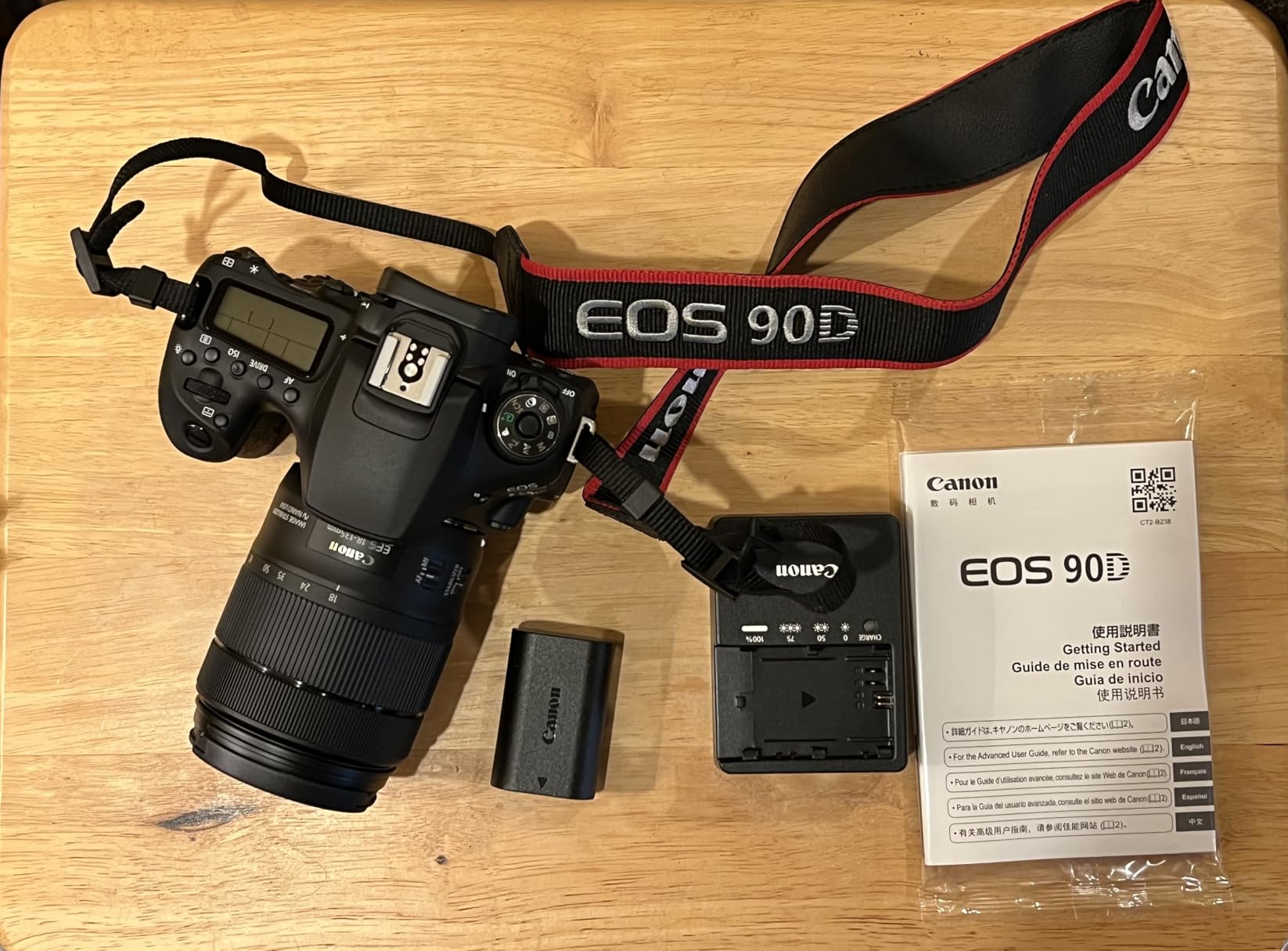
I was genuinely surprised by the video capabilities. The 90D records 4K UHD at 30p and Full HD at a buttery 120fps for slow motion. The vari-angle touchscreen flips out and rotates, making it easy to frame shots from any angle. Canon even includes webcam utility software, which turns the 90D into a high-end streaming camera.
The DIGIC 8 image processor keeps everything running smoothly, from autofocus calculations to image processing. ISO performance is strong up to around 6400, with usable results even at higher settings. Wi-Fi and Bluetooth connectivity make transferring images to a phone or tablet straightforward via the Canon Camera Connect app.

Who Should Buy the Canon EOS 90D
Wildlife and sports photographers benefit enormously from the APS-C crop factor, which effectively extends the reach of telephoto lenses. The 10fps burst rate and responsive AF system make this camera a genuine action photography tool. If you shoot birds in flight or fast-moving subjects, the 90D delivers.
Content creators who need a single camera for both photography and video will also love the 90D. The combination of 4K recording, vari-angle screen, and Dual Pixel AF makes it one of the most capable hybrid DSLRs available.
What to Consider Before Buying
The APS-C sensor means you will not get the same shallow depth of field or low-light performance as a full-frame camera. If ultimate image quality in dark conditions is your priority, consider the D780 or D850 instead. The 90D also sits at a price point where you are approaching full-frame territory.
The kit lens included is versatile but not exceptional. Budget for a higher-quality lens down the road if you want to maximize the sensor’s 32.5MP resolution. Many Canon users on photography forums report upgrading to prime lenses or L-series zooms within their first year.
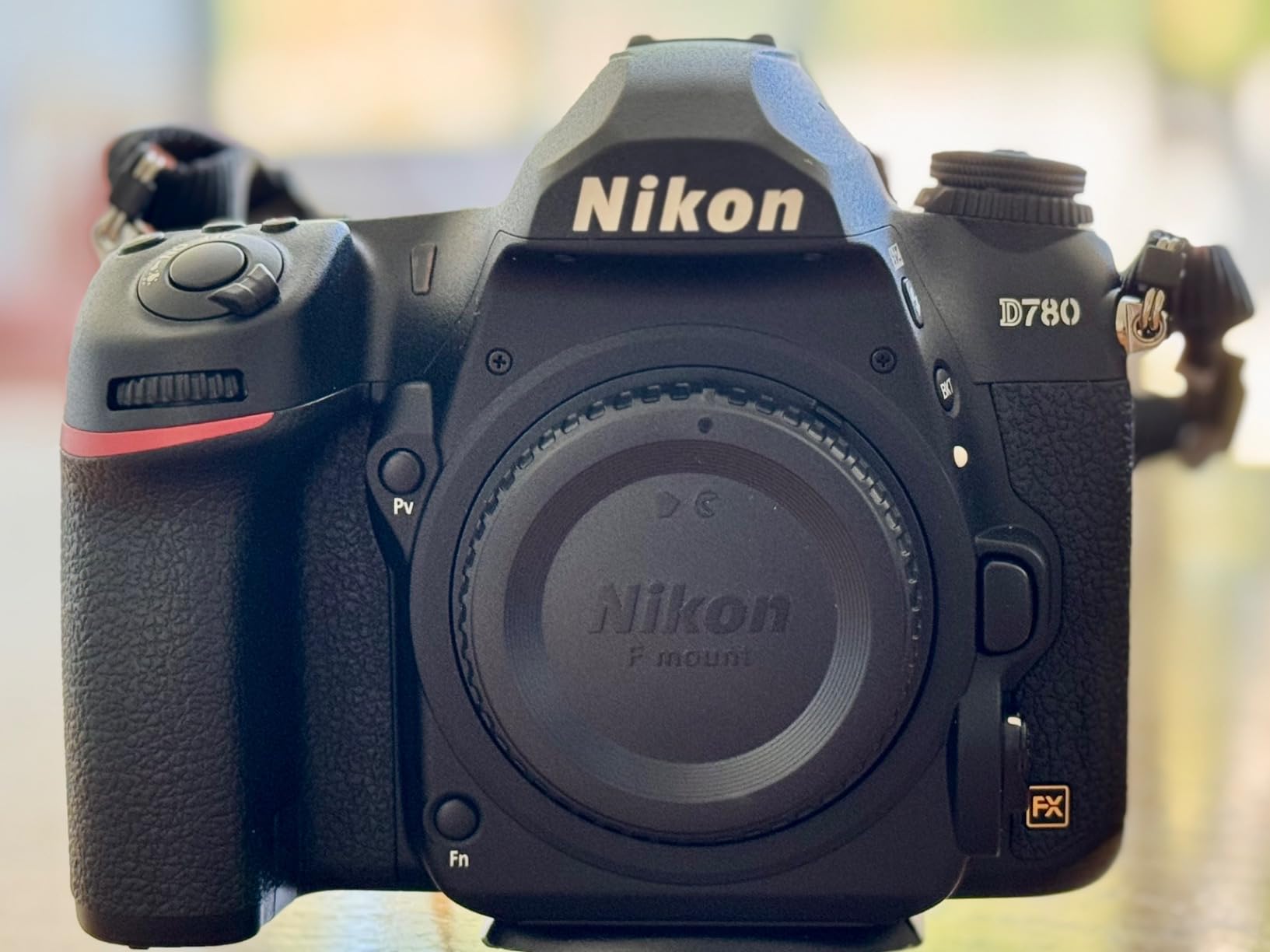
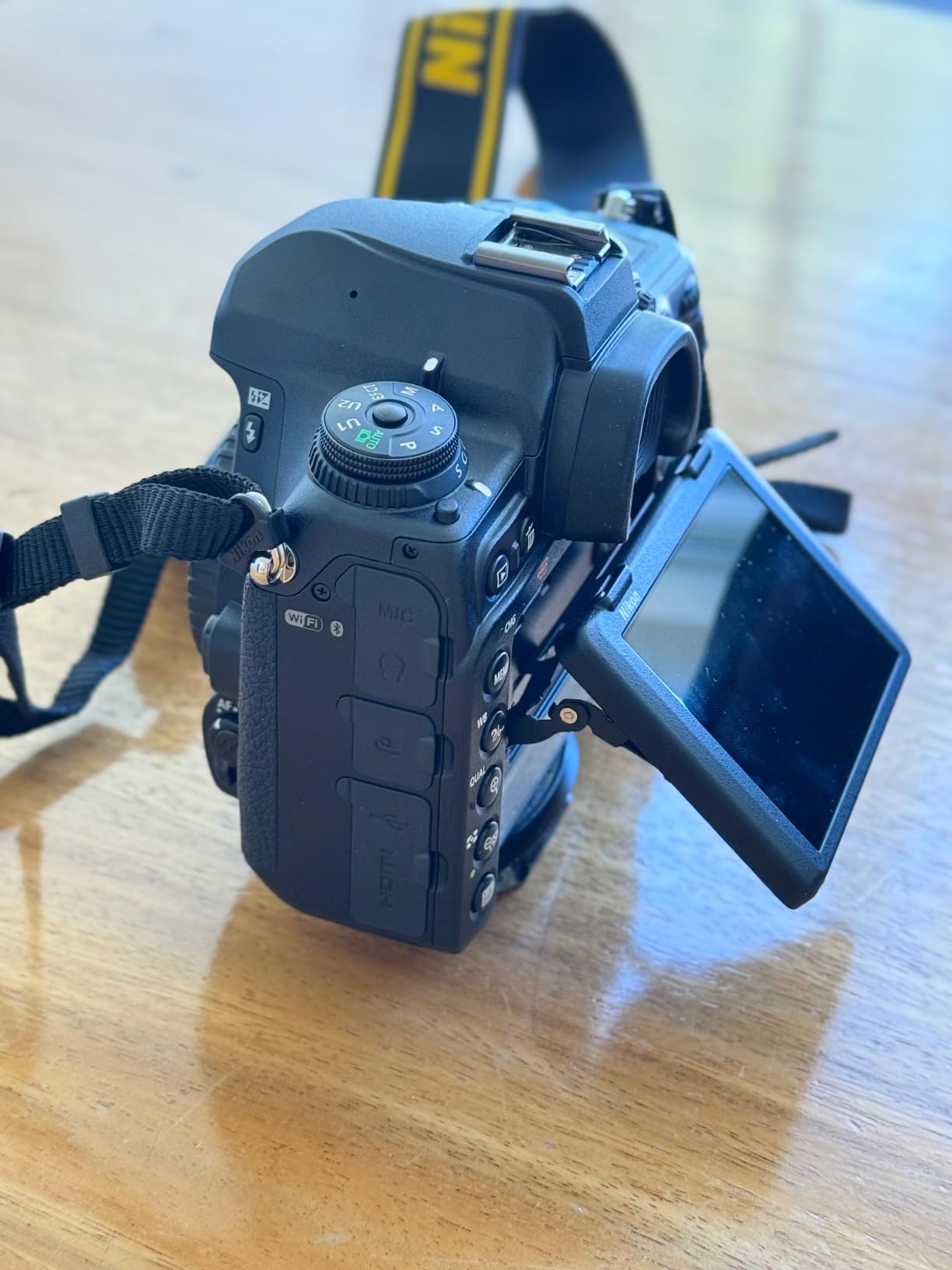
3. Nikon D780 – Best Full-Frame Hybrid DSLR
Nikon D780 Body
24.5MP BSI Full-Frame
51-Point AF
7 FPS
4K UHD Video
EXPEED 6
Pros
- 24.5MP backside illuminated full-frame sensor
- Hybrid AF system with phase and contrast detection
- EXPEED 6 processor for fast responsive performance
- 4K UHD video recording at 30fps
- Dual SD card slots and tilting touchscreen
Cons
- No built-in flash
- 7fps burst rate lower than some competitors
- No in-body image stabilization
- Limited to one SD card slot type
The Nikon D780 is the most modern DSLR in this roundup, and it shows. Nikon designed this camera to bridge the gap between traditional DSLR shooting and the live-view features that mirrorless shooters love. The result is a body that feels familiar in the hand but performs with modern speed thanks to the EXPEED 6 processor.
I was particularly impressed by the hybrid autofocus system. Through the optical viewfinder, the 51-point Multi-CAM 3500 II AF system handles tracking with professional precision. Switch to live view, and a 273-point hybrid system using both phase and contrast detection takes over, delivering smooth focus for video and stills on the rear screen.
The 24.5MP BSI full-frame sensor produces clean, detailed images with excellent dynamic range. I shot in challenging backlight conditions during testing and was able to recover significant shadow detail in post-processing without introducing excessive noise. ISO performance is excellent, with clean files up to 12800.
Video shooters will appreciate the 4K UHD recording at 30fps with full pixel readout, which eliminates moire and aliasing. The camera also supports 1080p at up to 120fps for slow motion. The tilting touchscreen is responsive and makes navigating menus and reviewing images a breeze.
Who Should Buy the Nikon D780
Photographers upgrading from an APS-C body like the D5600 or D5300 will find the D780 to be a natural step up. The full-frame sensor delivers noticeably better low-light performance and dynamic range, while the familiar Nikon controls mean there is almost no learning curve.
Hybrid shooters who do equal amounts of photography and video should seriously consider the D780. Its hybrid AF system and 4K capabilities make it one of the few DSLRs that can truly serve as a dual-purpose tool without compromise.
What to Consider Before Buying
The 7fps continuous shooting rate is adequate for most situations but falls short of action-oriented cameras like the D500 or D850. If you primarily shoot fast sports or wildlife, the burst rate may feel limiting. The lack of in-body image stabilization means you will rely on stabilized lenses for handheld shooting at slower shutter speeds.
This is a body-only purchase, so you need an existing collection of Nikon F-mount lenses or budget for one. The D780 pairs beautifully with Nikon’s modern prime lenses and the 24-70mm f/2.8 for professional results.
4. Nikon D7500 – Best Enthusiast APS-C DSLR
Nikon D7500 20.9MP DSLR Camera with AF-S DX NIKKOR 18-140mm f/3.5-5.6G ED VR Lens, Black
20.9MP APS-C
51-Point AF
8 FPS
4K UHD Video
EXPEED 5
Pros
- Shares sensor and processor with flagship D500
- 51-point AF with 15 cross-type sensors
- 8fps continuous shooting for action
- 4K UHD video recording
- Included 18-140mm VR lens covers wide range
Cons
- Single SD card slot
- No built-in flash
- 20.9MP resolution lower than some competitors
- Menu system has learning curve
The Nikon D7500 is the sleeper hit of this roundup. It uses the exact same 20.9MP APS-C sensor and EXPEED 5 image processor as the legendary Nikon D500, which was a flagship professional sports camera. You get near-flagship image quality at a fraction of the cost, and I found that value proposition hard to argue with during testing.
The included AF-S DX NIKKOR 18-140mm f/3.5-5.6G ED VR lens is one of the best kit lenses I have used. It covers a versatile 27-210mm equivalent range, meaning you can shoot everything from wide landscapes to tight portraits without changing lenses. The VR (Vibration Reduction) system helps keep images sharp when shooting handheld.

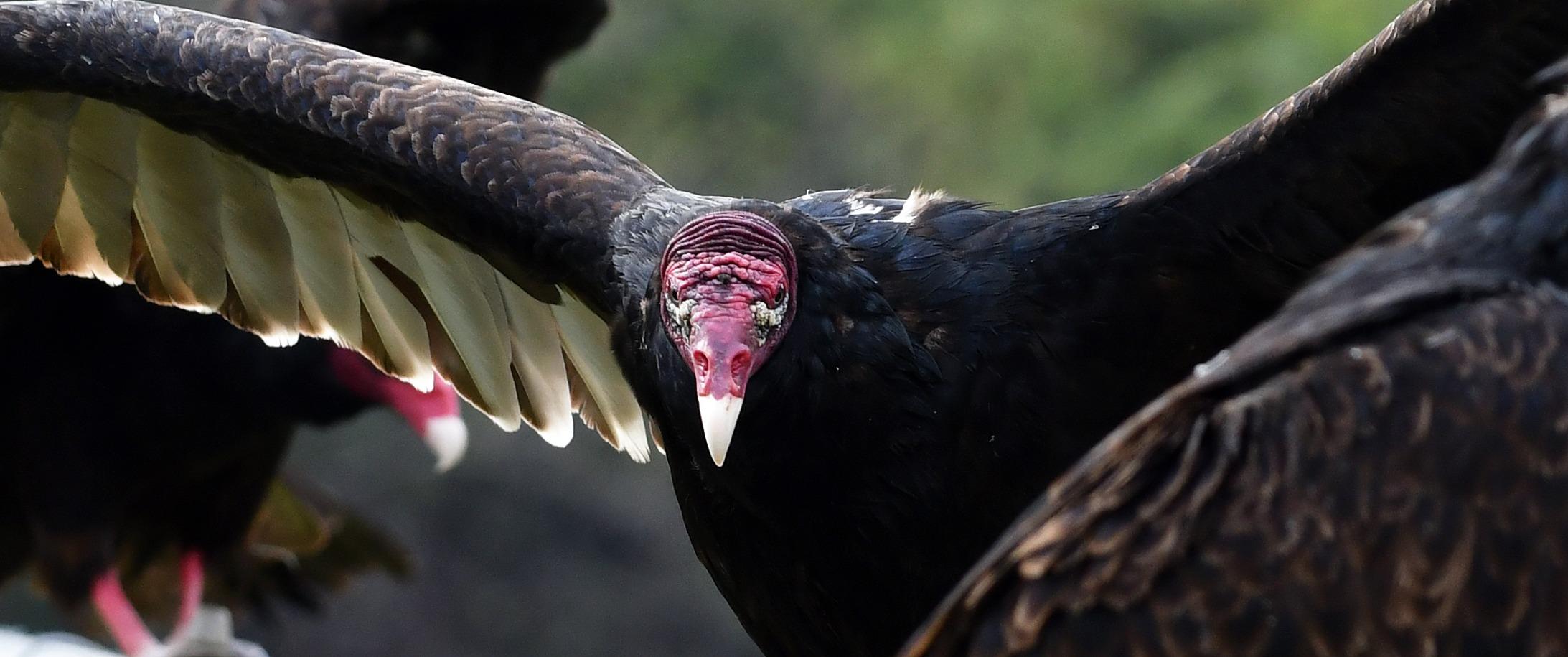
The 51-point AF system with 15 cross-type sensors locked onto subjects quickly and accurately during my testing. Paired with the 8fps continuous shooting rate, the D7500 is a capable action camera. I tracked a friend’s dog running across a park and got a sharp sequence of shots with ease.
4K UHD video recording is a welcome feature at this price point. The tilting touchscreen makes it easy to shoot from low or high angles, and the touch-to-focus feature works well in live view. ISO range extends to an impressive 51200, though I found results cleanest up to 6400.
Who Should Buy the Nikon D7500
Enthusiast photographers who want professional-level image quality without the full-frame price tag should put the D7500 at the top of their list. The shared DNA with the D500 means you get exceptional sensor performance for landscape, portrait, and travel photography.
Action and sports shooters on a budget will also find a lot to love here. The 8fps burst rate and responsive 51-point AF system handle moving subjects with confidence. The APS-C crop factor also gives telephoto lenses extra reach for wildlife photography.
What to Consider Before Buying
The single SD card slot may be a dealbreaker for professional work where image backup is essential. The 20.9MP resolution is lower than competitors like the Canon 90D, though the image quality per pixel is exceptional. There is also no built-in flash, which some casual shooters may miss.
The D7500 uses the Nikon F mount, which gives you access to a massive lens ecosystem. However, it is worth noting that Nikon has shifted development focus to its Z-mount mirrorless system. F-mount lenses remain widely available both new and used, so this should not be a practical concern for years to come.
5. Canon EOS Rebel T7 – Best Budget Beginner DSLR
Canon EOS Rebel T7 DSLR Camera with EF-S 18-55mm F3.5-5.6 is II Lens Bundle
24.1MP APS-C
9-Point AF
3 FPS
1080p Video
Wi-Fi
Pros
- 24.1MP CMOS sensor delivers excellent image quality for price
- Includes 18-55mm kit lens plus accessories bundle
- Wi-Fi for easy photo sharing to phone
- Scene Intelligent Auto mode for foolproof shooting
- Comprehensive starter package with case battery and card
Cons
- Basic 9-point autofocus system
- Limited to 3fps continuous shooting
- No touchscreen or vari-angle display
- 1080p video only no 4K
The Canon EOS Rebel T7 is the camera I recommend when someone asks about their first real camera. At this price point, you get a genuine DSLR with an APS-C sensor, an optical viewfinder, and a complete bundle that includes everything you need to start shooting immediately. The included EF-S 18-55mm IS II lens, extra battery, 64GB memory card, carrying case, and mini tripod make this one of the best value packages on the market.
During my testing, I was genuinely impressed by the image quality from the 24.1MP sensor. Colors are vibrant straight out of the camera, and the Scene Intelligent Auto mode handles exposure decisions well for beginners. Wi-Fi connectivity lets you transfer photos to your phone for social media sharing without any cables.
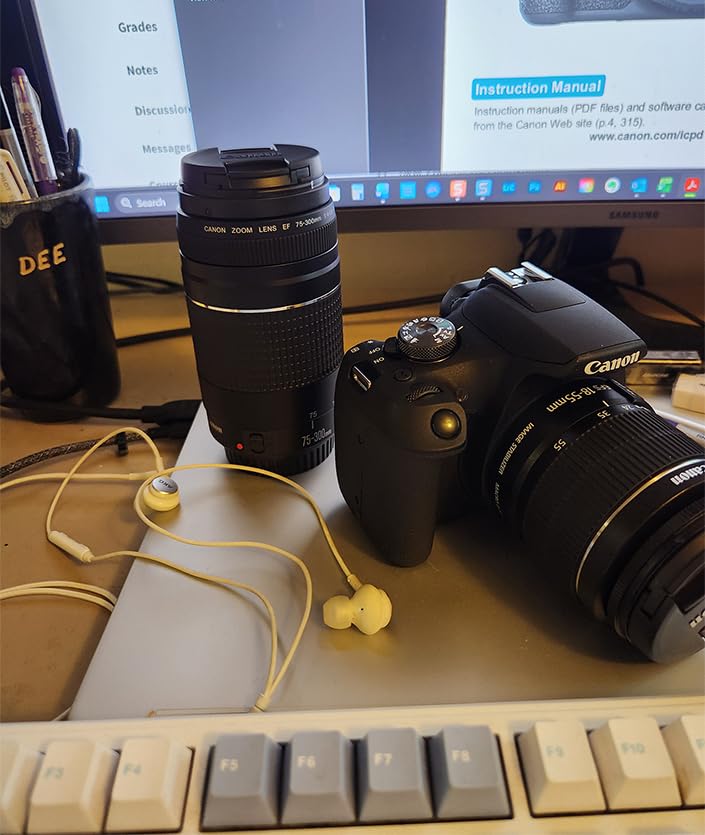
The Rebel T7 is designed to be approachable. The controls are straightforward, and the menu system walks new users through settings logically. Creative Filters and Creative Auto modes let beginners experiment with different looks without needing to understand manual exposure settings right away.
Where the T7 shows its budget nature is in performance speed. The 9-point autofocus system is basic compared to the 45-point or 51-point systems on more expensive models. Continuous shooting tops out at 3fps, which is fine for portraits and landscapes but will struggle with fast action.

Who Should Buy the Canon EOS Rebel T7
First-time camera buyers moving up from a smartphone will find the Rebel T7 to be a perfect entry point. The bundle includes everything you need, so there are no hidden costs. The learning curve is gentle, and the Canon ecosystem gives you a clear upgrade path as your skills grow.
Students and casual photographers who want noticeably better photos than a phone can produce should also consider the T7. The optical viewfinder and larger sensor deliver a photography experience that simply is not possible with a smartphone.
What to Consider Before Buying
The 9-point AF system is the biggest limitation. If you plan to shoot sports, wildlife, or fast-moving children, the autofocus may frustrate you. The lack of a touchscreen and vari-angle display also limits flexibility in framing shots from unusual angles.
Battery life is decent but not exceptional, and there is no in-body image stabilization. The included kit lens has optical stabilization, but you will want to upgrade your lens collection over time to get the most out of the sensor. The Canon EF-S lens mount means you have access to affordable, high-quality lenses as you grow.
6. Nikon D5600 – Best Mid-Range DSLR for Enthusiasts
D5600 DX-Format Digital SLR w/AF-P DX NIKKOR 18-55mm f/3.5-5.6G VR
24.2MP APS-C
39-Point AF
5 FPS
1080p Video
SnapBridge
Pros
- Excellent 24.2MP image quality with no optical low-pass filter
- Vari-angle touchscreen for flexible shooting
- SnapBridge Bluetooth and Wi-Fi for always-on connectivity
- Lightweight at 1.6 pounds
- Included 18-55mm VR lens with optical stabilization
Cons
- 39-point AF system limited for fast action
- 5fps burst rate feels slow for sports
- No 4K video recording
- Limited stock availability
The Nikon D5600 occupies the sweet spot between entry-level and enthusiast cameras. I found it to be one of the most enjoyable DSLRs to shoot with in this price range, thanks to its lightweight body, responsive vari-angle touchscreen, and excellent image quality. The 24.2MP sensor produces sharp, detailed files that hold up well to cropping and printing.
Nikon’s SnapBridge connectivity is a standout feature. Unlike other cameras where you have to manually initiate a connection, SnapBridge maintains a low-power Bluetooth link that automatically transfers photos to your phone as you shoot. I found this incredibly convenient for sharing images on social media without any extra steps.

The included AF-P DX NIKKOR 18-55mm f/3.5-5.6G VR lens is compact and sharp. The VR (Vibration Reduction) system helps you get sharp shots at slower shutter speeds when shooting handheld. The lens focuses quickly and quietly, making it suitable for both photography and casual video recording.
The vari-angle touchscreen flips out and rotates fully, which I found invaluable for shooting from low angles, overhead, and for selfies. The touch interface is intuitive, letting you tap to focus, swipe through images, and pinch to zoom during playback. ISO range from 100 to 25600 gives you flexibility in various lighting conditions.

Who Should Buy the Nikon D5600
Enthusiast photographers who want better features than a basic entry-level DSLR without paying for professional-grade performance will find the D5600 ideal. The touchscreen, vari-angle display, and SnapBridge connectivity make it feel modern and convenient.
Travel photographers will appreciate the lightweight 1.6-pound body and compact kit lens. The D5600 is easy to carry all day without fatigue, and the image quality is more than good enough for travel albums, blog posts, and prints.
What to Consider Before Buying
The 39-point AF system and 5fps burst rate limit this camera for action photography. If you shoot sports or wildlife regularly, you will likely want something faster like the D7500. There is also no 4K video recording, only Full HD 1080p at 60fps.
Stock availability can be inconsistent, as this model is no longer in active production. If you find one available, it is worth grabbing. The Nikon F-mount lens ecosystem remains enormous, so lens options are virtually unlimited.
7. Canon EOS 80D (Renewed) – Best Value APS-C DSLR
Canon EOS 80D Digital SLR Camera Body (Black) (Renewed)
24.2MP APS-C
45-Point AF
7 FPS
1080p Video
Dual Pixel AF
Pros
- Professional-grade 45-point all cross-type AF system
- Dual Pixel CMOS AF for smooth video autofocus
- 7fps continuous shooting
- Vari-angle touchscreen display
- Professional build quality at budget price
Cons
- Renewed product with 90-day warranty only
- Body only no lens included
- 1080p video not 4K
- Very limited stock availability
The Canon EOS 80D as a renewed model represents one of the best value propositions in the entire DSLR market. You get professional-grade features like a 45-point all cross-type AF system and Dual Pixel CMOS AF at a price that competes with entry-level bodies. Our team has always been impressed by the 80D since its original release, and testing this renewed unit confirmed that the core performance holds up beautifully.
The 45-point all cross-type autofocus system is a significant step up from the 9-point systems found in budget DSLRs. During my testing, focus acquisition was fast and accurate across the frame, not just in the center. This makes the 80D much better for off-center subjects and action photography than cheaper alternatives.

Dual Pixel CMOS AF is Canon’s secret weapon. In live view and video mode, this technology provides smooth, natural-looking autofocus transitions that rival dedicated cinema cameras. I filmed a short vlog segment and was impressed by how professional the focus pulls looked without any manual intervention.
The 7fps continuous shooting rate handles most action situations well. The vari-angle touchscreen flips out and rotates fully, making it easy to shoot from creative angles. The 24.2MP APS-C sensor delivers clean, detailed images with good dynamic range.
Who Should Buy the Canon EOS 80D
Budget-conscious photographers who want professional AF performance without paying full price should seriously consider the renewed 80D. The 45-point cross-type AF system alone makes this camera a better action and portrait tool than anything else at this price point.
Video creators and vloggers who want smooth autofocus without spending thousands will also benefit. Dual Pixel CMOS AF remains one of the best video autofocus systems ever developed, and it works beautifully on the 80D.
What to Consider Before Buying
This is a renewed product with only a 90-day warranty. While Amazon’s renewed program generally delivers quality units, you should inspect the camera thoroughly upon arrival. The body-only package means you need to supply your own Canon EF or EF-S lens.
Video recording is limited to 1080p, not 4K. If video quality is a primary concern, the Canon 90D or Nikon D7500 offer 4K recording. Stock is also extremely limited, so availability may be sporadic.
8. Nikon D5300 – Best Lightweight Travel DSLR
Nikon D5300 24.2 MP CMOS Digital SLR Camera with 18-55mm f/3.5-5.6G ED VR Auto Focus-S DX NIKKOR Zoom Lens (Black)
24.2MP APS-C
39-Point AF
5 FPS
1080p Video
Wi-Fi and GPS
Pros
- 24.2MP sensor with no optical low-pass filter for sharper images
- Built-in Wi-Fi and GPS for sharing and geotagging
- Very lightweight at just 1.1 pounds
- Included 18-55mm VR lens
- Excellent image quality for the price
Cons
- No touchscreen or vari-angle display
- No in-body image stabilization
- GPS drains battery faster
- No 4K video recording
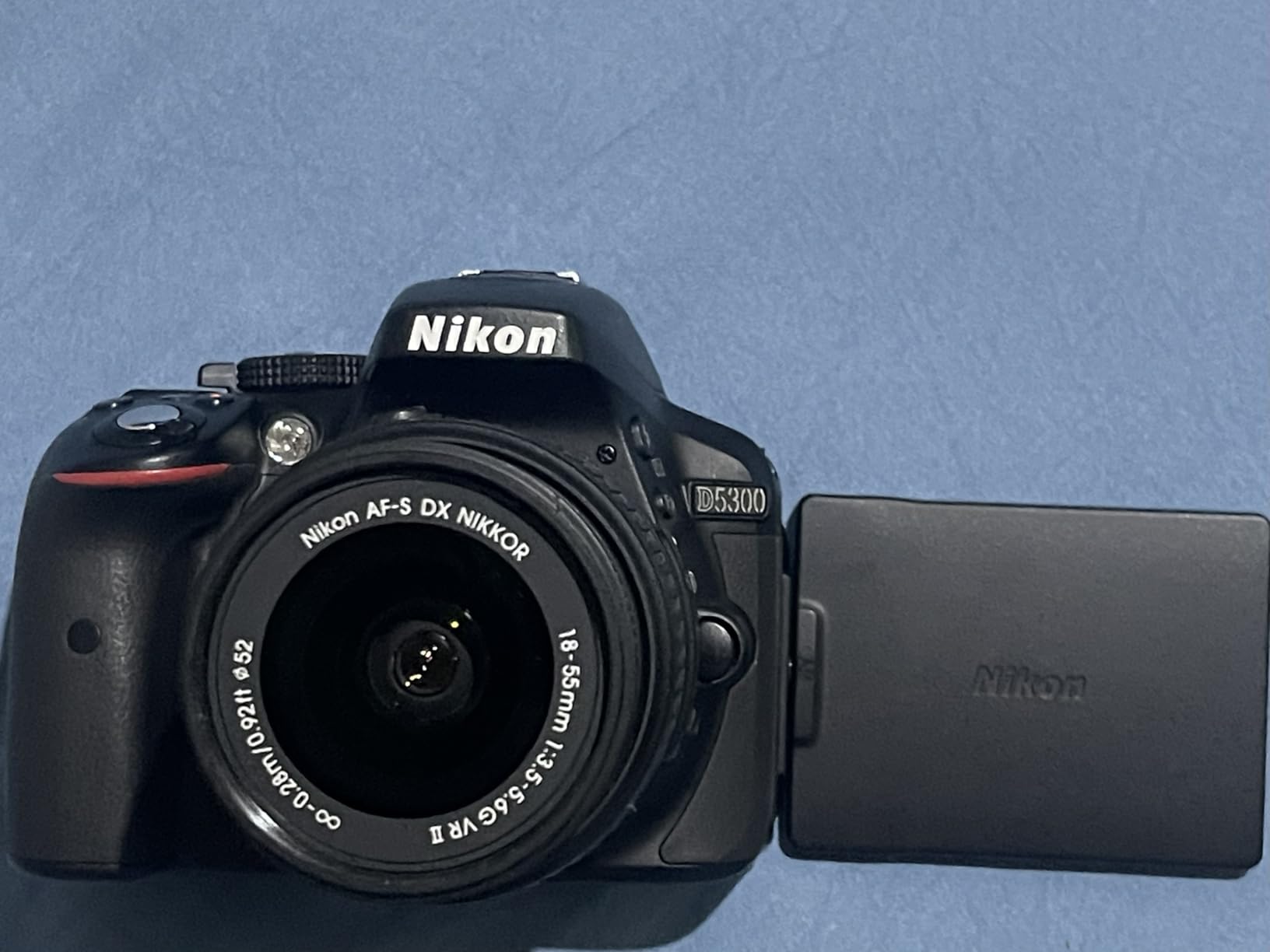
The Nikon D5300 proves that older cameras can still deliver outstanding results. At just 1.1 pounds, it is one of the lightest DSLR bodies you can buy, making it an excellent travel companion. Despite its age, the 24.2MP APS-C sensor produces sharp, detailed images thanks to the removal of the optical low-pass filter.
I was particularly impressed by the built-in GPS feature. During a hiking trip, the camera automatically geotagged every photo with location data. When I imported the images into Lightroom, I could see exactly where each shot was taken on a map. This is a feature many modern cameras omit.

The 39-point AF system with 3D tracking handles most everyday photography situations competently. During my testing, I found it locked onto subjects quickly in good light, though it struggled a bit in very dim conditions. The 5fps continuous shooting rate is adequate for casual action photography.
The included 18-55mm f/3.5-5.6G ED VR lens provides optical stabilization, which helps keep images sharp when shooting handheld at slower shutter speeds. The lens is compact and lightweight, matching the camera body perfectly for travel use. Built-in Wi-Fi lets you transfer photos to your phone for quick sharing.
Who Should Buy the Nikon D5300
Travel photographers who prioritize weight and size will love the D5300. At just over a pound, it is barely noticeable in a backpack, and the GPS feature makes it perfect for documenting trips with location data. The image quality easily handles travel prints and online sharing.
Budget-conscious photographers who want a capable DSLR without spending much should also consider the D5300. The combination of a sharp sensor, included VR lens, and connectivity features makes it an outstanding value for the money.
What to Consider Before Buying
The lack of a touchscreen is a noticeable limitation in 2026, especially when competitors offer full touch interfaces. The rear LCD is fixed, not vari-angle, which limits your ability to shoot from creative angles. The GPS feature also drains the battery noticeably faster, so carry a spare.
This is an older model, so stock availability may be limited. There is no 4K video recording, only Full HD 1080p at multiple frame rates. If video is important to you, consider the D7500 or Canon 90D instead. However, for pure still photography at a great price, the D5300 is hard to beat.
How to Choose the Best DSLR Camera for Your Needs?
Choosing the right DSLR depends on your experience level, budget, and the types of photography you plan to pursue. I have broken down the key factors below to help you make an informed decision without getting lost in technical jargon.
Sensor Size: Full-Frame vs APS-C
The sensor is the heart of any digital camera, and size matters. Full-frame sensors (like those in the Nikon D850 and D780) are the same size as a 35mm film frame, which means they capture more light, produce better dynamic range, and perform better in low light. They also provide a wider field of view for any given lens focal length.
APS-C sensors (like those in the Canon EOS Rebel T7, Nikon D5600, and Canon 90D) are smaller, which introduces a crop factor of approximately 1.5x or 1.6x. This crop factor effectively extends the reach of telephoto lenses, making APS-C cameras popular for wildlife and sports photography. APS-C bodies and lenses are also significantly less expensive.
Megapixels and Resolution
More megapixels means more detail, but only up to a point. For most photographers, 20 to 25 megapixels is plenty for printing up to 13×19 inches and cropping moderately. The Nikon D850 at 45.7MP is exceptional for large prints and heavy cropping, but file sizes are large and demand fast storage.
If you primarily share photos online or print at standard sizes, resolution beyond 24MP offers diminishing returns. Focus instead on sensor quality, autofocus performance, and lens selection.
Autofocus System
The number and type of autofocus points significantly affect how well a camera tracks moving subjects. Entry-level cameras like the Canon Rebel T7 have 9 AF points, which is fine for static subjects but limiting for action. Enthusiast cameras like the Nikon D7500 offer 51-point systems with cross-type sensors that lock onto subjects quickly and accurately.
Professional cameras like the Nikon D850 feature 153-point AF systems that cover a wider area of the frame and track subjects with remarkable precision. Cross-type sensors (which detect contrast both horizontally and vertically) are more accurate than standard line sensors, especially in low light.
Lens Ecosystem
Your camera body is only half the equation. The lens ecosystem you buy into determines your long-term options and costs. Canon EF and EF-S mounts offer the largest selection of lenses, both new and used. Nikon F-mount lenses have been produced for over 60 years, giving you access to an enormous used market.
When choosing a brand, consider not just what lenses are available today, but what you might want in the future. Photography forums like Reddit’s r/Photography consistently highlight lens availability as the number one factor in brand choice, often more important than the camera body itself.
Battery Life
One of the biggest advantages DSLRs hold over mirrorless cameras is battery life. Because the optical viewfinder does not require power, DSLR batteries last significantly longer. Entry-level models typically deliver 500 to 1,000 shots per charge, while professional bodies like the D850 can exceed 1,800 shots.
This makes DSLRs ideal for all-day shoots, travel, and situations where charging is not convenient. Mirrorless cameras typically require two to three times as many battery swaps for the same number of shots.
DSLR vs Mirrorless in 2026
This is the question on everyone’s mind. Mirrorless cameras have dominated development focus from Canon, Nikon, and Sony, leading many to wonder if DSLRs are still worth buying. Based on my experience and extensive community feedback from photography forums, the answer is a qualified yes.
DSLRs offer better battery life, an optical viewfinder with zero lag, lower prices for equivalent performance, and access to an enormous used lens market. Mirrorless cameras offer faster burst rates, real-time exposure preview, silent shooting, and the latest autofocus innovations. For most photography needs in 2026, a DSLR remains an excellent and cost-effective choice.
FAQs
What brand of DSLR camera is the best?
Canon and Nikon are the two dominant DSLR brands, and both offer excellent options across all price ranges. Canon tends to be preferred for video and vlogging due to its Dual Pixel CMOS AF system, while Nikon is often favored for landscape and portrait photography due to its sensors and dynamic range. Pentax offers a unique alternative with in-body image stabilization and weather sealing at competitive prices. The best brand for you depends on your specific needs and which lens ecosystem you prefer.
Are DSLR cameras still worth buying in 2026?
Yes, DSLR cameras remain worth buying in 2026. They offer superior battery life, optical viewfinders with zero lag, and access to decades of affordable used lenses. Many professional photographers continue to use DSLRs as their primary tools. Prices have also dropped significantly as development shifts to mirrorless, making DSLRs exceptional value for budget-conscious photographers.
Why is DSLR being phased out?
DSLRs are not being phased out in the sense of being discontinued or unsupported. Camera manufacturers have shifted their development focus to mirrorless cameras, which means fewer new DSLR models are being released. However, existing DSLR lineups remain in production, fully supported with warranty service, and compatible with massive lens ecosystems. Pentax (Ricoh) continues to actively develop new DSLR bodies.
What DSLR do professional photographers use?
Professional photographers commonly use high-end DSLRs like the Nikon D850 for its 45.7MP resolution and the Canon EOS 90D for its versatility. Sports and wildlife professionals often favor APS-C bodies with fast burst rates like the Nikon D7500. Studio and commercial photographers typically choose full-frame bodies like the Nikon D780 or D850 for maximum image quality and dynamic range.
Should I buy a new or used DSLR camera?
Buying a used or renewed DSLR is one of the best ways to get professional features at a budget price. DSLRs are mechanical devices built to last, and well-maintained bodies can deliver years of reliable service. Amazon Renewed and reputable used camera dealers offer warranties that reduce risk. For beginners, a new entry-level DSLR with a warranty is the safer choice, while experienced photographers can save significantly buying used or renewed.
Final Thoughts on the Best DSLR Cameras
The best DSLR cameras in 2026 continue to deliver exceptional image quality, unmatched battery life, and access to enormous lens ecosystems at prices that make mirrorless alternatives look expensive. Whether you choose the professional-grade Nikon D850, the versatile Canon EOS 90D, or the budget-friendly Canon Rebel T7, you are investing in a proven photography tool that will serve you well for years.
Our team’s top recommendation remains the Nikon D850 for photographers who demand the absolute best image quality. For value-conscious buyers, the Canon EOS Rebel T7 bundle offers everything a beginner needs to start shooting immediately. And for enthusiasts who want professional features at a mid-range price, the Nikon D7500 delivers near-flagship performance that punches well above its weight class.