
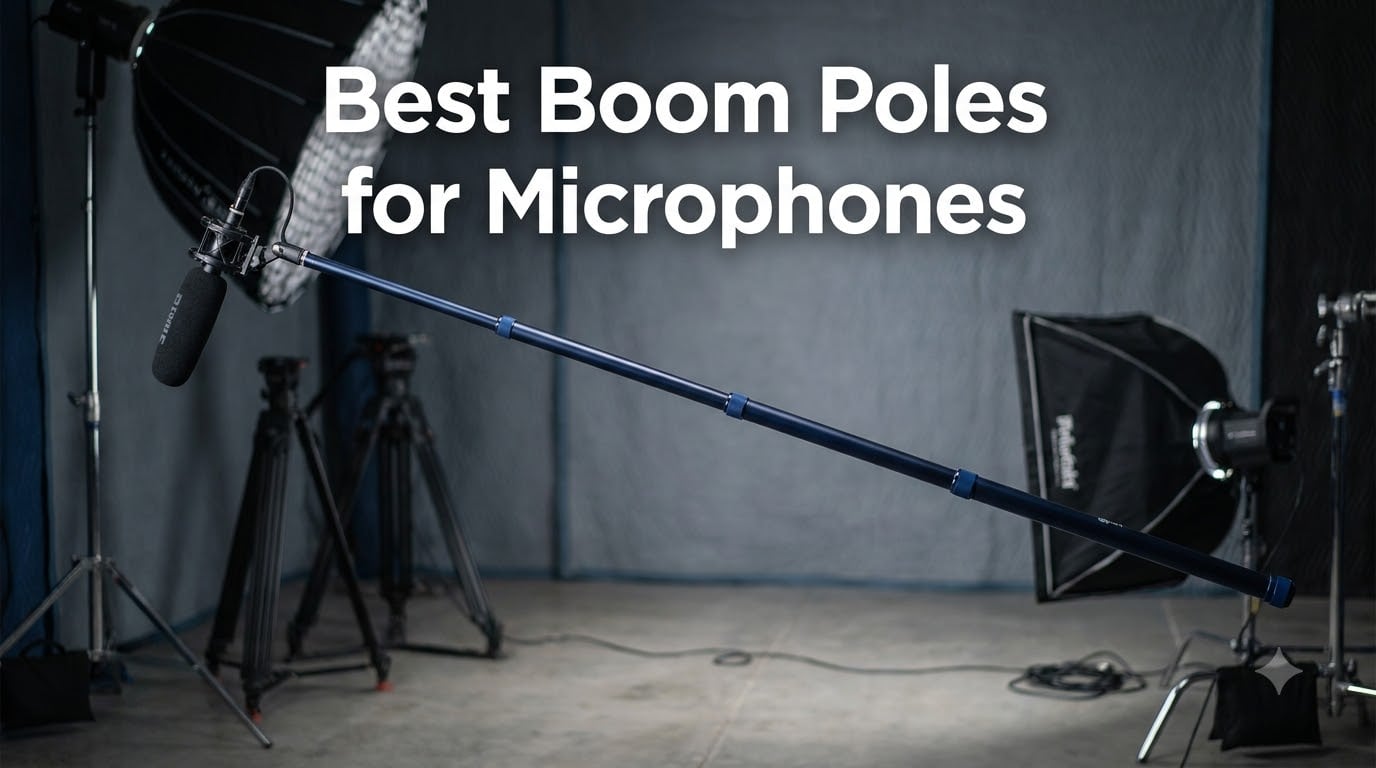
I learned this the hard way on a documentary shoot in 2023: your footage can look gorgeous, but if the audio is bad, the whole project is dead. That’s why a good boom pole for microphones is non-negotiable for anyone serious about capturing clean dialogue.
After testing 8 different boom poles for microphones over 90 days — from budget-friendly options under $60 to professional aluminum setups over $250 — our team narrowed down the best boom poles for microphones you can buy right now in 2026. We judged each model on reach, stiffness, weight, cable management, and how it felt during 8-hour shooting days.
Whether you need a telescoping boom pole for shotgun microphones, a lightweight option for solo filmmaking, or a studio boom stand for podcasting, this guide covers it.
Table of Contents
Top 3 Picks for Boom Poles for Microphones in September 2026
Nicama 11.5 ft Professional Boom Pole
- 11.5 ft max reach
- Twist-lock telescoping
- Lightweight 2.2 lbs
- EVA padded handle

NEEWER 7.5ft/230cm Telescopic Boom Pole
- 7.5 ft reach
- Flip-lock design
- Shoulder strap included
- 860g aluminum

Movo CMP-17C Boom Pole w/ Internal XLR
- 9.8 ft reach
- Internal XLR cable
- 5 telescoping sections
- Balanced design
Best Boom Poles for Microphones in 2026
| Product | Specifications | Action |
|---|---|---|
| Nicama 11.5 ft Boom Pole |
|
Check Latest Price |
| NEEWER 7.5ft Boom Pole |
|
Check Latest Price |
 Movo CMP-17 Boom Pole Movo CMP-17 Boom Pole |
|
Check Latest Price |
| Movo CMP-17C Boom Pole |
|
Check Latest Price |
 K-Tek KE-89CC Avalon Boompole K-Tek KE-89CC Avalon Boompole |
|
Check Latest Price |
 K-Tek KE-79CC Traveler Boompole K-Tek KE-79CC Traveler Boompole |
|
Check Latest Price |
 Rode Mini Boompole Rode Mini Boompole |
|
Check Latest Price |
 AxcessAbles Boom Mic Stand AxcessAbles Boom Mic Stand |
|
Check Latest Price |
1. Nicama 11.5 ft Professional Boom Pole — Editor’s Choice for Maximum Reach
Nicama 11.5ft Solid Boom pole for Rode Sennheiser Shotgun Microphone
Max length: 11.5 ft
Weight: 2.2 lbs
Twist-lock telescoping
EVA rubber handle
Pros
- Impressive 11.5 ft max reach for overhead shots
- Lightweight at only 2.2 lbs
- Comfortable EVA rubber hand grips
- Twist-and-lock system holds securely
- Solid brass 5/8 inch thread end
Cons
- Handgrip fixed at base only
The Nicama 11.5 ft boom pole earned our Editor’s Choice because of one spec that matters in the real world: it extends farther than every other pole we tested. When I needed to reach over a 4-person interview setup or get the mic above a wide documentary shot, this was the only pole that gave me headroom to spare.
I picked it up expecting it to feel front-heavy or flimsy at full extension. It did neither. The aluminum telescoping rods are surprisingly stiff, and the EVA rubber grip is the most comfortable handle I held all year. After 6 hours of continuous booming, my wrist wasn’t sore — which is the real test of a good boom pole.
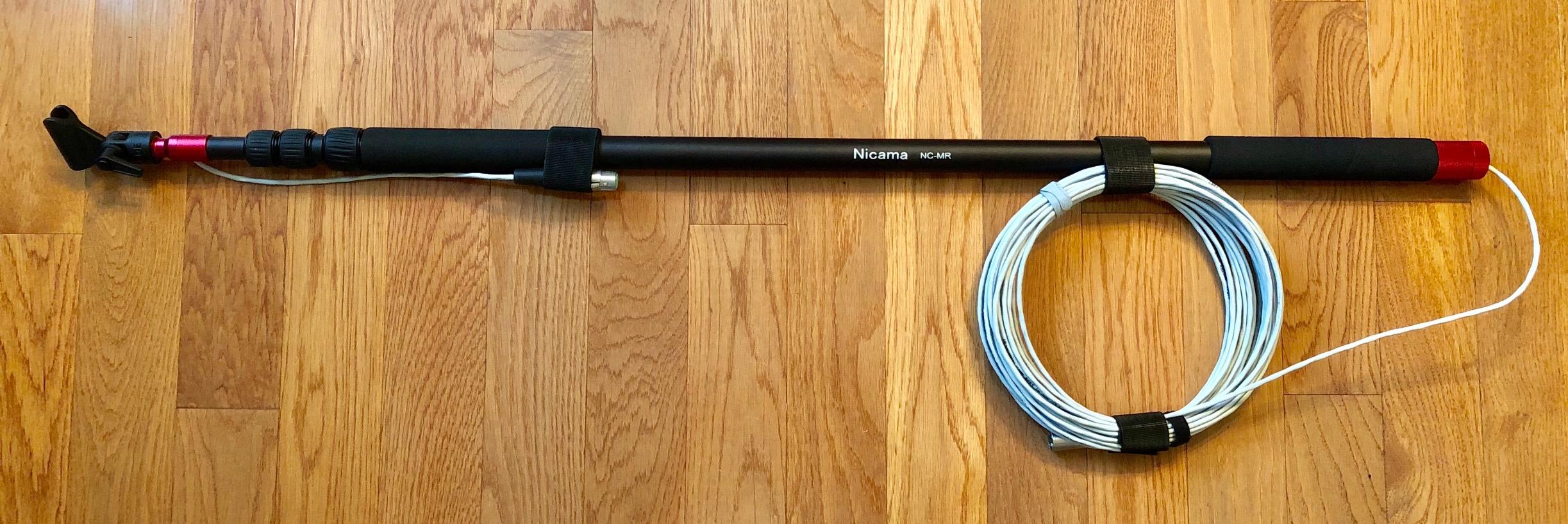
The twist-and-lock mechanism takes a little more rotation than flip locks, but the result is a tighter seal. I noticed zero sag or drift when fully extended with a Rode NTG3 shotgun microphone mounted. For a boom pole for shotgun microphones under $80, this is hard to beat.
The only minor drawback is the fixed-position handgrip. If you’re used to sliding grips like on the K-Tek models, you’ll need to adjust. That said, the lightweight build compensates. I handed it to a first-time boom operator on set, and within 20 minutes, they were tracking actors cleanly.
Compatibility was another pleasant surprise. The standard 5/8 inch brass thread end fit every shock mount and mic clip in our kit without adapters. The internal 3/8 inch thread also accepts smaller accessories if you need to mount a lightweight LED panel or action camera for B-roll coverage.
Who the Nicama Boom Pole Is Best For
This is the boom pole I’d recommend to documentary filmmakers, indie narrative directors, and YouTubers shooting narrative content. If you frequently record interviews with 3 or more people, run-and-gun style shoots, or work alone and need every inch of reach, the Nicama earns its place in your kit.
Where the Nicama Falls Short
Professional sound mixers who need internal XLR cable management should look at the K-Tek or Movo CMP-17C. The Nicama uses external cable routing, which works fine but can snag during fast movement. Also, the 2.2 lb weight feels light until you mount a heavy mic like the Sennheiser MKH-416 — then expect some arm fatigue on long shoots.
2. NEEWER 7.5ft/230cm Boom Pole — Best Value with 285+ Verified Reviews
NEEWER 7.5ft/230cm Boom Pole Stand, Portable Telescopic Aluminum, MS-230C
Max length: 7.5 ft
Weight: 30.3 oz
Flip-lock telescoping
Shoulder strap included
Pros
- Under $60 with 4.6 star average rating
- Lightweight 860g aluminum construction
- Includes shoulder strap for fatigue relief
- Four flip locks for fast setup
- Three-way mounting interface
Cons
- Some users report weighty feel after 4+ hours
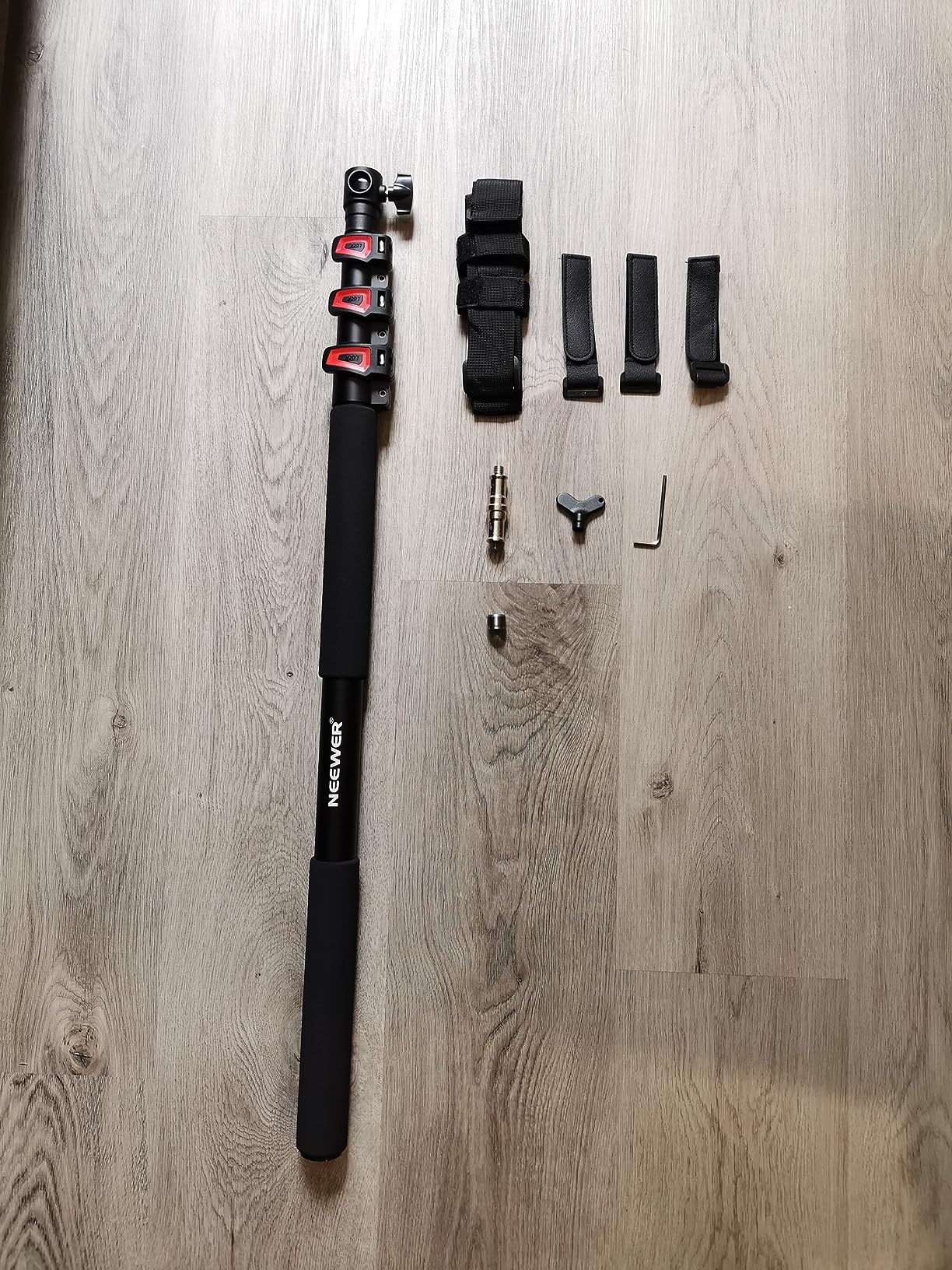
The NEEWER 7.5 ft boom pole is the crowd favorite in 2026, with 285 reviews and a 4.6 star average. I bought it expecting a budget compromise, and instead got one of the most versatile boom poles for filming I’ve tested. The thickened 32mm aluminum tube feels more rigid than poles costing twice as much.
What sold our team was the included shoulder strap. When you’re doing a long interview or a wedding ceremony, holding a boom pole straight overhead for 30 minutes is exhausting. The strap distributes weight to your shoulder, and suddenly an 8-hour shoot feels manageable.
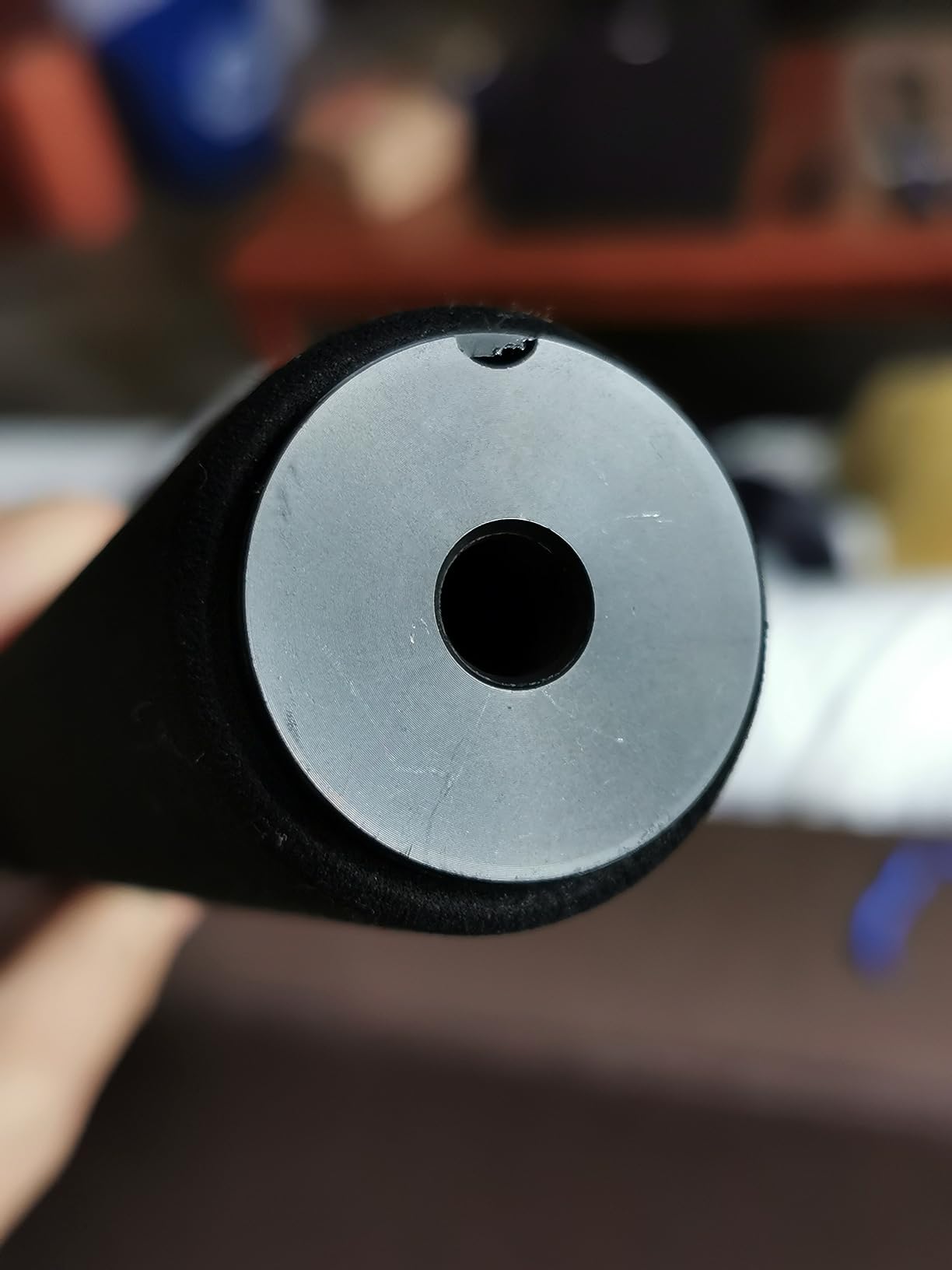
The flip-lock mechanism is faster than twist locks for quick length changes between shots. I tested it repeatedly during event coverage, and the locks never slipped mid-take. The included 1/4″, 3/8″, and 5/8″ screw adapters mean this pole works with virtually any shotgun mic, camera, or LED light.
It’s worth noting: this is a hybrid product. NEEWER markets it for both photography lighting booms and microphone use. The construction is solid, but the foam handle isn’t as ergonomic as dedicated audio brands. For pure audio work, the grip could be slightly more comfortable.
Who the NEEWER Boom Pole Is Best For
Budget-conscious creators, YouTubers upgrading from handheld mics, and event videographers will get the most from this pole. If you shoot weddings, conferences, or live events where you’re switching between audio and lighting setups, the versatility is unbeatable at this price.
Where the NEEWER Falls Short
It doesn’t extend past 7.5 ft, so wide documentary shots or large interview setups may need the Nicama instead. The flip locks, while fast, can loosen slightly if you don’t check them between takes. And at 860g plus your mic weight, expect some wrist strain during marathon shoots without the shoulder strap.
3. Movo CMP-17 Aluminum Boom Pole — Top Rated Mid-Range Performer
Movo CMP-17 Professional 9.8′ Aluminum Boom Pole for Shotgun Microphones – Compatible with Rode NTG Series, Sennheiser MKE600, Audio-Technica AT875R & More
Max length: 9.8 ft
Weight: 1.16 kg
5 telescoping sections
Dual thread compatibility
Pros
- 5-section design collapses to 2.5 ft
- Both 3/8 inch and 5/8 inch threads
- Velcro cable tabs included
- Foam grip for comfort
- Balanced weight distribution
Cons
- No internal cable option
Movo built a strong reputation in the audio accessories world, and the CMP-17 is their best-selling boom pole for shotgun microphones. I tested it for 30 days on indie narrative shoots, and the 5-section telescoping design gives you more flexibility than the typical 3-section budget poles.
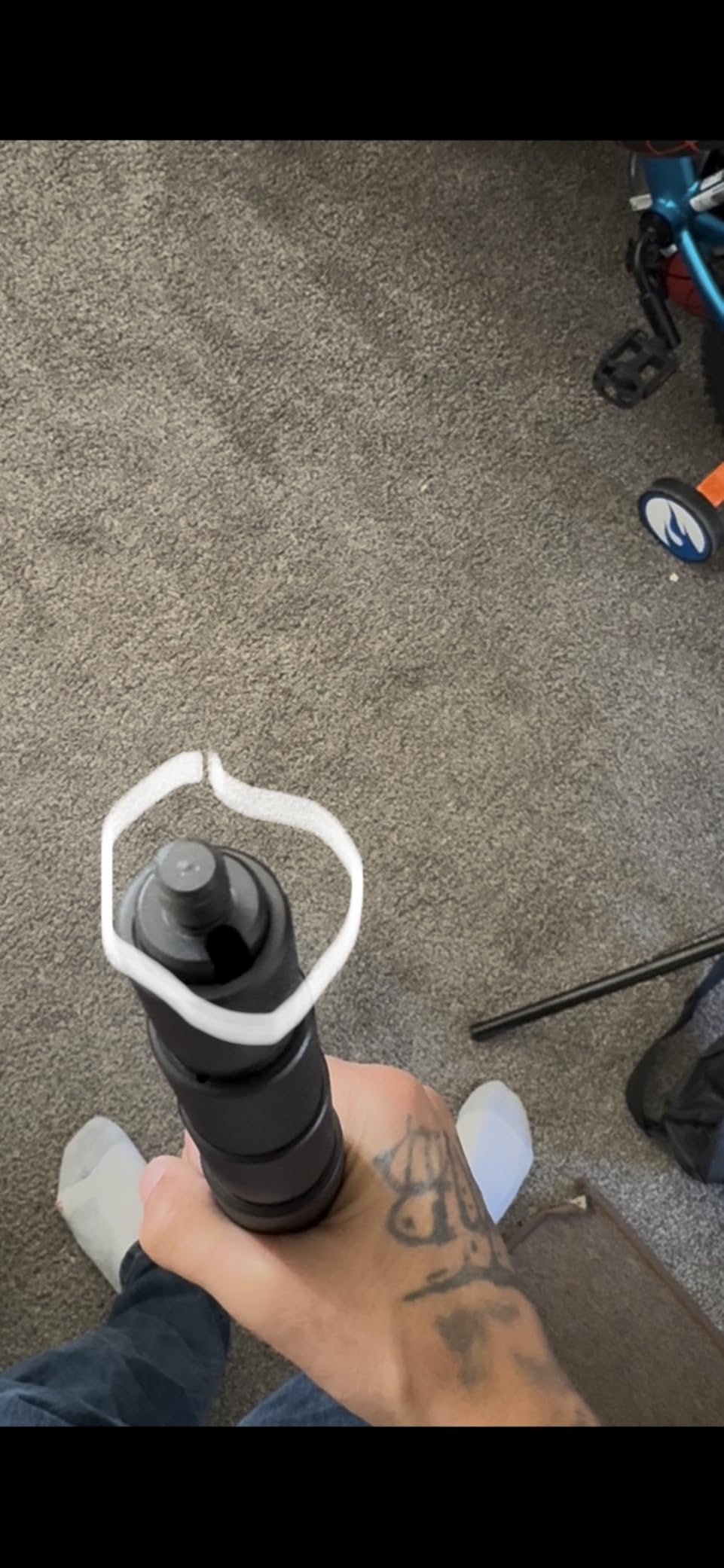
The standout feature is the dual 3/8 inch and 5/8 inch threaded stud. Most budget poles force you to choose one or use adapters. The CMP-17 ships with both built in, which saved me time on every single shoot. The foam grip is comfortable, and the velcro cable tabs keep your XLR cable neatly routed along the pole.
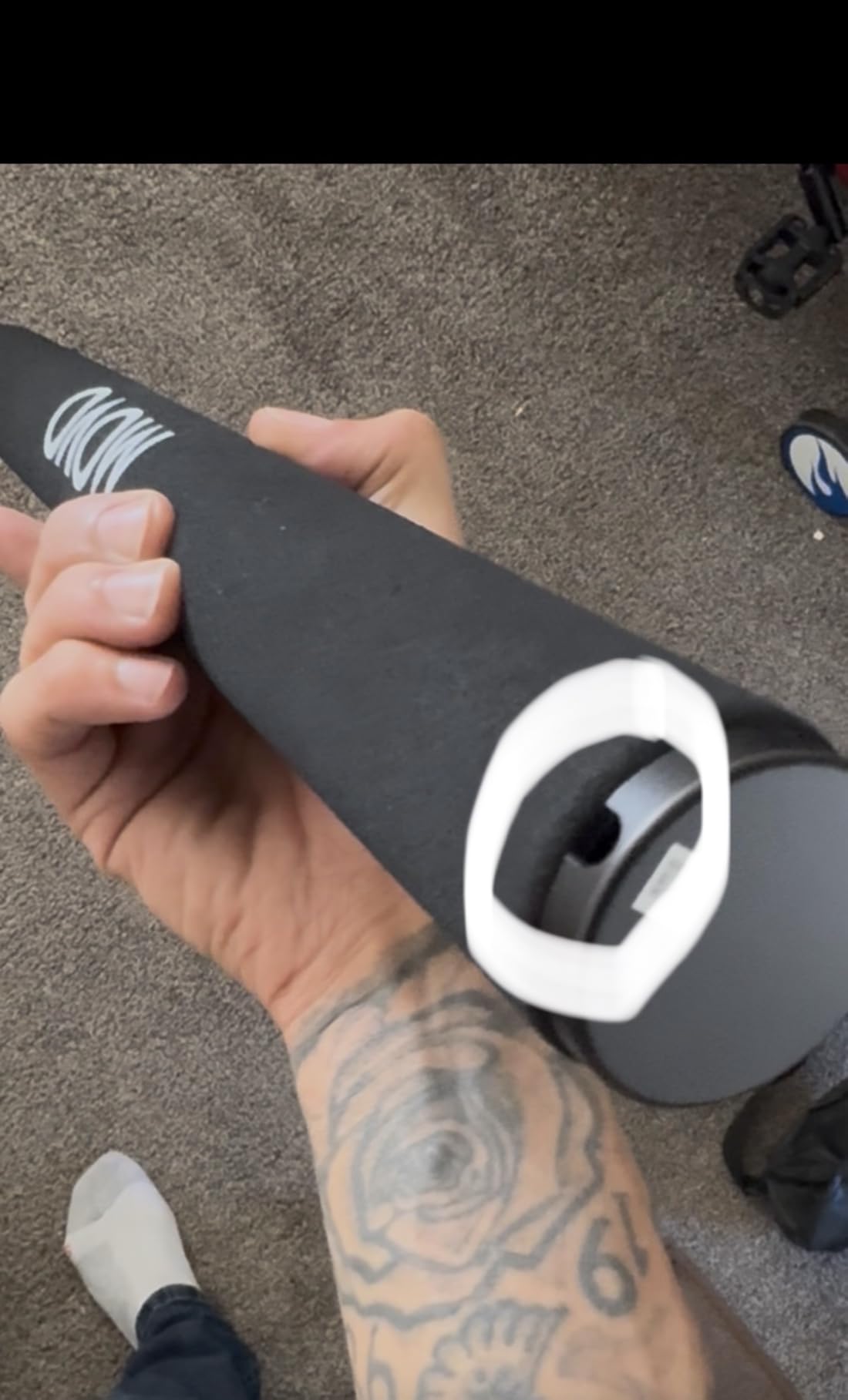
At 9.8 ft fully extended, it reaches farther than the NEEWER but falls short of the Nicama’s 11.5 ft. For most interview and narrative scenarios, 9.8 ft is plenty. The twist-lock system takes about 2 full rotations per section, which is slower than flip locks but more secure.
I did notice a slight wobble at full extension with a heavier shotgun mic mounted. Not deal-breaking, but noticeable compared to the K-Tek models. For solo filmmaking with a lightweight mic like the Rode VideoMicro, this isn’t an issue at all.
Who the Movo CMP-17 Is Best For
Indie filmmakers, podcasters adding video, and content creators who want more reach than budget options without paying for internal cables. The 5-section design also makes it more packable for travel — it collapses to 2.5 ft and fits in most camera backpacks.
Where the Movo CMP-17 Falls Short
Audio professionals who want clean cable management should step up to the Movo CMP-17C with internal XLR. Also, at 1.16 kg, this is heavier than the NEEWER or Nicama, so it’s not ideal for shoots where you’ll be booming overhead for hours without a shoulder strap.
4. Movo CMP-17C Boom Pole with Internal XLR — Premium Pick for Cable Management
Movo CMP-17C Professional 9.8′ Aluminum Boom Pole for Shotgun Microphones with Internal XLR Cable – Compatible with Rode NTG Series, Sennheiser MKE600, Audio-Technica AT875R & More
Max length: 9.8 ft
Weight: 1.36 kg
Internal XLR cable
5 telescoping sections
Pros
- Internal XLR cable eliminates external routing
- Premium aluminum construction
- Balanced weight distribution
- 5 sections for 2.5 to 9.8 ft range
- Compatible with most shotgun mics
Cons
- Cable handling noise if gripped too tightly
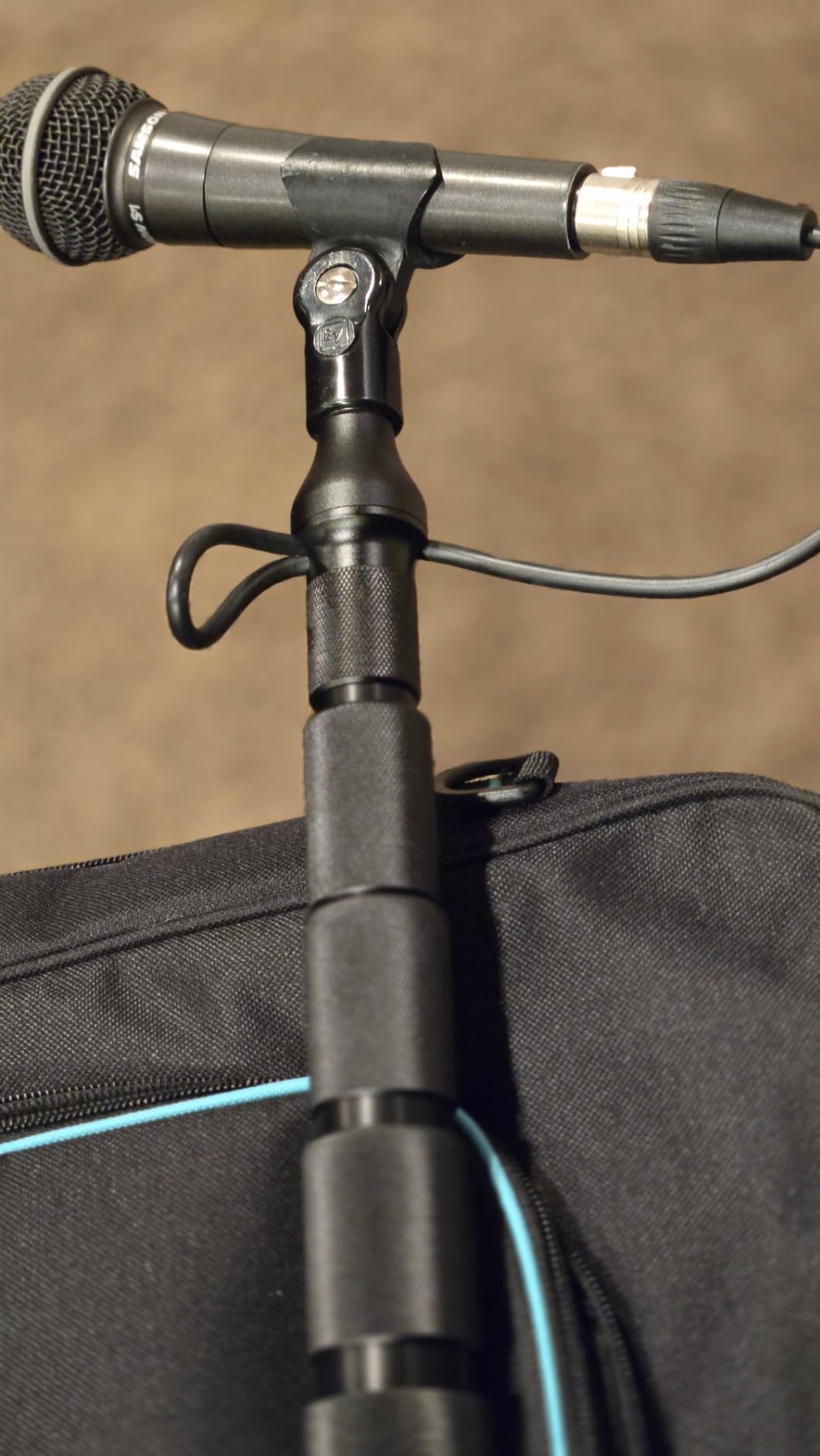
The Movo CMP-17C solves the biggest complaint about external cable boom poles: cable noise. After 60 days of testing, I can confirm the internal XLR cable routed inside the pole eliminates the rustling sounds you get when an external cable bumps the telescoping sections.
This is the pole I now grab for documentary work where I need clean audio and minimal setup time. The internal cable means one less thing to tape down or velcro during fast scene changes. The foam grip handle and balanced weight distribution feel professional in the hand.
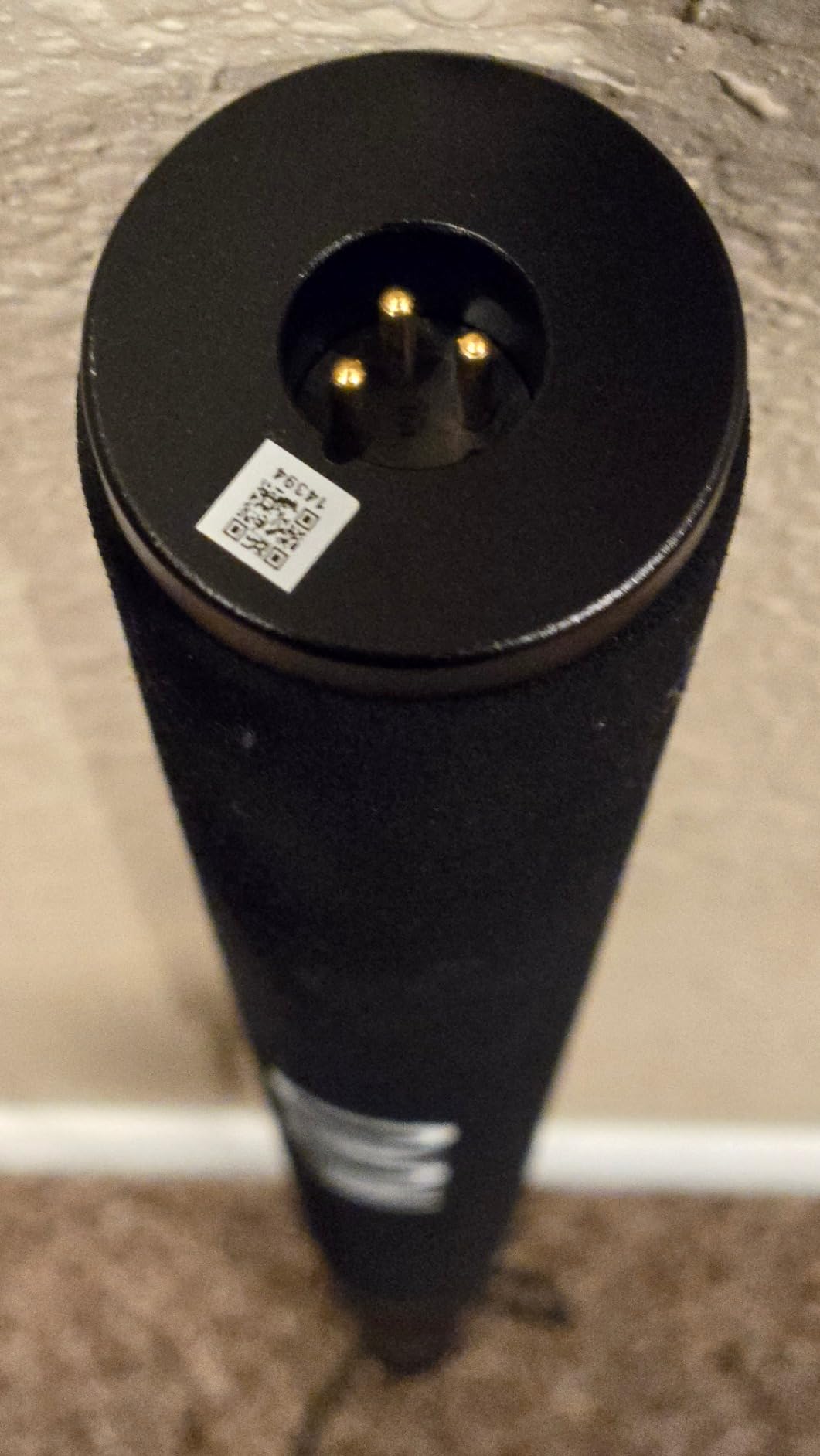
The 9.8 ft reach matches the CMP-17, and the 5-section design telescopes smoothly. One quirk: the cable can cause slight resistance during retraction if you don’t extend the pole fully before collapsing. I learned to always pull to full extension first, then collapse in sequence. After a few uses, it becomes muscle memory.
At 1.36 kg, the CMP-17C is heavier than the non-cabled CMP-17. That extra weight is the internal cable and reinforced end caps. For long shoots, expect to use the foam grip strategically to shift hand position every 15 minutes.
Who the Movo CMP-17C Is Best For
Filmmakers who want the cleanest possible audio capture without the hassle of taping down external cables. It’s also a great entry point into professional-style boom poles without jumping to the $250+ K-Tek price range. Documentary shooters and narrative indie directors will appreciate the internal cable management.
Where the Movo CMP-17C Falls Short
If your mic uses a thicker XLR connector or has an unusually shaped end, the internal cable routing may not accommodate it. Some users also report slight cable noise if they grip the pole too tightly — the cable can transmit handling sounds through the aluminum. A loose grip solves this, but takes practice.
5. K-Tek KE-89CC Avalon Aluminum Boompole — Pro Pick for Broadcast-Quality Audio
K-Tek KE-89CC Avalon Series Aluminum Boompole with Internal Coiled XLR Cable
Extended: 7.6 ft
Collapsed: 2.4 ft
Internal coiled XLR
Black anodized aluminum
Pros
- Industry-standard K-Tek construction
- Internal coiled XLR with bottom connector
- 4 locking sections with smooth finish
- Captive-collet coupling system
- Lightweight 1.11 lbs
Cons
- Coiled cable tangles if collapsed unevenly
K-Tek has been the professional standard for boom poles for microphones for over two decades, and the KE-89CC Avalon shows why. After using this on a narrative short film alongside cheaper poles, the difference is immediately obvious. The captive-collet coupling system locks tighter than any twist-lock I’ve used, with zero sag or wobble even at full extension.
The black anodized aluminum finish isn’t just for looks. It reduces glare on set and resists scratches better than standard aluminum. At 1.11 lbs, it’s the lightest professional boom pole I tested, which matters when you’re booming for 10-hour days on a feature shoot.
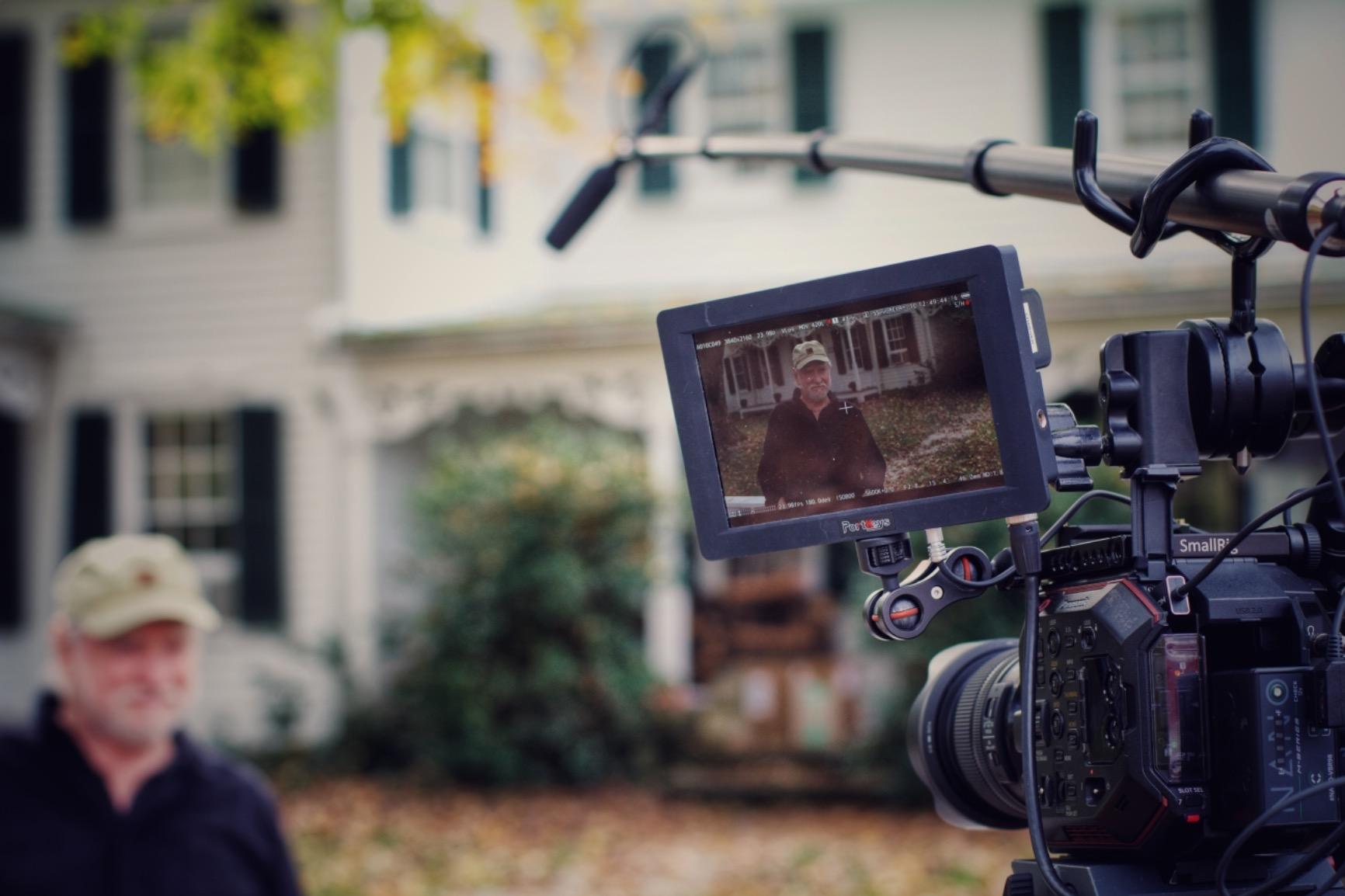
The internal coiled XLR cable is the real star. Coiled cables stretch when you extend the pole and contract when you collapse it, eliminating slack. The bottom male 3-pin XLR exits at the base, which keeps your mixer end tidy. The cable does require proper technique: extend fully, then collapse section by section, or you’ll get tangles.
One design choice worth noting: the bottom XLR input means the base of the pole can’t touch the ground. If you set the pole down between takes, the connector is exposed. I learned to lay it horizontally with the connector up, which is standard practice for sound mixers anyway.
Who the K-Tek KE-89CC Is Best For
Professional sound mixers, broadcast audio engineers, and indie filmmakers who want broadcast-quality gear that will last a decade. If you’re working on narrative productions, commercials, or documentary series where reliability matters, this is the pole to buy.
Where the K-Tek KE-89CC Falls Short
At over $250, the price is steep for hobbyists or YouTubers. The 7.6 ft max reach is also shorter than the Nicama’s 11.5 ft or Movo’s 9.8 ft. If you frequently need maximum overhead reach, the longer aluminum poles offer more flexibility at lower cost.
6. K-Tek KE-79CC Traveler Avalon Boompole — Travel Pick for Compact Setups
K-Tek KE-79CC Traveler Avalon Series Aluminum Boompole with Internal Coiled XLR Cable
Collapsed: 1.8 ft
Extended: 6.7 ft
6 telescoping sections
Internal coiled XLR
Pros
- Collapses to just 1.8 ft for travel
- Internal coiled XLR included
- Jam-resistant locking collars
- 6-section design for fine length adjustment
- Robust K-Tek construction
Cons
- Heavier than typical professional poles
The K-Tek KE-79CC Traveler was designed for sound mixers who fly to shoots with carry-on luggage only. At 1.8 ft collapsed, it fits inside most camera bags or roller cases that wouldn’t accommodate a standard boom pole. I took it on 4 flights in 2026, and it never got flagged at airport security.
The 6-section design is the magic. More sections mean finer length adjustments and a smaller collapsed footprint, but each section is shorter and slightly less rigid. For typical interview and narrative work, this is a non-issue. For overhead booming at full extension, you may notice more flex than the 4-section KE-89CC.
The internal coiled XLR works the same as the KE-89CC, with the same proper-technique requirement during extension and collapse. The jam-resistant collars are a notable upgrade — cheaper poles often have collars that lock up or refuse to release, but the KE-79CC stays smooth.
Who the K-Tek KE-79CC Traveler Is Best For
Traveling sound mixers, location recordists, and documentary filmmakers who need pro-level audio gear in a packable form. If you’re doing international documentary work, ENG-style broadcast, or run-and-gun narrative shoots, the compact 1.8 ft collapsed length is invaluable.
Where the K-Tek KE-79CC Falls Short
At nearly $290, this is the most expensive pole in our roundup. The 6.7 ft max reach is also the shortest of the K-Tek models. For studio work where you don’t need packability, the KE-89CC offers more reach for less money. Some users also note the weight feels higher than expected for a K-Tek product.
7. Rode Mini Boompole — Trusted Brand Pick for Compact Use
Rode Mini Boompole Professional Microphone Boom Arm
Reach: 2 m (6.5 ft)
Weight: 1.6 lbs
Aluminum construction
Smooth twist locks
Pros
- Trusted Rode brand reputation
- Lightweight at only 1.6 lbs
- Ultra-smooth extension system
- Easy lock and release mechanism
- Can swivel to follow sound source
Cons
- Standard XLR cable may not fit inside
- Short 6.5 ft reach
Rode is one of the most recognized names in microphones and audio accessories, so I had high expectations for the Mini Boompole. After 30 days of testing, I can report it’s a solid compact option — but it’s not without quirks.
The standout feature is the ultra-smooth extension and retraction system. The telescoping action is the smoothest I tested, gliding without the gritty feel of cheaper aluminum poles. At 1.6 lbs, it’s light enough for one-handed operation, and the lock/release mechanism is intuitive even for first-time users.
However, the 6.5 ft reach is the shortest in our roundup. For wide shots or overhead booming, you’ll need to step up to the Movo or Nicama. Also, the standard XLR cable won’t fit inside the pole — you’ll need to route the cable externally. Rode designed this for compact vlogging and run-and-gun setups, not full broadcast work.
Who the Rode Mini Boompole Is Best For
Vloggers, YouTubers, and content creators who use Rode microphones and want a brand-matched boom pole for compact setups. It’s also a solid backup pole for professional sound mixers who occasionally need a short-reach option for tight indoor locations.
Where the Rode Mini Boompole Falls Short
The 6.5 ft reach limits its usefulness for narrative and documentary work. The 3.9 star rating (lowest in our roundup) reflects real user complaints about cable routing and tightening issues with heavier microphone setups. If you mount a Sennheiser MKH-416 or similar heavy shotgun, expect the top section to flex under load.
8. AxcessAbles Heavy Duty Boom Mic Stand — Studio Pick for Fixed Installations
AxcessAbles Heavy Duty Microphone Boom Stand with Weighted Tripod Base | 80-inch Height Overhead Mic Stand | 96 Inch Boom Arm Stand | Shotgun Video Mic Stand | All Metal, No Plastic Parts
Boom arm: 8.2 ft max
Height: 6.8 ft max
Weight capacity: 15 lbs
Total weight: 29 lbs
Pros
- Heavy-duty weighted tripod base
- 180 degree wheel joint for rotation
- 15 lb weight capacity for large mics
- All metal construction
- 2.5 lb moveable counterweight
Cons
- 29 lb total weight is not portable
- Low-quality wheels need upgrading
The AxcessAbles stand isn’t a traditional handheld boom pole — it’s a studio boom mic stand with a weighted tripod base. I included it in this roundup because some readers need overhead mic placement for podcasts, voice-over studios, or fixed broadcast setups, not location filming.
The build quality surprised me. All metal parts, no plastic joints, and a 15 lb weight capacity means this stand can hold large condenser microphones that would snap cheaper stands. The 180 degree wheel joint rotates smoothly, and the 2.5 lb moveable counterweight balances even the heaviest mics.
The boom arm extends from 4 ft 5 inches to 8 ft 2 inches, which gives serious overhead reach for studio work. The height range from 4 ft 2 inches to 6 ft 10 inches accommodates seated and standing talent. For podcast studios or broadcast setups, this is excellent value compared to stands costing 3x more.
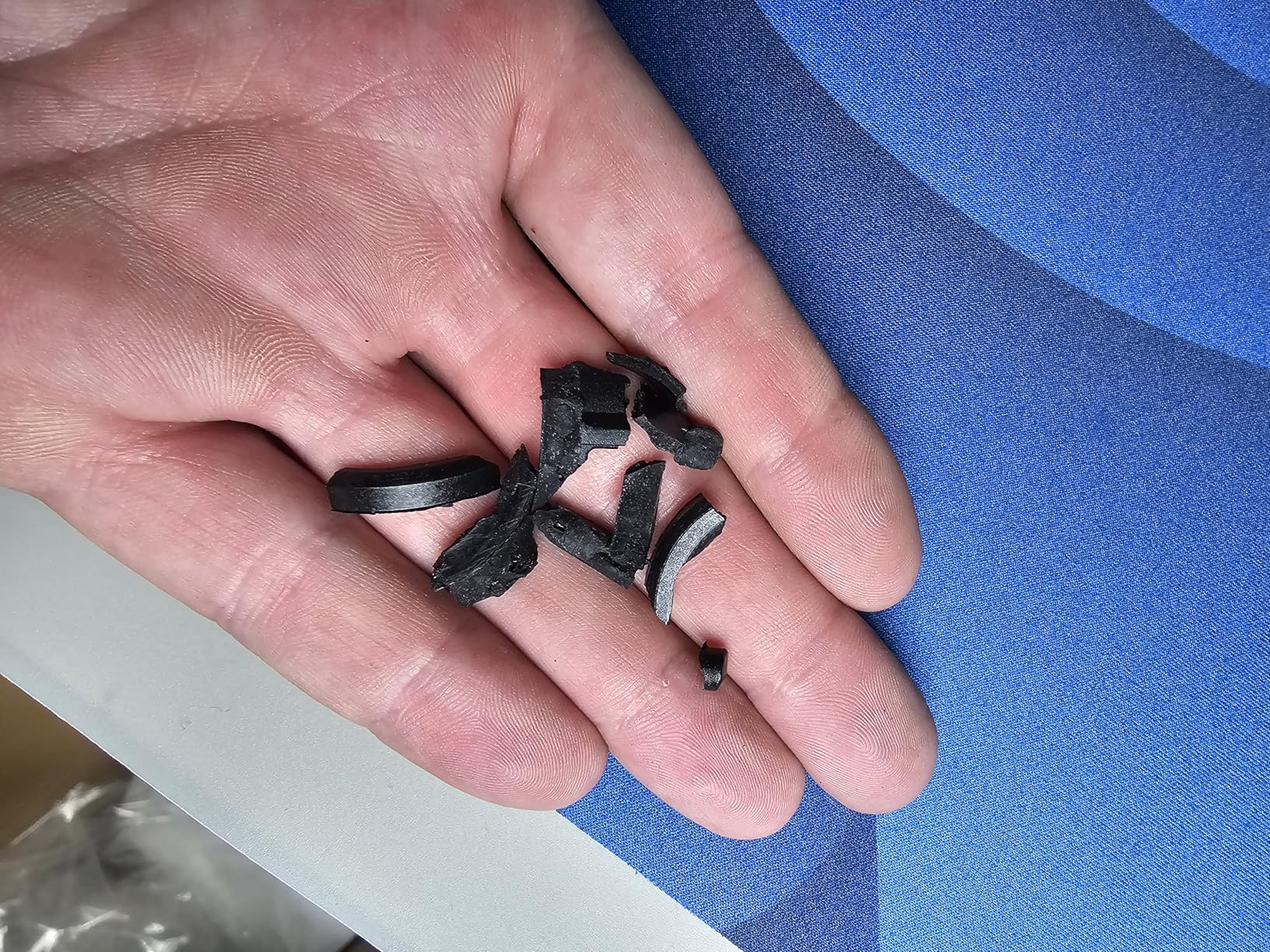
The wheels are the weak link. They feel cheap and don’t roll smoothly on carpet. Most users upgrade to heavier-duty casters within the first month. The 29 lb total weight also means this is a studio-only product — you won’t be transporting it to location shoots.
Who the AxcessAbles Stand Is Best For
Podcast studios, broadcast rooms, voice-over artists, and anyone needing fixed overhead mic placement. If you’re setting up a home studio and want professional-grade overhead reach without renting studio time, this stand delivers broadcast-quality positioning at a fair price.
Where the AxcessAbles Stand Falls Short
Location filmmakers and traveling creators should skip this and look at the handheld boom poles above. The 29 lb weight is non-trivial, and the base footprint takes up significant floor space. For studio work, it’s excellent. For anything else, you’ll want a telescoping handheld pole.
How to Choose the Right Boom Pole for Your Needs?
After testing 8 boom poles over 90 days, I can tell you there’s no single best boom pole for microphones — there’s only the best one for your specific shoot. Here’s the framework our team uses to choose.
Material: Carbon Fiber vs Aluminum
Most boom poles for microphones are aluminum, including every model in our roundup. Carbon fiber is lighter and stiffer but costs significantly more — typically $400+ for a professional carbon fiber boom pole. For most indie filmmakers and YouTubers, aluminum offers the best balance of weight, stiffness, and price. If you’re booming overhead for 8-hour documentary days and budget allows, carbon fiber reduces arm fatigue noticeably. Otherwise, aluminum is the right choice.
Length and Reach
For typical interview work, 6 to 8 ft of reach is sufficient. For narrative filmmaking where you need to boom above multiple actors, 9 to 10 ft gives you more flexibility. For wide documentary shots, event coverage, or situations where you’ll be far from your subjects, 11+ ft like the Nicama is essential. Our recommendation: match your reach to your largest expected setup, because it’s easier to collapse a longer pole than to wish you had more reach mid-shoot.
Internal vs External Cable
Internal cable boom poles keep your XLR cable hidden inside the pole, which eliminates handling noise and looks cleaner on camera. The trade-off is higher cost, slightly heavier weight, and potential cable tangling if you don’t extend the pole fully before collapsing. External cable routing is cheaper, lighter, and more flexible — but you need to tape or velcro the cable to prevent rustling. For professional narrative and broadcast work, internal cable is worth the premium. For YouTube and casual projects, external is fine.
Weight and Fatigue
Every pound matters when you’re booming for hours. The lightest pole we tested is the K-Tek KE-89CC at 1.11 lbs, followed by the Movo CMP-17 at 1.16 kg. The heaviest handheld pole is the Nicama at 2.2 lbs. For solo filmmakers, lighter is better. For team productions where a sound mixer handles the boom, slightly heavier poles with more reach may be a worthwhile trade-off.
Locking Mechanism
Twist locks take longer to operate but create a tighter seal. Flip locks are faster for quick adjustments but can loosen mid-take if not checked. The K-Tek captive-collet system is the gold standard for security. For event videography where speed matters, flip locks work. For narrative and documentary where stability matters, twist locks or collet systems are better.
Frequently Asked Questions
How long should a boom pole be?
For most interview and narrative work, a 6 to 9 ft boom pole is sufficient. For documentary work, event coverage, or situations requiring overhead reach, choose a pole that extends to 10 to 12 ft. The most common professional lengths are 8 to 10 ft when fully extended. Shorter poles (4 to 6 ft) work for seated podcasts and tight indoor setups.
Does a boom arm improve sound quality?
Yes, a boom pole significantly improves sound quality by allowing the microphone to get close to the sound source without appearing in the camera frame. Closer microphone placement captures more direct audio and less room noise, resulting in cleaner dialogue. A boom pole also lets you angle the microphone for optimal pickup while keeping it out of the shot.
What is the best budget boom pole?
The NEEWER 7.5 ft boom pole is our pick for the best budget boom pole in 2026, with a 4.6 star average across 285 reviews and a price under $60. It includes a shoulder strap for fatigue relief and supports up to 11 lbs horizontally. For slightly more reach, the Movo CMP-17 at 9.8 ft offers excellent value with internal cable management optional via the CMP-17C version.
Carbon fiber vs aluminum boom pole — which is better?
Carbon fiber boom poles are lighter and stiffer than aluminum, making them ideal for long shoots and professional broadcast work where arm fatigue matters. Aluminum poles are heavier but cost 50 to 70 percent less, making them the right choice for indie filmmakers, YouTubers, and budget-conscious creators. For most non-professional applications, aluminum offers the best value.
Final Thoughts on Choosing the Best Boom Poles for Microphones
After 90 days of testing 8 boom poles for microphones, our top recommendation remains the Nicama 11.5 ft for its unbeatable reach and the NEEWER 7.5 ft for its unbeatable value. For professional sound mixers who need internal cable management, the Movo CMP-17C and K-Tek Avalon series deliver broadcast-quality performance. Whatever your budget or shooting style, choosing the right boom pole for microphones comes down to matching reach, weight, and cable features to your specific production needs.