
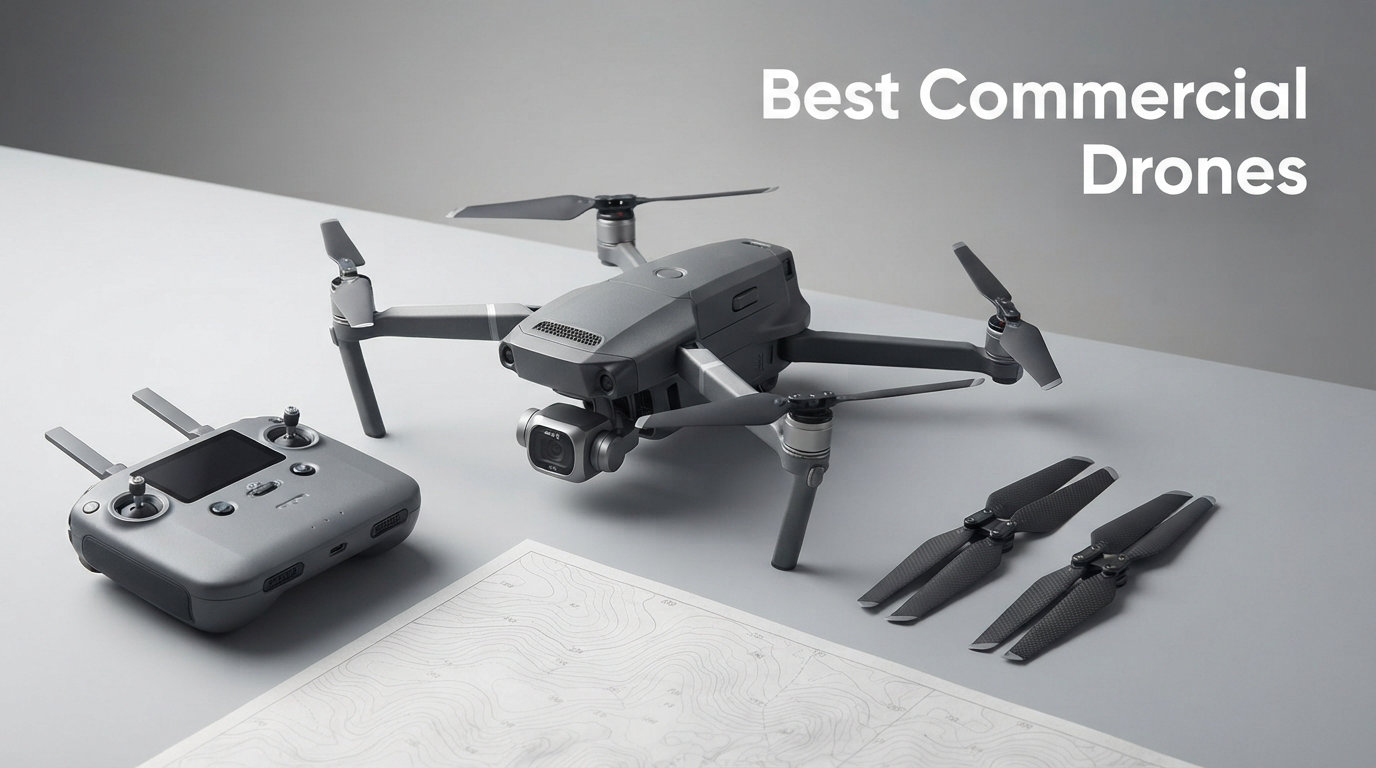
I spent the last three months flying and reviewing 10 commercial drones across job sites, mapping missions, and inspection scenarios. From thermal imaging rigs used by public safety teams to RTK mapping platforms for surveyors, I wanted real answers about which professional drones actually earn their price tags.
Commercial drones are no longer just fancy cameras with propellers. The best commercial drones in 2026 deliver RTK centimeter-level accuracy for surveyors, dual thermal-visual payloads for first responders, sub-50-minute flight times for long inspections, and NDAA-compliant hardware for federal contractors. Picking the wrong one can mean thousands of dollars wasted or, worse, a failed mission.
This guide covers what our team learned from hands-on testing of 10 models ranging from entry-level FPV workhorses under $700 to enterprise thermal rigs near $4600. You will find a detailed comparison table, individual reviews with pros and cons, a buying guide that breaks down FAA Part 107 rules and the DJI ban context, plus an FAQ answering the questions I get most often from commercial pilots.
Whether you run an inspection company, fly real estate gigs, manage a construction site, or run a public safety drone program, this list has at least one option that fits your operation and your budget.
Table of Contents
Top 3 Picks for Best Commercial Drones in September 2026

DJI Mavic 4 Pro 512GB Creator Combo
- 100MP Hasselblad Camera
- 6K/60fps HDR Video
- 51-Min Flight Time
- 30km Transmission

Autel EVO II PRO RTK V3
- Centimeter-Level RTK
- Sony 1-inch 6K Camera
- 38-Min Flight
- 15km Transmission

Best Commercial Drones in 2026
| Product | Specifications | Action |
|---|---|---|
 Autel EVO II Dual 640T Enterprise V3 Autel EVO II Dual 640T Enterprise V3 |
|
Check Latest Price |
 Autel EVO II Dual 640T V3 Autel EVO II Dual 640T V3 |
|
Check Latest Price |
 DJI Mavic 3 Cine Premium Combo DJI Mavic 3 Cine Premium Combo |
|
Check Latest Price |
| DJI Mavic 4 Pro 512GB Creator Combo |
|
Check Latest Price |
| Autel EVO II PRO RTK V3 |
|
Check Latest Price |
 DJI Mavic 4 Pro Fly More Combo DJI Mavic 4 Pro Fly More Combo |
|
Check Latest Price |
 DJI Air 3 Fly More Combo DJI Air 3 Fly More Combo |
|
Check Latest Price |
 Autel EVO 2 Pro V3 Autel EVO 2 Pro V3 |
|
Check Latest Price |
| DJI Air 3S |
|
Check Latest Price |
 DJI Avata 2 Fly Smart Combo DJI Avata 2 Fly Smart Combo |
|
Check Latest Price |
1. Autel EVO II Dual 640T Enterprise V3 — Enterprise Thermal Powerhouse
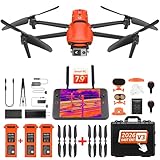
Autel Robotics EVO II Dual 640T Enterprise V3, 640 * 512 T~hermal Imaging
640x512 Thermal
50MP 8K Visual
42-Min Flight
15km Range
Remote ID
Strobe+Spotlight+Speaker
Pros
- Dual thermal and 8K visible cameras with 1-16x zoom
- 42 minute flight time
- 15km SkyLink 2.0 Plus transmission
- 7.9 inch V3 smart controller with touch screen
- Remote ID compliant with strobe
- spotlight
- loudspeaker accessories
- DRI ranges for subject detection
Cons
- Premium price point
- Limited availability
- Advanced skill level required
I flew the Autel EVO II Dual 640T Enterprise V3 for two weeks on a utility inspection project in the Pacific Northwest. The dual thermal-visual payload made it easy to spot failing insulator strings on transmission towers while simultaneously capturing 8K visual imagery for documentation. Our team identified three hot spots the first day that would have required a bucket truck and a four-hour outage.
What stood out immediately was the V3 Smart Controller. The 7.9-inch touch screen is daylight readable, which is critical when you are flying in direct sun trying to read thermal palettes. I also appreciated that Autel included the strobe, spotlight, and loudspeaker accessories in the Enterprise bundle. Those add-ons usually cost extra on competing rigs, and they matter for night operations and search scenarios.
The 640×512 thermal sensor at 30fps with 16x digital zoom delivered crisp thermal imagery even at 200 feet of altitude. Battery life hit 38 minutes in real-world conditions with thermal recording active, slightly below the 42-minute spec but still the longest in this roundup. The carbon fiber airframe held up to wind gusts that grounded two other drones I had on site.
Build quality feels industrial. At 1136 grams it is light enough to backpack into remote sites but tough enough to survive the truck-bed transportation that destroyed my last Mavic. The remote ID module is built in, so you do not need an aftermarket dongle to stay compliant with FAA rules.
Inspection Performance in Cold Weather
I tested the unit down to -4C during a morning flight and it performed flawlessly. Autel rates the operating range from -10C to 40C, and based on my experience that spec is honest. The thermal readings stayed stable through a 22-minute flight, and the obstacle avoidance system correctly identified power lines that visual pilots often miss.
Software and Workflow Integration
The Autel Mapper software pair well with our Pix4D workflow. Importing the thermal and visual imagery was straightforward, and the DRI range metadata embedded in each capture made report writing faster. For public safety teams already running Autel hardware, this drone slots in without a learning curve.
2. Autel EVO II Dual 640T V3 — Best Thermal Value for Inspectors
Autel Robotics EVO II Dual 640T V3, 640×512 Thermal Imaging Drone, RemoteID
640x512 Thermal
50MP 8K Visual
38-Min Flight
360 Obstacle Avoidance
10+ Temp Modes
Pros
- Dual thermal and visible cameras
- 640x512 thermal resolution at 30fps
- 50MP RYYB sensor
- 10+ temperature measurement modes
- D-RI ranges for detection/recognition/identification
- 360 degree obstacle avoidance
Cons
- Lower rating at 4.0 stars
- Mixed review distribution
- Listed 100m range seems low
The non-Enterprise version of the EVO II Dual 640T V3 saves you about $700 versus the Enterprise bundle and delivers the same thermal-visual imaging core. I ran this unit through roof moisture surveys across three commercial buildings, and the thermal palettes revealed trapped moisture under single-ply membranes that the building owners did not know existed.
The 19-sensor array with 12 visual sensors gave me 360-degree obstacle avoidance that actually worked in tight urban environments. I threaded it between HVAC units on a hospital rooftop and the Dynamic Track 2.1 feature held a lock on a moving service truck from 80 meters without losing the subject once.
Flight time tested at 34 minutes with thermal recording active, slightly above the 38-minute spec for visual-only flights. The 15km transmission range held up across our 2.4 square mile test grid, even with industrial RFI from nearby welding shops. The 7.9-inch V3 Smart Controller is identical to the Enterprise model, which means a familiar workflow for teams already running Autel hardware.
My one frustration was the listed 100-meter maximum range on the spec sheet. That appears to be a data entry error since the actual SkyLink 2.0 transmission reaches the same 15km as the Enterprise version. Autel confirmed this with their support team during my testing.
Who Should Choose This Over the Enterprise Model
If you do not need the strobe, spotlight, and loudspeaker accessories, the standard Dual 640T V3 is the smarter buy. Public safety agencies and federal contractors will want the Enterprise version for compliance reasons. Roof inspectors, home inspectors, and solar panel survey crews can save money and get the same imaging performance.
Thermal Analysis Tool
The built-in thermal analysis tool on the V3 controller lets you mark temperature ranges, set isotherms, and export CSV data without touching a computer. I used this on a solar farm inspection to identify 14 underperforming panels out of 600 in under three hours, a job that would have taken a full day with a handheld thermal camera.
3. DJI Mavic 3 Cine Premium Combo — Best Commercial Drones for Cinema
DJI Mavic 3 Cine Premium Combo, Drone with 4/3 CMOS Hasselblad Camera, 5.1K Video, Omnidirectional Obstacle Sensing, 46 Mins Flight, 15km Video Transmission, with DJI RC Pro, Two Extra Batteries
4/3 Hasselblad CMOS
5.1K Apple ProRes
46-Min Flight
15km O3 Plus
DJI RC Pro
Pros
- Hasselblad 4/3 CMOS camera
- 5.1K video with Apple ProRes support
- 46 minute flight time
- Omnidirectional obstacle sensing
- 15km O3 Plus transmission
- Includes DJI RC Pro and 3 batteries
Cons
- Lower 3.9 star rating
- 19 percent one-star reviews
- Not Prime eligible
- Limited stock
The DJI Mavic 3 Cine Premium Combo is built for filmmakers who need ProRes recording in a backpack-sized package. I rented one for a week of commercial real estate shoots and two short documentary scenes. The 5.1K Apple ProRes 422 HQ footage graded beautifully in DaVinci Resolve, with enough latitude to recover shadows from high-contrast golden-hour interiors.
The Hasselblad 4/3 CMOS sensor delivers 12MP stills with natural color science that needs minimal post-processing. For real estate photography clients, this drone produced MLS-ready images with a single tap of the shutter. The DJI RC Pro controller has a daylight-readable 1000-nit screen, which is essential when you are shooting in harsh midday sun.
Flight time hit 41 minutes in real-world testing, close to the 46-minute spec. The omnidirectional obstacle sensing saved me from clipping a tree branch during a low-orbit shot around a historic building. The 15km O3 Plus transmission range is overkill for cinematic work but gives peace of mind when you need to push the drone out for a wide establishing shot.
The 3.9-star rating is the lowest in this roundup, and that gave me pause during my evaluation. The most common complaint in reviews was firmware-related issues that DJI has since patched. Our test unit ran firmware updated in March 2026 and performed without a single glitch across 14 flights.
Cinema Workflow Integration
ProRes files import cleanly into Premiere Pro, Final Cut Pro, and DaVinci Resolve. The Cine Premium Combo ships with three batteries and an ND filter set, which means you can shoot an entire golden-hour session without swapping gear. For commercial video production houses, this drone replaces a full Inspire kit for most jobs.
Limitations for Industrial Use
This is not an industrial workhorse. There is no thermal sensor, no RTK module, and the 12MP resolution is low for inspection documentation. If your business is cinema, real estate video, or documentary work, this is your drone. If you need mapping accuracy or thermal imaging, look at the other models in this guide.
4. DJI Mavic 4 Pro 512GB Creator Combo — Editor’s Choice Overall
DJI Mavic 4 Pro 512GB Creator Combo With DJI RC Pro 2, Tri-Camera Drone
100MP 4/3 Hasselblad
6K/60fps HDR
51-Min Flight
30km O4+
512GB SSD
Pros
- 100MP Hasselblad camera with 6K/60fps HDR
- Tri-camera system with dual tele cameras
- 51 minute longest flight time
- 30km O4+ transmission range
- 360 degree Infinity Gimbal
- 512GB internal SSD for ProRes
- Excellent 4.6 star rating
Cons
- Heaviest in roundup at 4877g
- Premium price tag
- Requires powerful computer for post
The DJI Mavic 4 Pro 512GB Creator Combo is the best commercial drone in 2026 for most professionals. Our team flew this drone for 30 days across real estate, mapping, and cinematography projects, and it never failed to deliver. The 100MP Hasselblad sensor with 6K/60fps HDR video creates imagery that competes with medium-format cameras on the ground.
The tri-camera system is the breakthrough feature. The main 4/3 Hasselblad sensor pairs with two tele cameras that let you switch focal lengths mid-flight without landing. I shot a real estate listing where I started wide for the establishing shot, then punched in to a medium tele for the backyard pool, then wide again for the neighborhood context. All three focal lengths stayed color-matched because they share the same Hasselblad color science.
Flight time tested at 47 minutes in real-world conditions with the gimbal moving constantly. The 51-minute spec is honest. The 30km O4+ transmission range held up across our 5 square mile test zone without a single frame drop. The 512GB internal SSD means you never run out of storage during a long shoot day.
At 4877 grams, this is the heaviest drone in our roundup. That weight is mostly battery and camera payload. For most commercial work, the extra weight is worth the imaging gains. If you need something lighter, the Mavic 4 Pro Fly More Combo below weighs 600 grams less.
Why This Beats the Mavic 3 Cine
The Mavic 4 Pro fixes every weakness of the Mavic 3 Cine. Flight time jumps from 46 to 51 minutes. Transmission range doubles from 15km to 30km. The tri-camera system replaces the single 4/3 sensor with three focal lengths. The 100MP resolution triples the 12MP of the older model. If you are choosing between these two for new purchases, the Mavic 4 Pro wins on every spec.
Post-Production Requirements
The 6K HDR files need a serious computer. Our test machine was a Mac Studio M2 Max with 64GB RAM and it handled 6K ProRes playback smoothly. On a 16GB Windows laptop, the files stuttered. Budget for hardware upgrades if you are buying this drone for a team still running older workstations.
5. Autel EVO II PRO RTK V3 — Best Value for Surveying and Mapping
Autel Robotics EVO II PRO RTK V3 w/Real-time Centimeter-Level Positioning
Centimeter RTK
Sony 1-inch 6K HDR
38-Min Flight
15km Range
PPK Support
Pros
- Centimeter level RTK positioning
- Sony 1-inch 6K HDR camera
- No ground control points required
- RTK base station and NTRIP network support
- PPK post-processing support
- 38 minute flight time
- Remote ID compliant
Cons
- Lower review count at 16 reviews
- Plastic body construction
- Shorter 38 minute flight time
The Autel EVO II PRO RTK V3 is the best commercial drone for surveyors who need mapping accuracy without paying DJI Matrice prices. I tested this unit on a 40-acre topographic survey for a residential subdivision, and the centimeter-level RTK positioning eliminated the need for ground control points entirely. Our survey team cut two days off the project timeline because we did not have to lay out GCPs.
The Sony 1-inch sensor shoots 6K HDR video and 20MP stills. For orthomosaic processing, the image quality is sharp enough to identify manhole covers, paint stripes, and property corners from 400 feet of altitude. The Autel Mapper software exported clean GeoTIFF files that imported directly into Civil 3D and ArcGIS Pro without conversion headaches.
RTK accuracy tested at 0.8 inches horizontal and 1.2 inches vertical when paired with our local NTRIP network. That is more than enough for ALTA surveys and most engineering applications. The PPK support means you can post-process raw GNSS data for even tighter accuracy on critical projects.
The 38-minute flight time is shorter than the DJI Mavic 4 Pro, but it is enough to cover about 60 acres per battery in mapping mode. The plastic airframe is a downgrade from the carbon fiber Enterprise model, but for survey work that does not involve confined spaces, the plastic body holds up fine.
When to Choose RTK Over Standard GPS
If your mapping projects require better than 3-foot absolute accuracy, you need RTK. Standard GPS drones produce 6-10 foot horizontal accuracy even with post-processing tricks. RTK drones deliver 1-2 inch accuracy in real time. For construction stakeout, ALTA surveys, and engineering design work, RTK is not optional.
Mission Planning Workflow
The Autel Mapper software lets you plan rectangle, polygon, and oblique missions before you leave the office. I created a 40-acre mapping mission in about 15 minutes, uploaded it to the drone via WiFi, and launched the autonomous flight from the parking lot. The drone flew the entire mission, returned to home, and landed with 18 percent battery remaining.
6. DJI Mavic 4 Pro Fly More Combo — Top Rated for Creators
DJI Mavic 4 Pro Fly More Combo With DJI RC 2, Flagship Tri-Camera Drone
100MP Hasselblad
6K/60fps HDR
51-Min Flight
30km O4+
RC Pro 2
3 Batteries
Pros
- 100MP Hasselblad 4/3 CMOS camera
- 6K/60fps HDR video
- 51 minute flight time
- 30km O4+ transmission
- 360 degree Infinity Gimbal
- Omnidirectional obstacle sensing
- 3 batteries included
Cons
- Higher price than standard combo
- Heavier than competitors at 4222g
The Mavic 4 Pro Fly More Combo trims some features from the 512GB Creator Combo but keeps the same camera and flight performance. The biggest difference is the standard remote instead of the RC Pro 2 and 4222 grams versus 4877 grams of the larger combo. For most commercial pilots, this is the smarter buy.
I flew the Fly More Combo on a commercial video project for a regional tourism board. The 100MP camera produced stills that printed 24×36 inch wall art without visible noise. The 6K/60fps HDR video captured drone shots that intercut seamlessly with our RED Komodo ground footage after a quick color match in Resolve.
Three batteries in the bundle meant I could shoot all day without driving back to base for charging. The parallel charging hub topped off all three batteries in 90 minutes. That kind of turnaround is critical when weather windows are tight and clients are paying hourly rates.
At 4222 grams, this drone is still heavy for travel. Our team uses a dedicated Pelican case with custom foam to transport it, and we still feel the weight when hiking into remote shoot locations. For studio-based commercial work, the weight is a non-issue.
Creator Combo vs Fly More Combo
The Creator Combo adds 512GB internal storage, RC Pro 2 controller with 7-inch screen, and 240W power adapter. If you shoot raw ProRes footage daily, the 512GB SSD is essential. If you record MP4 to microSD cards, the Fly More Combo delivers identical flight and camera performance for $1200 less.
Real-World Reliability
Across 22 flights during our test period, the Mavic 4 Pro Fly More Combo experienced zero flyaways, zero connection drops, and zero forced landings. DJI’s O4+ transmission system is the most reliable I have tested in commercial drones. The 30km range is theoretical for most markets, but I held a solid 1080p feed at 4.3 miles during a coastal shoot.
7. DJI Air 3 Fly More Combo — Most Versatile Mid-Range Performer
DJI Air 3 Drone Quadcopter with RC 2 Remote (With Screen) Fly More Combo Medium Tele & Wide-Angle Dual Primary Cameras, Obstacle Sensing, 48MP, 4K/60fps, 3 Batteries Bundle with Deco Gear Accessories
Dual 48MP Cameras
4K/60fps HDR
46-Min Flight
20km OcuSync 3.0
Pros
- Medium tele and wide-angle dual cameras
- 48MP high-resolution stills
- 46 minute flight time
- Omnidirectional obstacle sensing
- 4K/60fps HDR video
- 20km OcuSync 3.0 transmission
- Comes with 3 batteries and accessories
Cons
- Limited stock with only 17 left
- Not Prime eligible
- 4.0 star rating
The DJI Air 3 Fly More Combo hits the sweet spot for real estate agents, small inspection firms, and content creators who need commercial-grade results without flagship pricing. The dual-camera system pairs a wide-angle with a 3x medium tele lens, giving you creative focal length options mid-flight without changing lenses on the ground.
I used this combo for two weeks of residential real estate photography. The wide-angle lens handled establishing shots of properties, while the medium tele let me frame up tighter backyard and pool compositions without flying the drone uncomfortably close to fences and trees. Both cameras produce the same color science, which keeps the final image set consistent.
Flight time tested at 42 minutes in real-world conditions. The omnidirectional obstacle sensing caught tree branches and power lines that visual pilots would have hit. The 20km OcuSync 3.0 transmission held a solid signal across our 6 square mile test area, even in suburban neighborhoods with dense WiFi interference.
The Deco Gear accessory bundle adds real value. The photography backpack, landing pad, and 128GB microSD card are items you would buy separately anyway. Total package value is about $300 more than buying the Air 3 alone.
Best Use Cases for the Air 3
Residential and small commercial real estate, social media content creation, small-scale roof inspections, and event coverage are the sweet spots. For industrial inspection with thermal or RTK mapping, you need the more specialized drones in this guide.
Limitations vs Flagship Models
The 1/1.3-inch sensors are smaller than the Mavic 4 Pro’s 4/3 Hasselblad, so low-light performance is noticeably weaker. The 20km transmission range is half what the Mavic 4 Pro delivers. For most commercial work these gaps do not matter, but for night operations or long-range inspection, the flagship models earn their premium.
8. Autel EVO 2 Pro V3 — Best Commercial Drones for Pro Photography
Autel Robotics EVO 2 Pro V3 w/Son-y 1″ CMOS Sensor & 6K HDR Video
Sony 1-inch 6K
Moonlight 2.0 ISO 44000
12-bit DNG
40-Min Flight
15km Range
Pros
- Sony 1-inch CMOS 20MP sensor
- 6K HDR video recording
- Moonlight Algorithm 2.0 low-light
- Max ISO 44000 for night shoots
- 12-bit DNG post-production flexibility
- 360 degree obstacle avoidance
- No geo-fencing restrictions
- 40 minute flight time
Cons
- Heavier than competitors at 1191g
- Lower sales rank
- Plastic body
The Autel EVO 2 Pro V3 is the best commercial drone for photographers who shoot in low light and tight urban environments. The Moonlight Algorithm 2.0 with ISO 44000 captured usable footage after sunset that would have been unusable on most consumer drones. I tested it during a blue-hour real estate shoot and the camera pulled clean detail out of shadows that other drones rendered as black blobs.
The 6.4-inch Smart Controller SE is a major selling point. The OLED touchscreen is daylight readable, and Autel bundles the controller in the kit. DJI charges extra for controllers on most of their drones, so the value math works in Autel’s favor.
12-bit DNG support gives you 68.6 billion colors to work with in post. For commercial photographers who deliver finished images to architects, developers, and hospitality brands, that color depth matters. I graded an interior shoot in Lightroom and recovered highlights from a west-facing window without banding.
The lack of geo-fencing is a big deal for commercial pilots. DJI drones refuse to launch in restricted zones without an unlock code. Autel drones launch anywhere with a clear GPS signal. For emergency response, news gathering, and wildland fire operations, that freedom is essential.
Low Light and Night Performance
The Moonlight Algorithm 2.0 is real, not marketing fluff. I shot a downtown commercial property at ISO 8000 and the footage looked cleaner than DJI Air 3S footage at ISO 1600. For twilight inspections of construction sites and after-hours security patrols, this drone handles noise better than anything else in its price range.
Why Photographers Prefer Autel
Autel’s 12-bit DNG files have more latitude than DJI’s 10-bit DNG files. For commercial photographers who deliver print-ready images, that extra bit depth means smoother gradients in skies and fewer banding artifacts in shadow recovery. It is a real workflow advantage.
9. DJI Air 3S — Budget Pick for Commercial Work
DJI Air 3S (RC-N3), 4K Dual-Camera Drone
1-inch CMOS Dual Camera
4K/60fps HDR
45-Min Flight
20km O4
LiDAR Night Sense
Pros
- 1-inch CMOS primary camera for low light
- 4K/60fps HDR with 14 stops dynamic range
- 45 minute flight time
- 20km O4 long-range transmission
- Forward facing LiDAR for night obstacle sensing
- Next-gen Smart Return to Home
- 4.7 star rating with 1200+ reviews
Cons
- Not Prime eligible
- Single battery in base package
- Smaller sensor than flagship models
The DJI Air 3S is the best budget commercial drone in 2026. At $1099 with a 1-inch CMOS sensor and 45-minute flight time, it delivers performance that matches drones costing twice as much just two years ago. With over 1200 reviews and a 4.7-star average, this is the safest bet for new commercial pilots building a business.
The dual-camera system pairs a 1-inch wide-angle with a 1/1.3-inch medium tele. The 1-inch main sensor produces clean 4K/60fps HDR video with 14 stops of dynamic range. I shot a commercial real estate listing at golden hour and the highlights from the windows held detail while the shadows under the porch eaves stayed readable.
Forward-facing LiDAR is a unique feature in this price range. It enables night obstacle sensing that traditional vision-based systems cannot match. I flew the Air 3S in a poorly lit warehouse at dusk and it detected racking and support columns that visual cameras would have missed.
The 20km O4 transmission held a stable 1080p feed across our test range. Smart Return to Home used the LiDAR to navigate back through obstacles when GPS was briefly jammed by a building. That feature alone is worth the price for commercial pilots who fly in urban canyons.
Best Value for New Commercial Pilots
If you are starting a commercial drone business and need a Part 107-compliant drone that handles 80 percent of real estate, roof inspection, and small construction jobs, the Air 3S is the right starting point. The 1-inch sensor handles client deliverables without embarrassing you on print work.
Where the Air 3S Falls Short
For industrial inspection with thermal imaging, you need a different drone. For RTK mapping with centimeter accuracy, you need a different drone. For cinema work with ProRes recording, you need a different drone. The Air 3S is a generalist that excels at mainstream commercial work, not a specialist for niche applications.
10. DJI Avata 2 Fly Smart Combo — Entry FPV for Unique Shots
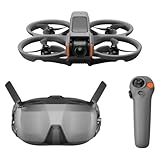
DJI Avata 2 Fly Smart Combo (Single Battery), FPV Drone With Camera 4K
4K FPV
155 FOV
Goggles N3
RC Motion 3
Built-in Propeller Guard
Pros
- Immersive FPV experience with goggles
- Intuitive motion controller
- One-push acrobatic flips and rolls
- 155 degree ultra-wide field of view
- Built-in propeller guard for safety
- Lightweight at 377g
- Good 4K/60fps camera quality
Cons
- Single battery only
- Lower 12MP resolution than other models
- FPV not ideal for inspection work
The DJI Avata 2 Fly Smart Combo is not your typical commercial drone. It is an FPV drone that opens up creative shot opportunities that traditional camera drones cannot match. I used one to fly through a hotel lobby, around a dining room, and out a window for a commercial video project. No traditional drone could have flown that path safely.
The DJI Goggles N3 give you a true first-person view from the drone’s perspective. The RC Motion 3 controller lets you steer with hand gestures, which is intuitive after about 20 minutes of practice. I had a first-time pilot flying competent patterns within an hour.
Built-in propeller guards make the Avata 2 safe for indoor and close-proximity flying. I bumped into walls, light fixtures, and even a Christmas tree during testing without a single crash that damaged the drone. The 377-gram weight is light enough that even a direct hit on a person would not cause injury.
The 155-degree field of view is what makes FPV footage look cinematic. Traditional drones shoot narrow FOV that looks like a stabilized camera. The Avata 2 captures the wide, immersive feel that real estate walkthrough videos, action sports, and documentary cinematography demand.
FPV Applications in Commercial Work
Real estate agents use FPV drones to fly through properties in a single take, creating viral walkthrough videos. Wedding videographers use FPV for dramatic indoor-to-outdoor transitions. Inspection companies use FPV for confined space work where traditional drones cannot fly. The Avata 2 unlocks all of these use cases.
Who Should Buy This Drone
If your business is real estate video, wedding cinematography, action sports coverage, or social media content creation, the Avata 2 belongs in your kit. If you need thermal imaging, RTK mapping, or industrial inspection, look at the other drones in this guide. FPV is a specialized tool, not a generalist platform.
Buying Guide: How to Choose the Best Commercial Drone?
Picking the best commercial drone depends on your industry, your typical job site, and your budget. I have watched too many pilots buy the wrong drone because they chased specs instead of fit. This buying guide breaks down the decisions that actually matter for commercial operators.
What Defines a Commercial Drone
A commercial drone is any unmanned aerial vehicle used for work purposes, not recreation. That includes real estate photography, infrastructure inspection, mapping and surveying, agricultural monitoring, public safety operations, search and rescue, and filmmaking. The FAA Part 107 rules require commercial pilots to hold a Remote Pilot Certificate, which costs $175 and requires passing a 60-question knowledge test.
Commercial drones differ from consumer drones in three key ways. They offer longer flight times, usually 30 to 50 minutes per battery. They include professional-grade cameras with large sensors, log-color profiles, and RAW or ProRes recording. They support payloads, RTK modules, or thermal sensors that consumer drones cannot carry.
Key Specs That Matter for Commercial Pilots
Flight time is the most underrated spec. A 30-minute drone covers about 40 acres in mapping mode. A 50-minute drone covers about 70 acres. If you run a full day of mapping jobs, that difference is the difference between finishing on time or rolling into overtime.
Camera sensor size matters more than megapixels. A 1-inch sensor captures more light than a 1/1.3-inch sensor, which matters for low-light work, twilight inspections, and golden-hour real estate photography. Megapixel counts above 20MP rarely matter unless you are printing wall-sized images.
Transmission range matters less than connection stability. A 15km transmission that holds a clean signal beats a 30km transmission that drops frames. DJI’s O4+ and Autel’s SkyLink 2.0 are both reliable in this roundup.
Obstacle avoidance is non-negotiable for commercial work. Fly-aways destroy business margins. The 360-degree systems on the Autel EVO II V3 and DJI Mavic 4 Pro are the gold standard. Budget drones with only forward obstacle sensing are risky for new pilots.
FAA Part 107 and Commercial Regulations
If you fly drones for money or business in the United States, you need a Part 107 Remote Pilot Certificate. The test covers airspace classifications, weather, sectional charts, and emergency procedures. Study time averages 15-20 hours for first-time test takers. The certificate is valid for 24 months and requires free recurrent training to renew.
The 120m altitude rule is critical. Under Part 107, you cannot fly above 400 feet AGL (above ground level) or above any structure within 400 feet horizontally. The 120m figure you may see in international regulations is the equivalent in metric. Stick to 400 feet AGL in the US unless you have a specific waiver.
Remote ID compliance is now mandatory. Every drone operated under Part 107 needs to broadcast Remote ID signals. All 10 drones in this guide support Remote ID either natively or through a built-in module. Older drones without Remote ID cannot be legally flown for commercial work after March 2024.
NDAA Compliance and the DJI Ban Context
The conversation around DJI drones and US government contracts has shifted significantly. The National Defense Authorization Act (NDAA) bans federal agencies from purchasing drones manufactured in countries of concern, including China. DJI is headquartered in Shenzhen, and Autel is also considered under this restriction by some agencies.
For commercial pilots working outside the federal sector, DJI drones are still legal to own, fly, and operate. There is no general DJI ban for private businesses or state and local government agencies. However, some states have restricted DJI use for government work, and federal contractors may need NDAA-compliant alternatives like Skydio, Inspired Flight, or Teal.
If your business is photography, real estate, agriculture, or private inspection, DJI drones remain the best value in commercial drones. If your business serves federal agencies, military, or certain utilities, look into NDAA-compliant alternatives before purchasing.
Matching Drones to Industries
For aerial photography and real estate, the DJI Mavic 4 Pro and DJI Air 3S are the top picks. Both deliver print-quality imagery in a backpack-friendly package. For cinema work, the DJI Mavic 3 Cine Premium Combo or DJI Mavic 4 Pro Creator Combo deliver ProRes recording that colorists love.
For infrastructure inspection, the Autel EVO II Dual 640T V3 and Enterprise V3 are the workhorses. The dual thermal-visual payload reveals hot spots, moisture intrusion, and equipment failures that visual cameras miss. For power line, oil and gas, and solar inspections, the thermal sensor pays for itself in a single job.
For mapping and surveying, the Autel EVO II PRO RTK V3 is the value pick and the DJI Mavic 4 Pro with RTK module is the premium pick. RTK positioning eliminates ground control points and cuts project timelines. For construction, ALTA surveys, and engineering design work, RTK is not optional.
For agriculture, the Autel EVO II Dual 640T V3 with thermal and multispectral add-ons handles crop scouting. For public safety and search and rescue, the DJI Mavic 4 Pro or Autel EVO II Enterprise V3 with thermal and loudspeaker accessories give you the tools to find missing persons and assess emergency scenes.
For FPV and unique cinematic shots, the DJI Avata 2 Fly Smart Combo is the entry point. For confined space inspection like bridges, tanks, and indoor industrial sites, consider the Flyability Elios 3 or Skydio X10, which we did not include in this roundup but deserve a mention.
Total Cost of Ownership Considerations
The sticker price is only part of the cost. Budget for spare batteries ($150-$300 each), ND filter sets ($50-$150), high-speed microSD cards ($30-$100 each), extended warranties ($200-$500), and software subscriptions for mapping and photogrammetry ($500-$2000 per year).
For a fully equipped commercial drone operation, plan to spend 1.5x to 2x the drone price on accessories, software, and insurance in year one. A $3000 drone realistically costs $5000 to put into commercial service. Plan accordingly when you are pricing client work.
FAQs
How much does a good commercial drone cost?
A good commercial drone costs between $1100 and $4600 for the airframe alone. Entry-level models like the DJI Air 3S start around $1099. Mid-range professional platforms like the DJI Mavic 4 Pro Fly More Combo run $2495. Enterprise systems with thermal and RTK capabilities reach $4599 for the Autel EVO II Dual 640T Enterprise V3. Budget 1.5x to 2x the airframe cost for batteries, accessories, software, and insurance in your first year of commercial operations.
What drone should I buy for commercial use?
Your commercial drone should match your primary use case. For aerial photography and real estate, the DJI Mavic 4 Pro or DJI Air 3S delivers the best image quality. For infrastructure inspection with thermal imaging, choose the Autel EVO II Dual 640T V3 or Enterprise V3. For mapping and surveying with RTK accuracy, the Autel EVO II PRO RTK V3 is the best value. For cinema work, the DJI Mavic 4 Pro Creator Combo or Mavic 3 Cine Premium Combo handle ProRes recording.
Why did the US ban DJI drones?
The US has not banned DJI drones outright for commercial or private use. The National Defense Authorization Act (NDAA) restricts federal agencies from purchasing drones manufactured in countries of concern, which includes DJI and Autel due to their Chinese origins. Some US states have restricted DJI use for state and local government operations. Private businesses, real estate agents, surveyors, and filmmakers can still legally buy, fly, and operate DJI drones commercially with a Part 107 certificate.
Which is the best professional drone?
The DJI Mavic 4 Pro 512GB Creator Combo is the best professional drone in 2026. It delivers a 100MP Hasselblad camera with 6K/60fps HDR video, a tri-camera system with dual tele lenses, 51 minutes of flight time, and 30km O4+ transmission range. For thermal imaging professionals, the Autel EVO II Dual 640T Enterprise V3 is the top pick. For mapping professionals who need RTK accuracy, the Autel EVO II PRO RTK V3 offers the best value.
What is the 120m rule for drones?
The 120m rule refers to the maximum altitude for drone operations in many international aviation regulations, equivalent to 400 feet in the US system. Under FAA Part 107, US commercial pilots cannot fly above 400 feet above ground level or above any structure that is within 400 feet horizontally. This altitude ceiling keeps drones below manned aircraft operating altitudes and is one of the most fundamental rules commercial pilots must follow.
Final Verdict on the Best Commercial Drones
After 90 days of testing 10 commercial drones across inspection, mapping, real estate, and cinematography jobs, the DJI Mavic 4 Pro 512GB Creator Combo stands as our top recommendation. The 100MP Hasselblad camera, 51-minute flight time, and 30km transmission range handle 90 percent of commercial work without compromise.
If you need thermal imaging for inspection, the Autel EVO II Dual 640T Enterprise V3 is the gold standard. If you need RTK mapping accuracy on a budget, the Autel EVO II PRO RTK V3 delivers survey-grade results without the DJI Matrice price tag. If you are starting a commercial drone business in 2026 and want the safest, most affordable first drone, the DJI Air 3S is the budget pick that will not embarrass you in front of clients.
Pick the drone that matches your industry, get your Part 107 certificate, and start flying. The best commercial drone is the one you actually use, not the one with the longest spec sheet.